by Brad Inman | May 21, 2025 | Industry, News Feed
Transcendent enthusiasm, like falling in love, grabs hold when buyers find a home they adore, Brad Inman writes of the couple who bought his Spanish-style West Hollywood home earlier this month.
Bigger. Better. Bolder. Inman Connect is heading to San Diego. Join thousands of real estate pros, connect with the Inman Community and gain insights from hundreds of leading minds shaping the industry. If you’re ready to grow your business and invest in yourself, this is where you need to be. Go BIG in San Diego!
I knew I would live there when I first walked into the 102-year-old condominium in San Francisco’s Nob Hill neighborhood last month. The feeling was indistinguishable from when I bought my first home in Oakland 45 years ago.
Nostalgia and imagination inspire powerful feelings when buying a home. You are launched into an orbit of transcendent enthusiasm, like falling in love.
TAKE THE INMAN INTEL SURVEY FOR MAY
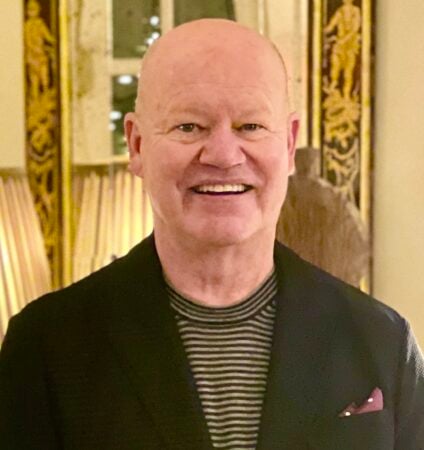
Brad Inman
As my wife Yaz and I were closing on the San Francisco unit, the young buyers of our 98-year-old Spanish-style West Hollywood home felt the same magical enchantment. The Brooklyn transplants wrote a poignant letter describing their enthusiasm about purchasing our house — they fell in love.
This is one reason why selling or leaving a home is so difficult. It’s not just the memories; your soul becomes welded to the place, making it difficult to let go. Before moving in, your imagination lays the first psychic rebar, connecting you to a future of joy and meaning with all of life’s experiences ahead of you.

Brad Inman’s chair in Palm Beach, Florida
Millions of other people embark on this same journey, which, as a journalist, has always drawn me to real estate.
Homeownership has never been an elite privilege — at least not in the United States. It was always meant for everyone. As with our current housing affordability crisis, market forces often step in to correct the imbalance when it becomes too much. A more balanced market is beginning to take shape now.
To achieve homeownership, aspiring buyers must make sacrifices, stretch their household budgets, accept smaller living spaces, and choose geographical trade-offs.
Young people — Gen Z, the Zoomers — are setting out on a new wave of geographical reshuffling, this time to affordable Midwestern states. No personal or economic obstacle can squash their determined real estate ambitions. Like love, desires take over.
Right now, I sit in a chair, in a room, in my home, where I write, read and reflect.
Homes aren’t just a dream for me — they are who I am and what I love.
Email Brad Inman
This post was originally published on this site
by Kevelyn Guzman | May 21, 2025 | Industry, News Feed
In slower markets, agents who are strategic, creative and proactive rise to the top, Coldwell Banker Warburg’s Kevelyn Guzman writes. Those who wait for conditions to change get left behind.
Bigger. Better. Bolder. Inman Connect is heading to San Diego. Join thousands of real estate pros, connect with the Inman Community, and gain insights from hundreds of leading minds shaping the industry. If you’re ready to grow your business and invest in yourself, this is where you need to be. Go BIG in San Diego!
Let’s get one thing straight: The market isn’t going to make you successful. Your strategy will.
In real estate, it’s easy to fall into the habit of blaming the market. When activity slows down, there are some go-to explanations: “Rates are too high.” “Buyers are waiting.” “Sellers don’t want to trade their low mortgage.”
TAKE THE INMAN INTEL SURVEY FOR MAY
All of that might be true — but it’s not the full story. Deals are still happening. Properties are still trading hands. People still need to move. What’s different is how those deals are made. In slower markets, agents who are strategic, creative and proactive rise to the top. Those who wait for conditions to change get left behind.
In a city like New York, you learn quickly that the market is never “easy.” There’s always something — interest rates, inventory challenges or shifting buyer psychology. The agents who succeed here are the ones who know how to pivot. They don’t rely on the market to do the heavy lifting. Instead, they rely on their ability to outthink and outwork the competition.
If you’re sitting around waiting for a “hot market” to carry you, you’re wasting time. What you really need is a smarter strategy. Here’s where to start:
1. Position the property, not just the price
Pricing is important, but it’s not the whole game. In a slower market, it’s not enough to simply “price to sell.” You need to understand the psychology behind buyer decision-making.
What problem does this property solve for them? What emotion are you tapping into?
- Is it value — like a first-time buyer who feels they’re finally “getting in” to a coveted neighborhood?
- Is it potential — an investor visualizing how they can maximize rental income or flip value?
- Or is it exclusivity — that emotional pull of owning a one-of-a-kind penthouse with skyline views no one else can claim?
These emotional drivers are often more powerful than square footage or finishes.
The story you tell around a listing — how you position it in the market — can be the difference between sitting stale and sparking interest. Great agents know how to package even a “challenging” property in a way that resonates with the right audience. Pricing is a tool, but positioning is an art.
2. Build hyperlocal relevance
In a city as vast and competitive as New York, being “a real estate agent” isn’t enough. The agents who win are hyperlocal experts. They know their neighborhoods inside and out — not just the comps, but the culture, the community and the hidden gems.
Building hyperlocal relevance means consistently showing up where your audience lives and plays. It’s hosting community events, creating valuable local content or supporting neighborhood businesses. When you become the go-to resource in your area, you stop competing for attention. People come to you. Market share starts with mindshare. Focus local, build deep relationships, and watch your business grow.
3. Leverage creative partnerships
When traditional channels aren’t producing results, it’s time to think outside the box. Partnerships are a powerful way to expand your reach and create new opportunities.
Think about local businesses, art galleries, design firms, wellness studios: Who shares your target audience but isn’t a direct competitor? Collaborating with these partners can help you tap into fresh networks, create memorable experiences and add value in ways that standard marketing can’t.
The goal is to create buzz where there was none. To reach people who may not be actively looking but are open to the right opportunity. In a tight market, visibility is everything. Creative partnerships give you an edge.
4. Work your database, not just your feed
Social media is important, but your most valuable assets are often sitting quietly in your database. Past clients, sphere of influence, referral partners — these are the people most likely to trust you, recommend you and work with you again. Yet many agents neglect this warm audience in favor of chasing cold leads online. Big mistake.
A smart, consistent outreach strategy can reignite old relationships and generate new business. Whether it’s personalized check-ins, client appreciation events or valuable market updates, staying in front of your database should be non-negotiable.
5. Take ownership of your strategy
At the end of the day, you can’t control interest rates, market cycles or buyer hesitations. But you can control how you show up, how you think and how you act. The agents who thrive in markets like this are the ones who take ownership of their strategy, not the ones waiting for conditions to change.
Success in New York City real estate comes down to positioning, relationships and creativity. The market isn’t going to hand you business. You have to go out and get it — strategically, deliberately, relentlessly. In a slower market, your relationships are your lifeline. Treat them accordingly.
Kevelyn Guzman serves as regional vice president at Coldwell Banker Warburg. Connect with her on Instagram and Linkedin.
This post was originally published on this site
by Troy Palmquist | May 21, 2025 | Industry, News Feed
Bigger. Better. Bolder. Inman Connect is heading to San Diego. Join thousands of real estate pros, connect with the Inman Community, and gain insights from hundreds of leading minds shaping the industry. If you’re ready to grow your business and invest in yourself, this is where you need to be. Go BIG in San Diego!
I recently spoke at Inman On Tour Nashville, where one idea stood out: There’s still room to grow. Even in a market where many are tightening the reins, growth is not only possible — it’s necessary for brokerages with the right infrastructure, strategy and leadership.
But here’s the truth: Opening a new office isn’t just a play for more square footage or market share. It’s a test of your systems, your people and your purpose.
TAKE THE INMAN INTEL SURVEY FOR MAY
In Nashville, I met David Hoffman, CEO of David Hoffman Realty, an award-winning Charlotte, North Carolina, indie. I followed up with him after the event and direct messaged him on Instagram when he shared info about the opening of his new office.
For more on opening a new office, check out my previous article: “Find your space and plant a flag in the market you serve.”
Subsequently, I reached out and asked what insights Hoffman had gleaned from his recent office expansion, including how he chose the location. His first office is south of Uptown Charlotte, which means that potential clients and agents on the north side don’t always reach out. The new office is the “same distance north of Uptown Charlotte as our current office is south,” he said.
“We already had a few experienced agents who were making the long drive down south, and wasting a lot of time and money, as well as agents who have wanted to be a part of our firm, but couldn’t afford the time to commute each way, as well as the long distance for attending meetings and attracting clients.”
Hoffman’s search put them in the center of the Lake Norman area. “It was a combination of location, location, location, as well as comfort and efficiency,” Hoffman said. “The town of Cornelius is in the epicenter of the Lake Norman region, so buyers and sellers look at agents in that area as capable of serving the entire region.”
7 questions to ask yourself before you grow
If you’re thinking about expanding into a new market or into another area of your existing market, Hoffman suggests you ask yourself these seven questions first:
1. What is your 3-year plan?
“We believe in ‘three minutes and three years,’” Hoffman said, “meaning that we are present in real time, but also making decisions that will help us get to where we want to be in three years,” which, in this case, included being in the Lake Norman area of his market.
“Fast-forward three years to know your personal and professional targets and goals,” Hoffman said. This will help you grow into a space that can support you and your team for the foreseeable future.
2. Is your hub built to handle more?
If your core operation is barely managing its current volume, adding more will only multiply the cracks. Before expanding, Hoffman said, take a hard look at your systems, including transaction flow, client service, compliance process, training and onboarding, and tech stack. Can they withstand a decentralized leadership structure?
Can your team take on more clients, staff and agents without sacrificing service or speed? If not, fix the foundation before adding more floors.
3. Do you have the leadership bandwidth?
Expansion isn’t just a logistical move — it’s an entire focus shift for your leadership, Hoffman said. You can’t be in two (or 10) places at once, so is your leadership team structured to support multiple locations? Is your time stretched too thin already?
If your current operation still requires your constant, personal oversight, it’s not time to scale. You need operational maturity before you can duplicate.
4. Are you financially ready?
This is where the rubber meets the road: Opening a new office means upfront capital for space, buildout, tech, talent and marketing, and enough cash flow to keep it running until it’s self-sustaining.
If your reserves can’t support six to 12 months of operating costs for a new location, hold off. Growth should be a strategic investment, not a financial risk that ends up sinking the ship altogether.
5. Do you understand the legal landscape?
State and municipal laws can shift dramatically between ZIP codes. If you’re expanding, you need a working knowledge of local compliance requirements, like adding managing brokers, updating MLS member roles, adjusting marketing disclaimers and adhering to jurisdiction-specific advertising rules, Hoffman said.
Overlooking these items can cost you more than just money — it can damage your credibility and result in reputational risk.
6. Is your team aligned with the vision?
Your people are your brand. If your current agents and staff don’t buy into your vision for growth, the cracks will show in the form of recruiting and retention struggles. Expansion works best when your team feels like they’re part of something they’re building, not something being built around them, or worse, in spite of them.
“Ensure that your current agents and staff are fully behind the vision of growth, and not only support it, but that they are a part of the integration,” Hoffman said. Communicate not just the “where” but also the “why” early on. Bring your people into the process, and provide opportunities that let them lead, too.
7. Is your brand and messaging consistent and scalable?
A disjointed brand confuses everyone. From the new office signage to your digital footprint to how your agents talk about the company, your message needs to be sharp and consistent, both internally and externally.
Internal communication matters just as much, Hoffman said. If your agents don’t understand how the expansion fits into the bigger picture and sell that vision in conversations with current clients and colleagues, neither will the market.
Scale is a multiplier of both strengths and weaknesses
Growth doesn’t fix what’s broken in your business. It amplifies it. But if you’re already strong at the core — operationally, financially, culturally — then expansion becomes more than a possibility. It becomes a smart, strategic step forward for your real estate brokerage.
Done right, adding a new location isn’t just about growing your footprint. It’s about deepening your value, extending your reach and creating a brokerage that’s built to last.
Troy Palmquist is the founder and principal at HomeCode Advisors. Connect with him on LinkedIn.
This post was originally published on this site
by Inman | May 21, 2025 | Industry, News Feed
 This May marks Inman’s sixth annual Agent Appreciation Month. Look for profiles of top producers, opinions on the current state of the industry and tangible takeaways you can implement in your career today. Plus, the prestigious Future Leaders of Real Estate return this month, too.
Pulse is a recurring column where we ask for readers’ takes on varying topics in a weekly survey and report back with our findings.
TAKE THE INMAN INTEL SURVEY FOR MAY
Hard-charging negotiator? Calm, wise advisor? Perfectly poised social butterfly? Today’s agents have to play all those roles and more, depending on the market, the circumstances and the needs of their clients. It’s not enough to know your stuff; you’ve got to be able to combine top-tier marketing with deep-down understanding of the market’s intricacies.

We’re wondering what trait you think best defines today’s top real estate agents? Is it their public image or their behind-the-scenes networking skills? Is it their social media presence or their in-person impact? What do the best agents have that others don’t — and how can new agents duplicate that magic? Let us know below:
We’ll compile a list of the top responses and post them on Inman next Tuesday.
This post was originally published on this site
by Rick Guerrero | May 21, 2025 | Industry, News Feed
Rick Guerrero and coach Ricky Carruth talk strategy, mindset, motivation and more in this interview filled with actionable, practical advice.
Bigger. Better. Bolder. Inman Connect is heading to San Diego. Join thousands of real estate pros, connect with the Inman Community, and gain insights from hundreds of leading minds shaping the industry. If you’re ready to grow your business and invest in yourself, this is where you need to be. Go BIG in San Diego!
If you’re a real estate agent navigating today’s unpredictable market, struggling to convert leads or just feeling stuck, this is the interview you can’t afford to miss.
TAKE THE INMAN INTEL SURVEY FOR MAY
I recently sat down with Ricky Carruth, one of the most authentic voices in real estate coaching today. With over 100 home sales annually and a thriving national coaching platform, Carruth doesn’t just talk theory — he’s lived it. Now, he’s on a mission to help agents like you cut through the noise and build sustainable, meaningful careers.
What we cover in the interview
Why conversations, not conversions, are the secret to your real estate success
Carruth explains why your number of conversations is the most critical metric in your business. It’s not about turning a “no” into a “yes” — it’s about creating more opportunities to hear “yes” in the first place.
How to build genuine, deep relationships that last a lifetime
In a post-commission-lawsuit world, trust and value matter more than ever. Carruth shows how agents who lead with service and empathy can win in any market.
The truth about systems, CRMs and drip campaigns
Spoiler alert: Most things agents are told to prioritize slow them down. Carruth shares how simplicity and focus are the real keys to scaling your business.
The coming real estate boom — and how to position yourself for it
Yes, rates are high. Yes, inventory is tight. But Carruth explains why we are on the verge of a historic market shift and how you can prepare to dominate the next decade.
Why the best agents are already working harder, while others wait on the sidelines
This conversation is a wake-up call. The market won’t wait for you to get ready. Carruth lays out precisely what agents should do to become the go-to name when the tsunami of transactions hits.
What makes this interview different?
Carruth doesn’t hold anything back. From lead generation and follow-up, to mindset and faith, to why most agents fail, he gives away the blueprint he used to go from zero to a diamond.
If you’re tired of fluff-filled motivational talks and want fundamental, actionable strategies from someone who’s done it, this is your moment.
Rick Guerrero is the Producing Sales Leader at Neighborhood Loans. You can follow him on Facebook or connect with him on LinkedIn.
This post was originally published on this site
by Lillian Dickerson | May 20, 2025 | Industry, News Feed
At Inman On Tour Miami on Tuesday, luxury agents from Palm Beach, Miami and 30A said their markets are expanding beyond second-home destinations and that collaboration drive success.
Bigger. Better. Bolder. Inman Connect is heading to San Diego. Join thousands of real estate pros, connect with the Inman Community and gain insights from hundreds of leading minds shaping the industry. If you’re ready to grow your business and invest in yourself, this is where you need to be. Go BIG in San Diego!
Since the COVID-19 pandemic, Florida has become a hot spot for second homebuyers and affluent clients seeking a more relaxed lifestyle.
But what many found when they flocked to the beachy oasis — besides tax benefits — was a destination where they could find themselves settling down full-time.
Top agents based out of Miami, Palm Beach and 30A during Inman on Tour Miami on Tuesday told similar stories of their clients coming to their region for a getaway and deciding to stay for the long haul.
TAKE THE INMAN INTEL SURVEY FOR MAY
“I think that Miami is a city that is so dynamic and that it’s grown up tremendously from being a vacation destination to now it’s where tech companies are, it’s where finance companies are,” Jill Hertzberg of the Jills Zeder Group at Coldwell Banker said. “And people are living here, relocating here — it’s no longer a vacation destination.”
Hertzberg’s son, Danny, who is also on her real estate team, added that as people tied to finance or other hubs of industry located in various parts of the country began to move to the area, they ultimately brought their businesses to Miami with them, which created a snowball effect.
“That growth was really tremendous,” Danny Hertzberg said. “So the city went from kind of like a beach, second-home destination, to a primary residence, to a major tech and finance hub that’s driving a lot of the economy here, and I’m very excited about the future of work in Miami.”
Holly Meyer Lucas of the Meyer Lucas Real Estate Team operates in Jupiter and Palm Beach, and noted that the migration of wealth in recent years has brought significant opportunity for real estate agents in the area, because in addition to the swaths of billionaires moving to Palm Beach, all of their staff are similarly moving to the area with them.
“We’re in the middle of one of the most significant mass migrations of wealth and of population in American history,” Lucas said.
She added that agents should take the opportunity to sit on local municipal decision-making boards to help encourage development in these areas of migration to help better serve clients with more inventory.
More people came to learn about the pristine planned communities in 30A where Hilary Farnum-Fasth of Corcoran Reverie operated during the pandemic, she said, and the market subsequently saw “explosive” growth.
“We saw a huge surge,” Farnum-Fasth said. “It was just incredible, because it was just so undervalued because nobody knew about it.”
As new residents continue to look for homes in Miami, the elder Hertzberg said what’s been interesting is that, she’s called up her clients who moved to the area in 2020, wondering if they’re ready to sell (so she can free up more inventory), and “nobody has wanted to sell.”
“That’s the incredible thing here,” she said.
The agents who succeed in these desirable markets are those who are hyper-plugged into the community, panelists at Inman on Tour Miami said, from knowing about country clubs, to local schools, to hair dressers and beyond.
“Then they’re thinking about all things local, particularly people relocating to our markets because we all have people relocating, and you’re plugged in with the city and you know what’s happening in terms of zoning and you’re keeping people updated,” Danny Hertzberg said. “If your clients look to you as a local resource, you’re not going to have all the answers, but you know how to connect the dots and get the right type of attorney for a dock versus the right type of attorney to put an addition off of the home versus the right type for accounting …”
And beyond that, it’s about working well with other agents to get a deal done, Lucas said. She recalled that during the pandemic when she was in the advanced stages of pregnancy with her third child and showing a property to her buyer that was represented by Jill, she was having a difficult day, and ended up asking her to drive her and her client around a bit because she wasn’t feeling up to it.
“And my point with this is, that without missing a beat and without throwing in the bus or without flexing or doing anything weird that I feel like lower-tier agents do, she gave me the opportunity to, she would refer to me if my buyer asked a question to give me the opportunity to answer the question and I referred back to her. It was like we worked just so seamlessly in sync with each other,” Lucas said.
“The way that you can really cannibalize a career is by being sharky and by being aggressive and that’s not how we operate at the top of the market,” she added.
Get Inman’s Luxury Lens Newsletter delivered right to your inbox. A weekly deep dive into the biggest news in the world of high-end real estate delivered every Friday. Click here to subscribe.
Email Lillian Dickerson
This post was originally published on this site