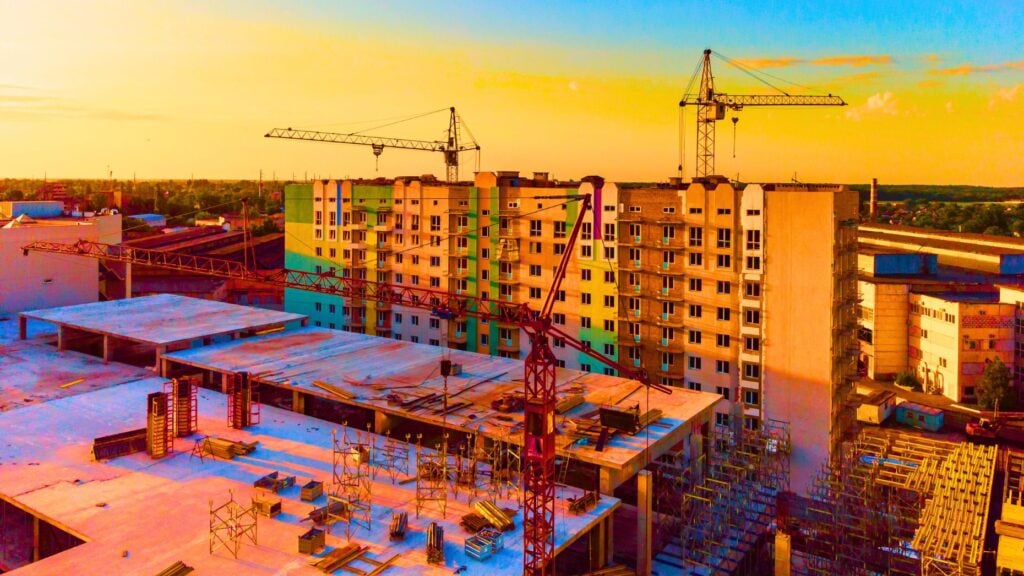
Leave The U.S.: A Village In Italy Is Selling Homes To Americans—For $1
Why This Matters to Texans Watching Housing Costs Rise
In Texas, buyers have spent the past few years navigating higher mortgage rates, elevated insurance premiums, and—especially in fast-growing metros—prices that still feel “sticky” even when the market cools. So it’s no surprise that headlines about $1 homes in Italy catch attention, particularly among would-be retirees, remote workers, and families ready to escape American lifestyle stressors and try something new.
But here’s the key: a Buy a home in Italy for $1 program is not a “free house.” It’s an incentive used by Italian villages selling homes to revive shrinking communities. If you’re considering an international move—whether to Move to Italy from the US permanently or spend part of the year abroad—this guide breaks down how it really works, what it costs, and the smartest way to approach it.
The $1 Home Trend: What’s Really Being Sold?
Across rural parts of Italy, municipalities have offered symbolic-price properties—often old, vacant homes that need significant renovation. These programs are designed to attract new residents, boost local trades, and preserve historic housing stock. That’s why “Cheap homes in Italy” and “Affordable real estate in rural Italy” often go hand-in-hand with strict rules.
While a village on Sardinia has been highlighted in recent coverage, similar programs have appeared across the country over the years. The common thread is that buyers take on a renovation obligation within a set timeline. For Americans, it’s an appealing story—Escape the US by buying a home in Italy and live the Italian dream—but the details determine whether it’s a great opportunity or an expensive detour.
What You Typically Get for $1
A distressed property in a small town, often vacant for years
Structural or systems issues (roof, plumbing, electrical, moisture) that require professional work
Local oversight from the municipality, including deadlines and permit requirements
A chance at Italian countryside living—but usually not a turnkey home
Why Americans Are Moving to Italy (And What Texans Should Consider)
The reasons behind Why Americans are moving to Italy are practical as much as romantic: a slower pace, walkable towns, food culture, historic architecture, and the possibility of relocating to Italy on a budget compared with high-cost U.S. areas. Many US expats in Italy also say they value community-centered living and the idea of start over in Italy with fewer day-to-day pressures.
From a Texas lens, it’s worth comparing what you’re leaving and what you’re gaining. Texas offers space, newer construction, and (in many counties) relatively lower taxes than coastal states—but costs like insurance and HOA dues can add up. Italy can feel more affordable in some daily expenses, but renovations, bureaucracy, and energy-efficiency requirements can surprise first-time international buyers.
Green Flags vs. Red Flags for Would-Be Buyers
Green flag: You have a realistic renovation budget and a local professional team lined up.
Green flag: You can spend time in Italy during planning, permitting, and construction.
Red flag: You’re counting on a $1 home to be “move-in ready.”
Red flag: You assume U.S.-style timelines—Italian permitting and contractor schedules can move slower.
How to Buy a $1 Home in Italy as an American (Step by Step)
If you’re serious about How to buy a $1 home in Italy as an American, treat it like any major real estate purchase—just with additional international layers. Here’s a clear process that mirrors the discipline Texas buyers already use for big transactions.
Step 1: Confirm the Program Rules (They Vary by Town)
Each municipality sets its own terms. Many require buyers to submit a renovation plan, start work by a deadline, and complete the project within a fixed window. Some require a refundable deposit or bond to ensure follow-through. Before you commit to Italy real estate for Americans, verify the fine print in writing.
Step 2: Budget Beyond the $1 Price Tag
Think of “$1” as the entry ticket—not the total cost. Your real budget should account for design, permitting, labor, materials, utilities setup, and professional fees. For Texans used to budgeting for inspections, appraisal gaps, and closing costs, apply the same mindset here—only broader.
Step 3: Visit and Inspect Like a Pro
Even if the town doesn’t require a full inspection, you should. Bring a qualified local technician or engineer to evaluate structure, roof, moisture issues, and seismic considerations in older masonry homes. This is your equivalent of a Texas option period—your chance to avoid buying a problem you can’t solve affordably.
Step 4: Line Up Your Team
Successful buyers typically have:
A local real estate professional (or municipal contact) to coordinate access and paperwork
A notary (common in Italian transactions)
A geometra/architect or engineer for plans and permits
Reliable contractors familiar with historic renovations
Step 5: Understand Residency, Visas, and Remote Work Realities
Buying property does not automatically grant residency. If your plan is move to Italy from the US full-time, talk to an immigration professional about legal pathways. If you plan on remote work from Italy, confirm your employer policies, tax implications, and time zone expectations. Many buyers start with a long-term stay strategy before making a permanent move.
What “Cheap Homes in Italy” Usually Cost After Renovation
Most $1 homes require meaningful investment. While totals vary widely by region, home condition, and finish level, the renovation budget often becomes the true purchase price. In Texas terms, think “major rehab” rather than “cosmetic fixer.” Your cost can rise quickly if you need:
This is why many buyers broaden their search beyond $1 programs to other cheap homes in Italy that might cost more upfront but require less work overall.
Are These the Best Italian Villages Offering $1 Homes?
“Best” depends on your goals: access to airports, healthcare, fiber internet for work, year-round livability, and whether you want a true small-town experience. Some buyers want deep rural charm and slow living in Italy; others want a village setting within reach of a larger city.
When evaluating the best Italian villages offering $1 homes, focus on practical livability:
Distance to a regional airport and major rail routes
Internet speed and reliability (critical for remote work)
Local contractor availability and renovation backlogs
Year-round services (grocery, pharmacy, clinics)
A Texas-Friendly Reality Check: Financing, Timing, and Risk
Texas buyers are used to conventional mortgages, predictable closing timelines, and standardized disclosure norms. Italy can feel different. You may not be using a U.S.-style mortgage for a $1 property, and renovation financing can be more complex. Plan for longer timelines and more hands-on oversight than a typical Texas purchase.
Common Mistakes Americans Make
Underestimating renovation costs and time
Not budgeting for professional fees and permitting
Assuming they can manage construction remotely without local help
Skipping thorough due diligence on property condition and legal status
What About Patrica, Italy? A Related Option in Lazio
Even when the headline focuses on Sardinia, many Americans also research central Italy for its balance of scenery and accessibility. Interest has grown in places like Patrica Italy homes, where buyers look for value without being too far from larger hubs. If you’re comparing regions, Lazio region real estate can appeal to buyers who want countryside life with the option of reaching Rome for travel, services, and cultural amenities.
If your search includes Homes for sale in Patrica Italy, you may find opportunities that aren’t $1 but still qualify as affordable real estate in rural Italy. Sometimes, paying more upfront for a better-condition home can reduce renovation risk and get you living there sooner.
$1 Program vs. Low-Cost Traditional Listing: Pros and Cons
$1 home pros: Symbolic purchase price, municipal support, community revitalization energy.
$1 home cons: Heavy renovation requirements, strict deadlines, higher uncertainty.
Low-cost listing cons: Higher purchase price, less “program” assistance.
Can You Really “Start Over in Italy” and Make It Work?
For many, the appeal isn’t just price—it’s lifestyle. The idea to escape the US by buying a home in Italy, embrace Italian countryside living, and live the Italian dream is powerful. And yes, it can be done—especially for buyers who approach it with patience, cash reserves, and a realistic plan.
If your goal is to escape American lifestyle pressures and redesign your day-to-day life, the best path is usually a phased approach: rent first, test the town in multiple seasons, and confirm you can access healthcare, groceries, and reliable internet. Then buy—whether that’s a $1 project or another form of cheap homes in Italy that fits your timeline and budget.
Practical Tips for Texans Considering the Leap
Plan a scouting trip: Visit at least once in the off-season to understand weather, services, and vibe.
Price the renovation before you buy: Get local contractor input and a written scope of work.
Build a buffer: Renovations in older homes often uncover surprises—budget accordingly.
Think long-term: If you may rent it out, confirm local rules and realistic demand.
Match the town to your life: If you need remote work from Italy, prioritize connectivity over postcard views.
The Bottom Line
The surge of interest in Italy real estate for Americans reflects a real shift: more people are questioning where and how they want to live. For Texans in particular—used to big horizons and big decisions—an Italian $1 home can be a meaningful project and a doorway to slow living in Italy, but only if you treat it like a serious investment, not a gimmick.
If you’re drawn to the idea to buy a home in Italy for $1, start with due diligence, build a strong local team, and budget for the renovation that turns a symbolic purchase into a real home. Done right, it can be a smart way of relocating to Italy on a budget—and, for some, a true chance to start over in Italy.
Multifamily investing expert Michael Zaransky reflects on the deep structural divergence between housing demand and the system’s ability to deliver new units under current economic conditions.
Bigger. Better. Bolder. Inman Connect is heading to San Diego. Join thousands of real estate pros, connect with the Inman Community, and gain insights from hundreds of leading minds shaping the industry. If you’re ready to grow your business and invest in yourself, this is where you need to be. Go BIG in San Diego!
Elevated development costs have increasingly derailed the apartment construction pipeline, particularly in markets that had already begun to show signs of strain. The deceleration isn’t isolated to one factor; instead, it stems from a convergence of rising interest rates, material inflation and policy-induced uncertainty, especially concerning tariffs.
What once was a thriving pipeline in major metros now reflects sharp drops in new starts, with deals often stalling even as rent benchmarks climb. Rents in many core markets have yet to reach levels capable of offsetting the compounded carrying and construction costs developers currently face, leading institutional capital to pivot away from speculative development and toward existing multifamily assets.
The downstream effects of that shift are already apparent. As new deliveries slow, the imbalance between rental demand and available inventory grows more pronounced.
Institutional investors understand the math — buildings under construction today won’t reach the market for 18 to 24 months. That visibility into future supply gives the multifamily sector a degree of clarity absent in other asset classes right now.
The leasing environment has tightened, with housing completions falling sharply in the past year. Strong demand persists, yet available units remain limited. The result: rising occupancy levels, climbing rents and accelerated competition across mid-market rental inventory.
Development
Although secondary markets like Phoenix, Arizona; Austin, Texas; and Nashville, Tennessee, experienced a brief cooling period due to overbuilding during the previous capital cycle, they remain outliers.
In most urban cores and high-barrier metros, the scarcity of new development is producing significant upward pressure on pricing. And while volatility tied to interest rates or trade policy may continue to cloud broader macro forecasts, the pipeline for multifamily supply remains quantifiable.
Cranes are few. Entitlements have stalled. Financing remains expensive. Against that backdrop, investors are increasingly aligning their strategies with sectors grounded in predictable fundamentals, and for now, multifamily’s constrained pipeline offers precisely that.
Further amplifying the issue is the parallel stagnation in single-family home production. Entry-level homes, once a pressure release valve for renters seeking to transition into homeownership, have grown cost-prohibitive amid escalating mortgage rates and tight labor markets.
With first-time buyers sidelined, more households remain in the rental pool longer, compounding multifamily demand when supply growth has hit a wall. The result is a layered strain on availability, pushing absorption rates even higher and driving sustained upward rent momentum.
Demand
These factors reflect a deeper structural divergence between housing demand and the system’s ability to deliver new units under current cost conditions. While no forecast can fully anticipate regulatory swings or financial disruptions, the known constraint on incoming supply sets the stage for a sustained landlord-favorable environment, especially in stable markets with high in-migration and tight zoning.
The near-term multifamily narrative won’t center on speculative optimism or economic guesswork; it will reflect the hard limits on how much (and how quickly) one can realistically deliver new housing.
Michael H. Zaransky is the founder and managing principal of MZ Capital Partners in Northbrook, Illinois. Founded in 2005, the company deals in multifamily properties.
Mauricio Umansky shares five key strategies for making (and modeling) more meaningful choices as a brokerage leader.
Whether it’s refining your business model, mastering new technologies, or discovering strategies to capitalize on the next market surge, Inman Connect New York will prepare you to take bold steps forward. The Next Chapter is about to begin. Be part of it. Join us and thousands of real estate leaders Jan. 22-24, 2025.
When it comes to making smart decisions in real estate — and in life — it’s essential to balance personal intuition and hard data.
As professionals in a position of leadership, we must demonstrate ways of thinking and assessing that will not only support our own success but that of our colleagues as well.
Here are five key strategies to consider when making (and modeling) effective decisions as a brokerage leader.
1. Cultivate a data-driven culture
Foster an environment where data informs every decision. Educate your team on how to track client engagement and encourage them to leverage analytics to identify trends, understand client needs, and optimize marketing strategies.
Track key performance indicators (KPIs) and return on investments (ROIs) for all activities, including social media posts, email campaigns, and open house events.
However, it’s essential to remember that data is best assessed in concert with other factors—it’s crucial to interpret data in context.
For instance, analyzing engagement data from virtual tours can reveal which property features captivate potential buyers. This insight can guide agents to focus their presentations and marketing materials on the most sought-after aspects, enhancing the property’s appeal and driving more targeted outreach.
2. Trust your instincts
While data provides a solid foundation, intuition, shaped by experience and industry insights, is invaluable. Don’t underestimate the power of a gut feeling, especially when navigating complex or unprecedented scenarios.
Luxury real estate often involves unique situations where strict reliance on data may not capture the full picture. For example, a seasoned agent might sense a buyer’s hesitation despite favorable “data points” and need to pivot to provide more personalized support and private discussions.
In another instance, an agent’s familiarity with local market idiosyncrasies could suggest a property has untapped potential, even if it doesn’t align perfectly with current market trends. In these moments, you should trust your instincts and use your real-life experience and judgment to make informed decisions.
3. Take a holistic approach
The truth is simple: Data can’t capture the full emotional and psychological landscape of the luxury market. Complement quantitative analysis with qualitative insights from clients and agents. This holistic approach often reveals nuances that numbers alone can’t capture.
One of our core tenets is collaboration, so when faced with uncertainty or challenging decisions, I always encourage agents to consult with a trusted colleague or mentor. These perspectives can provide clarity, validate your intuition, and offer new strategies for moving forward. Combining data-driven insights with personal experience and collaborative input ensures a well-rounded approach to achieving success.
4. Prioritize open communication
Encourage open dialogue within your team. As mentioned earlier, our human experiences are a key element in smart decision-making — and diverse perspectives can bridge the gap between data and intuition, leading to well-rounded decisions. Create a culture where data and instincts are valued in equal measure.
One way to foster an environment of open communication is by hosting regular team meetings and brainstorming sessions where agents of all experience levels are encouraged to share their insights and experiences. Consider holding a special video or in-person workshop with a mix of very experienced and newer agents where participants discuss recent transactions and highlight how different approaches (be it data analysis or intuitive judgment) contributed to closing deals.
By openly discussing successes, challenges and their processes for problem-solving, agents can learn from each other and feel more confident in blending analytical and intuitive strategies in their own work. This practice not only enhances decision-making but also builds a cohesive team culture centered on mutual respect and a growth mindset.
5. Continuous learning and adaptation
The real estate market — and its luxury sector — is ever-evolving. Stay ahead of the curve by staying up to speed on new tools and methods and updating your data strategies with the latest technologies and methodologies.
To support our agents in their ongoing education, we have The Agency University, which offers (and could be recreated in your own brokerage) training videos, webinars, and workshops on a number of topics, from new agent training and business coaching to email marketing, client management, and personal branding.
Everything is designed to accelerate our agents’ success and provide them with the full training support they need to meet their potential. After all, you shouldn’t expect your teams to excel without at least providing systems and programs to support their success.
Balancing intuition with data isn’t about choosing one over the other; it’s about blending them to enhance your effectiveness as a leader. When you value and utilize both, you can make well-informed, confident decisions that drive success for your brokerage.
Mauricio Umansky is the founder and CEO of The Agency in Los Angeles. Connect with him on Instagram.
The slow price growth is attributed to a shortage in housing inventory and limited buyer competition, according to a Redfin report published on Tuesday.
Whether it’s refining your business model, mastering new technologies, or discovering strategies to capitalize on the next market surge, Inman Connect New York will prepare you to take bold steps forward. The Next Chapter is about to begin. Be part of it. Join us and thousands of real estate leaders Jan. 22-24, 2025.
U.S. home sale prices rose 0.2 percent for the second consecutive month in July, representing the smallest monthly gain since January 2023, according to a Redfin report published on Tuesday.
Although a shortage in housing inventory is keeping prices elevated, limited buyer competition is slowing growth. Inventory has recently improved, but it remains around 30 percent lower than pre-pandemic levels, according to Redfin.
“There aren’t enough sellers listing their homes to cause prices to fall and there aren’t enough buyers to create competition to drive prices up significantly,” Redfin Senior Economist Sheharyar Bokhari said. “Relatively low sales and gradual price increases will remain the status quo each month until one of those things changes.”
Despite a recent drop in mortgage rates, which typically boosts buyer demand and accelerate price growth, home sale prices have continued to rise, albeit at a slower pace.
The Redfin Home Price Index (RHPI) shows that home prices grew 6.8 percent year-over-year in July, down from 7.3 percent in June, marking the lowest annual increase since January.
The RHPI, which uses the repeat-sales pricing method to calculate seasonally adjusted changes in prices of single-family homes, found that 20 of the 50 largest U.S. metro areas saw month-over-month declines in home prices in July on a seasonally adjusted basis, up from just four metros in February.
The steepest declines in July were observed in Austin, Texas (-1.6 percent), San Francisco (-1.1 percent) and Nassau County, New York (0.7 percent). The highest month-over-month gains were seen in Indianapolis, Indiana (1.2 percent), Miami (1.2 percent), and San Antonio (1.1 percent).
In his first Inman Connect appearance since 2021, Zillow CEO Rich Barton discussed accelerating tech innovation and the next evolution of the residential portal experience.
HAPPENING NOW! At Inman Connect Las Vegas, July 30-Aug. 1, 2024, the noise and misinformation will be banished, all your big questions will be answered, and new business opportunities will be revealed. JOIN US VIRTUALLY.
When Zillow launched in 2006, the site looked nothing like it does today.
There were no listings, no interactive videos and floor plans, or photos that homebuyers and daydreamers could scroll through for hours on end. All the site offered was a comprehensive list of transaction histories that, with some algorithmic magic, turned into the Zestimate — the industry’s first automated valuation model (AVM).
“[It was an] unbelievably provocative, interesting feature that had not existed before,” Zillow CEO Rich Barton recalled Wednesday at Inman Connect Las Vegas. “That Zestimate fueled all kinds of voyeurism and fantasies. It was incredibly entertaining, which is one of the reasons we were mobbed.”
“But it turns out that it is also a critical piece of marketplace information for anyone in the process of moving,” he added. It was this kind of intermingling, this kind of yin and yang of entertainment and practicality that helped create what the Zillow brand is today: this big trusted consumer brand that stands for consumer empowerment and customer advocacy.”
Barton said the focus on consumer empowerment and advocacy is the key to success for Zillow and the entire industry as it strives to make the dream of a quick, frictionless homebuying experience a reality.
Although the atmospheric rise of artificial intelligence has stoked fear, Barton said focusing on consumer empowerment will ensure that agents will be able to accelerate through change rather than be consumed by it.
“We are accelerating, and that queasiness we’re all feeling is natural,” he said, recalling a recent experience he had racing at 140 mph on a closed BMW track. “As a species, we haven’t really had time to catch our breath and process the last lap around the track, which was the smartphone lap. And now we’re being told to accelerate on the next lap. Here comes AI, [and] around we go again.”
Barton said it’s time to accelerate past the “Portal 1.0 experience” and begin bringing order to a complicated “multi-party, multi-partner, multistage” transaction process by investing in technology, partnering with competitors, and staying in tune with what consumers and agents need to have a positive — even joyful — experience.
“You all may not know this, but less than half of our company’s revenue now comes from buyers agents, lead generation or original business model,” he said. “Our growth and opportunity as a company now comes from investing in this array of digital workflow, tools and technologies for the industry as a whole.”
“Showingtime has been a big success for us. Follow-up Boss, Listing Showcase dotloop, Aryeo … we’ve been putting together these products, building and putting together these products for quite some time,” he added. “We did not build, invest in and integrate these products to keep them inside the walled garden. We did it to make them broadly available and to power your businesses.”
Barton said the next iteration of residential portals will focus on coordination, integration and digitization — the three steps to making buying a home as easy as buying a latte.
“It’s not unlike Brad Inman’s latte transaction [keynote] from 2013. Who remembers that?” he said. “His vision was organizing this mess and saying moving should be as easy as buying a latte. Well, we’re getting there. We’re getting there. It’s taking a while, but we’re getting there.”
Although tech is a key component of bringing Inman’s latte vision to life, Zillow said the plan doesn’t work without people — tech developers and researchers, C-Suite leaders and agent partners.
“This would not be possible if we didn’t have great agent partners,” he said. “It would not be possible if we didn’t prioritize them, and it would not be possible if we weren’t helping drive real business for them.”
“As we accelerate faster to the future, I am really pleased that we are pitching a really big tent and inviting everyone underneath,” he added. “We do not believe this is a zero-sum game. We digitize the industry, and we all win. You grow, we grow, and our customers get what they want.”