
by Summer Goralik | Jun 24, 2025 | Industry, News Feed
Real estate is changing fast, and so must you. Inman Connect San Diego is where you turn uncertainty into strategy — with real talk, real tools and the connections that matter. If you’re serious about staying ahead of the game, this is where you need to be. Register now!
“One lie … leads to another.” If you know the song, then you know Charles Wright (and the Watts 103rd Street Rhythm Band) weren’t singing about kickbacks, but they might as well have been.
I happened to be listening to that track when a new enforcement action landed in my lap. That was all it took to pull me off the creative writing streak I’d been riding and back onto the compliance path.
TAKE THE INMAN INTEL INDEX SURVEY FOR JUNE
So, with that, we might as well start from the beginning.
Several years ago, I stood in front of a packed room of escrow professionals, most of whom worked at “independent” shops, meaning escrow companies licensed by the California Department of Financial Protection and Innovation (DFPI).
Instead of the straightforward compliance talk I had planned, the session quickly turned into a venting forum. Many attendees took the mic to voice frustration and outrage, sharing stories about real estate brokers steering business to their own escrow companies — allegedly offering illegal perks to secure it. Many were angry. Some felt hopeless. And more than a few had simply lost faith in regulators.
After listening, I countered with one simple question: “How many of you have actually filed a complaint with the California Department of Real Estate?”
Silence.
I quickly filled the void with something along the lines of, “Don’t assume they know. Regulators are busy. You have to bring these issues to their attention. Make it a big deal. Let them get to the bottom of it.”
In other words, you can’t claim that nothing is being done if no one’s shining a light on the problem.
Fast forward to the present, and before diving into this fresh regulatory filing that’s bound to turn a few licensed heads, we need to zoom out and take a look at the broader escrow landscape.
How brokers fit into the escrow equation
Ever wondered how a real estate broker can handle escrow in a California transaction? The Escrow Law provides an exemption outlined in California Financial Code §17006 that allows them to step into both roles, acting as broker and escrow holder in the same deal.
There are two primary types of escrow operations in the state:
- Independent escrow companies licensed and regulated by the DFPI may offer escrow services to the general public.
- Exempt entities, such as real estate brokers, title companies, banks and attorneys, may handle escrows as part of their regular services, as long as certain conditions are met.
Under this framework, a real estate broker may operate an in-house escrow division regulated by the Department of Real Estate (DRE). These broker-controlled escrows are limited in scope. They may only handle transactions in which the broker is acting as a party and performing licensed real estate activities.
That said, some brokers cross the line by handling escrows where they aren’t a party or fail to perform a licensed act. That’s considered third-party escrow activity, and it can trigger action from the DRE — or even DFPI.
Alternatively, a brokerage may own an independent escrow company or hold ownership in a title company that operates a title-controlled escrow division, offering both title and escrow services.
Regardless of the structure, the frustration I heard in that room years ago was the same: Brokers were allegedly offering their agents financial incentives to route transactions through escrow companies they controlled or owned. And for the escrow professionals in attendance, this raised serious concerns about fairness, legality and market manipulation.
One kickback (leads to another)
In my years as a compliance consultant, I’ve encountered my fair share of unlawful kickback arrangements. Some brokers simply didn’t know the law. A few were unapologetic and willing to risk it. But the majority of brokers I’ve worked with want no part of this. They’re careful, cautious and committed to doing the right thing.
Still, for those who cross the line, the red flags are all too familiar. As a former DRE investigator and now a consultant, I’ve seen the same patterns repeat:
- Brokers offering to reduce office fees (transaction coordinator fees are a common enticement) if agents use the in-house escrow. And by “use,” I mean steer.
- Promising better commission splits for agents who “keep it in the family.”
- Subsidizing agent marketing costs (flyers, 3D tours, staging) to capture escrow volume.
These patterns aren’t hard to trace: Just follow the closing statements, the escrow holders, the agents and the money. It’s not subtle. In fact, the paper trail often paints a pretty blunt picture.
Let’s just say, I have investigative mileage in this area. I’m not bluffing.
Listen, when you get into this kind of unlawful activity — just like Charles Wright warned about lying — a kickback is rarely a one-off. It almost always leads to another. The broker offers an incentive, the agent steers the client to the broker-owned or controlled escrow, the reward gets paid, and the cycle feeds itself.
It starts as a pattern and quickly becomes a business strategy, one that writes its own story for regulators. All they have to do is read it.
Escrow compliance has been a constant throughout my career, from my early days as an escrow officer to my time as a DRE investigator and now as a consultant. I’ve contributed articles on the subject that still appear on the Department’s website, and I regularly work with brokers on understanding prohibited referral fee arrangements.
In other words, when it comes to unlawful kickbacks, I’ve been on both sides: enforcing the rules and helping brokers avoid pitfalls through education and guidance.
And honestly, I want real estate brokers to get this right. Although I believe most of them do, I also don’t want to stand in another room full of frustrated escrow professionals, disheartened by what they’re seeing out on the street. In many ways, this goes beyond compliance. It’s a matter of credibility.
The legal lines are clear
In California, the rules are not ambiguous. The DRE, which regulates real estate brokers and agents, enforces the following anti-kickback statute:
Business and Professions Code §10177.4 prohibits real estate licensees from receiving any fees, commissions or other consideration as compensation or inducement for referring customers to specific settlement service providers, including any escrow agent or controlled escrow company.
The DFPI, responsible for the regulation of escrow agents, enforces a parallel restriction:
California Financial Code §17420 makes it illegal for escrow agents to pay any commission, fee or other consideration in exchange for referrals.
And then there’s the elephant in the room: the federal government.
The Consumer Financial Protection Bureau (CFPB), whose waning authority and power have been a hot topic in the industry lately, regulates illegal referral activity under federal law:
RESPA (12 U.S.C. §2607) prohibits the payment or receipt of kickbacks for referrals of settlement services on a broader, national scale.
Even marketing perks and reimbursements may raise compliance concerns when tied to referral arrangements. While certain statutes — particularly RESPA — do allow for limited exceptions or safe harbors, those carve-outs are narrowly construed. Regulators often pay close attention to how these exceptions are applied in practice, especially when the line between legitimate collaboration and inducement becomes blurred.
Enter a newly filed case drawing attention.
A new DFPI case pulls back the curtain
I’ve always said that one of the most valuable and free forms of education for any practitioner is reading enforcement actions issued by regulatory agencies.
Earlier this month, the DFPI filed an Accusation to revoke the escrow license of a company it alleges offered unlawful consideration for referrals. According to the Accusation, the escrow company paid over $44,000 to cover photography and videography services used by real estate agents to market their listings. Roughly 82 percent of those listings ended up closing escrow with the same company.
In addition to the Accusation, DFPI issued an Order to Discontinue Violations and a supporting Statement of Facts, both of which provide further context for the agency’s concerns.
DFPI alleges this wasn’t a coincidence. It was a calculated effort to steer business by subsidizing agent marketing costs, which is a clear violation of the escrow law. The company is also accused of sponsoring broker preview events that led to escrow referrals, misrepresenting office locations without proper licensure and misleading DFPI about service contracts with affiliated marketing vendors.
These aren’t minor clerical oversights. On the compliance scale, they’re serious — and potentially costly. Notably, the Accusation outlines an alleged systematic effort to generate business through impermissible means.
While the allegations are significant, it’s important to note that the case remains pending, and the escrow company has the opportunity to file a notice of defense in accordance with due process.
Why this matters now
Public enforcement actions like this are not rampant in the escrow space. In fact, part of the reason I was put on the spot so many years ago is likely because there weren’t many public enforcement actions — or at least not enough of them — taking place against alleged bad actors.
DFPI’s action sends a clear message: Regulators are watching, and the tolerance for pay-to-play practices is fading. After all, that’s their job: to protect consumers, maintain a level playing field, and uphold both compliance and the integrity of settlement services.
Putting aside this particular enforcement action, which is far from final, I think it’s important for brokers to hear the following: When escrow is treated like a commodity to be traded for perks, trust suffers. I’ve seen it firsthand.
At their core, illegal referral fees can limit consumer choice, quietly drive up transaction costs and operate in ways that lack transparency. And let’s not forget, this kind of activity is not just a California issue. It can also create exposure under federal RESPA.
When the government bites
Most real estate professionals aim to do the right thing, and I can still say that — even after seeing some of the most egregious violations over the course of my career. But aiming isn’t enough if it’s paired with poor practices. Not knowing the law, or not meaning to break it, isn’t a defense either.
And regulators can’t take action without complaints, audits or evidence. Years ago, I told that room full of escrow professionals: “Change doesn’t happen in silence.” I still believe that.
This case is one to watch. It serves as a warning shot for those actually engaging in similar conduct, and a timely confirmation for others who consistently speak out against unlawful kickback arrangements. It’s worth noting that illegal referral fee activity almost always involves a network of players, including brokers, agents and affiliated businesses. And of course, participating in these schemes often comes with the assumption that no one is watching.
Well, I think it’s safe to say they’re watching. Where this goes, we’ll have to wait and see.
And while this action focuses on one company, similar investigations may follow, whether by the DRE for potential broker or agent misconduct or under RESPA at the federal level.
Here’s the deal: Whether or not the allegations in this DFPI case are ultimately proven, they underscore ongoing challenges in the industry that need cleaning up. With class-action litigation now etched into its résumé, real estate doesn’t have the luxury of looking the other way.
Unethical and unlawful practices, alleged or not, have to be put to rest. If we’re going to champion the value that licensees bring (and they absolutely do), we need to face the problems, no matter how uncomfortable and commit to fixing the cracks that weaken the foundation.
NOTE: The opinions, suggestions, and recommendations contained in this discussion are based on Summer Goralik’s experience working for the California Department of Real Estate and as a real estate compliance consultant. They should not be considered legal advice or relied upon as such. You should consult with your brokerage and/or appropriate legal counsel in your jurisdiction for further clarification.
by Matt Carter | Jun 24, 2025 | Industry, News Feed
After pilot tests in 11 markets, iBuyer expands its Key Connections program that puts partner real estate agents in touch with “high intent” sellers who want to explore their options.
Real estate is changing fast, and so must you. Inman Connect San Diego is where you turn uncertainty into strategy — with real talk, real tools and the connections that matter. If you’re serious about staying ahead of the game, this is where you need to be. Register now!
IBuyer Opendoor is hoping to reach more sellers by “flipping the script” and giving them the option of listing their home with an Opendoor preferred agent with an all-cash backup plan.
TAKE THE INMAN INTEL INDEX SURVEY FOR JUNE
Opendoor’s new Key Connections program connects partner real estate agents with high-intent sellers in their market who want to explore their options.
After pilot tests of Key Connections in 11 markets, Opendoor announced Tuesday that it’s expanding the program and will invite more vetted agents to reach sellers in additional markets.
“Today, a meaningful percentage of our acquisitions come to us through an agent who is bringing their customer to Opendoor and requesting a cash offer,” Opendoor CEO Carrie Wheeler said on the company’s May 6 earnings call.

Carrie Wheeler
“We are taking our existing vibrant partnership with agents and flipping the script, so to speak, by sending Opendoor customer referrals to embedded agent partners,” Wheeler said of Key Connections. “Those agents are able to talk through the options that a customer has to sell, from an Opendoor cash offer to a full listing.”
In pilot tests of Key Connections, Wheeler said customers have been receptive to having a local expert explain their options.
“Agents benefit from high-intent seller referrals from our marketing engine and are able to bring all options to the table in assessing the smartest move for the customer,” she said.
The program can help Opendoor improve its conversion rates, whether sellers accept a cash offer or opt to list with a partner agent, which generates “asset-light” revenue without the need for Opendoor to buy and sell the property itself.
The Key Connections program has also allowed Opendoor to deliver final, underwritten offers faster, because partner agents do an in-home assessment in their first meeting with prospective sellers, Wheeler said.
Since launching in Phoenix in 2014, Opendoor has expanded into 50 markets as of March 31 and sold more than 13,500 homes last year.
But the company has been operating in the red, racking up a $392 million 2024 net loss and cumulative losses of $3.81 billion through March 31.
The Nasdaq Stock Market notified Opendoor on May 28 that the company could be delisted from the exchange after its price per share fell below the minimum $1 per share requirement for 30 consecutive business days. Shares in Opendoor, which over the past year have traded for as little as 51 cents and as much as $3.09, closed at 53 cents Monday.
To get its share price back above $1, Opendoor will ask shareholders on July 28 to approve a reverse stock split at a ratio between 1-for-10 and 1-for-50, at the discretion of the company’s board.
If Opendoor were to execute a 1-for-10 reverse stock split, the number of issued and outstanding shares would decrease from 729 million to 72.9 million, and the company’s price per share would rise above $5, based on Monday’s closing price.
But because a reverse split would not decrease the number of shares of common stock the company is authorized to issue, the number of shares authorized but unissued would increase from 1.78 billion to 2.88 billion, shareholders were informed on June 16.
“The board believes that a higher stock price, which may be achieved through a reverse stock split, could help facilitate the company’s ability to raise new equity capital,” shareholders were told.
In addition to allowing Opendoor to land more funding — privately, or by issuing more shares — a reverse stock split could stimulate investor interest in the company and help attract, retain and motivate employees, the company said.
Email Matt Carter
by Inman | Jun 24, 2025 | Industry, News Feed
Real estate is changing fast, and so must you. Inman Connect San Diego is where you turn uncertainty into strategy — with real talk, real tools and the connections that matter. If you’re serious about staying ahead of the game, this is where you need to be. Register now!
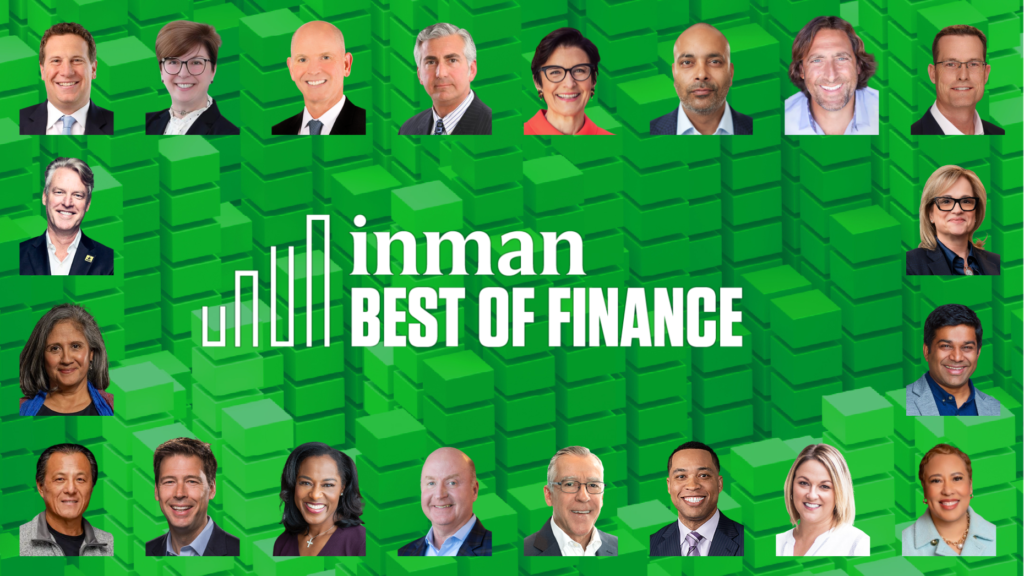
Inman, real estate’s leading news source for agents, brokers, executives and technology leaders, today proudly announced winners of its 2025 Best of Finance Awards — a celebration of those mortgage and finance professionals who have demonstrated exceptional leadership, innovation, and a profound commitment to excellence within the real estate ecosystem.
Since 1998, Inman has recognized the most deserving companies and individuals in the real estate industry for their commitment to excellence and service. The Best of Finance Awards are the latest in Inman’s highly regarded real estate awards program.
The Best of Finance Awards acknowledge individuals and companies who have distinguished themselves by not only navigating the complexities of a dynamic market but also setting new benchmarks for service and technological advancement, and their ability to drive measurable impact in the lending industry.
“In a year that has seen significant shifts and challenges in the mortgage and finance sectors, the dedication and ingenuity of these honorees have been truly inspiring,” said Emily Paquette, Inman CEO. “The 2025 Best of Finance honorees have demonstrated a commitment to empowering homebuyers and investors, and we are incredibly proud to recognize their outstanding contributions to our industry.”
Recognizing almost 150 individuals and their companies for their influence and ingenuity in mortgage and financial services, the 2025 Best of Finance honorees include:
- AJ Barkley, Head of CRA and Neighborhood and Community Lending, Bank of America
- Jane Fraser, CEO, Citi
- Allan Thygesen, CEO, DocuSign
- Laura Escobar, President, Lennar Mortgage
- Jay Bray, Chairman and CEO, Mr. Cooper
- Valerie Saunders, Chief Executive Strategist, National Association of Mortgage Brokers (NAMB)
- Glen Messina, Chair, President and CEO, Onity
- Varun Krishna, CEO, Rocket Companies
- Mat Ishbia, Chairman, President and CEO, United Wholesale Mortgage
A full list of the 2025 Best of Finance Award honorees can be found on the Inman website. Inman extends its warmest congratulations to all the recipients for their exceptional work and lasting impact on the industry
Information on Inman’s full slate of real estate industry awards can be found at inman.com/awards.
Questions about Inman’s real estate awards programs should be directed to [email protected].

by Makenzie Green | Jun 24, 2025 | Industry, News Feed
Real estate is changing fast, and so must you. Inman Connect San Diego is where you turn uncertainty into strategy — with real talk, real tools and the connections that matter. If you’re serious about staying ahead of the game, this is where you need to be. Register now!
We all have the power to be a light in the world, and our true purpose unfolds when we stay focused on the bigger picture. In the real estate industry, the brokerage and agent are privileged to represent one of the most critical decisions someone will make in their lifetime.
TAKE THE INMAN INTEL SURVEY FOR JUNE
Still, one’s commitment to the industry should go far beyond a transaction, recognizing our responsibility to care for the communities we represent and the people within them. Sales metrics do not just define a brokerage’s culture, but by the values it upholds. Social responsibility plays a pivotal role in shaping an environment where agents are inspired to lead with integrity, compassion, and purpose.
Generosity is multifaceted, extending beyond mere financial contributions; we all can utilize the unique talents sewn into each of us to provide value to others. By using one’s time and skills for the greater good, agents not only enhance their sense of purpose but also contribute to the overall well-being of the brokerage.
When a brokerage actively engages in community service, adheres to ethical business practices, and conducts meaningful outreach, it fosters a culture where social impact is woven into its very identity.
Experiential events, like team-building volunteer days or interactive fundraisers, challenge agents to be vulnerable and step outside their comfort zones, fostering personal growth and strengthening character.
In turn, this creates a lasting culture of collective individuals who inspire one another, ensuring that success is measured not only in transactions but in the positive impact made on the world around them.
Here are a few ways brokerages can incorporate giving into their culture:
Host a build day
Partner with a local charity, such as Giveback Homes, for an unforgettable Build Day in your city that fosters teamwork and community impact. Agents and staff step outside their daily routines to take on tasks such as demolition, framing, and sawing, contributing to the construction of a home for a deserving family.
At one of our Los Angeles Build Days, we had the meaningful opportunity to work alongside the future homeowner as we painted, installed flooring and siding, and applied roofing. The future homeowner was a military veteran who had been injured in active duty and was also the sole caregiver for his son, who required wheelchair accessibility.
The Habitat team thoughtfully incorporated accessible design features to meet their needs within their soon-to-be forever home. This day was gratifying, as it felt like a small way to give back to someone who has given so much in service to our country.
Another core memory of mine was at our first Giveback Homes Build Day in Basalt, Colorado. Half of our team learned to measure, saw and install siding for condos that would house local teachers, while the other half built a playground for neighborhood kids.
As we wrapped up, a mother and her son walked by — the boy’s eyes lit up at the sight of the new playground, and he ran to the slide, smiling from ear to ear. It was a blessing to see the fruit of our hard work that day and receive the stamp of approval from the small boy on the joy the playground will bring to the families of Basalt.
Organize a community clean-up
Make a tangible difference by organizing a community clean-up. Whether picking up litter, painting or gardening, your brokerage can have a significant impact when everyone comes together to enhance our cities.

The Agency’s Annual Global Clean Up for Earth Day is one of my favorite initiatives. It’s incredible to see our offices—from Amsterdam to Maui and everywhere in between—come together to care for our communities. Whether it’s cleaning parks and beaches, beautifying schools, or planting trees and gardens, the collective impact shows how much of a difference we can make when we all come together.
Sweat for social good
Foster camaraderie and support a cause by partnering with a local fitness studio or hosting a sports tournament — such as golf or pickleball — to raise funds for a charitable organization. A little friendly competition creates lasting memories while giving back.

Shop for change
Turn networking into a force for good by hosting an exclusive shopping event at a boutique that donates a portion of its proceeds to charity. Engage your clientele while supporting meaningful causes.

Rethink holiday giving
The holiday season is an ideal time to incorporate giving into your business. Use your office or open houses to entertain your clients and community by collecting toys for children’s organizations, coats for shelters or hosting a gift-wrapping fundraiser to support local charities.
By embracing these opportunities, agents and brokerages can transform their professional influence into a force for meaningful change. When generosity becomes a cornerstone of the business, it not only strengthens client relationships but also deepens the bonds within the team.
Together, we can build a culture where giving back is not just an occasional act but a defining principle that shapes our industry and the communities we serve. When you set out to help the world, you end up helping yourself. At the heart of this is the belief that, no matter where we are in life, the opportunity for generosity is knocking at our doors.
Makenzie Green is the Vice President of Vibes at The Agency. You can connect with her on Instagram.
by Holly Brink | Jun 24, 2025 | Industry, News Feed
Holly Brink shares agent Abby Goodell’s no-frills strategy for turning Facebook Marketplace posts into legit buyer leads and examines why most agents overlook the platform.
Since the NAR commission suit settlement, buyer agents have faced new rules, new documents and a new normal. This month, Inman drills down on Today’s Buyers Agent with the fresh marketing strategies, skills and tools buyer agents are using to prosper in changing times.
Most agents ignore Facebook Marketplace as a serious lead source, but that’s a mistake. One agent, Abby Goodell, shares her no-frills strategy for turning Facebook Marketplace posts into legit buyer leads — and why most agents overlook it.
Read Goodell’s top tips to consistently turn free Facebook posts into honest conversations, real clients and real closings. Whether you’re a seasoned pro or just looking for a new listing boost, this is the scrappy social media strategy you’ll wish you started sooner.
Post it like you mean it
Goodell posts every listing on Facebook Marketplace and shares it to up to 20 local buy/sell/swap groups, specifically targeting towns and counties within a 30- to 60-mile radius. “Each listing gets posted, and then I just hit ‘renew’ when it expires,” she says. “It’s quick, and I reuse the same structure every time.”
She doesn’t differentiate much between Marketplace and group posts — they’re cross-posted all at once using Facebook’s built-in sharing feature.
Format matters: Stand out with consistency
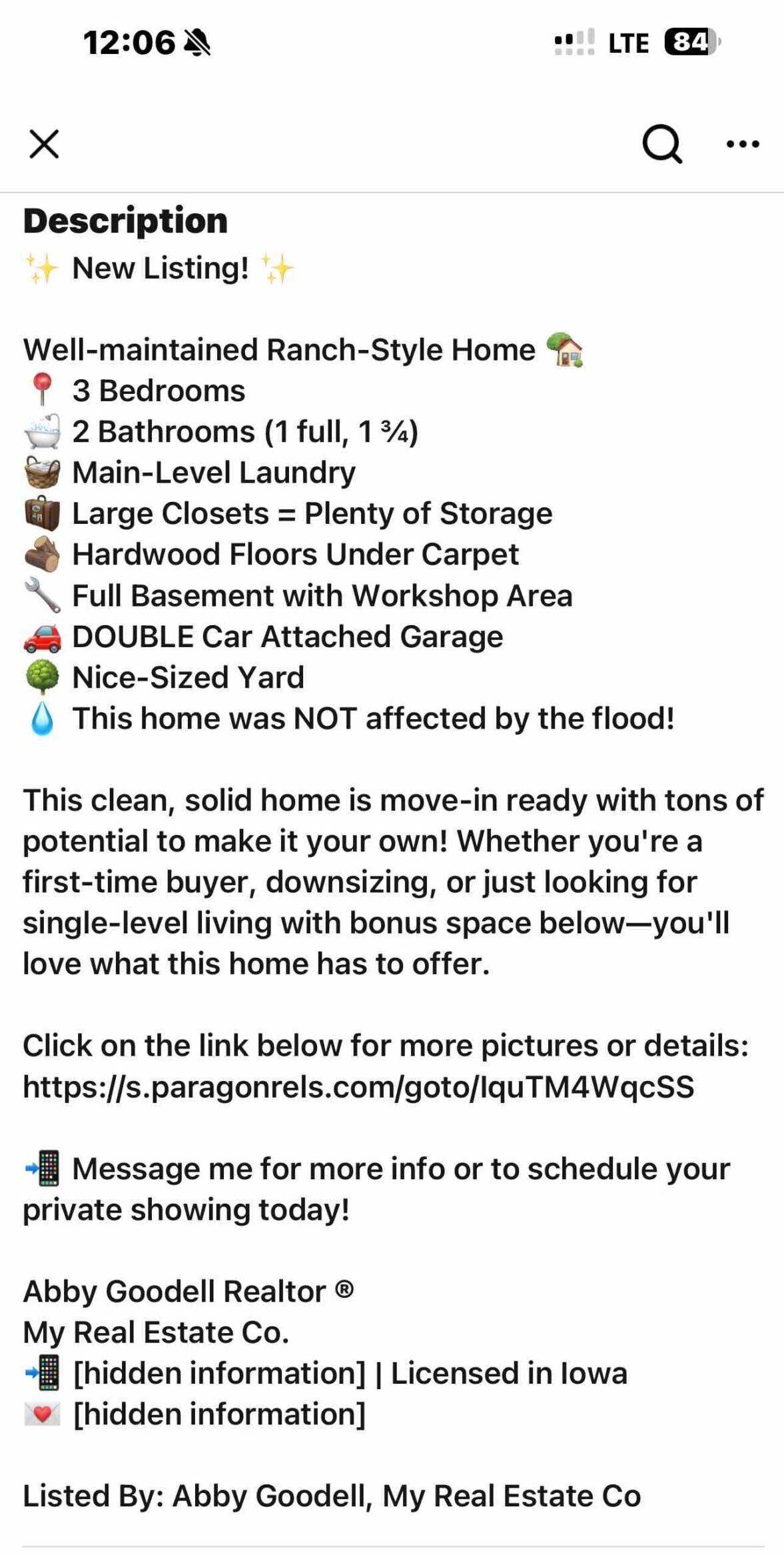
Her listing posts follow a predictable, polished formula:
- Headline: “New Listing!” plus bed/bath emojis
- A short description and CTA (call Abby, or click the website)
- A few MLS-quality photos to draw the eye
“I use the same photos I upload to the MLS, taken with a professional camera. You’d be surprised how much that alone helps the post stand out,” Goodell says.
Here’s her sample template:
The group game: Play it fast and loose
Not every group allows real estate posts, but Goodell doesn’t let that stop her.
“You can’t see group rules when you share. I’ll share it anyway. If they remove it or kick me out, it’s fine. I don’t stress about it.” (Always make sure you’re following your office, state and local regulations, of course.)
She recommends joining any group with a county or city name in it, especially those “Buy, Sell, Trade” ones. As for flags? “You’ll know when you get flagged. Just move on.”
Lead quality and results
Facebook Marketplace plays a significant role in Goodell’s lead funnel. She gets more messages from Marketplace and more comments from group posts.
“For every three listings I post, at least one gets me a qualified buyer lead from Marketplace.”
She even shared a success story: A pre-qualified buyer messaged her in response to a Marketplace post. He didn’t have an agent, so Goodell booked a buyer consultation and represented him on a different home entirely.
Dealing with trolls, spam and flags
Posting to Facebook comes with a side of chaos.
“You’ll get spammy comments, mean people and flagging. Just block them, or turn off comments if it’s too much,” Goodell advises. “I’ve had posts removed before, but you don’t get in trouble. You move on.”
Goodell’s two biggest tips?
- Most agents think it’s not worth it — but it is, if you follow up quickly.
- When I got started, I just listed my broker’s and other company agents’ listings in the area with permission. Then I would say, “Listed by XYZ, Advertised by Abby Goodell.”
She spends less than an hour a week per listing handling messages and comments and consistently replying.
Is it just for budget homes?
Not at all. Goodell’s strategy works across all price points. “People think it’s just for cheap listings or rentals. It’s not. It’s fair game for everyone,” she said.
Key takeaways
- Post every listing to Facebook Marketplace and 20-plus local groups.
- Use professional photos and a consistent structure with emojis and CTAs.
- Expect spam, trolls and post removals; just block and move on.
- Follow up fast. Goodell closes real deals from Marketplace leads.
This isn’t just about where you post; it’s about how you show up. Facebook Marketplace might feel messy or like a royal waste of time. Still, for agents willing to stay consistent, follow up fast, and block the occasional troll, it’s a marketing channel hiding in plain sight, and it’s underutilized.
Goodell’s results prove that with little effort and a lot of emoji flair, you can turn scrolls and messages into showings, and those showings into closings.
Holly Brink is the co-founder, COO and managing broker of My Real Estate Company in Iowa, Minnesota, Nebraska and Illinois. Connect with her on Instagram or LinkedIn.