
by Troy Palmquist | Jul 7, 2025 | Industry, News Feed
As Troy Palmquist refreshes his consumer-facing real estate brand online, he takes you along on the journey, including the nuts and bolts decisions related to content marketing.
Real estate is changing fast, and so must you. Inman Connect San Diego is where you turn uncertainty into strategy — with real talk, real tools and the connections that matter. If you’re serious about staying ahead of the game, this is where you need to be. Register now!
One of the tasks I’m working on as I move back into production is refreshing my consumer-facing online presence. I’m pivoting some of my digital content toward buyers and sellers, updating my bio and working on search engine optimization.
In an effort to make my consumer-focused website more effective for lead generation and brand building, I’ve purchased my name in both the .realtor and .realestate domains. The .realtor domain is available exclusively for members of the National Association of Realtors and the Canadian Real Estate Association, while anyone can purchase a .realestate domain.
Here are seven reasons why I decided to make the switch:
1. Strong professional branding and credibility
For agents and brokers who want to lean into their professional status through their NAR or CREA membership, the .realtor extension is a great way to communicate it. In addition, top-level domains that are industry-specific — like .realtor as opposed to .com or .net — are easier to remember, keeping agents top-of-mind with the people they meet.
2. Cost-effective marketing
Realtors get the full first year of a .realtor domain at no cost, while renewals begin at $39.95/year. The .realestate domain starts at $69/year. Multi-year and multi-domain discounts between 10 percent and 25 percent are also available. That’s an affordable investment for ongoing branding and is, in many cases, far cheaper than other domains.
3. Strategic hybrid domain approach
If you’re wanting to explore multiple approaches to branding and marketing — for example, content marketing that focuses on both your local market and a specialty niche — you can cover multiple audiences, highlight your authority and attract traffic with multiple SEO strategies. With both domain types, you also have a better chance of dominating search results.
4. Setup and technical support
For those who are tech-savvy, the complimentary website offered with a domain name purchase is a simple DIY process, often under five minutes. However, for those who need a little more help, there are premium options that allow you to outsource customization, optimization and content development. SSL security, ADA compliance and reliable hosting are baked in, so your site can be up and running almost immediately.
5. Lead generation and SEO lift
Among the tools offered are built-in contact forms, pop-ups, MLS integrations and done-for-you blog posts aimed at converting website visitors into warm leads. In addition, case studies show that some clients have seen significant spikes in both traffic and engagement, suggesting that there may be an SEO boost as well.
6. Domain forwarding and multi-domain strategy
If you have an existing .com website, you can route traffic to or from your .realtor or .realestate site, creating more comprehensive domain authority. By owning multiple domains, you strengthen your online presence and reduce the risk of a copycat competitor horning in on your brand. In my case, I’ll be pointing to my website sellingtheaddress.com built on the access.com, Agent Image-designed website, giving me multiple domains for better brand coverage.
7. Exclusivity and brand differentiation
Since only NAR/CREA members can access .realtor domains, you’ll enhance your credibility and deter so-called “cybersquatters” who buy desirable domains and sell them back at a premium. In addition, a .realestate domain can help you more accurately communicate your niche or location along with what you do, often far more affordably than a .com domain.
As an example, take my local market, Oxnard, California. I can purchase OxnardRealEstate.com from GoDaddy for $9,699. I can grab Oxnard.realestate, a premium URL, for $500/year, or I can niche down to OxnardHomes.realestate or OxnardWaterfront.realestate for only $69/year.
For enhanced professionalism, differentiation and affordability, a .realtor or .realestate URL just makes sense, and I’m looking forward to seeing how it will boost my online presence. It’s a simple step that puts me in control of my brand and gives clients one more reason to trust they’ve come to the right place.
Troy Palmquist is the founder and principal at HomeCode Advisors. Connect with him on LinkedIn.
by Troy Palmquist | Jul 7, 2025 | Industry, News Feed
Buyers are paying attention to “best-of” rankings. Are you? Troy Palmquist teaches you to add this leverage to supercharge your real estate business.
Real estate is changing fast, and so must you. Inman Connect San Diego is where you turn uncertainty into strategy — with real talk, real tools and the connections that matter. If you’re serious about staying ahead of the game, this is where you need to be. Register now!
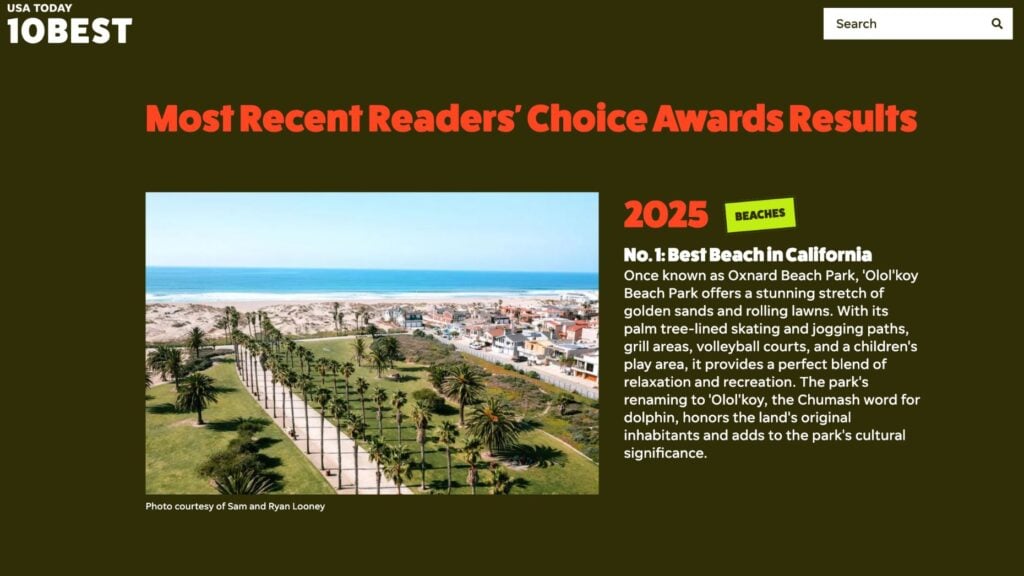
Recently, my market of Oxnard, California, was ranked No. 1 in a USA Today article titled “Coastal gems of California: 10 best beaches that have it all.” The expert panel cited ‘Olol’koy Beach Park (formerly Oxnard Beach Park) for its beauty, amenities and cultural significance. Subsequently, that ranking was picked up by other publications, which added their own takes and insights.
“Best places to live” lists are everywhere, online, in magazines and on television. Even a fluffy feature in a YouTube video can carry weight when it introduces buyers to your market and aligns with what sellers already believe about their city or region.
Here are five ways to position yourself as the savvy local agent or broker who understands how to use that buzz to drive interest and sell homes.
1. Recognize the opportunity
Anytime your market receives a “best-of” designation, that’s a built-in conversation starter. Even the ranking of a local attraction, restaurant or development creates a marketing opportunity. The validation of a ranking provides a selling point you don’t have to generate — just amplify.
Remember, however, that this type of ranking is time-sensitive, so share related content while it’s still trending, usually within a year of publication or less.
2. Turn rankings into marketing touchpoints
There are many ways to incorporate a new “best-of” ranking into your marketing:
- Social media post: Share the article along with your personal take or market insight.
- Client email: “Thought you’d like to see this — [Your neighborhood] made the list!”
- Newsletter content: Share the article along with current listings in the area. Add a call to action that invites buyers to look at houses in the area.
- Blog post or video: Break down what the ranking means and what locals love about the area. Add it to your website along with a search engine optimized headline to juice your site’s SEO.
- Listing consultation: Talk about how you’ll use the ranking to draw attention to and elevate the listing in your marketing.
- Property description: Launch into your listing copy with the designation. For example: “Located in one of California’s top-ranked coastal towns … ”
3. Make it easy for agents with Google Alerts
Set a saved Google Alert for “[Your City] + best place” and another for “[Your City] + best of.” That way, you’ll be the first to know when your market gets a shoutout. This offers set-it-and-forget-it convenience, as you let marketing opportunities come directly to you.
4. Bring it into the listing appointment
Before your next listing consultation, print the article or include a PDF of it in your digital listing portfolio. It adds local credibility and shows sellers how you’ll use the “best-of” designation to boost exposure for their home and their neighborhood. In a competitive market, track pricing and show how the ranking is or could add value to their home sale.
5. Localize and elaborate on the ranking for added benefits
Don’t just share a link to the article or video on your social media channels. Use it as a springboard, translating it into talking points that get to the heart of what buyers care about. Take a tip from the commentary included to examine features like walkability, schools, commute times and lifestyle.
Go further by adding quotes, photos or testimonials from past clients and members of your sphere about the neighborhood or its best features. The goal? Reinforcing the impact of the ranking with a dose of reality and taking it beyond the headline.
Build momentum with every media mention of your market, and be ready when an award or designation falls into your lap. Us “best-of” designations to talk about what you and your neighbors love best about your town or community.
Troy Palmquist is the founder and principal at HomeCode Advisors. Connect with him on LinkedIn.

by Troy Palmquist | Jul 5, 2025 | Industry, News Feed
Real estate is changing fast, and so must you. Inman Connect San Diego is where you turn uncertainty into strategy — with real talk, real tools and the connections that matter. If you’re serious about staying ahead of the game, this is where you need to be. Register now!
It used to be that we talked about homeownership as a financial and aesthetic goal. Think about the sales pitches we used:
- Start building equity instead of your landlord’s wealth.
- Lock in your future with an asset that pays you back.
- Finally, a space that really reflects your style.
- Paint the walls any damn color you want.
Now, however, the dream of homeownership is no longer about white picket fences. It’s about stability in unstable times. It’s about finding peace in an increasingly noisy world.
- We crave certainty → A home offers that.
- We want belonging → A neighborhood delivers that.
- We seek control → Homeownership is still one of our most personal, empowering achievements.
In the face of challenges to affordability and inventory, what are real estate’s biggest power players doing? Are they making it easier for buyers, sellers and the agents who serve them? No. They’re not even speaking to the things that really matter most to boots-on-the-ground agents.
Instead, they’re fighting among themselves, fighting with the portals and looking to enrich shareholders instead of helping families find financial stability and wealth-building potential in real estate. They’re ignoring the clear fact that helping more families and agents grows the business and, ultimately, increases the value to shareholders.
We used to take the transparency offered by the MLS for granted. Now, CEOs are creating a paradigm shift where consumers potentially can’t even find listings online unless they’re signed on with the “right” brokerage.
It’s a science experiment, and it has nothing to do with what’s best for agents or consumers.
How all that conflict impacts brokerages — and agents
Brokerage companies need to realize that their shareholders aren’t their only clients. In many cases, I wonder if even the shareholders are happy with the positions that they’re taking.
In a struggle that’s positioned as being all about “consumer choice,” I have to ask whether consumers would choose industry policies that actually make it harder for them to find the home they want.
The duty to return profits to shareholders and to focus on the end consumer are not mutually exclusive. In fact, they can, or should, go hand-in-hand.
Brokerages have two customers: the client and the agent. Getting your agents cut off of IDX or portals doesn’t help them. No wonder so many agents say they’re planning to switch brokerages.
Is the real endgame for some players in the industry dual representation or dual agency? That has already been outlawed in some states. It should become less common, not more common.
When asked why we’re having this fight among ourselves, the answer always goes back to the security needs of ultra-high-worth individuals. I’ll tell you this: Those buyers aren’t searching for their next home on Instagram or YouTube videos.
For the luxury seller, only qualified buyers and trusted agents are allowed through the door. If there’s an art collection or family portraits they don’t want to show, those can be blurred out and the number and placement of photos limited.
How are the adversarial positions brokerage leaders are taking impacting the bottom lines of their brokerages? Is this making brokers more money? Is it making agents more money? Is it attracting new agents to the brokerage or causing retention issues based on the positions the company is taking at its C-suite level?
This chapter for our industry is obviously different than ones of the past. The leaders are different. The story is different. The outcome is going to be different at the end of the day. We’re here to promote homeownership and help people buy and sell homes. Anything else is just unnecessary noise.
Want to differentiate your service? Start caring about the client
Our industry’s reputation has taken a hit, and the headlines haven’t been kind. Here’s how to create a client-centered real estate business that serves both experienced buyers and sellers and those who are just exploring the real estate market for the first time:
Counter the noise
Economic and political news is louder than ever, and uncertainty is rampant. AI-generated content, TikTok real estate “influencers” and nonstop market speculation are creating confusion, not clarity, for clients.
It’s up to you to create content, to have conversations, to pick up the phone and make some calls. Take your role as a resource seriously, and counter all of that nonsense noise with practical wisdom and winning strategies that help your clients achieve their goals.
Acknowledge economic uncertainty
It’s not just about interest rates and inventory; inflation and wage stagnation continue to stretch average American household budgets to the limit. Yet buyers are still hopeful, and sellers are increasingly realistic.
Make sure your clients know that while their dreams may be harder to achieve, they won’t be denied. Stop ghosting them and dodging their calls. Walk the walk with them, providing advice, resources and, most of all, consistent encouragement on the journey to their goals.
Understand the local impact of global disruption
Immigration, wars and cultural shifts aren’t abstractions; they affect housing demand, supply chains, affordability and neighborhood dynamics. They create fear and uncertainty that make it harder to take action. They impact the way we see and speak to each other, and contribute to political, social and cultural polarization.
Housing is personal and deeply human, and that makes the role of real estate professionals more important than ever. When you understand the global and local issues that affect your buyers and sellers — from international conflicts to local zoning — you’re better able to provide the help and advice your clients need.
Prepare for tech disruptions and cultural shifts
AI search, virtual staging and YouTube home tours with millions of views: The landscape of branding, marketing, and buying and selling real estate is evolving fast. While the future of housing is being built on technological innovation, the foundation is still human: trust, community and connection.
We’ve spent enough time talking about our commissions and suing each other. Let’s get back to promoting our listings (so everyone can see them), helping clients develop winning financial strategies and creating pathways to homeownership where none seem to exist. It’s what we owe to our clients and what we owe to ourselves.
Troy Palmquist is the founder and principal at HomeCode Advisors. Connect with him on LinkedIn.

by Troy Palmquist | Jul 4, 2025 | Industry, News Feed
As we celebrate Independence Day, Troy Palmquist looks at where the dream of homeownership went off the rails and how the real estate industry helps — and hurts — homebuyers.
Real estate is changing fast, and so must you. Inman Connect San Diego is where you turn uncertainty into strategy — with real talk, real tools and the connections that matter. If you’re serious about staying ahead of the game, this is where you need to be. Register now!
It’s easy to say the American dream of homeownership is alive and well. It’s much harder to prove it when mortgage rates hover around 7 percent, the industry is being challenged in courtrooms, inventory is tight, and headlines keep seesawing from economic panic to political chaos.
Despite all of it, however, people still want one thing: a place to call home.
Maybe a brief history lesson of the past five years is instructive here:
- 2020: COVID market standstill turns into the Wild West of high-demand relocation trends
- 2021: COVID still holding on, accompanied by record-low rates and ongoing high demand, resulting in …
- 2022: Record low inventory accompanied by the beginning of rising interest rates
- 2023: A second year of low inventory, high interest rates and a verdict in the Sitzer | Burnett commission lawsuit
- 2024: The National Association of Realtors reaches a settlement in the commission lawsuits as agents continue to struggle to find listings, and the lack of affordability has a chilling effect on buyers
This year feels different — because it is different
There’s more noise than ever. From interest rates and off-market inventory to global unrest, AI disruption, immigration and deportation policies, warfare, and yes, even Cybertrucks, the very idea of “stability” feels out of reach. Brokers sue each other, NAR and, now, the portals.
And yet, buyers still show up. Sellers still hope. Families still dream.
If anything, the chaos of this year makes that dream — the one rooted in homeownership — even more meaningful.
“This part of my life … this little part … is called happiness.” — Chris Gardner, The Pursuit of Happyness (2006)
That quote, delivered quietly by Will Smith’s character after securing a job that changes his family’s future, still stops me in my tracks. Not because of the paycheck, but because of what that financial lifeline represents: a future. Stability. Dignity. A home.
The Pursuit of Happyness may not be a movie about real estate, but it’s absolutely a story about home. Gardner isn’t chasing wealth. He’s chasing a life where his son can sleep safely in his own room, under his own roof. It’s what every parent — every person — truly wants.
That’s what makes our work as real estate professionals more important than ever in 2025. We’re not just selling homes. We’re guiding people through uncertainty. We’re standing in the gap between fear and freedom.
This year’s Fourth of July is about more than backyard BBQs and fireworks. It’s a moment to ask: What does freedom mean now?
- Maybe it’s the freedom to plant roots
- To build equity
- To host family dinners
- To wave to a neighbor from the porch
- To say, “This is mine. I built this”
Homeownership isn’t just a transaction — it’s a transformation.
And while the path to home might feel harder this year — for first-time buyers, for international buyers, for working families — that only makes the pursuit more sacred. Just like Chris Gardner’s journey, it’s in the struggle that the meaning is made.
So, as we reflect on the American dream this July Fourth, let’s remember:
- The dream isn’t dead. It’s evolving.
- The dream isn’t easy. It never was.
- The dream still matters. Maybe more than ever.
Because in a world filled with noise, uncertainty and disruption, a home still offers the one thing people crave most: A place to belong.
Do your part to keep the dream alive
I know it feels like we’re all helpless, but as real estate professionals, we’re uniquely positioned to make a difference in our communities and in the lives of the buyers and sellers we serve. The only antidote to despair is action, as Joan Baez memorably said.
Here’s how you can help right now:
- Become hyper-focused on your clients and exceptionally informed about your community. Look at market and pricing trends, and identify up-and-coming neighborhoods where bargains are becoming available.
- Create content that’s educational and informative so that buyers and sellers have the resources they need to make better decisions. Create blogs, videos and social media posts about affordability, financing, specific niches and value-added services that make a difference for clients.
- Take back the search, and develop your own online ecosystem. That way, you can display your properties and share them from your own digital platform.
- Get back to basics. Pick up the phone and have conversations. Meet for coffee. At the end of the day, this is a relationship-based business, and there are a lot of people who need to buy and sell. Be there for them.
- Get involved in your community, whether it’s drumming up support for your local library or joining groups that are focused on affordable housing initiatives.
In my case, sitting on the board of directors for Boys and Girls Clubs is my way of giving back and helping to build the future I want to see. Making sure that the youth and families we serve understand their legal rights and know that their kids have a safe place to grow helps spark joy and hope in an increasingly uncertain world.
Don’t agree with the direction we’re headed, either locally or nationally? Reach out to your legislative representatives and express your concerns. It’s time that we, as Americans, stop navel-gazing and start looking upward and outward. It’s not just about me and mine. It’s about we and ours. Let’s get started.
Troy Palmquist is the founder and principal at HomeCode Advisors. Connect with him on LinkedIn.

by Troy Palmquist | Jun 30, 2025 | Industry, News Feed
As the market shifts, it’s important that your listing stands out from the competition. Troy Palmquist helps you help your sellers get market-ready fast.
Real estate is changing fast, and so must you. Inman Connect San Diego is where you turn uncertainty into strategy — with real talk, real tools and the connections that matter. If you’re serious about staying ahead of the game, this is where you need to be. Register now!
One of the most significant aspects of my previous experience in the real estate industry comes from my time working in foreclosures, flips and asset disposition, moving thousands of properties in markets across several states. One thing I’ve learned during that process is that not every home needs a full renovation to find a buyer.
Sometimes, a fresh coat of paint, new lighting, new flooring or even just staging can make a difference in how a home shows. Sometimes, simply cleaning up the yard and refreshing the front door adds the curb appeal that draws attention to a listing and helps move a home on to its next owner.
TAKE THE INMAN INTEL SURVEY FOR JUNE
Sometimes the house needs to be empty, with no belongings or personalization left in the home. Often, however, sellers don’t have the financial capability to move out ahead of time or pay for storage and movers. Even simple decluttering (after all, they’re already moving, so let’s start packing) requires materials, labor, transportation and, often, storage.
Updates help, whether you’re working with
- expired listings that need a refresh before being reintroduced to the market,
- elderly homeowners making up for deferred maintenance,
- a property that has been rented out and treated with less than tender loving care or
- a traditional owner who just needs to do some basic repairs and updates before hitting the market.
As the market shifts and more inventory is available for buyers to choose from, your listing needs to stand out from Day 1. Part of my value proposition includes partnering with companies that are set up to offer services that assist in a cohesive pre-listing process, helping seller clients get the best price possible from their sale.
TheQwikFix, for inspection repairs
One such company tackling repairs — specifically those related to the inspection process — is TheQwikFix, a member of the 2025 NAR Reach cohort. The platform pulls from home inspection reports to create detailed repair quotes from local, licensed contractors, simplifying the process of getting a home market- and closing-ready.
In his recent Tech Review of TheQwikFix, Craig Rowe writes:
What helps TheQwikFix earn its value is that it keeps the deal moving forward. The fast turnaround, the simple interface, the easy-to-read pricing — it all contributes to the momentum needed to get to close. You don’t need days between the report’s handover and the listing agent’s handyman deciding how to price it.
He also suggests, and I totally agree, that the play here is to get the home pre-inspected and repairs completed before the first offer comes in. That way, the seller is confident in pricing the property, and the buyer is (or should be) confident in making an offer. It’s an extra layer of protection for both parties, allowing them to enter escrow without having to worry about falling out due to a tense post-inspection negotiation.
Notable, for pay-at-close convenience
Of course, many of your sellers won’t have money just lying around for a renovation or a series of updates. For those who need to smooth the way, Notable is a financing company that specializes in pay-at-close loans for repairs and upgrades that get homes sold.
Last year, Leading Real Estate Companies of the World announced that it had chosen Notable as a partner for its Solutions Group. As part of its pitch, Notable offers a white-label solution that can be branded through the brokerage, staging company or other vendors (like TheQuikFix) funding up to $50,000 that can be used to pay the contractor or service provider of the seller’s choice.
The flexibility doesn’t stop there. You can also use Notable’s funds for staging, moving expenses, temporary housing — anything and everything connected to the move. For house-poor, cash-strapped clients who need money prior to closing, it’s a godsend.
According to its most recent statistics, Notable has lent more than $1 billion and helped to renovate or improve 30,000 homes with a solid 96 percent client satisfaction rating.
Making this a powerful 1-2 punch at your listing consultation
Whether you’re working with a graphic artist or DIYing it in Canva, put together a downloadable graphic to promote these services as a seller incentive. Provide information about the value of repairs prior to listing, then provide the logistical and financial path for getting them completed.
Add your downloadable pdf to the Sellers page on your website and make it part of your listing consultation package. That way, when you do your initial walkthrough, you can point out needed repairs without having to dance around the cost or leave the homeowner searching for a clear next step.
Remember, sellers are coming off a five-year spree where all they had to do was sign on the dotted line, get the home listed, and wait for the offers to roll in. Now that those days are gone in many markets, you’ll have to educate them on the realities of the current market. Coming in with a solution in hand gives you instant credibility, and the white-labeled potential of Notable adds even more brand authority to your pitch.
Troy Palmquist is the founder and principal at HomeCode Advisors. Connect with him on LinkedIn.
