Put effort into the before, during and after of the listing appointment to position the property and generate additional leads from the process, Nick Schlekeway writes.
Bigger. Better. Bolder. Inman Connect is heading to San Diego. Join thousands of real estate pros, connect with the Inman Community, and gain insights from hundreds of leading minds shaping the industry. If you’re ready to grow your business and invest in yourself, this is where you need to be. Go BIG in San Diego!
Winning a listing doesn’t come down to charm or luck — it comes down to process. It’s a skill, a system and most importantly, a mindset. To elevate your listing game, you must master each of the three stages: pre-listing, listing and post-listing.
These stages are your roadmap — not just to secure the listing, but to earn trust, stand out from the competition and turn your sellers into raving fans. Let’s break them down.
Stage 1: The pre-listing advantage
Most agents lose the listing before they ever show up because they don’t take the pre-listing stage seriously.
Before you walk through the door, your job is to gather intel, build trust and position yourself as a professional.
That starts with asking the right questions in your pre-listing call:
What updates or renovations have you done to the home?
What are your favorite parts of living here?
If you could change anything about the home, what would it be?
Why are you moving?
What are you hoping this move will do for your lifestyle?
These questions don’t just give you insight into the property — they tell you what matters most to the client. They also allow you to relate on a human level. Are they relocating? Starting a new job? Going through a life transition? That’s your cue to share a personal story, build empathy and create a connection.
Bring a pre-listing packet. Confirm the appointment with intention. And always, always show up with a mindset of service, not just presentation.
Stage 2: The listing appointment
This is your moment to lead. To show up prepared. To demonstrate that you’ve done your homework.
That means knowing the comps, the actives, the pendings and the properties that didn’t sell. The last thing you want is to get stumped by a seller who says, “Well, what about that house around the corner?” and you have no idea what they’re talking about.
The listing appointment is not just about pricing, though that’s a big part of it. It’s about presenting your process, articulating your marketing strategy and helping them feel confident that you’re the right person to guide them through the sale.
And here’s a hard truth from my own experience: Don’t forget to bring the agreement. Years ago, I went on a listing appointment, crushed the presentation, and the sellers told me they wanted to work with me. The only problem? I didn’t have a listing agreement with me. I figured I’d send it the next day.
Big mistake.
By the time I followed up, they had changed their mind and listed with someone else. Always be ready to close. When sellers are excited and ready to go, don’t let the opportunity pass you by.
Stage 3: Post-listing follow-up
Whether you win the listing or not, the post-listing stage matters just as much.
If you secure the listing, it’s now time to execute. Schedule the staging. Get the photographer. Start the marketing machine.
But more importantly, communicate. I recommend doing weekly seller huddles. Keep them updated on showings, new listings in the neighborhood and feedback from potential buyers. Even if there’s no news, that is the news. Don’t leave your clients guessing.
If you don’t get the listing? Don’t disappear. That’s where your follow-up game kicks in. Send a thoughtful thank you. Maybe they mentioned a life event — follow up with a small gesture that shows you were listening.
You never know when the first-choice agent will drop the ball. Stay top of mind, stay professional, and keep the relationship alive.
So many agents pour all their energy into the listing appointment itself, but if you’re not putting equal effort into the before and after, you’re missing out on business you could’ve had.
Since the NAR commission suit settlement, buyer agents have faced new rules, new documents and a new normal. This month, Inman drills down on Today’s Buyers Agent with the fresh marketing strategies, skills and tools buyer agents are using to prosper in changing times.
Sometimes the difference between a struggling agent and a top agent isn’t massive; it’s minor. But those small, consistent habits make all the difference. In this market, especially, it’s the agents who show up with discipline, strategy and intention who continue to grow.
This article shares seven specific habits that top agents consistently practice and why they work.
1. They start every day with lead generation
For top agents, lead generation isn’t something they do when they have time; it’s the non-negotiable that starts every single day. Whether it’s social media outreach, circle prospecting, database calls or open house follow-up, they prioritize creating new business before anything else.
Many now start each morning with social media DMs to past clients, prospects or sphere contacts based on life events. A birthday, a job promotion or a move can all serve as great conversation starters. Others send short, personalized video messages about new listings or record unsolicited video CMAs to past buyers. These agents know that starting the day with proactive communication leads to opportunities and momentum.
They also segment their efforts based on urgency. For example, they may reach out to hot leads with property updates, touch base with cold leads using educational content and re-engage past clients with value-based check-ins. This layered, purposeful outreach builds stronger and more consistent pipelines of business over time.
2. They build a personal brand
While struggling agents often react, the best agents are proactive. They stay top-of-mind by consistently showing up in front of their audience on social media, YouTube, via email communication or even through direct mail. They reinforce their brand through education, storytelling and community engagement.
Top agents know that consumers choose people, not companies. So they focus on being relatable, knowledgeable and visible. They share client stories, market updates, neighborhood insights and behind-the-scenes moments that humanize their brand and deepen connections.
Their brand becomes a magnet. It keeps them top-of-mind and first in line when a client is ready to make a move or has the opportunity to refer a potential client.
3. They prioritize reviews and referrals
Top agents know a happy client is the best lead magnet. But they don’t just let good service speak for itself; they amplify it through reviews. They actively collect reviews through platforms such as Google, Zillow and Facebook. They don’t stop at gathering 5-star ratings; they turn those reviews into social media posts, email content and listing presentation proof points.
They also leverage the power of storytelling. Instead of saying “another one sold,” they highlight the client’s journey: the challenges faced, the solutions provided and the outcome achieved. These narratives build credibility and emotional resonance.
And most importantly, they ask for referrals with intention. They send follow-up emails after closings, thank-you notes after reviews and occasional check-ins with past clients that include a gentle reminder to send business their way.
4. They invest in coaching, training and masterminds
Growth doesn’t happen in isolation. Top agents surround themselves with ideas, accountability and support. They attend masterminds and conferences where they gain perspective from peers in other markets. These gatherings help them identify trends early, learn about new marketing strategies and stay motivated.
This learning doesn’t just come from masterminds and conferences; they also invest their time and money in training. Whether it’s learning how to leverage AI, refining their negotiation skills or sharpening their listing presentation, they understand the market is always changing, and the agents who stay relevant are the ones who keep learning.
Most top agents also work with a coach. Coaches help them create systems, hold them accountable and accelerate breakthroughs. Whether it’s weekly calls or monthly strategy sessions, coaching creates clarity and consistency.
They realize learning isn’t an event; it’s a lifestyle.
5. They treat their CRM like a gold mine
Your CRM holds untapped opportunities. Top agents know this and treat it accordingly. Tom Ferry has said that roughly 8 percent of any database will transact each year. Based on this belief, if you have 500 contacts in your database, roughly 40 are likely to buy or sell. It’s just a question of who they’ll choose.
Understanding this, top agents deliver consistent value to their database. They send property alerts tailored to each contact’s interests. They create segmented email campaigns. They send video market updates. They make their database feel like a VIP club, not just a spreadsheet.
One standout strategy is the “Deal of the Week,” first taught by Sharran Srivatsaa. Each week, the agent highlights one listing, often the best buy the agent sees on the market that week in a specific category (luxury, first-time buyer, fixer-upper, etc.). This approach creates curiosity, triggers responses and keeps the database engaged.
These consistent touches build relationships, and those relationships build business.
6. They focus on listings, not just buyers
The best agents understand that buyers can consume time, but listings offer leverage. While buyers are important, listings drive market presence, efficiency and scalability.
They structure their business to attract sellers through strategies that include but are not limited to:
Farming specific neighborhoods with high turnover rates
Using direct mail to share just-listed/just-sold updates
Hosting neighborhood events to build local recognition
When you control listings, you control inventory, and that positions you as a local expert. Listings also generate buyer leads, improve your online presence and create more predictable revenue.
Top agents know that listings lead to leverage, and leverage leads to growth.
7. They build momentum in the slow seasons
When other agents take their foot off the gas, top producers hit the accelerator. They use slow seasons to sharpen their skills, deepen their relationships and plant seeds for the future.
They double down on marketing, host educational events and reconnect with past clients. They batch content, update their systems and train their teams. Because of this, when the market heats up again, they’re ready. They’ve already created momentum, and that momentum becomes listings, referrals and closings while others are still trying to get back into rhythm.
Top agents don’t just weather the slow season; they win it.
If you’re looking to grow, start with one of these habits. Get consistent. Then add another. Success isn’t about being superhuman. It’s about doing the right things every day, even when no one’s watching.
That’s how top agents create separation from their competition and build businesses that thrive in any market.
Jimmy Burgess is a real estate agent and national team builder with Real Brokerage in northwest Florida, serving the 30A, Destin, and Panama City Beach markets. Connect with him on Instagram and LinkedIn.
After posting losses in 16 of the past 18 quarters, Opendoor implemented the latest in a string of layoffs on Wednesday, primarily on the iBuyer’s sales side, Inman has learned exclusively.
Bigger. Better. Bolder. Inman Connect is heading to San Diego. Join thousands of real estate pros, connect with the Inman Community and gain insights from hundreds of leading minds shaping the industry. If you’re ready to grow your business and invest in yourself, this is where you need to be. Go BIG in San Diego!
Opendoor let go of another 40 employees on Wednesday in what the company is describing as a targeted restructuring within its sales operation as it seeks to reverse an ongoing string of losses and build new revenue streams outside of buying and selling houses, Inman has learned exclusively.
According to an internal email obtained by Inman and a confirmation from the company, Opendoor said it implemented its latest round of staff reductions as part of a shift to become a “multi-product, multi-channel” company.
The layoffs were the latest in a series of restructuring and maneuvers aimed at finding a path toward profitability and growth after the company rose to become the largest, and one of the only remaining large-scale, iBuyers.
“Yesterday, Opendoor implemented a small, targeted restructuring, primarily within our sales organization,” an Opendoor spokesperson told Inman. “This change reflects our continued shift toward a unified go-to-market strategy — one that brings sales, marketing and industry channels into tighter alignment.”
The restructuring included transitioning 70 more employees into unspecified new roles, the company said.
The changes were only the latest sign that Opendoor was continuing to evolve after years of challenges to its primary model of buying homes, rehabbing them and selling them, ideally at a profit.
Notably, Opendoor has been talking more about generating revenue through a program involving referrals with agents and other “asset-light” revenue streams.
“By integrating these functions, we’re building a more sales-centric organization that better supports both our direct-to-consumer and partner agent strategies,” Opendoor said. “It’s a deliberate step toward creating a leaner, more asset-light business — one that can serve more customers and scale with discipline.”
The latest shift follows a trend for the iBuyer, which has posted collective net losses of nearly $2.8 billion in the 18 quarters since going public in its quest to buy homes and sell them at a profit.
Cutting toward profitability?
But while the company scaled to become the largest within the iBuying sector, it has consistently struggled to post a profit and has in recent years sought to evolve beyond the core iBuying concept.
Opendoor has posted a profit during just two of the past 18 quarters, according to the company’s earnings reports dating back to the fourth quarter of 2020, when the company went public.
In that same time, other companies that also had significant iBuying segments — perhaps most notably Zillow — abandoned the attempt to profit from iBuying at scale.
Meanwhile, Opendoor’s cash and cash equivalents has fallen 76 percent from its peak in early 2022, when it was using some of its $2.3 billion to ramp up its home-buying efforts amid a red-hot market.
At the end of the third quarter of this year, when Opendoor reported an $85 million loss, the company had $559 million cash and cash equivalents.
Amid the slowdown, the company has shifted its members of leadership and trimmed staff in multiple rounds.
In April 2023, Opendoor lopped off 560 positions, or 22 percent of its workforce, as it weathered a sharp downward shift in the market after several years of growth.
Last year, the company announced it had let go of about 300 employees “as part of a reorganization aimed at prioritizing strategic growth and driving long-term efficiencies,” according to its annual earnings report released in February. Those layoffs followed a $78 million loss in the third quarter of 2024.
The company finished 2024 with 1,470 employees, it said in its annual earnings report. 1,128 of those employees were in the U.S., the company said at the time.
During the first three months of this year, Opendoor laid off another 65 employees, which it said represented 5 percent of its workforce at the time. Those figures suggest the company had 1,300 employees.
That would mean that, after Wednesday’s layoff, Opendoor has approximately 1,195 employees, a figure the company declined to confirm on Thursday.
If the upheaval wasn’t enough, Opendoor is also working to engineer its way out of a threat of a different kind.
Just last week, Opendoor announced that it was planning to implement a stock maneuver in an attempt to stay publicly listed on the Nasdaq Composite after its stock fell well below the $1 per share minimum in April and stayed there. On Thursday, Opendoor’s stock closed at $0.60 per share.
Judge declines to reopen case and vacate settlement with Chicago mortgage broker Townstone Financial, calling the request “a Pandora’s box the court refuses to open.”
Bigger. Better. Bolder. Inman Connect is heading to San Diego. Join thousands of real estate pros, connect with the Inman Community, and gain insights from hundreds of leading minds shaping the industry. If you’re ready to grow your business and invest in yourself, this is where you need to be. Go BIG in San Diego!
A federal district judge Thursday rejected the Consumer Financial Protection Bureau’s request to undo a settlement it reached last year in a fair lending case involving Chicago mortgage broker Townstone Financial, which the Trump administration had maintained was targeted because of the owner’s political views.
Townstone was accused in July 2020 of discouraging Black residents from applying for loans on an AM radio show and podcasts. But an internal review of the case determined that the CFPB “abused its power” in pursuing the case in order to “further the goal of mandating DEI in lending,” Office of Management and Budget Director Russell Vought claimed in March.
Fair housing and consumer protection groups opposing the move in court said the CFPB’s request to undo the settlement was “unprecedented” and would establish a “dangerous and destabilizing precedent” if granted.
The groups — including the National Fair Housing Alliance, the American Civil Liberties Union, the Consumer Federation of America and the National Consumer Law Center — were granted standing to file an amicus brief after the CFPB essentially switched sides in the case.
In declining to reopen the case and vacate the CFPB’s $105,000 settlement with Townstone Financial, U.S. District Judge Franklin Valderrama agreed that doing so “would erode public confidence in the finality of judgments.”
Granting the CFPB’s motion “would set a precedent suggesting that a new administration could seek to vacate or otherwise nullify the voluntary resolution of a case between a prior administration (or the same administration, but under different agency leadership) and a private party merely because its leadership thought the original litigation unwise or improperly motivated,” Valderrama wrote in his June 12 order. “That is a Pandora’s box the Court refuses to open.”
Valderrama agreed that “it is impermissible for government agencies to target people or entities because of protected speech,” but noted that the issue was never adjudicated in court.
In pursuing its case against Townstone Financial, the CFPB maintained that the speech in question was not protected by the First Amendment because it was advertising. But neither the trial court or an appeals court weighed in on the First Amendment issues in the case.
Vought and his top deputy at OMB, Dan Bishop, are leading the Trump administration’s efforts to downsize the CFPB, with Vought serving a dual role as the CFPB’s acting director.
At an April 30 cabinet meeting, Vought told President Trump that the CFPB — which brought its case against Townstone and its president and CEO, Barry Sturner, during the first Trump administration — had “ruined [Sturner’s] life.”
The CFPB “had gone after” Sturner “because he complained about crime in Chicago, literally the same thing that the Democrat mayor had talked about,” Vought told Trump.
“We apologized on your behalf to that individual, and we basically, without having to go through notice and comment, we ended the policy that set that [case] in motion,” Vought said, referring to an April 23 executive order prohibiting federal agencies from pursuing cases based on unintentional “disparate impacts” to borrowers.
In a 2020 complaint, the CFPB maintained that statements made by hosts of Townstone’s AM radio call-in show and podcasts discouraged prospective Black mortgage applicants, violating the Equal Credit Opportunity Act (ECOA).
In a 2016 episode, for example, Sturner allegedly said that between Friday and Monday, it’s “hoodlum weekend” on the South Side of Chicago, and that police are “the only ones between that turning into a real war zone and keeping it where it’s kind of at.”
Townstone generated up to 90 percent of its mortgage applications from radio advertising, the CFPB alleged. From 2014 through 2017, Black applicants accounted for only 1.4 percent of the 2,700 mortgage requests fielded by the lender in the Chicago market, compared to 9.8 percent of applications taken by its competitors.
In seeking to overturn the settlement, the Trump administration argued that the CFPB had engaged in a “flagrant misuse of government resources” by employing an audio analytics mining software app, Nexidia, to comb through more than 78 hours of AM radio programs and podcasts published by Townstone on social media.
The CFPB’s attempt to vacate the Townstone settlement and at least four others has prompted other companies to seek similar deals, Bloomberg Law reported Friday.
The acting director of the CFPB’s enforcement division, Cara Petersen, resigned Tuesday, saying in a farewell email that “the bureau’s current leadership has no intention to enforce the law in any meaningful way.”
“Companies lining up to get backroom deals from the CFPB should be embarrassed,” Petersen’s predecessor at the CFPB, Eric Halperin, told Bloomberg Law.
Stephen Hall, legal director at Better Markets — one of the groups opposed to vacating the Townstone settlement — called Valderrama’s order “a thorough, well-reasoned, and decisive rejection of a shameful effort by the Consumer Financial Protection Bureau.”
Get Inman’s Mortgage Brief Newsletter delivered right to your inbox. A weekly roundup of all the biggest news in the world of mortgages and closings delivered every Wednesday. Click here to subscribe.
Imelda Collins launched the “Win a House Near Sligo” raffle to give one lucky winner the keys to her “fairytale Irish country home” in County Leitrim, Ireland. Over 150,000 tickets were sold, and in the end, Kathleen Spangler of Chicago emerged as the winner.
Bigger. Better. Bolder. Inman Connect is heading to San Diego. Join thousands of real estate pros, connect with the Inman Community and gain insights from hundreds of leading minds shaping the industry. If you’re ready to grow your business and invest in yourself, this is where you need to be. Go BIG in San Diego!
In the midst of an unpredictable housing market, where many are unsure whether to jump in or hold back, thousands took a chance on an unconventional path to homeownership. And for one woman, that gamble paid off.
Imelda Collins launched the “Win a House Near Sligo” raffle to give one lucky winner the keys to her “fairytale Irish country home” in County Leitrim, Ireland. Over 150,000 tickets were sold, and in the end, Kathleen Spangler emerged as the winner.
Spangler now owns the property mortgage- and rent-free, all thanks to that £5 ticket.
“The current housing crisis in Ireland makes it extremely difficult to buy or rent, so this is an incredible opportunity to own your own home,” Collins explained on UK-based raffle site Raffall. “If you win my home, you will be MORTGAGE AND RENT FREE!, and I will pay your legal fees and stamp duty!”
Following her May 22 win, Spangler responded on Raffall, “If this is indeed real, I absolutely accept.”
Inman has reached out to Spangler for further comment but did not immediately receive a response.
Collins noted that she plans to donate a portion of the raffle’s proceeds to the Irish Society for the Prevention of Cruelty to Animals (ISPCA), a charity that she says is close to her heart. As for the rest, Raffall will take 10 percent — Collins will receive the remainder, minus affiliate commissions and taxes — after covering advertising and marketing expenses related to the raffle.
The prize home is a newly renovated and redecorated 1.75-acre property just 15 minutes away from Sligo. According to Collins, “a wonderful feature of the property is that it benefits from a south-facing position, ensuring sunshine from sunrise to sunset.”
Collins originally purchased the home in 2022 for €133,000 and estimates that it is now worth around €300,000, thanks to significant upgrades.
The home was renovated in 2022, with new insulation, rewiring, replumbing, new carpentry, modern appliances and high-quality furnishings, which will all belong to Spangler with the exception of one “sentimental furniture piece” and some personal wall art.
The interior of the house includes a spacious living and dining area, kitchen, bathroom and two double bedrooms. The exterior features front and back gardens, a garden shed, a large patio with countryside views, and gated access to an open meadow.
While Collins has not yet commented further on the raffle’s outcome, she simply told Inman, “For the moment, we are letting it all sink in.”
Find out how this broker across four states has launched and where she and her agents are headed as they embrace the future.
Bigger. Better. Bolder. Inman Connect is heading to San Diego. Join thousands of real estate pros, connect with the Inman Community, and gain insights from hundreds of leading minds shaping the industry. If you’re ready to grow your business and invest in yourself, this is where you need to be. Go BIG in San Diego!
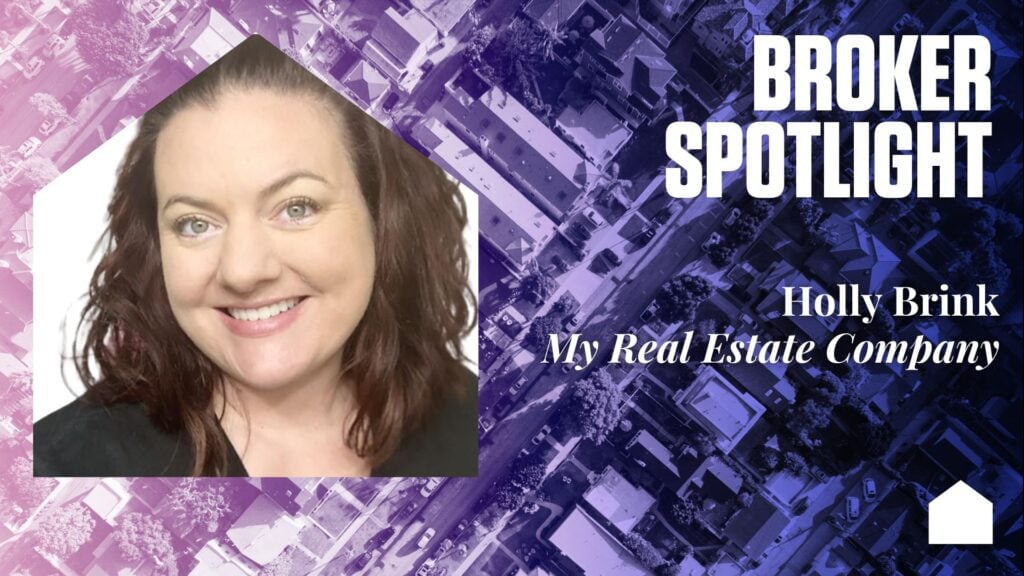
For co-founder and managing broker Holly Brink, innovation is an essential element in providing exceptional service to both clients and stakeholders. An innovator and systems architect at heart, she personally designed and launched her brokerage’s AI-powered agent assistant, MyCortex, and builds tech solutions like automated drip campaigns and Slack workflows to help her team “focus on people, not paperwork.”
“We’re relentlessly agent-first,” Brink said. “Every tool, process and perk is built to make agents more efficient and less stressed. We love pushing the tech envelope.”
The new woman-led, agent-driven brokerage with two founders — one a Marine Corps vet turned Realtor and a 15-year agent in her seventh year as managing broker — prides itself on the fact that “solutions come from lived experience and actual agent feedback.”
Find out how this broker across four states has launched and where she and her agents are headed as they embrace the future.
Name: Holly Brink Title: Co-founder and COO, managing broker Experience: Over 15 years in residential real estate, including six-plus years as managing broker at two national brokerages and two months steering operations at My Real Estate Company Location: Spencer, Iowa (managing broker in Iowa, Minnesota, Illinois and Nebraska) Brokerage name: My Real Estate Company Rankings: We just launched in March 2025 Team size: Currently 15 licensees across four states
How did you get your start in real estate?
I got my license in 2008 in Arizona to continue my career in property management. I fell in love with helping families find homes — and after moving to Iowa, discovered my true passion was mentoring and coaching agents. I also quickly realized that the real magic lies in building systems that let agents focus on that human connection.
What’s something you know now that you wish you knew when you started?
Automation and systems aren’t optional — they’re your sanity savers. And just as crucial: Track your clients and reach out regularly. Building genuine relationships is the real cornerstone of longevity in this business — something I didn’t fully grasp on Day 1.
Tell us about a high point in your brokerage career.
I’m living it right now. After six years as a managing broker with two national brands, I knew it was time to do things differently. In my first 30 days as COO at MyRECo, I led our switch to a mobile-first model — and 11 agents joined under that new vision almost immediately. That early traction showed that transparency, smart tech and an agent-first culture create unstoppable momentum.
What’s your top prediction for next year?
Agents who integrate AI assistants into their business will outpace peers by at least 20 percent in lead conversions — the tech is ready; it’s simply a race of who adapts fastest. I also predict email itself will feel as archaic as fax machines … though that evolution might take more than one year.
What’s your top tip for freshly licensed brokers?
Don’t chase every shiny lead — focus on mastering a handful of reliable sources (sphere, referrals, hyperlocal advertising). Pair that with rock-solid follow-up systems and genuine check-ins. Consistency and relationships will build your reputation far faster than sporadic big splashes.