by Matt Carter | Jun 12, 2025 | Industry, News Feed
The New York City-based REIT will pay $120 million in cash for national non-Qualified Mortgage lender HomeXpress Mortgage Corp., plus 2.08 million shares in Chimera valued at $27.9 million.
Bigger. Better. Bolder. Inman Connect is heading to San Diego. Join thousands of real estate pros, connect with the Inman Community, and gain insights from hundreds of leading minds shaping the industry. If you’re ready to grow your business and invest in yourself, this is where you need to be. Go BIG in San Diego!
HomeXpress Mortgage Corp., a national provider of non-QM mortgages that are popular with gig workers, is being acquired by a New York City-based Real Estate Investment Trust (REIT), the companies announced Thursday.
Chimera Investment Corporation will pay $120 million in cash for HomeXpress, plus 2.08 million shares in Chimera valued at $27.9 million at Wednesday’s closing price of $13.89.
HomeXpress President and CEO Kyle Walker and key members of his senior management team will continue to lead HomeXpress as a Chimera subsidiary.

Phillip Kardis
HomeXpress’ loan origination platform “is expected to create a powerful combination and enhance our enterprise value,” Chimera President and CEO Phillip Kardis said in a statement. “HomeXpress has an excellent management team with experienced origination professionals that have a long history of serving broker and correspondent partners across the U.S. ”
Chimera is in the business of acquiring, financing and securitizing non-Qualified Mortgages (non-QM) that don’t meet Fannie Mae and Freddie Mac’s strict underwriting and documentation requirements. Because of their more flexible income verification requirements, non-QM loans are popular with self-employed gig workers and others with non-traditional sources of income.
Combining HomeXpress’s origination capabilities with Chimera’s ability to manage, finance and securitize non-QM loans “will create a powerful platform that further anchors our position as a leader in the residential credit sector,” Chimera disclosed to investors in a deal summary.
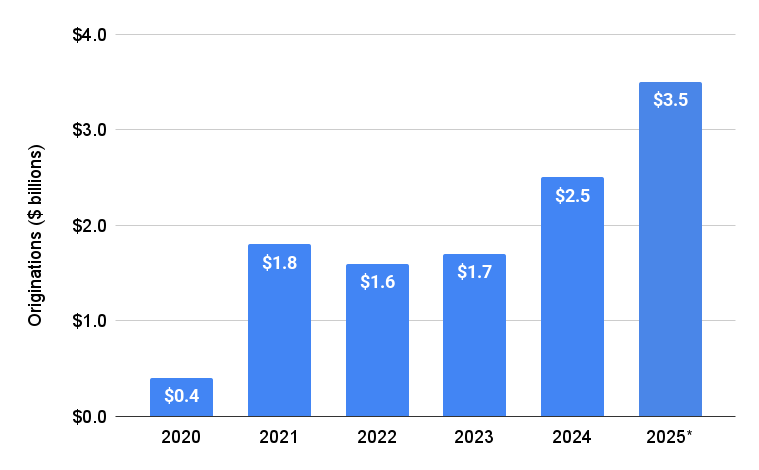
HomeXpress mortgage originations 2020-2024
HomeXpress mortgage originations (* 2025 projected). Source: Chimera Investment Corp. regulatory filing.
HomeXpress has originated $10.7 billion in loans since launching in 2016 and has always been profitable, generating $47 million in 2024 pre-tax earnings, Chimera disclosed.
Acquiring HomeXpress is “the next logical step in the evolution of the company” following last year’s acquisition of alternative asset manager Palisades Group for up to $50 million, the company said.
Santa Ana, California-based HomeXPress is licensed in 41 states and Washington, D.C., sponsoring 13 mortgage loan originators who work out of four branches, according to Nationwide Mortgage Licensing System records.
HomeXpress originated 5,982 mortgages last year, most of them (53 percent) refinancings, according to Home Mortgage Disclosure Act (HMDA) records analyzed by iEmergent.
HomeXpress 2024 loan originations by county
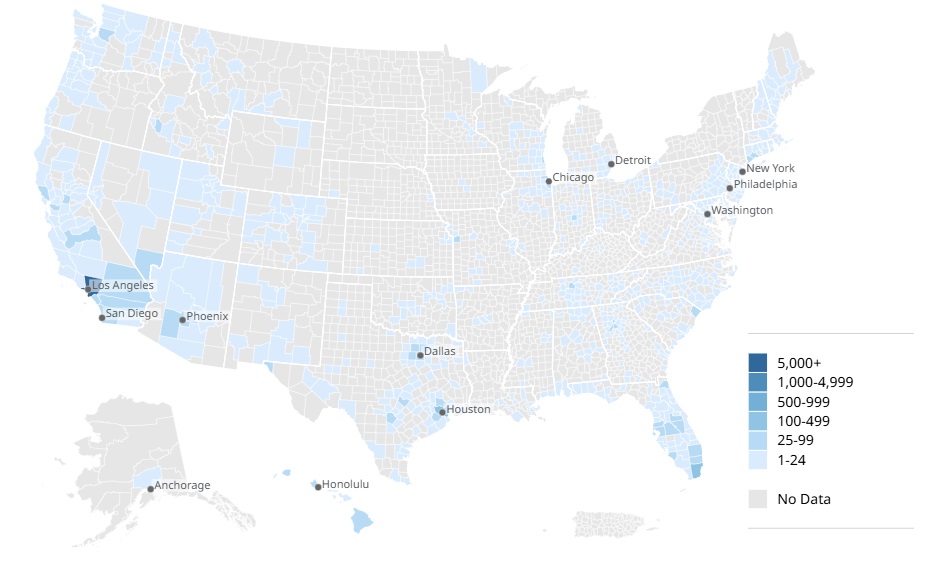
HomeXpress 2024 loan originations by county. Source: iEmergent.
Most of the company’s business tracked by HMDA was generated in three states — California ($623 million in originations), Florida ($412 million) and Texas ($280 million) — with other contributors including Arizona ($81 million), Washington ($66.6 million) and Nevada ($58.8 million).
As a Chimera subsidiary, HomeXpress will be positioned to expand its product offerings and grow strategically, Walker said.

Kyle Walker
“By combining platforms and assets, Chimera and HomeXpress are poised to deliver enhanced value to HomeXpress’ borrowers and further strengthen its relationships with its many business partners,” Walker said in a statement.
A&D Mortgage — which claims to be the nation’s biggest provider of non-QM mortgages — last month announced it had acquired loan servicer Mr. Cooper’s wholesale and non-delegated correspondent mortgage business.
The integration of Mr. Cooper’s third-party originations team provides A&D Mortgage’s partners with access to a suite of more than 20 mortgage programs, including agency, government, jumbo and non-QM, with enhanced operational efficiency and “industry-best turnaround times,” the company said in announcing the deal.
A&D Mortgage originated 8,369 loans in 2024 totalling $2.93 billion, and two-thirds of those loans were purchase loans taken out by homebuyers, according to iEmergent’s HMDA records.
“Broadly speaking, we like non-QM origination businesses because the returns can be high, and it thematically represents a growth zone of the mortgage market catering to non-traditional situations and self-employed borrowers,” BTIG analyst Eric Hagen said in a note to clients. “The risk is a disruption in credit markets and a widening of securitization spreads which leaves issuers and loan aggregators saddled with warehousing more interest rate and credit risk on their balance sheets.”
Hagen said Chimera’s expectation that HomeXpress could fund $3.5 billion in loans this year implies that the company might need to raise $200 million to $300 million in capital if it were to keep those loans on its balance sheet.
While BTIG is neutral on Chimera, the deal valuation casts other mortgage REITs with non-QM lending businesses in a favorable light, Hagen said. BTIG has a “buy” rating on Chimera competitors Angel Oak Mortgage REIT, Ellington Financial and Rithm Capital Corp.
Editor’s note: This story has been updated with insights from BTIG analyst Eric Hagen.
Get Inman’s Mortgage Brief Newsletter delivered right to your inbox. A weekly roundup of all the biggest news in the world of mortgages and closings delivered every Wednesday. Click here to subscribe.
Email Matt Carter
by Marian McPherson | Jun 12, 2025 | Industry, News Feed
The Senate confirmed Department of Housing and Urban Development Chief of Staff Andrew Hughes as the department’s deputy secretary. Hughes also worked under former Secretary Ben Carson.
Bigger. Better. Bolder. Inman Connect is heading to San Diego. Join thousands of real estate pros, connect with the Inman Community and gain insights from hundreds of leading minds shaping the industry. If you’re ready to grow your business and invest in yourself, this is where you need to be. Go BIG in San Diego!
Four months after securing his confirmation, Department of Housing and Urban Development Secretary Scott Turner finally has a deputy.
The Senate confirmed Andrew Hughes on Wednesday in a vote of 51-43, elevating the two-time HUD chief of staff to chief operating officer. In his role, Hughes will guide the department’s day-to-day operations.
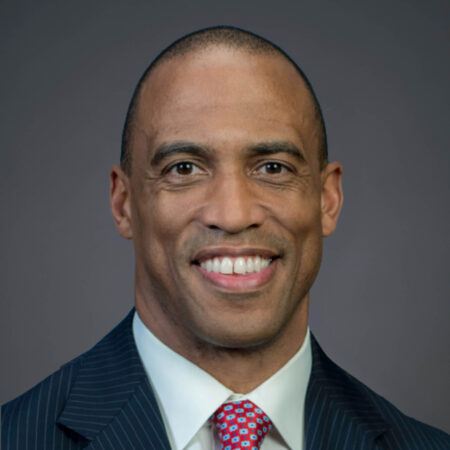
Scott Turner | Credit: America First Policy Institute
“Andrew Hughes is a servant leader and is the right person, at the right time, for this assignment to carry out HUD’s mission,” Turner said in a prepared statement. “I had the pleasure of serving alongside him during the first Trump administration and witnessed firsthand his leadership, wisdom, and love for this country.”
“We share a clear vision for HUD’s future, and it is truly a blessing to have him in this role,” he added. “He will serve the American people well.”
Before joining HUD under former Secretary Ben Carson, Hughes had no political experience. The now-deputy worked as a special projects coordinator for the University of Texas System and a part-time Uber driver. At UT, Hughes oversaw the university’s social media and websites, compiled press releases, planned university events, and researched funding opportunities and higher education legislation.
Hughes joined Carson’s 2016 presidential campaign team and transitioned to helping the Trump campaign when Carson dropped out of the presidential race. His work with Carson and Trump paid off, with Carson tapping Hughes to become his department liaison after taking the helm at HUD in 2017. After the end of President Trump’s first term, Hughes followed Carson to the conservative think tank, the American Cornerstone Institute.
Former HUD Secretary Ben Carson, Senate Banking Committee Chairman Senator Tim Scott and the Mortgage Bankers Association all backed Hughes’s confirmation, with MBA President and CEO Bob Broeksmit noting that the deputy’s prior experience “gives him a unique perspective on ways to improve HUD’s operations, including its programs to support affordable homeownership and rental housing opportunities.”

Andrew Hughes | Credit: HUD
“MBA congratulates Andrew Hughes on his confirmation to serve as HUD Deputy Secretary,” Broeksmit said in a prepared statement on Wednesday. “We look forward to continuing our important work with him, Secretary Turner, and HUD staff on policies and initiatives that lower single-family and multifamily financing costs and increase homeownership and rental housing opportunities for all Americans.”
Hughes thanked the Senate for confirming him, saying, “Serving at HUD is more than a job — it’s a calling.”
“I’m humbled to help lead an agency that expands opportunity for all communities — rural, tribal, and urban,” he added in a prepared statement. “Together, under the leadership of President Trump and Secretary Turner, we’re focused on ensuring more Americans can achieve not just housing, but the stability, self-sufficiency, and upward mobility that define the American Dream.”
Although Hughes fills a crucial spot, the Partnership for Public Service’s political appointee tracker reveals there are still several key roles at HUD that are vacant.
The Senate is awaiting nominations for the commissioner of the Federal Housing Administration (FHA), the president of Ginnie Mae, the HUD senior and general counsel and the HUD assistant secretary for public affairs. Hughes is still listed as HUD’s chief of staff, and it’s unknown whether he’ll take on a dual role or appoint a replacement.
Email Marian McPherson

by Jill Butler | Jun 12, 2025 | Industry, News Feed
CEO and founder Jill Butler offers insights to help you build something that reflects the heart of your company and provides the space for your agents to accomplish big things.
Bigger. Better. Bolder. Inman Connect is heading to San Diego. Join thousands of real estate pros, connect with the Inman Community, and gain insights from hundreds of leading minds shaping the industry. If you’re ready to grow your business and invest in yourself, this is where you need to be. Go BIG in San Diego!
Thirteen years ago, I started RedKey Realty Leaders in a single room at the Frontenac Hilton. It was modest — just a desk, a vision and a passion for reshaping what a real estate company could be.
Now, as we prepare to celebrate our 13th anniversary and the opening of our brand-new flagship office in Clayton, Missouri, I find myself reflecting on how far we’ve come — and what this move means not just for our team, but for our industry.
Relocating an office — especially your headquarters — is never just about square footage. It’s about values. It’s about culture. And if done right, it’s about vision.
I’m sharing a behind-the-scenes look at our journey to our new space in the hopes that it may inspire other brokers who are reimagining how their physical space can serve their people, their clients and their growth.
Why we moved
The decision to leave our long-time Frontenac, Missouri, location wasn’t taken lightly. That office held history. It was the first physical manifestation of RedKey’s heartbeat — filled with energy, creativity and big dreams.
But as we’ve grown, we realized that our flagship office needed to evolve. We weren’t just looking for a place to work; we needed a space that reflects who we are now and who we’re becoming.
In the post-pandemic real estate world, the purpose of a physical office has changed. It’s no longer about rows of desks and assigned seating. It’s about collaboration. Flexibility. A space that welcomes, inspires and supports a hybrid workforce. We wanted to create an environment where agents actually want to come in — not because they have to, but because the energy is magnetic and the support is tangible.
Finding the right space
When we began our search, we were clear about three things:
- We wanted to be closer to the core of St. Louis. Clayton offered a central, prestigious location that’s easily accessible.
- We needed a space that we could make our own, open to renovation and reinvention.
- It had to allow for future expansion; we’re not done growing.
We toured countless buildings, but when I walked into 1034 S. Brentwood Blvd, I saw potential. It didn’t look like RedKey, yet. But it had the bones: a mezzanine level, flexible layout and plenty of natural light. Most importantly, I could picture our agents thriving there.
Designing with purpose
Renovation began with a single question: What do our agents need to be at their best?
We brought in workplace designers who understood our culture and started from scratch. The result is a thoughtfully designed, modern space that still feels warm and inviting.
It includes:
- Two conference rooms for private client meetings and team trainings
- Access to the building’s gym
- A mix of open-desk areas and private offices to support different workstyles
- Places to socialize and comfortable lounges that encourage spontaneous collaboration
- A mezzanine level that adds vertical energy and a sense of discovery
We also created areas for quiet reflection and focus. Real estate is a high-energy business, and we all need moments to breathe, reset and recharge.
Culture comes first
One of the most important lessons I’ve learned over the years is that culture doesn’t just happen. You have to build it intentionally. And the physical environment plays a huge role.
At RedKey, our culture is built on love, service and fun. That means creating a space where people feel valued, where help is always available and where laughter echoes down the halls.
We made choices in the design process that reflect those values. For example, the kitchen is at the center of the office, not tucked away in the back, because we believe connection happens over coffee and casual conversation. Our training room is wired for hybrid events because we want every agent, regardless of office location, to feel included and empowered.
Lessons for other brokers
If you’re thinking about upgrading or relocating your office space, here are a few takeaways from our experience:
- Start with your people: Your agents aren’t just employees — they’re your brand ambassadors. Ask them what they need. What helps them thrive. What frustrates them. Their feedback will guide your decisions and ensure buy-in from the start.
- Think beyond today: Design for the company you want to be five years from now. Build in flexibility. Modular furniture, multiuse rooms and tech-friendly infrastructure will future-proof your space.
- Culture isn’t a luxury — it’s a strategy: Don’t underestimate the ROI of a positive workplace culture. At RedKey, we’ve been named a Top Workplace in St. Louis for multiple consecutive years, and I firmly believe that’s because we invest in our people, not just our processes.
- Make it feel like home: Real estate is personal. Our agents deal with families, hopes, dreams and major life transitions. Give them an environment that reflects that warmth, a place where they feel proud to bring clients.
- Celebrate the journey: Moving offices is a milestone worth honoring. Our open house on June 26 isn’t just a party — it’s a reminder of how far we’ve come and where we’re headed.
A new chapter begins
Standing in our new office, I’m filled with gratitude. Gratitude for the team that made this move possible, for the clients who trust us, and for the communities in and around St. Louis — our forever home.
This office isn’t just a building. It’s a symbol of our values, our ambition, our commitment to being a local, independent brokerage, and our belief in what’s possible when people are supported, seen and set up to succeed.
If you’re a broker wondering whether now is the time to rethink your space, I encourage you to do it. Build something that reflects the heart of your company. Give your people a space that fuels their success. You’ll be amazed at what unfolds.

by Amy Stockberger | Jun 12, 2025 | Industry, News Feed
AI will never replace the power of real connection, indie broker Amy Stockberger writes. But it can clear the clutter, remove the repetition, and give you back the time and energy to focus on what actually builds legacy.
Bigger. Better. Bolder. Inman Connect is heading to San Diego. Join thousands of real estate pros, connect with the Inman Community, and gain insights from hundreds of leading minds shaping the industry. If you’re ready to grow your business and invest in yourself, this is where you need to be. Go BIG in San Diego!
AI is reclaiming our time, enhancing our client experience and expanding our revenue streams. Our service-first model wasn’t negotiable, so instead of scaling back, we scaled smarter.
At our company, one of our core mottos is: “If you’re not using AI first, you’re being irresponsibly unproductive.” Our entire business is built on serving before, during and forever — clients, agents, staff and our local community. That mission wasn’t going anywhere.
I had zero interest in reducing the white-glove experience that built our reputation. So we made a power move. We invested in an AI consultant to help us automate 60 percent of our business operations without compromising service.
How we created systems using AI
We’ve systematized and streamlined everything, including:
- Transaction management
- Listing coordination
- Agent support
- Sales
- Marketing
- Accounting
- Core operations
That shift has already saved us thousands of hours and is on track to reclaim over $325,000 per year (a whopping 1000+ percent ROI) all while enhancing the human-to-human connection that drives our Lifetime Home Support model, and allows us to nurture and grow prospects into lifetime clients.
The AI assistants powering our ecosystem
We’ve built custom AI Assistants that act like specialized team members without the overhead. Each one removes friction, speeds up execution and protects our brand standard.
Here’s a small glimpse of what’s live inside our system:
- Local market stats assistant: Keeps agents informed about market shifts and helps them craft their weekly “Don’t Fire Me” calls with sellers, utilizing real-time pricing and positioning data.
- Contract verbiage assistant: Built with over 20 years of proven language that has helped me serve thousands of clients and avoid legal pitfalls.
- Contract compliance assistant: Ensures accuracy and consistency in file audits for our staff.
- Offer work-up assistant: Streamlines the process of prepping clean, professional offers.
- Listing assistant: Automates MLS data sheet completion to save time and prevent errors.
- Marketing director assistant: Equipped with strategies for social, YouTube and Google Business, including hooks, captions and digital playbooks.
- List-to-launch assistant: Determines the exact buyer avatar for each listing and builds targeted strategies to get the property in front of the right audience.
- Project-specific assistants: From onboarding vendors to launching our Home and Lifestyle Expo, a lead generation and revenue stream, we’ve built AI support around nearly every major initiative.
Every piece is designed to enhance human service, not replace it. This is essential to helping your team embrace AI and use it to level up, rather than check out.
SAMY: Our 1st 24/7 digital employee
Meet SAMY, our always-on, never-drops-the-ball digital employee currently in beta inside Microsoft Teams.
She is more than a support bot. SAMY is built with a comprehensive understanding of what our agents need to serve at the highest level.
She helps with:
- Real-time training and onboarding
- SOP retrieval and guidance
- On-demand roleplaying to sharpen skills
- Data pulls for transactions, marketing and prep
- Process support for every stage of the deal
- Direct links to tools, templates and resources
She functions like an elite mentor, systems expert and assistant coach all in one, available 24/7. SAMY is changing the game on how we support our agents, and she’s just the beginning.
What’s next on the roadmap
Next up is ACE, our Digital Admin Support Assistant.
While SAMY supports our agents, ACE is being developed to support the heartbeat of our company — our employees. He provides instant access to all SOPs, Looms and internal workflows in a way that is clear, consistent and immediately actionable.
ACE is a digital deskmate. He helps new hires get ramped up, supports daily execution and ensures operational consistency across the team.
With SAMY and ACE in place, every layer of our business — from client-facing to back-end ops — now has a system, a strategy and AI-powered support behind it.
3 non-negotiables for building in-house AI assistants
If you are building your own AI ecosystem in-house, these are the three non-negotiables we follow:
- It must enhance, not compromise, service: AI should never replace the human experience. Every assistant must make it faster, smarter or more consistent.
- It must integrate with existing systems: Don’t scrap what is working. Build AI on top of your current playbooks and frameworks.
- It must buy back time, not create complexity: Every AI tool should simplify and support, not distract or overwhelm.
This is not about playing with trendy tech. It is about future-proofing your business through intentional automation and systemization.
What this actually means
Our job — whether we’re solo agents or scaling companies — is to future-proof our businesses.
If you’re not leveraging AI at a high level, you’re not just falling behind. You’re creating gaps in your service, your speed and your scalability — and others who are using AI well are going to stand out in ways that matter to your clients.
That’s why we’re not just building for ourselves. We’re bringing others with us.
We’ve started running AI workshops for local small businesses to help them implement real, practical solutions. It’s also become a natural entry point to introduce them to our Home Support Team program — one of our key revenue and referral pillars.
I’m a firm believer that you should keep your business as SADD as possible — systematized, automated, delegated and deleted.
We’ve been using AI for over two years now, and while the results are already tangible, we know we’re just getting started. One thing AI will never do is replace the power of real connection. But it can clear the clutter, remove the repetition, and give you back the time and energy to focus on what actually builds legacy — relationships through authentic service.
Amy Stockberger is the founder of Amy Stockberger Real Estate. Connect with Amy on Instagram.

by Marian McPherson | Jun 12, 2025 | Industry, News Feed
The Zillow-owned portal appeared to shed listings Wednesday after the Fairness in Apartment Rental Expenses Act became law, but a spokesperson insisted daily fluctuations are common.
Bigger. Better. Bolder. Inman Connect is heading to San Diego. Join thousands of real estate pros, connect with the Inman Community and gain insights from hundreds of leading minds shaping the industry. If you’re ready to grow your business and invest in yourself, this is where you need to be. Go BIG in San Diego!
In the hours after the enforcement of New York City’s broker fee bill, the Fairness in Apartment Rental Expenses (FARE) Act, StreetEasy lost more than 1,000 rental listings.
The Real Deal began tracking StreetEasy’s NYC rental listing count at 3 p.m. EST on Tuesday. That afternoon, the Zillow-owned site boasted 13,383 listings, 9,136 of which were already no-fee. By 1:30 p.m. EST on Wednesday, when FARE, which requires property owners to cover broker fees for the agents they hire to list a unit, went into effect, the rental listing count had dropped to 12,160.
A StreetEasy spokesperson told TRD the listing drop shouldn’t be attributed to FARE, as this type of fluctuation is typical in New York City, where thousands of renters are signing leases in a given day.
In a conversation with Inman, the spokesperson added additional insight, saying that a day — or even a few weeks — of rental listing declines wouldn’t signal a FARE-induced market collapse, especially since most NYC rentals are already no-fee and renters are becoming more active in the summer. Some of the drop may also be attributed to property owners and brokers temporarily pulling listings to get in compliance with FARE, the spokesperson added.
The portal said it will continue to carefully track rental trends, and said early data shows that FARE hasn’t led to an extreme rise in rents.
“The average annual growth in asking rents of the properties that dropped a broker fee was 5.3 percent in April, only slightly above the 4.6 percent growth for the rest of the market in which broker fees remained in place,” a StreetEasy report read. “The FARE Act is unlikely to alter how property managers set asking rents based on market demand. Asking rents are primarily driven by market conditions, rather than solely by property managers’ costs.”
As of Thursday at 12 pm ET, the NYC rental listing count on the site has remained steady, with 12,175 listings.
Due to FARE, StreetEasy has removed the filter for no-fee apartments and added an alert that reads, “Under NYC law, you can’t be charged a broker fee if you didn’t hire a broker.”
Although FARE is officially NYC law, the fight over the controversial bill is far from over.
The Real Estate Board of New York’s (REBNY) lawsuit against the City to stop FARE’s enforcement is still in play, despite Southern District of New York judge Ronnie Abrams denying the association’s preliminary injunction request on Wednesday.
REBNY’s suit argues that FARE is “constitutionally defective” and preempted by New York state laws that protect commercial free speech and already regulate compensation for real estate brokers and salespeople. The lawsuit also claims the FARE Act violates the Contracts Clause of the U.S. Constitution since brokers and landlords can’t execute existing listing agreements that require brokers to negotiate and receive compensation from tenants.
“New Yorkers will soon realize the negative impacts of the FARE Act when listings become scarce and rents rise,” REBNY President Jim Whelan said on Wednesday. “We will continue to litigate this case as well as explore our avenues for appeal.”
As REBNY revs up for the next stage of its suit, Councilmember Chi Ossé, who authored FARE, used his X and Instagram accounts to remind renters about the bill’s enforcement and urge them to report any property owners who are violating FARE by recasting broker fees as “management fees” to the City’s Consumer Protection Law team.
“Know your rights so landlords + brokers can’t scam you – SPREAD THE WORD,” Ossé said.
Email Marian McPherson
by Richelle Hammiel | Jun 12, 2025 | Industry, News Feed
Since the NAR commission suit settlement, buyer agents have faced new rules, new documents and a new normal. This month, Inman drills down on Today’s Buyers Agent with the fresh marketing strategies, skills and tools buyer agents are using to prosper in changing times.
Purchasing a luxury home often comes with a hefty price tag, but in some U.S. metros, high-end living can still be surprisingly affordable. Location, design and luxury amenities can certainly drive up costs, but in seven major U.S. metros, buyers can still find luxury homes priced under $1 million.
According to a new report from Redfin, Detroit, Michigan; Cleveland, Ohio; Pittsburgh, Pennsylvania; Indianapolis, Indiana; St. Louis, Missouri; Cincinnati, Ohio; and San Antonio, Texas, currently offer this level of affordability.
While that’s encouraging news for buyers looking for upscale homes at lower price points, the list has shrunk drastically. Five years ago, 30 metros offered similar opportunities. Between 2013 and 2017, that number was even higher at 35. But by 2020, it had dropped to 30, and today, only seven remain in that category.

Sheharyar Bokhari | Redfin Senior Economist
“The Rust Belt’s relative affordability has preserved opportunities for luxury buyers that have all but disappeared in much of the country,” Redfin Senior Economist Sheharyar Bokhari said in Redfin’s report. “These metros haven’t seen as much explosive investor demand or speculative buying, which has helped keep prices grounded.
“Buyers can get historic charm, large lots, and upscale finishes — often in walkable, tree-lined neighborhoods — for a small fraction of what a similar home would cost in cities like San Francisco or New York.”
1. Detroit, Michigan

Canva: Detroit, Michigan
Detroit has undergone a major transformation in recent years. With revitalized neighborhoods and an influx of development, the city’s housing market is catching up, though prices are still low compared to coastal markets.
As of 2025, the median luxury home sale price in Detroit is $753,851, a $220,294 increase from 2020. Going back a full decade, the price has surged 81.2 percent between 2015 and 2025.
2. Cleveland, Ohio

Canva: Cleveland, Ohio
With a mix of classic architecture and access to a steady economy, Cleveland appeals to buyers seeking character without big-city price tags.
Cleveland’s median luxury home sale price currently sits at $757,046. That’s up from $531,461 in 2020 and $476,170 in 2015, a 59 percent increase over the past 10 years.
3. Pittsburgh, Pennsylvania

Canva: Pittsburgh, Pennsylvania
Pittsburgh has reinvented itself from a steel town to a center for healthcare, tech and education. That revitalization has extended to its housing market, where buyers still find high-end homes at more approachable prices.
The median luxury home price in Pittsburgh is $846,715 in 2025. That a 53.2 percent increase from $552,799 in 2015, and it’s up from 2020’s median price of $618,837.
4. Indianapolis, Indiana

Canva: Indianapolis, Indiana
Indianapolis’ affordability and quality of life make it a standout. The city offers strong schools and family-friendly neighborhoods at prices that remain relatively accessible.
In 2025, the metro’s median luxury home price is $914,276, up from $616,613 in 2020. In 2015, that number was $553,161, reflecting a 65.3 percent jump over the decade.
5. St. Louis, Missouri

Canva: St. Louis, Missouri
St. Louis offers Midwestern charm, a growing cultural scene and historic neighborhoods that continue to attract buyers.
Luxury homes here are priced at a median of $914,453 in 2025, nearly identical to Indianapolis. That’s up from $677,578 in 2020 and $602,076 in 2015, which is a more modest but still substantial 51.9 percent growth over the 10-year span.
6. Cincinnati, Ohio

Canva: Cincinnati, Ohio
Cincinnati has become a standout for luxury buyers in search of large homes and tree-lined streets at lower price points. Its strong job market and downtown area add to its appeal.
In 2025, the city’s median luxury home price is $931,145, the second highest on the list. That’s a 70.2 percent increase from 2015’s $547,238 and up from $600,709 just five years ago.
7. San Antonio, Texas

Canva: San Antonio, Texas
San Antonio is known for its rich culture and booming population. While it’s the priciest of the seven metros on this list, it still offers luxury homes under the million-dollar mark.
The median luxury sale price in 2025 is $957,854, up from $656,438 in 2020 and $567,799 in 2015. That’s a 68.7 percent increase over the past 10 years.
For perspective, the national median luxury home price in 2025 is $1,348,065 — up from $797,903 in 2020 and $717,004 in 2015. That’s an 88 percent jump over the past decade, highlighting just how rare these seven relatively affordable metros have become in today’s high-priced market.
Email Richelle Hammiel
