Why Schertz Station Matters for the San Antonio Metro
In a region where growth can feel nonstop, it takes a truly large, well-located project to move the needle. Schertz Station is shaping up to be that kind of San Antonio development—a master-planned, mixed-use real estate destination designed to blend housing, retail, dining, jobs, and community gathering spaces in one place.
For buyers, sellers, and investors across the northeast side of the metro, the conversation isn’t only about new rooftops. It’s also about how a major, coordinated district can shift demand patterns, add new amenities, and influence pricing—especially in high-traffic corridors that connect San Antonio to communities like Schertz, Cibolo, and Universal City.
This article breaks down what’s gaining momentum at Schertz Station, the scale of the plan, the types of businesses it’s designed to attract, what it may mean for schools and infrastructure, and how it could influence Texas commercial real estate activity and residential growth over the next several years.
Schertz Station at a Glance: Scale, Vision, and Location Advantages
Schertz Station is being positioned as a large-scale, mixed-use hub in Schertz—an area that has benefited from steady in-migration, commuter demand, and employer activity throughout the I-35 corridor. In practical terms, the project’s “station” branding signals a central gathering point: a place where people can live nearby, run errands, meet friends, and access services without driving across town for every trip.
Mixed-use projects work best when they connect three ingredients: convenient access, enough rooftops to support everyday retail, and an experience that feels cohesive (walkability, visible public spaces, and strong tenant mix). Schertz Station’s location near major roadways and established neighborhoods is one reason it’s drawing attention. For many residents, it sits in the sweet spot between San Antonio’s employment centers and the growing suburban ring to the northeast.
What “Mixed-Use” Really Means Here
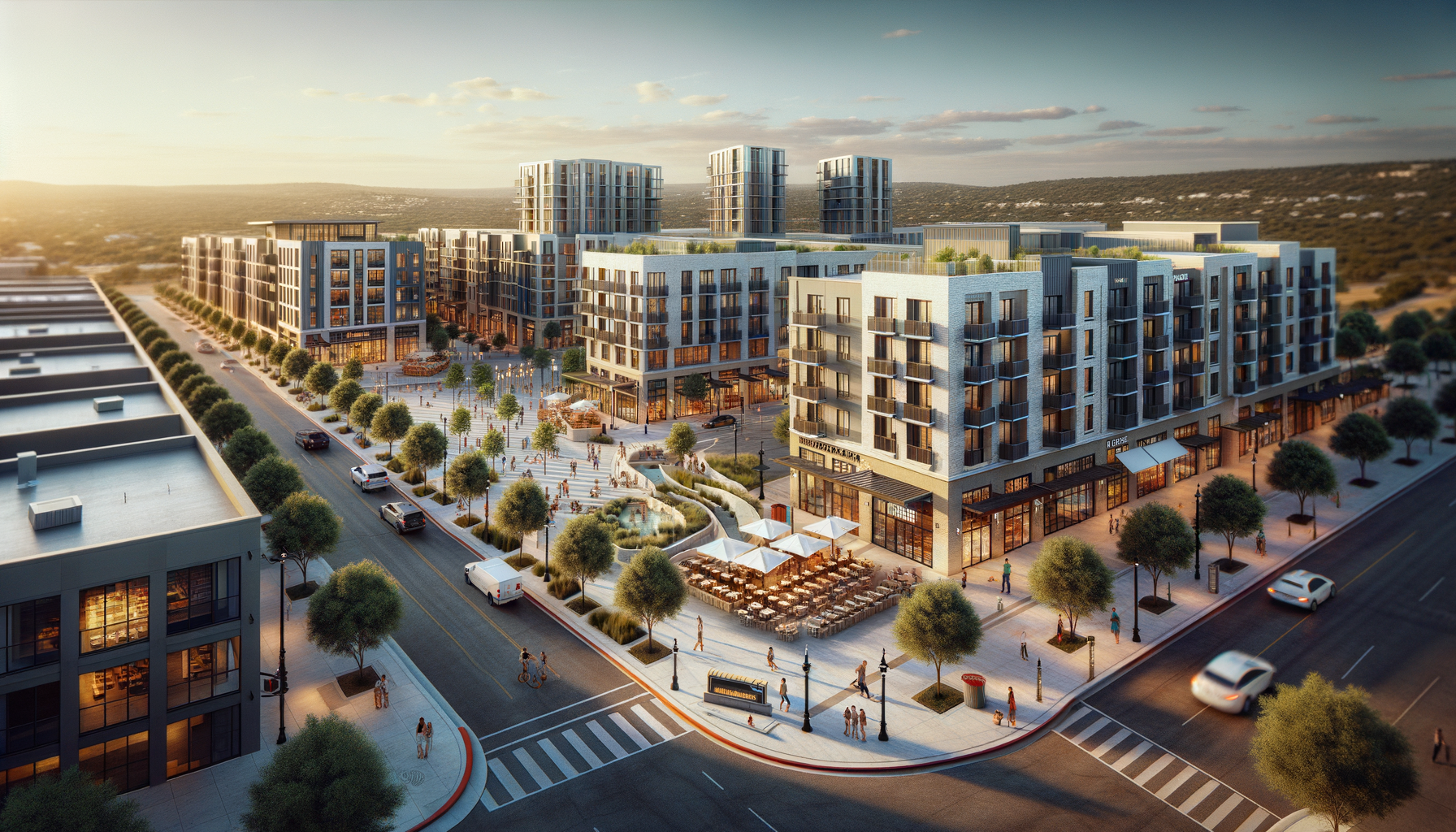
When people hear “mixed-use,” they often picture a few apartments over shops. Schertz Station is aiming for a broader version of mixed-use real estate—a district with multiple housing types, a meaningful commercial component, and public-facing spaces that support events, dining, and day-to-day services.
- Residential: A mix of housing options, with a focus on increasing supply to meet ongoing residential growth in the corridor.
- Retail and dining: Space designed for restaurants, neighborhood services, and destination concepts.
- Employment and services: Potential office, medical, or professional services that reduce the need for long commutes.
- Community spaces: Streetscapes, gathering areas, and event-ready public zones that help a district feel like a “place,” not just a project.
Momentum Signals: What “Gaining Momentum” Looks Like in Texas Development
In Texas, major projects rarely move in a straight line. Development typically advances through milestones—land planning, infrastructure coordination, phased vertical construction, and tenant commitments. “Momentum” can show up as grading and utilities work, permitting activity, marketing of commercial pads, and announcements tied to retailers, restaurants, or anchor users.
For Schertz Station, the buzz reflects increasing clarity around the site’s direction and a broader regional context: the San Antonio metro continues to attract residents seeking relative affordability compared with other big Texas cities, while employers and service providers follow rooftops. That combination can create a powerful feedback loop for well-placed mixed-use districts.
Why Timing Matters in the San Antonio-Area Cycle
Real estate is seasonal in Texas. Spring and early summer often bring the strongest buyer activity, while late fall and winter can slow foot traffic even when serious buyers are still out. For developers and commercial tenants, timing can also be influenced by financing conditions, construction costs, and lease negotiations that take months to finalize.
Schertz Station’s progress is also landing in a period when many households are balancing interest rates with lifestyle priorities. In plain language: buyers may be cautious, but they still want great locations and nearby amenities. A large San Antonio development that adds both housing and services can stand out because it offers convenience—something many buyers are willing to prioritize.
Expected Housing: What Residential Growth Could Look Like at Schertz Station
At the heart of most successful mixed-use districts is housing. Without enough residents nearby, retail and restaurants struggle outside peak hours. With enough rooftops, the area can support the kinds of everyday tenants people actually use—grocery-adjacent services, fitness, childcare, quick dining, and medical offices.
Schertz Station is expected to deliver a meaningful number of housing units over time as development phases roll out. While final totals can change as designs are refined, the working concept is a multi-phase community that adds new units in a way that supports commercial absorption rather than overwhelming the area all at once.
Housing Types Buyers May See in a Mixed-Use District
One reason mixed-use projects can help a region is that they often introduce more than one housing option. That matters in fast-growing suburbs where a single product type can leave gaps for downsizers, first-time buyers, or renters who want proximity to services.
- Multifamily apartments: Often the earliest phase because they deliver quick occupancy and support nearby retail.
- Townhomes or urban-style condos (where feasible): A bridge product for buyers who want ownership with lower maintenance.
- Single-family neighborhoods nearby: Even when not inside the main district, surrounding subdivisions often benefit from new amenities.
How New Units Can Affect Nearby Neighborhood Prices
It’s common to assume that new housing supply automatically pushes prices down. In reality, the effect depends on how fast demand is growing and what kind of housing is added. In high-demand corridors, new supply can help stabilize price acceleration—especially in entry-level and mid-range segments—while still supporting overall values due to improved amenities and convenience.
For homeowners near Schertz Station, the “value story” often comes down to quality-of-life improvements: better dining options, more services, and potentially shorter drives. For buyers, the story may be choice: more inventory types in an area that has been dominated by traditional subdivisions.
Businesses and Commercial Activity: Why Tenants Care About Schertz Station
The commercial side of Schertz Station is a key reason the project is getting attention beyond typical subdivision news. In Texas commercial real estate, tenants usually make decisions based on traffic counts, household density, income profiles, visibility, and ease of access. A master-planned district can package those variables in a way that’s attractive to both national brands and strong local operators.
In practical terms, expect the tenant mix to lean toward “daily needs” plus “experience”—a combination that performs well in suburban mixed-use environments.
What Types of Businesses Typically Anchor Mixed-Use Districts
- Restaurants and coffee: Both quick-service and sit-down concepts that benefit from lunch and evening traffic.
- Personal services: Hair, wellness, fitness, and boutique services that build repeat visits.
- Medical and professional offices: Clinics, dental, and specialty services that follow population growth.
- Retail support: Small-format shops and convenience-oriented tenants.
Green Flags for Long-Term Commercial Success
- Phased delivery: Commercial space comes online as rooftops and traffic grow, reducing vacancy risk.
- Strong access and circulation: Easy entries, clear signage, and safe internal traffic flow.
- Balanced tenant mix: Not over-reliant on one category (for example, only restaurants).
- Places to linger: Shade, sidewalks, patios, and event spaces that keep people on site longer.
Community Impact: Schools, Infrastructure, and Everyday Quality of Life
Large developments bring opportunity, but they also raise reasonable questions. Will roads keep up? What about schools? How will the area feel on weekends? These concerns are especially important in the San Antonio metro, where rapid suburban growth can strain infrastructure if timing gets out of sync.
Schertz and the broader northeast corridor have experience with growth, and the region’s planning conversations often focus on aligning transportation improvements with new rooftops and new commercial activity.
Infrastructure: The Unseen Work That Determines Success
Infrastructure isn’t glamorous, but it can make or break a project. Utilities, drainage, road capacity, turn lanes, and signal timing all influence whether a mixed-use district functions smoothly. In Texas, heavy rain events and heat also make drainage design and shade planning more than just “nice to have.”
For residents, the best sign of thoughtful infrastructure is simple: you can get in and out without headaches, and the place still feels pleasant when it’s busy.
Schools and Family Considerations
Families often decide where to buy based on school zones and commute patterns. If Schertz Station adds significant housing, it may increase enrollment pressure in nearby schools over time. For buyers, the smart move is to verify zoning, confirm any planned boundary changes, and understand how new development can affect class sizes and future campus needs.
Local Business Opportunities
Large mixed-use districts can also create openings for local entrepreneurs. While national tenants often lead early phases, successful centers typically add local operators once traffic is established. That can mean more unique dining, boutique services, and community events—features that help a place feel authentically “local” rather than interchangeable.
How Schertz Station Could Influence Regional Real Estate Investment
Investors pay attention to projects like Schertz Station because they can reshape micro-markets. When a district adds housing, retail, and services together, it can lift the profile of surrounding areas and reduce “amenity gaps” that previously kept renters and buyers looking elsewhere.
Importantly, this isn’t just a Schertz story. It’s part of a broader San Antonio development pattern: growth pushing outward along major corridors, with nodes of walkable or semi-walkable activity emerging in suburban cities.
Potential Winners: Property Types That Often Benefit
- Nearby single-family homes: Amenity improvements can increase desirability, especially for move-up buyers.
- Small multifamily and rentals: New retail and services can support rent resilience, depending on supply levels.
- Commercial pads and flex space: Service-oriented businesses often cluster near rooftops and high-visibility intersections.
- Land parcels: As a node develops, surrounding land can become more valuable for future infill.
What to Watch: Market Indicators That Matter in Texas
For anyone considering investment near Schertz Station, keep an eye on these practical indicators:
- Days on market and inventory: If inventory rises sharply, pricing power can soften in the short term.
- Lease-up pace for new apartments: Strong absorption suggests demand is keeping up with supply.
- Retail occupancy and tenant announcements: A stable tenant mix signals the district is becoming a true destination.
- Infrastructure timelines: Road improvements often correlate with smoother growth and better long-term performance.
Practical Guidance: Buying Near Schertz Station
If you’re considering a home purchase in or near Schertz Station, the goal is to balance upside with clear-eyed due diligence. New development can be exciting, but timelines shift and early phases can feel more “construction zone” than “finished lifestyle.”
Step-by-Step: How to Shop Smart Near a Major Mixed-Use Project
- Step 1: Get pre-approved, not just pre-qualified. A full pre-approval gives you clearer budget boundaries and strengthens your offer in competitive pockets of the northeast metro.
- Step 2: Map your commute at peak times. Test weekday mornings and late afternoons. Mixed-use districts can improve convenience, but growth can also add traffic before improvements are complete.
- Step 3: Review HOA and development plans. Ask what’s planned nearby, where future phases could go, and how that might affect noise, views, and access.
- Step 4: Inspect with the future in mind. Standard inspections matter, but also ask about drainage patterns, soil movement considerations typical in Texas, and any nearby construction impacts.
- Step 5: Evaluate resale factors. Homes near successful mixed-use nodes can be attractive later, but buyers will also care about school zones and traffic flow.
Common Buyer Mistakes (and How to Avoid Them)
- Assuming every promised amenity is guaranteed. Plans evolve. Focus on what is under construction or formally committed.
- Overlooking noise and light patterns. Proximity to dining and retail is convenient, but ask about delivery hours, patios, and event programming.
- Skipping a neighborhood comparison. Compare Schertz, Cibolo, Universal City, and northeast San Antonio options side-by-side to understand value per square foot and tax profiles.
Practical Guidance: Selling Near Schertz Station
If you own a home nearby, a growing mixed-use district can be a marketing advantage—if you position it correctly. Buyers respond to clear, concrete benefits: shorter errands, more dining options, and a neighborhood that feels like it’s improving rather than aging.
Step-by-Step: How to Market Your Home With Nearby Development in Mind
- Step 1: Price based on today’s comps, not tomorrow’s hype. Appraisers will rely on closed sales, so anchor expectations in current data.
- Step 2: Highlight convenience. In listing remarks and showings, describe drive times, nearby services, and lifestyle benefits in plain language.
- Step 3: Prepare for buyer questions. Be ready to discuss construction timelines, road access, and what phases are planned (without overpromising).
- Step 4: Stage for the target audience. Many buyers moving to the corridor want functional space: home office setups, clean storage, and low-maintenance yards.
Green Flags That Help Homes Sell Faster
- Documented updates: Roof age, HVAC service records, and energy-efficiency improvements.
- Move-in-ready condition: Neutral paint, clean landscaping, and repaired “little things” that buyers notice during showings.
- Clear value story: A crisp explanation of why the location works—especially for commuters and families.
Negotiations and Closing: What to Expect in This Part of the Metro
Negotiations in the San Antonio area often hinge on inspection results, seller concessions, and interest-rate driven affordability. Near active development, buyers may also ask for additional clarity on disclosures, boundary lines, and any planned easements.
Step-by-Step: A Simple Texas Closing Roadmap
- Step 1: Offer and option period. Buyers typically negotiate an option period to conduct inspections and further due diligence.
- Step 2: Inspection and repairs. Focus on major systems first (foundation signals, roof condition, HVAC performance), then negotiate repairs or credits.
- Step 3: Appraisal and underwriting. The lender confirms value and finalizes loan approval. Realistic pricing helps avoid surprises.
- Step 4: Title work and survey. Review restrictions, easements, and boundary details—especially important near developing areas.
- Step 5: Final walkthrough and closing. Confirm agreed repairs, verify condition, and sign closing documents.
Outlook: Scenarios for Schertz Station and the Northeast Corridor
No development comes with guarantees, but it’s reasonable to think in scenarios. If Schertz Station delivers housing in phases and secures a strong blend of retail, dining, and services, it could become a meaningful node that supports both quality of life and property demand across the northeast side.
In a slower scenario—where construction costs, financing conditions, or tenant timelines stretch out—the project may still progress, but buyers and investors should expect longer “in-between” periods when the area is improving but not yet fully formed. That’s common in large mixed-use real estate projects across Texas.
Either way, the direction is clear: the corridor is still experiencing residential growth, and well-planned districts tend to attract follow-on investment in Texas commercial real estate—from medical offices to service retail and small business expansion.
Bottom Line: A Regional Node in the Making
Schertz Station is more than a headline—it’s a sign of how the San Antonio metro is evolving. As suburban communities mature, the market increasingly rewards places that combine housing with daily conveniences and genuine gathering spaces. For residents, that can mean an easier routine and more local options. For investors, it can mean a new focal point that shifts demand and strengthens the case for nearby property improvements.
As the project advances, the smartest approach is to stay grounded: track tangible milestones, compare neighborhoods carefully, and make decisions based on today’s numbers while keeping an eye on how this major San Antonio development could reshape the area over time.