
by Micaela Gonzalez | Oct 18, 2026 | News Feed
The Hidden Cost of Being Always Available: Time Management Strategies for Texas Real Estate Agents
In Texas real estate, speed matters. When buyers are competing in Austin suburbs, sellers are timing weekend traffic in Dallas-Fort Worth, or a relocation client is landing in Houston on short notice, responsiveness can feel like the whole job. But being “always on” has a hidden price: fractured focus, missed high-value work, and creeping exhaustion that can turn a promising year into real estate agent burnout.
This article breaks down practical, Texas-specific time management for real estate agents who want to stay responsive without living on their phones. You’ll find realistic strategies for handling interruptions, unplanned showings, and paperwork, plus ways to communicate availability clearly while still delivering standout service.
Why constant availability hurts real estate agent productivity in Texas
Texas markets often run on momentum. Showings spike on weekends, lenders and title teams race to hit contract deadlines, and school calendars drive seasonal surges—especially in late spring and early summer. The result is a steady stream of pings, calls, and “Can we see it in 30 minutes?” requests that can easily take over your day.
The problem isn’t being responsive. The problem is letting every request become an immediate interruption. Real estate agent productivity suffers when your day becomes reactive: you switch tasks constantly, lose your planning window, and end up doing critical work late at night.
Common time drains that show up across Texas metros and smaller markets include:
- Unplanned showings that break your schedule into unusable fragments
- Constant client texting that forces rapid context switching
- Administrative responsibilities (listing input, forms, disclosures, option period documentation, repair negotiations)
- Vendor coordination for photos, staging, inspections, and repairs—often on tight timelines
- Offer management during peak weekend activity, when multiple parties expect instant updates
Over time, the cost shows up as missed prospecting, inconsistent follow-up, and weaker transaction oversight. Even worse, real estate work-life balance becomes a moving target, because there’s no true “off” switch—only quiet moments between notifications.
How to set boundaries with real estate clients without losing business
Setting boundaries with real estate clients isn’t about being less helpful. It’s about being more reliable. Clear expectations protect your focus and give clients confidence that you’re in control of the process—especially important for first-time buyers and out-of-state movers who may test availability because they’re anxious.
Use a “service promise” instead of 24/7 access
A strong boundary sounds like a commitment, not a rejection. For example: “I respond to messages same day and typically within two hours during business hours. If it’s urgent, call me.” This keeps you responsive while discouraging endless late-night texting.
Try a simple communication framework you can reuse in your buyer consult and listing presentation:
- Response windows: When clients can expect replies (and how fast)
- Urgent vs. non-urgent: What counts as urgent and how to reach you
- Showing planning: How much notice you need for weekday and weekend tours
- Weekend rules: How you handle Saturday/Sunday requests during peak Texas showing times
Realistic example: A Dallas buyer texts at 10:15 p.m. asking to see a home at 8:00 a.m. The boundary-based reply is: “I can line up showings for tomorrow. I’m back at 7:30 a.m. and will confirm availability then. If the home is time-sensitive, call me now and I’ll advise on the best move.” You’re still protecting the client—without training them that every late-night text gets instant action.
Build boundaries into your showing policies
Unplanned showings are one of the fastest ways to lose control of a real estate agent schedule. In many Texas markets, it’s reasonable to require a minimum notice window—then make exceptions intentionally rather than automatically.
Consider guidelines like:
- Weekdays: Same-day showings require a cut-off time (for example, requests before 2 p.m.)
- Weekends: Encourage clients to choose a planned block (e.g., 11–2) rather than scattered one-offs
- New listings: Offer a “priority showing block” for hot properties, but only after a quick qualifying call
This approach supports managing real estate clients professionally. It also reduces the hidden time tax: travel, reset time, and the mental load of constantly switching from negotiation to driving to paperwork.
What should go on your real estate agent schedule (and what shouldn’t)?
If you want real estate business efficiency, schedule the work that creates revenue and reduces risk first—then fit everything else around it. Many Texas Realtor career tips focus on lead generation, but the real breakthrough is treating your calendar like a business system, not a suggestion.
A helpful way to think about real estate workflow management is to divide your week into “focus blocks” and “service blocks.” Focus blocks move the business forward. Service blocks protect clients and transactions.
High-value activities to protect on your calendar:
- Lead generation and follow-up (daily)
- Client consults (buyers and sellers)
- Offer and negotiation time (especially Friday through Sunday in many Texas markets)
- Transaction review (catch issues early, reduce fires later)
- Marketing and listing prep (pricing work, photography coordination, listing copy)
Lower-value tasks to contain (not eliminate): social media scrolling, unstructured “check email,” and long text threads that could be a five-minute call. These are classic productivity tips for Realtors because they don’t look harmful in the moment, but they quietly consume prime working hours.
A Texas-friendly weekly rhythm that reflects real showing patterns
While every market is different, many Texas agents see peak showings Thursday through Sunday, with negotiations heating up Friday afternoon through Sunday evening. Use that reality instead of fighting it.
- Monday: Transaction admin, pipeline review, marketing refresh, vendor scheduling
- Tuesday–Wednesday: Prospecting, consults, listing prep, pricing and CMA work
- Thursday: Pre-weekend showing confirmations, client strategy calls, offer prep
- Friday–Sunday: Showings, open houses, negotiation blocks, rapid follow-up windows
This structure supports how to be a productive real estate agent without pretending weekends don’t exist. It also creates guardrails: if you know Friday night is a negotiation block, you can stop “stealing” time from your Monday admin work to handle issues that could wait.
Real estate business organization: systems that reduce interruptions
Most interruptions aren’t truly urgent—they’re symptoms of missing systems. Strong real estate business organization turns repetitive questions into repeatable processes, so you don’t have to reinvent the wheel for every client or listing.
Create templates for the questions you answer every week
In Texas transactions, clients commonly ask about option periods, earnest money timelines, survey questions, and inspection negotiations. If you type the same explanation repeatedly, that’s a signal to build a template.
Keep a simple library of:
- Option period overview (what it is, what happens during it, common deadlines)
- Offer submission checklist (docs needed, lender contact, key terms)
- Inspection response options (repairs vs. credits, what’s typical, how to prioritize)
- Showing etiquette and expectations (timing, feedback, decision process)
These templates support managing real estate clients at scale. They also improve consistency—an underrated part of real estate agent best practices, especially when you’re juggling multiple deals.
Use a daily “power hour” to prevent paperwork from taking over your life
Administrative responsibilities expand to fill the space you give them. A practical solution is a scheduled admin block where you process everything in one pass: email, forms, file notes, and task updates. This is one of the simplest productivity tips for Realtors, because it reduces the mental drag of unfinished micro-tasks.
A realistic daily workflow might look like:
- Morning (30–60 minutes): Review urgent messages, check showing requests, confirm top priorities
- Midday (30 minutes): Quick client updates, lender/title check-ins, schedule adjustments
- Late afternoon (45–60 minutes): Admin power hour—forms, disclosures, notes, follow-up tasks
When clients know you have predictable update windows, they feel supported even if you aren’t replying instantly to every non-urgent message.
Tech and workflow tools that improve real estate business efficiency (without feeling robotic)
Technology should make you more human, not less—by freeing time for relationships and problem-solving. The goal isn’t to automate care; it’s to automate repetition. For time management for real estate agents, the best tools are the ones that reduce back-and-forth and prevent details from falling through the cracks.
Here are practical ways agents across Texas use tech to protect their calendars while staying responsive:
- Appointment scheduling links: Let clients book consults or check-in calls inside your available windows, reducing endless text coordination.
- Saved email/text snippets: Quick, consistent responses for option period reminders, showing instructions, and document requests.
- CRM task plans: A “new lead,” “active buyer,” and “under contract” checklist that automatically generates your next steps.
- Transaction management checklists: Keep deadlines visible (especially around inspection/option timelines) so you’re not relying on memory.
- Shared showing plans: A simple itinerary (date, address, time, notes) shared with buyers, so day-of questions don’t derail you.
Realistic example: You’re working with a relocating family moving to San Antonio. Instead of a week of scattered texts, you send a scheduling link for a 15-minute “tour planning call,” then share a showing itinerary with a defined start and stop time. They feel guided, and you avoid the productivity drain of constant rescheduling.
Communicate availability in a way that reassures clients
Agents worry that boundaries will sound like poor service. In practice, clients mostly want clarity. A short message can protect your time and build trust at the same time:
“I’m in showings from 1–4 today, but I’ll check messages at 12:30 and again at 4:30. If you’re writing an offer or something is time-sensitive, call me and I’ll step out.”
This is one of the most effective Texas real estate agent tips because it matches what clients actually experience here: busy weekend schedules, fast-moving listings, and tight deadlines. You’re not unavailable—you’re organized.
Watch for early warning signs of real estate agent burnout
Burnout rarely arrives all at once. It shows up as short patience, constant catching up, and reduced attention to detail—dangerous in a contract-driven business. Protecting real estate work-life balance is also a client-service strategy, because the best advice comes from a clear head.
Common warning signs include:
- Regularly working past midnight to “finish admin”
- Dreading client messages instead of feeling ready to help
- Missing small deadlines or forgetting follow-ups
- Feeling like every request is an emergency
If you recognize these patterns, treat them as a business signal. Tighten your real estate agent schedule, raise your standards for what gets an immediate response, and rebuild your weekly rhythm around fewer, higher-quality commitments.
In Texas real estate, the agents who last aren’t the ones who are always available. They’re the ones who are consistently dependable. With clearer boundaries, smarter scheduling, and better real estate workflow management, you can deliver excellent service, improve real estate business efficiency, and still have a life outside the next notification.
by Micaela Gonzalez | Oct 16, 2026 | News Feed
Property Lines, Easements, and Surveys: What Texas Homebuyers Should Know Before Purchasing
When you’re buying a home in Texas, the house gets most of the attention—but the land it sits on can cause some of the biggest surprises. Texas property lines, recorded easements, and the type of survey you receive can affect everything from where you can build a fence to whether a neighbor can legally use part of your driveway.
This matters even more in today’s Texas market, where buyers may be moving quickly, relocating from out of state, or purchasing in newer suburbs where lots are tight. A clear understanding of property boundaries Texas and a smart approach to a property survey Texas can help you avoid expensive disputes, delays at closing, and stressful surprises after you move in.
What are Texas property lines, and why don’t they always match fences or landscaping?
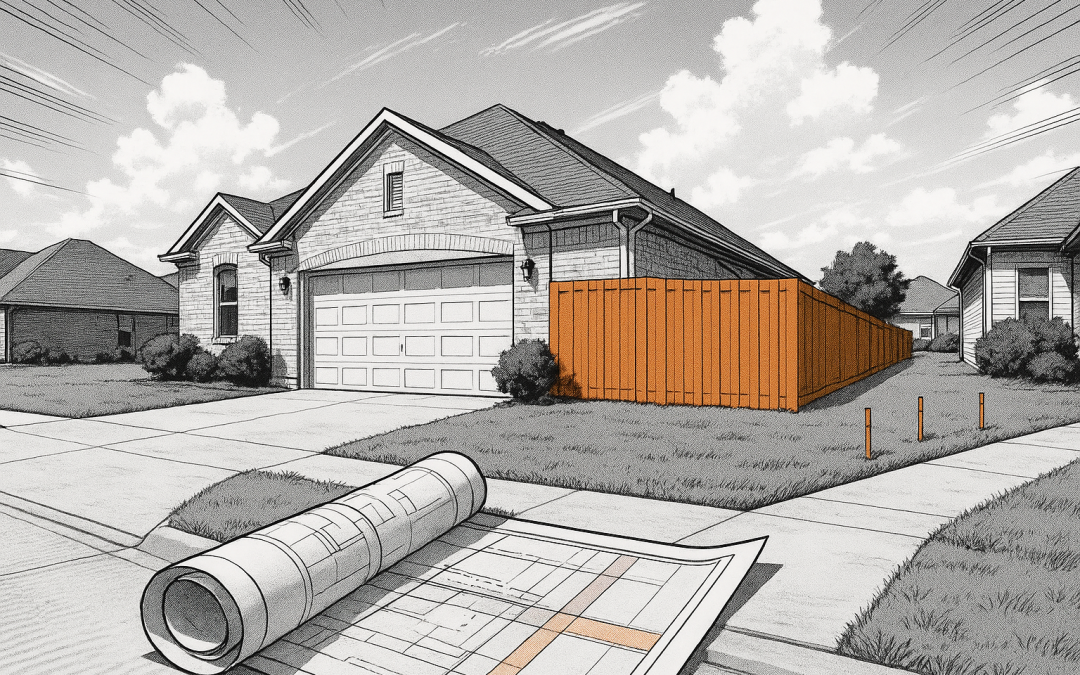
Texas property lines are the legal boundaries described in recorded documents—typically a subdivision plat and a metes-and-bounds or lot-and-block legal description. They’re not defined by what “looks like” the yard, where the grass changes, or where a fence happens to sit. In many neighborhoods, fences and landscaping are installed for convenience or aesthetics, not as a precise boundary marker.
This is one of the most common misconceptions first-time buyers have: “The fence is the property line.” In reality, a fence on property line Texas rules depend on what your survey and title documents say. A fence might be close to the boundary, but it can also be several inches—or several feet—off, especially on older properties or where multiple fence replacements happened over decades.
Common reasons the fence doesn’t match the legal boundary
In Texas, it’s normal to see small (and sometimes significant) differences between physical features and the legal boundary. Here are a few frequent causes:
- Fence installed inside the lot: Owners often set fences slightly inward to avoid disputes or to clear utility easements.
- “Follow-the-old-fence” replacements: A new fence gets built where the old one stood—even if the old one was off.
- Sloped lots, creek lines, or irregular shapes: In parts of Central Texas and the Hill Country, topography can lead to creative fence lines that don’t match recorded lines.
- Corner-lot confusion: Side-yard and street-side setbacks can make it unclear where the lot ends and the right-of-way begins.
- Landscaping as a visual boundary: Hedgerows, rock borders, and garden beds are often placed without a survey.
Another Texas homebuyer tip: don’t assume the curb, sidewalk, or a tree line marks your boundary. Street right-of-way can extend farther than you expect, and corner lots often have more complicated setbacks and easements that affect usable space.
What does a property survey in Texas show (and what can it reveal before closing)?
A property survey Texas buyers receive is a drawing prepared by a licensed Texas surveyor that maps boundary lines and key features. Texas real estate surveys can vary by type and detail, but the best surveys for buyers clearly show improvements (like the home, driveway, fences, patios) in relation to the lot lines and easements.
In a land survey when buying a house, you’re typically looking for three big things: whether improvements appear to cross boundary lines, whether there are encroachments from neighbors onto the property (or vice versa), and what recorded easements affect the lot. This is where a survey can save you from surprises, especially in fast-moving metro areas like Dallas-Fort Worth, Austin suburbs, Houston master-planned communities, and San Antonio’s rapidly growing edges.
Issues a Texas real estate survey can uncover
Before you get too far into buying a home in Texas, it helps to know what the survey might flag:
- Encroachments: A neighbor’s fence, shed, driveway, or even roof eave crossing the boundary.
- Setback problems: A patio cover, garage extension, or addition built too close to the lot line.
- Easement conflicts: A pool, fence, or tree planted inside a utility easement Texas property owners must keep accessible.
- Driveway location questions: Shared driveways or drive approaches that cross lot lines can point to an access easement Texas buyers need to review.
- Lot shape surprises: A “pie-shaped” cul-de-sac lot can have a narrower backyard than it looks from the street.
Buyers also ask if they can “use the seller’s old survey.” Sometimes you can, but it depends. If the survey is outdated, missing improvements, or the title company won’t accept it without an affidavit, you may need a new one. In some transactions, the title company survey Texas process involves the seller providing an existing survey plus a T-47 affidavit (a form stating no changes were made). Your agent and title team can guide you, but the key is this: the survey must match the current reality of the property.
Also remember: a survey is not the same thing as an appraisal or a home inspection. An appraisal supports value for the lender. An inspection evaluates condition. A survey focuses on property boundaries Texas and recorded restrictions or rights affecting the land.
How do easements in Texas real estate affect what you can do with a property?
Easements in Texas real estate are legal rights that allow someone else limited use of part of a property. The most common easements relate to utilities, drainage, and access. They typically “run with the land,” meaning they remain in place even when the property changes ownership.
Understanding property easements matters because an easement can limit where you can build, how you can landscape, and what you can fence. A yard that looks wide-open on a showing day may have a sizable easement area that must remain accessible or unobstructed.
Utility easements in Texas: the most common buyer surprise
Utility easements Texas homeowners encounter often run along the rear or side lot lines and allow utility companies access for power lines, cable, gas, water, or sewer. In many Texas subdivisions, rear-lot utility easements are standard—even if you never see workers back there.
Practically speaking, a utility easement doesn’t always mean “you can’t use that space,” but it can mean:
- You may be restricted from building permanent structures (like a garage, detached office, or room addition) within the easement.
- Fences may be allowed, but gates, locks, or certain materials might be discouraged if they block access.
- Landscaping can be risky—large trees planted over utility lines may later be removed or damaged during repairs.
- If the utility company needs access, they may enter the easement area and aren’t responsible for every aesthetic impact.
In areas like Houston (with significant drainage infrastructure) and North Texas (with dense utility corridors in newer developments), easements can be a major factor in backyard usability. A survey and title review help you see these clearly.
Access easements in Texas: driveways, shared roads, and “how do I get there?”
An access easement Texas buyers should pay special attention to is any easement granting the right to cross property to reach another parcel. You’ll see these more often with rural properties, Hill Country tracts, or homes on private roads outside city centers—but they also appear in suburban setups with shared driveways.
Access easements can be perfectly normal, but you want clarity on details like who maintains the driveway, who can use it, whether it’s exclusive or shared, and whether it allows utility installation in the same corridor. If a driveway crosses a boundary without a recorded easement, that can be a red flag worth addressing before closing.
Another often-overlooked category is drainage easements. In parts of Texas where heavy rains and flash flooding are real seasonal concerns, drainage easements may keep water flowing away from homes. Blocking or altering them can create neighbor conflicts—and sometimes city enforcement issues.
What are common property line disputes in Texas, and how can buyers avoid them?
Property line disputes Texas homeowners run into often start small: a fence built a little “over,” a neighbor parking on the edge of a lot, or a driveway that’s been used for years without anyone questioning it. Then a sale happens, a new owner wants to build a pool, or a fence is replaced—and suddenly everyone wants proof of where the line really is.
Texas is a property-rights-focused state, but outcomes still depend on recorded documents, survey evidence, and sometimes legal concepts like boundary agreements or claims based on long-term use. The important takeaway for buyers is simple: don’t wait until after closing to discover you have a boundary problem.
Fence, driveway, and neighbor issues to watch for during showings
As part of your Texas home buying guide mindset, keep an eye out for these situations and ask questions early:
- Fence lines that zig-zag or abruptly change direction: That can signal a past attempt to “split the difference” without a formal boundary agreement.
- A neighbor’s landscaping maintained on “your” side: It may indicate the practical use doesn’t match the legal line.
- Shared driveways without clear separation: Ask whether a recorded easement exists and how maintenance is handled.
- Sheds, garages, or carports close to the lot line: A survey can confirm whether there’s an encroachment.
- Corner lots with fences near sidewalks: The fence may be inside the property line to account for right-of-way or easements.
If the survey reveals an encroachment, it doesn’t always kill the deal—but it does change the conversation. Options might include negotiating repairs, obtaining an encroachment agreement, requesting a boundary agreement, adjusting price, or in some cases requiring the issue to be cured before closing. Your agent and title company can help coordinate next steps, but the earlier you identify the issue, the more options you have.
A practical Texas real estate tip: if you plan to add a pool, outdoor kitchen, or detached structure, pay even closer attention. Setbacks, easements, and boundary lines all affect where you can build. What feels like a “big backyard” can become much smaller once you factor in utility easements and required offsets from fences and the home.
What questions should Texas buyers ask their agent or title company about surveys and easements?
When you’re buying a home in Texas, your real estate agent can help you spot red flags, but your title company and survey documents usually provide the official map of what’s recorded. The goal is to confirm that what you think you’re buying matches what you’re legally buying—and to make sure easements and boundary issues won’t interfere with how you plan to use the property.
Here are practical questions—straightforward, buyer-friendly, and effective for getting clarity before closing.
- Will the seller provide an existing survey, and will the title company accept it? Ask if a T-47 affidavit is required and whether the survey is recent enough.
- If we need a new survey, what type of Texas real estate survey is appropriate? Confirm timing, cost, and how it fits the option period or closing timeline.
- Does the survey show any encroachments or boundary conflicts? Specifically ask about fences, driveways, patios, and roof overhangs.
- What easements are shown on the survey, and what do they allow? Focus on utility easements Texas properties commonly have, drainage easements, and any access easement Texas owners may be subject to.
- Are there restrictions on fences or gates within easement areas? This is especially relevant if you want a fully enclosed yard for pets.
- Is there a shared driveway or shared access, and is it documented? Ask for the recorded easement language and maintenance expectations.
- Does the title commitment list exceptions related to easements or boundary matters? This is where your title company survey Texas review can highlight what is and isn’t covered.
- What would trigger a property line dispute later? Ask your agent what they’ve seen locally in that neighborhood or subdivision—especially with older areas where fences have shifted over time.
One more Texas homebuyer tip: keep your future plans in mind. If you’re dreaming of a workshop, a larger driveway, a pool, or even just moving a fence, ask your agent to help you verify feasibility with the survey, HOA rules (if applicable), and any city setback requirements. Surveys and easements aren’t just paperwork—they shape how you’ll live on the property.
At the end of the day, the simplest way to protect yourself is to treat the survey and title review as essential parts of due diligence, not last-minute closing items. A clear view of Texas property lines, a solid property survey Texas buyers can rely on, and a plain-English understanding of easements in Texas real estate can help you close with confidence—and avoid unpleasant surprises after move-in.
by Micaela Gonzalez | Oct 11, 2026 | News Feed
The True Cost of Homeownership in Texas: Expenses Buyers Often Overlook
For many Texans, the mortgage payment is the headline number when buying a home in Texas—but it’s rarely the full story. The true cost of owning a home in Texas includes recurring bills and “surprise” expenses that can change your monthly budget, especially in today’s environment of shifting insurance pricing, rising service costs, and region-by-region property tax differences.
If you’re a first-time homebuyer Texas shoppers often focus on interest rates and down payments, then feel squeezed later by expenses beyond mortgage payments. This guide breaks down the most common Texas homeownership costs—from Texas property taxes to home maintenance costs—and offers practical Texas homebuyer tips for budgeting for homeownership with fewer surprises.
What are the biggest expenses beyond mortgage payments in Texas?
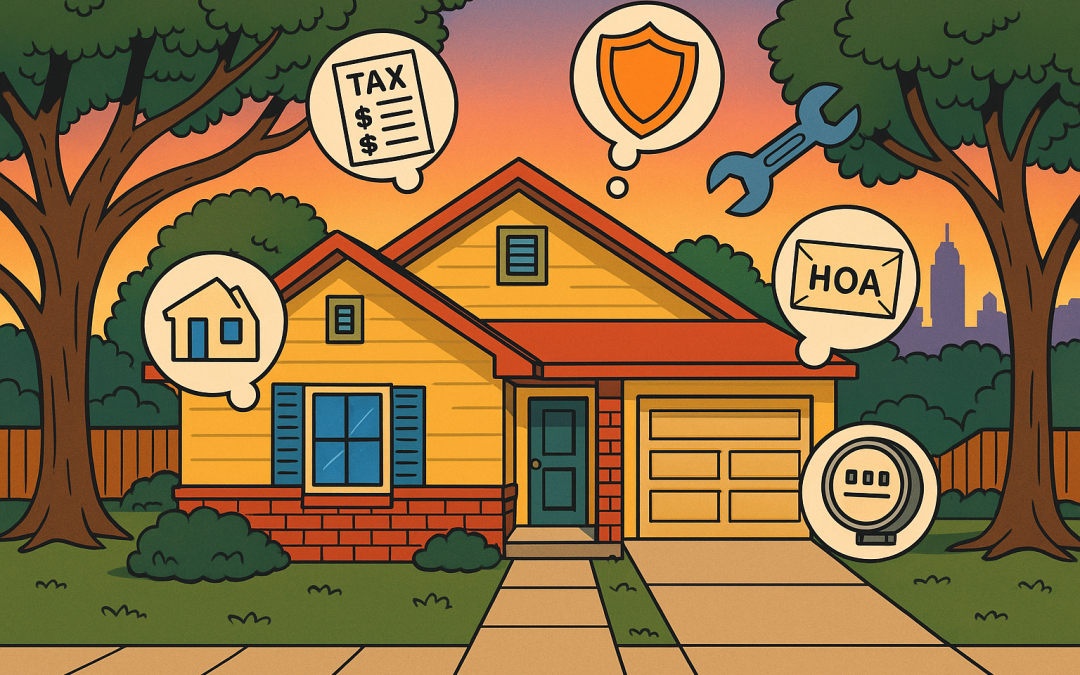
Think of homeownership as a bundle: principal and interest are only one piece. Your monthly expenses of owning a house can include escrowed costs (like taxes and insurance) plus “out-of-pocket” items such as utilities, maintenance, and HOA dues. Together, these are the hidden costs of homeownership that shape the real cost of living in a Texas home.
Here are the major categories most buyers should plan for:
- Texas property taxes (often the largest non-mortgage cost)
- Homeowners insurance Texas premiums and deductibles
- Utilities (electricity, water, gas, trash, internet)
- Home maintenance costs and routine upkeep
- Unexpected homeownership expenses (repairs and replacements)
- HOA fees (common in master-planned communities and many suburbs)
- Seasonal expenses (heat, hurricanes, hail, freezes, lawn care)
In Texas, these costs can vary dramatically by metro, school district, and even neighborhood. A newer home in a suburban MUD district outside Houston may have different tax components than a central Austin bungalow or a Dallas-area home in a high-demand ISD.
How do Texas property taxes affect the true cost of owning a home in Texas?
Texas property taxes are a core driver of Texas homeownership costs because Texas doesn’t have a state income tax, and local governments rely heavily on property tax revenue. In many areas, taxes can rival or exceed homeowners insurance as the largest “extra” cost, and they directly impact your monthly payment if escrowed.
Two homes with the same purchase price can have very different tax bills depending on:
- Tax rate (set by overlapping entities like city, county, school district, and special districts)
- Assessed value (which may change after a sale)
- Exemptions (especially the homestead exemption)
- New construction timing (taxes may jump when the full home value is assessed)
Common Texas property tax “gotchas” buyers should plan for
Post-purchase assessment changes: A home may be taxed based on a lower historical value until it sells. After closing, the appraisal district may reassess closer to market value, raising the next bill. This is one of the most common hidden costs of homeownership for new buyers.
New-build sticker shock: Builders sometimes advertise estimated taxes based on the lot or a partial year. Once the home is fully assessed, the tax bill can increase substantially—meaning your escrow payment may rise the following year.
Exemption timing: Your homestead exemption typically isn’t automatic. Missing the filing window can mean you pay more than necessary. It’s a simple step, but it’s a big part of smart budgeting for homeownership in Texas.
How much do homeowners insurance Texas policies and utilities really cost?
Homeowners insurance Texas costs depend heavily on geography and risk factors. Gulf Coast and hail-prone regions can see higher premiums due to windstorm, hurricane exposure, or frequent roof claims. Central and North Texas buyers may run into hail and wind considerations, while older homes statewide may need updated wiring, plumbing, or roofs to qualify for preferred rates.
Insurance isn’t just the premium. Deductibles—especially wind/hail deductibles—can create large out-of-pocket costs after a storm. That’s why insurance planning is central to the true cost of owning a home in Texas.
Utilities are the other major ongoing piece of the cost of living in a Texas home. Texas summers are long, and air conditioning can push electricity bills up significantly, especially in larger homes with high ceilings, older windows, or underperforming insulation.
Utilities that commonly affect the monthly expenses of owning a house include:
- Electricity: Often the biggest seasonal swing, especially in July–September
- Water and sewer: Can rise with irrigation and summer lawn care
- Natural gas: Heating and hot water (varies by region and home efficiency)
- Trash and recycling: Sometimes bundled with city services, sometimes separate
- Internet: Essential expense that varies by neighborhood options
Texas-specific note: in deregulated electricity markets (common in parts of North Texas and Houston-area service territories), plan choices and contract terms can change costs. If you’re moving from a regulated city utility area, the billing experience may feel different even when usage is similar.
What do home maintenance costs and unexpected homeownership expenses look like in Texas?
Home maintenance costs are not optional if you want to protect your home’s value. Texas weather can be tough on roofs, HVAC systems, foundations, and landscaping. The “small stuff” (filters, gutters, caulk, sprinkler heads) adds up, and the “big stuff” (roof replacement, HVAC replacement, plumbing leaks) can hit fast.
A helpful rule of thumb for homeownership budget Texas planning is to set aside a maintenance reserve every month. The exact number depends on the home’s age, materials, and condition, but many homeowners budget a percentage of the home’s value annually for maintenance and repairs. Older homes and homes with pools, extensive landscaping, or aging systems generally need a higher cushion.
Here are common unexpected homeownership expenses Texas buyers run into:
- HVAC repairs or replacement: High summer usage can shorten lifespan; tune-ups help
- Roof repairs: Hail and wind events are frequent in many regions
- Foundation or drainage work: Expansive clay soils in many Texas areas can cause movement if drainage is poor
- Plumbing issues: Aging supply lines, sewer line problems, or hidden leaks
- Tree trimming and storm cleanup: Especially after spring storms or hurricanes
- Pest control: Termites and other pests are a real ongoing concern in many markets
Season matters, too. Spring storm season often exposes roof and tree issues, and late summer can reveal HVAC weakness. In some parts of Texas, a winter hard freeze can create burst pipes or irrigation damage—an expense that tends to arrive suddenly and all at once.
If you’re buying an older home in neighborhoods like Houston’s Oak Forest, Dallas’s Lake Highlands, Fort Worth’s Arlington Heights, or San Antonio’s Alamo Heights area, it’s smart to look closely at system ages and prior updates. The inspection report is important, but so is budgeting for what the inspector flags as “end of life soon.”
How do HOA fees and seasonal expenses change the monthly expenses of owning a house?
HOAs are common in many Texas communities, especially suburban and master-planned areas around Katy, Cypress, Frisco, McKinney, Round Rock, Pflugerville, and parts of the Hill Country. HOA fees can be modest or significant, and they’re part of the real expenses beyond mortgage payments that affect affordability.
What HOA fees may cover varies widely. Some include neighborhood amenities like pools and parks, while others may include limited exterior maintenance for townhomes or condos. Always review the fee schedule and what’s included so you understand the true cost of owning a home in Texas in that community.
Seasonal expenses are another overlooked category of Texas homeownership costs. Texas weather drives periodic spending that isn’t monthly but still predictable over the year:
- Summer: Higher electric bills, lawn irrigation, HVAC servicing
- Spring: Storm prep, gutter cleaning, roof inspections after hail/wind
- Fall: Tree trimming, sealing gaps, prepping sprinkler systems (where applicable)
- Winter: Pipe insulation, freeze prep, occasional heating spikes
If you’re near the Gulf Coast, also plan for hurricane preparedness and potential insurance complexities. In hail-prone corridors from North Texas through parts of Central Texas, a roof fund (and understanding your deductible) is a practical form of budgeting for homeownership.
Texas homebuyer tips: How to build a realistic homeownership budget before you buy
A strong homeownership budget Texas plan starts before you make an offer. Getting pre-approved is important, but pre-approval alone doesn’t guarantee comfort. Lenders qualify you based on debt-to-income ratios; your personal budget needs to account for the full cost of living in a Texas home and your lifestyle priorities.
Use these Texas real estate tips to reduce the risk of payment shock:
- Request a full payment estimate: Ask your lender for a breakdown that includes principal, interest, estimated taxes, insurance, and HOA to better estimate monthly expenses of owning a house.
- Stress-test your budget: Model your payment with higher taxes or insurance than the initial estimate, especially if the home recently sold for much more than prior years.
- Verify property taxes carefully: Ask what exemptions are currently applied and whether the tax estimate reflects full market value. This is crucial for buying a home in Texas without surprises.
- Shop insurance early: Get quotes during the option period if possible. For older roofs or older systems, ask whether upgrades could lower premiums.
- Build a maintenance reserve: Treat maintenance like a bill you pay yourself every month. This is the simplest way to prepare for unexpected homeownership expenses.
- Read HOA documents, not just the fee: Look for special assessments, upcoming capital projects, and restrictions that could affect your plans.
- Consider efficiency and condition, not just price: A slightly higher-priced home with a newer roof and HVAC can be cheaper over time than a bargain home with deferred maintenance.
For a first-time homebuyer Texas residents, it also helps to plan for “move-in costs” that aren’t part of closing: changing locks, window coverings, basic tools, lawn equipment, and initial repairs. These one-time items can feel like hidden costs of homeownership when they hit right after you get the keys.
Finally, remember that costs vary by age, size, location, and condition. A newer home in a growing suburb may bring higher tax rates or HOA fees but fewer early repairs. An older home closer to job centers might reduce commute costs but increase ongoing maintenance. The best strategy is to compare homes using the same all-in monthly number—not just the list price or mortgage payment—so you truly understand Texas homeownership costs before committing.
by Micaela Gonzalez | Oct 2, 2026 | News Feed
Buying an Older Home in Texas: What to Look for Beyond the Charm
From shaded porches in the Heights to bungalows in North Oak Cliff and historic cottages near downtown San Antonio, older homes Texas buyers love often stand out for their craftsmanship, mature trees, and character you can’t always find in newer subdivisions. But when you’re buying an older home in Texas, the “cute” details should be the starting point—not the final decision.
Texas weather and soil can be tough on houses over time. Heat, humidity, hail, and expansive clay soils mean an older property may need more careful evaluation of its structure and systems than its curb appeal suggests. This Texas home buying guide walks through what to look for when buying an older house so you can move forward confidently, budget realistically, and avoid surprises after closing.
What should you check first when buying an older home in Texas?
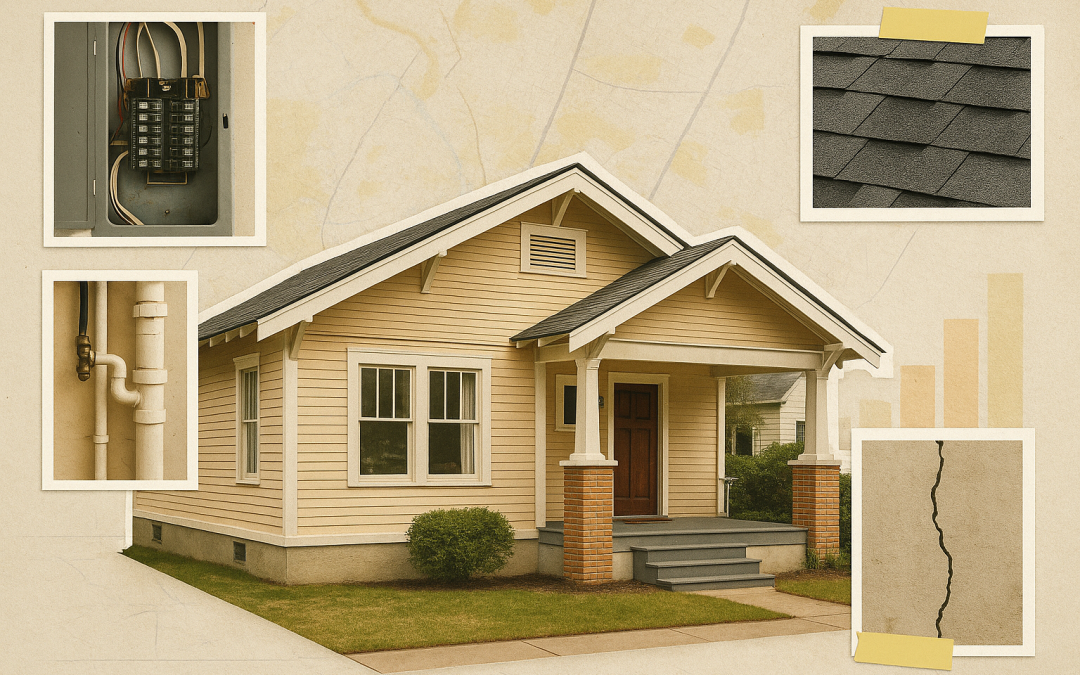
If you’re buying a house in Texas that’s 30, 50, or 100+ years old, start by focusing on the “big-ticket” items: foundation, roof, electrical, plumbing, HVAC, and insulation. These are the parts of the home that can turn a charming deal into an expensive project—especially if multiple systems are near the end of their lifespan.
A helpful rule of thumb for Texas homebuyer tips: don’t assume cosmetic updates mean the important parts were updated too. Fresh paint and new countertops may be paired with aging wiring, older supply lines, or a roof that’s close to replacement.
Foundation and structure: the Texas-specific reality
Texas foundation problems are one of the most common concerns in older neighborhoods across Houston, Dallas-Fort Worth, Austin, and parts of Central Texas. Expansive clay soils swell when wet and shrink when dry, and our seasonal swing—from spring rains to hot, dry summers—can stress foundations year after year.
What to look for when buying an older house: doors that stick, cracks that reappear after repair, sloping floors, gaps around windows, and separated trim can be clues that movement has occurred. Not every crack is a crisis, but patterns matter, and a Texas home inspection should note red flags and recommend further evaluation when needed.
Roof age and storm history
Roof condition is especially important in Texas because hail and high winds can shorten a roof’s useful life. Ask for the approximate age, the shingle type, and whether there’s been recent storm damage or insurance claims. Even if the roof “looks fine,” it may be near the end of its service life based on age alone.
Also pay attention to attic signs: staining, daylight coming through, and soft decking are all concerns. If you’re planning on renovating an older home, a roof replacement can impact the timing and cost of everything else, from insulation to electrical work in the attic.
How do electrical, plumbing, and HVAC issues show up in older homes Texas buyers tour?
Systems are where older homes can differ the most from modern builds. Some historic homes Texas buyers consider have been meticulously updated behind the walls. Others still have patchwork improvements done over decades. Either way, understanding the home’s “infrastructure” is essential to safe living and predictable costs.
Old house electrical systems: safety and capacity matter
Old house electrical systems may not match the demands of today’s lifestyle—think multiple TVs, computers, EV chargers, and larger HVAC loads. In older Texas homes, you might see a mix of newer and older wiring types, older panels, or circuits that were added over time.
During a Texas home inspection, common findings include:
- Outdated or undersized electrical panels that may need upgrading
- Improper DIY additions (splices, overloaded circuits, unsafe junctions)
- Limited grounded outlets or inconsistent wiring practices across the home
- Older fixtures or exterior connections that aren’t weather-protected
Important note for home inspection tips for buyers: a standard home inspection is a great screening tool, but if the inspector flags concerns, you may want a licensed electrician to provide a deeper evaluation and a repair estimate. This helps you negotiate clearly and budget accurately.
Plumbing in older homes: supply lines, drains, and water pressure
Plumbing in older homes can be perfectly functional—or it can be nearing a major update, depending on what’s been replaced. In Texas, hard water in many areas can contribute to mineral buildup, and older supply lines and drain systems may have had decades of wear.
What to look for when buying an older house includes water pressure consistency, slow drains, signs of prior leaks under sinks, staining near ceilings, or cabinetry damage. Ask what materials are present for supply lines and drain lines, and whether the home has had any repiping work. If the home has a pier-and-beam foundation, access may make certain repairs easier; if it’s slab-on-grade, plumbing repairs can be more disruptive.
HVAC and insulation: comfort in the Texas heat
Texas summers are where older homes either prove their quality—or reveal their weak points. HVAC age and maintenance history are critical because replacement can be one of the biggest expenses after closing. But don’t stop at the unit itself; ductwork condition, airflow, and return placement also matter for comfort and efficiency.
Insulation is another common gap in older homes Texas buyers fall for. Many older properties have less attic insulation than what’s typical today, and some have older windows or unsealed penetrations that allow hot air in and conditioned air out. If the home is drafty or struggles to cool in summer, you’ll likely see it in utility bills and daily comfort.
What paperwork and clues reveal how an older home has been maintained?
When buying an older home in Texas, the story of the house is often spread across permits, disclosures, repair receipts, and visible craftsmanship. A well-maintained older home usually leaves a paper trail—and consistent details that match the owner’s claims.
Start by asking for documentation on major replacements (roof, HVAC, water heater, foundation work, plumbing updates, electrical panel changes). If sellers don’t have paperwork, that doesn’t automatically mean the work wasn’t done, but it should encourage a closer look and more detailed questions.
Renovations: quality matters more than style
Renovating an older home is common in popular Texas neighborhoods, but not all renovations are equal. A gorgeous kitchen can hide older plumbing in walls or outdated wiring nearby. Likewise, “open concept” changes may involve structural modifications that should be supported correctly.
Green flags include consistent finishes, professional-grade work, and evidence of licensed trades when major systems were touched. Red flags include uneven floors after remodels, mismatched materials, visible shortcuts, or renovations that seem to ignore moisture management (especially around tubs, showers, and exterior doors).
In historic homes Texas buyers consider—like properties in Galveston’s historic districts, older parts of San Antonio, or established Dallas and Houston neighborhoods—there may be additional considerations related to preserving character. Even when there aren’t formal restrictions, specialty materials and craftsmanship can cost more to repair or replicate.
Moisture, drainage, and trees: small issues that become big ones
Maintenance history shows up in how the property handles water. In many Texas cities, sudden downpours test drainage fast. Look at the slope of the yard, gutter condition, downspout placement, and signs of standing water. Water management is closely tied to long-term foundation performance, especially where soils expand and contract.
Mature trees are part of the charm in many older neighborhoods, but they can influence foundations and underground plumbing. You don’t need to fear trees, but you should evaluate how close large trees are to the home, whether roots have affected walkways, and whether plumbing has had past root intrusion.
How do inspections and insurance work when buying a house in Texas that’s older?
A thorough Texas home inspection is your main tool for understanding the home beyond the charm. It also helps you decide which issues are safety concerns, which are normal age-related wear, and which are budget items you can plan over time.
Most buyers benefit from scheduling the inspection early in the option period so there’s time to get follow-up specialists if needed. This is one of the most practical Texas real estate tips: use the inspection to gather facts and estimates, not just to generate a punch list.
Texas home inspection focus areas for older homes
Here are home inspection tips for buyers that matter most with older properties:
- Ask about system ages (roof, HVAC, water heater) and request approximate install dates if known.
- Review electrical safety, including panel condition, grounding, GFCI placement in wet areas, and any questionable DIY work.
- Check plumbing performance by running multiple fixtures, flushing toilets, and looking under sinks for prior leak repairs.
- Evaluate the attic for insulation depth, ventilation, signs of leaks, and past fire or pest issues.
- Look for movement indicators and ask whether a structural engineer is recommended when foundation concerns appear.
Depending on the home and region, buyers may also consider additional inspections such as sewer scope, pool inspection, chimney/fireplace evaluation, or pest/termite checks. Older homes are more likely to have a mix of past repairs, so verifying key areas can be money well spent.
Insurance considerations for older homes in Texas
Insurance is another area where age can matter. Some insurers look closely at roof age, electrical updates, plumbing material, and prior claims history. In storm-prone regions—like the Gulf Coast and hail-impacted North Texas—roof condition can heavily influence premiums and deductibles.
Texas homebuyer tips: request insurance quotes earlier than you think you need them, especially if the home is significantly older or has unique features. If the property has an older roof, older wiring, or older plumbing, you may need to document upgrades or plan improvements to meet underwriting requirements. Also ask how the policy treats replacement cost versus actual cash value for roofs, since that can affect out-of-pocket costs after a claim.
Are older homes in Texas worth it? Advantages, trade-offs, and smart next steps
For many buyers, the answer is yes—older homes Texas buyers pursue can offer location, lot size, architectural character, and established community feel that’s hard to replicate. In many metro areas, older neighborhoods also place you closer to job centers, dining, parks, and cultural hubs than newer outer-ring developments.
Still, the trade-off is that older home maintenance tends to be more hands-on. Even well-cared-for homes may need ongoing updates over time, and your first year of ownership might include projects you didn’t expect if you don’t plan carefully.
Advantages that often come with buying an older home in Texas include:
- More mature landscaping and shade, which can improve outdoor enjoyment and comfort
- Distinct architecture and materials that may be difficult or expensive to reproduce today
- Established neighborhoods with community identity and long-term market demand
- Potential value-add if you renovate thoughtfully and address systems strategically
The best approach is balanced: appreciate the charm, but validate the fundamentals. If your inspection results show manageable issues and the home’s major systems have a realistic path forward, an older home can be a smart long-term purchase.
As you move through the process, remember that buying a house in Texas is as much about planning as it is about preference. A clear budget for repairs, a prioritized maintenance plan, and a careful review of inspection findings can turn an older home from a gamble into a confident decision—and a place you’ll love living in.

by Micaela Gonzalez | Sep 28, 2026 | News Feed
Managing Client Expectations: A Critical Skill for Texas Real Estate Agents
In today’s Texas housing market, managing expectations isn’t just a “soft skill”—it’s a core part of real estate transaction management. From Dallas-Fort Worth’s fast-moving suburbs to Austin’s price-sensitive buyers and Houston’s neighborhood-by-neighborhood variability, clients are walking in with headlines, social media advice, and strong opinions about what “should” happen. The agents who thrive are the ones who translate market reality into clear, confident guidance.
Done well, managing client expectations real estate-style reduces stress, limits misunderstandings, and protects your time. It also upgrades the real estate client experience, because clients feel informed and supported even when deals hit speed bumps. Think of this as one of the most reliable successful real estate agent habits: set the frame early, communicate consistently, and handle hard moments with calm professionalism.
Why managing client expectations matters in Texas real estate right now
Texas is big, diverse, and highly local. That means clients can’t rely on one-size-fits-all assumptions about pricing, timelines, negotiations, or repairs. A buyer relocating from California may expect aggressive over-asking bidding everywhere, while a move-up seller in San Antonio might assume their home will sell in a weekend because it did in 2021. Your job is to anchor decisions to the current, hyperlocal data—without sounding dismissive.
Seasonality also plays a major role in setting expectations with real estate clients. Spring is often the most active period in many Texas metros, while mid-summer brings heat, vacations, and appraisal/repair bottlenecks. The holiday stretch can slow showings and underwriting timelines, and severe weather—hail in North Texas, Gulf storms near Houston, or Central Texas flooding—can disrupt inspections, insurance, and closings with little warning.
In a practical sense, expectations management is one of the most bankable professional real estate agent skills for a long-term Texas real estate career. Clients may not remember every form you prepared, but they will remember whether you prepared them for what was coming.
How to set realistic expectations from the first consultation
The best time to manage expectations is before the client emotionally commits to an outcome. Your first buyer consult or listing appointment should establish how you’ll communicate, what decisions belong to the client versus the agent, and what the likely “friction points” are in a Texas transaction. This is where strong real estate agent communication skills quietly prevent future conflict.
Start with a “process map,” not a sales pitch
Clients relax when they can visualize the road ahead. A simple, plain-language walkthrough—search or prep, offer, option period, financing, appraisal, title, closing—signals competence and builds client trust in real estate. For Texas agents, it’s especially helpful to explain the option period in everyday terms: it’s a paid window to investigate the property and negotiate repairs or credits, not a guarantee that the seller will agree.
Keep it conversational, but be specific about typical timing ranges in your market. In DFW, for example, a well-priced home can still move quickly, but lender and title timelines may not match the pace of the offer. In Austin, buyers may have more leverage than they did a few years ago, but desirable areas and turnkey homes can remain competitive.
- Communication expectations: When you respond, how you deliver updates, and what you need from them to keep things moving.
- Decision expectations: You provide analysis and strategy; they make the final call.
- Reality checks: Pricing ranges, negotiation levers, and what “good condition” really means in Texas construction norms.
Set boundaries that protect your time and improve results
Clear boundaries are not cold—they’re a service. Explain when you preview homes, how quickly you can write offers, and how you handle after-hours requests. Clients often test responsiveness early; if you set a standard, you prevent burnout and reduce the chance of rushed mistakes in contracts.
One of the best Texas real estate agent tips is to define “urgent.” An expiring offer or inspection deadline is urgent. A “what do you think of this house?” text at 11:30 p.m. usually isn’t. When clients know the difference, they trust your structure and feel cared for rather than ignored.
Real estate client communication: pricing, timelines, and market reality
Most difficult real estate clients aren’t truly difficult—they’re anxious, surprised, or attached to an assumption. Pricing and timing are where assumptions show up first. Communicating with buyers and sellers means translating data into a story they can understand and act on.
Pricing conversations: use ranges, not absolutes
Instead of promising a single “perfect” number, talk in ranges and scenarios. For sellers, frame pricing as a strategy: the list price influences the buyer pool, days on market, and negotiation leverage. For buyers, frame it as risk management: what happens if you offer too low (lose the home) or too high (appraisal and cash gap risk).
Texas markets can shift within the same metro. A Houston buyer looking in The Heights may face different dynamics than someone shopping in Katy. A DFW seller in Frisco may experience different demand than a seller a few miles away depending on school zones, inventory, and builder competition. Use that hyperlocal nuance to make your guidance feel grounded, not generic.
- Green flag: You show comps and explain why they’re comparable (condition, updates, lot, location, concessions).
- Red flag: You “sell the number” without discussing appraisal risk, concessions, or days-on-market trends.
Timeline conversations: plan for “Texas delays”
Timelines in Texas are often derailed by perfectly normal events: inspection findings that require specialist bids, lender conditions that pop up late, survey issues, or insurance changes driven by claim history and roof age. In many parts of Texas, insurance has become a bigger wild card than clients expect, especially on older roofs or in hail-prone zones.
Build a habit of communicating timeline buffers. If the contract allows seven days for the option period, encourage decisions by day five. If the lender says they need 21 days, assume 24 and plan accordingly. These are real estate agent best practices that keep closings on track without overpromising.
Texas Realtor tips often focus on speed. Just as important is cadence: a predictable weekly update (even when nothing changes) reduces anxiety and prevents clients from filling silence with worst-case assumptions.
Negotiations, inspections, and the option period: preventing surprises
Negotiation is where emotion spikes, and expectations can swing wildly between “we have all the power” and “we’re being taken advantage of.” Your role is to steady the room. Successful negotiation communication is less about being aggressive and more about being clear, timely, and evidence-based.
Set a negotiation framework before the first offer
With buyers, clarify what matters most: price, closing date, repairs, rate buydown, or seller-paid closing costs. With sellers, clarify acceptable concessions in advance so they’re not making high-stress decisions under a response deadline. This approach improves real estate transaction management because you’re not inventing strategy mid-crisis.
Remind clients that negotiation outcomes in Texas often hinge on property condition and financing type. Cash offers can reduce appraisal risk. FHA/VA financing can come with different appraisal and repair considerations. None of these are “bad”—they just change the conversation, and you should prepare the client for that from the start.
Inspections in Texas: normalize findings and focus on leverage
Nearly every inspection report looks scary to a first-time reader. One of the most valuable real estate agent communication skills is translating inspection language into priorities: safety, major systems, structural concerns, and water-related issues. In Texas, pay special attention to foundation movement indicators, drainage patterns, roof condition after storms, and HVAC performance in extreme heat.
Help clients separate “maintenance” from “material defect.” A missing GFCI outlet or a cracked switch plate is usually not the same as a roof at end-of-life or a foundation issue requiring engineering review. When you frame the report this way, clients make better decisions and feel less overwhelmed.
- Good expectation to set: Sellers rarely agree to fix everything; the goal is reasonable resolution on meaningful items.
- Good practice: Ask for credits or targeted repairs tied to licensed bids when possible, not vague demands.
- Common mistake: Letting inspection negotiations drift past deadlines and losing leverage.
When you anticipate inspection friction, you reduce the odds of a deal falling apart over small items. That directly improves the real estate client experience for both sides.
Financing, appraisal, and closing: communicating through setbacks and tough calls
Even well-qualified clients can be surprised by financing and appraisal. Your job is not to replace the lender or title company, but to make the process feel coordinated and predictable. Proactive real estate client communication here is often what clients remember most—especially when something goes sideways.
Financing expectations: pre-approval isn’t the finish line
Set the expectation that underwriting can request documents late, and that job changes, new debt, large bank deposits, and missed paperwork can delay closing. This is particularly important with self-employed buyers, commissioned income, or complex assets—common profiles in Texas markets with strong small business and energy-sector ties.
A practical habit: ask the lender what their “common last-minute conditions” are for that buyer profile, and share a simplified version with the client. This is one of those successful real estate agent habits that feels like white-glove service without adding much work.
Appraisal expectations: prepare clients for outcomes, not just hopes
In shifting markets, appraisal gaps can happen—especially if the offer is driven by emotion or a unique feature that comps don’t reflect well. Explain the three basic paths if an appraisal comes in low: renegotiate price, bring cash, or dispute/seek reconsideration (where appropriate). Framing these options early turns a potential meltdown into a manageable decision.
For listings, reduce appraisal risk by keeping a clean upgrade list, permits when applicable, and a packet of comparable sales and improvements ready for the appraiser. That’s real estate agent best practices in action and a strong example of building client trust in real estate.
Handling difficult conversations professionally (without losing the relationship)
Every agent eventually faces difficult real estate clients or simply difficult moments: a seller who insists on an unrealistic price, a buyer who wants to “lowball” repeatedly, or a client who blames you for lender delays. The goal isn’t to “win” the conversation—it’s to protect the transaction and keep your standards.
Use calm, direct language that separates facts from feelings. Lead with what you know, what you don’t know yet, and what you recommend next. Then document the plan in writing. This reduces misunderstandings and creates a paper trail without sounding threatening.
- Phrase that helps: “Here are the options I can support, and the risks attached to each.”
- Boundary that helps: “I’m happy to negotiate hard, but I won’t misrepresent facts or pressure the other party unethically.”
- Reset that helps: “Let’s come back to your top two priorities and make the next decision based on those.”
In Texas, where referral networks run deep and reputations travel fast within brokerages and communities, professionalism during friction is part of your brand. It’s also a hallmark of professional real estate agent skills that experienced clients and relocation buyers notice immediately.
Ultimately, setting expectations with real estate clients is not about lowering excitement—it’s about replacing uncertainty with clarity. When you communicate early, often, and honestly, you protect your client, your contract deadlines, and your own longevity in a Texas real estate career.
