
by Drew Thompson | Jun 4, 2025 | Industry, News Feed
You are your business’s most important asset. Don’t you deserve an upgrade? Drew Thompson shares educational and inspirational resources that will give you the boost you need now.
Bigger. Better. Bolder. Inman Connect is heading to San Diego. Join thousands of real estate pros, connect with the Inman Community, and gain insights from hundreds of leading minds shaping the industry. If you’re ready to grow your business and invest in yourself, this is where you need to be. Go BIG in San Diego!
If you’re reading this, you’re not just an agent; you’re an entrepreneur. You know that the old ways of doing business are dying, and the agents who treat their practice like a high-growth startup are the ones who will dominate the second half of 2025.
Forget collecting designations like they’re Pokémon cards. We’re talking about strategic investments in skills and systems that deliver tangible ROI.
The most successful agents I know operate like founders, not freelancers. They’re obsessed with leverage, they stack specialized training on top of AI, and they execute faster than the market can even think about copying them
This isn’t just another list of courses. This is your playbook. I want you to vet these 25 accelerators the same way a venture capitalist vets a startup: find the one that solves your biggest constraint right now, schedule it and get back to building.
We’ve broken these down into five critical foundational skills — the leverage points you need to exploit if you want to scale, not just sell.
Theme 1: AI-driven marketing and client acquisition: Your pipeline on autopilot
Your growth in 2025 will scale at the speed of your algorithms. If you’re not leveraging AI in your marketing and lead gen, you’re already behind. These accelerators will help you build a client acquisition machine that runs 24/7.
| # |
Accelerator |
Quick Win |
| 1 |
Revii AI + “AI for Social Media” Playbook (Tom Ferry) |
Deploy pre-built AI agents to auto-draft posts, DM prospects and roleplay scripts — lead gen runs while you sleep |
| 2 |
HubSpot Academy “AI for Marketers” |
Blend first-party CRM data with generative AI to send hyper-personal emails in minutes, not hours |
| 3 |
Jason Pantana’s “AI Content Multiplier” Framework |
Master AI to strategically transform one core video or blog post into a month’s worth of targeted social media updates, email snippets and short-form video ideas |
| 4 |
Canva Magic Studio Webinar Series |
Turn listings into scroll-stopping Reels and carousels with one prompt and zero designers |
| 5 |
Copy.ai “Real Estate Listing Description Generator” Tool & Training |
Utilize Copy.ai’s dedicated real estate templates and guided tutorials to craft compelling, SEO-friendly listing descriptions and ad variations in minutes |
Execute now. Don’t wait.
Information without implementation is just entertainment. Here’s your action plan for when you finish this article:
- Pick TWO accelerators from this list that solve your single biggest bottleneck right now. Not five, not 10. Two.
- Block the first session on your calendar within the next 24 hours.
- Share your key takeaways and action items with your team (or a peer) by the end of this week.
Theme 2: Strategic business architecture and scalability: Systems beat hustle
Hustle gets you started. Systems get you scale. If you’re still the bottleneck in your own business, it’s time to architect for growth. These programs are about building a business that can run (and grow) without your constant intervention.
| # |
Accelerator |
Quick Win |
| 6 |
Sharran Srivatsaa’s 4-Week MBA |
Twenty 10-minute micro-lessons that hand you the frameworks Sharan used to 4× Inc. 500 his own companies |
| 7 |
Boomtown Master Class Series |
Automate lead routing, score follow-ups and hold your team accountable inside one AI-powered CRM |
| 8 |
Amy Porterfield’s Digital Course Academy |
Package your expertise into a digital product that earns while you list and show |
| 9 |
AgentFire “Scalable Real Estate Business Plan 2025” |
Swipe a one-page template that bakes tech, targets and tracking into your yearly roadmap |
| 10 |
Canva for Sales “Create Better, Close Faster” |
Lift winning slide decks and proposal templates straight from CRO playbooks |
Theme 3: Elevated client engagement and personal branding: Conversations convert, brand compounds
In a world of AI and automation, genuine human connection and a powerful personal brand are your ultimate differentiators. These accelerators focus on mastering the art of conversation and building a brand that attracts, not just chases.
| # |
Accelerator |
Quick Win |
| 11 |
Jeremy Miner’s NEPQ Sales Mastery Summit |
Swap old-school pitch scripts for question-led selling that gets prospects to close themselves |
| 12 |
Phil M. Jones “Exactly What to Say” for Agents |
Plug 30 magic phrases into listing calls and watch objections melt |
| 13 |
List Builders Society (Amy Porterfield) |
Build an owned email list — your highest-margin channel — in weeks, not years |
| 14 |
Personal Branding for Agents (TrainingCred) |
Craft a narrative that pre-handles “Why you?” before the first handshake |
| 15 |
Homebot Client-Nurture Platform |
Monthly AI-driven equity digests keep past clients hooked and trigger repeat listings on autopilot |
Theme 4: Financial acumen and wealth creation: Speak the language of investors
Stop talking about curb appeal and start talking cap rates. The best agents understand the numbers, guide investors with confidence and build their own wealth through real estate.
| # |
Accelerator |
Quick Win |
| 16 |
Columbia ExecEd Real Estate Investing Program |
Master income-property valuation so you can guide investors — and become one |
| 17 |
CFI Commercial Real Estate Finance Specialization |
Build lender-grade models that stand up in any credit committee |
| 18 |
Wharton × Wall Street Prep Real Estate Certificate |
Add Ivy League credibility plus Wall Street rigor to your bio |
| 19 |
BiggerPockets Deal-Analysis Podcast (select episodes) |
Weekly dissection of live deals to sharpen your underwriting instincts |
| 20 |
CFI CRE Case-Study Labs |
Hands-on mortgage and cash-flow labs you can copy-paste into client presentations |
Theme 5: Future-proofing mindset and innovation: Upgrade the operator — you
Your business can only grow to the extent that you do. Investing in your mindset, your leadership and your ability to innovate is non-negotiable. These are about upgrading the most important asset in your business: you.
| # |
Accelerator |
Quick Win |
| 21 |
Sharan Srivatsaa’s “Business School” Podcast + VIP |
Real-time growth frameworks direct from a four-time Inc. 500 builder |
| 22 |
Brendon Burchard Certified High Performance Coach Program |
Install the habits top CEOs use to sustain energy, clarity and execution |
| 23 |
Chris Voss MasterClass on Negotiation |
Apply hostage-negotiation tactics to price drops, appraisal gaps and commission pushes |
| 24 |
Marketing AI Show (Paul Roetzer) |
Stay ahead of the AI curve — one 30-minute episode at a time |
| 25 |
On Purpose with Jay Shetty (Podcast) |
Cultivate mindfulness and purpose to fuel your drive and resilience |
The market rewards speed and specificity.
Choose.
Commit.
Implement.
Drew Thompson is the head of agent performance and head coach at Real. Connect with him on Instagram and LinkedIn.
by Verl Workman | Jun 4, 2025 | Industry, News Feed
Since the NAR commission suit settlement, buyer agents have faced new rules, new documents and a new normal. This month, Inman drills down on Today’s Buyers Agent with the fresh marketing strategies, skills and tools buyer agents are using to prosper in changing times.
The real estate industry thrives on talent, but identifying the next top-producing agent isn’t as simple as scanning resumes. The best agents aren’t just those with prior real estate experience — they’re individuals with an innate ability to connect, persuade and solve problems.
While traditional hiring pools may yield solid candidates, thinking outside the box — way outside — can lead you to discover exceptional talent where you least expect it.
I’ve identified what I refer to as the 12 pillars of recruiting. From developing an agent referral program to new licensees to co-op agents, I’ve discovered that all of them work. Agent attraction is an active, not passive, pursuit. I’ve learned that the inability to identify, attract and bring in great talent is more related to a lack of activity than what is going on in the market.
Pillar Four is “Always be recruiting.” Wherever you are, you should have the mindset of always recruiting. This pillar focuses on people who are not currently in real estate.
You may encounter a restaurant server, for example, who displays exceptional customer service, someone who is a natural with people and genuinely cares about their job and your satisfaction. Learn to identify exceptional individuals and, along with giving them a great tip, you can offer them a great opportunity that may be life-changing to that person.
The DNA of a top producer
Before exploring where to find your next superstar agent, it’s important to understand what makes a top-producing agent in the first place. I often say that great agents aren’t recruited, they’re developed. So recognizing great people is the first step.
These individuals possess exceptional people skills, resilience and an entrepreneurial spirit. They excel at selling, negotiating and managing their time effectively. They are self-motivated, persuasive and relentless in their pursuit of success.
With these qualities in mind, let’s examine some unconventional places where you might meet your next top agent.
High-end retail stores
Luxury retail employees, particularly those working in high-end boutiques, jewelry stores and car dealerships, have a natural ability to cater to discerning clients. They master the art of relationship-building, customer service and handling high-ticket transactions.
If someone can sell a $50,000 watch or a $100,000 luxury vehicle, imagine what they could achieve in real estate. These professionals already know how to listen, build trust and close deals — making them prime candidates for a career transition.
The fitness industry
Personal trainers and fitness coaches are often natural entrepreneurs. They build and maintain their own clientele, foster long-term relationships and motivate people to achieve their goals. Success in fitness requires persistence, discipline and strong communication — qualities that mirror those of a top-producing real estate agent. Trainers who understand the value of networking and personal branding may find that their people skills translate seamlessly into real estate commissions.
Hospitality professionals
If you’ve ever received five-star service from a hotel concierge, you’ve encountered someone who would likely excel in real estate. Hospitality professionals know how to anticipate needs, solve problems quickly and keep clients happy. Bartenders, too, have an uncanny ability to engage people, read personalities and make compelling recommendations. These individuals are accustomed to working under pressure and managing multiple demands simultaneously — valuable skills in a competitive real estate market.
I recall the story of a broker who encountered two young bartenders, Sarah and Veronica, in Pacific Palisades, California. The broker saw something extraordinary in them, engaged in a conversation and worked with them to incorporate transition time. Soon enough, they were earning seven figures in real estate.
Car dealerships
The best car sales professionals aren’t just selling vehicles; they’re selling dreams. They understand the psychology of a sale, how to overcome objections, and how to close deals with confidence. Many top real estate agents started in car sales because the ability to handle big-ticket negotiations and guide customers through major financial decisions translates seamlessly into real estate transactions.
Educators and teachers
Teachers might not be the first professionals you consider for a sales role, but their ability to break down complex topics and build relationships is invaluable. They are organized, patient, and excellent at guiding people through processes — just like a real estate agent helping a client navigate a transaction. Their ability to communicate effectively and adapt to different personalities makes them strong candidates, especially in markets where explaining contracts and finances is crucial.
Freelancers and small business owners
Entrepreneurs already have the drive and resilience required to thrive in real estate. They’re accustomed to creating their own opportunities, managing their schedules and taking financial risks. Whether they’re marketing consultants, photographers or designers, those who have built a successful business on their own are often highly self-motivated and willing to do what it takes to succeed—key traits of a top-producing agent.
Social media influencers and brand ambassadors
Influencers and brand ambassadors understand the power of marketing, personal branding and audience engagement. Many have built loyal followings by mastering the art of persuasion and content creation. Since real estate success is closely tied to effective self-promotion and lead generation, individuals who already excel in digital marketing and audience engagement can bring a modern edge to your team.
Military veterans and law enforcement officers
Few professions instill discipline, resilience and problem-solving skills quite like the military or law enforcement. Veterans and officers are highly adaptable, remain calm under pressure and excel at working with diverse individuals. These qualities make them strong candidates for real estate, particularly in high-stakes negotiations and fast-moving markets.
Nonprofit fundraisers and charity event planners
Fundraisers have a knack for networking and persuasion. They know how to cultivate relationships, build trust and secure financial commitments — skills that align perfectly with selling real estate. A person who can convince donors to contribute to a cause can just as easily help buyers and sellers navigate the largest transactions of their lives.
Mortgage and banking professionals
If someone already understands the financial side of real estate, they’re halfway to being a great agent. Mortgage loan officers and banking professionals are familiar with lending, contracts and financial negotiations, making them a natural fit for real estate sales. Their ability to analyze numbers and guide clients through financial decisions can be a huge asset in a competitive market.
Finding talent where others aren’t looking
The best agents don’t always come from traditional backgrounds. Sometimes, the ideal candidate is already excelling in a different industry, just waiting for the right opportunity. By looking beyond the typical talent pool and considering professionals with transferable skills, you open the door to discovering high-performing individuals who have the potential to dominate in real estate.
So, the next time you receive exceptional service at a luxury store, chat with a charismatic fitness coach, or meet a top-performing salesperson in another industry, consider asking: “Have you ever thought about real estate?” The answer might surprise you — and lead you to your next top producer.
Verl Workman is founder and CEO of Workman Success Systems. Connect with him on LinkedIn or Instagram.

by Holly Brink | Jun 4, 2025 | Industry, News Feed
Tailor your outreach and communication to the individual agent so that you’re providing what they need to thrive, broker Holly Brink writes.
Bigger. Better. Bolder. Inman Connect is heading to San Diego. Join thousands of real estate pros, connect with the Inman Community, and gain insights from hundreds of leading minds shaping the industry. If you’re ready to grow your business and invest in yourself, this is where you need to be. Go BIG in San Diego!
You know the cost of losing an agent — hundreds of hours spent recruiting, onboarding and coaching, only to watch them walk away chasing the next shiny thing. In 2025, the brokerages that make their people feel seen, heard and genuinely supported will win the war for talent.
1. Map out a real career roadmap
Agents need more than a commission split — they need a roadmap. Last year, during a one-on-one meeting, I sat down with Emily, who was eager for her next milestone. We set a target: Earn her Broker Associate designation by her next renewal, then lead a Wednesday Business Builder on the topic of CapCut. By spring, she’d nailed both and had the momentum to recruit and mentor two new agents herself.
How you do it: Sketch each agent’s “next three wins” (on a whiteboard or in a shared doc), assign deadlines, then revisit quarterly — no radio silence — just clear, bite-sized steps toward big ambitions.
2. Carve out ‘show up and chat’ time
Every weekday morning for the past four years, I’ve hosted a Zero-agenda coffee chat from 9 a.m. to 9:30 a.m. CST on Zoom. Agents drop in to vent, brainstorm or celebrate. Newbies get solutions quickly, veterans share battle-tested tips and mentorship sparks organically. For anything confidential — such as contract snags or client conflicts — we offer 15-minute one-on-one meetings via Calendly. Those office hours say loud and clear: “I’ve got your back.”
3. Champion wins—At work and beyond
Agents aren’t just revenue engines — they’re people with life-defining milestones. When Lindsey welcomed her baby, we surprised her with a curated “baby box.” When Ki’erra made the dean’s list, we ran a social media shout-out. When Angela secured dual U.S./Australia citizenship, we cheered her on just as loudly as any sales award.
Sharing these moments in our weekly huddle and across social channels builds real connection — and loyalty — far beyond what another ping-pong table could ever achieve.
4. Automate the admin, not the relationship
Nobody sticks around for paperwork. At MyRECo, we automate tedious tasks so agents can focus on building relationships, not data entry. From lead follow-up reminders to compliance check-ins and a living template library, our systems handle the “busy,” so agents can sell and serve. That productivity boost isn’t a “perk”; it’s why our people feel truly supported.
5. Keep the conversation flowing
“Your vibe attracts your tribe,” so we’ve woven feedback into our daily rhythm — no fancy surveys required:
- Daily coffee chat: 9 a.m. to 9:30 a.m. CST on Zoom — no slides, just straight talk.
- Monthly one-on-ones: Book a 15-minute slot via Calendly for deeper or confidential check-ins.
- #agent-feedback and private-support-chat Slack channels: Ideas, kudos and pain points go straight to leadership.
- Regular vibe checks: We pull top topics from Slack and coffee chat and dedicate our next live huddle to what we’re stopping, starting or doubling down on.
Regular touchpoints demonstrate that we’re listening — and taking action.
Yes, your agents are independent contractors, and nobody wants Big Brother hovering. The key is tailoring your outreach: Some agents crave a quick text, others prefer a video call or a lengthy one-on-one coaching session. Ask what they need, then deliver. That custom touch, powered by systemized automation and genuine facetime, is the retention secret for 2025.
Retention isn’t about free signs or flashy swag. It’s about career clarity, dependable access, genuine celebration and a listening culture. Nail these five fundamentals, and your agents will stick around long past the next commission check — because they won’t just work for you, they’ll want to work with you.
Holly Brink is the co-founder, COO and managing broker of My Real Estate Company in Iowa, Minnesota, Nebraska and Illinois. Connect with her on Instagram or LinkedIn.
by Matt Carter | Jun 3, 2025 | Industry, News Feed
Although Rocket’s plans to acquire Mr. Cooper and Redfin are structured as all-stock deals, assuming their debts will leave Rocket more highly leveraged, Fitch analysts said of possible debt rating downgrade.
Bigger. Better. Bolder. Inman Connect is heading to San Diego. Join thousands of real estate pros, connect with the Inman Community, and gain insights from hundreds of leading minds shaping the industry. If you’re ready to grow your business and invest in yourself, this is where you need to be. Go BIG in San Diego!
Rocket Companies will make the most of the company’s credit rating to issue $4 billion in debt and use the proceeds to retire notes held by a subsidiary of the nation’s largest mortgage servicer, Mr. Cooper, which Rocket plans to acquire this year.
Rocket said Tuesday it plans to issue $2 billion in senior unsecured notes due in 2030 and another $2 billion due in 2033.
After the Mr. Cooper acquisition closes, Rocket will use part of the proceeds to pay off $1.95 billion in notes owed by Mr. Cooper subsidiary Nationstar Mortgage Holdings Inc. that are due in 2026, 2027 and 2028.
The remaining proceeds may be used “at the company’s discretion” to pay off, purchase or amend additional Nationstar notes that will be due in 2029, 2030, 2031 and 2032.
Mr. Cooper had $11.3 billion in outstanding debt as of March 31, including $4.95 billion in unsecured senior notes at interest rates ranging from 5 percent to 7.125 percent. Due dates for the notes are spread out over six years, from 2026 to 2032.
Rocket’s plans to acquire not only Mr. Cooper but real estate brokerage Redfin attracted the attention of analysts at Fitch Ratings, who in March warned that they may downgrade debt issued by subsidiary Rocket Mortgage to junk bond status.
In placing Rocket Mortgage’s issuer default rating on “rating watch negative,” Fitch analysts said Rocket has a “strong liquidity profile,” but will probably have to keep borrowing in order to fund loans and acquire mortgage servicing rights after it closes the deals to acquire Mr. Cooper and Redfin.
Fitch analysts said they will weigh a downgrade on Rocket Mortgage’s long-term issuer default rating (IDR) to “‘BB+’ from ‘BBB-,’” which would make it more costly for Rocket to borrow money.
Although both the Mr. Cooper and Redfin acquisitions are structured as all-stock deals, assuming Mr. Cooper and Redfin’s debt obligations will leave Rocket more highly leveraged.
Fitch estimates that the Mr. Cooper deal will more than double Rocket’s corporate leverage ratio, from 0.6x to 1.4x after the deal closes.
Mr. Cooper’s corporate leverage ratio was 2.1x at the end of last year, and Fitch analysts said they expect to upgrade the company’s BB issuer rating.
At the time the deals were announced, the all-stock transactions valued Mr. Cooper at $9.4 billion, while Redfin was valued at $1.75 billion.
In reporting first-quarter earnings, Rocket executives said they expect the Redfin deal to close as soon as this quarter, which ends June 30, and that the Mr. Cooper acquisition remains on track to close by the end of the year.
Speaking at an investment conference in May, Rocket CEO Varun Krishna said over the past several years, Rocket has invested about $500 million in AI and other technology that will help the company scale its business without a proportionate increase in expenses after the merger.
He said Rocket’s acquisition of Redfin will help it achieve its goal of capturing 8 percent of the purchase loan market, and the Mr. Cooper deal will put Rocket in touch with more homeowners who might be ready to refinance.
Rocket wants to handle 20 percent of U.S. mortgage refinancings. After acquiring Mr. Cooper, Rocket will be collecting payments on $2.1 trillion in mortgage loans — about one in six U.S. mortgages. When those homeowners are ready to refinance, Rocket will have a leg up on “recapturing” their business, Krishna said.
“Having a relationship at the top of the funnel and with real estate agents allows you to build a stronger organic purchase business,” Krishna said of the Redfin deal. “Having a servicing book allows you to build an organic servicing recapture business.”
Get Inman’s Mortgage Brief Newsletter delivered right to your inbox. A weekly roundup of all the biggest news in the world of mortgages and closings delivered every Wednesday. Click here to subscribe.
Email Matt Carter

by Craig C. Rowe | Jun 3, 2025 | Industry, News Feed
Goby Homes officially launched its flagship product designed to center transaction management around better communications and transparency.
Bigger. Better. Bolder. Inman Connect is heading to San Diego. Join thousands of real estate pros, connect with the Inman Community, and gain insights from hundreds of leading minds shaping the industry. If you’re ready to grow your business and invest in yourself, this is where you need to be. Go BIG in San Diego!
Real estate software startup Goby Homes has formally launched its flagship real estate software solution, a product “designed to improve the transparency, document management and security of residential real estate transactions,” according to a June 4 statement.
Augmenting the company’s announcement is the National Association of Realtors naming founder Terrence Nickelson as the recipient of its iOi Innovator of the Year Award. This year’s award will be presented at the 2025 Realtors Legislative Meetings, taking place May 31 through June 5 in Washington, D.C.
Previous iOi Innovator awardees include Pritesh Damani, chief technology officer at The Real Brokerage; Inés Hegedus-García, managing partner at Avanti Way Realty; and Kathleen Lappe, CEO of DirectOffer.
“Receiving the Innovator of the Year award is a tremendous honor,” Nickelson said. “It reinforces my belief that while technology plays a crucial role in streamlining processes, in the real estate industry, particularly when dealing with our clients’ most significant investments, there’s truly no such thing as a completely ‘end-to-end’ platform driven solely by artificial intelligence.”
Inspiring the creation of Goby Homes is the pace at which real estate deals fall through before closing. While the reasons are many, increased transparency and more multi-party collaboration on how to address common transaction challenges can only help. The company summarizes its value proposition as “introducing alignment, visibility, and structured collaboration to every transaction.”
“Despite countless tools available, transactions still fall apart because key information gets missed, roles and responsibilities are unclear, and real-time transparency is almost nonexistent,” Nickelson said. “Without a shared source of accountability, confusion builds, leading to friction, a poor client experience, and ultimately, fallout.”
Nearly 760 home sales collapse every day, totaling a quarter of a million per year, according to Goby Homes. Redfin reported in May that “Roughly 56,000 U.S. home-purchase agreements were canceled in April, equal to 14.3 percent of homes that went under contract that month.”
Additionally, Goby Homes has found that digital security remains a major risk throughout the lifecycle of a common home sale, due in part to fragmented communications spanning email, text and other transaction systems. While wire fraud is always a risk, so is long-term data risk and the spilling of personal financial information into the coffers of bad actors.
The product’s centralization of all transaction information can help alleviate security risks by ensuring a single, secure hub is the only landing spot for deal point documents, terms and workflow.
In addition to NAR’s recognition, the National Fair Housing Alliance (NFHA) presented Nickelson the “Innovation Impact Award” at the 2025 Responsible AI Symposium. He was also a panelist at Inman Connect Miami, on stage for a session entitled, “Built for Real Estate: Tech Solutions That Deliver Results.”
Goby Homes is a member of the second cohort of fledgling companies being supported by Equity Angels, a woman-founded and -led organization focused on equitable access to financial and entrepreneurial resources. A member of its first cohort, Upfront, recently acquired MoxiWorks’ backoffice product, MoxiBalance. It will be rebranded as Vero.
Email Craig Rowe
by Andrea V. Brambila | Jun 3, 2025 | Industry, News Feed
Bigger. Better. Bolder. Inman Connect is heading to San Diego. Join thousands of real estate pros, connect with the Inman Community, and gain insights from hundreds of leading minds shaping the industry. If you’re ready to grow your business and invest in yourself, this is where you need to be. Go BIG in San Diego!
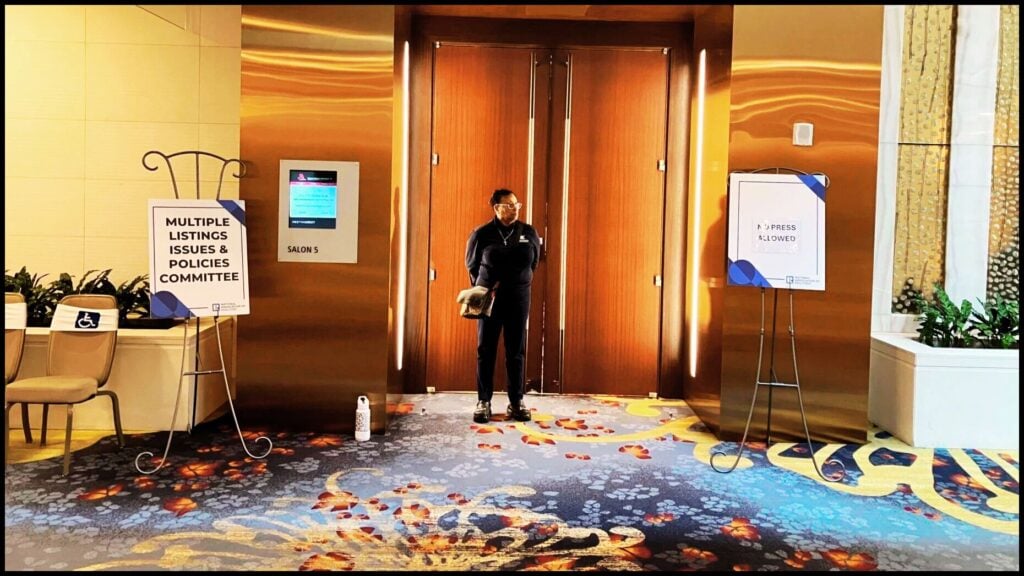
As soon as Wednesday, June 4, the National Association of Realtors may vote to rescind its controversial “no-commingling” policy, which currently allows multiple listing services to prohibit brokers from displaying listings from MLSs together with those from non-MLS sources.
NAR’s Multiple Listing Issues and Policies Committee voted on Tuesday to rescind the policy, formally known as “the no-commingling rule,” at the trade organization’s annual midyear conference, the Realtors Legislative Meetings, in Washington, D.C.
The rule is currently under scrutiny from the U.S. Department of Justice (DOJ) and was the subject of an antitrust lawsuit brought against NAR and Zillow by now-defunct real estate brokerage REX. NAR and Zillow prevailed in that case, in part because the rule is optional, not mandatory. According to legal filings in that case, 29 percent of Realtor-affiliated MLSs have chosen not to adopt the rule.
NAR’s MLS Technology and Emerging Issues Advisory Board, which is part of the committee, put forward the recommendation to revoke the policy to the full committee Tuesday afternoon.
“Rescission of these optional model MLS rules and the corresponding policy language is in response to requests for its removal due to its outdated application under current marketing strategies and diminished benefits,” the advisory board’s rationale for the change reads.
The committee voted to eliminate the policy without any discussion, and it was the only proposal the committee voted on, committee members and attendees told Inman after the meeting. Panelists also reportedly did not take questions, and audience mics were turned off.
The MLIP Committee meeting was closed to the press this year for the first time in at least 13 years, if not for the first time ever.
“The meeting was an internal NAR member event, and it was decided that it should be closed,” NAR spokesperson Tori Syrek told Inman in a statement.
Inman has asked NAR whether the meeting was therefore live-streamed so that non-attendee NAR members would have access to the event. Inman also asked why the meeting was not therefore labeled “NAR members only” and therefore left open to non-member attendees, such as vendors. Inman will update this story if and when responses are received.
NAR’s Executive Committee will vote on the rescission tomorrow, and it will become final if approved. Due to NAR’s governance changes, if the Executive Committee approves the change, it does not need to go to the NAR board of directors.
Matt Consalvo, CEO of Arizona Regional MLS and a member of the committee, told Inman he doesn’t like NAR’s optional rules and believes removing the no-commingling rule provides brokers with greater clarity. ARMLS never adopted the rule.
“When brokers operate in multiple MLSs and there are the optional rules, it confuses them because one MLS may adopt something and another MLS may not,” Consalvo said.
Asked what happened in the rest of the meeting, Consalvo said NAR Senior Counsel Charlie Lee had given “a great presentation,” making sure everyone had a common understanding of Internet Data Exchange (IDX) and Virtual Office Website (VOW) policies.
There was also a discussion about the new Multiple Listing Options for Sellers (MLOS) policy, though the attendees Inman spoke to said they did not hear anything new.
“Nothing in it was enlightening for myself,” Consalvo said.
According to Consalvo, ARMLS’s Coming Soon status “checks all the boxes” of the new policy. ARMLS added it in 2020 in response to the passage of NAR’s Clear Cooperation Policy, which requires listing brokers to submit listings to Realtor-affiliated MLSs within one business day of publicly marketing them.
“We saw what needed to happen for choices for brokers to be able to comply … and we put a very robust Coming Soon in that is exactly the intent of what that policy is,” Consalvo said.
“So we have no change needed.”
Listings can stay in that status for 30 days, it allows for showings and offers, and listings aren’t distributed across the internet until they’re ready to be active, “but all the agents know about it and the agents can grab the listing and share with their clients freely,” he added.
Here is the policy language set to be eliminated:
Section 18.3.11
Listings obtained through IDX feeds from REALTOR® Association MLSs where the MLS participant holds participatory rights must be displayed separately from listings obtained from other sources. Listings obtained from other sources (e.g., from other MLSs, from non-participating brokers, etc.) must display the source from which each such listing was obtained.* (Amended 05/17) O
Note: An MLS participant (or where permitted locally, an MLS subscriber) may co-mingle the listings of other brokers received in an IDX feed with listings available from other MLS IDX feeds, provided all such displays are consistent with the IDX rules, and the MLS participant (or MLS subscriber) holds participatory rights in those MLSs. As used in this policy, “co-mingling” means that consumers are able to execute a single property search of multiple IDX data feeds resulting in the display of IDX information from each of the MLSs on a single search results page; and that participants may display listings from each IDX feed on a single webpage or display. (Adopted 11/14)
Section 19.23
A Participant shall cause any listing displayed on his or her VOW obtained from other sources, including form another MLS or from a broker not participating in the MLS, to be searched separately from listing in the MLS.
Editor’s note: This story has been updated with a comment from NAR, as well as additional questions from Inman that NAR has not yet responded to.
Email Andrea V. Brambila.
Like me on Facebook | Follow me on Twitter
