
by Inman | Jun 10, 2025 | Industry, News Feed
Bigger. Better. Bolder. Inman Connect is heading to San Diego. Join thousands of real estate pros, connect with the Inman Community, and gain insights from hundreds of leading minds shaping the industry. If you’re ready to grow your business and invest in yourself, this is where you need to be. Go BIG in San Diego!
Pulse is a recurring column where we ask for readers’ takes on varying topics in a weekly survey and report back with our findings.
We’re just halfway through 2025, and we’ve already seen a lot of changes coming out of the National Association of Realtors. From the Delayed Marketing Exempt Listings policy — meant to provide a compromise between those wishing to abolish Clear Cooperation and those wishing to double down on it — to no-commingling and hate speech policy changes at NAR’s midyear Legislative Meetings, it’s been a busy year for the trade group.
So we want to know what you’re thinking about, well, all of it: Do you feel that NAR is focusing on the right things? Do you like the changes they’ve made so far, or were there other priorities that got left out? Are these changes bold enough to meet the moment, or are they just checking boxes? What’s missing from the conversation that no one’s talking about? Let us know below:
We’ll compile a list of the top responses and post them on Inman next Tuesday.

by Taylor Anderson | Jun 10, 2025 | Industry, News Feed
Modesto broker John Diaz took aim at NAR, CAR and two local organizations for the creation and enforcement of the Variable Dues Formula, which he claims is illegal and anticompetitive.
Bigger. Better. Bolder. Inman Connect is heading to San Diego. Join thousands of real estate pros, connect with the Inman Community and gain insights from hundreds of leading minds shaping the industry. If you’re ready to grow your business and invest in yourself, this is where you need to be. Go BIG in San Diego!
A California broker is the latest to take on the National Association of Realtors in court with a challenge alleging one of the trade group’s rules is anticompetitive and illegal.
John Diaz, a broker in Modesto, took aim at NAR’s Variable Dues Formula policy, which imposes dues on brokerages for licensees who aren’t Realtors. NAR sets the policy and the state and local organizations enforce it.
Diaz’s complaint listed the Lodi Association of Realtors, Central Valley Association of Realtors, California Association of Realtors and National Association of Realtors as defendants.
“Under VDF, a broker member of the Realtor associations (or the “designated REALTOR® member”) is required to pay dues not only for themselves and their licensed agents, but also for every non-member licensee in their firm, regardless of whether those agents join the Realtor Associations for their area,” the complaint says.
The complaint states that the three organizations provided a valuable service to real estate professionals in the market, “such as key access to listed properties, fillable forms for contacts and disclosures, etc.”
“However, Defendants also require brokers to pay dues for their licensees who are not members of Defendant associations,” the complaint said, alleging that “this is anti-competitive and in violation of federal antitrust law.”
Specifically, the complaint notes that failure to pay any dues, including for non-member licensees, would result in loss of access to the multiple listing service and, therefore, the ability to transact business.
The complaint said the rule, which was formally adopted in 1972, also blocks brokers’ ability to hire sales agents who choose not to join state or local Realtor organizations and that it requires dues for commercial leasing agents and visual inspectors.
“These are licensed sales agents, but not Realtors because they do not join the NAR Associations such as Defendant Associations because of the financial burden that results from the fees they charge,” Diaz’s complaint says.
He said the creation and enforcement of the policy amounts to a nationwide scheme that violates federal antitrust law.
In a statement in response to the new lawsuit, NAR said that it “is proud to provide unparalleled value for brokerage firms and individual members.”
“The unified Code of Ethics enhances consumer trust, the best-in-class advocacy improves members’ ability to execute their next transaction, and our resources and professional development ensure members are always on the cutting edge of the industry,” an NAR spokesperson said in a statement. “We will respond to the plaintiff’s claims in court.”
CAR said that it offered tools to help all members to succeed, and that much of its work to help the industry went on behind the scenes.
“In addition to resources like the Legal Hotline and transactional products, C.A.R.’s advocacy efforts have played a key role in protecting mortgage interest deductions, opposing point-of-sale mandates and other proposals that could impact property rights,” the group said in a statement. “These efforts have helped reduce potential legal and regulatory costs for members, brokers and consumers. C.A.R. will address the pending lawsuit through the appropriate legal channels.”
Diaz is only the latest broker to take aim at an NAR policy in court, though NAR has had recent success defending itself from some of the claims.
In April, a Pennsylvania judge agreed to partially dismiss a case filed by a broker against NAR over its three-way agreement that requires agents and brokers to join a local, state and national Realtor association in order to qualify for membership in any of those NAR affiliates.
The broker in that case represented himself, and in partially dismissing the case, the judge recommended the broker hire an attorney, likening the matter to hiring a Realtor to transact real estate.
NAR also scored a legal victory on Monday, when a U.S. Magistrate Judge recommended that a court dismiss a case filed by a Texas broker who also challenged the three-way agreement. That broker also represented herself in the case.
Diaz is not representing himself in his antitrust challenge.
Email Taylor Anderson
by Andrea V. Brambila | Jun 10, 2025 | Industry, News Feed
The concept of who brings the buyer that completes a real estate sale will remain, though it may come up less frequently in commission disputes, according to the trade group.
Bigger. Better. Bolder. Inman Connect is heading to San Diego. Join thousands of real estate pros, connect with the Inman Community and gain insights from hundreds of leading minds shaping the industry. If you’re ready to grow your business and invest in yourself, this is where you need to be. Go BIG in San Diego!
In the wake of the National Association of Realtors’ nationwide antitrust settlement requiring the use of agreements between buyers and their brokers, some have suggested that the concept of procuring cause is dead — or that it should die.
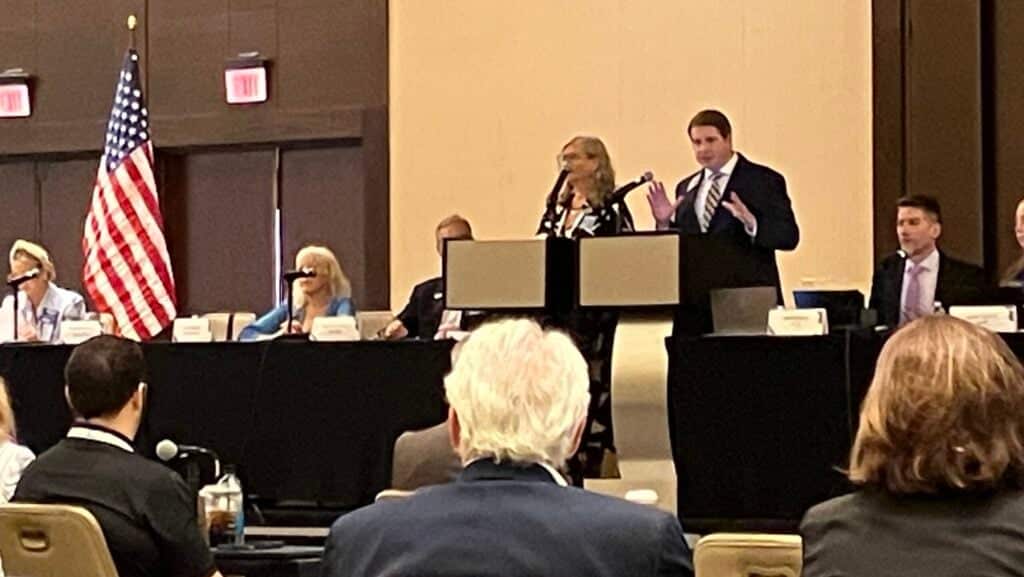
But at last week’s Realtors Legislative Meetings in Washington, D.C., Matt Troiani, NAR’s senior counsel and director of legal affairs, told attendees of the event’s Professional Standards Forum that procuring cause will still be a factor in arbitration determinations regarding who is entitled to buyer broker compensation, “at least in many markets.”
“The rumors of procuring cause’s demise have been greatly exaggerated,” Troiani told at least 200 attendees.
“Frankly, we could not get rid of procuring cause even if we wanted to; it predates the Code of Ethics.”
Procuring cause is a legal concept enshrined in many states’ laws. NAR’s Code of Ethics and Arbitration Manual points to Black’s Law Dictionary’s definition of procuring cause:
“A broker will be regarded as the ‘procuring cause’ of a sale, so as to be entitled to commission, if his efforts are the foundation on which the negotiations resulting in a sale are begun. A cause originating a series of events which, without break in their continuity, result in accomplishment of prime objective of the employment of the broker who is producing a purchaser ready, willing, and able to buy real estate on the owner’s terms.”
Although buyers are now required to decide their agent’s compensation before seeing listings, Troiani stressed that the settlement continues to allow listing brokers and sellers to offer compensation outside of the multiple listing service.
“So in many markets, you will continue to see instances where an offer of compensation is made by a seller or a listing broker and is accepted and memorialized in some kind of agreement with a broker for new buyers,” Troiani said.
According to Troiani, there will continue to be cases where buyer brokerages sign non-exclusive agreements with a buyer, or where a buyer has signed exclusive agreements with multiple brokerages at the same time, and therefore when a sale happens, there may be some dispute as to which brokerage is entitled to that offer of compensation.
“So the extent to which procuring cause comes up in arbitration over time may become fewer, but we do not think that it is going away,” Troiani said.
NAR will continue to provide guidance regarding offers of compensation and procuring cause, Troiani added.
In an op-ed last month, managing broker and Inman contributor Spencer Krull urged NAR to get rid of procuring cause.
“With procuring cause, an agent works with a buyer, and if that buyer ends up using a different agent to write an offer, then the first agent can file a complaint with their local board and go after the second agent’s commission,” Krull wrote.
“Procuring cause is NAR’s equivalent of rewarding the kid who licks the lollipop to make sure no one else will want it.”
Email Andrea V. Brambila.
Like me on Facebook | Follow me on Twitter

by Jim Dalrymple II | Jun 10, 2025 | Industry, News Feed
Bigger. Better. Bolder. Inman Connect is heading to San Diego. Join thousands of real estate pros, connect with the Inman Community and gain insights from hundreds of leading minds shaping the industry. If you’re ready to grow your business and invest in yourself, this is where you need to be. Go BIG in San Diego!
There’s Star Trek‘s Data. And HAL 9000 from 2001: A Spacey Odyssey. Scarlett Johansson memorably voiced Samantha, an artificial intelligence assistant, in Her. And the Maschinenmensch from 1927’s Metropolis is one of the most enduring images in cinema, even if most people today haven’t actually seen the movie.
Humans have been inventing machines since time immemorial, but we are perhaps most fascinated by those machines built in our own image. A car or a copy machine or a coffee maker is an object, but an android with a voice or a face? That’s a protagonist.
Recent years have seen an explosion of AI technology. Thanks to tools like ChatGPT and Midjourney, smart and interactive bots that would’ve seemed like science fiction half a decade ago are now commonplace. They’re so common, in fact, that when a panelist at last month’s Inman on Tour Miami asked a room filled with real estate professionals who has used AI, virtually every hand went up.
But the proliferation of this technology has turned an abstract philosophical question into a practical one for numerous companies, including many operating in real estate: How human should our AI assistants actually be?
To answer this question, Inman reached out to multiple real estate technology companies that have built their own AI tools. And while company leaders subscribe to different philosophies, one thing was clear: AI technology is becoming more and more human. In fact, it’s becoming so real-seeming that increasingly, consumers are simply treating it like a person.
Blurring lines between humans and machines
Jindou Lee used to work in video game development, but today he’s the CEO of HappyCo, a company that develops property management technology. Last year, the company unveiled its JoyAI. The tool takes requests from tenants, then helps coordinate maintenance.
Lee has spent considerable time thinking about the humanity of the bot his company has built. And he told Inman that user interactions with JoyAI suggest a certain blurriness, where users sometimes don’t appear to know if they’re engaging with a piece of technology or an actual human being.

Jindou Lee.
“There are so many times where, you know, a resident would thank our AI bot,” he said. “They didn’t know if they were talking to a human or not.”
In response, HappyCo has designed some transparency into its tech. If a person asks JoyAI if it’s a human or a bot, it has the ability to answer honestly and reveal to users that it is, in fact, a digital assistant. But while Lee said that people do appreciate connections to actual humans, and no one wants to feel like they’re talking just to a computer, JoyAI users have tended to accept the machine.
“If it solves the problem, we found that people don’t really care,” he said. “If you’re a resident, you put in a ticket, you just want it to be fixed.”
A few years ago, when chatbots were more rudimentary, that might not have been the case. But today, as the technology advances, Lee expects more and more people to accept interactions with AI. And the line between humans and bots may not always be so clear.
“I think those lines,” he said, “will continue to blur.”
What’s in a name
As Kathleen Lappe and her team at DirectOffer developed their own voice assistant AI — which functions as a concierge in both the real estate and hospitality spaces — they wanted to find a name for the tech. Lappe recently told Inman the team discovered that the names Noah and Olivia were the two most common English names at the time, so they settled on the latter.
“We felt OLIVIA rolled off the mouth,” Lappe said, “And then we built an acronym after OLIVIA, so it just hit the right spot.”
OLIVIA’s avatar as featured on DirectOffer’s website. Credit: DirectOffer
In choosing OLIVIA — which also presents itself with a human face and is described internally as “her” — DirectOffer was following in the footsteps of many other companies that have consistently chosen female names for their artificial intelligence. Amazon, for example, has Alexa. Apple’s phones all come with Siri. And once upon a time, Microsoft built a bot named Cortana.
This preference for female names is common in real estate as well. Aside from OLIVIA, there’s DealMachine’s Alma, lead nurturing bot Gabbi.AI, and voice-based AI rent collector Colleen. There are exceptions, too, but the trend toward female names for AI assistants is clear.
In the case of OLIVIA, Lappe said that users simply tended to respond better to female names.

Kathleen Lappe
“In general, women don’t have a problem with women giving instructions to them,” Lappe said. “And men are more comfortable with women guiding them.”
Lee made a similar point, saying that in his company’s research, “People responded better to female names than male names” — hence “JoyAI.”
The trend toward female names for virtual assistants is so common that researchers have actually looked into the topic. A 2019 report from UNESCO, for example, argued that feminized voices are a relatively recent phenomenon and that they raise questions about potential gender biases in technology. But perhaps most critically, the report suggests that the naming and gendering of AI is further blurring the lines between real and simulated people.
“As emotive voice technology improves,” the report states, “the ability to distinguish between human and machine voices will decrease and, in time, probably disappear entirely.”
In a similar vein, a 2021 paper looked at this question and acknowledged that past investigations suggested female-voiced bots are common because they’re perceived as being warmer. But the researchers actually suggested there’s something deeper going on.
“We argue that people prefer female bots because they are perceived as more human than male bots,” the researchers found.
In other words, it’s not so much that people like women’s voices more. It’s that those voices are nudging them further into the gray zone between machine and human.
To anthropomorphize or not
While the bots generally seem to be racing toward personhood, not every company is trying to make them seem human. Michael Martin, CEO of real estate virtual assistant company Sidekick, said his company has taken a very different approach and intentionally chooses not to anthropomorphize their tech. Sidekick’s assistants are simply and fittingly called “Sidekicks.”

Michael Martin
“It reinforces this kind of false humanity of an AI that I think stokes fears of human replacement,” Martin told Inman of naming bots. “Which I think in real estate is particularly pronounced in many cases. I think it’s really important, as AI becomes more ubiquitous, that the human-computer interaction always remains clear.”
Martin has followed other companies’ moves to anthropomorphize AI and speculated that such choices are done to make the tools more relatable. But his vision for the future of the technology is something different. It’s a vision in which artificial intelligence becomes “more of a substrate” embedded in some other machine — say, a car or a fridge — than a friendly aide with a name or face. In this future, a bot might not actually need a name at all.
In the end, it may not be entirely an either-or between Martin’s vision and what other companies like DirectOffer are creating. But either way, it’s clear that going forward, technology will be increasingly able to do something that we’ve long associated with living beings: Act on its own.
“There’s a world very soon,” Martin said, “where two agents working together on a deal, that experience is better because both of them have a Sidekick, and those Sidekicks can interact without the agent needing to.”
Correction: DirectOffer’s OLIVIA is a voice assistant AI. This post originally mischaracterized it as a chatbot.
Email Jim Dalrymple II

by Darryl Davis | Jun 10, 2025 | Industry, News Feed
Lean on systems and support that take the busywork off your plate — like CRMs, done-for-you marketing, voicemail drops and smart follow-up templates, coach Darryl Davis writes.
Bigger. Better. Bolder. Inman Connect is heading to San Diego. Join thousands of real estate pros, connect with the Inman Community, and gain insights from hundreds of leading minds shaping the industry. If you’re ready to grow your business and invest in yourself, this is where you need to be. Go BIG in San Diego!
Let’s not sugarcoat it: Getting into real estate right now is no walk in the park.
The market is unpredictable. Buyers are anxious. Sellers are skeptical. And your to-do list? It’s probably longer than your pipeline. But here’s the good news — this isn’t just a tough time to start in real estate. It’s also the perfect time to become the kind of agent who can weather anything.
Because skills sharpen under pressure. And resilience? That’s built one challenge at a time.
If you’ve had a rough week — or three — don’t sweat it. You’re not doing it wrong. You’re just in the phase where most agents give up. But the ones who stick it out? They’re the ones who end up unstoppable.
Here’s how to stay the course, even when it feels like the course is uphill in both directions:
1. Get in the game early (even if you trip)
You won’t master real estate by learning alone. Webinars, coaching and training are important — they give you the what and how. But the real magic happens when you take what you’ve learned and put it into action. Making the calls. Asking the questions. Showing up — awkward or unsure — but still showing up. Action builds clarity. Movement builds momentum. Just start.
2. Redefine rejection
That “no” you just heard? It wasn’t personal. It was practice. Every conversation, especially the ones that fall flat, teaches you something. And every agent you admire has a stack of “no thanks” under their belt. Keep going.
3. Find a guide, not just a guru
Look for someone who’s been where you are — and is willing to share the journey. Whether it’s a mentor, coach or peer, surrounding yourself with people who’ve navigated the chaos will remind you: It is survivable. (And sometimes even funny in hindsight.)
4. Make peace with the awkward phase
You will mess up an appointment. You will forget a form. You will get ghosted. It’s part of the deal. But every time you face it instead of folding? You’re one step closer to becoming the skilled, steady, in-demand agent you set out to be.
5. Use the tools that keep you moving
You don’t have to do this the hard way. Lean on systems and support that take the busywork off your plate — like CRMs, done-for-you marketing, voicemail drops and smart follow-up templates. Less time on admin equals more time building your business.
The truth is, there’s no magic wand in real estate. No shortcut. No perfect market. But there is a version of you that keeps going when others stop. That version? That’s who builds the career.
So, give yourself some grace. Let it be messy. Learn fast, fail forward, and remind yourself that every “bad day” in real estate is still moving you toward mastery — if you let it. You’ve got this.

by Kevelyn Guzman | Jun 10, 2025 | Industry, News Feed
One-size-fits-all answers just don’t cut it in this highly complex market. Start thinking bigger, and build the business of your dreams, Coldwell Banker Warburg’s Kevelyn Guzman writes.
Bigger. Better. Bolder. Inman Connect is heading to San Diego. Join thousands of real estate pros, connect with the Inman Community, and gain insights from hundreds of leading minds shaping the industry. If you’re ready to grow your business and invest in yourself, this is where you need to be. Go BIG in San Diego!
Let’s stop playing small. You’re not just an agent. You’re not just helping someone buy or sell a home. You’re running a business — whether you’ve realized it or not.
Too often, I hear agents refer to themselves as if they’re filling a job: “I work at XYZ Brokerage.” But if that’s how you see yourself, you’re missing the bigger picture. You are your own brand. You’re the CEO of your own operation. You are your own marketing department, finance team, sales lead and strategic planner.
And while your brokerage should absolutely support your growth, it’s your name, your reputation and your income on the line. You’re not alone — but you are in charge.
5 ways to scale
The agents who get that? They don’t just survive. They scale. Here’s how:
1. Build structure like it’s your job — because it is
One of the biggest traps in this industry is the illusion of freedom. You can technically work when you want. But without structure, that freedom quickly turns into chaos.
Successful agents aren’t winging it. They’re managing their calendars, setting time blocks, building systems for lead follow-up, content creation, showings and client care. You don’t have to be a robot, but you do have to be disciplined.
You can’t outsource self-management. You are the COO of your day-to-day. The way you spend your time will either compound in your favor or work against you.
2. Know your brand — and build it like a business
Your brand is your most valuable asset. It’s how people remember you, talk about you and refer you. And yes, it starts with the visuals — your logo, colors, font and photos. These aren’t just “nice to have.” They anchor your brand identity. They make you recognizable across every platform, from listing presentations to Instagram stories.
But your brand is more than design. It’s your voice. It’s how you follow up. It’s how you show up in negotiations, at open houses and in your social presence. Whether you’re all business or you bring the humor, your brand should be intentional and consistent.
3. Treat your numbers like a CFO
No thriving business operates without a clear understanding of the numbers. And yet, too many agents are out here guessing. They don’t know how much they’re spending on marketing, what their average ROI is or what they need to make monthly to hit their annual goals.
That’s not a business — that’s gambling.
If you don’t already have a budget, make one. If you’re not tracking your leads and conversions, start. Know your best-performing marketing channel. Know how much you can spend to acquire a client and still stay profitable.
4. Learn when to delegate — and what to invest in
Here’s the truth: You can’t scale if you’re doing everything yourself. You may start as a solo operation, but you shouldn’t stay one.
If the brokerage you’re affiliated with does not offer transaction support or marketing assistance, then outsourcing this support is critical for your business. These aren’t vanity moves. They’re business decisions. Time is money. And if you’re spending your time on things that don’t grow your business, you’re stalling your potential.
The most successful agents I know are the ones who know when to delegate — and when to double down. They lean on their brokerage for support, plug into the network and bring in help when it makes financial sense.
5. Hustle is great. Vision is better
You can’t out-hustle a lack of strategy. And you can’t grow a business without a clear idea of what you want to build.
What kind of clients do you want to work with? What price points? Which neighborhoods? What does a “good year” look like — and how will you get there?
Hustle gets you started, but intention keeps you focused. This is where working with the right brokerage matters. You should have a leadership team helping you connect your day-to-day work to the bigger picture. You should feel like your goals are being championed, but also challenged.
Make sure your brokerage doesn’t just support agents, but partners with entrepreneurs. Does it offer coaching, masterminds, brand development and international connections? But at the end of the day, you should know where you’re going and shouldn’t be afraid to own it.
Act like the CEO of your business
You are the business. You’re the brand, the engine, the decision-maker. That doesn’t mean you have to do it alone — but it does mean no one will care about your growth more than you.
Treat this like a business and you’ll start thinking bigger. You’ll raise your standards, sharpen your focus and build something real. Whether you’re closing two deals a year or two a month, the same rule applies: Act like the CEO of your business, and watch everything shift.
Kevelyn Guzman serves as regional vice president at Coldwell Banker Warburg. Connect with her on Instagram and Linkedin.
