
by Luke Babich | Jun 11, 2025 | Industry, News Feed
Bigger. Better. Bolder. Inman Connect is heading to San Diego. Join thousands of real estate pros, connect with the Inman Community, and gain insights from hundreds of leading minds shaping the industry. If you’re ready to grow your business and invest in yourself, this is where you need to be. Go BIG in San Diego!
As mortgage rates remain high, many markets are slowing as buyers become more picky amid expensive borrowing costs. In this type of market, buyers have more leverage, and they may be looking to get more bang for their buck.
It’s no wonder sellers are getting anxious. 88 percent of homeowners have significant fears about selling their home, but 73 percent believe an agent can deliver market value or higher for their property, according to a recent survey from our team.
Agents can help sellers get the most value for their property by presenting a sleek, appealing home that’s optimized every single square foot of space. A 2023 report found that 25 percent of recent buyers bought a smaller house than they’d planned, so the market for smaller homes is likely bigger than many sellers realize.
Here are the best ways to help clients maximize their home’s square footage before hitting the market.
1. Stage for flow
Building an addition is the most obvious way to increase a home’s square footage, but it’s also the most expensive. It’s much more practical to work with the square footage that’s already there. Effective staging can make a space seem larger and more open just by removing distractions.
If your client has bulky furniture that makes the space feel smaller, explore the possibility of replacing it with pieces that have slimmer silhouettes. If they don’t want to purchase new furniture, most professional staging services have furniture to rent.
Also think about how the furniture is arranged. Create lanes for convenient, natural movement, and use furniture to create focal areas. For example, cluster two chairs and an end table together to create a conversation spot.
Finally, avoid pushing furniture against the walls. While this will leave the center of a room open, it can often make a space feel smaller and more cramped.
2. Feature the right size of appliance
A modestly sized kitchen can feel even smaller if your client has a lot of bulky appliances. Appliances that aren’t used enough to justify the counter space they take up should be removed, especially if they’re old. Taking out an old appliance can make a kitchen seem visually larger and add some much-needed counter space.
For vital appliances, such as stoves and refrigerators, there are slimline or apartment-sized models that are much more appropriate for small spaces. If your client can shrink their appliance footprint by half, the kitchen will feel twice as big.
3. Maximize natural light
If your client can’t expand the square footage of the home, help them present what they already have in the best possible light — literally. The more natural light in a space, the better. Remove heavy or obstructive window coverings, such as drapes or blinds, and trim exterior bushes, hedges or trees that might block the windows.
If your client has a budget for renovations, tell them to consider installing skylights or more windows. Even smaller pillbox windows can dramatically improve a space’s brightness, especially if it’s dark to begin with.
4. Encourage multipurpose rooms
Since the pandemic, buyers have been especially interested in multipurpose spaces that could serve as an office, workout room or guest bedroom. If your client has a spare bedroom, they could consider adding furniture to make it multifunctional. For example, a convertible sofa or Murphy bed could make a spare bedroom much easier to convert into a home office in a pinch.
Other rooms could also be candidates for conversion, especially rooms that may feel superfluous to today’s buyers. Formal dining rooms have fallen out of fashion in this more relaxed era of open floor plans. This room might have more appeal as a home office or gym. The same principle applies to formal living rooms or sitting rooms. If you have both, one is probably unnecessary.
5. Explore enclosing outdoor space
Another easy way for your client to add some usable square footage to their home is to enclose outdoor space. Screening in a porch or patio can provide a breezy, appealing space at a relatively low cost, compared to building a whole new addition.
6. Suggest pocket doors
In a small space, interior doors can contribute to a perception of visual clutter. They can also render the space behind them useless, shrinking an already modest space. Sliding pocket doors can have an outsized effect on a house, freeing up space and contributing to a cleaner, more minimalistic look.
7. Remind homeowners to declutter
One of the easiest ways to make a home look larger is to get rid of clutter. Before a home opens for showings, a general rule of thumb is to get rid of half of everything. Encourage them to put half their furniture into storage or more if they have a lot.
They should also remove excess bottles on bathroom counters, clothes in the closets and dishes in kitchen cupboards. Buyers almost always look into storage spaces, and if they’re cluttered, they’ll likely assume that the house doesn’t have enough storage.
8. Advise your client to update unfinished rooms
Most homes are priced by the square foot, so an unfinished basement, attic or garage apartment that could function as livable space can be an easy way to boost a home’s usable footage and its value. If a basement or attic can be easily and inexpensively converted into a living space, it’s a no-brainer to do so.
Even smaller spaces, such as nooks under a staircase, can add real value and appeal once they’re converted into a closet or office space. On the other hand, if your client’s space requires serious renovations, there’s a cost-benefit calculation that you’ll want to advise them on.
Carefully go over relevant comps to determine how much value they might be able to add to their home through a conversion, and make sure they get several estimates from contractors so they get the best price.
Luke Babich is the CEO of Clever Real Estate in St. Louis. Connect with him on Facebook or Twitter.
by Jonathan Pressman | Jun 11, 2025 | Industry, News Feed
Bigger. Better. Bolder. Inman Connect is heading to San Diego. Join thousands of real estate pros, connect with the Inman Community, and gain insights from hundreds of leading minds shaping the industry. If you’re ready to grow your business and invest in yourself, this is where you need to be. Go BIG in San Diego!
When you’re getting ready to list a house, you know the quality of the bathrooms can make or break a buyer’s offer. Updating a bathroom is one of the top renovations that increase home value, but with so many options to choose from, where should you start? Here are 25 popular bathroom remodel ideas for 2025.
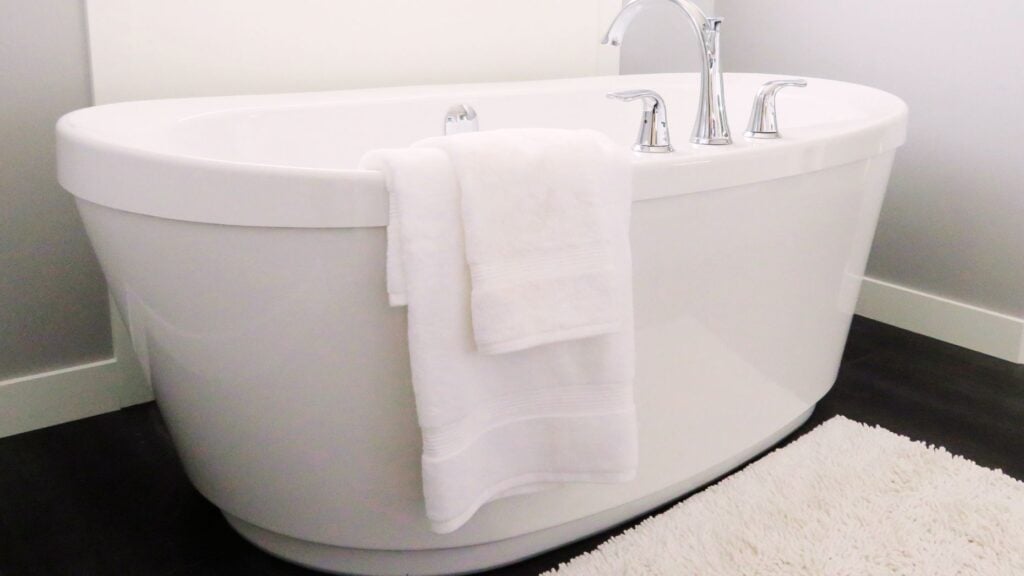
1. Add a freestanding tub
Freestanding tubs are a flexible option when you want to express yourself with a unique look. Unlike traditional bathtubs that fit into a corner, freestanding tubs come in a variety of different shapes, styles and sizes.
2. Introduce bold colors
For many years, preference and popularity went to neutral paint colors that made bathrooms look sterile and spacious. But in 2025, bold colors are booming, with owners choosing hues that inspire a more luxurious look.
3. Install a floating vanity
Why take up floor space when you can mount a vanity on the wall for a sleek, modern look? Floating vanities are trending now, and they come with the added bonus of easier cleaning.
4. Choose spa-like amenities
In-home saunas, steam showers, body jets and other spa-like upgrades are becoming increasingly common as homeowners seek a more relaxed experience that they can enjoy without leaving the house.
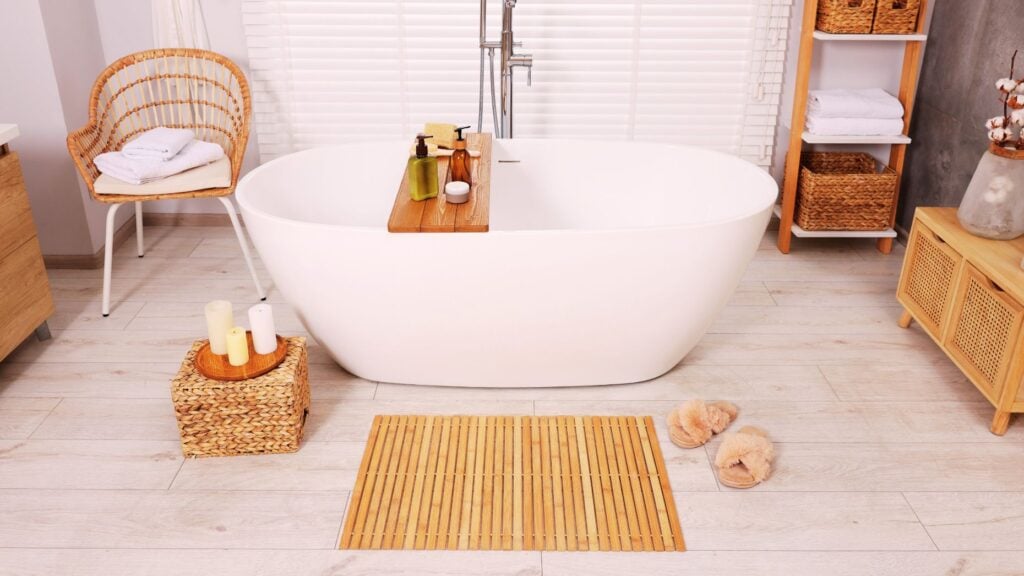
5. Swap in natural and sustainable materials
Vinyl and other plastics are affordable, durable and easy to install — but they’re among the least sustainable bathroom materials and definitely won’t help you in pursuit of that spa-like experience. For your next bathroom remodel, think about how you can utilize sustainable materials, like natural stone and bamboo.
Courtesy of Canva
6. Give your bathroom an IQ boost
With technology, you can make just about any part of your bathroom more intelligent. Voice-activated features, smart controls and touchless sensors are just a few ways you can bring your bathroom into the modern age and enjoy added conveniences.
7. Mix and match metals
There’s nothing wrong with matching your metals, but in 2025, many homeowners are going against the grain and mixing hardware finishes. Try combining silver and gold or black and bronze to create a luxe look that stands out.
8. Install a glass shower enclosure
Glass shower enclosures can give a bathroom a more open feel than tiled shower walls, creating a sleeker, more modern look. Though you may have to compromise on privacy (there are ways around that, too, such as frosted glass), cleaning a glass shower is quicker and easier than dealing with tiles and grout.
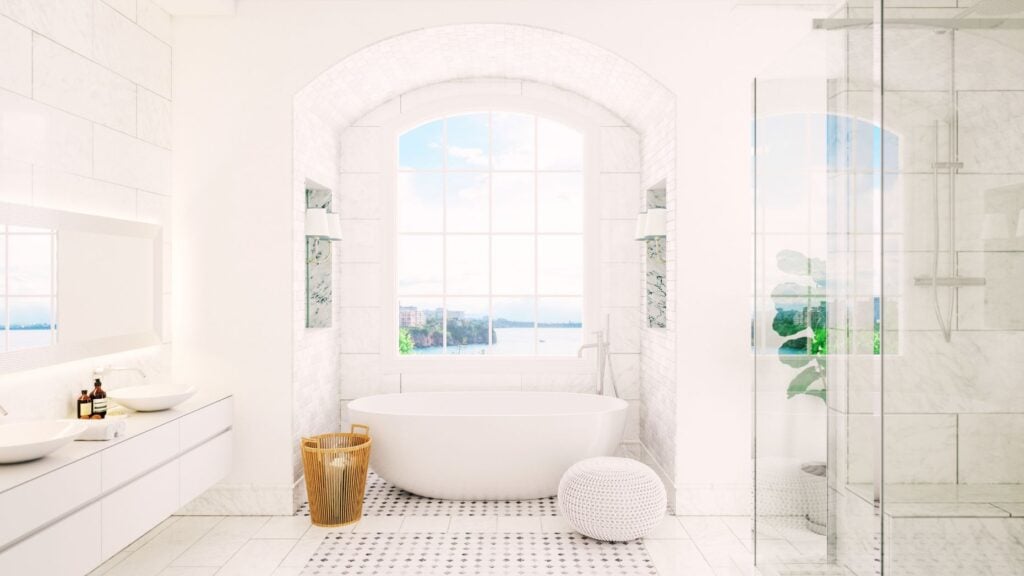
9. Add a window
Adding a window to a bathroom can instantly transform drab into fab. Besides the increased aesthetic appeal, you’ll also benefit from improved ventilation and air quality. While adding a window isn’t a quick or cheap fix, it’s often a worthwhile expense that can completely change a bathroom’s look and feel.
Courtesy of Canva
10. Customize storage solutions
Hanging shower caddies and personal effects strewn across vanity countertops scream dorm living and are definitely out of style in 2025. Instead, choose built-in storage options — such as drawers, recessed niche shelving and linen closets — that keep your bathroom organized and clutter-free.
11. Add a personal touch
More homeowners are opting to personalize their bathrooms with area rugs, artwork, aromatherapy and more. Adding personal touches to your bathroom can make it feel more like a room in your home and less like a place that’s reserved strictly for business.
12. Hang wallpaper in place of paint
Wallpaper gives you the power to put any design or color on your bathroom walls — and at a fraction of the cost of tile. Wallpaper today is also more durable, easier to apply, and, unlike 19th-century Victorian wallpaper, free of arsenic.
13. Go minimalist
A minimalist bathroom is timeless, easy to clean and focused on function over form. Think straight lines, neutral colors and open floor space. You can never really go wrong with a minimalist bathroom, which is why they’ll always be in style.
14. Go maximalist
The Gilded Age might feel like ancient history, but to those who love an over-the-top look, the maximalist makeover might be a perfect fit. The beauty of a maximalist bathroom is the freedom to choose. Utilizing all available spaces to layer, add variety and create a dramatic effect make each maximalist bathroom one of a kind.
15. Go modern
While modern bathrooms typically include many of the same design principles as minimalist bathrooms, they often feature more diverse or complex finishes. A modern bathroom makeover might call for integrating technology into the design, layering to create depth and mixing and matching a wider range of materials.
16. Pick patterned or geometric tiles
While simple subway tiles will always have a place in our hearts, patterned and geometric tiles create a visual curiosity that’s sure to please. Why settle for ordinary tiles when you can pick from thousands of shapes, patterns and styles?
17. Embrace biophilic design
Biophilic designs can help bring the beauty of the outdoors into homes, reducing stress and helping homeowners connect with nature. Planters, living walls and plenty of natural light can give your bathroom the look of an outdoor oasis.
18. Choose earthy and ocean tones
Browns, blues and greens can evoke a sense of calmness and warmth, blending with biophilic designs to make your bathroom feel like a natural paradise. You can add earthy and ocean tones just about anywhere in your bathroom, from paint and accessories to vanities and tiles.

Courtesy of Canva
19. Get cozy with heated floors and towel warmers
When warm colors aren’t quite enough for you to feel cozy, heated floors and towel warmers can add a spa-like element to any bathroom, along with the benefits of improved hygiene.
20. Say it loud with a statement piece
Statement pieces of all kinds are now finding their way into bathrooms, offering another opportunity to personalize your space. Benches, sconces, side tables and funky fixtures allow homeowners to express their individuality and enhance aesthetics and functionality.
21. Integrate lighting
Integrating water-resistant LED lighting can breathe new life into your bathroom, saving space and simplifying grooming and cleaning. Today, it’s easier and more affordable to integrate LED lighting into any part of your bathroom, from backlit mirrors and vanities to uplights and recessed fixtures.
22. Seek out sustainability features
As sustainability comes into focus, upgrading bathrooms with more eco-friendly solutions can not only help support the planet but also lower your utility bills. Look for energy-efficient lighting, along with toilets, faucets and showerheads bearing the WaterSense label.
23. Introduce soft textiles
Soft textiles, such as linen, cotton, chenille and bamboo, are excellent additions to any bathroom. Plush towels, curtains, rugs and bath mats — particularly those in warm tones — can help promote a luxurious look and feel.
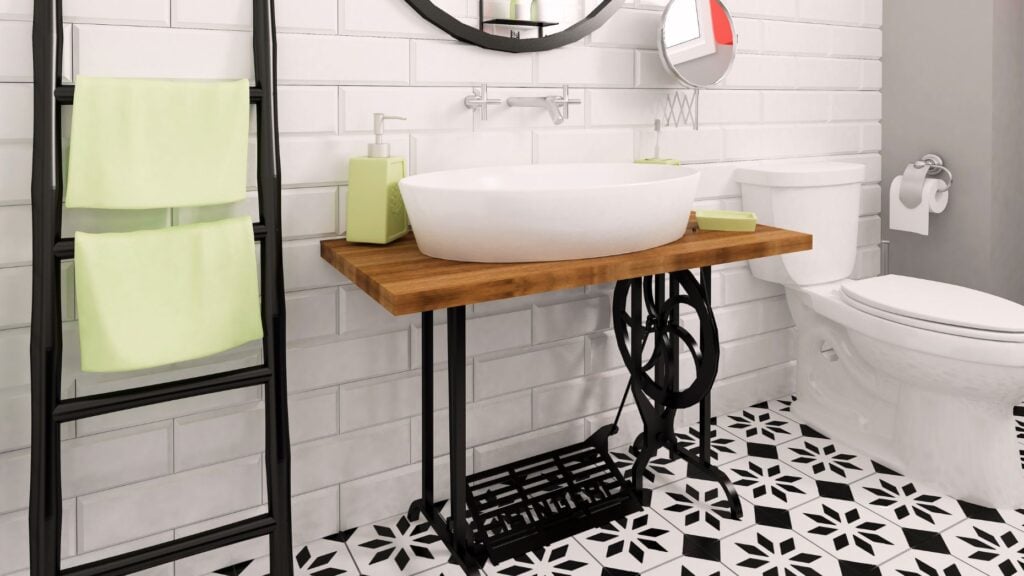
24. Reclaim and recycle
We’ve all complained that things are made like they used to be, which is why many homeowners today are incorporating reclaimed vanities, mirrors, tiles and wood into their bathrooms. In addition to avoiding waste, recycling old or vintage materials can offer an affordable way to make your bathroom stand out.
Courtesy of Canva
25. Buck the trend!
Following the trend is fun, but do you know what’s better? Bucking the trend, blazing your own trail and choosing any bathroom finishes you love. Take any of the design elements and styles you like, and combine them to make your dream bathroom.
Jonathan Pressman is a Realtor who writes on a wide range of financial topics. Connect with him on LinkedIn and Instagram.

by Marian McPherson | Jun 10, 2025 | Industry, News Feed
Boutique firm Acre & Estate has joined Coldwell Banker Hearthside. The merger extends Coldwell Banker Hearthside’s reach from 11 to 14 offices throughout Pennsylvania and New Jersey.
Bigger. Better. Bolder. Inman Connect is heading to San Diego. Join thousands of real estate pros, connect with the Inman Community, and gain insights from hundreds of leading minds shaping the industry. If you’re ready to grow your business and invest in yourself, this is where you need to be. Go BIG in San Diego!
Coldwell Banker Hearthside is extending its lead as one of Coldwell Banker’s largest affiliates, thanks to its acquisition of Lehigh Valley boutique firm Acre & Estate Brokerage.
Coldwell Banker Hearthside has 11 offices throughout Pennsylvania and New Jersey, and the acquisition of Acre & Estate marks its entrance into Lehigh Valley with three offices in Bethlehem, Brodheadsville and Wind Gap, Pennsylvania. Acre & Estate founder Eric Leadbetter will continue to lead his team as the president of Coldwell Banker Hearthside’s Lehigh Valley Division.
“This wasn’t just a market move. It was a culture fit,” Coldwell Banker Hearthside co-owner Jamie Mancuso said in a written statement. “Eric’s agents, his energy, his ideas — they will complement and elevate what we do companywide.”
Mancuso and Leadbetter said the acquisition enables the team to leverage the best parts of each other’s companies — Coldwell Banker brings enhanced technology and support, while the former Acre & Estate team brings invaluable knowledge about Lehigh Valley and the elevated customer service and modern branding that comes with boutique real estate.
“What drew me to Hearthside was their independence, their innovation, and their clear sense of identity,” Leadbetter said in a prepared statement. “This isn’t a corporation absorbing a boutique firm. It’s two philosophies aligning. We’re not just adding volume — we’re scaling values.”
Added Mancuso, “We’re not waiting on the market. We’re moving forward. We’re betting on good people, doing things the right way, and building something great — together.”
Alongside the acquisition of Acre & Estate, Coldwell Banker Hearthside is appointing another regional leader.
Longtime Hearthside team member Stefanie Hahn will serve as president of the Delaware Valley region. This model, the brokerage said, supports growth while prioritizing the company’s tight-knit culture. Hearthside owners Jamie and Robin Mancuso will continue to lead the company’s daily operations, while Hahn and Leadbetter oversee regional expansion.
“We don’t have layers and layers of management,” Mancuso said. “Our agents call me directly. They know we’re all in this together.”
Email Marian McPherson

by Marian McPherson | Jun 10, 2025 | Industry, News Feed
Zillow Rentals has partnered with third-party artificial intelligence company, EliseAI, to power its chatbot for renters and property owners. EliseAI will answer questions, schedule tours and send automatic follow-ups to renters.
Bigger. Better. Bolder. Inman Connect is heading to San Diego. Join thousands of real estate pros, connect with the Inman Community, and gain insights from hundreds of leading minds shaping the industry. If you’re ready to grow your business and invest in yourself, this is where you need to be. Go BIG in San Diego!
Zillow Rentals is making an upgrade to its platform with EliseAI, an artificial-intelligence-powered chatbot that will answer renters’ questions and schedule tours. Conversations with EliseAI will be saved to the Zillow Renter Hub so users can review previous conversations with Elise throughout their rental search.
EliseAI, which is a third-party platform that provides artificial intelligence solutions for housing and healthcare companies, will be integrated into Zillow Rentals by the end of the third quarter, according to an announcement Tuesday.
“We want to make it even easier for renters on Zillow to get the information they need right when they need it, something no other rental marketplace is doing today,” Zillow Rentals SVP Michael Sherman said. “It’ll be a smarter, faster experience for renters and a more efficient way for property marketers to connect with serious leads.”
For renters, Zillow Rentals said EliseAI will be able to answer key questions about a rental property, including pricing, unit availability, amenities, the application process, and fees, etc. The bot can also schedule tours and send real-time details and reminders to renters.
On the property manager side, EliseAI will answer prospective renters’ questions around the clock and send automatic follow-ups once a renter asks a question or schedules a tour, all of which are managed through the EliseAI portal.
“We’re excited to be working toward a partnership with Zillow that would bring EliseAI’s industry-leading conversational AI to the very place where today’s renters begin their search: the listing itself,” EliseAI Co-Founder and CEO Minna Song said in a prepared statement. “Together we will empower property owners and operators to work more efficiently while giving renters the seamless, on-demand experience they expect.”
Zillow remains bullish on multifamily, with the company saying Zillow Rentals is outpacing its competitors in traffic and listing growth.
During Q1, Zillow’s rentals revenue grew 33 percent year over year to $129 million — an all-time high for that segment.
“We now have the most listings, 2 million active rental listings on Zillow’s rental network,” Zillow CEO Jeremy Wacksman told Inman in May. “And that’s what drives the audience. We actually have the largest rental audience in the country, 37 million unique visitors come to Zillow Rentals. It’s the number one brand preference because it has the most inventory. No one has them all, but we’re trying to get to as many as possible.”
Email Marian McPherson
by Jim Dalrymple II | Jun 10, 2025 | Industry, News Feed
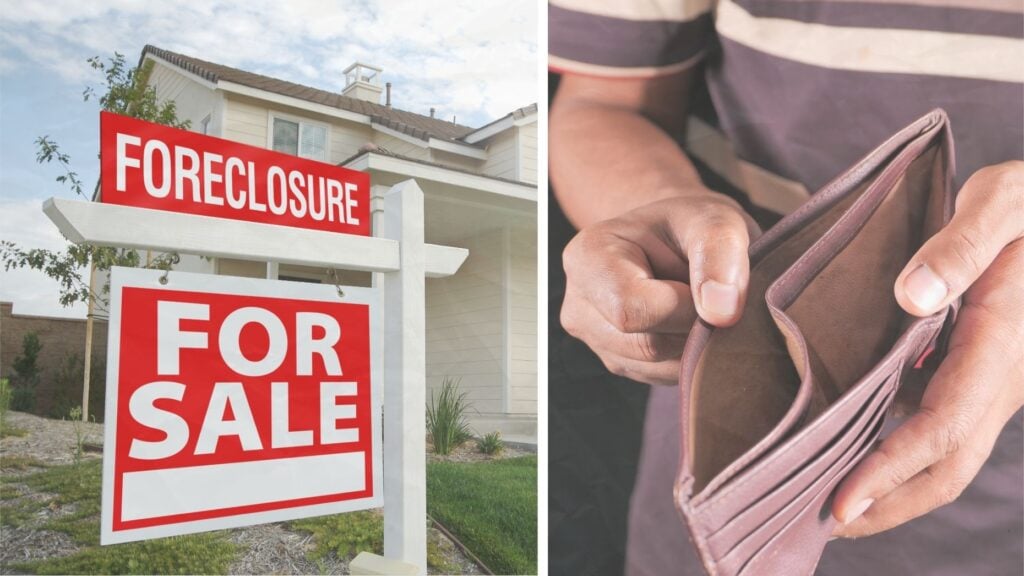
States with the highest foreclosure rates in May included Delaware, Florida, Illinois and Indiana. ATTOM’s CEO described the situation as “a mixed picture.”
Bigger. Better. Bolder. Inman Connect is heading to San Diego. Join thousands of real estate pros, connect with the Inman Community, and gain insights from hundreds of leading minds shaping the industry. If you’re ready to grow your business and invest in yourself, this is where you need to be. Go BIG in San Diego!
Amid ongoing challenges in the real estate market, a new report shows that foreclosures ticked down month over month in May, but were up 9 percent compared to the same time last year.
The report, from data firm ATTOM, shows that in May, there were 35,498 properties in the U.S. with foreclosure filings. That amounts to one in every 4,009 housing units with a filing. The report notes that these numbers are down 1 percent compared to April but up 9 percent compared to May of 2024.
Rob Barber, ATTOM’s CEO, described the situation in May as “a mixed picture with fewer starts but a continued rise in completed foreclosures.”
“This suggests that while fewer new defaults are being initiated, lenders may still be working through a backlog of existing cases,” Barber added in the report. “We’ll be watching closely in the months ahead to see how these trends evolve.”
The states with the worst foreclosure rates include Delaware, where one in every 2,313 housing units had a foreclosure filing in May; Florida, at one in every 2,536 housing units; Illinois, at one in every 2,668 housing units; Nevada, at one in every 2,747 housing units; and Indiana, at one in every 2,983 housing units.
The three metro areas with populations over 500,000 and the worst foreclosure rates were all in Florida: Lakeland (one in every 1,506 housing units); Cape Coral (one in every 1,674 housing units); and Jacksonville (one in every 1,888 housing units).
The report also reveals that lenders repossessed 3,844 properties via completed foreclosures in May. That’s up 7 percent compared to April, and up 34 percent relative to the same time last year.
The year-over-year rise in foreclosures comes as the real estate market struggles with years of sluggishness. After a particularly active period during the COVID-19 pandemic, mortgage rates jumped in 2022 and have remained elevated ever since. Higher rates have subsequently translated into slower sales and lower inventory.
However, while foreclosure rates have ticked up during this period of sluggishness and remain elevated compared to the early days of the pandemic, ATTOM data shows that they remain well below rates during the Great Recession.
Email Jim Dalrymple II

by Jim Dalrymple II | Jun 10, 2025 | Industry, News Feed
The company handling notifications has sent out more than 100 million emails notifying homesellers about the settlements — and is charging more than $32 million for its services.
Bigger. Better. Bolder. Inman Connect is heading to San Diego. Join thousands of real estate pros, connect with the Inman Community and gain insights from hundreds of leading minds shaping the industry. If you’re ready to grow your business and invest in yourself, this is where you need to be. Go BIG in San Diego!
Over a year after major real estate entities settled antitrust commission litigation, more than 2.5 million people have submitted claims to collect money in the cases.
That’s according to a new quarterly report from JND Legal Administration, the law firm overseeing administrative tasks related to major settlements in cases such as Gibson, Sitzer | Burnett, and others. Among other things, the report — filed in court Monday — reveals that up through this month JND has sent out 100 million emails and 38 million postcards to notify potential homesellers of the settlements.
Additionally, JND began staffing a contact center last July to handle inquiries about the settlements, and since that time has received “over 25,000 calls and 30,000 emails.”
This flurry of reaching out to, and fielding inquiries from, consumers led to the 2.5 million claims, which were submitted both online and via a paper form.
The report further outlines how much JND is making for this work. In total, between January of last year and May of this year the firm has invoiced $32,777,091.15. Of that sum, $5,919,220.72 remains outstanding.
The report includes a chart showing exactly how much JND charged for specific campaigns. For example, JND carried out a mail campaign related to the Gibson settlement beginning in July 2024. This led to nine different invoices, sent between last July and February, the largest of which was for about $6.3 million. That $6.3 million invoice has been paid, though smaller sums totaling about $7,000 remain unpaid.
Antitrust commission lawsuits dominated the real estate industry in recent years, gaining particular attention after a jury sided with homesellers who claimed the National Association of Realtors and major franchisors conspired to inflate consumer costs. The verdict, in the case known as Sitzer | Burnett, led to a series of similar lawsuits that eventually included virtually every major real estate company.
Settlements began pouring in after the jury verdict, and NAR settled in March 2024. The trade organization’s settlement included an agreement to change some rules, as well as the promise to pay $418 million.
Other major settlements included HomeServices of America, which agreed to pay $250 million, Anywhere, at $83.5 million, Keller Williams, at $70 million, Compass, at $57.5 million, and RE/MAX, at $55 million. These settlements alone, along with NAR’s, total more than $900 million. With various additional settlements, the total amount of money available is more than $1 billion, though how much individual consumers get to collect will depend on the total number of claims, as well as the costs of administering the settlements.
Tanya Monestier — a law professor at the University of Buffalo who has objected to the settlements — has argued that the plaintiffs attorneys in the cases could collect $333 million, but that homesellers themselves may only get $20 or $25.
Read JND’s full report on the settlement administration here:
Email Jim Dalrymple II
