How to use Instagram to generate more real estate leads in 2025

Improve your reach and land more leads with advice from Adam Morejon and Rick Guerrero on social media marketing that works.

Bigger. Better. Bolder. Inman Connect is heading to San Diego. Join thousands of real estate pros, connect with the power of the Inman Community, and gain insights from hundreds of leading minds shaping the industry. If you’re ready to grow your business and invest in yourself, this is where you need to be. Go BIG in San Diego!

In this episode of Real Estate Rockstars with Rick, I sat down with Adam Morejon from Agent Marketers and chatted about innovative social media strategies for real estate agents. The conversation was full of actionable tips, focusing on why real estate agents should have an omnichannel presence and not rely on just one specific platform.

Organic growth

Morejon, who grew his Instagram following to over 50,000 within a year — all organically — shared his journey from zero presence to becoming a local influencer. His story is both motivational and practical, offering Realtors valuable advice on making the most of their social media reach.

What’s striking about the interview is Morejon’s focus on delivering value rather than posting typical “Just Listed” or “Just Sold” content. He encourages Realtors to position themselves as community information hubs by sharing local updates, events and lifestyle content. This approach keeps local followers engaged and attracts potential relocation clients.

Batch for success

One of Morejon’s key strategies is batching content creation on Mondays to ensure a consistent flow of posts, Reels and carousels throughout the week. He highlights how mixing various types of content helps maintain engagement and extend reach. Additionally, Morejon discusses the power of collaborating with local businesses to tap into their audiences and expand visibility.

If you want to grow your Instagram following and generate more leads, you won’t miss this interview. Watch the full video to discover how Morejon’s practical strategies can transform your real estate social media game and establish you as the go-to expert in your community.

Rick Guerrero is the Director of Branch Sales and Strategic Partnerships at US Mortgage Corp. You can follow him on Facebook or connect with him on LinkedIn.

This post was originally published on this site

How to use Instagram to generate more real estate leads in 2025

Improve your reach and land more leads with advice from Adam Morejon and Rick Guerrero on social media marketing that works.

Bigger. Better. Bolder. Inman Connect is heading to San Diego. Join thousands of real estate pros, connect with the power of the Inman Community, and gain insights from hundreds of leading minds shaping the industry. If you’re ready to grow your business and invest in yourself, this is where you need to be. Go BIG in San Diego!

In this episode of Real Estate Rockstars with Rick, I sat down with Adam Morejon from Agent Marketers and chatted about innovative social media strategies for real estate agents. The conversation was full of actionable tips, focusing on why real estate agents should have an omnichannel presence and not rely on just one specific platform.

Organic growth

Morejon, who grew his Instagram following to over 50,000 within a year — all organically — shared his journey from zero presence to becoming a local influencer. His story is both motivational and practical, offering Realtors valuable advice on making the most of their social media reach.

What’s striking about the interview is Morejon’s focus on delivering value rather than posting typical “Just Listed” or “Just Sold” content. He encourages Realtors to position themselves as community information hubs by sharing local updates, events and lifestyle content. This approach keeps local followers engaged and attracts potential relocation clients.

Batch for success

One of Morejon’s key strategies is batching content creation on Mondays to ensure a consistent flow of posts, Reels and carousels throughout the week. He highlights how mixing various types of content helps maintain engagement and extend reach. Additionally, Morejon discusses the power of collaborating with local businesses to tap into their audiences and expand visibility.

If you want to grow your Instagram following and generate more leads, you won’t miss this interview. Watch the full video to discover how Morejon’s practical strategies can transform your real estate social media game and establish you as the go-to expert in your community.

Rick Guerrero is the Director of Branch Sales and Strategic Partnerships at US Mortgage Corp. You can follow him on Facebook or connect with him on LinkedIn.

This post was originally published on this site

You can retire! A timeline for prep, planning, preparing for the future

Sisters Maeda Palius and Amy Chorew offer a retirement roadmap designed to help you leverage your knowledge to gain financial freedom.

Bigger. Better. Bolder. Inman Connect is heading to San Diego. Join thousands of real estate pros, connect with the power of the Inman Community, and gain insights from hundreds of leading minds shaping the industry. If you’re ready to grow your business and invest in yourself, this is where you need to be. Go BIG in San Diego!

It’s no secret that Amy and I are big fans of all things finance, business and planning for ways to meet your personal goals of financial freedom. We know that financial freedom looks different for every household, and we’re big believers in synergistic planning — that means aligning your business plan with your personal financial plan so both work together to move you toward financial freedom.

Picture this: You’re standing at a crossroads. Each road represents a financial phase on your journey. Each road has a timeline and pace. In this article we are going to show you a simple map and timeline to help you visualize what you need to know and plan for so that, yes, you can retire.

The roads ahead

There are essentially four roads that combine together to lead you to retirement. Each road is traveled for a length of time. Here are the areas we focus on.

  • Grow cash: Years one to five
  • Buy real estate: Years five to 10
  • Invest in retirement plans: Years 10 to 25
  • Retire: Flip the money switch, and watch it come back to you!

Year 3: You’re getting the hang of it. Now what?

If you’re a few years into your business and finally getting traction, your first step is clear:

Build your cash reserves

You need three to six months of living expenses saved. Why? Because having cash on hand gives you confidence and flexibility — so you’re making strategic decisions, not desperate ones.

Once you’ve got cash, think: Where should this capital go?

For agents earlier in their careers, the best next move is often real estate.

Let’s say you put $50,000 to $100,000 down on a property you plan to hold for the long term. You’re pairing debt with an appreciating asset — smart! This move can set you up with equity growth, rental income and tax benefits.

Real estate as a long-term wealth tool

Here’s how savvy investors think:

  • Does the property cash flow well?
  • What’s your return on equity?
  • Can you comfortably carry the property for the next 15–20 years?

Your returns may go toward renovations, mortgage paydown or even personal expenses during ownership. The key is understanding the numbers and building your portfolio intentionally.

Year 7-10: You’re building wealth. Now optimize it

Once you’ve got a few properties under your belt and steady cash flow, it’s time to:

Think tax strategy

Talk to your CPA about reducing your tax bill as a real estate professional and a property owner. At this stage, your income is growing from both commissions and rents.

Here’s where qualified retirement plans come into play.

Don’t jump into retirement plans too soon

Start simple:

  • IRA: Low cost and easy to open
  • Solo 401(k): Still manageable, but allows for higher contributions

As your income increases, consider more advanced plans like a cash balance plan. They can offer huge tax advantages. For example:

An agent with a $50,000 tax bill contributes $100,000 to their retirement plan — eliminating that tax bill entirely. Instead of paying the IRS, you’re investing in your future.

Yes, you’ll pay taxes later when you withdraw, but meanwhile, that $100,000 is compounding for potentially 10–30 years.

5-7 years from retirement: Get serious

By now, your rental properties may be paying down, your retirement accounts are growing, and your income streams are becoming more predictable.

Time to:

 Partner with a financial advisor

Get clear on:

  • Which assets are paying you?
  • What debt is left?
  • When will mortgages be paid off?

That’s when true mailbox money begins — rents coming in, with fewer expenses going out.

You’ve got this

We hope this gave you a clear roadmap for growing your business and personal wealth — so you can retire on your terms.

Amy Chorew is an active Realtor involved in investment properties and listing well-staged homes in Connecticut. Connect with her on LinkedIn and Instagram.

Maeda Palius has been a practicing CPA for 40 years. Connect with her on LinkedIn.

This post was originally published on this site

10 spring real estate content ideas for instant engagement, lead gen

New Inman contributor and marketing strategist Alyssa Stalker offers great ideas for stepping up your spring content marketing and drawing in buyers and sellers.

Bigger. Better. Bolder. Inman Connect is heading to San Diego. Join thousands of real estate pros, connect with the power of the Inman Community, and gain insights from hundreds of leading minds shaping the industry. If you’re ready to grow your business and invest in yourself, this is where you need to be. Go BIG in San Diego!

Spring is historically one of real estate’s busiest and most opportunity-filled seasons. As buyers reenter the market and sellers prepare to list, content becomes critical for staying top of mind.

But to stand out today, agents must move beyond templated graphics and generic listing promos. The most effective real estate professionals use content to tell stories, showcase expertise and build brand trust.

These 10 content ideas combine current trends with strategic messaging to help you connect with modern buyers and sellers without sacrificing your professional edge.

1. Spring reset: How to prepare a home for market in under 30 minutes

Take advantage of the spring cleaning conversation by sharing quick, impactful tips sellers can implement right away, like decluttering entryways, updating light fixtures or refreshing curb appeal. Keep it bite-sized and visual to make it scroll-friendly and shareable.

2. Seasonal trends: The butter yellow effect

This trending hue is popping up in design and fashion, and agents can use it to showcase homes with natural light, warm tones or fresh seasonal styling. A content series that leans into color psychology can demonstrate your understanding of what visually resonates with buyers in today’s market.

3. Patio season: How outdoor spaces can influence a sale

As buyers begin to picture their summer, outdoor living becomes a strong selling point. Use content to highlight features like decks, fire pits or flexible entertaining areas. Share tips for staging these spaces, or feature local contractors or landscapers for added community value.

4. Hosting ready homes: Positioning listings through lifestyle

Create content that reframes listing features through a lifestyle lens. Open concept kitchens, spacious dining rooms or seamless indoor-outdoor flow can be positioned as ideal for entertaining. This helps buyers emotionally connect with the space and shows sellers how you market homes beyond the basics.

5. What buyers actually want this spring: Tap into design and lifestyle trends

Instead of relying on outdated preferences, share what’s trending right now in design and lifestyle and how buyers are responding. Think warm minimalism, statement lighting, earthy neutrals, curved furniture or biophilic design elements that bring the outdoors in.

Create content that shows how these trends appear in real homes, and explain why they matter. You’re not just selling properties; you’re helping buyers envision a lifestyle.

6. Fresh start stories: Real client wins from the spring market

Whether it’s a first-time buyer or a seller relocating for a dream job, spring is the perfect time to share feel-good client stories. Keep the focus on transformation, new beginnings or lessons learned, adding warmth and credibility to your content.

7. Local spring roundup: Your community guide

Establish local authority by sharing seasonal guides for your area, highlighting parks, farmers markets, events or the best patios in town. Position it as a “live like a local” moment for buyers exploring the area and a feel-good lifestyle piece for your wider audience.

8. Visual refresh: Before and after listing content

Spring is about transformation. Show how thoughtful staging, lighting or landscaping can change a listing’s entire presentation. Use a before-and-after format to demonstrate your strategic eye, and position yourself as a professional who adds measurable value.

9. Think outside the box: Listing prep content that doesn’t feel overdone

Everyone shares a “how to prep your home for spring” checklist, but forward-thinking agents take it further. Offer a strategic breakdown of what actually impacts perception online.

For example, what types of listing photos perform best, which small upgrades boost visual appeal or how to prep a home specifically for short-form video. Or do a mini case study on how a seller followed your advice and increased perceived value. This builds your authority while subtly showing how your marketing process is different.

10. Make it yours: Brand yourself with a signature spring strategy

Use this season to create a branded content angle that only you’re known for. Maybe it’s “The Spring Edit” where you share your top picks weekly or a “Freshly Listed Fridays” series. Or a personal mini series showing what you’re doing differently this season to elevate your service.

It’s not only following trends; it’s about establishing consistency and creating an experience around your brand. When done well, people start to associate you with the feeling of spring and action.

The most effective real estate professionals don’t just sell homes; they communicate value. By tapping into seasonal trends, offering expert guidance and creating relatable content, you can position yourself as a trusted advisor in a competitive market that an audience wants to pay attention to.

Whether you use these content ideas to connect with new leads or deepen relationships with your existing audience, spring is your chance to show up with relevance, clarity and confidence.

Alyssa Stalker is a real estate branding strategist and host of the Above Asking podcast. Connect with her on LinkedIn or Instagram.

This post was originally published on this site

10 spring real estate content ideas for instant engagement, lead gen

New Inman contributor and marketing strategist Alyssa Stalker offers great ideas for stepping up your spring content marketing and drawing in buyers and sellers.

Bigger. Better. Bolder. Inman Connect is heading to San Diego. Join thousands of real estate pros, connect with the power of the Inman Community, and gain insights from hundreds of leading minds shaping the industry. If you’re ready to grow your business and invest in yourself, this is where you need to be. Go BIG in San Diego!

Spring is historically one of real estate’s busiest and most opportunity-filled seasons. As buyers reenter the market and sellers prepare to list, content becomes critical for staying top of mind.

But to stand out today, agents must move beyond templated graphics and generic listing promos. The most effective real estate professionals use content to tell stories, showcase expertise and build brand trust.

These 10 content ideas combine current trends with strategic messaging to help you connect with modern buyers and sellers without sacrificing your professional edge.

1. Spring reset: How to prepare a home for market in under 30 minutes

Take advantage of the spring cleaning conversation by sharing quick, impactful tips sellers can implement right away, like decluttering entryways, updating light fixtures or refreshing curb appeal. Keep it bite-sized and visual to make it scroll-friendly and shareable.

2. Seasonal trends: The butter yellow effect

This trending hue is popping up in design and fashion, and agents can use it to showcase homes with natural light, warm tones or fresh seasonal styling. A content series that leans into color psychology can demonstrate your understanding of what visually resonates with buyers in today’s market.

3. Patio season: How outdoor spaces can influence a sale

As buyers begin to picture their summer, outdoor living becomes a strong selling point. Use content to highlight features like decks, fire pits or flexible entertaining areas. Share tips for staging these spaces, or feature local contractors or landscapers for added community value.

4. Hosting ready homes: Positioning listings through lifestyle

Create content that reframes listing features through a lifestyle lens. Open concept kitchens, spacious dining rooms or seamless indoor-outdoor flow can be positioned as ideal for entertaining. This helps buyers emotionally connect with the space and shows sellers how you market homes beyond the basics.

5. What buyers actually want this spring: Tap into design and lifestyle trends

Instead of relying on outdated preferences, share what’s trending right now in design and lifestyle and how buyers are responding. Think warm minimalism, statement lighting, earthy neutrals, curved furniture or biophilic design elements that bring the outdoors in.

Create content that shows how these trends appear in real homes, and explain why they matter. You’re not just selling properties; you’re helping buyers envision a lifestyle.

6. Fresh start stories: Real client wins from the spring market

Whether it’s a first-time buyer or a seller relocating for a dream job, spring is the perfect time to share feel-good client stories. Keep the focus on transformation, new beginnings or lessons learned, adding warmth and credibility to your content.

7. Local spring roundup: Your community guide

Establish local authority by sharing seasonal guides for your area, highlighting parks, farmers markets, events or the best patios in town. Position it as a “live like a local” moment for buyers exploring the area and a feel-good lifestyle piece for your wider audience.

8. Visual refresh: Before and after listing content

Spring is about transformation. Show how thoughtful staging, lighting or landscaping can change a listing’s entire presentation. Use a before-and-after format to demonstrate your strategic eye, and position yourself as a professional who adds measurable value.

9. Think outside the box: Listing prep content that doesn’t feel overdone

Everyone shares a “how to prep your home for spring” checklist, but forward-thinking agents take it further. Offer a strategic breakdown of what actually impacts perception online.

For example, what types of listing photos perform best, which small upgrades boost visual appeal or how to prep a home specifically for short-form video. Or do a mini case study on how a seller followed your advice and increased perceived value. This builds your authority while subtly showing how your marketing process is different.

10. Make it yours: Brand yourself with a signature spring strategy

Use this season to create a branded content angle that only you’re known for. Maybe it’s “The Spring Edit” where you share your top picks weekly or a “Freshly Listed Fridays” series. Or a personal mini series showing what you’re doing differently this season to elevate your service.

It’s not only following trends; it’s about establishing consistency and creating an experience around your brand. When done well, people start to associate you with the feeling of spring and action.

The most effective real estate professionals don’t just sell homes; they communicate value. By tapping into seasonal trends, offering expert guidance and creating relatable content, you can position yourself as a trusted advisor in a competitive market that an audience wants to pay attention to.

Whether you use these content ideas to connect with new leads or deepen relationships with your existing audience, spring is your chance to show up with relevance, clarity and confidence.

Alyssa Stalker is a real estate branding strategist and host of the Above Asking podcast. Connect with her on LinkedIn or Instagram.

This post was originally published on this site

Home price appreciation seen as cooling as inventories grow

Experts surveyed by Fannie Mae expect national home prices to grow by 3.4 percent in 2025. Median list prices in 69 markets were down by 10 percent or more from a year ago in March.

In April, we’ll go deep on money and finance for a special theme month, by talking to leaders about where the mortgage market is heading and how technology and business strategies are evolving to suit the needs of buyers now. Inman’s Best of Finance returns for 2025, celebrating the leaders in this space. And subscribe to Mortgage Brief for weekly updates all year long.

Housing experts surveyed by Fannie Mae expect national home price appreciation to cool this year as inventories continue to swell, with dozens of local markets already seeing double-digit annual declines in median list price.

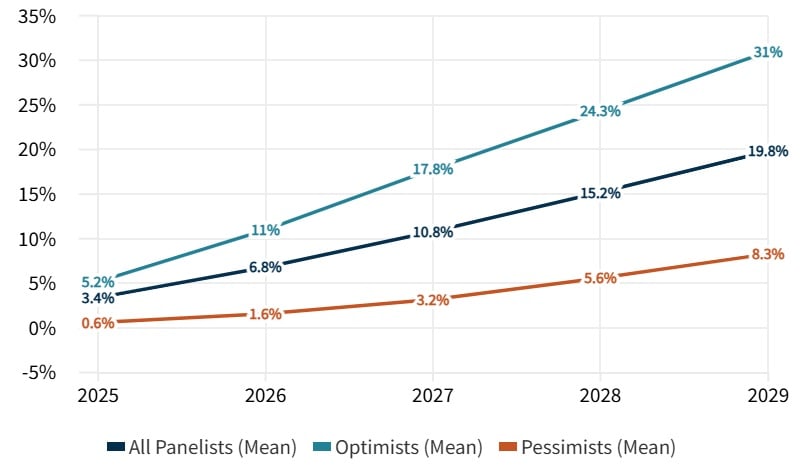
Fannie Mae’s latest Home Price Expectations Survey (HPES), released Tuesday, showed more than 100 housing and mortgage industry experts expect home price growth to slip to 3.4 percent in 2025, down from 5.8 percent last year.

The latest quarterly survey shows experts are less optimistic than they were in January, when they were forecasting 3.8 percent price appreciation in 2025.

The HPES panel expects price appreciation to continue to cool to 3.3 percent next year, down from the 3.6 percent forecast for 2026 issued in January.

Pessimists see home price appreciation flattening

Projected cumulative home price growth from Q4, 2024. Source: Fannie Mae / Pulsenomics LLC.

But the most pessimistic quartile of survey panelists sees national home price appreciation flattening to 0.6 percent this year and remaining weak until 2028.

While prices could go up more sharply in some markets, they’re also expected to fall in some metros where listings come onto the market faster than buyers can snatch them up.

At the national level, there were 1.75 million new and existing homes on the market in February, up 15 percent from a year ago, according to data tracked by the National Association of Realtors and the U.S. Census Bureau.

Inventory of new and existing homes

The inventory of existing homes grew by 17 percent, to 1.24 million, according to NAR data, while the number of new single-family homes on the market grew by 7 percent, to 500,000, the Census Bureau reported.

Realtor.com was tracking 1.3 million listings in March, up 17 percent from a year ago.

The latest readings from the S&P CoreLogic Case-Shiller Indices showed national home prices were up 4.1 percent from a year ago in January, with Tampa the only market in the 20-City index to see prices slip over that period, by 1.5 percent.

Nicholas Godec

But the second half of the year “told a different story,” S&P Down Jones Indices’ Nicholas Godec said in a press release, with only four of 20 cities — New York, Chicago, Phoenix and Boston — managing to “eke out” price increases during that period.

San Francisco posted the largest six-month decline at 3.4 percent, followed by Tampa at 3.2 percent, Godec said.

Selma Hepp, chief economist at Cotality (formerly CoreLogic), said flattening home price changes over the last six months “suggest further price deceleration is ahead.”

Selma Hepp

“While this year’s cold winter and large natural disasters play a role in dampening demand, falling consumer sentiment suggests potential homebuyers are wary of the short-term economic outlook and future inflation,” Hepp said in a March 30 report.

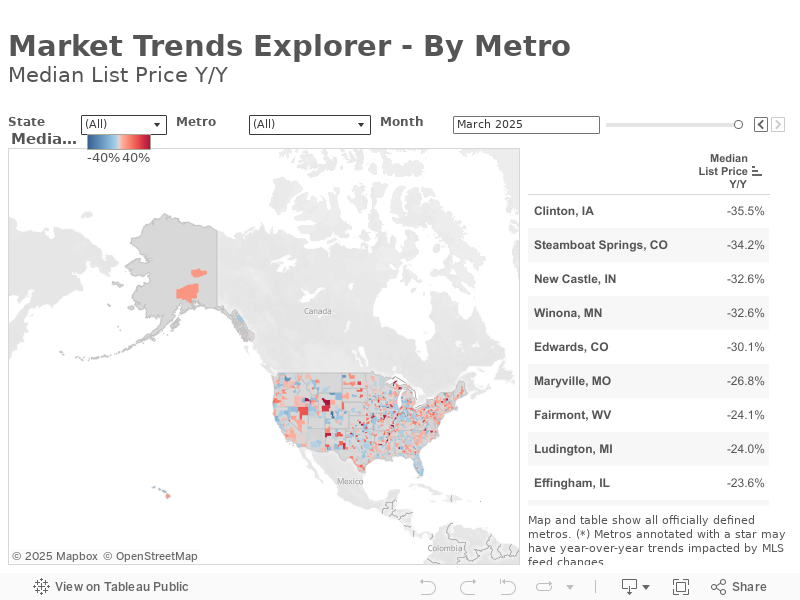
Home prices are driven by local supply and demand, and Realtor.com data shows median list prices in 69 metros were down by 10 percent or more from a year ago in March.

Median list price declines in 69 markets

Markets experiencing double-digit annual declines in median list price included Steamboat Springs, Colorado (-34.2 percent); Winona, Minnesota (-32.6 percent); Wenatchee, Washington (-22.1 percent); Flint, Michigan (-21.1 percent); Marion, Indiana (-19.7 percent); Enid, Oklahoma (-17.6 percent); Santa Fe, New Mexico (-14.5 percent); Ukiah, California (-13.7 percent); Dublin, Georgia (-13.4 percent); Montgomery, Alabama (-11.3 percent); Cedar Rapids, Iowa (-10.9 percent); Wausau, Wisconsin (-10.5 percent); and Boulder, Colorado (-10.2 percent).

“There are many ways to slice and dice housing data,” Realtor.com Chief Economist Danielle Hale said in her most recent weekly housing market update. “Through the lens of geography, our data reveals some commonalities.”

Danielle Hale

Realtor.com’s last Hottest Housing Markets report found that homes are selling more quickly in many markets in the Northeast and Midwest, and that a separate Down Payment Trends report showed buyers were putting more down on homes in the Northeast and Midwest and less in the South and West.

Last month, Fannie Mae economists said a pullback in mortgage rates should provide a “small boost” to home sales this year, in part because tariffs implemented by the Trump administration might inflate prices and slow economic growth. But tariffs announced this month have sent mortgage rates on the rebound, jeopardizing such forecasts.

Get Inman’s Mortgage Brief Newsletter delivered right to your inbox. A weekly roundup of all the biggest news in the world of mortgages and closings delivered every Wednesday. Click here to subscribe.

Email Matt Carter

This post was originally published on this site