In May, Elliman requested to move the dispute into an arbitration and provided all relevant agreements to Holly Parker’s claims, according to TRD. Parker withdrew the lawsuit without prejudice, meaning she can refile later.
Bigger. Better. Bolder. Inman Connect is heading to San Diego. Join thousands of real estate pros, connect with the Inman Community and gain insights from hundreds of leading minds shaping the industry. If you’re ready to grow your business and invest in yourself, this is where you need to be. Go BIG in San Diego!
Parker filed the suit back in April after Elliman demanded $1.5 million in clawbacks, including bonuses, assistant pay, advertising costs and StreetEasy fees. In return, Parker sought to void the clawback demand and recoup roughly $385,000 in damages and legal costs.
In May, Elliman requested to move the dispute into an arbitration, and in June, provided all agreements that govern the parties’ dispute. Parker withdrew the lawsuit, or discontinued it, without prejudice.
The legal dispute erupted following Parker’s February move to Compass after more than two decades with Elliman. At the time, Parker reportedly had 16 pending deals on the table. Under her 2020 independent contractor agreement (ICA), Parker was entitled to a 40 percent commission split on those deals, payable within 30 days of closing, the lawsuit states. That deadline came and went, and Parker claimed the firm still owed her nearly $193,000 after 10 of those deals closed.
Parker argued that side agreements she signed at Elliman should override her original contract. According to Parker, these agreements increased her commission split to 70 percent and included up to $205,000 in reimbursements and a performance bonus.
The lawsuit also stated, “As a matter of professional courtesy, Parker discussed her intentions to leave Elliman long before she effectuated the termination. Elliman never cited to Parker any clawback rights it believed it maintained and instead indicated to Parker that she would be paid for all pending transactions that closed within 90 days following her departure.”
Both Parker’s legal team and Douglas Elliman representatives declined to comment on the matter.
Turn up the volume on your real estate success at Inman On Tour: Nashville! Connect with industry trailblazers and top-tier speakers to gain powerful insights, cutting-edge strategies, and invaluable connections. Elevate your business and achieve your boldest goals — all with Music City magic. Register now.
Every Friday, Inman Service Editor Dani Vanderboegh rounds up the most popular, most read, most critical stories of the week to give you a quick catchup on the big headlines you might have missed in the hustle and bustle of the workweek. Here’s this week’s Top 5 as chosen by our readers.
P.S. Don’t miss The Download, our weekly column that breaks down one of the week’s top stories and equips you with what you’ll need to meet next Monday head-on.
Andrea Brambila | Inman
The trade organization’s MLS committee on Tuesday approved the elimination of the controversial policy at a meeting closed to the media. Its Executive Committee will take a final vote Wednesday.
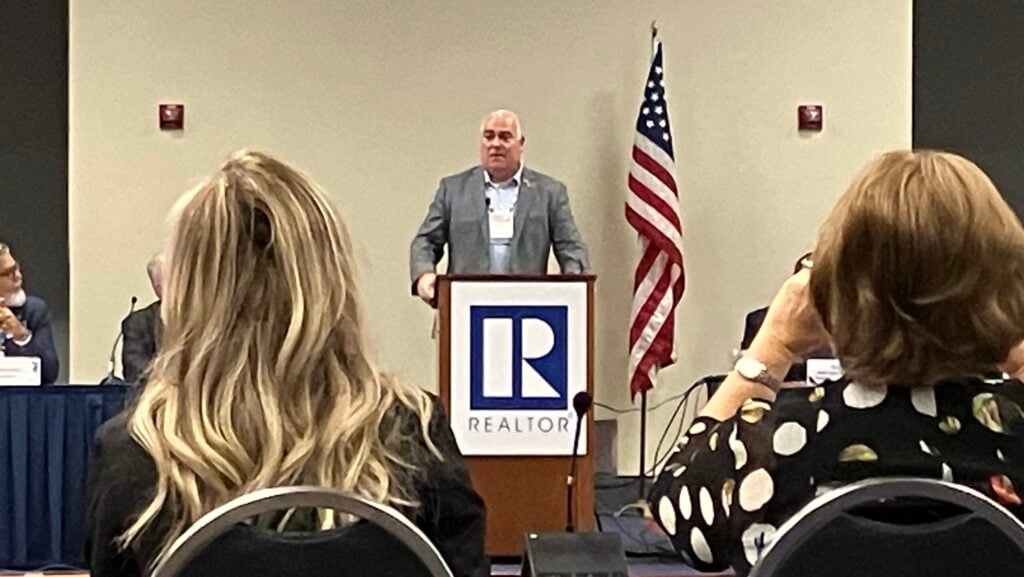
NAR President Kevin Sears addresses NAR’s Broker Engagement Council at the Realtors Legislative Meetings in Washington D.C. on June 2, 2025
At NAR’s midyear conference, Kevin Sears told brokers he was “cautiously optimistic” about improving the trade group’s relationship with the antitrust enforcer.
Courtesy of Compass
During a keynote address Tuesday, the CEO rallied the firm’s agents and staff against Compass naysayers, discussed short-term goals of seller choice and agent listing attribution, and unveiled the latest rendition of Compass AI.
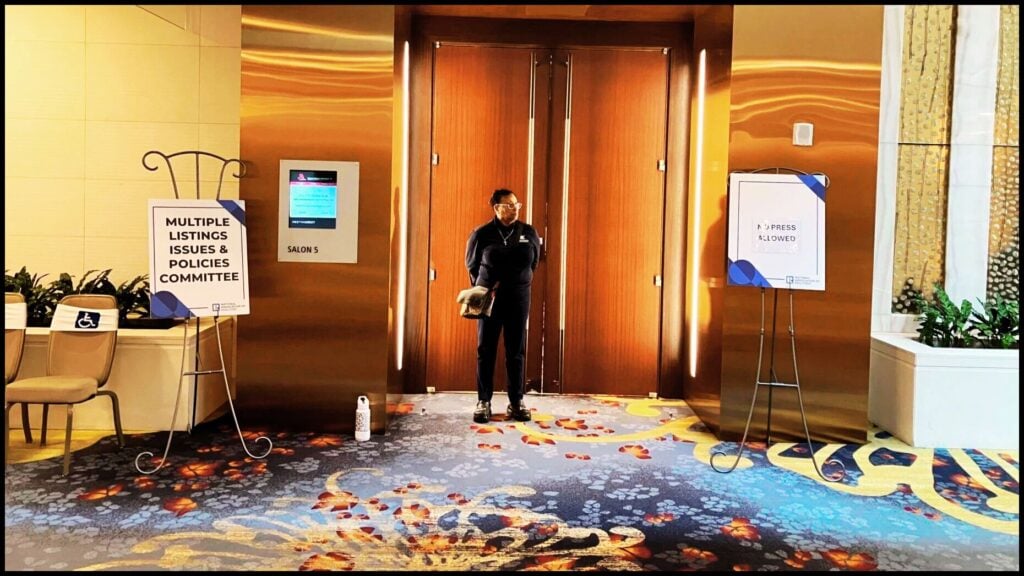
The committee opted to rescind the controversial “no-commingling” policy on Wednesday, one day after NAR’s Multiple Listing Issues and Policies Committee voted to scrap it amid DOJ scrutiny.
Jimmy Burgess and digital marketing expert Josh Ries break down a system for creating multiple marketing opportunities from each open house.
Bigger. Better. Bolder. Inman Connect is heading to San Diego. Join thousands of real estate pros, connect with the Inman Community and gain insights from hundreds of leading minds shaping the industry. If you’re ready to grow your business and invest in yourself, this is where you need to be. Go BIG in San Diego!
Anti-LGBTQ+ sentiments are rising, and according to the LGBTQ+ Real Estate Alliance‘s latest annual report, the real estate industry is at the epicenter.
The report, which is based on Alliance member surveys, revealed that real estate agents in the for-sale market (22.2 percent), outdated legal forms that require homebuyers or renters to use an outdated name or gender marker (17.8 percent) and real estate agents in the rental market (15.7 percent) are the top three sources of anti-LGBTQ+ discrimination. Homesellers (14.4 percent) and landlords (13.5 percent) are also contributing to discrimination issues, with members reporting issues with sellers and landlords refusing to sell or rent their property to an LGBTQ+ person.
Justin Ziegler
LGBTQ+ Real Estate Alliance President Justin Ziegler said the Trump Administration’s anti-LGBTQ policies — especially those attacking transgender and gender expansive (TGX) people — has created a dangerous and antagonistic environment.
“LGBTQ+ people are facing the greatest hostility since the AIDS epidemic because of the current administration’s anti-LGBTQ+ and anti-TGX executive orders, along with its efforts to end DEI,” Ziegler said in a statement. “We are troubled to learn that our members believe that real estate professionals were the leading cause of record-high housing discrimination against the LGBTQ+ community.”
“Our industry has a lot more work to do to root out discrimination and ensure that the LGBTQ+ community has equal access to fair housing and equal access to homeownership,” he added.
A third of survey respondents said housing discrimination has gotten worse over the past three years, with 58 percent of LGBTQ respondents and 42 percent of heterosexual respondents saying President Trump’s anti-transgender policies will cause more trans and gender expansive (i.e., people who eschew traditional gender identities and expressions) individuals and families with TGX children to relocate.
This uprooting, respondents said, will likely lead to poorer homeownership and financial outcomes for LGBTQ+ children.
Parents of heterosexual children were 10.4 percent more likely to believe that their child would have equal access to homeownership than parents with LGBTQ+ children. These parents were also 23.1 percent more confident about their child’s potential equal access to financial stability than parents with LGBTQ+ children.
More than 71 percent of parents with heterosexual children believe their child will have fair housing access in the future, compared to just 49.0 percent of parents with LGBTQ+ children.
“We recognize that more education is needed as those in the LGBTQ+ community had a different view than heterosexuals about numerous homeownership-related issues,” Ziegler said of the report’s findings.
In a phone call with Inman, Ziegler said the Trump Administration’s policies are forcing LGBTQ+ homeowners, especially those who are transgender or gender expansive, to consider moving to a new state or a new country to find safety. However, that safety comes at a high cost, with homeowners losing the benefit of their record-low mortgage rates and equity.
“I can’t tell you exactly how much TGX homeowners have lost, but I can tell you this: I bought a home five years ago. I sit on a 2.75 percent interest rate and my home has appreciated by about 60 to 70 percent since I purchased it. If I were to sell it, I would be sitting on hundreds of thousands of dollars worth of cash,” he said. “Let’s say I have $350,000, and if I were to take all of that cash and put it down on purchasing my same home right now, in today’s value, I would still have an increased mortgage payment, due to higher mortgage rates and appreciation trends.”
“I would not be able to afford the home that I’m living in,” he added. “And that’s the situation LGBTQ+ are facing.”
Ziegler said real estate agents are in a special position to help LGBTQ+ homebuyers, homesellers, and renters navigate a difficult housing and political landscape, but bias often gets in the way.
“The reality is the best thing that people can do in our industry is just treat everybody with dignity and respect,” he said. “Being inclusive just is going to create a stronger industry. Treating people the way you would want to be treated is going to create a stronger industry. I mean, how great would the world be if everyone were just accepted for who they are?”
“And I think that that’s, that’s probably the baseline of how to become an ally,” he added. “And even from the business standpoint of it, with homeownership being lower within the LGBTQ+ community, there are more opportunities to get business with folks in a community where the home ownership rate is lower. Why wouldn’t you want that opportunity? And all you have to do is accept people for who they are.”
Ziegler said Pride Month is the perfect opportunity for agents to connect with the LGBTQ+ community by attending local Pride events, learning about LGBTQ+ history, and finding ways they can advocate for equality in their brokerages and communities by supporting diversity, equity, and inclusion (DEI) initiatives and bills that protect LGBTQ+ rights.
The Alliance president also said this is the time for LGBTQ+ agents to be more visible and show others, especially those who haven’t disclosed their sexual orientation or gender identity, that they’re not alone.
“If you’re in a community where you feel safe to do so, now is the time to be out. Now is the time to be visible,” he said. “When I was 16 years old, I put a rainbow on the back of my car. I wasn’t trying to make any kind of political statement. I just wanted the people around me to know that they knew someone who was gay.”
“It’s very easy to marginalize someone when you feel they’re not part of your community. It’s very easy to lump someone into a ‘those people’ category,” he added. “But when you know someone, you have a relationship with them, whether they’re your neighbor, coworker or friend, it makes it a lot harder to hate on a community.”
Bigger. Better. Bolder. Inman Connect is heading to San Diego. Join thousands of real estate pros, connect with the Inman Community, and gain insights from hundreds of leading minds shaping the industry. If you’re ready to grow your business and invest in yourself, this is where you need to be. Go BIG in San Diego!
If you’re not known as an expert for a specific community or area, then you’re not an expert. Geographical farming is a foundational strategy for agents looking to build a consistent business with a steady flow of listing opportunities.
In a business where burnout is common and consistency elusive, Craig Duran, a Panama City Beach, Florida-based agent, has quietly built a career — and a lifestyle — around geographic farming. In this article, he shares the dos and don’ts of farming the right way.
A rocky start that led to a system
Duran entered real estate in 2003 after a stint as a professional musician and golf shop employee. His early years rode the wave of a hot market — until the 2008 crash struck. One particularly painful year saw only five closings.
“I didn’t have the skill set. I wasn’t really running a business,” he said. Ready to quit, a lifeline came from an unexpected place: His mother gifted him three months of coaching with Bill Fields.
That coaching taught Duran two things that changed everything:
You’re in the people-finding business.
You need a repeatable system to find and serve those people.
That’s when he discovered farming.
Starting with 1 farm and a letter
Duran chose a condo building where his office was located and wrote a letter. Within the first couple of letters, he landed a listing.
“I probably got lucky, but that’s when I saw the potential,” he said.
From there, he added a second, more traditional residential farm. He diversified not just by geography but by product type, balancing vacation condos with primary residences.
Today, his business runs 12 to 13 active farms, which provide him with a business that consistently provides listings.
Selecting a farm: What matters
Duran’s criteria for selecting a farm have evolved. Early on, proximity and product familiarity were key. Now, he encourages agents to evaluate farms based on:
The annual turnover rate gives you an indication of how many homes will typically sell in the coming year. This gives you the ability to calculate how many homes your efforts may be able to generate for you in the coming year, should you decide to farm that area or neighborhood. You should anticipate a minimum ability to capture 10 percent of the sales in the coming year and even higher with consistent value and communication with the owners in the farm you choose.
The average price point and potential commission provide another way of understanding the investment you will make and the potential return on that investment. Factoring in $2 per household per month is a great way to budget your annual spend for the area or neighborhood. This will be a combination of monthly mailers to the owners, along with “just listed” and “just sold” cards for the homes you list in the neighborhood.
Understanding if there is already a dominant agent in the farm helps you decide which areas have the most opportunity for immediate impact. Finding a neighborhood where there isn’t an agent who has over 10 percent of the previous year’s sales is a factor that increases your ability to become the go-to agent for that farm area.
It’s hard to sell something you don’t like. Duran said, “You should genuinely like the area or property type. It makes conversations easier.” He also considers life stage alignment — young agents farming starter neighborhoods, for example, can connect more naturally with homeowners.
The goal: A 10x return
While he no longer obsesses over exact ROI calculations, Duran aimed for a 10x return early on.
“Some farms hit that. Some get zero for three years and then explode in year four. You’ve got to play the long game,” he noted.
He tracks everything in a spreadsheet, manually entering data at year’s end. His process isn’t just analytical — it’s reflective.
Monthly execution: Direct mail and digital layers
Duran’s strategy centers around consistent, relevant direct mail. The core messages:
“Just sold” notifications
“For sale” promotions (with QR codes)
Market updates curated for each farm
“People want to know what’s happening in their building or neighborhood — not generic data,” he said.
Digitally, he uses landing pages to capture emails and send e-alerts with property activity. The key? Value-first content with no sales pressure. This is an example of one of his postcards for capturing email addresses for e-alerts:
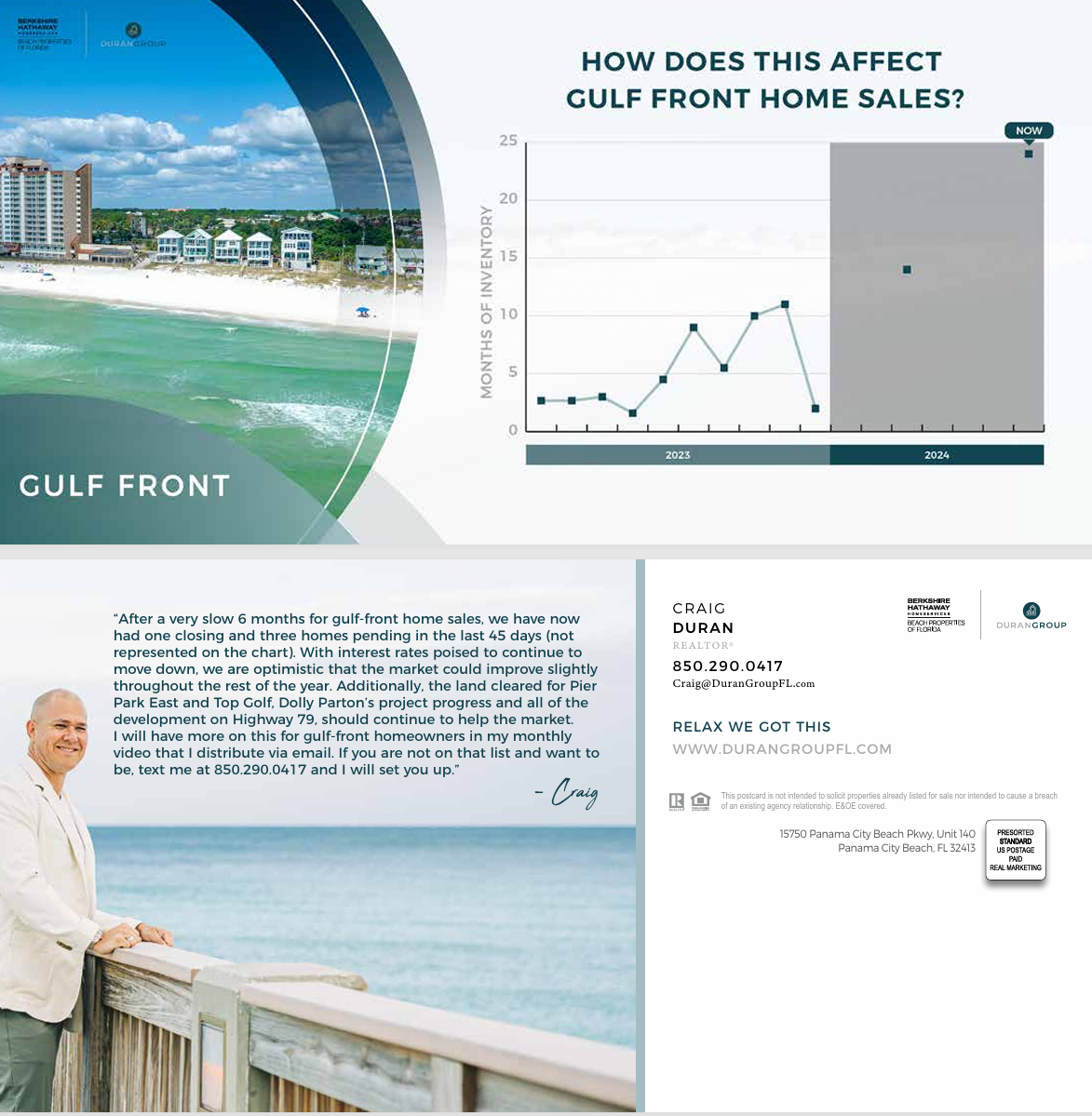
“If someone wants a market update emailed to them, I give it freely. That branding carries weight later when they’re ready to list.” This is an example of a market update postcard Duran has used recently:
Video: The underrated farm asset
Duran creates screenshare video updates, walking viewers through market stats and trends. Each one is tailored to the specific farm.
“You can’t say everything in a postcard. These videos let me explain how I think — how I work. Owners feel like they know me before we ever speak.”
Many are 10–15 minutes long, breaking the “keep it short” rule. “People watch. Especially when it’s about their property,” he said.
This is an example of one of the neighborhood-specific updates he does:
When to let go of a farm
Deciding to drop a farm is difficult. Duran has seen zero ROI in some farms for years, only to have them pay off later. Still, he evaluates annually and adjusts. Factors include:
Lack of engagement despite strong effort
Shift in inventory or pricing that no longer fits his model
Burnout or lack of personal interest
“You can’t farm everything forever. It’s OK to pivot,” Duran said.
Final advice: Consistency over perfection
In a market filled with distractions, Duran’s advice is simple: “Just get good at helping people. Focus on consistency. That’s what separates the agents who survive from those who thrive.”
Whether you’re a new agent or a seasoned pro needing to regain momentum, geographic farming isn’t just a marketing tactic — it’s a foundation. The best time to start farming an area or neighborhood may have been yesterday, but the second-best time is today.
Start farming your first or next area today, and your future business will be stronger and more consistent.
Jimmy Burgess is a real estate agent and national team builder with Real Brokerage in northwest Florida, serving the 30A, Destin, and Panama City Beach markets. Connect with him on Instagram and LinkedIn.
As a listing agent, you didn’t sign up to be steamrolled. You signed up to serve. Coach Darryl Davis shares strategies for working with difficult sellers.
Bigger. Better. Bolder. Inman Connect is heading to San Diego. Join thousands of real estate pros, connect with the Inman Community, and gain insights from hundreds of leading minds shaping the industry. If you’re ready to grow your business and invest in yourself, this is where you need to be. Go BIG in San Diego!
Let’s talk about something every agent will face eventually — the listing that tests your patience and professionalism.
You know the one. The seller who ignores your advice. Wants to hover during showings. Says no to photos, no to staging and is this close to going back to FSBO even though it didn’t work the first time. One of our clients recently shared a story like that during coaching: a smoker’s home, sellers who insisted on being there for every showing, and now — after weeks of no movement — they’re threatening to walk away altogether.
Sound familiar?
Whether you’re brand new or you’ve got decades under your belt, listings like this can rattle even the best agents. But they don’t have to derail you. Let’s walk through how to manage them with strength, professionalism and maybe even a little peace of mind.
Real talk: You’re not just spending time; you’re making an investment
Real estate is one of the only professions where you work first and get paid later — if the client follows through. No hourly wage. No salary safety net. You’re investing your time, your money and your expertise upfront, hoping that your client will partner with you to bring it to the finish line.
That’s not just a job — that’s a leap of faith. Every minute you spend is a down payment on their success.
So, when a seller decides midway through to cancel the listing or go back to FSBO, you don’t have to simply shrug and walk away. Especially if you’ve done the work. You have every right to protect your investment.
If they want out, don’t let them walk without understanding the cost
Here’s what I teach agents to say in situations like this:
“Seller, I’ve already invested time, money and resources into getting your home sold. I’ve done all that without asking for a penny upfront because I believed in your goals. But if you want to cancel and go back to FSBO, I can’t just walk away from that investment. In any other profession — attorney, consultant, contractor — you’d receive a bill for time and services rendered. I’ve taken the liberty of adding mine up. Here’s what that looks like.”
This isn’t about being confrontational. It’s about creating clarity. You’re not just “the agent”; you’re a professional. You’ve put in real work, and your value deserves recognition.
When sellers sabotage their own sale
Now let’s talk about the showings. Sellers who refuse to declutter, insist on staying during tours or won’t let you take photos aren’t just being difficult — they’re getting in their own way.
Buyers can’t speak freely if the seller is watching their every move. They won’t say, “It smells like smoke” or “This kitchen needs work.” But they will tell their agent, who can then pass that feedback on to help you reposition the property. If the seller shuts down that loop, they’re cutting off their own chance at a successful sale.
Here’s a simple metaphor I often use:
“Imagine I’m a doctor, and I prescribe medicine to help you get better, but you refuse to take it. Then, when your symptoms don’t improve, you blame the doctor. That doesn’t make sense. The same applies here. You hired me to help you sell your home. But I need your cooperation to make that happen.”
That usually lands.
Stand tall, set boundaries
There’s a difference between excellent service and emotional servitude. You are not a doormat. You are not a magician. You’re a skilled professional running a business.
If your client refuses to listen and insists on ending the listing early, you can offer a conditional release, meaning they can cancel, but if the home sells before your agreement expires, you’re still owed your commission.
“I want to support your decision, but I also have to honor the time and resources I’ve already committed. A conditional release protects both of us and respects the work that’s already been done.”
That’s not being “difficult.” That’s being fair.
This business is simple, but it’s not always easy
At the end of the day, the formula is clear: Be honest. Be professional. Set clear expectations early. And when necessary, be willing to have the tough conversations.
Because sometimes, the most important thing you can do for your client is not to agree with them. It’s to guide them. To educate. To hold the line. And to remind them that success comes when we act like a team — not when we go rogue.
So, if you’re in one of those listings right now — the kind that keeps you up at night — take a breath. Stand your ground. And remember: You didn’t sign up to be steamrolled. You signed up to serve. And there’s a big difference.
And you’re reading this on Inman, so you’re in the right place
This is where smart agents go to grow. To sharpen their skills. To find perspective and solutions when things get tough. My team and I are proud to support professionals like you — because this business needs strong, heart-centered leaders now more than ever.
Keep going. Keep learning. And keep standing tall.
Wealthy buyers are choosing stability over speculation, market expert Chris Drayer writes. They’re thinking long-term and betting on real estate as a safer, smarter place to park their wealth.
Bigger. Better. Bolder. Inman Connect is heading to San Diego. Join thousands of real estate pros, connect with the Inman Community, and gain insights from hundreds of leading minds shaping the industry. If you’re ready to grow your business and invest in yourself, this is where you need to be. Go BIG in San Diego!
Mansions over $10 million are selling to the ultra-wealthy like hotcakes. What does this mean, and what do we say to real estate buyers and sellers? Outside of the lifestyles of rich and famous, real estate buyers and sellers seem nervous, hesitant and on the fence. They may want to move or need to move due to a life event, but are reluctant to move forward. Agents are frequently looking for conversations to have with prospects around the current market conditions.
This is actually a great opportunity to have a conversation with your prospects who are always wondering if now is the right time to buy or sell. So this is good news for you, and here’s what to tell your buyers and sellers.
Mansion sales are booming
This week, Fortune reported what I found very surprising. Thanks to uncertainty in the market due to the volatile trade war, mansion sales are booming.
This is counterintuitive to me, and likely, many sellers. Aren’t we in a high-rate, low-affordability market? Isn’t the real estate slowdown still dragging on?
Yes, and no.
Here’s what you need to know and, more importantly, what you should be telling your buyers and sellers.
The mindset of mansion buyers matters
Why are insanely rich people investing in high-end real estate this year? These wealthy buyers are choosing stability over speculation. They’re thinking long-term and betting on real estate as a safer, smarter place to park their wealth.
Your clients should consider this mindset as well.
They may be moving for any other reason that life throws at you, but rest assured that the market has spoken, and it believes in the stability and long-term growth of real estate. If you’re going to make a move, you won’t be alone. But when to pull the trigger?
Trying to time the market is like rocket surgery
As you know, buying the dip is not easy to do. Stocks fluctuate wildly daily, but in general, the market continues upward over time. Homes are not stocks and are not as volatile. Rates may drop. Prices may fluctuate. But unless you are doing a fix and flip, this is a long-term purchase.
Nobody has a crystal ball. If a move would improve your client’s quality of life, give them more space, reduce stress, or bring them closer to family. That’s the value that matters now.
Waiting might feel safe, but inaction has a cost, too. Life’s timing matters most.
So, what should you tell your clients?
“Let’s have a conversation. We can talk about the headlines, but I want to know what’s going on in your life.”
Life conversations are where trust begins and where clarity forms. That’s how you help someone get off the fence. Use confidence and care. Talk to them about life, and be able to back up their decisions with relevant, timely information about their long-term goals.
Chris Drayer is co-founder of Revaluate, which segments consumers for marketers by propensity to move.