Don’t go silent this summer. Reach out to past clients, and show them you care with these strategies from coach Darryl Davis.
Bigger. Better. Bolder. Inman Connect is heading to San Diego. Join thousands of real estate pros, connect with the Inman Community, and gain insights from hundreds of leading minds shaping the industry. If you’re ready to grow your business and invest in yourself, this is where you need to be. Go BIG in San Diego!
In a world of automation and AI, agents who lead with heart and human connection are the ones who stand out. One of the simplest (yet most overlooked) ways to build a business that lasts? Gratitude.
Not just at closing. Not just at holidays. But especially during seasons when most agents go quiet.
This summer, don’t go dark. Show up. Check in. Give thanks. Here are nine smart, smile-inducing ways to show appreciation to your clients and sphere in a way that builds loyalty, trust and future business.
1. Host a summer client appreciation event
It doesn’t have to be a gala. A backyard BBQ, a sunset ice cream social or even a picnic in the park can work wonders. Invite past clients, current prospects and vendor partners for a laid-back celebration of the people who make your business possible.
Pro tip: Bring name tags, have a fun photo booth and hand out thank-you cards on-site. These little touches go a long way in turning a fun event into a memorable one.
2. Deliver a summer survival kit
Think practical and personal. A small tote with sunscreen, a reusable water bottle, maybe even a cooling towel or bug spray. Add a handwritten note that says, “Just wanted to help you stay cool this summer — thanks again for trusting me with your real estate journey.”
Bonus: Include a magnet or postcard with a quick summer home maintenance checklist — they’ll appreciate the thoughtfulness and your expertise.
3. Create and share a local summer guide
Be the neighborhood expert who goes beyond real estate. Put together a well-designed, branded-to-you list or PDF of local concerts, farmers’ markets, splash pads, kid-friendly events or date night ideas.
Teaching moment: This shows you know (and love) your community. It’s also shareable — clients may forward it to friends, expanding your reach organically.
4. Offer a free home checkup or seasonal maintenance reminder
Team up with a trusted local contractor or handyman and offer complimentary or discounted check-ups for things like A/C units, gutters or sprinkler systems. Or simply send a branded summer maintenance checklist with your favorite vendor recommendations.
Why it matters: It positions you as a homeowner ally, not just a sales rep. People remember the agent who made their life easier — even years after closing.
5. Drop off a sweet treat
Surprise and delight goes a long way. A small cooler of popsicles on the porch, a fruit basket with a ribbon or even a $5 gift card to the local ice cream shop with a punny note like, “Real estate is sweet — thanks to you!”
What to know: These don’t need to be extravagant. They need to be timely and thoughtful. That’s what gets remembered.
6. Send a personalized market update
Take a few minutes to send a quick check-in: “Hey! Just wanted to share what’s happening in your neighborhood right now — your home’s value may surprise you.” Attach a mini CMA or video message.
Pro insight: This isn’t just a pitch — it’s a service. It keeps your clients informed and shows that you’re still actively invested in their biggest investment.
7. Celebrate milestones that matter
Home anniversaries. Birthdays. New babies. First summer in a new home. These are easy to track (CRM, anyone?) — but so often missed. A handwritten card, a bottle of lemonade with a bow or even just a call can rekindle client connections.
Tip: Use your phone’s reminders, or set up recurring calendar events so you don’t miss these moments.
8. Host a fun summer giveaway
Make it seasonal and simple. “Enter to win a backyard BBQ basket!” or “Tell us your favorite summer memory for a chance to win local concert tickets.” Keep the entry tied to your business — maybe a photo of their home, a testimonial or referral.
Why it works: Giveaways create engagement. People love free stuff, and they love sharing with others even more.
9. Send a handwritten note — No strings attached
No marketing. No QR code. Just a real thank-you. Something like, “This time of year always reminds me how grateful I am for the clients who’ve trusted me. Hope you’re having a great summer.”
Fact: A handwritten note stands out 10x more than any email or text — and it costs you less than a dollar. Clients aren’t loyal to agents who simply “close the deal.” They’re loyal to agents who stay connected.
Summer is the perfect time to be the exception. To show up when no one else is. To deliver gratitude when others go silent. To stay top of mind — not with gimmicks, but with genuine care.
You don’t have to do all nine. Just start with one. Then do another. Then repeat. Because when your business is built on relationships, referrals aren’t luck — they’re the natural result.
And if you ever need a little inspiration or a boost of encouragement, you’re in the right place. Inman’s full of the kind of agents, ideas and stories that help you grow stronger in every season.
Shares in the iBuyer have traded for as little as $0.58 on the Nasdaq in recent days — well below the $1 threshold companies must meet to avoid delisting.
Bigger. Better. Bolder. Inman Connect is heading to San Diego. Join thousands of real estate pros, connect with the Inman Community and gain insights from hundreds of leading minds shaping the industry. If you’re ready to grow your business and invest in yourself, this is where you need to be. Go BIG in San Diego!
IBuyer Opendoor on Friday announced that it is planning a reverse stock split — a measure designed to avoid getting kicked out of the Nasdaq for having a too-low share price.
The company announced the move in a statement and filing with the U.S. Securities and Exchange Commission, saying the board of directors is recommending the reverse stock split. Chief Financial Officer Selim Freiha said in the statement that the “proposal is intended to support long-term shareholder value and give us optionality in preserving our listing on Nasdaq.”
“We’re grateful for the continued support of our shareholders, and remain focused on building a durable, technology-driven platform that powers life’s progress, one move at a time,” Freiha added.
The statement notes that the split could range from between 1-for-10 shares to 1-for-50 shares, “with the exact ratio within such range to be determined by the board in its discretion.”
The move comes amid a challenging period for Opendoor that has seen its share price fall from a high of more than $34 in 2021 to a current price of just under $0.70 on the Nasdaq. Earlier this week, shares dipped below $0.60 — to $0.58. Higher mortgage rates, lower home sales, and minimal home appreciation — all trends that have been ongoing for several years now — have been particularly hard on iBuyers, which make money if they buy, renovate, and sell homes at a profit.
Companies are required to maintain a share price of at least $1 in order to remain listed on the Nasdaq. Opendoor shares were consistently trading below that threshold by early April, and the company received a warning from Nasdaq about the situation earlier this month. The warning gave Opendoor 180 days to get back into compliance — or in other words to raise its share price back above $1.
Opendoor shareholders now have to approve the reverse stock split. However, the company’s statement notes that even with shareholder approval, the board “will not effect the reverse stock split if the board does not deem it to be in the best interests of the Company and its stockholders.”
In pursuing a reverse stock split, Opendoor follows in the footsteps of its smaller iBuying rival Offerpad, which carried out a 1-for-15 reverse stock split in 2023. Offerpad shares had fallen below the $1 threshold in late 2022. And like Opendoor today, Offerpad back then opted for the reverse split to avoid getting booted from the market.
In Offerpad’s case, the move worked — for a while. Shares hovered between $8 and $10 for the final half of 2023 and into 2024, but have since been in a state of steady decline. As of Friday afternoon, they were trading for just over $1, though they have dipped below that threshold several times recently.
Offerpad had a market cap of just over $31 million as of Friday afternoon. Opendoor’s market cap was about $493 million.
In response to harder times, Opendoor has leaned into more asset light revenue streams, including a seller marketplace and a referral program for agents. Such moves helped Opendoor trim losses in Q1, though revenue was also down during the first three months of the year.
In its statement Friday, Opendoor ultimately said that the board’s decision to pursue the reverse stock split “will be based on a number of factors, including market conditions, the historical, then‑existing and expected trading price of our common stock,” and the “continued listing requirements of the Nasdaq Global Select Market.”
Bigger. Better. Bolder. Inman Connect is heading to San Diego. Join thousands of real estate pros, connect with the Inman Community, and gain insights from hundreds of leading minds shaping the industry. If you’re ready to grow your business and invest in yourself, this is where you need to be. Go BIG in San Diego!
Senate Democrats have questions and concerns about the Trump administration’s plans to restructure mortgage giants Fannie Mae and Freddie Mac — and are asking their federal regulator to put any action to privatize them or take them public on hold.
In a letter to Federal Housing Finance Agency (FHFA) Director Bill Pulte Thursday, lawmakers asked for assurances that changes in the works at Fannie and Freddie won’t “put investor profits over the homes of millions of Americans” and drive mortgage rates up.
“As FHFA Director, you have a duty to ensure the safety and soundness of [Fannie and Freddie], and a decision of this magnitude cannot be made on a whim without Congressional consultation and approval,” lawmakers said.
The five-page letter — signed by 14 Senate Democrats, including ranking Banking Committee member Elizabeth Warren and Senate Minority Leader Chuck Schumer — sought more information about the status of plans to reorganize Fannie and Freddie by June 18, 2025.
An FHFA spokesperson said in a statement to Inman that the agency is “studying how, if the President elects to take Fannie and Freddie public, it can be done in the safest and soundest manner, which includes keeping them in conservatorship. In any scenario, we will ensure the MBS [mortgage-backed securities] market is safe and sound and that there is no upward pressure on rates.”
Fannie and Freddie were placed in government conservatorship in 2008 under financial strains generated by the 2007-2009 housing crash and the Great Recession. The companies don’t make loans themselves, but play a vital role in keeping mortgage rates down by guaranteeing that MBS investors who fund most U.S. home loans get paid even when homeowners have trouble making their loan payments.
While Trump took steps during his first administration to release the mortgage giants from the government’s control, disagreements over how the companies would be structured have kept the “government-sponsored entities,” or GSEs, in limbo.
Advocates of privatizing Fannie and Freddie have always expected that it would entail the government divesting itself of its ownership in the companies and releasing them from conservatorship. The Trump administration has hinted at a different path that could involve taking the companies public while maintaining the FHFA’s tight control over their business.
Restructuring Fannie and Freddie without privatizing them might keep mortgage rates from climbing, but could also leave taxpayers on the hook if the companies run into trouble again.
In a May 28 appearance on CNBC, Pulte noted that in one recent social media post, Trump “very explicitly says that he wants to take them public. He did not say that he wants to privatize them.”
Treasury Secretary Scott Bessent has acknowledged that the government might even put its considerable stake in the companies in a sovereign wealth fund. In theory, Fannie and Freddie could generate revenue for the government.
“The reason they’re talking about this is they need the cash in order to make their tax cuts and their budget reconciliation bill work,” Whalen Global Advisors LLC Chairman Christopher Whalen told Yahoo Finance on May 22.
Shares in Fannie and Freddie gained more than 40 percent after Trump first posted to social media on May 21 that the companies “are doing very well, throwing off a lot of CASH, and the time would seem to be right” to take them public.
But Fannie and Freddie shares have since given up some of those gains, as it dawned on investors that the Trump administration might be more intent on tapping the companies as a source of revenue than privatizing them.
After Trump posted to Truth Social on May 27 that the government intended to maintain an implicit guarantee of Fannie and Freddie’s obligations, some Fannie and Freddie investors got cold feet and sold their shares.
A June 3 Bloomberg News story that confirmed the mortgage giants might remain in conservatorship — and perhaps be used to generate revenue to pare down the deficit — accelerated the selloff in Fannie and Freddie.
Ackman’s case for forgiveness
If the Trump administration wants to use Fannie and Freddie to generate revenue instead of privatizing them, that might come at the expense of existing investors, whose shares have traded on an over-the-counter exchange since being delisted by the New York Stock Exchange in 2010.
That includes billionaire Bill Ackman’s hedge fund management company, Pershing Square Capital Management, which holds significant stakes in both companies.
The worst-case scenario for existing investors is that the government converts its senior preferred shares in the companies into common stock, massively diluting the value of existing stockholders’ shares.
In a lengthy June 3 post on X, Ackman called the “notion that the Trump administration would act in a manner to wipe out [existing Fannie and Freddie] investors for an uncertain and likely suboptimal outcome … extremely unlikely.”
Ackman argues that the government would come out ahead if it simply cancelled the $348.2 billion Fannie and Freddie would currently be required to pay to buy back their preferred shares under terms established in 2008.
Cancelling Fannie and Freddie’s balance sheet liabilities would not be a gift to existing shareholders, Ackman maintains, because the mortgage giants never got credit for $301 billion in payments they made to the government when the Treasury was sweeping all of their profits into government coffers.
If the government instead tried to convert its preferred shares into common stock, Fannie and Freddie would have difficulty raising money from the private sector, Ackman argued — and face a flood of lawsuits from existing investors that would delay their exit from conservatorship.
Ackman complained that the media “often depicts Pershing Square as having wealthy investors,” but noted that the company manages funds on behalf of thousands of small shareholders as well as pension funds and others that invest on behalf of retirees and other small investors.
“While the press and some politicians attempt to portray the [potential release of Fannie and Freddie] from conservatorship as a windfall for the rich, the vast majority of the value created here will go to small investors,” Ackman claimed.
Depending on what the Trump administration has in mind for the mortgage giants, it may not be required to obtain Congressional approval.
Moody’s Chief Economist Mark Zandi said Monday that the most likely outcome is that the Trump administration keeps Fannie and Freddie in conservatorship so mortgage rates don’t go up.
Zandi said he’d like to see Fannie and Freddie chartered as government corporations with an explicit guarantee, which would help keep mortgage rates low.
Real estate industry groups like the National Association of Realtors and the Mortgage Bankers Association have proposed a “utility-style” model for Fannie and Freddie that would provide an explicit guarantee while limiting their risks and profits.
But because Congress would have to pass legislation approving such a model, there’s virutally no chance of that happening, Zandi said.
Trump has a tight grip on Fannie and Freddie
The Trump administration gained tight control over Fannie and Freddie after Pulte, grandson of PulteGroup founder William J. Pulte, fired 14 board members and made himself the chair of both companies in March.
Pulte has issued dozens of orders out of the public eye, eliminating programs and policies intended to boost lending in minority communities, protect borrowers from unfair or deceptive practices, and assess risks associated with climate change.
New appointees to the mortgage giants’ boards include banker and investor Omeed Malik — dubbed “MAGA world’s premier financier” and a “close friend” of Donald Trump Jr. by New York Magazine — as well as former Pulte Group division president Mike Stucky and Brandon Hamara Hamara, vice president of land acquisition at homebuilder Tri Pointe Homes Inc.
Senate Democrats have questioned the legality of Pulte’s Fannie and Freddie board purges and his right to serve as chair of the companies.
In their June 5 letter to Pulte, lawmakers wanted to know what the timeline was for privatizing or restructuring Fannie and Freddie, and whether the FHFA has met with Ackman or any other GSE shareholders.
“To our knowledge, neither FHFA nor the Administration have produced a study on the impact that releasing [Fannie and Freddie from conservatorship] would have on safety and soundness, mortgage rates, or the housing market and financial system more broadly,” Senate Democrats said.
The Trump administration “has also not released any information indicating whether the [GSEs] financial positions would make it feasible to take them public, including by relisting their common and preferred stock, or what taking them public would entail,” lawmakers complained.
Get Inman’s Mortgage Brief Newsletter delivered right to your inbox. A weekly roundup of all the biggest news in the world of mortgages and closings delivered every Wednesday. Click here to subscribe.
Bigger. Better. Bolder. Inman Connect is heading to San Diego. Join thousands of real estate pros, connect with the power of the Inman Community, and gain insights from hundreds of leading minds shaping the industry. If you’re ready to grow your business and invest in yourself, this is where you need to be. Go BIG in San Diego!
Want to level up your business? Inman Access offers expert-led tutorials with insights, advice and ideas designed to help you build your skills every day.
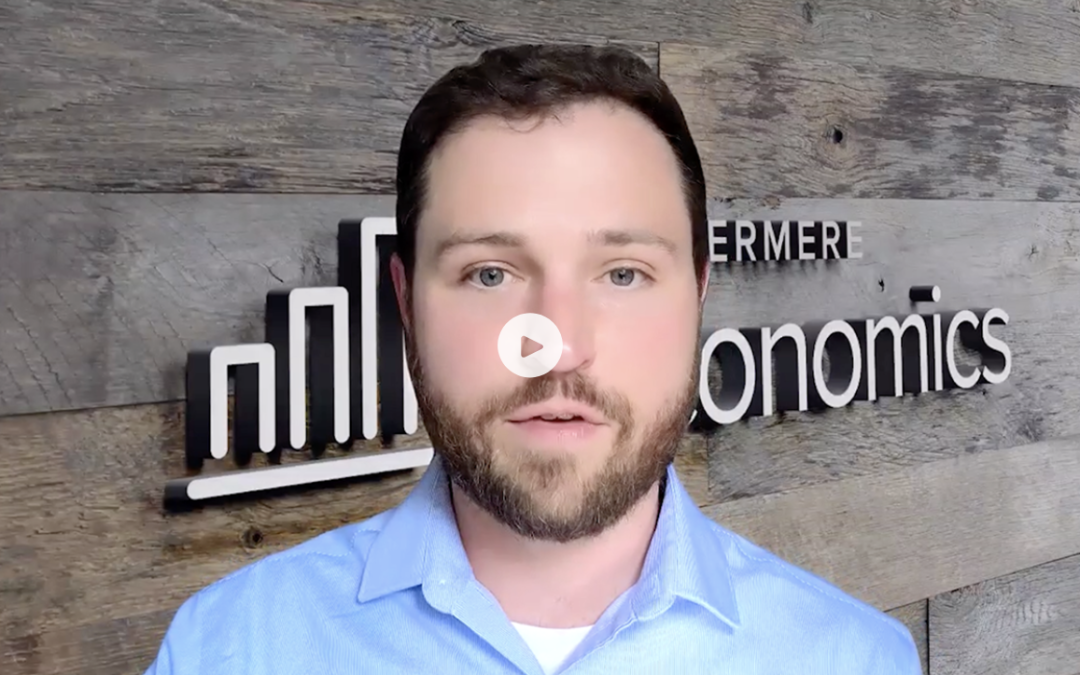
There is a noticeable change in consumer behavior. More and more homebuyers and sellers are asking their agent about the economy — stock market volatility, tariff impacts, recession risks and interest rate gyrations. How do you cut through the chatter, and help clients focus on the factors that really matter?
Windermere Real Estate’s Principal Economist Jeff Tucker brings clear-eyed perspective and walks agents through what to keep top of mind when talking to their clients about the economy and what it means for their homebuying or homeselling journey.”
Elevate your skills and set yourself up for success in 2025. Watch the session above, plus get fresh content added weekly, with Inman Access.
At Fortune’s Workplace Innovation Summit, Zillow Chief People Officer Dan Spaulding praised the portal’s Cloud HQ and how it’s boosted employee productivity and morale.
Bigger. Better. Bolder. Inman Connect is heading to San Diego. Join thousands of real estate pros, connect with the Inman Community, and gain insights from hundreds of leading minds shaping the industry. If you’re ready to grow your business and invest in yourself, this is where you need to be. Go BIG in San Diego!
Zillow Chief People Officer Dan Spaulding dished about the benefits of remote work at Fortune’sWorkplace Innovation Summit at the end of May, saying it’s all about empowering employees to work in an environment that’s best for them — whether it’s at home, in the office or both.
Dan Spaulding | Credit: LinkedIn
“We call it Cloud HQ because we wanted to take the politics of proximity out of the equation and start from a place where remote work isn’t a perk, it’s a business strategy,” he said. “And so for us at Zillow, it’s an intentional strategy that everything we do starts in the cloud. It’s gonna be documented. It’s gonna be written down, it’s gonna be clear for our employees to follow, so whether they’re working at home or in the office together, that they know the rules of the road and, for us, it’s been really transformative on our culture.”
Even with the focus on remote work, Spaulding said Zillow still understands the power of in-person interactions. That’s why the portal invests in regular “Z-retreats” that enable employees in the same market to gather and collaborate on projects.
“Making that transparent to the company really gives our employees the ability to understand what’s happening outside of the virtual world that they work in on a daily basis,” he told Fortune.
On LinkedIn, Spaulding explained the benefits of Zillow’s Cloud HQ, saying the portal has been able to hire employees in all 50 states, increase productivity and innovation, and stoke a 4x increase in applicants per role. Spaulding said remote work has boosted morale, with 94 percent of employees saying they’re proud to work at Zillow.
“We hire adults and treat people like adults,” he said on LinkedIn. “That means giving people the freedom to choose where and how they work best — and trusting them to show up when it matters. That trust? It’s paying off.”
In February, Zillow CEO Jeremy Wacksman dove into the portal’s remote model, saying that it’s saved the company millions of dollars in overhead costs.
Since switching to the Cloud HQ model in 2020, Zillow has reduced its office footprint by 73 percent, from 1,046,413 square feet to 274,771 square feet. The company shuttered its Denver and Overland Park, Kansas, offices and dramatically downsized its offices in Seattle; New York; Atlanta, Georgia; San Francisco; and Irvine, California, according to U.S. Securities and Exchange Commission filings.
Zillow’s office reduction measures lowered the company’s leasing costs from $54 million in 2022 to $34 million in 2024. The company expects its leasing costs to drop to $18 million over the next four years, and anticipates earning $26 million in sublease income during the same period.
The portal’s moves, including Cloud HQ, have improved its bottom line.
In the first quarter of this year, Zillow turned a profit for the first time since 2022, earning $598 million in revenue and making an $8 million profit, a reversal from last year’s $23 million loss.
Get all caught up on the National Association of Realtors Legislative Meetings, including Thursday’s votes on the no-commingling and hate speech policies.
Bigger. Better. Bolder. Inman Connect is heading to San Diego. Join thousands of real estate pros, connect with the Inman Community, and gain insights from hundreds of leading minds shaping the industry. If you’re ready to grow your business and invest in yourself, this is where you need to be. Go BIG in San Diego!
Each week on The Download, Inman’s Christy Murdock takes a deeper look at the top-read stories of the week to give you what you’ll need to meet Monday head-on. This week: Get all caught up on the National Association of Realtors Legislative Meetings, including Thursday’s votes on the no-commingling and hate speech policies.
After an eventful year in the real estate industry and amid ongoing concerns about government scrutiny, the rise of AI, and political and economic upheaval, the National Association of Realtors held its midyear Legislative Meetings in Washington, D.C., this past week. On the agenda were issues related to speech, fair housing, technology, commissions and affordability.
Inman’s Andrea V. Brambila had boots on the ground during the meetings, offering unparalleled insights and asking the tough questions during a jam-packed week for the real estate industry.
In response to a question from a broker, NAR President Kevin Sears talked about NAR’s historically “rocky relationship” with the Department of Justice, driven, in part, by the trade group’s recent lawsuit over a settlement agreement from which the DOJ withdrew.
After meeting with the DOJ twice in recent months, Sears said that “there was a clear lack of understanding of how [Realtors] do business,” with the DOJ believing that agents “take advantage of” consumers. “We protect the consumer,” Sears countered, adding that he explained that to the department.
When asked what the DOJ’s “issue” was with NAR, Sears’ response was succinct and to the point: “They think we make too much money,” Sears said.
“We make too much money. That’s it. I said I represent 1.5 million entrepreneurs who choose to wake up unemployed every day. But it’s through their hard work, by representing their clients and consumers, that they can earn a living.”
Sears went on to say that this year he is “cautiously optimistic” about forging a better relationship with the DOJ.
The changes, which are effective immediately, remove references to hate speech, add a definition of harassment and make the policy no longer applicable to all of a Realtor’s activities.
The committee opted to rescind the controversial “no-commingling” policy on Wednesday, one day after NAR’s Multiple Listing Issues and Policies Committee voted to scrap it amid DOJ scrutiny, Jim Dalrymple II reports.
From concerns about changes to the NAR Code of Ethics to resources for catching up with everything that’s new and effective right now, Inman contributors provided opinions, options and support for real estate professionals looking to rethink the way they do business.
Has NAR leadership learned anything about consumers in the past 25 years? As they prepare to vote on changes, housing counselor Rachael Hite thinks they haven’t.
You are your business’s most important asset. Don’t you deserve an upgrade? Drew Thompson shares educational and inspirational resources that will give you the boost you need now.
There are plenty of factors you can’t control in the broader economy, Amy Corr writes, but there are ways to implement more control and consistency in your business.
Christy Murdock is a writer, coach and consultant and the owner of Writing Real Estate. Connect with Writing Real Estate on Instagram and subscribe to the weekly roundup, The Ketchup.