This report is available exclusively to subscribers of Inman Intel, the data and research arm of Inman offering deep insights and market intelligence on the business of residential real estate and proptech. Subscribe today.
An immigrant tech worker uncertain about the state of the economy — and their family’s future. A retiree with a suddenly shaky investment portfolio. A homebuyer hit with a shockingly high price tag for needed repairs.
These three stories of real estate transactions gone awry are just a taste of how the tariff fallout is seeping into client decisions and beginning to eat away at the margins of the brokerage industry, agents across the country told the Intel Index survey in May.
As part of its flagship monthly survey of real estate professionals, Intel found that a small but significant share of agents and brokers had already seen a deal blow up because of tariffs.
12 percent of agent respondents and 16 percent of brokerage leaders told Intel that they had already witnessed at least one sale fall apart as a result of the tariffs.
Another 9 percent of agents and 4 percent of brokerage leaders in the survey said that it had not happened to one of their clients, but they had seen it happen to a client of another agent or brokerage in their market.
At this time, most agents surveyed have not yet seen an actual deal fall through for this specific reason alone.
Still, Intel sought these stories to better understand where things might be headed if current tariff levels remain in place — and especially if the temporary reprieves on even higher “reciprocal” tariffs are allowed to expire.
Agents and brokerage leaders said that the primary effect so far has been psychological — but a number of clients have been materially affected by tariffs as well.
“The tariff noises are unpredictable and chaos is reigning, which is creating an environment of instability and uncertainty in my buyers,” wrote one decision-maker at a brokerage on New York’s Long Island.
In this week’s report, Intel breaks down the most frequently cited tariff-related obstacles that real estate professionals are running across.
Wide-ranging experiences
Real estate agents whose business has been affected by tariffs reported numerous reasons given by clients.
Roughly half of the agents who told Intel that tariffs had tanked a deal in their market said that they had seen at least one instance where the client had not yet been directly impacted by tariffs, but worried they would be in the weeks to come.
This type of general fear and uncertainty, even before any direct impact was felt, was the most common scenario that these agents witnessed killing a sale.
One agent in Charlottesville, Virginia, reported to Intel that they had seen multiple deals fall apart in March and April.
At least one of this agent’s clients used HOA documents as an excuse to back out, but “later admitted the entire reason was economic uncertainty,” the agent wrote.
In Austin, an agent told Intel they were aware of another agent’s client who backed out because he or she was increasingly fearful of both tariffs and deportation when they backed out of a home search.
The client, who worked in tech, had lived in the U.S. for more than three decades, raised children that were born here and had proper documentation, the agent said.
But it’s not just fear of a hypothetical outcome that’s giving some buyers cold feet.
The government’s ever-changing tariff policy hit financial markets particularly hard in April, with the S&P 500 falling 12 percent in value in the days after the Trump administration’s April 2 announcement of so-called “reciprocal” tariffs.
Since then, markets have recouped most of their losses from that early period as the Trump administration paused a number of the highest tariff rates and signaled a willingness to strike deals with trading partners.
But for a number of agents who had a deal on the line in April, the damage was done.
More than 4 in 10 agent respondents who had seen tariffs tank a deal told Intel that a client had lost income from, or value within, their stock investment portfolio before backing out of a deal.
Actual job loss due to tariffs was rarely cited as a reason for a deal falling through in the earliest weeks of tariff implementation.
But loss of income or business revenue in a trade-dependent field was a relatively frequent issue for the clients who did back out, agents said. And some clients even told their agents that tariffs had already begun to push up their cost-of-living.
Another agent from New York City said one of their clients backed out of a deal after learning how high tariffs had pushed the cost of renovating the property.
This general experience was shared by 1 in 5 of the affected agents, who said they had seen tariffs raise the cost of a newly built home outside a client’s price range.
Here’s the full text and responses to Intel’s question from agents who said they’ve seen a sale fall apart due to tariffs.
Intel: You mentioned you’ve seen the tariffs contribute to at least one lost sale in your market. Which of the following scenarios have come up? Select all that apply.
49 percent — Client was not directly impacted by new tariffs, but expressed concern that they might be in the months to come
42 percent — Client lost income from, or value within, a stock investment portfolio
30 percent — Client did not lose a job, but lost income or business revenue in an industry reliant on international trade
26 percent — Client cited rising household expenses from new tariffs
21 percent — Client backed out of a search for new construction listings because of increased costs of material goods due to tariffs
18 percent — Client lost a job in an industry reliant on international trade
For now, new tariffs in imports remain a relatively rare cause of a busted purchase or sale. And based on financial market movement in recent weeks, investors appear to be increasingly convinced that the new levies will not remain in place long-term, or will not be pushed as high as once feared.
But the longer that they remain in place, and the likelier it becomes that the pauses on higher rates are allowed to expire, the more that cases like these may creep further into the mainstream.
For some brokerage decision-makers, that’s already the reality.
“The propensity for a negative business environment outweighs the indicators of positive views looking forward,” the Long Island brokerage leader wrote, “and this is directly related to tariffs, and mayhem around them.”
Methodology notes: This month’s Inman Intel Index survey was conducted May 20-June 3, 2025, and received 529 responses. The entire Inman reader community was invited to participate, and a rotating, randomized selection of community members was prompted to participate by email. Users responded to a series of questions related to their self-identified corner of the real estate industry — including real estate agents, brokerage leaders, lenders and proptech entrepreneurs. Results reflect the opinions of the engaged Inman community, which may not always match those of the broader real estate industry. This survey is conducted monthly.
Bigger. Better. Bolder. Inman Connect is heading to San Diego. Join thousands of real estate pros, connect with the Inman Community, and gain insights from hundreds of leading minds shaping the industry. If you’re ready to grow your business and invest in yourself, this is where you need to be. Go BIG in San Diego!
There’s the story, and then there’s the story behind the story.
The headlines read “National Association of Realtors overturns ‘no-commingling’ rule.” That sounds like a big story — an influential national organization just changed a policy that could affect millions of agents and consumers. But looking at it more closely, the headline might as well have read “NAR changes policy in attempt to show relevance.”
The story behind this story is actually the “portal war” playing out between Zillow, Compass and Redfin, along with NAR’s attempt to be a relevant player in that fight. Think of it like a monster movie where Godzilla, King Kong and Mothra (Zillow, Compass and Redfin) are going at it, knocking down buildings, setting things on fire … meanwhile, NAR is the reporter in the foreground saying, “Tokyo is burning.”
Sure, the reporter is an important character to explain what’s going on, but that reporter isn’t making it onto the movie poster.
NAR’s optional “No-Commingling Rule” (NCR) prohibited MLS listings from being displayed alongside non-MLS listings. Now, forgive me if I’m being cynical, but it’s pretty clear the purpose of this “segregation policy” was to keep MLSs and listing platforms from cannibalizing and chipping away at the dominance of the Realtor-controlled listings.
Keep in mind, the policy was never “mandatory,” it was “optional,” which hints at the behind-the-scenes power struggles back in 2005 when the policy was implemented, which set the stage for today’s portal wars some 20 years later.
Back in the early 2000s, the internet was still a shiny new object. Most people were connecting to the “World Wide Web” using dial-up modems, pages loaded slowly, graphics were low resolution, most brokerage websites were pretty barebones, and fax machines were still an office mainstay.
(For those of you not old enough to remember uncurling thermal fax paper to make photocopies, so you could drive to a client’s home to get wet signatures with an actual pen … you have no idea of the fun you missed.)
As connections got faster, the MLS provided public access through a client account set up by their agent. Access to listings was still in the control of brokerages and the MLS.
Enter IDX
The Internet Data Exchange protocol was a true game changer, allowing brokerages to set up Virtual Office Websites (VOWs) and eventually allowing individual agents to have MLS search access and listings on their own individual websites … and in some cases, in addition to the IDX fed listings on their websites, brokerages and agents were showcasing off-market/non-MLS listings.
In 2005 the industry was facing an existential dilemma — technology was moving fast, the MLSs faced losing control over their data as brokerages (even small brokerages) posed a threat to their hegemony — and NAR stepped up to level the playing field by limiting consumer choice, if only as an option: “If you want to include non-MLS listings, well, we prefer you didn’t, but if you have to, we’ll be disappointed.”
Enter Zillow
The No-Commingling Rule was implemented just in time for Zillow’s entrance in 2006, which eventually created yet another existential dilemma for brokerages, prompting some brokerages to establish policies regarding syndication and withholding listings. And then Redfin became a bigger player in the industry, and then Zillow became a brokerage, and then the iPhone and apps, and then private listing networks, and then Compass, and then REX and lawsuits, and the DOJ, and then Clear Cooperation Policy and then …
Sorry, I had to sit down because the room started spinning.
Every item on the above list was considered “industry rattling,” “game-changing” and a reason to decry the end of “the brokerage business” as we know it. That’s why news of NAR rescinding the optional “No-Commingling Rule” barely woke me from my afternoon nap.
For the record, NAR had another “major” announcement in March with their head-scratching “Multiple Listing Options for Sellers Policy,” which is yet another optional policy an MLS can choose to adopt or ignore. I hate to admit it, but I don’t fully understand why they announced this policy and what it even does, but a broker friend of mine put it this way: “It allows NAR to stay out of the fray and allows Zillow and Compass to both say they won.” I guess I’m not the only cynic in town.
In 2023, California decriminalized jaywalking. I’m glad it’s now off the books, but I didn’t really notice because, as a born and bred New Yorker, I was jaywalking anyway. And I don’t think I’d notice that NAR repealed the optional NCR if no one told me because it didn’t change how I did my job.
Whether siding with Compass and its three phase listing strategy, or rooting for Zillow and the hard line it’s taking against the three phase listing strategy, at the end of the day, the agents I work with have their shoulders to the wheel helping their clients buy and sell homes, regardless of what is thrown their way.
NAR exists to protect the industry, and that industry has changed — and so is what NAR is protecting. In light of the “settlement,” possible Department of Justice intervention, and the portal wars happening all around us, NAR needs to do more than announce (what I think are) meaningless policy changes.
Instead of manning (and womanning) the walls of the castle to fend off the [insert existential threat du jour here], it’s time for the industry to truly examine the role of the MLS in the decoupled commission universe, and how we, as an industry, can truly better serve the public. To that end, I applaud NAR’s exploration of refreshing the Code of Ethics, but don’t get me started on SOP 10-5!
To repeal a rule that was only optional to begin with is not a repeal of anything, and based on its timing, it comes off as a desperate play for attention. So, Godzilla, King Kong and Mothra might be battling it out. And Tokyo might be burning … but agents have houses to sell.
Spencer Krull is a managing broker with Side, and also works as a real estate expert witness and consultant for attorneys.
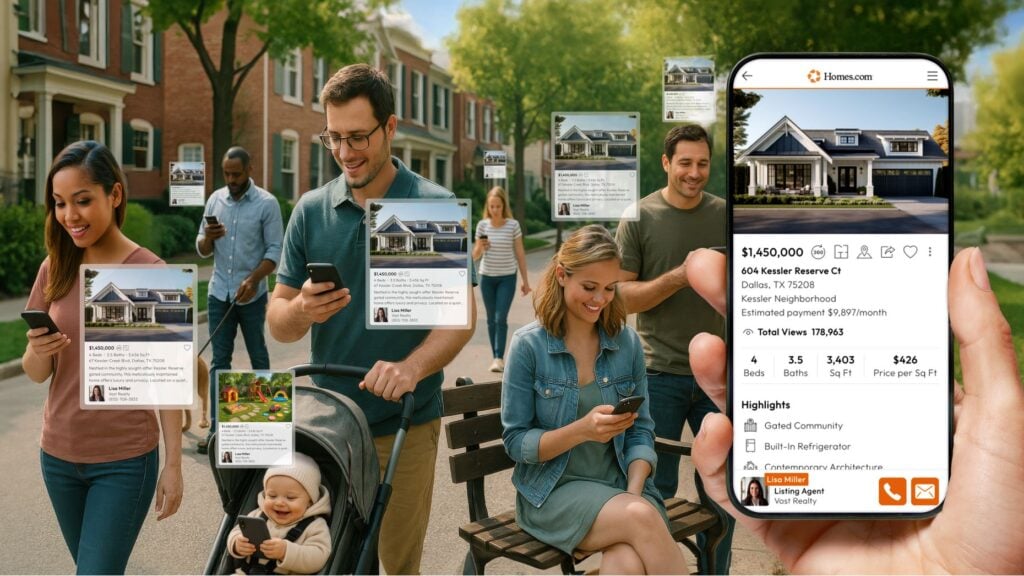
According to the National Association of Realtors, the vast majority of home shoppers are searching online. It’s harder than ever to grab a buyer’s attention. They’re not looking at a few homes — they’re scrolling through hundreds. Flyers don’t work, and social media doesn’t target the right people. And other real estate websites? They’re selling your leads to other agents.
Homes.com puts you back in control
We’re the only agent-friendly portal. Your listings. Your leads. Buyers see your name, your photo and connect directly with you. When you boost a listing on Homes.com, it jumps to the top of search results, in front of millions of active buyers. Your listing gets featured next to local schools and neighborhoods — plus it’s powered by retargeting ads, email campaigns and Matterports to stay top-of-mind and bring your listing to life. Boosted listings get more views, favorites and shares — which means more offers and faster sales.
Get to the front of the line
When buyers search on Homes.com, up to 1,000 listings can show up. But most buyers don’t scroll past the first page — they click on the first 40 homes they see. If your listing is stuck on page 10, there’s only a 1 in 1,000 chance it gets clicked.
You need to be on page one — where 90 percent of buyers are looking.
Boosting your listings on Homes.com moves them to the top, above other basic listings, so more buyers see them. The results? Boosted listings get an average of 120,000 views and eight times more buyer inquiries than unboosted ones.*
*All figures based on internal analyses comparing Members to non-Members on Homes.com. Boosted Listings will receive the same levels of marketing exposure.
Stay in front of buyers again and again until they act
If someone views your listing on Homes.com, we retarget them across the web with ads featuring your name, photo and contact information. We even retarget buyers and sellers who visit your profile on Homes.com. You can also upload your own email list — we’ll retarget those contacts too. On average, buyers see boosted listings 32 more times* — moving them closer to contacting you and making an offer.
*All figures based on internal analyses comparing Members to non-Members on Homes.com. Boosted Listings will receive the same levels of marketing exposure.
Let buyers tour your listing anytime, anywhere with a Matterport 3D digital twin
Busy lives mean many buyers will never walk through your home in person. When you boost your home, our professional photographers* will create a Matterport 3D digital twin and floor plan. With Matterport, buyers can explore your home anywhere, anytime — day or night, seven days a week. Buyers can take unlimited virtual tours, revisit favorite rooms and share with family and friends. They can even measure to see how furniture will fit or use our AI to digitally remove furniture.
*Matterport 3D Tour only available in select markets.
Ready to stand out, win more clients and sell faster?
With boosted listings, powerful retargeting, virtual tours and prime placement, you’ll attract more buyers and sellers than ever before. Unlike other platforms, we protect your leads and ensure you maintain full control over your business.
Make Homes.com Boost a winning part of your listing presentation. Let sellers know that if they list with you, their property will get prime placement on Homes.com — one of the most heavily trafficked home-buying sites in the world. Agents who use Homes.com in their listing presentations are winning 60 percent more listings.*
*Based on internal analyses comparing Members to non-Members on Homes.com.
With Homes.com Boost, there is no commitment. One low payment markets the listing until it sells, and you pay only when you have a commission on the way. Or become a Homes.com Member and all your listings will benefit from Homes.com’s billion-dollar investment, massive audience and proven results.
Join Homes.com today and take your real estate career to the next level.
In today’s economic climate, more sellers are asking the same question: Is spending $20,000 to $40,000 on traditional home staging really necessary? For decades, preparing a listing meant renting furniture, hiring photographers and coordinating logistics — just to bring one property to market. Until recently, virtual staging wasn’t a true alternative — it was expensive, slow and often looked artificial. That changed with AI.
Enter Collov AI, a Silicon Valley-based startup that leverages proprietary model training to develop AI-powered tools for real estate professionals. Unlike traditional virtual staging, which often involves outsourcing to overseas designers, Collov AI’s solution delivers instant results with photorealistic quality and interactive editing — all without the friction of manual workflows.
Its AI stages rooms with precision — placing furniture that’s properly scaled and styled — while preserving the original architecture. No fake light fixtures, no awkward edits. Just clean, realistic design that helps buyers see a property’s full potential.
One standout feature is the ability to remove existing furniture. In cases where buyers couldn’t look past a home’s outdated style, Collov AI allowed users to present the same space with a fresh, modern look — completely shifting their perception. With tools like “Chat Edit,” agents can refine images using natural language prompts — swapping furniture styles, adjusting lighting, or changing flooring—all in seconds, no design skills required.
Internal analysis shows that listings staged through Collov AI receive significantly more engagement across digital platforms. In one case, a condo listing that had gone unnoticed saw a 72 percent spike in listing views and a 44 percent increase in qualified leads after virtual staging was applied.
Payton Stiewe, Real Estate Advisor at Engel & Völkers San Francisco, shared, “We’ve used Collov AI on multiple listings and buyer consultations. The turnaround is fast, the cost is a fraction of traditional staging, and in this market, it’s a smart, strategic move.” Samuel Yang, PREC* at Nu Stream Realty, added, “After two months of no offers, I added Collov AI’s stunning virtual staging photos — within one week, two offers came in!”
Collov AI isn’t just catering to agents — it’s also being used by developers, stagers and photographers across residential and commercial sectors. As real estate continues its digital evolution, tools like this are helping professionals move faster, reach wider audiences and tailor visual marketing to today’s buyer expectations.
To learn more about Collov AI and try the platform, visit collov.ai.
Markk Tong is the Founding Marketing and Sales Manager of Collov AI, a Silicon Valley-based startup using artificial intelligence to transform real estate marketing. With a background in design technology and experience working with top brokerages, he focuses on bridging AI innovation with real-world agent needs.
Virtual property tours have evolved from simple slideshows to immersive, high-tech experiences. Today, true 3D tours, like those powered by Matterport, are redefining how properties are showcased, leaving traditional 360 walkthroughs behind. But what makes a 3D tour truly three-dimensional, and why does it matter?
What Sets Real 3D Apart
Real 3D tours don’t just capture a space visually; they digitize it completely, allowing viewers to explore height, width and depth with precision. Unlike 360 walkthroughs — which rely on stitching flat, panoramic images together and lack spatial accuracy — true 3D tours use advanced infrared-equipped cameras or AI to measure and capture the physical environment. The result? Immersive, to-scale models that offer a seamless, lifelike experience of walking through a property.
Matterport takes this depth to the next level with its “digital twin” technology, recreating properties in precise detail. Even simple 360 cameras or smartphones can be used to produce 3D tours through their cutting-edge software, making this advanced capability widely accessible.
5 benefits of Matterport 3D tours
For real estate agents, real 3D tours present unmatched advantages across marketing, sales and client satisfaction.
1. Stand out with innovative marketing
Offering a 3D tour instantly elevates your listings. These tours make a strong first impression, driving engagement and expanding online visibility. Integrating Matterport’s high-quality digital experiences can even improve your SEO rankings, ensuring your properties get noticed by more buyers and sellers.
2. Generate more leads, sell faster
Matterport 3D tours consistently drive up to 300 percent more engagement compared to static photos. The immersive nature of these tours attracts buyers, increases inquiries and often results in faster sales.
3. Reach buyers anytime, anywhere
Whether your buyers are international investors or local families with packed schedules, Matterport tours provide around-the-clock access to properties. 3D tours allow buyers to thoroughly explore homes from anywhere, helping them make confident decisions faster.
4. Achieve higher selling prices
Data shows homes listed with 3D tours can sell for up to 9 percent more and close 31% faster. A true-to-life experience helps buyers connect emotionally, envision potential and feel comfortable making competitive offers.
5. Save valuable time
By enabling buyers to pre-qualify themselves, real 3D tours reduce time wasted on unsuitable showings. Agents and sellers can focus on serious buyers, streamlining the sales process and minimizing disruptions.
How to choose the right 3D tour
Not all “3D” tours are created equal. Here’s a quick checklist for evaluating tour providers to ensure you’re getting true 3D technology that delivers real value for your business:
Does the tour provide a seamless, smooth walkthrough experience?
Does it include advanced features like a dollhouse view and auto-defurnish?
Are assets like listing photos, floor plans and videos included?
Can the provider distribute tours to major platforms like Homes.com or the MLS?
Matterport checks all these boxes, pioneering the industry with its AI-powered 3D digital twins and user-friendly features.
Elevate your real estate marketing
Real 3D tours with Matterport don’t just showcase properties; they transform how buyers experience them. By offering immersive, accurate and cutting-edge tools, you’ll stay competitive and deliver exceptional value to clients.
Elevate your listings today — start with a free Matterport account and see how digital twins can revolutionize your marketing strategy.
Bigger. Better. Bolder. Inman Connect is heading to San Diego. Join thousands of real estate pros, connect with the power of the Inman Community, and gain insights from hundreds of leading minds shaping the industry. If you’re ready to grow your business and invest in yourself, this is where you need to be. Go BIG in San Diego!
Each week onTrending, digital marketer Jessi Healey dives into what’s buzzing in social media and why it matters for real estate professionals. From viral trends to platform changes, she’ll break it all down so you know what’s worth your time — and what’s not.
June is here, and brands are navigating familiar terrain with a new level of caution. From rainbow logos to ad placement strategies, what worked a few years ago may not always be effective in 2025. This continues to highlight a constant shift toward authenticity in both values and voice.
Whether it’s how you show up for Pride Month, experiment with Threads or use AI tools like ChatGPT in your workflow, remember: It’s not just what you do — it’s the how and the why that matter.
Pride Month and the evolving role of brands
This year’s Pride Month has brought a noticeable shift in how brands show up — or don’t.
Where rainbow logos and merch were once standard, now many companies are scaling back. Some are reacting to political pressure or consumer backlash, while others are reconsidering how to show support in more meaningful ways. This corporate retreat has sparked important conversations about authenticity, tokenism and how communities perceive performative allyship, especially during June.
What’s happening:
Companies pulling back:BarkBox was criticized after internal messages revealed plans to cancel Pride campaigns. Target had its sponsorship rejected by Philly Pride organizers who were skeptical of corporate motives.
Trust is fraying: Consumers and LGBTQ+ communities are pushing back on what they see as empty gestures or “rainbow capitalism,” where Pride becomes a seasonal marketing campaign instead of a year-round commitment.
Some brands are doubling down: Others, like the San Francisco Giants, are continuing or expanding their Pride efforts, with clear ties to long-standing values and action.
Questions for real estate professionals to ask
Before you post about Pride Month, take a step back. Instead of asking “Should we say something?” — ask “What do we stand for, and how do we show that?”
Here are a few questions to help guide that reflection:
Brand alignment
Do we support LGBTQ+ clients, vendors or team members year-round, or only during Pride Month?
Are our marketing materials and language inclusive?
Have we taken actions that demonstrate allyship beyond a single social media post?
Audience and authenticity
Is our support for Pride aligned with the values and expectations of our audience?
Are we prepared to receive feedback — both positive and critical — and respond thoughtfully?
Internal culture
Do LGBTQ+ members of our team feel supported, heard and included?
Are we promoting a work environment that is safe and affirming for all identities?
If you choose to show support, here’s how to do it well
If your answers point toward authentic alignment, here are a few ways to engage online in a way that reflects genuine support:
1. Share stories, not just symbols
Highlight LGBTQ+ homeowners, community leaders or team members (with consent). Focus on real experiences and why inclusive housing matters.
2. Use your platform for education
Explain why inclusive language in listings matters. Share resources on housing discrimination or how to be a more inclusive agent.
3. Partner locally
Collaborate with a local LGBTQ+ center, sponsor a Pride Month event or donate a portion of June commissions to a housing justice cause.
4. Lead with values, not visuals
Avoid slapping a rainbow on your logo without context. Instead, post a message from leadership or team members about why Pride matters to your brand.
5. Engage beyond June
Continue to support inclusive policies, training and representation in your business. Make your content reflect real inclusion all year.
In today’s climate, silence may speak — but so can shallow statements. As a real estate professional, your brand can build trust by leading with clarity and compassion. If you choose to show up for Pride, let it be with purpose, not performance.
Threads ads are live, but most brands are still circling
With more than 350 million monthly active users, Meta’s Threads is no longer just the new kid on the block — it’s an emerging space for brand awareness. Since opening its doors to advertisers in April, Threads has drawn interest, but not a rush. Many brands remain in “wait-and-see” mode, weighing its staying power and strategic potential.
The catch? Threads ad inventory can’t be bought alone — it has to be bundled with other Meta placements. That’s made it less appealing for cautious advertisers, even though agency pros are calling it a “low-risk, high-learning opportunity.” In other words: A safe space to experiment.
So, what is currently working? Organic content. Agencies are advising clients to build an organic presence first, not to drive sales, but to develop a more authentic, human voice. Some brands are treating Threads as a testing ground for tone and personality, rather than a direct-response channel.
For real estate professionals, Threads offers a chance to get ahead of the curve. There’s less competition, more room to be playful and a growing user base watching for fresh voices. Think of it as a sandbox: Try short takes on market trends, hyperlocal commentary or behind-the-scenes posts. Skip the hard sell and focus on connection, because early adopters often get the biggest boost when the platform scales.
ChatGPT adds app integrations and meeting summaries — but is it ready for daily workflow?
OpenAI is positioning ChatGPT as a central hub for work by adding new features that connect it with tools like Gmail, Google Drive, Microsoft Teams and GitHub. In theory, this means less tab-hopping and more seamless access to the info you need, without manual uploads. It even shows the source of each response, making it easier to verify key details.
Another update: ChatGPT can now record and summarize meetings, offering transcripts, action items and key takeaways. It’s designed to streamline everything from brainstorming sessions to client recaps.
For real estate professionals, these features could reduce time spent on admin and follow-up, but only if they integrate smoothly into your existing systems. It’s worth exploring, especially for solo agents or small teams looking to stay organized — just keep an eye on whether the tech matches your workflow.
TikTok doubles down on brand tools — from insights to conversions
TikTok’s newest updates aim to make brand marketing smarter, not just splashier. With the launch of Market Scope, a first-party analytics platform, marketers can now segment audiences by funnel stage, track brand sentiment and discover top-performing products and keywords — all from inside TikTok.
They’ve also introduced Brand Consideration Ads, a new mid-funnel campaign objective designed to reach high-intent users based on in-app behaviors, such as searches, shares and clicks, which convert at rates 14 to 16 times higher than awareness audiences.
Other updates include TopView upgrades, featuring new interactive add-ons such as gift boxes and a guaranteed audience reach feature, as well as direct linking from brand ads to TikTok Shop, streamlining the path from discovery to purchase.
For real estate professionals, these tools offer a new way to move beyond brand awareness and guide potential buyers or clients down the funnel — whether that means building your audience, gathering insights or driving people to book an appointment.
TL;DR (Too Long, Didn’t Read)
? Pride Month branding is under a microscope: Many companies are pulling back, but others are leaning in with purpose. Before posting, real estate pros should assess values, culture and community alignment.
? Threads ads are now live, but most brands are starting with organic content to test their voice and tone before investing.
? ChatGPT integrations and meeting summaries could streamline work, but adoption depends on how well they fit into your existing systems.
? TikTok’s new brand tools give pros more power to track engagement, build mid-funnel audiences and drive conversions, not just awareness.
Building trust online isn’t about flashy content or checking a box — it’s about showing up with purpose. Whether you’re navigating how your brand supports Pride or experimenting with emerging platforms like Threads, the real opportunity lies in leading with clarity, not just visibility.
For real estate professionals, that means trading performative posts for meaningful presence — the kind that reflects your values, builds connection and resonates long after someone scrolls by.
Jessi Healey is a freelance writer and social media manager specializing in real estate. Find her onInstagram,LinkedIn,Threads, orBluesky.