
by Inman | Jul 9, 2025 | Industry, News Feed
Real estate is changing fast, and so must you. Inman Connect San Diego is where you turn uncertainty into strategy — with real talk, real tools and the connections that matter. If you’re serious about staying ahead of the game, this is where you need to be. Register now!
Pulse is a recurring column where we ask for readers’ takes on varying topics in a weekly survey and report back with our findings.
It seems like we’ve been talking about the one-two punch of high interest rates and low inventory for years — because we have. The combination created a self-perpetuating cycle that resulted in the post-pandemic “lock-in effect.” Now, however, it seems that sellers have finally decided the time has come to put their homes on the market, giving buyers more options than they’ve had in ages.
As inventory is (finally) on the rise in many parts of the United States, we wanted to ask: What are you seeing in your local market? Are sellers coming off the sidelines? How do current levels compare to last year or before the pandemic? Are sellers realistic on price and positioning amid the new normal? Let us know below:
We’ll compile a list of the top responses and post them on Inman next Tuesday.

by Doreen Spagnuolo | Jul 9, 2025 | Industry, News Feed
Real estate is changing fast, and so must you. Inman Connect San Diego is where you turn uncertainty into strategy — with real talk, real tools and the connections that matter. If you’re serious about staying ahead of the game, this is where you need to be. Register now!
In the realm of real estate, the terms “real estate agent” and “Realtor” are often used interchangeably, but they are not the same. And while the distinction may seem minor, it makes a significant difference in training, ethics, accountability and service, especially in today’s evolving marketplace.
The basics: license vs. membership
Let’s start with the basics. A real estate agent is an individual who holds a state-issued license to assist clients in buying, selling or renting property. A Realtor, on the other hand, is a licensed real estate professional who is also a member of the National Association of Realtors (NAR). This membership is offered through a local Realtor association and includes automatic membership in both the state and national associations.
All Realtors are real estate agents, but not all real estate agents are Realtors.
A higher standard: The Code of Ethics
What truly sets Realtors apart is their commitment to a strict Code of Ethics — one that exceeds the requirements of state law. Established by NAR, the Code promotes honesty, integrity, fairness and putting the client’s interests above all else. It’s not just lip service — local associations enforce this code and include consequences such as mandatory education, suspension or fines of up to $15,000.
This ethical foundation is more than just paperwork. Article 10-5 of the Code, for example, prohibits hate speech and discriminatory language based on race, religion, gender identity or other protected characteristics — an obligation that exceeds state law in many markets. Recently, NAR approved changes to Article 10-5 of the Code, intending to strengthen the Code’s anti-discrimination focus.
These changes clarify how the Code applies specifically to real estate-related activities and define “harassment” more clearly in a business context. While the core principle — prohibiting hate speech and discrimination based on race, religion, gender identity and other protected characteristics — remains unchanged, these refinements ensure fair, consistent enforcement tied directly to a Realtor’s professional conduct. NAR asserts that the updates help protect against ambiguity while reinforcing the industry’s commitment to equity and inclusion.
When you work with a Realtor, you’re choosing someone who upholds the highest professional standards — on paper and in practice.
Training that goes the extra mile
Realtors are also committed to continual growth. They must complete ethics training every three years, and many go further by earning specialized designations, such as ABR (Accredited Buyer Representative), SRES (Senior Real Estate Specialist), CRS (Certified Residential Specialist) and C2EX (Commitment to Excellence). These aren’t just initials — they represent hours of study, testing and real-world application.
Local Realtor associations offer added support. At LIBOR, for example, members also benefit from monthly legal updates, risk management training, live and on-demand continuing education, and tools to navigate today’s fast-changing real estate landscape. Our Legal Support Center, for instance, gives members direct access to attorneys who help them protect their businesses and clients.
More than sales: Advocacy and community impact
Realtors do more than open doors — they open opportunities. Through the Realtor Political Action Committee (RPAC), members support policies that protect homeownership, preserve property rights and promote access to housing. Whether it’s fighting excessive transfer taxes or lobbying for down payment assistance programs, Realtor is the voice of both the profession and the consumer.
Realtors are also deeply involved in their communities. They support Habitat for Humanity builds, food drives, literacy programs and housing fairs. At LIBOR, we take this commitment further with our “Home for All of Us” campaign — a public-facing initiative that promotes fair housing awareness across our region and reinforces the belief that housing should be inclusive, equitable and safe for everyone.
In 2019, Newsday’s “Long Island Divided” investigative series brought painful truths to light about unequal treatment in real estate. It was challenging and deeply disappointing to read — but it also became a turning point. LIBOR responded swiftly and decisively, recognizing that change starts with accountability.
In the months that followed, among many other initiatives, LIBOR launched “Home for All of Us” to educate both Realtors and consumers about fair housing, implicit bias and equitable service. This transformative initiative continues today, raising awareness and reinforcing the profession’s responsibility to ensure every person receives fair and respectful treatment, regardless of who they are or where they come from.
The value to consumers
For buyers and sellers, choosing a Realtor over a non-member agent means selecting someone who is held to higher ethical standards, has access to more effective tools and training and is part of a robust professional network. Real estate agents are trained not just in contracts and pricing strategy but also in managing risk, avoiding bias, negotiating deals and complying with evolving laws and regulations.
In an era of shifting commission structures, iBuyer platforms and AI-generated home valuations, the human side of real estate matters more than ever. A Realtor provides local insight, conflict resolution, nuanced communication and trusted relationships that no algorithm can replicate.
Why join as a Realtor?
If you’re a licensed agent who isn’t yet a Realtor, there’s never been a more critical time to consider taking that next step. Being a Realtor isn’t just a title — it’s a professional edge. Take a look at your local real estate association and see what tools and solutions are offered. Consider some of these benefits provided by LIBOR, for example: ethical credibility, legal protection, advocacy power, exclusive training, broker and business support, and local service with national strength.
Why work with a Realtor?
Real estate is more than a transaction — it’s a life decision. Whether you’re a consumer navigating a home sale or a professional building a career, it’s essential to understand who’s representing your interests. Ask the question: Are you a Realtor?
The answer can make all the difference.
Doreen Spagnuolo is the CEO of Long Island Board of Realtors. You can connect with Doreen on Instagram and LinkedIn.

by Philip Crescenzo Jr | Jul 9, 2025 | Industry, News Feed
When buyers plan and have the right people on their side, mortgage expert Phil Crescenzo Jr. writes, they can stay in control, and the rest becomes a lot less stressful.
Real estate is changing fast, and so must you. Inman Connect San Diego is where you turn uncertainty into strategy — with real talk, real tools and the connections that matter. If you’re serious about staying ahead of the game, this is where you need to be. Register now!
While house hunting is exciting, it is also one of the most high-pressure experiences. Between rising demand, tight timelines and fluctuating interest rates, it’s easy to make small mistakes that result in significant consequences. Especially mortgage mistakes.
Working with homebuyers on a daily basis has shown me that a few simple steps can have a significant impact on the process. When working with those planning to buy this season, here’s how to stay ahead, steer clear of common mistakes and feel confident closing.
Don’t overlook the hidden costs
Most buyers budget for their down payment and closing costs, but many forget about the hidden costs that come with moving, like relocation trucks, utility deposits, furnishings and storage. Not preparing for these extras often leads to financial stress during a time when things could ideally wrap up smoothly.
Another issue I often see is buyers changing their credit profile too close to the closing date. Minor changes to credit scores, inquiries and deposits made prior to closing can interrupt the process or even jeopardize the approval of a loan. It’s key to avoid any financial moves without first checking with your lender as a quick conversation can prevent a lot of hassle.
Start early and communicate often
For those hoping to buy over the next few months, the best time to start the mortgage process is now. Ideally, buyers should begin looking at least 90 days out. It’s not uncommon for the right home to pop up unexpectedly, and being prepared provides an edge. Being overly prepared is something few buyers ever regret.
Additionally, buyers shouldn’t assume what is important and what is not. It’s best to stay in touch with the lender, even if the issues seem minor. If buyers are ever unsure about a purchase, ask, “Will this impact my approval?” A quick check-in can save a lot of trouble down the line.
Know what to do when lender volume spikes
During busy seasons or when interest rates drop, the entire real estate process speeds up. That means lenders are juggling more files, and closing timelines can shift.
Many lenders are still operating with leaner teams after a slower few years, so the heavy activity can also stretch resources. This, in turn, can make it tougher to get quick updates and can slow things down, especially if buyers aren’t totally prepared.
The best way to stay on track is to get ahead of it. When an application is organized and ready to go, it’s a lot easier for the lender to keep things moving, even when they’re juggling a lot of files.
Move fast (without cutting corners)
One of the best ways to stay competitive in a fast-moving market is to get full approval before finding a home. Buyers should ask lenders for what’s called a “TBD approval,” which means everything is approved except the property address. With this in hand, sellers know you’re serious and your offer will stand out, even against higher bids.
There are also a few documents that can trip buyers up if they’re not prepared. For example, if a buyer plans to use funds from a 401(k) or investment account, they’ll want to start that process early, as those funds aren’t liquid and often require time to be transferred.
Additionally, if a buyer is self-employed, they should prepare their profit and loss statements and tax return transcripts upfront. They can constantly be updated later, if needed.
Use technology to stay ahead
Buying a home can move quickly, sometimes faster than expected. Technology can make it much easier to keep up without feeling overwhelmed. Today’s digital tools let buyers upload documents securely, sign necessary forms from anywhere, track their loan progress in real time and get instant preapproval letters when timing matters most. It’s all about removing some of the usual stress and helping the process stay on course.
Simple features, such as rate alerts and payment calculators, also make a significant difference. They help buyers stay informed and make decisions with confidence, even when market conditions shift overnight.
Stay competitive when things move fast
Remember: Timing is everything. A desired home could be gone tomorrow, and interest rates could shift by the hour, so the most successful buyers are the ones who start early. When you already have your application in and the documents ready, buyers can jump at the opportunity that comes up.
Working with the right lender is just as important. If a lender can’t follow through or is slow to respond, a buyer might lose out on their dream home. Look at their track record and reputation, not just the rate they offer. A great rate means nothing if the loan doesn’t close on time.
The good news is that a little preparation can go a long way. When buyers plan and have the right people on their side, they can stay in control and the rest becomes a lot less stressful.
Phil Crescenzo Jr. is a 25+ year mortgage professional who specializes in closing complex mortgages and new construction. Connect with Phil on LinkedIn.

by Jen Dillard | Jul 9, 2025 | Industry, News Feed
Systems aren’t just a tool for growth, Jen Dillard writes. They’re a foundation for sustainability in your real estate business.
Real estate is changing fast, and so must you. Inman Connect San Diego is where you turn uncertainty into strategy — with real talk, real tools and the connections that matter. If you’re serious about staying ahead of the game, this is where you need to be. Register now!
Let’s talk about something that isn’t said enough in business circles: You do not have to be everything to everyone. You do not have to be constantly buried in the day-to-day to prove you’re committed. And being busy all the time isn’t a badge of honor. It’s often a sign that something deeper needs attention.
This is especially true in the real estate industry. Agents are working hard, putting in the hours, yet they feel stuck in the daily chaos. The overwhelm becomes the norm. But here’s the thing: It doesn’t have to be.
Most of us were never taught how to scale sustainably. We’re told to hustle harder, but not how to structure smarter. And that’s where systems come in — not complicated, rigid structures but simple, intentional systems that protect your time, reduce stress and make your business easier to run.
If you feel like your business is running you instead of the other way around, here are five steps to success:
1. Get clear on what you’re repeating
Before you can build a system, you need to identify the tasks that are repeatable. Start by paying attention to your week. What are you doing over and over again? Perhaps it involves following up with leads, scheduling appointments, onboarding new clients or writing repetitive emails.
These are not one-off tasks. They’re patterns. And patterns are where systems are born. When you start seeing your work through that lens, you’ll find a dozen opportunities to save time and simplify.
Sometimes, simply making a running list for a few days can open your eyes to how many tasks are consuming your time. You don’t need to organize them right away — notice them. That awareness alone is powerful.
2. Document the process (even if it’s messy at first)
One of the most significant barriers to building systems is the idea that it must be perfect. But that idea is false.
Start by writing things down step-by-step, just the way you do them. Whether it’s how you respond to new inquiries, set up listings or manage your calendar, get it out of your head and into a document. These become your checklists, your templates, your standard operating procedures.
This step is about clarity, not perfection. Once it’s documented, you can tweak it, improve it and most importantly, delegate it.
And the best part? Once it’s documented, you don’t have to rely on memory. You’ve created something that can be used again and again, by you or someone else, which saves energy and mental space.
3. Automate and delegate where it makes sense
There is no trophy for doing everything yourself. Once you’ve documented your process, look for areas where a tool or team member can assist.
Use a CRM to automate lead follow-ups. Use a scheduling tool to eliminate the email ping-pong. Create email templates for FAQs. And when the time is right, hire support, whether that’s a virtual assistant, transaction coordinator or marketing help.
One practical tip: Pick one central platform to house everything. When your systems are all in one place, your team knows where to go, your clients get a better experience, and you eliminate unnecessary confusion and expenses.
Consider the tasks that drain your energy the most and start there. Can a tool do it? Can someone else? If the answer is yes, take the next step to delegate those tasks.
4. Structure gives you freedom
It might feel counterintuitive, but structure doesn’t confine you. It frees you up. Every system you put in place buys back your time, reduces stress and builds a stronger business that isn’t dependent on you doing everything.
And this isn’t just about efficiency. It’s about peace of mind. When you have systems in place, you can take a vacation without your business falling apart. You can focus on higher-level strategy. You can be more present in your life outside work.
Freedom in business isn’t about doing less work. It’s about doing the right job and trusting the rest will be handled because you took the time to create a foundation that supports it.
5. Start small, but start now
You don’t need to overhaul your entire business this week. Start with one repeatable task, checklist or template. It’s the accumulation of those small changes that will transform the way your business operates.
Remember, systems aren’t just a tool for growth; they’re a foundation for sustainability. And building them isn’t about being more robotic; it’s about creating space for greater clarity, creativity and control.
If you’re feeling overwhelmed, let that be your cue — not your excuse — to start simplifying. Your future self will thank you.
Jen Dillard is a top-producing real estate agent serving the Columbia River Gorge region of Oregon and Washington. Connect with her on Instagram and LinkedIn.

by Julie Busby | Jul 9, 2025 | Industry, News Feed
House hacking is a mindset shift that turns today’s real estate market challenges into strategic advantages, broker Julie Busby writes.
Real estate is changing fast, and so must you. Inman Connect San Diego is where you turn uncertainty into strategy — with real talk, real tools and the connections that matter. If you’re serious about staying ahead of the game, this is where you need to be. Register now!
In a market squeezed by higher interest rates and low inventory, we’ve got to get creative. Lately, I’ve been leaning into an old concept with a fresh twist: house hacking — and it’s working.
Instead of buyers feeling stuck, they’re seeing opportunity: Rent out a unit, a basement, even a spare room to offset the mortgage. It’s turning “Can I afford this?” into “How can I make this work for me?” If you’re not already talking to your clients about this creative solution, here’s why you should be.
What is house hacking?
House hacking, in its most basic form, means buying a property and then renting out a portion of it, using the new income to cover mortgage payments, property taxes and other costs associated with homeownership. For some, house hacking is a great entry point into real estate investing, providing an affordable way to own a property without having to bear the entire financial burden alone.
Why house hack?
House hacking offers a wide variety of benefits for homeowners, some of which include:
Added income: Mortgage payments and property expenses are offset by the added rental income. Depending on the situation, some house hackers even end up with little to no housing costs.
Real estate appreciation: House hacking enables the accumulation of equity in a property and an increase in net worth, particularly when compared to renting.
Potentially afford more: When a buyer knows they will rent out a portion of a property and receive a return, they can usually afford more. One of our clients is working with one of our favorite lenders and was initially targeting condos and townhomes for $650,000.
Now that she’s house hacking, though, she’s looking at a $1.2 million multiunit property with a larger backyard and two-car garage. Additionally, she’s building her real estate portfolio for better returns in the future.
Tax benefits: Owning property often comes with tax advantages, such as deducting property-related expenses, such as mortgage interest, repairs and property taxes.
Advice for getting started with house hacking
Here are a few things buyers should consider:
Analyze finances: Buyers should take a financial deep dive and figure out everything from what they can afford for a down payment, full monthly costs and projected (realistic!) rental income.
Choose the right property: This part is crucial. Our favorite property for house hacking setups is a multiunit, where the owner lives in one unit and the renter lives in the other. This way, you can keep a good eye on your property.
Get a feel for financing options: House hackers may be eligible for some really great loan programs and products. Right now, we have a client using a loan program where she can finance any improvements she makes to the property.
Understand landlord responsibilities
It’s a good reminder that house hackers become landlords! Remind your buyers to check into local regulations regarding renting out a portion of a property.
One way we got started was to ask our clients for a weekly chat and bring up the idea during that informal meeting. We then gauged interest and made the relevant introductions.
House hacking is a powerful tool that we love to discuss with clients, and it is not just a workaround; it’s a mindset shift that turns today’s market challenges into strategic advantages. As brokers, we have the opportunity to educate our clients, expand their options and help them build wealth in creative ways.
Julie Busby is the founder and president of Busby Group, and in the top 1 percent of Chicagoland brokers. Follow her on Facebook and LinkedIn.

by Marian McPherson | Jul 9, 2025 | Industry, News Feed
Real estate is changing fast, and so must you. Inman Connect San Diego is where you turn uncertainty into strategy — with real talk, real tools and the connections that matter. If you’re serious about staying ahead of the game, this is where you need to be. Register now!
Last year, Jim D’Amico survived Hurricane Milton.
The storm tore through Florida’s Gulf Coast, leading to the deaths of three residents and more than $35 billion in residential and commercial damages. Amid the chaos, D’Amico, who owns Century 21 Integra, leaped into action, using funds from the brokerage’s longstanding nonprofit, Fresh Start, to help Floridians who’d lost their homes and livelihoods get their lives back on track.
The footage of cars, homes, and torn belongings floating through Texas’s Hill Country after a 26-foot river surge, which resulted in the deaths of more than 100 people on Friday, reminded D’Amico of the aftermath of Milton. He realized he needed to step in once again.
“Fresh Start was developed originally for people in recovery who might need a place to live, people returning from the military, or anyone who had a situation where they couldn’t make ends meet to fulfill their basic needs, like housing,” he said. “And then the last couple of years, it’s kind of evolved into more of like an aid mission when areas are hit with storms.”

Jim D’Amico
D’Amico opened Fresh Start’s coffers and turned his four Hill Country offices into supply stations, with agents in Fredericksburg, Seguin, and San Antonio gathering essential goods, like bottled water and nonperishable food, and delivering them to the Kerrville office for distribution.
“This is a situation where there’s no amount of money that can help heal some of the losses that have taken place in this particular catastrophe, and honestly, you know, prayers are probably more needed than anything else to help people deal with the loss of their children and other loved ones,” he said. “But, we’re doing what we can.”
“We started fundraising on Monday, and in less than 24 hours, we’ve received $5,000,” he added. “We plan to match $25,000 in donations, with a long-term goal of raising $100,000. One hundred percent of everything that’s donated is given directly to people in need.”
Alongside individual brokers, major players are stepping up to the plate, using their broad networks to support survivors, affected families, and first responders who are still navigating dangerous terrain to locate missing victims before another week of dangerous thunderstorms rolls in.
KW Cares, the philanthropic arm of Texas-based franchisor Keller Williams, has spent the past several days checking on KW’s Hill Country offices and supporting first responders. KW Cares CEO Alexia Rodriguez said all of the franchisor’s Hill Country agents have been contacted and given assistance, which includes coverage of immediate needs and eventual access to emergency grants up to $5,000 and catastrophic hardship grants up to $30,000.
The franchisor also donated $150,000 to Texas Search and Rescue and Mercy Chefs on Tuesday.
“The first thing that we’ve been doing is making sure all of our associates are accounted for. That is always our number one priority, and thank God, we have accounted for everybody in the affected areas. That’s priority number one, right?” Rodriguez said. “Now, what we’re trying to do is assess property damage. But some folks have not been able to make it back to their homes. Roads have been washed out. They just haven’t even had a chance to eyeball their property themselves.”
Rodriguez said KW Cares is working with KW’s top-line and regional leadership to craft a response plan for the coming weeks. Right now, Rodriguez said it’s important to give first responders room to continue search efforts and secure the riverfront, which is currently covered with debris from nearby homes and campgrounds.
“We can’t be boots on the ground because it’s not appropriate for us to do so right now,” she said. “But we do want to take care of the folks that are taking care of the community. So later this week, we are going to start serving lunches through our business center in Kerrville to the first responders in the area. “We want to make sure that we’re giving back to the community in that way.”
Keller Williams is only one of many brokerages and franchisors rallying their networks to support flood relief efforts, with Anywhere Real Estate, RE/MAX, Douglas Elliman, Compass, Ebby Halliday Realtors, and Epique Realty urging agents to donate to their philanthropic partners, like the American Red Cross, or to their nonprofit arms to support relief efforts.
Texas Realtors also announced its coordination with the National Association of Realtors and local Realtor associations, such as the Central Hill County Board of Realtors and Kerrville Board of Realtors, to disperse funds and other resources to communities throughout the Hill Country.
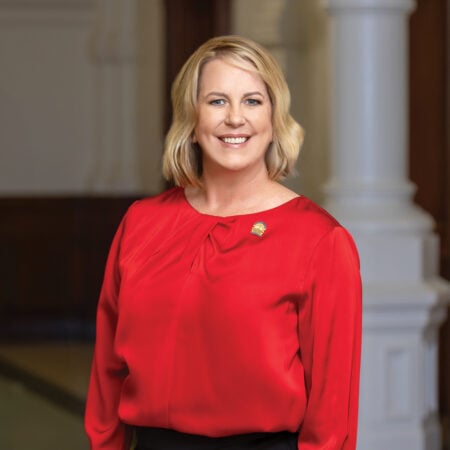
Christy Gessler
“Texas Realtors is working with and contributing to community organizations in affected areas through the Texas Realtors Disaster Relief Fund to get immediate assistance to those who need it most,” Texas Realtors Chairman of the Board Christy Gessler told Inman in a written statement. “We’re also working with local associations to identify other areas that need help, as this tragedy is ongoing.”
“We know the importance of getting funds and resources to these communities as quickly as possible, and these local organizations are actively providing essential assistance for those in need,” she added. “We also know that many Realtors in these communities and from other locations have come to lend a hand—delivering supplies, clearing debris, and helping out in any way they can.”
Although the nation’s attention is currently focused on the tragedy in Hill Country, D’Amico, Rodriguez, REAL Vice President of U.S Operations Jemila Winsey, and Spyglass Realty broker-owner Ryan Rodenbeck said they understand there will be a day when media attention fades.

Ryan Rodenbeck
“It’s going to take a long time to get all of that cleaned up. So many people lost their businesses, their livelihoods, and their family members,” said Rodenbeck, whose brokerage is raising money for the Kerr County Flood Relief Fund and several other area nonprofits. “We have to raise awareness and keep raising awareness. A lot of brokerages have newsletters, and we can use them to keep the story alive and fresh in people’s minds.”
“People are going to be hurting from this for a long time,” he added.
Winsey said the real estate community is in a unique position to help victims walk the long road to recovery.

Jemila Winsey
“What’s been hard to shake is this: just one weekend earlier, we were in Fredericksburg, 31 miles from Kerrville, relaxing with some of our closest friends over wine and laughter. It was calm, beautiful, full of joy,” she said. “And then, just days later, people nearby were clinging to rooftops and losing everything. That contrast has been hard to carry.”
Winsey said this week hasn’t been “about deals or deadlines,” as she’s helped five agents in her circle get to safety. Although everyone can’t make five-figure donations or dedicate a week to volunteering, Winsey said “small acts of kindness” — such as checking in with affected colleagues by call or text, posting links to verified GoFundMe or nonprofit fundraisers on social media, or connecting families with trusted vendors who offer rental, moving or repair services — still make a huge difference.
“Whatever it is, big or small, someone out there could really use it,” she said. “You don’t have to do everything. But doing something from the heart, really makes a difference.”
Email Marian McPherson
