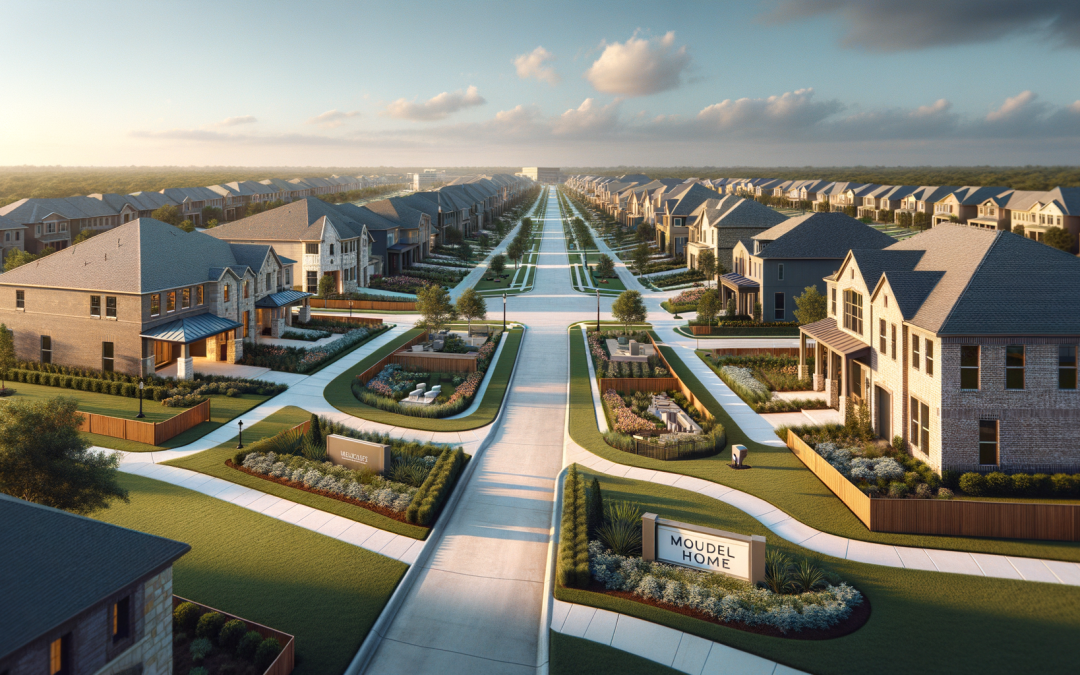
3D Printed New Contruction Smart Homes of the Future – Pro’s & Con’s & Design Concepts
Why Texas Buyers and Sellers Are Paying Attention
Texas has long been a testing ground for new homebuilding ideas—thanks to fast-growing metro areas, steady relocation demand, and a strong culture of innovation. Over the last few years, one of the biggest “what’s next?” conversations has centered on 3D printed homes with built in smart home technolofy. The promise is compelling: faster builds, improved efficiency, and modern layouts that pair well with cool smart home technology.
At the same time, practical questions matter most for real people trying to buy or sell a home in today’s market: How does the sales price compare to traditional construction? Will it appraise? Is it durable in Texas heat, hail, and shifting soils? And what does owning one actually feel like day to day?
This guide breaks it all down in plain language for Texas buyers, sellers, and curious homeowners—covering the benefits, the concerns, and the design concepts shaping 3D printed smart homes of the future.
What Is a 3D Printed Home (and What Isn’t It)?
A 3D printed home typically refers to a house where a large-scale construction printer “prints” some or all of the wall system, most often using a concrete-based material. The printer lays down the wall material in layers, guided by a digital plan. Think of it like piping icing—only at building scale, and with structural material.
What parts are usually printed?
Most common: Exterior and/or interior wall systems printed in a concrete-based mix
Sometimes: Certain partitions, decorative features, or accessory dwelling units (ADUs)
Usually not printed: Roof framing, windows, doors, mechanical systems (HVAC), electrical wiring, plumbing, cabinetry, and finishes
Why “new construction” matters here
In Texas, most 3D printed residential projects are new construction. That matters because new builds come with different timelines, inspection phases, warranty expectations, and financing requirements than resale homes. It also means buyers need to understand what’s “standard” for this builder versus what’s an upgrade—especially for smart home features and energy-efficiency options.
Texas Market Context: Where 3D Printed Homes Are Showing Up
Texas conditions make the state a natural candidate for alternative building methods. Demand has been strong in many regions, and builders are always looking for ways to deliver homes faster and more cost-effectively—without sacrificing quality.
Common Texas drivers for interest
Rapid growth: Continued demand in major metros and surrounding suburbs
Skilled labor shortages: A recurring challenge that can affect construction timelines
Weather realities: Heat, occasional deep freezes, hail, and storm seasons encourage durable building envelopes
Energy costs: A strong incentive for efficiency-focused construction and smart controls
Seasonal patterns to keep in mind
New construction activity in Texas often surges in spring and early summer when weather is more predictable, then faces schedule pressure during peak heat and storm periods. While a 3D printed wall system can reduce time spent on some phases, permitting, site work, inspections, and utility connections still follow local schedules—and those can be just as seasonal as traditional builds.
The Big Benefits: Why Buyers Like the Idea
The appeal of 3D printed homes isn’t just novelty. The best projects focus on performance, long-term operating costs, and comfort—especially when paired with cool smart home technology that makes a house easier to manage.
1) Potentially faster build timelines (for certain phases)
When printing replaces parts of conventional framing, some wall-construction steps can move faster and more predictably. That can be especially helpful in markets where labor availability can cause delays.
Green flag: A builder who provides a clear construction schedule showing what’s faster and what’s unchanged
Red flag: Marketing that claims “printed in 24 hours” without clarifying that most of the home still requires standard trade work and inspections
2) Strong “envelope” potential and energy efficiency
One of the most practical reasons Texans care about 3D printed homes is efficiency. A tight, well-designed building envelope helps reduce air leakage, stabilize indoor temperatures, and keep HVAC systems from working overtime—especially during long summer heat waves.
Actual performance depends on design choices: insulation strategy, window quality, roof assembly, sealing around penetrations, and HVAC sizing. But many 3D printed designs aim for fewer gaps and a sturdier wall assembly than some standard builds.
3) Durability and resilience (with the right engineering)
Concrete-based wall systems may offer advantages for certain durability concerns, such as resistance to pests and reduced susceptibility to some types of rot. In Texas, that can matter in humid regions and anywhere termites are common.
That said, resilience is never automatic. The foundation design, reinforcement approach, roof system, and water management details (flashing, drainage, grading) are still critical.
4) Design flexibility and modern aesthetics
3D printing can enable curved walls, unique textures, and architectural details that may be costlier with traditional methods. Many buyers love the contemporary look, especially when combined with minimalist interiors and smart lighting scenes.
5) A natural fit for cool smart home technology
Because these homes are often built as “future-forward” projects, many feature smart home packages from day one—rather than as afterthoughts. Buyers shopping for 3D printed homes with built in smart home technolofy often prioritize convenience, security, and energy control.
Pros & Cons at a Glance (for Texas Buyers)
Pros
Efficiency potential: Tighter envelope designs can reduce cooling demand in hot months
Modern design: Unique architecture and cleaner lines
Durability: Concrete-based walls may resist pests and some moisture-related issues
New construction advantages: Warranties, new systems, and fewer near-term repairs
Smart home readiness: Easier to integrate structured wiring, sensors, and smart panels during construction
Cons
Financing/appraisal learning curve: Some lenders and appraisers may have limited comparable sales
Builder variability: Quality depends heavily on engineering, materials, and site management
Repairs and modifications: Cutting into printed walls for future changes may be more complex
Permitting and code approvals: Can vary by city/county and may add time
Resale uncertainty: Buyer pool may be smaller in some areas until the concept becomes more common
Sales Price: How 3D Printed Homes Compare in Texas
Let’s address the question most buyers ask right away: what’s the sales price difference?
In Texas, sales price is influenced by far more than wall construction method. Land cost, neighborhood, builder reputation, square footage, finishes, energy features, and availability of comparable homes all matter. So instead of a single “3D printed homes are cheaper” rule, a more accurate way to think about it is this:
Scenario A (value-forward builds): Some 3D printed projects aim to reduce labor and streamline construction. If land is reasonably priced and finishes are modest, the sales price can be competitive with entry-level or mid-range new construction.
Scenario B (design-forward builds): Many 3D printed homes are marketed as premium, architecturally distinctive properties with upgraded smart systems and modern finishes. In that case, the sales price can meet or exceed nearby new builds.
Scenario C (limited comps): If there are few similar sales, pricing may reflect a mix of replacement-cost thinking and buyer willingness to pay for uniqueness, which can create a wider range of outcomes.
What tends to push the sales price up
Prime location or high land costs (common in and near Austin, parts of Dallas-Fort Worth, and desirable Houston suburbs)
High-end window packages, roofs, and interior finishes
Extensive smart home packages (smart electrical panels, whole-home battery readiness, advanced security and automation)
Custom architecture, especially curved or complex layouts
Smaller production scale (one-off builds can cost more per square foot than larger developments)
What may help keep sales price competitive
Standardized plans used repeatedly (more like a tract-build model)
Simpler rooflines and efficient footprints
Smart features focused on efficiency rather than luxury add-ons
Builder relationships with local inspectors, engineers, and trades that reduce delays
A practical buyer takeaway on pricing
When comparing sales price, ask for an apples-to-apples comparison. A 3D printed home may include upgrades (smart locks, thermostats, EV-ready wiring) that a nearby “traditional” new construction home charges extra for. The sticker price only tells part of the story—total monthly cost and comfort are often where the difference shows up.
Efficiency and Energy Performance: What to Look For in Texas
In much of Texas, cooling is a major part of the monthly budget. That’s why efficiency isn’t just a buzzword—it’s a real quality-of-life feature. A well-built home that maintains temperature and humidity more consistently can feel better and cost less to operate.
Key efficiency features that matter (printed or not)
Insulation strategy: Ask where insulation is placed and what R-values are used for walls and roof
Air sealing: A tight building envelope reduces hot air infiltration and humidity issues
High-performance windows: Low-E coatings and proper installation reduce heat gain
HVAC design: Right-sized systems and good ductwork (or ductless designs) improve comfort
Ventilation: Balanced ventilation can help with indoor air quality and humidity control
Roof/attic approach: Radiant barriers, sealed attics, and reflective roofing can help in hot regions
How smart home technology boosts efficiency
Smart systems can improve efficiency when they’re set up thoughtfully. The goal isn’t gadgets—it’s better control and better information.
Smart thermostats: Scheduling and learning features can reduce unnecessary runtime
Room sensors: Helps manage hot spots and comfort zones
Smart shades or lighting: Reduces solar heat gain and cuts lighting waste
Leak detection sensors: Prevents expensive water damage, especially in vacation or second homes
Smart electrical panels: Helps monitor usage and manage loads during peak demand
Common efficiency mistakes to avoid
Assuming “printed” automatically means efficient: Efficiency depends on the full system—roof, windows, insulation, and sealing details.
Overlooking humidity control: In many Texas regions, comfort is as much about moisture as temperature.
Ignoring orientation: West-facing glass can raise afternoon cooling load significantly.
Cool Smart Home Technology: What’s Worth It (and What’s Just Flashy)
Buyers drawn to 3D printed homes with built in smart home technolofy often want a home that feels modern on day one. Here’s how to separate truly useful features from “nice demos” that don’t add much long-term value.
High-value smart features (practical in Texas)
Smart thermostat + humidity-aware controls: Especially helpful during long cooling seasons
Smart leak detection + auto shutoff valve: A big win for risk reduction
Smart garage door + camera coverage: Common daily convenience and security use
Video doorbell and exterior lighting automation: Improves safety and visibility
Smart electrical monitoring: Helps track high-use appliances and plan for solar/EV charging
Features that can be great, but depend on the owner
Whole-home audio: Excellent for some households, unused by others
Advanced automation scenes: Useful if set up properly; otherwise can be annoying
Voice assistant integrations: Convenient, but some owners prefer fewer always-on devices
Questions to ask about the smart home package
Is it a single ecosystem or mixed brands?
Will features work without subscription fees?
Is there a structured wiring panel and strong Wi-Fi design?
Are there dedicated circuits for future upgrades like EV chargers or a battery system?
Design Concepts for 3D Printed Smart Homes (Texas-Friendly Ideas)
The most exciting part of this trend may be design. 3D printing can make certain shapes and details easier to build, which opens the door to layouts tailored to Texas living—indoor-outdoor flow, shade strategies, and flexible spaces.
1) Heat-smart massing and shaded outdoor living
Texas homes live and die by shade and airflow. Design concepts that work well include:
Deep overhangs and covered patios for afternoon sun protection
Courtyard plans that create private outdoor space without huge exposure
Window placement that prioritizes morning light and reduces west-facing heat gain
2) Curved walls and wind-friendly forms
Curved forms can be an aesthetic signature of printed construction. In some designs, smoother shapes can also reduce wind pressure points compared to sharp corners—though actual performance depends on engineering and roof structure.
3) “Right-sized” footprints with flexible rooms
In many Texas markets, buyers want practical spaces: a home office, a guest room, or a flex space that can evolve. Popular concepts include:
Split-bedroom layouts for privacy
Home office nooks near the entry (great for remote work)
Garage-to-mudroom transitions designed for Texas dust and sports gear
4) Smart utility cores
A smart “core” groups mechanical systems, networking equipment, and electrical controls in one accessible area. This is especially useful for homes with advanced efficiency features.
Dedicated network closet for routers and smart hubs
Clear labeling for smart panel circuits and loads
Space planning for future battery storage or additional controls
Concerns to Understand Before You Buy (and How to Reduce Risk)
Every building method has tradeoffs. The goal isn’t to be skeptical—it’s to be informed, especially with newer construction approaches.
1) Appraisal and comparable sales
Because 3D printed homes are still relatively uncommon, an appraiser may have fewer “like for like” comparable sales. That can affect valuation and, in some cases, financing outcomes.
Green flag: The builder and agent can provide documentation of costs, specs, and nearby comparable new construction.
Red flag: A sales pitch that dismisses appraisal concerns instead of planning for them.
2) Financing and insurance questions
Many buyers can finance these homes with standard mortgage products, but lender familiarity varies. Insurance carriers may also ask detailed questions about materials and replacement cost.
Tip: Ask early whether the home qualifies for standard underwriting and what documentation the lender wants.
Tip: Request an insurance quote before you’re deep into the option period.
3) Permitting, code compliance, and engineering
Texas building requirements can vary by city and county. Some jurisdictions are very comfortable with alternative methods; others may require extra engineering review or inspection steps.
Green flag: The builder has a track record in the same jurisdiction and can show approved plans and engineering stamps.
Red flag: Vague answers about how the wall system meets code or handles reinforcement.
4) Repairs, remodeling, and future modifications
Homeowners often change things over time: adding outlets, running new cables, mounting TVs, installing shelving, or remodeling kitchens and baths. With printed walls, modifications may require special tools, careful planning, and experienced contractors.
Ask: How are utilities routed? Are there chases or designated pathways for future wiring and plumbing changes?
Ask: What fasteners and mounting methods are recommended for the wall system?
5) Moisture management and exterior detailing
Texas weather can be tough on exterior assemblies. Even with durable wall materials, water intrusion can still happen at transitions—around windows, doors, rooflines, and penetrations.
Green flag: Clear detailing for flashing and drainage, and a warranty that spells out coverage.
Red flag: Rushed finishing work around openings or inconsistent sealants.
Step-by-Step: How to Buy a 3D Printed New Construction Smart Home in Texas
Buying new construction is a process, and printed construction adds a few extra questions. Here’s a straightforward roadmap.
Step 1: Get pre-approved (and ask the right lender questions)
Request a standard pre-approval based on your income, debts, and credit.
Ask whether the lender has financed non-traditional construction methods before.
Confirm the lender’s expectations for appraisal and documentation.
Step 2: Review what’s included in the smart home and efficiency package
Ask for an itemized list of smart devices and whether subscriptions are required.
Confirm HVAC specs, insulation details, window ratings, and any energy certifications offered.
Understand what is standard vs. upgrade so you can compare sales price fairly.
Step 3: Understand the timeline and contingency windows
For move-in-ready homes, confirm inspection and closing timelines.
For homes under construction, review the build schedule and how delays are handled.
Ask about change order policies if you want customization.
Step 4: Do inspections—yes, even on new construction
New doesn’t mean perfect. A third-party inspector can help you spot issues early.
Pre-drywall (if applicable): Checks framing, rough-in mechanicals, and sealing strategy
Final inspection: Focuses on finishes, function, drainage, and safety items
Optional tests: Air leakage testing, duct leakage testing, and thermal imaging for insulation gaps
Step 5: Negotiate with facts, not just feelings
Use inspection results to request repairs or credits.
Ask for smart home devices to be installed and demonstrated before closing.
For pricing, ask about builder incentives: rate buydowns, closing cost contributions, or upgrades.
Step 6: Final walkthrough and closing
Test smart locks, thermostats, garage controls, and cameras.
Confirm you receive login transfer instructions and reset procedures.
Collect warranty documents and a clear service request process.
Step-by-Step: Selling a 3D Printed Smart Home in Texas
If you own a 3D printed home—or plan to in the future—resale strategy matters. The goal is to make the home feel understandable and financeable to the widest pool of buyers.
Step 1: Prepare documentation that builds confidence
Permits, engineering documents, and warranties
Smart home device list (brands, ages, subscriptions, and reset instructions)
Utility bills or usage summaries (when available) to support efficiency claims
Step 2: Price with local comps, then adjust for features
Start with nearby new construction and resale comps of similar size and location.
Account for smart features and efficiency upgrades in a clear, itemized way.
Be realistic: uniqueness can add value, but it can also narrow the buyer pool.
Step 3: Market the benefits in plain language
Focus on comfort, operating costs, durability, and modern convenience.
Explain how the smart system helps daily life (not just that it exists).
Offer a simple “how to use the home” sheet for showings and open houses.
Red Flags and Green Flags Specific to Printed New Construction
Green flags
Clear engineering documentation and a builder who welcomes questions
Strong water management details (flashing, drainage, grading)
Thoughtful smart home setup with good Wi-Fi planning
Transparent warranty terms and a responsive service process
Evidence-based claims about efficiency (not just hype)
Red flags
Unclear answers about how utilities are routed or how modifications are handled
Overpromising on build speed without acknowledging standard construction phases
Limited documentation for permits, testing, or inspections
Smart devices installed without a cohesive system or without owner control transfer
Finish issues around windows/doors that could signal water intrusion risk
What the “Future” Likely Looks Like in Texas (Scenarios, Not Guarantees)
It’s reasonable to expect more experimentation and gradual adoption—especially in fast-growing Texas corridors where builders look for speed, consistency, and workforce flexibility. But outcomes will vary by city regulations, builder quality, and consumer comfort.
Scenario 1: More printed wall systems in entry-level and workforce housing
If printing helps stabilize labor needs and reduce certain timeline risks, we may see more value-focused communities where the main goal is reliable delivery and efficiency.
Scenario 2: Premium design-forward homes expand the category
Architect-led projects can push the design side—curves, textures, and indoor-outdoor concepts—especially in lifestyle-driven markets. These may carry higher sales price points but attract buyers seeking uniqueness.
Scenario 3: Smart home packages become more standardized
As buyers increasingly expect smart thermostats, security, and energy monitoring, builders may shift from “optional tech upgrades” to baseline packages—especially where efficiency and insurance risk reduction are priorities.
Bottom Line: Are 3D Printed Smart Homes Worth It?
For many Texas buyers, the answer depends on priorities. If you value modern design, potential efficiency gains, and integrated cool smart home technology—and you’re comfortable doing a bit of extra diligence on financing, appraisals, and documentation—these homes can be a strong fit.
The best approach is to evaluate the home like any other major purchase: look closely at build quality, warranty strength, neighborhood fundamentals, and monthly cost of ownership. When the printed construction is paired with sound engineering and a well-planned smart home system, the “future” can feel surprisingly practical.
Why this matters for Texas buyers, sellers, and anyone watching Mortgage Rates
Mortgage Rates are the single biggest swing factor in Texas home affordability. In markets like Dallas–Fort Worth, Austin, Houston, and San Antonio—where many households shop payment-first—small rate moves can change the price point a buyer can qualify for, the number of competing offers a seller receives, and how long a home sits on the market.
That’s why a recent headline is catching the Real Estate world’s attention: President Trump has announced a plan to purchase $200 billion of Mortgage Backed Securities (often called “MBS” or Mortgage Bonds) with the stated goal of bringing mortgage rates down—apparently outside the Federal Reserve’s typical channels. The report, as covered by Politico, frames it as a strategy tied to housing finance policy and the government-sponsored enterprises that underpin much of the U.S. mortgage market. (Source: Politico, Jan. 8, 2026 https://www.politico.com/news/2026/01/08/trump-mortgage-fannie-freddie-00717985)
This article breaks down, in plain English, how buying Mortgage Backed Securities can influence Mortgage Rates, what historical precedents (QE1, QE2, and “QE-infinity”) tell us, and what Texas buyers and sellers should watch next. It’s not a prediction or a promise—just a practical look at the mechanics and the likely scenarios.
What exactly is being proposed?
As reported, Trump announced a $200 billion purchase of Mortgage Backed Securities designed to push mortgage rates lower, and it appears framed as something other than a Federal Reserve quantitative easing program. (Source: Politico, Jan. 8, 2026)
At a high level, the claim is straightforward: if a large buyer steps into the Mortgage Bonds market and buys a lot of MBS, it can raise MBS prices and, in turn, reduce the yield investors demand. Since many mortgage rates are tied—directly or indirectly—to the pricing of MBS, lower MBS yields can translate into lower retail mortgage rates.
The key questions are: Who would do the buying? What funding source would be used? What type of MBS would be purchased? And would the market view the program as credible, durable, and large enough to matter?
Mortgage Backed Securities 101 (and why Texas buyers should care)
Most U.S. home loans aren’t held by the bank that originated them. Instead, they’re bundled into Mortgage Backed Securities—tradable bonds backed by monthly mortgage payments from homeowners.
For a typical “conforming” mortgage (the type most first-time buyers use), the loan is often sold into a system supported by government-sponsored enterprises like Fannie Mae and Freddie Mac, which package loans into Mortgage Bonds with standardized features. Those bonds trade in huge volumes, and their prices help set the cost of mortgage money across the country—including in Texas.
How Mortgage Bonds connect to your interest rate
When lenders quote a rate, they’re not guessing. They’re pricing your loan based on what they can sell it for in the secondary market, plus a margin for costs and risk. If the price investors will pay for Mortgage Backed Securities rises, lenders can often offer a lower rate (or fewer fees) while still making the numbers work.
In short:
Higher MBS prices typically mean lower MBS yields.
Lower MBS yields tend to translate into lower Mortgage Rates (all else equal).
Lower Mortgage Rates can improve affordability, often boosting Real Estate demand, especially in payment-sensitive Texas suburbs.
The mechanics: How buying $200B of MBS could push Mortgage Rates down
To understand the lever, think of Mortgage Bonds like any other bond market: when a large buyer shows up, it can change supply-and-demand dynamics. But mortgages have a few special features that matter for how effective this could be.
Step-by-step: the rate impact chain
Step 1: A large buyer purchases Mortgage Backed Securities.
A $200 billion program is meaningful in headline terms. The effectiveness depends on the pace of purchases, the maturity/coupon types targeted, and whether the buyer is steady and price-insensitive (meaning they’re buying to achieve a policy goal rather than to maximize returns).
Step 2: More demand pushes up MBS prices.
Bond prices and yields move inversely. If prices rise, yields fall.
Step 3: Lower MBS yields reduce the “secondary market” cost of mortgage money.
Lenders set mortgage pricing based on how the loan can be sold into the MBS market. If investors accept lower yields, lenders can generally offer lower rates to borrowers for the same profitability.
Step 4: Retail Mortgage Rates may decline—but not always one-for-one.
This is important: a decline in MBS yields doesn’t always translate into the same-sized drop in the rate you see advertised online. Lenders also price for:
Volatility (fast market moves widen margins)
Capacity constraints (when everyone rushes to refinance, lenders may raise margins)
Credit overlays and risk management
Servicing values and hedging costs
Why mortgages are “weird”: prepayment risk and the “negative convexity” issue
Mortgage Bonds aren’t like a standard Treasury bond. Homeowners can refinance or sell, meaning the investor gets paid back early when rates fall. That early payoff risk—called prepayment risk—is why MBS often need extra yield compared with Treasuries. It’s also why a program of MBS buying can sometimes have diminishing returns if rates drop quickly and investors expect a wave of refinancing.
What actually moves mortgage rates day-to-day?
In practice, Mortgage Rates tend to track a mix of:
U.S. Treasury yields (especially the 10-year, as a broad benchmark)
MBS spreads (the extra yield MBS investors demand over Treasuries)
Market volatility and expectations about inflation and Federal Reserve policy
A major MBS purchase program primarily targets the MBS spread channel. If it successfully narrows spreads, Mortgage Rates can fall even if Treasury yields don’t move much.
“Outside the Fed”: why the funding channel matters
The biggest open question is how an MBS purchase program would be implemented if it is not a Federal Reserve asset purchase program.
Historically, large-scale purchases of Mortgage Backed Securities were carried out by the Federal Reserve as part of quantitative easing. The Fed can expand its balance sheet to buy assets. If another entity were buying MBS, it would still need a source of funds and a legal authority to conduct large-scale purchases without destabilizing the market.
Possible channels (conceptual, not confirmation of the plan)
A government-affiliated buyer: Purchases could be routed through an agency or a housing finance-related vehicle. The practical effect would hinge on whether markets believe the buyer can keep purchasing consistently.
GSE-related mechanisms: Because Fannie Mae and Freddie Mac sit at the center of conforming mortgages, policy changes involving their portfolios or market footprint could affect MBS demand. (Any specific mechanism would depend on legal authority and published program details.)
Treasury or another public financing source: If the funding ultimately increases federal borrowing, markets could respond in ways that partially offset the mortgage-rate benefit (for example, if Treasury yields rise).
Until the program details are formalized, the impact on Mortgage Rates is best thought of as a scenario: credible, steady purchases can tighten MBS spreads, but the broader rate environment (Treasuries, inflation expectations, growth) still matters.
Historical precedent: QE1, QE2, and QE-infinity (and what they did to mortgage markets)
To understand why MBS purchases are seen as a powerful lever, it helps to look back at the Federal Reserve’s post-crisis playbook.
QE1 (2008–2010): direct support for Mortgage Bonds during a housing crisis
During the financial crisis, the Fed purchased large amounts of agency Mortgage Backed Securities to stabilize housing finance and lower borrowing costs. The goal wasn’t subtle: get mortgage credit flowing and support housing demand when private capital was pulling back.
What matters for today’s Real Estate context is that MBS purchases can compress MBS spreads, improve liquidity, and lower primary mortgage rates—especially when markets are stressed and risk premiums are high.
QE2 (2010–2011): more Treasury-heavy, indirect mortgage impacts
QE2 was more focused on Treasury purchases than MBS, aiming to lower longer-term rates broadly. Even without being MBS-centric, lowering benchmark yields can still influence Mortgage Rates, but usually less precisely than buying Mortgage Bonds directly.
QE3 / “QE-infinity” (2012–2014): open-ended asset purchases and the power of expectations
QE3 is often remembered for being open-ended (“until conditions improve”), which mattered because market expectations can move rates even before purchases happen. When investors believe a large buyer will be in the market for a long time, they may accept lower yields sooner, tightening spreads and lowering Mortgage Rates.
A practical takeaway: the credibility and duration of a purchase program can matter as much as the headline dollar amount.
What the research consensus generally suggests
Across these episodes, many analyses concluded that large-scale asset purchases contributed to lower longer-term interest rates and helped reduce mortgage borrowing costs, especially by narrowing term premiums and MBS spreads. The exact size of the effect is debated, and it varied by period and market conditions, but the direction of impact—downward pressure on yields—was a central rationale for QE programs.
How big is $200B in context?
$200 billion is substantial, but context is everything. The agency MBS market is very large and highly liquid. A program of this size could still matter—particularly if targeted at specific coupons where most new mortgages are being securitized—but it may not replicate the scale of the Fed’s most aggressive MBS-buying periods unless it’s paired with ongoing purchases or expanded authority.
In other words, $200B could:
Move the margin if it’s credible and well-executed
Signal intent and shape expectations (which can influence rates quickly)
Have a limited effect if broader forces (inflation, Treasury yields, fiscal concerns) move in the opposite direction
Potential impact on Mortgage Rates: three realistic scenarios
Because Mortgage Rates reflect multiple moving pieces, it’s best to think in scenarios rather than a single outcome.
If markets believe the purchase program will be sustained and sizable enough to matter, MBS spreads could narrow. That can lead lenders to improve pricing, especially on conventional conforming loans tied to agency Mortgage Backed Securities.
What you might see in Texas: more rate-driven demand, more showings, and improved affordability at the margin—especially in entry-level and move-up price bands where monthly payment sensitivity is highest.
If the program is perceived as inflationary, fiscally expansionary, or politically uncertain, Treasury yields could rise even as MBS spreads tighten. In that case, Mortgage Rates might fall only slightly—or not at all.
Texas angle: The state’s strong in-migration and job growth pockets can keep housing demand resilient, but higher benchmark rates can blunt affordability and keep buyers cautious, especially in areas with high property taxes and insurance costs.
If the market doubts the legal authority, funding source, or staying power of the purchases, MBS investors may not reprice meaningfully. Lenders also tend to price conservatively during policy uncertainty, widening margins until volatility settles.
Texas angle: Buyers may not get the “rate relief” headlines suggest, and Real Estate activity may remain driven more by local inventory, pricing, and seasonal patterns than by national policy announcements.
What this could mean for the Texas Real Estate market in 2026
Texas is not one housing market—it’s many. But there are a few common dynamics that rate movements tend to amplify.
Affordability is already shaped by taxes, insurance, and HOA costs
Texas homeowners often face higher property tax burdens than many states, and insurance costs have been a rising concern in parts of the state. That means a rate drop can help, but it may not be a silver bullet if total monthly payment pressures remain high.
Rate changes can shift demand between metros and suburbs
When Mortgage Rates fall, buyers frequently stretch into larger homes or preferred school zones, often boosting suburban demand. In Texas, that can show up as renewed competition in fast-growing corridors around:
Dallas–Fort Worth (north and west growth areas)
Austin (surrounding suburbs where buyers chase affordability)
Houston (master-planned communities and commutable suburbs)
San Antonio (value-driven move-up markets)
Seasonality: rate relief matters most in spring and early summer
Texas homebuying activity typically heats up in spring, peaks into early summer, and cools in late summer and fall. If mortgage pricing improves heading into the spring season, it can increase buyer traffic quickly. If it happens in late fall or winter, the impact may be muted by normal seasonal slowdowns.
What buyers should do now (practical, step-by-step)
Headlines about Mortgage Backed Securities can tempt buyers to “wait for rates.” The safer approach is to prepare for multiple outcomes so you can act if pricing improves.
Step 1: Get pre-approved (not just pre-qualified)
Pre-qualification is usually a quick estimate. Pre-approval involves documentation and a lender review, making your offer stronger—especially in competitive Texas submarkets.
Green flag: A lender who reviews income, assets, credit, and explains rate/points options clearly.
Red flag: A “pre-approval” with no document review or unclear loan terms.
Step 2: Ask your lender how they price loans off the MBS market
You don’t need to be a bond trader. Just ask:
Are today’s rates improving because MBS prices rose, or because Treasury yields fell?
How volatile has rate pricing been this week?
What is the cost to float vs. lock right now?
Step 3: Make a “rate-drop plan” before you shop
If Mortgage Rates fall, competition can rise fast. Decide in advance:
Your maximum monthly payment and purchase price
Your must-haves vs. nice-to-haves
How quickly you can tour homes and write an offer
Step 4: Understand lock options and float-downs
If you get under contract and rates improve, you may be able to benefit, depending on your lender and lock program.
Pros of locking: Protects you if rates rise during escrow.
Cons of locking: If rates drop, you might not automatically benefit unless you have a float-down option (often with rules or costs).
Common mistake: Waiting too long to lock in a volatile market and losing your payment comfort zone.
Step 5: Don’t skip the inspection—especially in Texas
Rate headlines can make buyers rush. In Texas, inspections matter because of soil movement, drainage, roofing wear, HVAC load in hot summers, and prior foundation repairs.
Green flag: Clear disclosure history and receipts for major repairs.
Red flag: Fresh paint in one area without documentation, or unwillingness to negotiate on obvious defects.
What sellers should do now (especially if lower rates bring more buyers)
If a credible MBS purchase program nudges Mortgage Rates down, more buyers may re-enter the market, particularly those who paused during higher-rate periods. Sellers who prepare early are usually the ones who benefit most.
Step 1: Price for today’s comps—not last year’s peak
Even if rates fall, buyers remain value-conscious. Overpricing can still backfire, leading to longer days on market and eventual price reductions.
Step 2: Pre-inspect or at least pre-repair high-impact items
Roof condition and any past leaks
HVAC service records
Foundation documentation (common buyer question in many Texas areas)
Drainage and grading
Step 3: Be ready for different negotiation styles
In a higher-rate environment, buyers often negotiate harder on:
Seller credits to buy down the rate
Closing costs
Repairs and warranties
If Mortgage Rates ease, you may see fewer credit requests—but buyers may still ask, especially if affordability is tight due to taxes and insurance.
Will lower Mortgage Rates automatically raise Texas home prices?
Lower Mortgage Rates can increase buying power, which can support price growth. But Texas pricing is also influenced by supply, local job trends, new construction pipelines, and migration patterns.
Here’s the practical way to think about it:
If inventory is tight and demand rises, prices can firm up quickly.
If inventory is building (including new homes) and buyers have choices, rate relief may show up more as higher sales volume than sharply higher prices.
Many Texas metros have significant new construction capacity relative to older, land-constrained markets. That can moderate price spikes, even when rates fall.
Key risks and uncertainties to watch
Even if purchasing Mortgage Backed Securities is directionally supportive for Mortgage Rates, real-world outcomes depend on market confidence and the broader economy.
Policy credibility and execution risk
Markets react not just to announcements, but to the details: legal authority, operational plan, purchase timing, and whether the program is likely to persist.
Inflation expectations and Treasury yields
If investors think a policy mix could increase inflation or deficits, longer-term Treasury yields can rise. Since many Mortgage Rates track overall long-term yields plus MBS spreads, higher Treasury yields can offset spread tightening.
Mortgage “basis” volatility (the gap between MBS and Treasuries)
MBS spreads can widen in volatile markets due to hedging dynamics and liquidity preferences. A purchase program can counteract that, but it may not eliminate volatility—especially around major economic data releases.
How to track whether this is really moving the needle
If you’re a buyer or seller, you don’t need to follow every bond market detail. Watch a few practical indicators instead:
Daily rate sheets from multiple lenders: Do you see consistent improvement, or just one-day blips?
Points and lender credits: Sometimes rates look unchanged, but pricing improves via lower fees.
Purchase application volume: When rates drop meaningfully, buyer activity often rises.
Local showing activity and pending sales: Your Texas metro’s weekly trend can confirm whether affordability is improving enough to move demand.
Bottom line for Texas Real Estate
Trump’s announcement of a $200B Mortgage Backed Securities purchase plan is drawing attention because buying Mortgage Bonds is a known lever for influencing mortgage pricing—one with historical precedent in the Federal Reserve’s QE-era playbook (QE1, QE2, and “QE-infinity”). (Source: Politico, Jan. 8, 2026)
Still, the impact on Mortgage Rates will depend on program details, credibility, and whether Treasury yields and inflation expectations move in the opposite direction. For Texas buyers and sellers, the smartest move is to stay prepared: get fully pre-approved, understand your lock strategy, and make decisions based on monthly payment math and local market conditions—not headlines alone.
The Future of New Construction in Texas: What Buyers Can Expect in 2026
Texas has long been a magnet for new residents, job growth, and relocation buyers—and that momentum continues to shape the outlook for new build homes in Texas. As we look toward Texas real estate market 2026 conditions, buyers are asking practical questions: Will prices come down? Will builders keep offering incentives? Which metro areas will have the best selection? And how do you decide between a brand-new home and a resale?
This guide breaks down what to expect for Texas new construction homes 2026, including buyer demand, Texas housing inventory 2026, pricing trends, and the most common Texas home builder incentives 2026 (including the popular Texas builder rate buy down). You’ll also find a clear checklist of what to look for when buying new construction in Texas, plus a straightforward new construction vs resale Texas comparison.
Texas Housing Trends 2026: The Big Picture for New Construction
When people talk about Texas housing trends 2026, the key story is balance. Many Texas markets have shifted away from the frenzied, low-inventory environment of earlier years. New construction is playing a bigger role in that shift—especially in fast-growing suburbs where builders can add supply faster than established neighborhoods can.
For 2026, expect a market that feels more “normal” than the peak years: buyers are more payment-sensitive, builders are more flexible, and inventory is healthier in many areas. That doesn’t automatically mean homes are cheap or that prices will fall everywhere—it means negotiation and options are more likely than they were at the height of the cycle.
What’s driving demand for new build homes in Texas?
Migration and job growth: Continued corporate investment and in-migration support baseline housing demand in major metros.
Affordability math: Buyers often shop monthly payment first. If builders can reduce the payment via incentives, new construction becomes more competitive.
Design and energy expectations: Many buyers prefer newer layouts, higher ceilings, dedicated home office space, and energy-efficient features that are harder to find in older resale stock.
Inventory choice: In several suburbs, new communities represent a large share of available listings, giving buyers more floor plans and move-in timelines.
What could slow demand?
Interest-rate sensitivity: If mortgage rates remain elevated, shoppers may pause or downshift in price.
Insurance and taxes: Property taxes are a major factor in Texas, and homeowners insurance costs can be volatile—both affect affordability even when base prices stabilize.
Commute and infrastructure: Some far-suburban growth can strain roads, schools, and utilities. Savvy buyers weigh lifestyle and resale value, not just price per square foot.
Texas Housing Inventory 2026: Supply, Starts, and What It Means for Buyers
Texas housing inventory 2026 is likely to remain uneven by region. In practical terms, that means some metro areas and price points will feel well-supplied (especially entry-level and mid-range new builds in the suburbs), while others—like close-in neighborhoods with limited land—may still feel tight.
New construction inventory typically shows up in two ways:
To-be-built homes: You choose a lot and a plan, then wait through construction.
Spec or “inventory” homes: Homes that are already under construction or completed. These are often where incentives and faster move-in options appear.
Why new construction inventory matters in 2026
More builder inventory generally creates:
More negotiating room: Especially on move-in-ready homes where builders want to reduce standing inventory.
More incentive offers: Rate buydowns, closing cost credits, and design upgrades are often used to help homes sell without cutting base price.
More realistic timelines: In a more balanced market, buyers can compare communities, schools, and commute patterns rather than rushing.
Pricing Trends for Texas New Construction Homes 2026
Pricing for Texas new construction homes 2026 will likely be shaped by three forces: interest rates (and the monthly payment they produce), construction costs, and local competition between builders and resale listings.
Rather than focusing only on “price up” or “price down,” many buyers will experience pricing through:
Base price adjustments: Some communities may reduce base prices, especially if competing nearby builders do the same.
Incentive-heavy pricing: Builders may hold the sticker price but offer significant credits or rate buydowns.
Lot premiums and upgrade packages: The final cost often comes from lot size/location and option selections, not just the advertised base price.
What to watch: “All-in” pricing
In 2026, smart shoppers focus on the true monthly payment and total cash needed at closing. Two homes with identical base prices can have very different affordability depending on:
Property tax rate and projected escrow payment
Homeowners insurance quote and wind/hail considerations
HOA dues and community assessments
Builder incentives tied to using a preferred lender
Upgrade selections and change orders
Texas Home Builder Incentives 2026: What’s Most Common (and How to Compare)
Texas home builder incentives 2026 are expected to remain a major part of the new construction landscape, especially in competitive suburban corridors. Builders tend to use incentives to protect neighborhood pricing and appraisals while still making the deal attractive to payment-focused buyers.
Common incentives buyers may see in 2026
Closing cost credits: Builder pays a portion of title fees, lender fees, or prepaid items when buyers use the preferred lender and title company.
Design center or upgrade allowances: Credits toward flooring, countertops, appliances, or blinds.
Price reductions on inventory homes: Especially on completed or near-complete homes.
HOA or appliance packages: Sometimes offered as “move-in ready” bundles.
Texas builder rate buy down: how it works (step-by-step)
A Texas builder rate buy down is one of the most powerful tools for affordability because it targets the monthly payment. Here’s the simple version of how it typically works:
Step 1: Builder offers a credit that can be used to reduce the interest rate for a period of time (temporary buydown) or for the life of the loan (permanent buydown), depending on program options.
Step 2: Buyer applies with the builder’s preferred lender to access the advertised incentive terms.
Step 3: Lender shows the rate/payment scenario with and without the buydown so you can compare savings.
Step 4: Buyer reviews the full deal, including the home price, any lender fees, and whether the incentive changes other terms.
Step 5: Buyer locks the rate according to the lender’s lock policy and the home’s completion timeline.
How to compare incentives (green flags and red flags)
Green flags:
Clear written breakdown showing how the incentive is applied (closing costs vs. rate buydown vs. upgrades)
Loan estimate comparisons from at least one outside lender and the preferred lender
Reasonable timelines for completion and rate lock options
Red flags:
Incentives that sound large but come with inflated lender fees or less competitive pricing
Vague “starting at” payment ads without taxes/insurance/HOA included
Pressure to waive inspections or skip contract review
Regional Outlook: Where New Construction Is Heading in 2026
Texas is not one market—it’s many. The experience of shopping new build homes in Texas depends heavily on the metro area and suburb. Below is a practical outlook for the biggest new construction hubs buyers ask about.
DFW new construction: choices, competition, and payment-focused deals
DFW new construction is likely to remain one of the most active scenes in the country thanks to land availability, strong job growth, and deep builder presence. In 2026, buyers should expect:
Strong inventory in outer-ring suburbs and master-planned communities
Frequent incentives on inventory homes, especially during slower seasonal periods
Wide variation in property tax rates between cities and counties—an important payment driver
In DFW, it’s common to compare multiple communities in the same day. Buyers often get the best leverage when they’re flexible on floor plan colors/finishes and can consider a home that’s already under construction.
Houston new construction communities: master plans and insurance awareness
Houston new construction communities continue to expand across several corridors, giving buyers a broad range of price points and lifestyle amenities. For 2026, watch for:
More move-in-ready options and builder promotions when standing inventory rises
Strong emphasis on community amenities (pools, trails, recreation centers)
Increased attention to flood risk, drainage, and insurance costs in location decisions
For Houston-area buyers, it’s wise to ask direct questions about drainage design, elevation, and prior flooding in the broader area. New doesn’t automatically mean risk-free.
Austin new builds 2026: selective growth and value comparisons
Austin new builds 2026 may feel more selective than other metros because land constraints and entitlement processes can limit where large-scale building happens. Still, new construction remains a meaningful option, particularly in suburban areas where builders can deliver more attainable price points than close-in resales.
Expect buyers to compare new construction deals directly with resale price reductions
Incentives may be targeted—larger on inventory homes, lighter on high-demand plans/lots
Commute patterns and school zoning will remain major decision points
San Antonio new construction homes: steady demand and family-friendly communities
San Antonio new construction homes often appeal to buyers looking for value, newer infrastructure, and family-friendly neighborhoods. In 2026, you can expect:
Strong community development on the metro’s growth edges
Continued incentives, especially when multiple builders compete nearby
A focus on affordability and payments—tax rates and insurance quotes matter here, too
Best Texas Suburbs for New Construction: What “Best” Really Means in 2026
Searches for the best Texas suburbs for new construction tend to assume there’s one perfect list. In reality, “best” depends on budget, commute, schools, and how you value community amenities versus a larger lot or mature neighborhood trees.
In 2026, the strongest new construction suburbs often share a few traits:
Multiple builders competing (more leverage for buyers)
Strong school and infrastructure planning
Retail and services nearby so the area feels livable, not just “new”
Stable resale demand so future flexibility is better if you move
How to evaluate a suburb or community (quick checklist)
Drive the commute at the times you’ll actually travel
Check property tax rates by address (not just by city name)
Ask about planned road expansions and school capacity
Review HOA rules for parking, rentals, and exterior changes
Look at nearby phases: future construction can mean noise and trucks for years
Buying New Construction in Texas: A Step-by-Step Roadmap for 2026
Buying new construction in Texas is different from buying a resale, mainly because the builder’s contract and timeline are designed to protect the builder. The good news: when you know the steps, the process is straightforward and often less stressful than competing for a resale listing.
Step 1: Get fully pre-approved (not just pre-qualified)
Because builders may tie incentives to financing, start with a solid pre-approval and then compare it to the builder’s preferred lender offer.
Green flag: Your lender explains payment scenarios including taxes, insurance, and HOA.
Common mistake: Shopping based only on rate, then getting surprised by fees or escrow changes.
Step 2: Bring representation early
If you plan to use an agent, bring them on the first visit to the model home and make sure they’re listed on the guest card. Many builders have rules that limit representation if the buyer visits unaccompanied first.
Step 3: Compare “all-in” costs across communities
Ask each builder for a written worksheet that includes:
Base price and lot premium (if any)
Estimated upgrades and design selections
Closing cost credits and rate buydown details
HOA dues and any special assessments
Estimated property taxes (and whether the community is in a MUD/PID where applicable)
Step 4: Review the builder contract carefully
Builder contracts often differ from the Texas resale forms buyers may be used to. Pay attention to:
Construction completion timelines and extension language
Deposit structure and refundability
How change orders are priced and when they’re due
Warranty coverage details and exclusions
Step 5: Schedule inspections (yes, even for new homes)
A new home can still have issues—think grading, drainage, HVAC performance, or missed details in installation. A smart approach is:
Pre-drywall inspection: Checks framing, plumbing, electrical, and mechanical rough-ins before walls go up.
Final inspection: Identifies incomplete items and safety concerns before closing.
11-month warranty inspection: Catches items to repair while the builder warranty is still active.
Red flag: Any pressure to skip inspections or accept “it’s new, you don’t need that.”
Step 6: Do a thorough final walk-through and confirm punch-list items
Before closing, walk the home with the builder and document:
Touch-up paint, drywall repairs, and trim gaps
Appliance installation and function checks
Water heater, HVAC, and thermostat operation
Grading away from the foundation and drainage paths
New Construction vs Resale Texas: A Practical Comparison for 2026
The new construction vs resale Texas decision often comes down to priorities: timeline, condition, negotiation style, and location. Here’s a clear side-by-side view.
Buying new construction (pros and cons)
Pros: Modern layouts, energy efficiency, builder warranties, less immediate maintenance, and potential incentives like closing cost credits or a Texas builder rate buy down.
Cons: Builder contracts favor the builder, upgrades add up quickly, landscaping/fencing may be extra, and communities may be under construction for years.
Buying resale (pros and cons)
Pros: Established neighborhoods, mature trees, closer-in locations, and often more transparent pricing on “what you see is what you get.”
Cons: Potential for deferred maintenance, older systems (roof/HVAC), fewer incentives, and more competition in highly desirable areas with limited supply.
Which is likely to be the better value in 2026?
In many Texas suburbs, new construction may look like the better monthly-payment value when incentives are strong. In close-in areas, resale may still win on location and long-term desirability. The best approach is to compare both using the same framework: total monthly payment, cash to close, and expected maintenance over the next 3–5 years.
What Buyers Should Look For in a New Build in 2026
Beyond incentives and shiny finishes, quality and livability are what matter most. Here’s what to prioritize when shopping Texas new construction homes 2026.
Construction quality and warranty clarity
Ask what the warranty covers (workmanship, systems, structural) and for how long
Find out the process for submitting warranty claims and typical response times
Review the builder’s reputation locally (service after closing matters)
Lot, drainage, and long-term function
Look for positive drainage away from the foundation
Understand easements, retaining walls, and any shared drainage features
Check backyard usability and sun exposure (important in Texas heat)
Energy efficiency and comfort
Insulation levels, window quality, and HVAC sizing affect comfort and bills
Ask about ventilation and humidity control (especially in humid regions)
Confirm whether smart thermostats or efficiency features are standard or upgrades
Community costs: taxes, HOA, and insurance
Texas affordability often hinges on the monthly escrow payment, not just the sales price. Request realistic estimates early and compare homes by total monthly cost.
Seasonal Patterns in Texas: When Buyers May Find the Best Builder Deals
Texas has fairly consistent seasonal rhythms. While every community is different, incentives often get more aggressive when traffic slows or when builders are trying to hit quarterly or year-end goals.
Late summer into early fall: Family moves taper after the school-year start, sometimes increasing negotiating room.
End of year: Some builders push hard to close inventory homes before year-end reporting periods.
Early spring: More buyers return to the market, and the best lots/plans can go quickly.
In 2026, if Texas housing inventory 2026 remains healthy in your area, timing matters a bit less than it used to—because selection can stay decent beyond the traditional “spring rush.”
What to Expect in the Texas Real Estate Market 2026: Scenarios, Not Guarantees
No one can promise exactly where rates, prices, or inventory will land. But buyers can prepare for likely scenarios in the Texas real estate market 2026:
Scenario A: Rates ease modestly: Demand could pick up, reducing negotiating leverage on the most popular floor plans and locations.
Scenario B: Rates stay elevated: Incentives and buydowns remain a key tool, and buyers who shop carefully may find solid payment-focused deals.
Scenario C: Local supply surges in certain suburbs: Builders may compete more aggressively on inventory homes, creating opportunities for buyers who can move quickly.
Across scenarios, the most consistent advantage comes from preparation: strong pre-approval, clear monthly budget, and a willingness to compare communities on total costs—not just base price.
Bottom Line: How Buyers Can Win with New Construction in 2026
The future of Texas new construction homes 2026 looks buyer-friendly compared to the peak frenzy years, especially in suburban markets with multiple builders and higher supply. Incentives—particularly Texas home builder incentives 2026 like closing cost credits and the Texas builder rate buy down—are likely to stay central to affordability.
If you’re considering buying new construction in Texas, focus on three things: the all-in monthly payment, the builder’s quality and warranty process, and the long-term livability of the location. Compare new builds with resale options using the same math, and you’ll be able to make a confident choice—whether you’re shopping DFW new construction, exploring Houston new construction communities, touring Austin new builds 2026, or narrowing down San Antonio new construction homes.
Texas Housing Market: Trends and Forecast 2025-2026
Why the Texas Housing Forecast for 2025–2026 Matters
Texas remains one of the country’s most closely watched housing markets because it sits at the crossroads of major forces: ongoing population growth, a job engine tied to energy and tech, and mortgage rates that can quickly shift affordability. After the rapid price run-up of 2020–2022 and the reset that followed in 2023–2024, many buyers and sellers are asking the same questions: Are home prices going up again? Will mortgage rates fall enough to unlock more inventory? And what happens to rent trends if more multifamily supply comes online?
This article lays out a clear, Texas-specific look at the statewide outlook for 2025 real estate and 2026. You’ll see the macroeconomic drivers that shape demand, the supply and demand balance that influences negotiations, and realistic scenarios for home prices, sales volume, and rents—using commonly referenced market indicators and widely cited forecast ranges from major housing economists and lenders. Forecasts are estimates, not guarantees, but they can help you plan with more confidence.
Quick Snapshot: Where Texas Stands Heading into 2025
Texas entered 2025 with a market that looks more “normalized” than the frenzy years, but still uniquely Texas: strong in-migration, a large pipeline of new construction in key metros, and meaningful differences between neighborhoods and property types. Buyers generally have more leverage than they did a few years ago, especially in areas with higher inventory and active new-build competition. At the same time, resale supply remains constrained in many submarkets because homeowners with ultra-low mortgage rates are reluctant to move.
Demand: Supported by population growth, job formation, and household formation, but still rate-sensitive.
Supply: Improving in several metros due to more listings and new construction completions; still tight in some “close-in” neighborhoods and desirable school zones.
Prices: Largely range-bound in many areas—more about “who has negotiating power” than a uniform statewide surge.
Rents: Moderating where new multifamily deliveries are heavy; steadier in smaller markets with less new supply.
Statewide Macroeconomic Drivers Shaping 2025–2026
1) Population Growth and Household Formation
Texas continues to add residents faster than most states, fueled by domestic migration (people moving in from other states) and international migration. Population growth matters because housing demand is ultimately driven by households: when more people form households, they need places to live—either as renters or owners.
What to watch for 2025–2026: Even if net migration cools from peak levels, Texas is still projected to grow. That supports baseline housing demand, especially in job-rich corridors such as the Dallas–Fort Worth Metroplex, the Austin–San Antonio corridor, and Greater Houston. It also creates steady demand in “secondary” markets where affordability, commutes, and new development attract buyers.
Green flag for demand: Continued inflows of working-age residents and families.
Red flag for pricing power: If affordability pressures cause more households to double up, delay buying, or choose renting longer, the pace of home price growth can flatten even with population growth.
2) Job Market, Wages, and Industry Mix
Texas has a diverse job base that includes energy, healthcare, logistics, manufacturing, professional services, and technology. That diversity helps cushion the statewide market when one sector cools. For housing, the most important job-market signals are employment growth, wage growth, and layoffs in high-paying sectors that drive buyer purchasing power.
2025–2026 outlook: Most mainstream economic scenarios expect Texas job growth to continue, but at a more sustainable pace than the post-pandemic rebound. If hiring remains steady, it supports sales volume and reduces forced selling. If job growth slows sharply, buyers become cautious and sellers face longer days on market.
Green flag for home prices: Broad-based job growth paired with wage gains that outpace inflation.
Red flag: Concentrated layoffs in markets with heavy exposure to one industry, which can soften demand quickly in specific submarkets.
3) Mortgage Rates and the “Lock-In” Effect
Mortgage rates are the single biggest swing factor for Texas housing activity because they directly change monthly payments. When rates rise, affordability drops; when rates fall, demand often returns quickly. Rates also create the “lock-in effect”: homeowners who secured 2%–4% mortgages are less likely to sell and trade into a 6%–7% loan, which limits resale inventory.
Rate environment scenarios for 2025–2026 (estimates): Many large forecasters have expected a gradual easing path rather than a quick drop. A reasonable planning range is:
2025: 30-year fixed mortgage rates often fluctuating around 5.75%–6.75% (with periods above or below depending on inflation and economic data).
2026: Potentially 5.25%–6.25% if inflation cools and the broader rate environment eases; higher if inflation proves sticky.
Why this matters for supply and demand: If rates drift lower, more buyers qualify and more sellers list (because trading up hurts less). That can increase sales volume even if home prices don’t surge. If rates stay elevated, the market can remain “stuck”: fewer listings, fewer buyers, and more negotiation around concessions.
4) Cost of Ownership in Texas: Property Taxes and Insurance
Texas affordability is not just about the purchase price. Property taxes and homeowners insurance can meaningfully impact the monthly payment—especially for first-time buyers comparing Texas to other states. These costs also influence rent trends, because landlords often pass through higher expenses.
2025–2026 outlook: While individual bills vary by county and taxing district, buyers should expect property taxes to remain a major line item. Insurance costs can also be volatile, particularly in storm-exposed regions along the Gulf Coast and in hail-prone parts of North Texas.
Practical tip: When you run affordability numbers, compare total monthly costs (principal, interest, taxes, insurance, HOA), not just the mortgage payment.
Texas Housing Market Indicators to Watch
Supply and Demand: Inventory and Months of Supply
In plain terms, supply and demand in housing comes down to how many homes are available versus how many buyers are shopping. Two common indicators are active listings and months of supply (how long it would take to sell the current inventory at the current sales pace).
Balanced market: Often considered around 5–6 months of supply (varies by local norms).
Seller-leaning: Typically under ~4 months of supply.
Buyer-leaning: Often over ~6 months of supply.
Texas has been moving closer to balance in many metros compared with the ultra-tight conditions of 2021–2022. However, inventory can still be tight for entry-level homes in good locations, while higher-price tiers may show more supply and longer marketing times.
Days on Market and Price Reductions
Two “real world” signals for buyers and sellers are days on market and the frequency of price reductions. When demand is strong, homes sell quickly and price cuts are rare. When supply builds or buyers get cautious, days on market rise and more sellers adjust pricing.
2025–2026 expectation: A more normal rhythm: well-priced homes in move-in-ready condition can still sell fast, while overpriced listings may sit and require reductions or concessions.
New Construction Pipeline
Texas has a large new construction footprint, especially in the suburbs of Dallas–Fort Worth, Houston, San Antonio, and parts of Austin’s perimeter. New construction matters because it can add supply even when resale listings are limited by the lock-in effect.
What it means for 2025 real estate: Builders may keep offering incentives—such as rate buydowns, closing cost credits, and design upgrades—if they need to maintain absorption (sales pace). Those incentives can indirectly pressure resale sellers, who may have to compete on price, condition, or concessions.
Texas Housing Forecast 2025–2026: Statewide Outlook (With Numbers)
Forecasting Texas home prices and activity is best done in ranges because outcomes hinge on mortgage rates, employment, and how much inventory comes to market. The projections below reflect common forecast bands used by major housing economists nationally, adjusted to Texas market dynamics such as strong population growth and a robust new-build sector.
Home Price Forecast: 2025–2026
Baseline scenario (most likely in a “soft landing” economy):
2025: Texas home prices (statewide) change approximately -1% to +3% year over year.
2026: Texas home prices change approximately 0% to +4% year over year, assuming rates ease modestly and employment remains stable.
Upside scenario (rates fall faster, demand rebounds):
2025:+3% to +6%
2026:+4% to +7%
Downside scenario (rates stay high longer or job growth weakens):
2025:-2% to -5%
2026:-1% to +2%
Important Texas nuance: “Statewide” averages can hide big differences. Markets with heavy new construction and higher investor activity may see flatter home prices, while supply-constrained neighborhoods with top schools, short commutes, and limited buildable land can be more resilient.
Sales Volume Forecast: 2025–2026
Sales volume is heavily rate-driven. Even modest declines in mortgage rates can bring sidelined buyers back—especially move-up buyers who have been waiting for payments to improve.
2025: Total existing-home sales in Texas could range from flat to +8% versus 2024, depending on rate movement and consumer confidence.
2026: If rates trend lower and listings improve, sales volume could rise another +3% to +10%.
In plain language: the market can see more transactions even if home prices don’t jump. That’s typical during normalization cycles, when buyers and sellers slowly adjust to a new interest-rate environment.
Supply Forecast: Inventory and New Listings
Inventory outlook: Expect gradual improvement rather than a flood of listings. The lock-in effect remains a real constraint. But more homeowners do move each year for life reasons—job changes, kids, caregiving, divorce, retirement—so listings can rise with time even without a major rate drop.
2025: Active inventory likely trends modestly higher year over year in many metros, with pockets of buyer-leaning conditions in outer suburbs and new-build corridors.
2026: Inventory could improve further if mortgage rates fall into the mid-5% range and more sellers feel comfortable listing.
New construction: Texas is positioned to add supply through building more than many states. Still, builders respond to demand; if absorption slows, they may reduce starts even while finishing homes already underway.
Rent Trends Forecast: 2025–2026
Rent trends in Texas depend on how many new apartments deliver and how fast renters absorb them. Several Texas metros have had a large multifamily construction wave, which typically cools rent growth until the new supply is leased up.
Statewide rent trend estimates:
2025: Average rents in many Texas markets may be -1% to +3% year over year (with stronger growth in undersupplied submarkets and weaker growth where deliveries are concentrated).
2026: Rent growth may re-accelerate modestly to +1% to +4% if deliveries slow and population growth continues.
Key nuance: Even in a “flat rent” year, your rent payment can still rise at renewal depending on the specific property, concessions expiring, or operating costs (taxes, insurance, repairs). Meanwhile, renters may see better move-in specials in areas with lots of new buildings competing for leases.
Regional Texas Market Dynamics: What Varies by Metro
Texas isn’t one housing market—it’s many. The statewide outlook provides a baseline, but local supply and demand can be very different based on job concentration, affordability, and construction volume.
Dallas–Fort Worth: Jobs and Suburban New Builds Shape Pricing
DFW often behaves like a “two-speed” market: close-in neighborhoods with limited inventory can stay competitive, while far-suburban areas with abundant new construction can feel more price-sensitive. For 2025 real estate, watch builder incentives, inventory in fast-growing counties, and the spread between list price and final sales price.
Likely trend: More negotiation leverage for buyers in areas with many similar homes and high resale competition.
Pricing: Often steadier in established areas; more variable in new-build corridors.
Houston: Affordability and Industry Mix, With Localized Insurance Considerations
Houston’s size and affordability relative to other major metros can support demand, but the region is also sensitive to industry cycles and insurance costs in certain locations. New construction continues to add supply, which can keep home prices from accelerating too quickly.
Likely trend: A fairly balanced market overall, with sharper differences between inner-loop neighborhoods and newer suburban submarkets.
Austin experienced one of the strongest pandemic-era price run-ups and then a noticeable cooldown. That has made Austin a focal point for conversations about home prices, affordability, and market “normalization.” The longer-term fundamentals—jobs, lifestyle appeal, and migration—still matter, but pricing is more sensitive to mortgage rates and inventory than it was during the boom.
Likely trend: Price movement that is closer to flat-to-modest growth in the baseline scenario, with pockets that swing faster depending on inventory and buyer demand.
San Antonio: Steady, Value-Oriented Demand
San Antonio often feels steadier than higher-volatility markets. Relative affordability can keep demand resilient, particularly for entry-level and mid-priced homes, though mortgage rates still influence monthly payments significantly.
Likely trend: More stable pricing and transaction activity, with seasonal swings.
South Texas, West Texas, and Smaller Markets: Micro-Trends Matter
Outside the major metros, local employment drivers (energy, manufacturing, healthcare, education, military), housing stock, and new development can create very different outcomes. In some smaller markets, limited inventory can keep prices firm even if sales volume is modest. In others, a single large employer can influence demand.
Single-Family vs Multifamily: Two Markets Moving at Different Speeds
Single-Family Homes: Resale vs New Construction
The single-family market in Texas is shaped by the tug-of-war between resale supply (limited by the lock-in effect) and new construction (more abundant in growth corridors). For many buyers, the choice comes down to whether you want an established neighborhood or a new home with builder incentives.
Pros and Cons: Existing Home vs New Build (Texas Edition)
Existing homes (resale) pros: Mature landscaping, established communities, often closer to job centers, potentially lower tax assessments than brand-new builds (case-by-case).
Existing homes (resale) cons: Fewer choices in tight neighborhoods, potential maintenance or deferred repairs, fewer financing incentives.
New builds pros: Modern layouts and efficiency, builder warranties, more availability in fast-growing areas, common incentives like rate buydowns and closing cost credits.
New builds cons: Higher property tax impact in some areas (newer assessments), HOA costs, ongoing construction nearby, commute distance depending on location.
Multifamily: A Supply Wave That Can Cool Rent Trends
Multifamily construction has been a major storyline in Texas. When many new units deliver at once, properties often compete on price, concessions, or amenities, which can flatten rent trends. Over time, if starts slow and absorption continues (thanks to population growth), rent growth can stabilize and re-accelerate.
For renters in 2025, this can be good news: you may have more negotiating power in certain urban and high-growth suburban apartment nodes, especially during off-peak leasing seasons.
Seasonal Patterns in Texas Real Estate (And How 2025–2026 May Follow Them)
Texas real estate is seasonal. Even in unusual years, the calendar still matters.
Spring (March–May): Typically the busiest period for listings and buyer activity; competition can heat up quickly for well-priced homes.
Summer (June–August): Still active, especially for families timing moves around school; heat and vacation schedules can affect showing activity.
Fall (September–November): Often a second wave of serious buyers; fewer listings can keep good homes competitive.
Winter (December–February): Slower pace, but buyers are often motivated; this can be a good time to negotiate depending on inventory.
2025–2026 takeaway: If mortgage rates dip even modestly during a peak season, demand can surge quickly. If rates rise during spring, buyers may pause and inventory can accumulate into summer, improving leverage for shoppers.
What Buyers Should Do in 2025–2026 (Step by Step)
For buyers, the main challenge in 2025 real estate is managing affordability while making smart choices about location, property condition, and financing. Here’s a straightforward process that works well in Texas markets where conditions can change neighborhood by neighborhood.
Step 1: Get Clear on Your Real Monthly Budget (Not Just Price)
Estimate principal and interest using a conservative mortgage rates assumption (don’t rely on best-case quotes).
Add property taxes (Texas can be high; confirm local rates and exemptions).
Add homeowners insurance (ask for real quotes early, especially in storm-exposed areas).
Add HOA and maintenance estimates.
Common mistake: Shopping based only on purchase price and then being surprised by taxes, insurance, or HOA dues.
Step 2: Get Pre-Approved (Not Just Pre-Qualified)
Pre-approval is a more rigorous review of your income, credit, debts, and assets than a quick pre-qualification. In competitive Texas submarkets, a strong pre-approval helps your offer stand out.
Pre-approval basics: You provide pay stubs, W-2s or tax returns (if self-employed), bank statements, and the lender runs credit.
Ask your lender: What rate locks are available, what points cost, and what loan programs fit (conventional, FHA, VA, USDA in eligible areas).
Plan for volatility: Mortgage rates can move week to week; understand how that changes your payment.
Green flag: A lender who can explain options clearly and provide a written estimate with taxes and insurance placeholders.
Step 3: Choose Your Strategy: Resale, New Build, or Hybrid
Resale focus: Best for buyers prioritizing location, character, or shorter commute.
New-build focus: Best for buyers wanting more inventory choices and potential incentives.
Hybrid approach: Compare both side by side; many buyers find the best value by staying flexible.
Step 4: Make an Offer With the Right Levers (Price, Concessions, Terms)
In a more balanced Texas market, winning isn’t always about the highest price. It’s often about clean terms and smart concessions that protect your budget.
Price: Base it on comparable sales and current competition, not last year’s headlines.
Seller concessions: Consider asking for closing costs, a rate buydown, or repairs instead of insisting on a big price cut (depending on the seller’s priorities).
Option period (Texas-specific): Use the option period to complete inspections and negotiate repairs; understand your deadlines and option fee.
Appraisal risk: If prices are flat and comps lag, don’t assume the appraisal will “make it work.”
Common mistake: Focusing only on sales price while ignoring rate buydown opportunities that can materially reduce monthly payments.
Step 5: Inspections, Negotiations, and Closing (Simple Timeline)
Inspection: Schedule quickly during the option period; review roof age, HVAC, plumbing, foundation indicators, and drainage (important in many Texas soils and weather patterns).
Negotiation: Request repairs, credits, or price adjustments based on material issues; prioritize safety and big-ticket items over cosmetics.
Final underwriting: Avoid major financial changes (new debt, job changes) before closing.
Final walk-through: Confirm agreed repairs are complete and the home is in expected condition.
Red flags: Repeated foundation patching without documentation, chronic drainage issues, unpermitted additions, or a seller unwilling to address major health and safety items.
What Sellers Should Do in 2025–2026 (Step by Step)
Sellers in 2025–2026 are in a market where buyers are more payment-conscious and more willing to walk away if a home feels overpriced or risky. The best strategy is to present a clean, well-documented home and price it according to today’s comps—not peak-era expectations.
Step 1: Price to Today’s Market, Not Yesterday’s
Look at the most recent comparable sales and current active competition.
Pay attention to list-to-sale price ratios and how often homes are reducing price.
Consider that buyers compare your home to builder inventory and incentives.
Common mistake: Overpricing “to leave room to negotiate.” In a rate-sensitive market, that can lead to longer days on market and larger eventual reductions.
Step 2: Prepare the Home Like a Product (Condition Still Sells)
Rate buydown: Can reduce a buyer’s monthly payment and expand your buyer pool.
Repair credits: Useful when timing is tight or repairs are specialized.
Green flag: A seller plan that considers the buyer’s monthly payment reality, not just the headline price.
Step 4: Expect More Inspection Negotiations
In more balanced conditions, buyers often negotiate more firmly after inspections. Being proactive—by fixing known issues or providing documentation—can reduce friction.
Have receipts for major work (roof, HVAC, plumbing).
Address water intrusion, drainage, and electrical safety issues early.
Common Mistakes and Smart Signals in the 2025–2026 Texas Market
For Buyers
Mistake: Waiting for a “perfect” rate and missing a good home at a fair price.
Mistake: Ignoring property taxes and insurance when comparing homes.
Smart signal: A listing with transparent disclosures, maintenance records, and realistic pricing.
Smart signal: Opportunities to negotiate concessions that improve payment affordability.
For Sellers
Mistake: Competing with new construction without adjusting for builder incentives.
Mistake: Treating early feedback as noise instead of a pricing signal.
Smart signal: Strong showing activity but no offers usually points to price or terms—not marketing.
Smart signal: A clean inspection and appraisal path is increasingly valuable to buyers.
Affordability Outlook: What Could Change the Market Fast
Affordability is the hinge factor for Texas housing in 2025–2026. Three shifts can change conditions quickly:
Mortgage rates: A move of even 0.50% can materially change the monthly payment and buyer pool.
Insurance and taxes: Rising costs can reduce purchasing power even if home prices stay flat.
Wages and employment: Strong job growth can keep demand steady; a slowdown can increase buyer caution.
That’s why the most realistic Texas housing forecast is one that anticipates range-bound home prices in many areas, paired with potentially improving sales volume if rates ease and inventory gradually loosens.
2025–2026 Scenarios: Putting It All Together
Scenario A: Gradual Rate Relief, Stable Jobs (Baseline)
Mortgage rates: Drift down modestly
Home prices: Mostly flat to low single-digit growth statewide
Sales volume: Improves as move-up buyers re-enter
Rent trends: Flat to modest growth, varying by multifamily deliveries
Supply and demand: More balanced; negotiations normalize
Scenario B: Faster Rate Drops and Strong Demand (Upside)
Mortgage rates: Fall faster than expected
Home prices: Re-accelerate in desirable, supply-constrained areas
Sales volume: Strong rebound
Rent trends: Stabilize and potentially firm as households compete for limited single-family rentals
Scenario C: Rates Stay High or the Economy Softens (Downside)
Mortgage rates: Remain elevated
Home prices: Mild declines in some markets, especially where inventory is high
Sales volume: Stays constrained
Rent trends: Weaker in markets with heavy apartment supply
Practical Takeaways for 2025 Real Estate Decisions in Texas
If you’re buying in 2025–2026, the best approach is to focus on what you can control: your budget, your financing plan, and the quality of the home and location. If you’re selling, success is increasingly about pricing, presentation, and making the transaction easy for a payment-sensitive buyer.
Buyers: Compare concessions (especially rate buydowns) alongside price; keep an eye on taxes and insurance; don’t skip inspections.
Sellers: Price to current comps; expect negotiations; consider concessions that improve affordability; compete directly with new builds if they’re in your area.
Investors: Underwrite conservatively—rent trends are softer in some metros due to multifamily supply, while single-family rental demand remains tied to household growth and affordability.
Bottom Line: Texas Housing Forecast 2025–2026
The most likely Texas housing forecast for 2025–2026 is a market that continues to normalize: modest home price movement (often flat to low single-digit growth), improving sales volume if mortgage rates ease, and rent trends that vary widely depending on how much multifamily supply hits each metro. With ongoing population growth and a large, diverse economy, Texas demand has a strong foundation—but affordability and monthly payments will remain the deciding factor for many households.
50 Year Mortages? What will that do to the Real Estate Market?
Why 50-Year Mortgages Are Suddenly Part of the Conversation
Texas has been a magnet for new residents and new jobs for years, but the last few market cycles have made one issue hard to ignore: affordability. From Austin’s fast-moving boom years to steady growth in Dallas–Fort Worth, Houston, and San Antonio, prices and interest rates have frequently risen faster than many household incomes. That’s why proposals for a 50 year Mortgage keep popping up in headlines and policy discussions. The idea is simple: stretch the loan term, lower the monthly payment, and help more people qualify for home buying.
But changing the length of the typical mortgage doesn’t just affect individual borrowers—it can ripple through the real estate market and the real estate industry in ways buyers, sellers, and professionals should understand. In Texas, where growth, new construction, and relocation demand all play major roles, a longer-term mortgage product could influence everything from entry-level pricing to negotiation leverage, appraisal pressures, and even how long homeowners stay in place.
This article breaks down what a 50 year Mortgage is, how it could affect affordability and aggregate demand, and what it might mean for the Texas real estate market in practical, day-to-day terms.
What Is a 50-Year Mortgage (And How Is It Different)?
A 50 year Mortgage is a home loan amortized over 50 years rather than the more common 30-year term. The core difference is the timeline for paying back principal. By spreading repayment across more months, the payment can be lower—at least compared to a 30-year loan at the same interest rate and loan amount.
Key features to understand
Longer amortization: Payments are calculated as if you will pay the loan off over 50 years.
Lower monthly payment (usually): Because principal repayment is stretched out, required monthly principal-and-interest can drop.
Higher total interest cost: You pay interest for a much longer period, so the lifetime cost typically rises substantially.
Equity builds slowly: Early payments are mostly interest, and with a longer term, principal paydown can be even slower.
Not the same as a 50-year fixed rate: Proposals vary. Some designs might be fixed-rate, others adjustable, and some might include resets or special program rules.
How it compares to common alternatives in Texas
30-year fixed: The standard for many Texas buyers; balanced payment and payoff timeline.
15-year fixed: Higher payment but faster equity growth and much less total interest.
ARM (adjustable-rate mortgage): Often lower initial rate, but future payments can rise—important risk in volatile rate environments.
Temporary buydowns (like 2-1 buydowns): Lower payment for the first years, then it rises—common in builder-driven markets such as parts of DFW, Houston suburbs, and San Antonio.
How a 50-Year Mortgage Could Change Affordability
Affordability is the headline reason people bring up a 50 year Mortgage. In real estate, “affordability” usually means whether a household can qualify for a loan and comfortably make monthly payments after accounting for taxes, insurance, and other debts.
1) Qualification and debt-to-income (DTI) ratios
Most lenders look closely at a buyer’s debt-to-income ratio (DTI). If a longer mortgage term lowers the monthly principal-and-interest payment, some buyers may fit within underwriting limits when they otherwise wouldn’t. That could expand the pool of qualified buyers in Texas—especially among first-time buyers trying to enter the market in metro areas where prices have outpaced wage growth.
2) The Texas-specific “payment” reality: property taxes and insurance
Texas is a no-state-income-tax state, but property taxes are often higher than buyers relocating from other states expect. Homeowners insurance costs have also become a bigger line item in many areas, especially near the coast and in storm-prone regions. That matters because a 50 year Mortgage primarily reduces the principal-and-interest portion of the payment—not the taxes and insurance.
In other words, a longer term can help, but it may not be the silver bullet some people assume. In many Texas counties, buyers are “payment constrained” by:
Property taxes (often collected with the mortgage payment via escrow)
Homeowners insurance (also often escrowed)
Mortgage insurance (if the down payment is small)
HOA dues (common in many master-planned communities)
3) Practical affordability: “Can you pay it?” vs. “Should you?”
Lowering the payment can make home buying feasible for more households, but it can also tempt buyers to stretch too far. When you extend the loan term, you may reduce the monthly payment while increasing total interest paid. That trade-off is critical in a market where job changes, relocation, and life events are common.
Green flags for affordability
Stable income with room for savings after the mortgage payment
Emergency fund intact after closing costs and down payment
Comfortable with payment even if taxes and insurance rise
Plan to make extra principal payments when possible
Red flags for affordability
Only qualifies by stretching to the maximum DTI
No buffer for rising property taxes, insurance renewals, or repairs
Relies on overtime/bonuses that aren’t consistent
Choosing a 50 year Mortgage primarily to “buy more house” rather than to stabilize monthly costs
Aggregate Demand: Could 50-Year Mortgages Increase Home Prices?
Aggregate demand is the total demand for housing across all buyers in a market. When more buyers can qualify—especially payment-sensitive buyers—demand can rise. In real estate, increased demand often shows up as:
More showings and higher open house traffic
More offers per listing
Shorter days on market
Upward pressure on prices (especially in tight inventory segments)
Why this matters in Texas
Texas housing markets are not one-size-fits-all. Austin can shift faster than San Antonio; DFW can behave differently than Houston; smaller metros and rural markets can move on their own cycles. Still, one Texas trend has been consistent: population growth. When demand rises faster than the supply of homes (especially entry-level homes), prices tend to follow.
If a 50 year Mortgage expands the qualified buyer pool, the real estate market may see higher aggregate demand—particularly for:
Starter homes
Smaller single-family homes in the suburbs
Townhomes and condos (where available)
New construction in fast-growing corridors
The “affordability paradox”
There’s a common dynamic in housing: a policy or product meant to improve affordability can increase purchasing power, which can increase competition, which can push prices up. Over time, that can reduce the affordability benefit for the next wave of buyers.
So, could a 50 year Mortgage increase home prices? It’s possible in many scenarios, especially if:
Inventory stays limited
Builders can’t ramp up entry-level supply quickly
Interest rates remain elevated
Population and job growth stay strong in major Texas metros
What would keep price growth in check?
Price impact depends on supply. Texas often builds more homes than many other states, which can moderate price spikes over time—particularly in areas with more available land and pro-building policies. If the state’s construction pipeline expands meaningfully (and entry-level product actually reaches the market), added demand from longer-term mortgages could be absorbed with less upward price pressure.
How a 50-Year Mortgage Could Affect Inventory and New Construction
Housing inventory is one of the biggest drivers of leverage in the real estate market. When inventory is tight, sellers often have the advantage. When inventory rises, buyers get more choices and negotiating power. Texas frequently experiences micro-markets where one school district or suburb behaves very differently from another just a few miles away.
1) “Move-up” inventory may stay tight longer
If 50-year terms become common, some homeowners may choose lower payments and stay put longer. That can reduce the number of resale homes hitting the market, particularly move-up homes that first-time buyers eventually need as they grow. In fast-growing Texas suburbs where turnover fuels supply, reduced mobility can keep resale inventory tighter.
2) Builders may adjust product and pricing strategies
Texas is known for its robust new construction activity. Builders respond quickly to financing incentives because they directly affect monthly payments. If longer-term mortgages become a mainstream option, builders could:
Market “payment-based” affordability more aggressively
Shift floorplans toward smaller, more efficient designs
Bundle rate incentives with longer-term loan structures
Hold firm on base prices if buyers can qualify at higher price points
3) Land, labor, and permitting still matter
Even if financing expands demand, construction capacity isn’t unlimited. In Texas, the pace of building can be constrained by:
Insurance costs and storm resilience standards in some regions
Buyer Behavior: How Home Buying Decisions Might Shift
Mortgage products shape buyer psychology. Most buyers shop based on monthly payment, not total cost over decades. A 50 year Mortgage could change how buyers decide what they can “afford,” which can reshape demand across price bands.
1) More buyers may prioritize payment stability
In periods of higher interest rates, Texans often look for ways to control the payment: smaller homes, farther commutes, ARMs, buydowns, or larger down payments. A 50-year term becomes another tool—one that may feel simpler than an adjustable-rate option.
2) Stretching to a higher price point becomes easier
Lower principal-and-interest payments can allow buyers to qualify for a larger loan. That can push demand upward into higher price tiers. In practice, this could:
Increase competition for mid-tier homes
Put pressure on appraisal values
Make “entry-level” scarcity worse if buyers bid up smaller homes
3) A bigger role for financial planning
A longer mortgage term can be reasonable for certain households, but it increases the importance of planning. Buyers should think about:
How long they expect to own the home
Whether they’ll make extra payments
How property taxes may rise over time
Whether the home needs near-term repairs
Impact on the Real Estate Industry in Texas
If 50-year mortgages became widely available, the real estate industry would adapt quickly. In Texas, where transaction volume can swing with rates and seasonality, a product that expands qualifying power could alter how agents, lenders, builders, and appraisers operate.
1) Mortgage lending and underwriting standards
A key question is whether 50-year terms would come with tighter underwriting. If lenders view longer terms as higher risk, they might require:
Higher credit scores
Larger down payments
More reserves (cash savings after closing)
Lower maximum DTIs
That would limit how much the product actually expands home buying access. On the other hand, if underwriting is similar to 30-year mortgages, more buyers could qualify—especially at the margins.
2) Appraisals and comparable sales pressure
When demand rises, prices can move faster than appraisals, especially in neighborhoods with few recent comparable sales. In Texas suburbs with rapid development and resale turnover, appraisers can struggle to keep up during hot periods. If longer terms increase bidding, appraisal gaps may become more common.
3) Negotiations: concessions may shift, not disappear
Texas contract negotiations often revolve around price, repairs, and seller concessions. In a market where buyers are payment-focused, sellers and builders may offer:
Closing cost credits
Interest rate buydowns
Upgrade incentives
If 50-year mortgages reduce payments by design, some sellers may feel less pressure to offer concessions. But that depends on inventory and seasonality. When listings pile up in slower seasons, concessions often return regardless of loan term options.
4) Longer ownership cycles and reduced turnover
If borrowers build equity more slowly, they may be less able (or less willing) to sell and move within a few years. That can reduce turnover, which affects the real estate industry’s transaction volume. Fewer moves can mean:
Fewer listings
Fewer buyer transactions
More emphasis on property management, renovations, and long-term homeowner services
Equity, Wealth Building, and the “Long Tail” of a 50-Year Term
Homeownership is often discussed as a path to long-term wealth building, but that depends on both price appreciation and principal paydown. With a 50 year Mortgage, principal paydown is slower. That can reshape the equity story for Texas homeowners.
1) Slower amortization means slower equity gains (from payments)
Even on a 30-year loan, early payments are interest-heavy. Extending to 50 years typically makes that even more pronounced. If home values rise, appreciation may still build equity—but relying on appreciation alone can be risky because markets move in cycles.
2) Refinancing and “term resets” could become more common
Many Texas homeowners refinance when rates drop or when they want to pull cash out for renovations. With a 50-year term, refinancing decisions could get more complex:
Refinancing from 50 to 30 years could raise the payment
Refinancing could restart a long amortization period, slowing equity again
Cash-out refis could be tempting but may extend debt timelines further
Texas has unique rules around home equity lending, and homeowners should be especially careful about how long-term debt strategies fit within those guardrails.
3) Heirs and long-term planning
A 50-year term can outlast a typical working career. That raises practical questions about retirement planning, estate planning, and whether homeowners want to carry a mortgage deep into later life. For some families, that may be acceptable. For others, it may feel like trading long-term security for short-term payment relief.
Risks and Trade-Offs Buyers Should Understand
Every affordability tool has trade-offs. The biggest risk with a 50 year Mortgage is not the concept itself—it’s using it without a plan.
Main trade-offs
Much higher total interest paid: The longer the term, the more time interest can accrue.
Equity builds slowly: This can matter if you need to sell within 5–7 years.
Greater exposure to market downturns: If values dip, owners with low equity have less flexibility to sell without bringing cash to closing.
Payment shocks still possible from taxes and insurance: Even with a lower mortgage payment, escrow costs can rise.
Texas-specific risk: escrow increases
Many homeowners experience payment increases when property tax assessments rise or insurance premiums adjust. A lower principal-and-interest payment can provide breathing room, but it can also mask the true long-term cost of ownership. Buyers should budget for potential escrow growth—especially in rapidly appreciating counties where assessments can climb.
When a longer term might be a reasonable tool
You expect income growth and plan to pay extra principal later
You’re using it to buy modestly (not to maximize purchase price)
You have a strong emergency fund and stable employment
You understand how taxes, insurance, and HOA dues affect the full payment
How It Could Affect Sellers in the Texas Real Estate Market
Most sellers care about one thing: the net proceeds and the likelihood the deal will close. A 50 year Mortgage could influence both—mainly by increasing the number of qualified buyers in certain price points.
Potential benefits for sellers
More buyer traffic: Especially for homes priced near common affordability ceilings.
Stronger offers: If more buyers can qualify, competition can improve pricing and terms.
Faster absorption: In areas with higher days on market, expanded financing options can help move inventory.
Potential downsides for sellers
Appraisal challenges: If prices accelerate, appraisals may lag, increasing renegotiation risk.
Financing complexity: New products sometimes come with extra documentation or underwriting overlays.
Buyer fragility: If buyers are stretching, small surprises (repairs, insurance quotes, tax estimates) can derail deals.
Seller tip: focus on the buyer’s “full payment,” not just the rate
In Texas, savvy sellers and listing agents pay attention to factors that shape the buyer’s monthly payment, including:
Tax rates and exemptions
Insurance costs and claim history in the area
HOA requirements
Condition issues that can impact insurance eligibility
Homes that are “easy to insure” and have clear documentation (roof age, updates, permits where applicable) can stand out more in a payment-sensitive market.
Seasonal Patterns in Texas: Where a 50-Year Mortgage Might Matter Most
Texas real estate is seasonal. Spring and early summer often bring more listings and more buyers, while late summer into winter can slow down in many areas (with exceptions tied to local job cycles and relocation patterns).
Spring and early summer: competition amplifies policy effects
If a 50 year Mortgage expands buyer qualification, you would likely feel it most during peak season when demand is already strong. More qualified buyers during spring could:
Increase multiple-offer situations in popular school zones
Push list-to-sale price ratios higher
Reduce seller concessions
Late summer and fall: could stabilize demand
In softer seasons, expanded financing options could help prevent demand from dropping as sharply—especially in segments where payment sensitivity is highest. That could support transaction volume for the real estate industry even when the market cools seasonally.
Winter: fewer buyers, but serious buyers
Winter buyers are often more motivated (job moves, lease timing, family needs). A longer-term mortgage option could help these buyers qualify without waiting for rates to drop—potentially smoothing out the slow season.
Step-by-Step: What Home Buyers Should Do If 50-Year Mortgages Become Available
If you’re considering home buying with a 50 year Mortgage, the process should be even more numbers-driven than usual. Here’s a simple, practical sequence Texas buyers can follow.
Step 1: Get pre-approved (not just pre-qualified)
A pre-approval typically involves a deeper look at your income, credit, debts, and assets. Ask your lender to run comparisons for multiple scenarios:
30-year fixed vs. 50-year term
Different down payment levels
Estimated property taxes for target neighborhoods
Realistic insurance estimates (especially if the home is older or in a storm-prone area)
Step 2: Shop based on “full monthly payment”
In Texas, focus on a monthly payment range that includes:
Principal and interest
Property taxes
Homeowners insurance
Mortgage insurance (if applicable)
HOA dues (if applicable)
Step 3: Stress-test your budget
Before you commit, ask: what happens if property taxes or insurance go up? While no one can predict exact changes, it’s reasonable to test your budget for higher escrow costs. If the payment only works in a best-case scenario, that’s a sign to reconsider.
Step 4: Choose your strategy for building equity
If you take a 50-year term, consider an “equity plan,” such as:
Making one extra principal payment per year (or monthly rounding-up)
Putting bonuses or tax refunds toward principal
Refinancing to a shorter term if rates drop and income rises
Step 5: Be disciplined during negotiations
A longer term may make a home feel affordable, but it’s still important not to overpay. In negotiation, prioritize:
Inspection outcomes and repair requests
Concessions that reduce your cash-to-close or your interest rate
Credits for known near-term replacements (roof, HVAC, foundation considerations)
Step 6: Don’t skip the inspection (and understand Texas-specific concerns)
Texas homes face region-specific issues: expansive clay soils can contribute to foundation movement, heat strains HVAC systems, and storms can age roofs faster. A thorough inspection helps you avoid turning a “lower payment” into a costly surprise.
Step-by-Step: What Sellers Should Do in a Market With Longer-Term Mortgages
Sellers don’t control mortgage products, but you can position your home to attract payment-sensitive buyers and reduce deal friction.
Step 1: Price to the market, not to your mortgage payoff
Buyers shop by monthly payment and comparable sales. Overpricing can backfire, especially if demand is boosted but buyers are still cautious about taxes and insurance.
Step 2: Make the home “easy to insure”
Insurance is a growing affordability factor. Simple improvements can help:
Document roof age and repairs
Fix known water intrusion issues
Service HVAC and provide receipts
Address electrical or plumbing red flags
Step 3: Be ready for appraisal and financing questions
If prices rise due to expanded qualification, appraisals may lag. Prepare by:
Keeping a list of upgrades and dates
Understanding recent neighborhood comps
Considering appraisal gap strategies if offers include them
Step 4: Evaluate offers beyond price
With new loan types, pay attention to:
Down payment strength
Buyer reserves (if shared)
Financing contingency terms
Timeline to close
How 50-Year Mortgages Could Affect Investors and Rentals in Texas
Texas has large rental markets, from urban apartments to single-family rentals in suburban neighborhoods. A 50 year Mortgage could influence investor behavior indirectly.
1) Competing with first-time buyers
If more owner-occupants can qualify, they may compete more effectively with small investors for entry-level homes. That could reduce investor share in certain neighborhoods—though investor activity also depends on rent growth, maintenance costs, and local regulations.
2) Rent vs. buy calculations may change
Lower monthly mortgage payments could narrow the gap between renting and owning in some areas, supporting more home buying demand. But again, Texas taxes and insurance remain major factors, so the “rent vs. buy” decision still needs a full-cost comparison.
3) Longer ownership horizons
If people buy and stay longer, rental turnover patterns could change. Some households that would have rented longer might purchase sooner, while others might buy but delay moving for job opportunities because selling is harder with low equity early on.
Market Stability: Would 50-Year Mortgages Make Housing Safer or Riskier?
The stability question is central. Longer terms can reduce monthly payments, which can reduce default risk for some borrowers. But they also can create slower equity growth and higher lifetime interest costs, which can increase vulnerability if prices stagnate or decline.
Potential stability benefits
Lower required payments could reduce payment stress for some households
Could help buyers avoid riskier products if the alternative is an ARM they don’t fully understand
May reduce forced selling during tight financial periods
Potential stability risks
Slower equity growth can trap owners if they need to sell
Higher total interest cost reduces long-term financial flexibility
If the product encourages buyers to overextend, delinquencies could rise during downturns
Texas-specific stability factors
Texas markets often have strong demand fundamentals due to job growth and migration, but they also have region-specific risks:
Storm exposure and insurance volatility along the Gulf Coast and in hail-prone corridors
Rapid growth areas where infrastructure and supply are catching up
Local tax and assessment dynamics that can change payment affordability over time
Pros and Cons of a 50-Year Mortgage for Home Buying
Pros
Lower monthly payment: Can help some buyers qualify and maintain cash flow.
Potentially smoother entry into homeownership: Especially for first-time buyers facing high rates.
Flexibility if paired with extra payments: Buyers can pay it like a shorter mortgage when possible.
Cons
Significantly higher total interest paid: The long timeline is costly.
Slow equity build: Riskier if you might move in a few years.
May push prices higher: Increased aggregate demand can reduce the affordability gain over time.
Doesn’t solve Texas taxes and insurance: Those costs can still rise and strain budgets.
Scenarios: What Could Happen to the Texas Real Estate Market?
No one can guarantee how the market will respond because the impact depends on details: underwriting standards, interest rates, whether the loan is fixed or adjustable, and how many buyers actually use it. But we can outline realistic scenarios.
Scenario A: Modest adoption, tight underwriting
If 50-year loans exist but require strong credit and larger down payments, adoption may be limited. The impact on prices and aggregate demand would likely be modest. The product would function as a niche option for specific households.
Scenario B: Broad adoption during a low-inventory period
If underwriting is similar to 30-year loans and inventory remains tight, more buyers could qualify quickly. In many Texas submarkets, that could raise competition and prices—especially in entry-level and mid-tier segments.
If new construction expands materially (especially smaller, more affordable homes) and resale inventory improves, extra demand may be absorbed with less price pressure. In this case, a 50 year Mortgage could help stabilize transaction volume without dramatically inflating prices.
Scenario D: Adoption during an economic slowdown
In a slowdown, lower monthly payments could help keep some buyers active, but job security becomes the deciding factor. Even with longer terms, demand typically softens when households feel uncertain. The loan could soften the decline, but it likely wouldn’t override broader economic fundamentals.
Common Mistakes to Avoid If 50-Year Mortgages Enter the Mainstream
Shopping only by monthly payment: Always review total costs, including taxes and insurance.
Maxing out qualification limits: Leave room for maintenance, escrow increases, and life changes.
Ignoring resale timeline: If you might move in 3–5 years, slow equity build matters a lot.
Skipping inspection to “win”: Texas homes can have expensive hidden issues; don’t trade safety for speed.
Assuming appreciation will bail you out: Markets move in cycles; plan for flat years too.
Practical Guidance for Texas Buyers and Sellers Right Now
Whether or not 50-year mortgages become widely available, the best approach in Texas is to focus on fundamentals: full payment, long-term costs, and neighborhood-level market conditions.
If you’re a buyer
Get a detailed pre-approval and ask for side-by-side loan term comparisons.
Estimate taxes and insurance early, not after you’re under contract.
Buy a home that still works if expenses rise.
Consider an extra-payment plan to build equity faster, even with a longer term.
If you’re a seller
Price based on comps and current demand, not last year’s peak.
Make repairs that reduce buyer uncertainty—especially roof, HVAC, and water issues.
Be open to financing-driven negotiations (credits, closing timelines) depending on your local inventory level.
Bottom Line: A 50-Year Mortgage Could Help Payments—But It Could Also Reshape the Market
A 50 year Mortgage is designed to lower monthly payments and expand access to home buying, which can be meaningful in a Texas real estate market where many households feel squeezed by higher rates, higher taxes, and higher insurance costs. But the real estate market is a system: if more buyers can qualify, aggregate demand can rise, and that can push prices up—especially where inventory is limited.
For the real estate industry, the changes could be significant: shifts in buyer qualification, negotiation patterns, appraisal challenges, and potentially longer ownership cycles that reduce turnover. For buyers, the biggest takeaway is to treat a longer term as a tool—not a shortcut. For sellers, the opportunity is a broader buyer pool, but with new financing considerations that may affect deal strength and appraisal outcomes.
In Texas, where local conditions vary block by block and county by county, the true impact will depend on supply, underwriting rules, and broader economic conditions. If 50-year mortgages arrive, the smartest move for most Texans will be the same as always: understand your full monthly payment, keep a cushion, and make decisions based on long-term stability—not just today’s qualifying numbers.
Austin’s housing market braces for cool down after COVID
Why this “housing cool down” matters in Austin right now
For much of 2020–2022, Austin real estate felt like it was operating on fast-forward: bidding wars, waived contingencies, and prices rising so quickly that buyers struggled to keep up. The post-COVID chapter looks different. A housing cool down doesn’t mean the market is “bad”—it means the balance of power is shifting, and the rules of the game are changing.
Today’s Austin market is being reshaped by several forces at once: the return-to-work effect (more in-person expectations changing where people want to live), an inventory surplus compared with the tight years, affordability pressure from higher mortgage rates, and demand that’s become more selective. For buyers, that can translate to more choices, more negotiating room, and fewer “take it or leave it” decisions. For investors, it raises the bar on deal quality, underwriting, and property selection.
This article breaks down what caused the cool down, what the data signals typically mean in Texas, and how buyers and real estate investment strategies can adjust—plus a Texas metro comparison to keep Austin’s story in statewide context.
From boom to breather: a quick recap of Austin’s post-COVID shift
Austin’s pandemic-era surge had several well-known ingredients: ultra-low mortgage rates, remote work flexibility, strong inbound migration, and a tech-forward economy that supported higher incomes. That combination produced rapid price appreciation and historically low inventory.
The “cool down” is best understood as the market normalizing after an unusually hot stretch. Instead of buyers competing for scarce listings, the market has moved toward more typical seasonal patterns: slower activity in late fall and winter, a spring pickup, and a more pronounced summer plateau—especially when rates are elevated.
What a cool down looks like on the ground
More homes for sale: buyers see an inventory surplus relative to the frenzy years, particularly in certain suburban and new-construction corridors.
Longer days on market: well-priced, move-in-ready homes still sell, but overpriced listings often linger.
More price reductions: sellers “test” the market less successfully than in 2021–2022.
There isn’t a single switch that flipped. Austin’s housing cool down is the result of multiple demand and supply changes happening at the same time.
1) The return-to-work effect reshapes location preferences
Remote work supercharged Austin’s appeal. When offices loosened attendance rules, households could prioritize lifestyle, space, and affordability. Austin benefited from that flexibility, especially among buyers relocating from higher-cost coastal markets.
As more employers adopt hybrid or in-office expectations, the return-to-work effect changes the “map” of demand:
Commute sensitivity increases: some buyers shift interest closer to major job centers and established commuting routes.
Suburban premium softens in places: areas that spiked when space mattered most may see more competition from closer-in neighborhoods.
Rent-versus-own decisions change: households uncertain about long-term work arrangements may rent longer rather than buy immediately.
This doesn’t erase Austin’s long-term job story, but it does make demand less “anything goes” and more neighborhood-specific. That’s why two homes at the same price point can behave very differently depending on commute access, school zones, and nearby amenities.
2) Higher mortgage rates reset affordability—and buying power
Even without a recession, higher rates alone can cool a market by reducing what buyers can comfortably finance. When the monthly payment jumps, many buyers either:
drop to a lower price tier,
pause and wait for better rate conditions, or
expect the home to be more “perfect” for the money.
In practice, that means fewer emotional overbids and more value-focused decision-making—especially for first-time buyers.
3) Inventory surplus: more supply, more choice, less urgency
An inventory surplus doesn’t always mean there are “too many homes” overall—it means there are more listings relative to active demand than the market had during the tightest years. In Austin, that surplus tends to show up unevenly:
New construction and newer resales: when builders deliver a wave of homes, buyers get options and leverage.
Similar homes clustered together: when multiple comparable properties hit the market at once, sellers must compete on price and condition.
Investor-heavy segments: where demand was fueled by short-term expectations of rapid appreciation, listings can rise when returns compress.
For buyers, more inventory is usually good news: you can compare layouts, negotiate repairs, and avoid rushed decisions. For sellers, it means pricing and presentation matter more than ever.
4) Demand becomes more selective (not necessarily “gone”)
Austin still benefits from population growth and job creation, but buyer behavior has changed. After the COVID-era scramble, today’s buyers often:
insist on inspections and appraisal protections,
push back on functional obsolescence (dated kitchens, worn roofs, HVAC near end-of-life),
prioritize energy efficiency, and
compare monthly payments carefully against renting.
That selectivity can feel like a slowdown—even if the market is simply returning to a more balanced pace.
5) Investor math is tighter than it was in 2021
In the hottest period, many investors relied on rapid appreciation to make deals work. In a cooler market, cash flow and realistic rent growth matter more. With financing costs higher, a property that once penciled out may now require:
a lower purchase price,
a different financing structure,
stronger rent-to-price alignment, or
a longer hold horizon.
This is one reason some segments experience more listings: certain owners choose to sell rather than accept lower returns.
Is Austin becoming a buyer’s market?
Many locals are asking a simple question: “Is this finally a buyer’s market?” The honest answer is that Austin can feel like a buyer’s market in some price bands and neighborhoods, while still acting competitive in others.
How to think about “buyer’s market” in plain terms
In a buyer’s market, buyers generally have more leverage because there are more homes for sale than there are ready, willing, and able buyers at current prices. Common signals include longer days on market, more price cuts, and sellers offering concessions.
In Austin, a buyer’s market dynamic often shows up when:
there are many similar listings competing for attention,
homes need updates and are priced as if they don’t, or
the property sits in a segment where affordability is stretched.
Where competition can still be strong
Even during a housing cool down, certain homes remain in demand:
Well-located, updated homes: close to major employers, popular corridors, and strong amenities.
Homes priced correctly from day one: realistic pricing can still create multiple-offer situations.
Scarce property types: for example, a true single-story home in a sought-after neighborhood can attract quick interest.
What it means for Austin buyers: practical advantages and smart next steps
If you’ve been watching Austin real estate from the sidelines, the cool down can be an opening—but only if you use your leverage wisely. Here’s how buyers can approach the market with confidence.
Step 1: Get clear on payment comfort, not just purchase price
In a higher-rate environment, the monthly payment is often the real constraint. Before touring homes, estimate your comfortable payment range (including taxes, insurance, and HOA dues when applicable). That helps you avoid falling in love with homes that strain your budget.
Green flag: you’re shopping with a monthly payment target and room for maintenance.
Red flag: you’re maxing out approval because “prices might go up again.”
Step 2: Get pre-approved (and understand what it really means)
Pre-approval is more than a checkbox—it’s your proof of ability to close, and it helps you negotiate. In Austin’s shifting market, sellers may accept lower offers from buyers who look solid on financing.
Simple pre-approval steps:
1) Choose a lender: compare rates, fees, and responsiveness.
2) Submit documents: income, assets, credit authorization, and employment details.
3) Review your numbers: ask about loan type options and estimated cash-to-close.
4) Request a pre-approval letter: tailored to your offer price.
Green flag: your lender can explain rate locks, points, and total closing costs clearly.
Red flag: vague estimates or slow communication—delays can cost you a deal.
Step 3: Use the inventory surplus to comparison-shop like a pro
More inventory means you can take a more analytical approach:
compare multiple neighborhoods at the same price point,
look at recent sold comps (not just list prices), and
factor in “hidden” costs like roof age, foundation maintenance history, and HVAC lifespan.
In Austin, it’s common for two homes listed at the same price to have very different long-term ownership costs. In a cool down, buyers can—and should—pay attention to those differences.
Step 4: Negotiate strategically (price is only one lever)
In a buyer’s market environment, negotiations often expand beyond sale price. Depending on the property and seller motivation, buyers may be able to request:
Seller-paid closing costs: to reduce your cash-to-close.
Rate buydown credits: temporary or permanent buydowns can help payment affordability.
Repair credits or repairs: especially for big-ticket items uncovered in inspection.
Flexible closing timeline: helpful when sellers are coordinating a move.
Pros and cons of common negotiation options:
Lower price
Pros: reduces loan amount; can help long-term value.
Cons: doesn’t always reduce monthly payment as much as credits when rates are high.
Closing cost credits / rate buydown
Pros: can materially reduce payment or upfront cash.
Cons: subject to lender limits; best evaluated with a loan estimate.
Step 5: Don’t skip inspections—use them to protect your budget
Austin’s competitive peak saw some buyers waive inspections. In a cooler market, that’s usually unnecessary and risky. Inspections help you understand the home’s condition and future expenses.
Inspection steps for first-time buyers:
1) Schedule quickly: within your option period timeframe.
2) Attend if you can: you’ll learn how the home works and what needs attention.
4) Request repairs or credits: focus on safety and major defects, not cosmetic preferences.
5) Re-check documentation: permits, warranties, and service records when available.
Green flag: seller provides maintenance records, disclosures, and allows thorough inspections.
Red flag: resistance to reasonable inspections or a pattern of quick cosmetic “flips” hiding deferred maintenance.
What it means for sellers: pricing, prep, and avoiding stale listings
Even though this article focuses on buyers and investors, sellers are part of the story. Austin’s housing cool down changes what works—and what backfires.
Pricing is a strategy, not a wish
In a market with an inventory surplus, “aspirational pricing” can lead to longer days on market and multiple price cuts, which often signal weakness to buyers. Many successful sellers now aim to:
price close to recent closed sales (not peak-era headlines),
account for condition and updates honestly, and
create momentum early, when a listing is freshest.
Condition and presentation matter more during a cool down
Buyers are less willing to overlook dated finishes or functional issues when there are more choices. Small improvements can have outsized impact:
Concessions can be a smart alternative to price cuts
When rates are elevated, a concession that supports a rate buydown can attract payment-sensitive buyers without slashing the headline price. The best approach depends on the buyer pool, the neighborhood, and how the home compares to nearby alternatives.
Real estate investment in Austin during a cool down: what changes, what doesn’t
A slower market doesn’t eliminate real estate investment opportunities—it changes where they are and how they should be evaluated. Austin can still be compelling for long-term investors, but the era of “buy anything and wait” is less reliable.
Underwriting shifts: from appreciation-first to fundamentals-first
In a cooler phase, investors tend to focus on:
Rent-to-price alignment: does current rent support the purchase price and financing?
True operating costs: taxes, insurance, HOA, maintenance, management, and vacancy.
Realistic rent growth: based on neighborhood supply and comparable rentals.
Exit strategy flexibility: can you hold longer if the resale market is soft?
In Texas, property taxes can materially affect cash flow. Investors who underwrite conservatively—especially on taxes and insurance—are typically better positioned during a housing cool down.
Watch the pipeline: new construction and competitive rentals
One Austin-specific dynamic is how new construction can influence both resale competition and rental supply. When builders deliver a large volume of homes or offer buyer incentives, resale listings may need to compete more aggressively on value. On the rental side, an influx of new units can flatten rent growth in certain submarkets.
Where investors may still find opportunity
Quality long-term holds: homes in stable, high-demand areas where tenants value schools, commute options, and amenities.
Value-add with discipline: modest renovations with clear cost control and realistic after-repair value assumptions.
Properties with unique appeal: layouts, lots, or locations that are harder to replicate.
Common investor mistakes in a cool down
Overestimating rent growth: especially when inventory surplus exists in nearby rentals.
Ignoring insurance and tax trends: costs can rise even when price growth slows.
Banking on a quick resale: days on market can stretch; carrying costs matter more.
Assuming “Austin always goes up”: Austin has strong fundamentals, but timing and entry price still matter.
Austin vs. the rest of Texas: a Texas metro comparison
Austin’s story is closely watched statewide, but it doesn’t always match what’s happening in other major metros. A Texas metro comparison helps clarify what’s local versus what’s broadly Texan.
Why Austin can cool faster than some metros
Faster run-up: markets that appreciated quickly often normalize more visibly.
Tech and professional services influence: hiring cycles, office policies, and equity compensation can affect demand.
New supply in growth corridors: when more homes come online, inventory surplus becomes more noticeable.
How that compares with Dallas-Fort Worth, Houston, and San Antonio
While all Texas metros feel the impact of mortgage rates, each has different demand drivers and housing supply patterns:
Dallas-Fort Worth: often supported by broad corporate relocations and a large, diverse job base. Inventory and pricing can vary widely by suburb, but the metro’s scale can absorb supply differently than Austin.
Houston: typically more affordability-driven with a deep and varied housing stock. Price moves can be steadier in many submarkets, and the metro’s size creates multiple “micro-markets” behaving differently at the same time.
San Antonio: often viewed as more value-oriented, with buyers comparing payments closely. It can attract spillover demand when Austin affordability tightens, though commuting practicality matters.
The takeaway isn’t that one metro is “better.” It’s that Austin’s housing cool down can be more pronounced because the preceding run-up was intense and because its demand is sensitive to the return-to-work effect and to higher-end affordability constraints.
Seasonal patterns in Austin: why timing feels different now
Texas real estate has seasons, and Austin is no exception. The difference today is that seasonality is more noticeable when the market isn’t overheated.
Typical Austin seasonality (in plain English)
Spring: more listings, more showings, and often the strongest competition.
Summer: active, but buyers may become more price-sensitive; heat and travel can slow momentum.
Fall: activity tapers; serious buyers and sellers remain, but urgency drops.
Winter: fewer listings and fewer buyers; motivated parties can sometimes negotiate more.
In a cool down, sellers who list at the wrong seasonal moment with aggressive pricing may sit longer. Buyers who shop in slower periods may find better negotiating conditions—especially on homes that have been on the market long enough to invite offers.
How to read the market: indicators that matter for Austin real estate
Headlines can be confusing, especially when one report says “prices are up” and another says “prices are down.” Austin’s market is best understood through a few practical indicators.
Inventory and months of supply
Inventory surplus is often discussed in terms of “months of supply”—how long it would take to sell current listings at the current sales pace. Higher months of supply generally signals a shift toward a buyer’s market. Lower months of supply typically favors sellers.
In Austin, changes in months of supply can happen quickly when buyer demand pulls back seasonally or when more new listings hit the market at once.
Days on market and price reductions
When days on market rise and price reductions become common, it usually means buyers have options. That’s a classic housing cool down pattern. It also means the best listings (well-priced, well-presented) stand out more clearly than during the boom.
Pending sales vs. new listings
Watching the relationship between new listings and pending sales can help explain momentum. If new listings outpace pending sales, inventory builds. If pending sales start catching up, the market can stabilize—even if it’s not “hot” again.
What buyers should watch in 2026: likely scenarios (not guarantees)
No one can promise where rates or prices will go next, but buyers and investors can prepare for a range of outcomes. Here are a few reasonable scenarios for Austin real estate as the market continues to digest the post-COVID era.
Scenario A: Gradual stabilization with selective competition
If rates ease modestly or incomes rise enough to offset payment pressure, Austin could see steadier demand. In that environment, the market may feel balanced overall, with competitive pockets for high-quality homes.
Scenario B: Extended cool down with ongoing inventory surplus in certain submarkets
If affordability remains tight and supply continues to deliver in specific corridors, buyers could keep leverage in those areas. Sellers would need to price realistically, and investors would need stronger cash flow fundamentals.
Scenario C: Re-acceleration in limited segments
Even in a cooler market, some segments can heat up quickly—especially if a neighborhood has limited resale supply or if a school zone becomes particularly sought-after. This would likely look like “micro-markets,” not a citywide frenzy.
Actionable takeaways: how to move forward with confidence
If you’re buying a home in Austin
Lean into the buyer’s market moments: compare options and negotiate beyond price.
Keep inspections and appraisal protections: a cool down is not the time to take unnecessary risk.
Focus on livability: commute realities and the return-to-work effect can influence resale appeal.
Ask for concessions strategically: closing cost credits or rate buydowns can matter more than small price cuts.
If you’re investing in Austin real estate
Underwrite conservatively: especially taxes, insurance, maintenance, and vacancy.
Don’t rely on fast appreciation: make sure the deal works on fundamentals.
Study supply pipelines: inventory surplus can be hyper-local and tied to new construction.
Plan your exits: be prepared for longer resale timelines.
If you’re selling in Austin
Price for today’s buyers: not yesterday’s headlines.
Compete on condition: address deferred maintenance and present the home well.
Consider concessions: they can attract payment-sensitive buyers in a high-rate environment.
Bottom line: Austin cools, but the market grows up
Austin’s housing cool down after COVID is less about a collapse and more about a reset. The return-to-work effect, affordability pressure, and an inventory surplus have shifted Austin real estate into a more negotiable, more discerning environment—often closer to a buyer’s market than the city has seen in years.
For buyers, that can be a welcome change: more time to decide, more leverage to negotiate, and more protection through inspections. For real estate investment, it’s a reminder that the best deals are built on fundamentals, not hype. And in the broader Texas metro comparison, Austin’s shift stands out—but it’s still part of a statewide story shaped by rates, supply, and the ongoing evolution of where and how Texans live and work.