Amy Chorew speaks with Real broker and team leader Tim Macy about building and growing a sustainable team in any market.
Bigger. Better. Bolder. Inman Connect is heading to San Diego. Join thousands of real estate pros, connect with the Inman Community, and gain insights from hundreds of leading minds shaping the industry. If you’re ready to grow your business and invest in yourself, this is where you need to be. Go BIG in San Diego!
In the fast-evolving world of real estate, successful team leadership requires a blend of vision, innovation and a deep commitment to serving clients. Tim Macy, a well-respected team lead and broker at Real with a downline of some 9,000 agents, exemplifies these qualities through his unique approach to building and guiding a high-performing real estate team.
In this interview, Macy shares his insights on leadership, technology and the changing landscape of the real estate market.
Q: Tim, tell us a little about your journey into real estate and how you became a team lead.
Tim Macy: I got out of the Air Force and found myself starting over in San Antonio with nothing. My wife and I didn’t know anyone there. I was mowing lawns and driving for Uber to make ends meet.
While mowing lawns at apartment complexes, I would listen to real estate investment podcasts, imagining myself owning apartment complexes one day. Getting licensed in real estate seemed like a natural next step to push forward on the investment side.
It’s funny how it came full circle because now, I do invest in apartment complexes. But what really pulled me in was helping people. I found that solving people’s problems was even more fulfilling than just making financial deals.
Q: What do you think sets your team apart from others in the industry?
Tim Macy: Our approach is focused on value over obligation. I think there’s this idea that agents should do enough little things for their clients so they feel obligated to work with them. Instead, we prioritize providing meaningful and relevant value to our clients.
Our content, communication and follow-ups are all about what is important to them, not what benefits us. This strategy of being helpful rather than manipulative has been key to building real relationships and trust.
Q: Can you share some of the challenges you’ve faced as a team lead and how you overcame them?
Tim Macy: One of the biggest challenges is profitability. New team leaders often chase top-line numbers like sales volume and GCI but neglect profitability. Growth doesn’t solve profitability problems; it usually makes them worse.
I’ve also learned that hiring the right admin and onboarding them correctly makes a big difference. You have to list everything you do and break it down into specific tasks before hiring someone to handle them.
Q: Technology is reshaping the real estate industry. How is your team adapting to these changes?
Tim Macy: We embrace technology as a tool to enhance, not replace, the human element of real estate. AI, for example, has made it easier to analyze market trends and provide clients with the most relevant information. But at the end of the day, relationships are everything.
We use technology to improve efficiency and enhance the client experience, but our focus remains on building meaningful connections.
Q: What advice would you give to aspiring team leads in real estate?
Tim Macy: Focus on profitability first. Track your net profit, and make sure your systems are efficient before expanding your team. Bringing on agents without systems in place will only lead to chaos. Also, don’t be afraid to be selfish initially.
Keep production to yourself, and hire support before giving away leads. Otherwise, you’ll end up burning out and losing control of your business.
Q: What’s next for you and your team? What are you most excited about?
Tim Macy: We moved from Texas to Connecticut, which was a challenging transition because Texas is a booming market, while Connecticut is more stable. However, we’ve been able to grow by partnering with agents and building strong marketing systems.
Since June, we’ve done about $30 million in sales. We have an organization of 9,000 agents and a team of 10, allowing us to work on both the macro and micro levels of real estate challenges. My goal is to continue refining our systems to better serve our clients and help agents grow their businesses.
Tim Macy’s journey as a team lead showcases the importance of innovation, adaptability and genuine leadership in real estate. His approach of providing meaningful value to clients, focusing on profitability and embracing technology demonstrates a sustainable model for success.
As the real estate industry continues to evolve, leaders like Macy are proving that success isn’t just about closing deals — it’s about building strong, supportive teams dedicated to delivering exceptional client experiences.
Amy Chorew is an active Realtor involved in investment properties and listing well-staged homes in Connecticut. Connect with her on LinkedIn and Instagram.
Bigger. Better. Bolder. Inman Connect is heading to San Diego. Join thousands of real estate pros, connect with the Inman Community, and gain insights from hundreds of leading minds shaping the industry. If you’re ready to grow your business and invest in yourself, this is where you need to be. Go BIG in San Diego!
One of the most lasting impacts of the pandemic-era real estate market has been the rise in home values across the market spectrum — in-town, rural and suburban areas, along with traditional luxury enclaves. It’s led to the question in many quarters: What constitutes a luxury home in today’s landscape?
With median home prices still on the rise at more than $400,000, a lot of agents are suddenly showing what used to be relatively mid-level homes that are now sitting north of $1 million. That means they can, in many cases, expect a commission of at least $30,000. Yet, they’re still showing those million-dollar homes the same way they’d show a $300,000 starter home back in the day — sign in the yard and lockbox on the doorknob.
I recently saw a great video from Las Vegas brokers Jon Gafford and Gavin Ernstone where they talked about this issue. Agents in their area are putting homes on the market for more than a million dollars and telling the buyer’s agent, “Just turn on the lights when you get there and lock up when you leave.”
If you’re making $30,000 on one sale, you can afford to show up and make sure that listing is showing at its best. You can afford to turn on the water feature and make sure the home is ready for prime time.
High-net-worth clients are not touring properties on their lunch break — they’re investing in a lifestyle. These buyers expect a curated, guided experience — not an agent fumbling for a key in a lockbox or skipping the tour entirely when the house is a mess.
Ready to elevate your luxury showings?
If you’re going to list a million-dollar property, you need to show up like it, literally and figuratively. Luxury real estate isn’t about unlocking a door — it’s about unlocking a feeling, a vision, a lifestyle.
Here’s how to step up and deliver:
Be present
Being present starts before the showing. If you don’t know the buyer agent well, reach out and connect with them. This gives you an opportunity to build rapport and to find out more about the buyer so that you can tailor the showing to their needs.
Unless the seller explicitly requests it, do not use a lockbox on a luxury property. Show up and conduct a personal walkthrough, which gives you a chance to control the narrative and manage the energy. None of that can happen if you’re not there.
If you absolutely cannot be onsite for a showing due to a pre-planned scheduling conflict, make sure that a trusted member of your staff or team is there and that they’re fully prepared to step up in your absence and show that property the same way you would.
Know the property
Know the square footage, materials, upgrades, systems and story of the home cold. Be ready to speak to its architecture, craftsmanship, neighborhood, comps and design details without glancing at a sheet.
If the home has an interesting story (like celebrity owners, a notable architect or a restoration story), lead with that. Emotional hooks sell and make the potential buyer feel more connected to the property and its history.
Stage for maximum impact
Talk to the sellers about the home’s condition at the beginning of the listing process, and make sure that you’ve conducted a thorough walkthrough to take note of any obvious repair items or areas of deferred maintenance. If the home is being sold for top dollar, its condition must reflect that.
Arrive early, and make sure that the home is ready to show. If there are pets in the home, ensure that they are secured in an area of the house that has been designated for that purpose. (If possible, ask the sellers to consider boarding pets temporarily during the showing process.)
Treat every showing like an event by setting the temperature and lighting before the buyer arrives. Highlight the home’s features when possible. For example, if the home has a great whole-house sound system, cue up a curated playlist that fits the home’s style.
Subtle scents like fresh flowers or luxury candles can create an elevated mood and show that the home is being taken care of properly. Stale or stinky air is an immediate turnoff, no matter what price point you’re working with.
Create a sense of occasion
Offer refreshments or small touches that elevate the moment: bottled water, espresso, luxury brochures. Treat potential buyers as guests in the home, and make sure they are comfortable.
Offer space when needed, but don’t disappear completely. Be available to re-engage as the tour progresses while still offering privacy for the buyer to consult with their agent.
Tailor the experience
Know who’s coming to see the house, and prepare accordingly. Your talking points and pace will vary depending on the buyer profile, and the language you speak will differ for a developer, a young couple or an experienced second-home buyer from out of state.
Anticipate questions the buyer will have, and answer them before they ask. Make notes of any additional information requested so that you can research it and follow up promptly.
Follow up like a pro
Within 12 hours, send a personalized follow-up. This is not a time for boilerplate language: Reference something the buyer responded to emotionally to show that you were paying attention during the showing.
Include any supplemental information the buyer may have requested: floorplans, permits, potential for expansion, etc. Keep the door open for follow-up conversations as needed.
Lockboxes have their place — for backup access, contractor entries or buyer’s agents wishing to preview a home. But when they become the standard for million-dollar listings, you’re not marketing luxury — you’re phoning it in.
This isn’t about showboating. It’s about stewardship. Sellers are trusting you with their most valuable asset. Buyers are walking into one of the biggest decisions of their lives. You’re not just a door opener — you’re a professional representative with a fiduciary responsibility to do the best job possible for your client. Treat it like it matters, because it does.
Troy Palmquist is the founder and principal at HomeCode Advisors. Connect with him on LinkedIn.
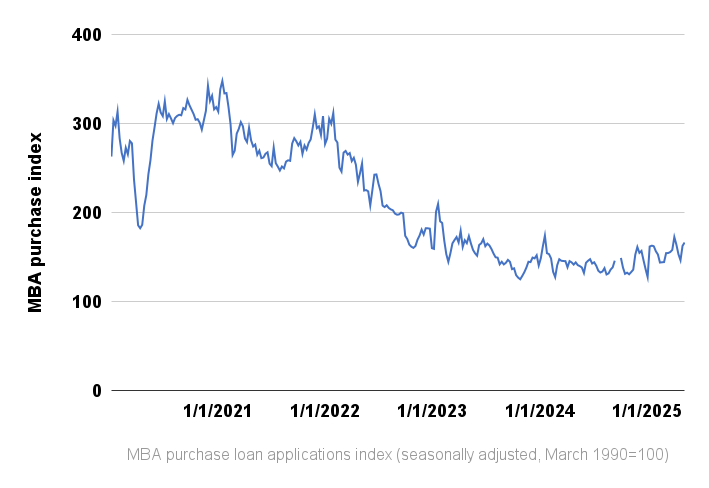
With more homes to choose from, purchase loan applications were up 18 percent from a year ago last week as buyers forged ahead despite economic uncertainty.
Bigger. Better. Bolder. Inman Connect is heading to San Diego. Join thousands of real estate pros, connect with the Inman Community, and gain insights from hundreds of leading minds shaping the industry. If you’re ready to grow your business and invest in yourself, this is where you need to be. Go BIG in San Diego!
Homebuyers came out in force again last week as mortgage rates found some stability, with demand for purchase loans climbing for the second week in a row, according to a weekly survey of lenders by the Mortgage Bankers Association.
The MBA’s Weekly Mortgage Applications Survey showed purchase loan applications were up by a seasonally adjusted 2 percent last week when compared to the week before, and up 18 percent from a year ago.
“Last week saw steadier mortgage rates, as the [Federal Reserve] meeting played as predicted, and market movements led to a small two-basis point increase in the 30-year conforming rate to 6.86 percent,” MBA Chief Economist Mike Fratantoni said in a statement.
While refi applications were essentially unchanged from the week before, falling by 0.4 percent, requests to refinance were up 44 percent from a year ago.
Mike Fratantoni
“The news for the week was the growth in purchase applications,” Fratantoni said. “Despite the economic uncertainty, the increase in home inventory means there are additional properties to buy, unlike the last two years, and this supply is supporting more transactions.”
Nationwide, there were 31 percent more homes for sale in April than there were a year ago, according to Realtor.com data. The 959,251 active for-sale listings that homebuyers had to choose from last month surpassed April 2020 levels, marking a new post-pandemic high.
Federal Reserve policymakers let a key short-term interest rate stand last week and are no longer expected to start cutting rates in June due to uncertainties over the Trump administration’s future moves on tariffs, immigration, taxation and regulation.
Administration officials have rolled out new or revised tariff policies 55 times this year, according to a tariff tracker maintained by the law firm Reed Smith.
The Trump administration on Monday announced a 90-day pause on a “reciprocal tariff” on goods from China announced April 2, reducing the effective tariffs on many Chinese imports from 145 percent to 30 percent.
The news sent stock markets and mortgage rates higher, with investors less fearful of a recession but still wary of inflation.
Monday’s reduction of tariffs on Chinese imports, and a trade deal with the United Kingdom, leaves the overall average effective tariff rate on U.S. imports at 17.8 percent — the highest since 1934, according to an analysis by The Budget Lab at Yale.
The Consumer Price Index for April, released Tuesday, showed prices were up 2.3 percent from a year ago last month — closer to the Fed’s 2 percent goal than the 3 percent annual inflation registered in January.
Inflation headed in the right direction
But the April CPI report contained “early signs of tariffs pushing up goods prices, with much more to come,” forecasters at Pantheon Macroeconomics warned in their May 14 U.S. Economic Monitor.
The economic policy uncertainty generated by tariffs and a drop in consumer confidence “is forcing providers of discretionary services to reduce prices,” Pantheon economists noted. “The upward impact on inflation from the tariffs will build rapidly over the coming months, but we continue to think that services inflation will cool, providing some offset and enabling the Fed to ease policy in the second half of this year.”
The Federal Reserve’s preferred inflation gauge — the Personal Consumption Expenditures (PCE) Price Index — showed annual inflation falling from 2.7 percent in February to 2.3 percent in March. The PCE Price Index for April will be released May 30.
Futures markets tracked by the CME FedWatch tool show investors don’t expect the Fed to resume rate cuts until Sept. 17.
Mortgage rates stabilize
Rates on 30-year fixed-rate conforming mortgages have been edging up this month, but at 6.81 percent on Tuesday were still 20 basis points lower than a 2025 high of 7.05 percent registered on Jan. 14, according to rate lock data tracked by Optimal Blue.
Optimal Blue data shows rates on 30-year fixed-rate loans hit a 2025 low of 6.48 percent on April 4. Fannie Mae forecasters said last month they expect mortgage rates to come down to 6.2 percent by the end of this year and to 6 percent next year.
At 166.5 as of May 9, the MBA’s seasonally adjusted purchase index showed homebuyer demand for mortgages was up 30 percent from a 2025 low of 127.7 registered on Jan. 3. The index was benchmarked at 100 in March 1990. Applications for purchase loans had previously picked up 11 percent during the week ending May 2.
Get Inman’s Mortgage Brief Newsletter delivered right to your inbox. A weekly roundup of all the biggest news in the world of mortgages and closings delivered every Wednesday. Click here to subscribe.
Bigger. Better. Bolder. Inman Connect is heading to San Diego. Join thousands of real estate pros, connect with the Inman Community, and gain insights from hundreds of leading minds shaping the industry. If you’re ready to grow your business and invest in yourself, this is where you need to be. Go BIG in San Diego!
Any challenge to winning over sellers can be overcome through competent conversation that includes, above all, seller participation. Great questions and deep listening enable sellers to make educated choices and have ownership of their goals. Real-world examples with risks and consequences demonstrate value, instill trust and help create a true “partnership” relationship.
The conversation starters below do more than get you started. They are lessons in seller conversion through probing questions, knowledge sharing and mutual decision-making.
1. Know the market. Be the expert. A metaphor will help sellers understand
By the time a shift in the market is noted by the media, it’s old news to the real estate industry. Agents need to be the market analysts, not the media. Let sellers know that you are the holder of the information and can help them leverage real news in real time.
Agent to seller: “When we track a town’s supply and demand, we know when shifts in the market favor the buyer or the seller. A two-month supply of homes in [town] signals a seller’s market. It takesonly two months to empty the shelf. However, changes in supply and demand can swing leverage in the opposite direction. Let’s discuss steps to win in this market.”
For a simple calculation of the month’s supply of inventory, divide the supply (homes for sale) by the current demand (the last 30 days of pending, not closed, sales).
Example: If there are 100 homes for sale, and 50 under contract/pending sales in the last 30 days, it takes two months to empty the shelf. Track every 30 days to see emerging trends.
2. Probing questions lead and guide seller discussions. Neighborhood news helps
Offer your SOI a review of the equity in their neighborhood, quarterly or annually. Meet or drop off a simple “MLS one-liner” of all activity in the area. If it’s simple and on one page, it will be shared with neighbors, becoming a big source of referrals. Follow up with probing “what ifs.”
Agent to seller:
“Everyone benefits from knowing the equity in their neighborhood and where prices are headed. I have a print-out of activity in your area that I’d like to drop off.”
“Hey,have you heard the news about the sales price of 123 Main?”
“Consider me a resource to help guide your future lifestyle plans.”
“If you couldchange anything about your home, what would it be?”
“What’s your long-termgoal for your home: Keep, sell, rent or renovate it to suit a future need?”
3. Is their house ready to sell? Help sellers see their home through buyers’ eyes
Asking sellers about the condition of their home is a delicate task. But because everyone understands what a “model home” looks like, switch up your ask to help them visualize how problem-solving fixes, with you as their guide, can increase the value of their home.
Agent to seller:
“Because there are steps in preparing a home for sale for a return investment, looking at a home through buyers’ eyes provides a clear perspective on whether a house is ready to sell.”
On a scale of 1 to 10, how would you rate your home’s condition? Model Home= 10.Poor Condition= 1.
What would it take for your home to be a 10?
What steps do you need guidance with?
What resources can I provide to help you through the initial process?
4. It’s not your marketing, not your personality, not your price
Losing a competitive listing can leave an agent in the dark. Of course, the seller liked you and your stellar marketing and maybe even your price. Differentiation in a consultative appointment is the key to hireability. To stand out, educate the seller on the three things that pay them a premium. They’ll listen!
Agent to seller: “The most crucial factor in selling a home is the collaboration between seller and agent on three key decisions that pay a seller a premium: pricing, condition and negotiation. While marketing capabilities are standard across the industry, educating a seller to critical choices on pricing, prepping the home, and complex negotiationwhen hearing offers are the benchmarks of a great proposal. Let’s discuss how to avoid leaving money on the table.”
5. Pricing choices that pay a seller a premium (in a 15-second elevator speech)
Providing sellers with critical decisions on goal-targeted pricing and having them choose is the consultative part of a “pre-marketing” process. Educate, don’t advise.
Agent to seller:
“There are 3 ways to price a house for sale — goal-targeted choices with risks and consequences:
Right-pricing, based on comparable sales, adds as much as a 5 percent premium to the sales price
Bidding/auction pricing, somewhat risky, is set low to stir up competition
Retail pricing, with a built-in price cushion in place, encourages lowball offers and a later sale. Which one works for you?”
Educate sellers on the often-misconstrued escalation clause. Not understanding this buyer strategy can leave money on the table. Understanding it can give sellers the upper hand.
Agent to seller: “Without a clear understanding, the escalation clause in an offer can look like a win for the seller, but it’s actually a buyerattempting to buy a home at the lowest price, offering to beat competing offers by an ‘escalated’ amount up to ‘a maximum price’ — the highest the buyer ‘would pay.’ Accepting the escalated offer on its terms is leaving money on the table. A true win for the seller, by the buyer ‘revealing his hand,’is tocounteroffer the buyer’s maximum he would pay, or counter ‘highest and best’ to all competing offers.”
7. The powerful message of the ROI of staging:Help sellers debunk common myths
It’s easy for sellers not to hear the message an unstaged home is sending to buyers. Help sellers separate “myth from reality” to capitalize on staging and sell for a premium.
Agent to seller: “The ROI stats are clear. Staged homes sell higher than unstaged homes. It’s common to question, ‘Why stage?’ because buyers ‘will want to change it’ anyway. Actually, buyers want to immediatelyfall in love with‘their’home, not ‘the seller’s’; have little vision and fewer resources; and can’t translate vacant or unstaged rooms to extra value and more space. Whether DIYor full staging, a home will sell for a premium and with fewer showing days on the market.”
8. Buy before sell? Sell before buy? Provide choices, not answers. Let them decide
It’s not about “what you would do” when the seller asks for advice on this critical timing issue. Answer the question with content; respond as the resource all agents should be.
Agent to seller:
“There is no one universal answer when selling and buying. There are actually five options to consider. It becomes a matter of personal choice. Each comes with consequences. Decide which one works best for you.”
Put your house on the market; sell it with a 60-day Use and Occupancy Agreement, giving you about 120 days or more for a home search and relieving some of the pressure to find a home.
Find the house first; make an offer contingent on selling your home — an ideal option for you, except for the weak negotiating position.
Put your house on the market; close, then find temporary housing. It’s a short-term option to decide your next move and the best negotiating position, but it’s inconvenient to move twice.
Secure a bridge loan to buy a home with equity from your existing home; repay it with proceeds from the sale of your house, also relieving pressure when buying before selling.
Keep your house, and rent it as part of an investment plan. I can guide you on that.
9. Carpe diem! Help sellers seize the deal. They decide how offers are heard
Too often, Realtors buy into “this is how we do it” when hearing offers. But negotiating isn’t a procedure. It’s a strategy based on what is on the table, with varying sets of buyer circumstances and seller goals.
Stop. Look. Listen. Then consult with the seller on the ways a negotiation can be handled. The seller decides the when and the how.
Agent to seller: “When an open house is swarming with potential buyers, what happens next can prompt sellers on when to accept a deal. Although there are commonly accepted ways of hearing offers in most markets, it comes down to choice. Some sellers in some scenarios wait to respond to an offer untilan artificial deadline is set to amass other offers, while some sellers in other scenarios seriously considerthe early offer, submitted to wow the seller, demonstrate urgency and align fast action to buyer commitment. Negotiating guidelines are just that, meant to help, but skilled negotiating is brainstorming options despite local practices.”
10. A seller’s wishlist is a clear path to getting it all. Provide buyers a visual
When a seller-agent guides buyer-agents with a seller’s wishlist in a competitive selling environment, it’s a win for both sides, facilitates targeted communication to address seller goals and curates the best offer by the buyer for the seller!
Agent to seller: “When sellers dwell on how to score the best deal among several offers in a seller’s market, they need only to name their terms. As seller agent, I commonly share the seller’s wishlist, in collaboration with the seller, with buyer agents preparing an offer. Here’s a sample of items I can include:”
Highest price with best terms and fewest contingencies
60-day closing with 60-day Use and Occupancy
Appraisal waiver for offers above list with proof of funds for deposit and appraisal gap
Total deposit due on Day 1 after all parties have signed the contract
Limit home inspection to major structural, environmental and mechanical issues
Consider waiving a specific dollar amount toward inspection concessions
Home inspection within three to five days after all parties have signed the contract
Add to contract [example]: chimney, fireplace, flue in As Is Condition.
Add the following personal property items excluded from sale: _____
Sellers will look favorably on a pre-approval from the preferred lender: _____
Provide buyer’s attorney information upon submission of offer.
Winning over sellers is a misnomer. It’s really about earning seller relationships when mastering the art of information communication. Markets change. Even repeat sellers want to know what they may not know.
When coached by a knowledgeable agent, sellers become holders of the information. This seals a bond between seller and agent, leads to effective decision-making, without remorse or regret, and is a platform for referrals.
Annette DeCicco is a real estate broker and director of growth and development at Berkshire Hathaway HomeServices Jordan Baris Realty in Northern New Jersey.
Bigger. Better. Bolder. Inman Connect is heading to San Diego. Join thousands of real estate pros, connect with the Inman Community, and gain insights from hundreds of leading minds shaping the industry. If you’re ready to grow your business and invest in yourself, this is where you need to be. Go BIG in San Diego!
Inman, the leading authority on real estate news and events, is excited to welcome Brian Buffini, chairman and founder of Buffini & Company, to the Inman Connect San Diego stage, taking place July 30 through August 1, 2025. Hosted at the stunning Hilton San Diego Bayfront, this three-day event brings together ambitious real estate professionals seeking actionable strategies, deep connections and the confidence to lead in a challenging market.
As interest rates fluctuate, inventory remains tight and commission structures evolve, you need more than inspiration; you need a concrete playbook. Inman Connect delivers tailored learning tracks, dozens of practical sessions and unparalleled networking opportunities designed to help you thrive.
Speaker Highlight: Brian Buffini
Brian Buffini’s journey began over 30 years ago when he arrived in San Diego from Ireland with little more than a dream and a strong work ethic. Determined to succeed, he built Buffini & Company into North America’s largest real estate coaching firm — entirely on the foundation of personal referrals.
His coaching principles have guided thousands of professionals to sustainable, referral-based success.
At Inman Connect San Diego, Buffini will reveal the client-focused approach highlighted in his coaching:
Referral mastery: Learn the authentic conversations and follow-up methods that turn every satisfied client into an ongoing source of new business.
Sustainable momentum: Discover how to create long-term growth patterns without cold calling or expensive advertising.
Winning strategies: Hear how agents from all backgrounds have transformed their careers by embracing Buffini’s straightforward, relationship-driven process.
Why attend Inman Connect San Diego?
The event is packed with learning and networking moments that will elevate your entire year!
Tailored learning tracks: Select from focused tracks such as Agent Connect, Broker Connect, MarTech Innovations, AI Applications, Negotiation Mastery and Next-Gen Technology. Customize your agenda to match your goals.
Actionable keynotes and panels: Engage with leading minds on topics like navigating high-rate environments, strengthening your personal brand and leveraging data for smarter decision-making. See who is confirmed to speak.
Elite networking: Connect face-to-face with more than 3,000 peers and industry veterans. Structured networking sessions, roundtable discussions and social events set against San Diego’s vibrant backdrop ensure you forge relationships that last well beyond the conference.
Practical takeaways: Return to your office armed with checklists, templates and proven tactics — from creative lead-generation campaigns to refined client-retention plans — that you can activate immediately.
Don’t miss out!
Inman Connect San Diego is the strategic advantage you need for 2025 and beyond. Register today to access Brian Buffini’s referral playbook, all conference sessions, and exclusive networking experiences.
If you’re a real estate pro who leads with heart, hustle and actual human connection, Stacey Soleil shares the things you should handle yourself.
Bigger. Better. Bolder. Inman Connect is heading to San Diego. Join thousands of real estate pros, connect with the Inman Community, and gain insights from hundreds of leading minds shaping the industry. If you’re ready to grow your business and invest in yourself, this is where you need to be. Go BIG in San Diego!
Artificial intelligence tools are everywhere right now. They’re fast, flashy and honestly kind of addictive once you get the hang of prompting. I use them too, and they’ve saved me hours on certain tasks. But there are still lines that shouldn’t be crossed, especially in an industry built on trust, nuance and reputation.
If you’ve ever felt the temptation to fully hand over your voice, your values or your relationships to AI, this is your reminder to pause. Here are 10 things you absolutely should not outsource to AI.
1. Don’t let AI write your apology
When a client feels let down, a teammate misreads your tone or a deal turns emotional, do not outsource your apology to an app. AI can mimic empathy, but it doesn’t feel anything. At best, you’ll sound generic. At worst, you’ll sound cold or performative.
Try this instead: Write what you genuinely feel. Be honest. Once you’ve gotten it out, add it to your AI of choice for help with tone or formatting. Authenticity always comes first.
2. Don’t let AI define your voice
Your voice is not a prompt. It’s how you show up on hard days, how you celebrate a win and how your clients describe you behind your back. AI can mirror a style, but it cannot capture the real-life moments that shaped who you are as a professional.
Try this instead: Give your AI examples of your past content or listing descriptions so it can reflect your existing tone. Do not expect it to invent one for you from scratch.
3. Don’t let AI make ethical decisions
Whether it’s disclosure language, how you present multiple offers or how you speak about competitors, AI does not carry the consequences of your choices. It doesn’t understand legal nuance or your code of ethics. And it definitely doesn’t know your market-specific obligations.
Try this instead: Use AI to help pressure-test your logic or present multiple ways to communicate something, but let your own integrity make the final call.
4. Don’t let AI handle your work conflicts
Tensions in real estate can be subtle or explosive. Maybe a co-broker threw you under the bus in front of a client. Maybe your team had a breakdown in communication and feelings got bruised. You can try prompting an AI to help you write a response, but it won’t understand the undercurrents, the politics or the trust that was broken.
Try this instead: Write it raw. Say everything you want to say without editing yourself. Once you’ve processed, add it to your AI tool to clean up tone or tighten the message. Your humanity is the part that matters.
5. Don’t let AI replace your expertise
AI can explain a financing term, but it has never negotiated an appraisal gap while standing in a driveway with panicked buyers. It can describe what a CMA is, but it doesn’t know what it’s like to deliver bad news to a client whose dream home is out of reach. That experience is yours. Own it.
Try this instead: Use AI to simplify, summarize or outline. Let it support your work, but never allow it to speak for your expertise.
6. Don’t let AI decide what’s ‘good enough’
Just because a listing description or market update reads well doesn’t mean it reflects your standards. AI aims for plausible, not personal. If you’re tempted to click copy and paste without checking how it aligns with your brand, your results may feel hollow.
Try this instead: Use AI to generate drafts. But always review with fresh eyes and a strong sense of what feels right for you, your clients and your brand voice.
7. Don’t let AI write anything you won’t fact-check
I’ve seen AI tools confidently generate fake stats, outdated guidelines and completely made-up program details. That becomes your liability the moment you hit “publish.” In a business where trust is your currency, misinformation is a price you can’t afford to pay.
Try this instead: Let AI help organize your content or summarize key points. Always double-check the numbers, names and regulations with real sources.
8. Don’t let AI talk about what you don’t actually understand
If you’ve never closed a short sale or executed a 1031 exchange, don’t let AI create content that implies you have. Your audience can feel the disconnect. It’s not a good look to present borrowed knowledge as personal expertise.
Try this instead: Share what you know deeply or partner with a trusted expert, conduct an interview, and let your AI tool help you structure the final output. That’s how you add value without losing credibility.
9. Don’t let AI fill the silence just to ‘stay consistent’
There’s pressure in this industry to post constantly. But if you’re showing up online with hollow content just to stay visible, your message starts to blur. AI can churn out content daily, but more doesn’t always mean better.
Try this instead: Let yourself be intentional. Share when you have something worth saying. AI can help you organize your thoughts once you have clarity, not before.
10. Don’t let AI tell you who you are
No app can define your value proposition, your purpose or your story. AI can echo back what you feed it, but it cannot discover who you are. That part comes from reflection, experience and the quiet confidence that builds when you’ve done the hard things well.
Try this instead: Explore your thoughts first. Reflect, journal, ask trusted colleagues what they notice about your impact. Once you have that clarity, AI can help you shape the message. The identity part? That’s yours to own.
Author Stacey Soleil is the SVP Community & Engagement at Inside Real Estate, Inman contributing writer and national speaker.