YouTuber Kyler Ferris unveils video mega team after return to eXp

YouTuber Kyler Ferris unveils video mega team after return to eXp

Ferris has launched what eXp Realty calls a “first-of-its-kind video-powered mega team” in Houston, in partnership with eXp real estate agent and YouTube creator Joe Rodriguez.

Bigger. Better. Bolder. Inman Connect is heading to San Diego. Join thousands of real estate pros, connect with the Inman Community and gain insights from hundreds of leading minds shaping the industry. If you’re ready to grow your business and invest in yourself, this is where you need to be. Go BIG in San Diego!

YouTube personality and Ferris Realty Broker-Owner Kyler Ferris is back with eXp Realty, and he’s not just returning, he’s working on elevating the traditional real estate team model, the firm announced Tuesday. Ferris brings with him his 45-agent team headquartered in Conroe, Texas.

Ferris has launched what the firm calls the “first-of-its-kind video-powered mega team” in Houston, in partnership with eXp agent and YouTube creator Joe Rodriguez.

Together, Ferris and Rodriguez are rolling out a new blueprint for agent growth, and that’s one that’s focused on long-form, hyper-local YouTube content as the primary driver of business. Rather than rely on cold calls, paid ads or traditional marketing techniques, agents on this team will focus on creating high-quality video content that generates organic leads at scale.

And it’s already working.

In 2024, Ferris Realty closed $164 million in sales volume. According to eXp, nearly half of those deals — 175 out of 368 transactions — were generated from Ferris’ YouTube channel Living in Houston Texas, which has racked up more than 4.5 million views and nearly 47,000 subscribers. The channel focuses on educating all viewers, especially prospective homebuyers, who are looking to learn more about Houston and its surrounding areas.

Rodriguez brings even more digital firepower with his channel The Original Living in Houston Team, which has almost 60,000 subscribers and close to 7 million views. His team vlogs also target buyers relocating to the area.

The mega team model flips the script on traditional prospecting. Agents are trained and supported to become video creators, who can produce educational content that connects with potential clients on YouTube — from top recommendations for neighborhoods to general facts about Houston that could push a viewer to purchase or stay put. And it all lives online 24/7.

The team leverages Ferris’ backend operations and systems with Rodriguez’s inbound lead pipeline, forming what they describe as an “unmatched YouTube ecosystem.” The team aims to generate over 5,000 organic leads a year.


24-year-old Twitch streamer Adin Ross buys $26M Florida mansion

24-year-old Twitch streamer Adin Ross buys $26M Florida mansion

The controversial Grand Theft Auto streamer secured the 10-acre property with a $12.7 million mortgage. The sellers are aerospace executives who built a new home on the estate in 2024.

Bigger. Better. Bolder. Inman Connect is heading to San Diego. Join thousands of real estate pros, connect with the Inman Community, and gain insights from hundreds of leading minds shaping the industry. If you’re ready to grow your business and invest in yourself, this is where you need to be. Go BIG in San Diego!

Gaming streamer Adin Ross has broken a sales record in Davie, Florida, with his purchase of a 10-acre estate for $25.5 million.

The 24-year-old internet personality is known for livestreaming himself playing video games and collaborating with celebrities.

Ross bought the home by way of an LLC, according to property records, and financed the property with a $12.7 million mortgage, The Real Deal reported.

The 11,325-square-foot home has seven bedrooms and nine baths, according to Zillow. The home was custom-built in 2024 and designed by Florida-based interior design firm Clive Daniel.

Amenities include a home theater, spa, office, smart home automation, elevator, art studio and pool house. Outdoor space features synchronized fountains, a reflecting pool with fire features, a swimming pool and outdoor kitchen.

The sellers are Laurent and Laure Parelle, both of whom are aerospace executives. The couple purchased the property in 2009 for $775,000, according to records. They listed it in March for $32 million.

Enzo Rosani, broker and managing partner of Barnes International Realty, represented the listing. William Abreu of The Nicolas Group at Compass repped Ross in the deal.

Other home sales in Davie haven’t come anywhere near Ross’ new pad. Previously, the sales record was held by a property at 10850 Southwest 23rd Street, which sold for $5.6 million in February.

Davie is located just west of Fort Lauderdale-Hollywood International Airport. The town and several of its neighboring towns have become popular among professional athletes, including Miami Dolphins quarterback Tua Tagovailoa, who bought a $1.7 million home in Davie in 2020.

Ross first gained attention by streaming himself playing NBA 2K and Grand Theft Auto V on Twitch. He was banned from the platform in 2023 for various platform violations, including having a guest who used a homophobic slur and for not moderating comments in his chat. He was subsequently allowed back on the platform this spring.

Ross had a heated encounter with NBA legend Shaquille O’Neal at UFC 314 on April 12, according to social media footage captured at the event showing O’Neal directing threats in Ross’ direction. The pair have also had a bit of back-and-forth online in the past, with Ross often jabbing at the former Lakers center.

Get Inman’s Luxury Lens Newsletter delivered right to your inbox. A weekly deep dive into the biggest news in the world of high-end real estate delivered every Friday. Click here to subscribe.

Email Lillian Dickerson

It’s not just KW! Compass was hit with a telemarketing lawsuit, too

It’s not just KW! Compass was hit with a telemarketing lawsuit, too

A renter outside Portland, Oregon, sued Compass this week, saying its agents contacted her despite her phone being on the National Do Not Call Registry and multiple requests to stop calling.

Bigger. Better. Bolder. Inman Connect is heading to San Diego. Join thousands of real estate pros, connect with the Inman Community and gain insights from hundreds of leading minds shaping the industry. If you’re ready to grow your business and invest in yourself, this is where you need to be. Go BIG in San Diego!

A renter outside Portland became the latest to target a major real estate brokerage with a lawsuit over telemarketing practices this week when she filed suit against Compass and one of its offices over unwanted calls and texts.

Jessica Murch said the company and its brokers and agents violated the Telephone Consumer Protection Act of 1991 when they called her with questions about listing the home she lives in with Compass.

Murch, who said she doesn’t own the home, said she received at least four calls and five texts she says she didn’t consent to from brokers and agents at Compass.

Murch became the latest consumer to file suit against a major real estate company this spring when she sued Compass in U.S. District Court for Oregon on Tuesday.

Last August, Murch said she clearly asked the Compass broker to not call or email her again after the initial contact.

About two weeks later, Murch said she received another call from a different Compass agent asking if she was interested in listing her house and relocating.

“The Plaintiff stated that she thought that she was pretty clear that she no longer wanted to receive calls from Compass and didn’t want to talk to Compass, and reiterated her internal do not call request.”

Murch continued getting calls into 2025, she said, up until two weeks before filing her lawsuit.

“Telemarketing calls are intrusive,” Murch said in her complaint. “A great many people object to these calls, which interfere with their lives, tie up their phone lines, and cause confusion and disruption on phone records.”

Compass declined to comment, saying it doesn’t comment on pending litigation.

“Plaintiff and the Class have been harmed by the acts of Defendants because their privacy has been violated and they were annoyed and harassed. In addition, the calls occupied their telephone lines, storage space, battery life, wear and tear, and bandwidth, rendering them unavailable for legitimate communication, including while showering, getting ready for work, driving, working, and performing other critical tasks.” 

Murch proposed a class that includes anyone who received multiple calls or texts from Compass or its agents if their numbers had been on the National Do Not Call Registry for at least a month before the contacts began.

She is requesting damages of between $500 to $1,500 per call or text.

Murch’s lawsuit was filed just days after a New York homeowner sued Keller Williams. The homeowner in that case made similar allegations against the franchiser. 

Email Taylor Anderson

TurboTenant, Rent Butter integrate to smooth tenant screening

TurboTenant, Rent Butter integrate to smooth tenant screening

TurboTenant’s integration of Rent Butter will embed what the companies are calling “near-instant” credit and background checks into the application process, removing it as a secondary, stand-alone action in the application ecosystem.

Bigger. Better. Bolder. Inman Connect is heading to San Diego. Join thousands of real estate pros, connect with the Inman Community, and gain insights from hundreds of leading minds shaping the industry. If you’re ready to grow your business and invest in yourself, this is where you need to be. Go BIG in San Diego!

Two technology companies in the rental industry are working together under an agreement forged to address the increasing risk of renter fraud, Inman has learned.

A June 18 press release from TurboTenant said that it is integrating Rent Butter’s, “tech-forward resident screening and verification platform” to empower its 775,00o-plus customers to vet applicants better and sniff out fraud attempts.

“Resident screening is one of the most important steps in protecting a rental investment,” TurboTenant CEO Seamus Nally said in the press release. “By partnering with Rent Butter, we’re providing our landlords with the best software available to manage their property and ensure access to the most accurate credit, criminal and eviction information available.”

The integration will embed what the companies are calling “near-instant” credit and background checks into the application process, removing it as a secondary, stand-alone action in the application ecosystem.

Such a flattening of the typical renter oversight process holds promise to save significant time for property managers, ensure data flows between steps with more accuracy and cut approval times for worthy applicants.

Rent Butter said in the release that traditional screening takes one to four days and estimates that as a result, landlords lose at least $65 per day in rent. Its software will allow TurboTenant users to see application reports and approval insights almost instantly.

“We believe in building safer, more inclusive communities by improving the accuracy and transparency of tenant screening,” Christopher Rankin, CEO of Rent Butter said in the release. “Working with TurboTenant allows us to bring this mission to scale and support hundreds of thousands of landlords with faster, fairer and more reliable screening technology.”

The company delves into consumer spending behavior, rent payment history, rent-to-income ratios and other financial activity to construct a more comprehensive model of an ideal tenant. Credit reports are largely static looks at a person at a single point in their consumer lifecycle.

A study conducted by Rent Butter looked at tenant approvals across 100,000 units and discovered six registered sex offenders, 85 felony convictions and 34 misdemeanors.

“In total, 14.5% of applicants in the dataset had serious criminal records that would not have been identified using more limited reporting methods,” Rent Butter said.

RentSpree, another software company serving the rental industry, has announced partnerships of its own to bolster antifraud efforts.

In August of last year, it connected with Finicity, a Mastercard company, to provide improved financial oversight of applicants, and in May, it evolved its existing partnership with TransUnion to better screen tenants for evictions and criminal records.

TurboTenant helps process more than $3 billion in rent each year, collects “millions of renter leads” and tackles more than 20,000 background checks every month, according to its website.

Email Craig Rowe

Housing starts plunge 10% in May to lowest level since 2020

Housing starts plunge 10% in May to lowest level since 2020

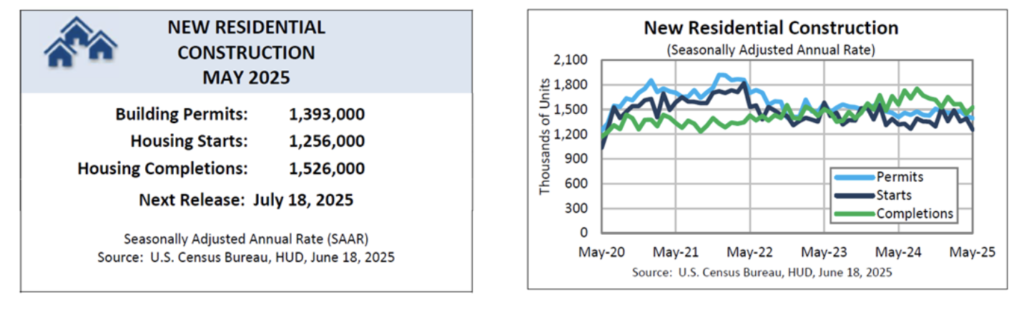
New residential construction made progress in completions but largely fell short on starts and permits, according to new data released Wednesday by the US Census Bureau and HUD.

Bigger. Better. Bolder. Inman Connect is heading to San Diego. Join thousands of real estate pros, connect with the Inman Community and gain insights from hundreds of leading minds shaping the industry. If you’re ready to grow your business and invest in yourself, this is where you need to be. Go BIG in San Diego!

New residential construction showed mixed signals in May, offering glimmers of progress in completions but largely falling short on starts and permits.

According to new data released Wednesday by the U.S. Census Bureau and the Department of Housing and Urban Development (HUD), the broader picture shows stagnation rather than recovery.

Privately owned housing starts dropped 9.8 percent from April to a seasonally adjusted rate of 1,256,000. That figure is also 4.6 percent below the May 2024 rate of 1,316,000, marking the weakest pace since 2020.

Odeta Kushi | First American Deputy Chief Economist

“Housing starts plummeted 10 percent in May to their lowest level since 2020, falling short of consensus expectations,” First American Deputy Chief Economist Odeta Kushi said in a statement. “The month-over-month pull back was primarily due to a decline in the volatile multi-family groundbreaking, while a decline in single-family building permits points to a weaker trend moving forward.”

Single-family starts edged up just 0.4 percent to 924,000 units, while multifamily construction took a deeper hit, falling to 316,000 units — down from 371,000 in April.

According to Kushi, the data comes amid growing pessimism among homebuilders, as is reflected in the latest National Association of Home Builders (NAHB) Housing Market Index (HMI).

“The steep drop is not entirely surprising considering that builder sentiment in June reached one of its lowest levels in 13 years, the only exceptions being April 2020 and December 2022,” Kushi explained. “This growing builder pessimism was widespread across all HMI components. Optimism about single-family sales for the next six months dropped by two points, and current sales conditions also fell by two points, marking the lowest level since June 2012. Prospective buyer traffic decreased from 23 to 21.”

Source: U.S. Census Bureau and the Department of Housing and Urban Development (HUD)

While completions provided a modest bright spot, increasing 5.4 percent from April to a rate of 1,526,000, they were still 2.2 percent below levels from the previous year. Single-family completions rose to 1,027,000, an 8.1 percent gain month over month, but multifamily completions dipped again, reaching 487,000 units in May from 503,000 units in April.

On the forward-looking side, building permits — an indicator of future construction — painted a dimmer picture. Privately-owned permits fell 2 percent from April to a rate of 1,393,000. This figure is also down 1 percent from May 2024. Single-family permits dropped 2.7 percent, while multifamily permits were relatively flat at 444,000.

According to Kushi, this data stands in stark contrast to what was seen in new-home sales early this spring.

“The weak construction data contrasts sharply with strong new-home sales in April, which made up the highest share of total sales since 2005,” Kushi noted.”

“Consider that new-home sales might offer a better deal for buyers than existing homes. Historically, new homes are priced at a premium relative to existing homes, but that gap has flipped. In April, the median price of a new home ($407,200) was actually lower than the median price of an existing home ($414,000), partly due to price cuts and builders constructing smaller, less expensive homes,” she added.

Those price adjustments are also showing up in builder strategy.

“The latest HMI survey data bears this out, revealing that 37 percent of builders reported cutting prices in June, the highest percentage since NAHB began tracking this figure monthly in 2022,” Kushi said. “Additionally, the use of sales incentives increased to 62 percent in June, up one percentage point from May.”

Still, a combinations of challenges continue to hold back construction activity, especially in the single-family sector.

“Builders face higher financing costs, tariff uncertainty, softer demand from elevated rates, increased competition from rising existing-home inventory in key markets like Texas and Florida, and higher inventories of their own,” Kushi said. “This mix is weighing on builder sentiment and likely to slow single-family construction.”

Email Richelle Hammiel

Lone Wolf inks integration partnership with Follow Up Boss

Lone Wolf inks integration partnership with Follow Up Boss

Customers of both Lone Wolf and Follow Up Boss no longer have to worry about separate logins or jumping between applications thanks to a new partnership between the popular software brands.

Bigger. Better. Bolder. Inman Connect is heading to San Diego. Join thousands of real estate pros, connect with the Inman Community and gain insights from hundreds of leading minds shaping the industry. If you’re ready to grow your business and invest in yourself, this is where you need to be. Go BIG in San Diego!

Agents and brokerages who are customers of both Lone Wolf and Follow Up Boss no longer have to worry about separate logins or jumping between applications thanks to a new partnership announced by the popular software brands.

The companies have agreed to an integration deal that will allow users of Follow Up Boss to send marketing data,  transaction insights and other critical client data directly into the advanced business tools of Lone Wolf Foundation. Such partnerships have become more common, with internal studies showing that customers of one company tend to favor one system for multiple business uses.

“Our mission has always been to empower real estate professionals by providing tools that simplify their daily operations and allow them to focus on what they do best,” Lone Wolf Technologies CEO Jimmy Kelly said in statement.

“This partnership represents our commitment to open, collaborative solutions that bring value to all agents, brokers and teams,” Kelly added.

Lone Wolf Foundation is a refresh of the company’s enterprise software, intended to reflect the user habits, experience demands, mobility and AI expectations of the fast-moving agent and tech-savvy real estate consumer.

While Lone Wolf’s CRM, Relationships, boasts a solid user base, the company realized that Follow Up Boss is also a popular alternative, and vice versa for the needs of Follow Up Boss users.

These partnerships are ultimately rooted in efficiency for each company’s user base. Now, instead of manually entering or using various conduits and workarounds to send data from one system to another and back again, deep integrations like this can greatly enhance data integrity, usage efficiency and user convenience.

Follow Up Boss co-founder Dan Corkill said that integration is a key component of the company’s user experience model. It also helps software companies scale and can promote each one to the other’s customer base, among other benefits.

“We’re always looking for ways to enhance our user experience and this partnership will help our mutual customers boost their efficiency and enable them to leverage additional solutions all in the same platform they’re working in every day,” Corkill said.

Follow Up Boss is owned by Zillow, which acquired it in 2023. It’s not exclusive to Zillow customers.

Lone Wolf recently announced it will be phasing out another CRM product in its den, Lion Desk, acquired in 2021. Kelly stated in a recent interview with Inman that while they gleaned important feature designs and user behavior data from the product, it simply didn’t fit the company’s new direction.

“This is not a decision we take lightly,” Kelly said. “It’s been part of our family for a few years now, but when we got into LionDesk we learned, unfortunately, that it wasn’t going to fit the need of that longer-term vision.”

Email Craig Rowe