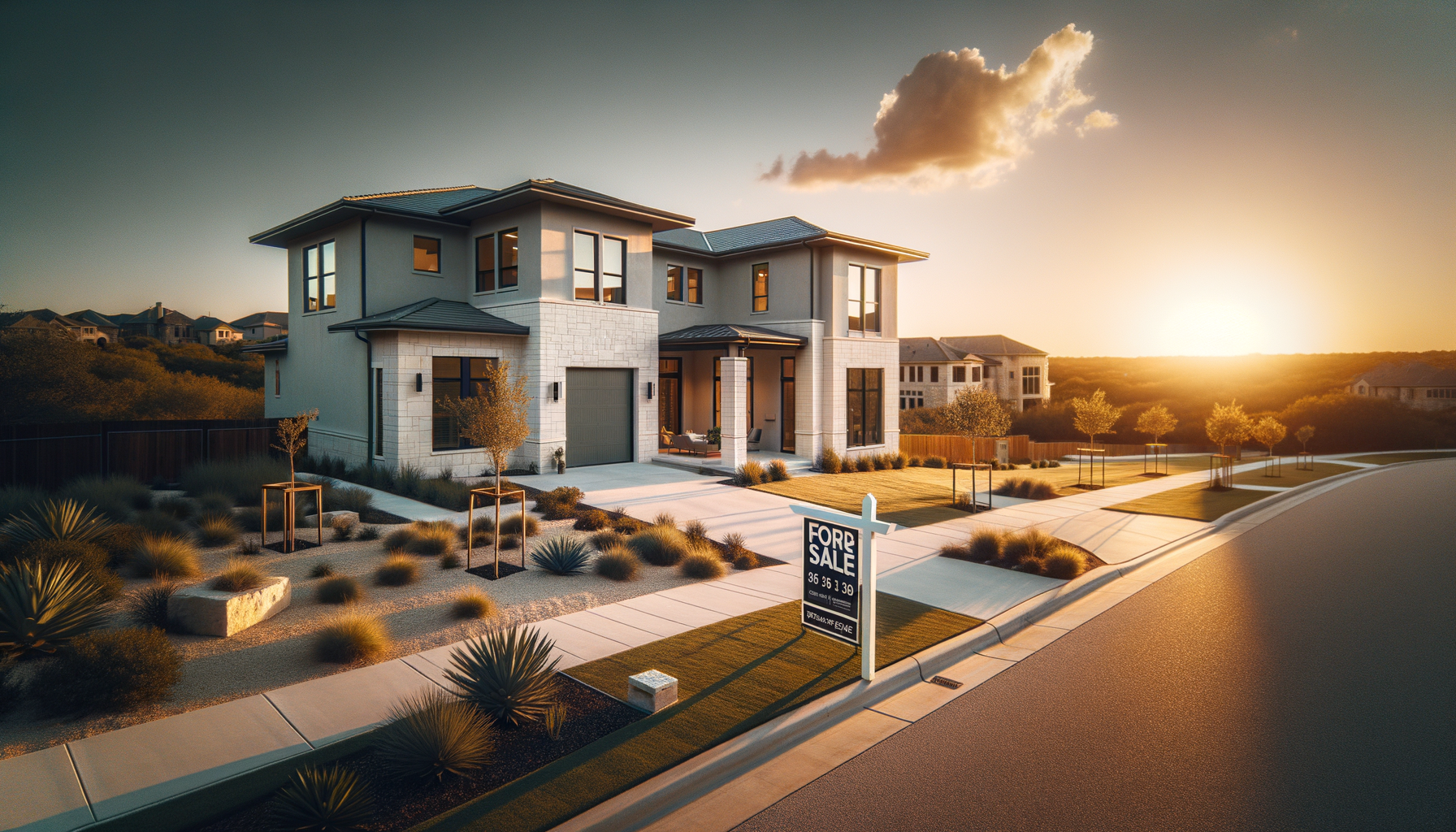
In Central Texas, new construction is one of the fastest-moving corners of the housing market—and it’s also where buyers can sometimes find the biggest negotiated savings. Between seasonal inventory pushes, interest-rate volatility, and builders trying to hit quarterly sales goals, “best buyer incentives” can change week to week in places like Austin, Georgetown, Leander, Round Rock, Pflugerville, Buda, Kyle, New Braunfels, and San Marcos.
For shoppers, that means two things matter as much as the floorplan: (1) what a builder is offering right now (rate buydowns, closing cost credits, design packages, price reductions), and (2) how clearly those incentives are structured through their preferred mortgage companies and lenders coops. For Realtors, it also raises an important question: which new home builders consistently support buyer representation with competitive, clearly documented best buyer agent commissions?
This guide explains how incentives and commissions typically work in Central Texas, where the best standard features tend to show up, and how to compare builders fairly—without getting distracted by marketing headlines.
What “best buyer incentives” look like in Central Texas right now
In Central Texas, builder incentives are often tied to two local realities: competition between large master-planned communities and a high share of rate-sensitive buyers. When interest rates rise, incentives typically shift toward financing help (like rate buydowns). When demand picks up in spring and early summer, incentives may pivot toward design upgrades or selective price reductions on spec homes.
Here are the most common incentives that show up with new home builders across Central Texas, and how to evaluate them:
- Interest rate buydowns: Temporary (e.g., 2-1) or permanent buydowns that lower the payment. Always ask if it requires using the builder’s preferred lender.
- Closing cost credits: A dollar-for-dollar credit applied to lender fees, title, escrow, and prepaid items. Confirm what it can and can’t cover.
- Price reductions on move-in-ready homes: Often the clearest “real” discount because it reduces loan amount and property taxes tied to purchase price.
- Design center allowances: Credits for flooring, countertops, cabinetry, or structural options. Great value when you plan to stay long enough to enjoy the upgrades.
- Lot premium discounts: Sometimes negotiable on inventory homes, especially late summer or end-of-year.
- Appliance, blinds, or backyard packages: Helpful, but compare the quality and what’s actually included (installation, warranty, specs).
- HOA or financing specials: Less common, but can appear in highly competitive submarkets.
A practical way to compare “best buyer incentives” is to translate them into a 3-year and 7-year cost picture. In Central Texas, many buyers move within that window for job changes, school needs, or lifestyle shifts—so the “best” incentive is usually the one that matters during the years you’ll actually own the home.
Why preferred lenders, mortgage companies, and “lenders coops” matter
Most builders in Central Texas structure their top incentives around preferred mortgage companies and lenders coops—essentially a network of lenders that regularly work with the builder and may offer promotional pricing, streamlined underwriting, or builder-funded credits.
This can be a win for buyers when it’s transparent. The risk is assuming a headline incentive automatically beats what you could get elsewhere. A clean comparison usually includes:
- The interest rate and APR (not just the rate)
- Any discount points or lender fees used to “create” the incentive
- Whether the incentive applies only to specific homes, lots, or closing dates
- Whether you can combine incentives (some builders make you choose one bucket)
In Central Texas, a common strategy is to get a quote from the builder’s lender and one outside lender on the same day, using the same assumptions (credit score range, down payment, loan type, HOA dues). That’s the fastest way to see whether the builder’s incentive is truly the best deal—or simply a different way of packaging costs.
Which Central Texas new home builders tend to offer the best incentives and commissions?
Because incentives and commissions change constantly, it’s hard to name a single “winner” across every neighborhood and month. In practice, the new home builders most likely to provide strong value in Central Texas usually share three traits: they build at scale (so they can fund promotions), they have standing relationships with preferred lenders, and they carry enough inventory to need consistent sales velocity.
Below are builder categories and names commonly active in Central Texas that frequently appear in conversations about strong promotions. Think of these as “builders to watch” for the best buyer incentives, best buyer agent commissions, and the best standard features—then verify current offerings in the specific community and price band you’re shopping.
National volume builders (often aggressive on financing incentives)
In many Central Texas submarkets, large national builders are the most consistent source of rate buydowns and closing cost credits—especially on move-in-ready homes. These builders often lean on preferred mortgage companies and lenders coops to deliver promotions quickly.
- Lennar: Often known for packaged offerings and periodic financing incentives, with communities across the Austin metro and along the I-35 corridor.
- D.R. Horton: Frequently active in entry-level and first move-up segments where payment incentives matter most.
- Pulte: Commonly offers financing and design incentives that vary by community, especially during inventory pushes.
- KB Home: Often emphasizes personalization and may offer rotating incentives tied to financing or design studio credits.
Commission note: Best buyer agent commissions can be strong with high-volume builders at times, but they may require strict registration rules and documentation. The “best” commission is the one that’s clearly published (or confirmed in writing) before contract, without surprises at closing.
Texas-based builders (often strong on standard features and local design)
Texas-rooted builders can shine in the best standard features category—things like masonry exteriors, covered patios, integrated smart-home packages, and finishes that fit Central Texas tastes. Incentives may be competitive, but can be more selective by community or inventory level.
- Perry Homes: Often positioned in master-planned communities with strong base design appeal and recognizable finish packages.
- Highland Homes: Common in Central Texas growth areas; often praised for design choices and build consistency, with incentives that vary widely by neighborhood.
- Taylor Morrison: Active in many Central Texas communities and price points; incentives often tied to financing and specific inventory homes.
- Chesmar Homes: Seen in several Austin-area communities; incentives and included features vary by product line and location.
Green flag: If the builder’s “standard features” list includes meaningful items that other builders treat as upgrades (better window packages, covered patio size, higher ceiling heights, structured wiring), that can beat a one-time incentive over the long run.
Semi-custom and move-up builders (value shows up in features more than flash incentives)
In Central Texas, semi-custom builders and move-up brands may not always advertise the biggest headline credits. Instead, value can come from lot selection, structural flexibility, and higher baseline specifications.
- Coventry Homes: Often in higher-tier communities; incentives can appear on inventory homes, but feature packages are a major part of the pitch.
- David Weekley Homes: Known for design, livability, and customer experience; promotions vary, but standard quality can reduce post-move costs.
- Scott Felder Homes: Common in the Austin region, often offering a mix of design-driven homes and competitive incentives depending on community stage.
Commission note: Best buyer agent commissions can vary significantly in this segment by community maturity (early phase vs. closeout). Agents should confirm commission addenda and registration rules before the first visit whenever possible.
How to compare builder offers: incentives, commissions, and the best standard features
Two homes can look similar on a brochure and still be very different deals. A builder offering a $20,000 closing cost credit might be less competitive than a builder with better base pricing, lower lot premiums, and stronger standard features—especially in high tax-rate areas of Central Texas where monthly cost is sensitive to purchase price.
Here’s a buyer-friendly way to compare new home builders without getting lost in sales language.
Step 1: Separate “price” from “payment”
Builders often market the monthly payment because it’s emotional and immediate. But payment depends on interest rate, taxes, insurance, HOA, and loan structure. Start with purchase price and total cash to close, then work down to the payment.
- Ask for a full loan estimate scenario using the builder’s lender and one outside lender.
- Confirm tax rate and MUD/PID status if applicable in that community, since it can significantly affect the payment.
- Check HOA dues and what they cover (amenities, landscaping, private streets).
Step 2: Put incentives into three buckets
Most best buyer incentives fall into one of these categories. Knowing which bucket you’re getting helps you compare apples to apples.
- Financing incentives: rate buydowns, lender credits, title credits tied to preferred lenders.
- Price incentives: base price reductions, lot premium reductions, inventory markdowns.
- Feature incentives: blinds, appliances, smart-home upgrades, design center credits.
In Central Texas, price incentives are often the most durable value because they reduce taxes and interest paid over time. Financing incentives can be excellent if you plan to refinance later or if the buydown meaningfully improves affordability now.
Step 3: Evaluate “best standard features” like an inspector would
The best standard features aren’t always the flashiest. They’re the items that reduce your future maintenance, improve comfort in Texas heat, and make the home easier to live in.
When you tour model homes, ask what’s standard vs. upgraded in these common Central Texas categories:
- Energy and comfort: insulation levels, window specs, HVAC sizing, thermostat zoning, radiant barrier (if offered).
- Exterior durability: masonry coverage, roof type, gutter inclusion, patio slab size.
- Interior practicality: cabinet construction, countertop material, flooring type in main living areas, lighting package.
- Tech and connectivity: pre-wiring, smart locks, EV outlet or conduit options, structured media panel.
A helpful rule: if you’ll end up paying to add it within the first year (blinds, gutters, garage opener, irrigation additions, ceiling fans), it’s worth real money. In many Central Texas communities, builders differ more on these “day one” livability items than on countertops.
Buyer agent commissions: what to know before you step into the model home
Buyer representation still matters in new construction, especially in Central Texas where contracts can be builder-written, timelines are strict, and incentives shift quickly. The challenge is that best buyer agent commissions are not uniform—and they can be affected by registration rules that kick in the moment you visit a model home or sign in at the front desk.
Here are the key points buyers (and agents) should understand upfront:
- Registration rules can control commission eligibility: Many new home builders require the buyer’s agent to accompany the buyer on the first visit or register the client online beforehand.
- Commission rates can vary by community: The same builder may offer different commissions in Georgetown vs. Buda depending on inventory levels.
- Incentives and commissions are separate: A strong buyer incentive doesn’t automatically mean strong agent compensation, and vice versa.
- Everything should be in writing: Commission addenda, bonus structures, and deadlines need to be documented before contract signing.
From a market dynamics standpoint, commissions tend to be more competitive when builders have standing inventory or are nearing the end of a phase. In spring, when buyer traffic is naturally higher in Central Texas, some builders tighten promotions. In late summer and around year-end, you may see more aggressive offers.
Red flags that can cost buyers and agents time (and sometimes money)
Most issues are avoidable with a little structure. Watch for these common snags:
- “One-day-only” incentives without a written worksheet: If it’s real, it can be documented and dated.
- Unclear lender requirements: If the best buyer incentives require preferred mortgage companies and lenders coops, confirm the exact lender name and whether the credit changes by loan type.
- Model home upgrades presented as standard: Ask for the standard features sheet and the option list for that exact plan.
- Lot premium surprises: A great base price can be offset by a high lot premium for greenbelt, corner, or cul-de-sac lots.
Smart strategies to get the best deal with Central Texas new home builders
In Central Texas, the best deal is usually created by timing, leverage, and clarity—not by negotiating like it’s a resale transaction. Builders have internal goals, construction schedules, and lender partnerships. If you align your offer with what the builder needs (a clean close, flexible move date, using their lender when it truly benefits you), you’ll often see stronger terms.
Focus on inventory homes when you want the biggest incentives
If your timeline is flexible, inventory homes (also called spec homes or move-in-ready homes) are where best buyer incentives tend to concentrate. Builders can discount these more easily because the construction costs are already sunk, and they want to reduce carrying costs and hit closing targets.
In Central Texas, this can be especially true in:
- Late summer (after peak spring/school-move season)
- End of quarter (March, June, September, December)
- Year-end closeouts in mature communities
Use lender comparisons to turn incentives into real savings
Because builder credits are often tied to preferred mortgage companies and lenders coops, the most practical move is to compare at least two loan scenarios. You don’t need five quotes—you need two clean, same-day estimates with matching assumptions.
Ask each lender to show:
- Rate, APR, and whether points are included
- Total closing costs (lender + title + escrow + prepaid items)
- Cash to close and monthly payment (including taxes and HOA)
- Any time-sensitive lock requirements for new construction
If the builder’s lender wins by a meaningful margin after accounting for fees, that’s a true incentive. If it doesn’t, you may still be able to use the outside lender and negotiate for a different incentive bucket (price or features), depending on the builder’s policy.
Negotiate what builders can actually move
Builders typically have more flexibility in some areas than others. In Central Texas, you’re often more likely to win concessions on:
- Closing cost credits (especially on inventory)
- Rate buydowns (through preferred lenders)
- Upgrade packages already installed in the home
- Lot premiums on certain remaining lots in a phase
You’re often less likely to win major changes to structural options after construction has started, or deep discounts on highly desirable lots (true greenbelt, water views, prime cul-de-sacs) in low-inventory communities.
Don’t overlook total cost of ownership in Central Texas
Central Texas ownership costs can vary dramatically by location. Two homes with identical prices can have different monthly costs based on property tax rate, insurance, HOA, and utility efficiency. The “best standard features” sometimes show up as lower electric bills and fewer post-move projects—especially important in Texas summers.
Before you commit, confirm:
- Estimated property tax rate and whether it includes MUD/PID or other district taxes
- Insurance expectations for the area (including hail considerations)
- What’s truly included at closing (landscaping, irrigation zones, gutters, garage opener)
- Builder warranty coverage and service process
For many first-time buyers in Central Texas, the winning combination is a realistic payment, a documented incentive package, and a home that won’t require immediate add-ons. When you weigh best buyer incentives, best buyer agent commissions, and the best standard features together—then validate the financing through mortgage companies and lenders coops—you put yourself in position to buy with confidence.