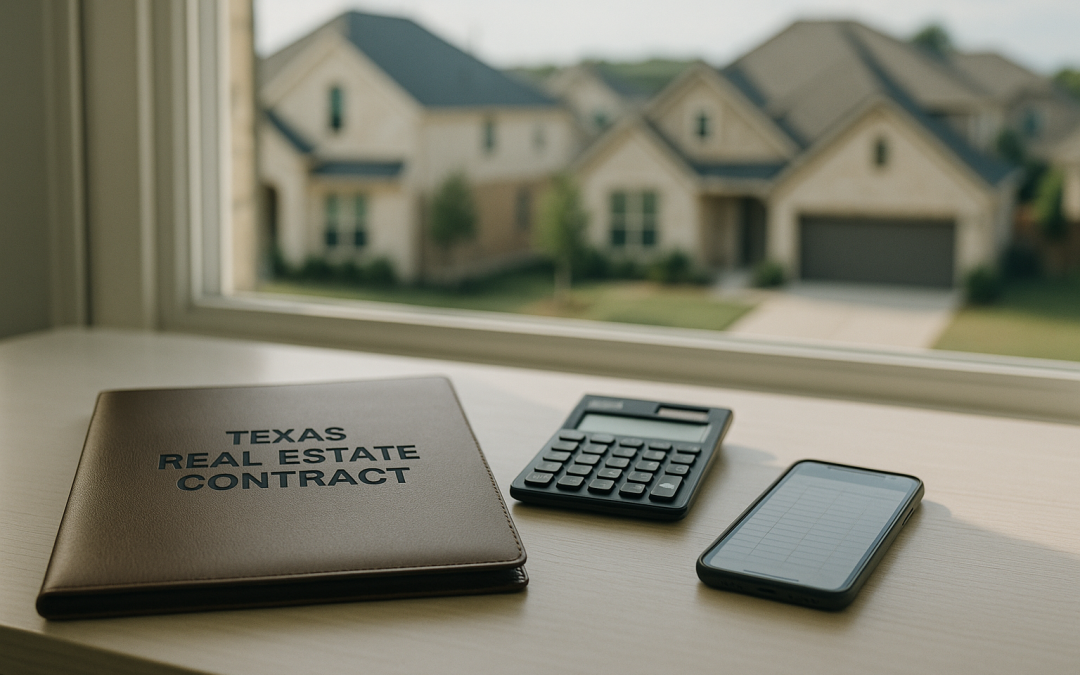
In a Texas housing market where contracts can move fast and closing dates often line up with school schedules, job relocations, and rate-lock deadlines, paperwork problems are one of the easiest ways to lose time. Many real estate closing delays Texas buyers and sellers experience aren’t caused by the house itself—they’re caused by documents that are missing, outdated, incomplete, or inconsistent.
The good news: most document mistakes that delay closing are preventable with a clear system, early review, and a practical closing documents checklist. Below are five of the most common real estate transaction mistakes tied to Texas real estate paperwork, why they happen, and how to avoid common closing delays during the Texas home closing process.
Why does paperwork cause real estate closing delays in Texas?
Texas real estate transactions involve multiple parties and timelines: buyer, seller, agents, lender, title company, and sometimes an HOA or attorney. Each party generates or relies on Texas contract documents that must match—names, dates, legal descriptions, fees, and required disclosures.
Closings also have hard dependencies. The title company can’t finalize settlement statements without lender figures. Lenders often can’t issue “clear to close” without updated income or insurance documents. And buyers can’t sign final loan packages if IDs don’t match or conditions aren’t met. That’s why staying organized isn’t just “nice to have”—it’s central to avoiding closing delays Texas buyers and sellers dread.
Seasonally, these issues tend to spike in Texas during late spring and summer, when transaction volume increases in metros like Dallas–Fort Worth, Austin, Houston, and San Antonio. More volume can mean tighter scheduling at lenders and title offices, so a small documentation hiccup can quickly push a closing past the planned date.
1) Missing signatures and initials: the simplest mistake that can stop a closing
If there’s one paperwork issue that repeatedly causes real estate closing tips to sound like “double-check everything,” it’s signatures. Missing signatures real estate problems show up in amendments, disclosures, HOA addenda, repair agreements, and even the contract itself. In Texas, many forms require initials in addition to signatures, and a single missed initial can create a compliance problem for the file.
Why it happens
Most missing-signature issues are caused by speed and handoffs. A counteroffer comes in late. An amendment is signed on a phone. A buyer thinks the agent will sign “for them” (they can’t). Or a document is revised after one party already signed, requiring a fresh signature set.
How to avoid it
Buyers, sellers, and agents can reduce this risk by treating signatures as a process, not an afterthought:
- Use one central signing method (e-sign platform or in-person) and keep versions organized.
- After every signed document, confirm it shows “completed” for all parties.
- Re-check signatures after any change to price, closing date, repairs, or concessions.
- Match names to legal IDs (middle initials, suffixes, hyphens) consistently across all forms.
This is a classic example of document mistakes that delay closing because it feels minor—until the title company or lender cannot proceed without a fully executed document trail.
2) Incomplete or inconsistent disclosures: small blanks that turn into big questions
Disclosures are a major part of Texas home buying process expectations. Texas sellers often complete a Seller’s Disclosure Notice, and additional disclosures may apply depending on property type, location, and history. When these are incomplete, contradictory, or delivered late, they can create common closing delays by triggering renegotiations, repair requests, or lender questions.
Where problems show up most
In practice, disclosure-related delays often come from:
- Blank sections left unanswered (even when the answer is “unknown”).
- Inconsistent answers compared to inspection findings or prior paperwork.
- Missing required addenda (HOA information, lead-based paint for older homes, etc.).
- Late delivery that shortens the buyer’s review window and pushes decisions closer to closing.
Even when a disclosure issue doesn’t kill the deal, it can slow the Texas real estate transactions timeline because the buyer may request additional documents, specialist evaluations, or an updated repair agreement—each of which creates more paperwork that must be signed correctly.
How to avoid it
Sellers should complete disclosures carefully and early, using documentation like receipts, warranty info, survey notes, and insurance claim history when available. Agents can help by reviewing the disclosure for completeness before it’s delivered. Buyers should read disclosures immediately and ask questions early—waiting until the final week can compress timelines and increase the chance of real estate transaction mistakes.
Organizational tip: keep a simple real estate document checklist folder with disclosure forms, repair receipts, and any warranties, so answers are consistent across the transaction.
3) Outdated or incorrect Texas contract documents: the version matters
Texas uses standardized forms for many transactions, commonly associated with Texas REALTORS® (TAR) and, in some cases, TREC. While the specific form set depends on the deal, the key point is universal: if the wrong version is used, or the wrong addendum is attached, the transaction can stall while documents are corrected and re-executed.
This is one of the more frustrating real estate closing delays Texas buyers encounter because it’s often discovered late—when the title company, lender, or compliance review flags an issue that requires “papering” the fix. That can mean fresh signatures, new dates, and sometimes re-disclosures by the lender.
Why it happens
Outdated forms usually come from templates saved on a computer, older transaction files copied forward, or a party pulling documents from an unofficial source. Incorrect addenda can happen when a property’s details change (for example, the home is in an HOA, has a leaseback, or includes non-realty items) but the paperwork doesn’t fully reflect it.
How to avoid it
- Agents should generate forms from current, approved libraries and confirm the latest version dates.
- Buyers and sellers should verify all attachments referenced in the contract are actually included.
- When something changes—closing date, repairs, possession, or exclusions—use a clear amendment and confirm it’s fully executed.
This is also where good file naming helps. A clean “Contract vFinal” isn’t enough—use dates and version numbers so everyone is working from the same Texas contract documents.
4) Financing and lender documentation errors: the biggest driver of closing delays
Even in cash deals, there’s paperwork. But when a lender is involved, financing documents become one of the most common sources of common closing delays. Loan files are document-heavy by design, and lenders must verify identity, income, assets, debts, insurance, and property details before issuing final approval.
In Texas, buyers often try to time purchases around rate locks, relocation timelines, or school start dates. If lender conditions aren’t satisfied on schedule, it can cause real estate closing tips to become urgent—because the closing date may have to move, and the seller may need to extend occupancy plans or moving arrangements.
What goes wrong most often
- Pay stubs, bank statements, or tax returns are outdated or missing pages.
- Large deposits appear without a clear paper trail, triggering documentation requests.
- Names or addresses don’t match across IDs, loan application, and contract.
- Homeowner’s insurance documents arrive late or have incorrect coverage or mortgagee clauses.
- Gift funds aren’t documented correctly or arrive too late for verification.
These are classic document mistakes that delay closing because they often lead to back-and-forth conditions. And in busy periods—like peak spring and summer buying in Dallas–Fort Worth suburbs (Frisco, McKinney, Prosper), Houston-area communities (Katy, Cypress, The Woodlands), or Central Texas (Round Rock, Leander, Dripping Springs)—a lender’s review queue may be less forgiving of last-minute submissions.
How buyers can stay ahead of lender conditions
During the Texas home closing process, buyers should assume the lender will ask for updates close to closing. A simple routine helps:
- Respond to lender requests within 24 hours when possible.
- Avoid major financial changes (new credit cards, car purchases, job changes) until after closing.
- Maintain a dedicated folder for loan items as part of your closing documents checklist.
- Confirm insurance early, including wind/hail considerations that can affect premiums in parts of Texas.
Agents can help by setting expectations early: financing is a moving target, and organization is one of the best tools for avoiding closing delays Texas lenders can’t “rush” at the end.
5) Title paperwork Texas issues: surveys, liens, HOA documents, and name mismatches
Title work is where many transactions either glide to closing or hit an unexpected speed bump. Title paperwork Texas requirements include verifying ownership, clearing liens, confirming legal descriptions, and preparing documents for closing. If any item is missing or incorrect, the title company may not be able to insure the transaction—which is a deal-stopper for most lenders and a serious risk for buyers.
Common title-related document problems
Title issues aren’t always “drama.” Many are fixable—but they take time and correct paperwork. Frequent examples include:
- Outdated or missing surveys, or surveys that don’t match current improvements (fences, additions, patios).
- Unreleased liens or missing payoff documentation for mortgages, tax liens, or judgment liens.
- Probate or estate documentation delays when an owner has passed away and authority to sell must be proven.
- HOA resale certificates, governing documents, or transfer fees arriving late.
- Name mismatches (married names, initials, suffixes) between ID, vesting deed, and contract.
In Texas, HOA documentation can be a recurring cause of real estate closing delays Texas metro buyers see, especially in master-planned communities around Austin, Houston, and DFW where resale packets and transfer fees are common. Another frequent issue is the survey: if a lender requires a new one, scheduling can take longer than expected, particularly during high-volume seasons.
How to reduce title-related delays
Sellers can help by gathering key documents early—existing survey, deed records they have, HOA contact info, and mortgage statements. Buyers and agents can help by reviewing the title commitment quickly and asking questions immediately if an exception or requirement looks unfamiliar.
One practical rule: treat the title commitment review like an inspection. It’s not just “fine print.” It’s the paperwork that confirms what you’re buying and whether ownership can transfer cleanly.
Practical real estate closing tips: a simple document system that keeps Texas deals on track
Most Texas real estate paperwork problems aren’t caused by a single big error. They’re caused by many small gaps—an unsigned amendment here, an outdated bank statement there—that snowball in the last week. The easiest way to prevent real estate transaction mistakes is to run your transaction like a project with clear deadlines and one source of truth.
Here’s a straightforward real estate document checklist approach that works for buyers, sellers, and agents:
- Create one shared “transaction folder” (digital is fine) for all executed documents and receipts.
- Track deadlines for option period, financing approval, HOA docs, appraisal, and closing.
- Confirm document version control so everyone is signing the same forms.
- Review for consistency (names, property address, legal description, closing date, and purchase price).
- Do a final week audit using a closing documents checklist so last-minute conditions don’t surprise you.
For first-time buyers especially, it helps to remember that the Texas home buying process is paperwork-heavy because it’s designed to protect ownership rights and clarify responsibilities. Staying organized isn’t just about speed—it’s about confidence. And when documents are clean, complete, and current, you dramatically reduce the odds of avoiding closing delays Texas buyers and sellers often blame on “the process.”
If you’re unsure whether your file is on track, ask your agent or title company a simple question: “What documents are still outstanding, and who owns each next step?” Clear ownership is often the fastest way to prevent real estate closing delays Texas transactions can run into at the finish line.