If you’re house hunting in Texas—especially around Houston, Austin, San Antonio, and the fast-growing suburbs of Dallas–Fort Worth—you’ll likely see homes located in a “MUD.” That stands for municipal utility district, and it can affect everything from your water provider to your annual tax bill. Understanding how a MUD Texas works helps you compare neighborhoods accurately, avoid surprises at closing, and feel confident about your long-term costs.
Below are five practical things to know—explained in plain language—so you can evaluate a MUD community like a pro.
1) A MUD is a local government that provides utilities (and pays for infrastructure)
What a municipal utility district is
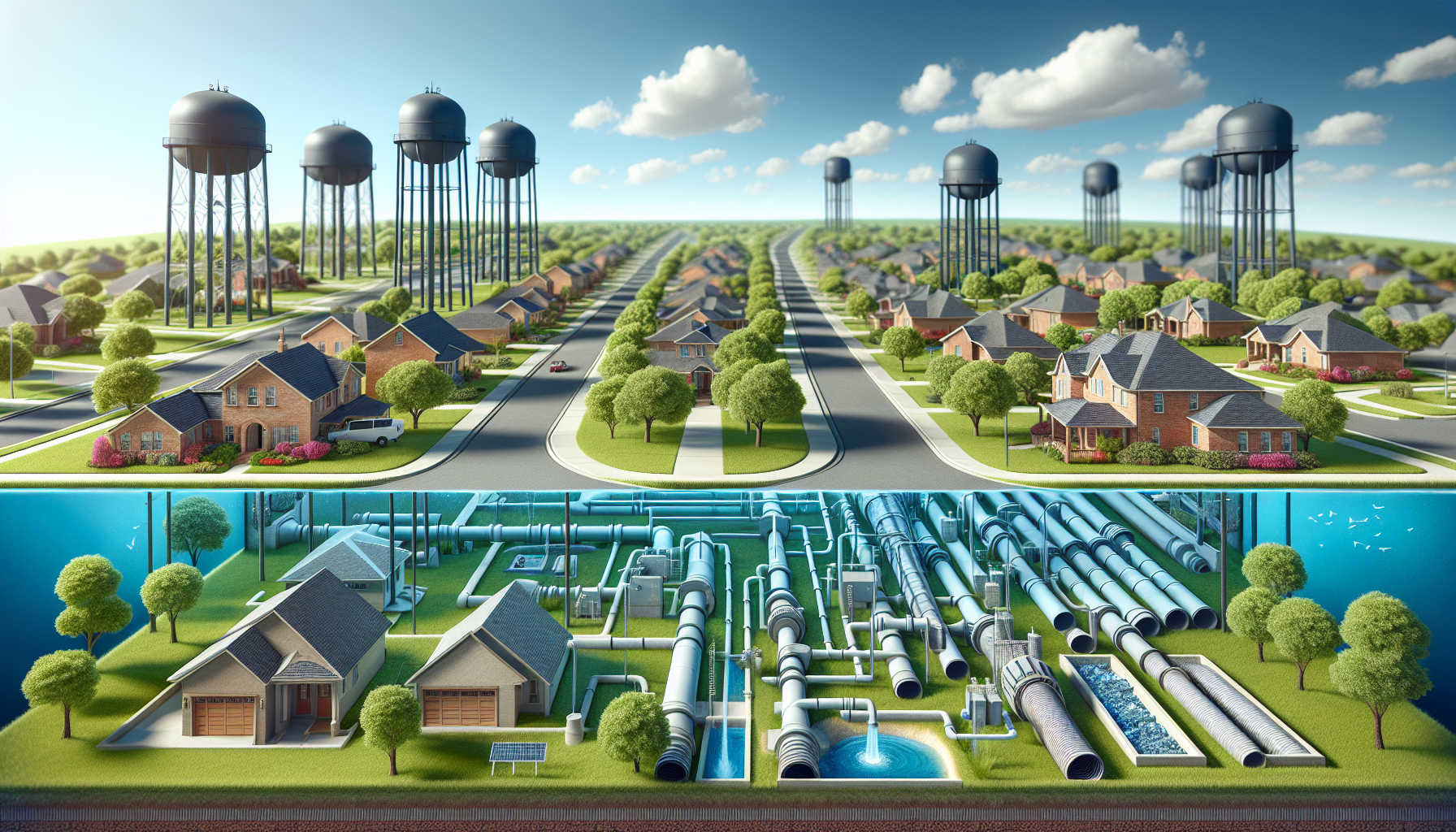
A municipal utility district is a type of special-purpose local government authorized by the State of Texas. MUDs are commonly created in areas outside city limits or in newly developing areas where city utility service isn’t available yet. The district’s job is to build and operate essential infrastructure, most often:
- Water (production wells, treatment, distribution lines)
- Wastewater/sewer (collection lines, lift stations, treatment capacity)
- Drainage and stormwater (detention ponds, drainage channels, storm sewers)
- Sometimes roads and parks (varies by district authorization)
Why MUDs are so common in Texas
Texas grows quickly, and new neighborhoods often pop up before a city can extend utilities to serve them—or in areas that prefer not to annex into a city at all. A MUD allows development to move forward by funding infrastructure up front, then paying those costs back over time through taxes and utility fees collected from property owners within the district.
In other words, a MUD can help turn “raw land” into a livable community with reliable water, sewer, and drainage—services that are non-negotiable for most buyers.
2) MUD taxes are part of your total Texas property taxes—so your tax bill may be higher
How MUD taxes fit into Texas property taxes
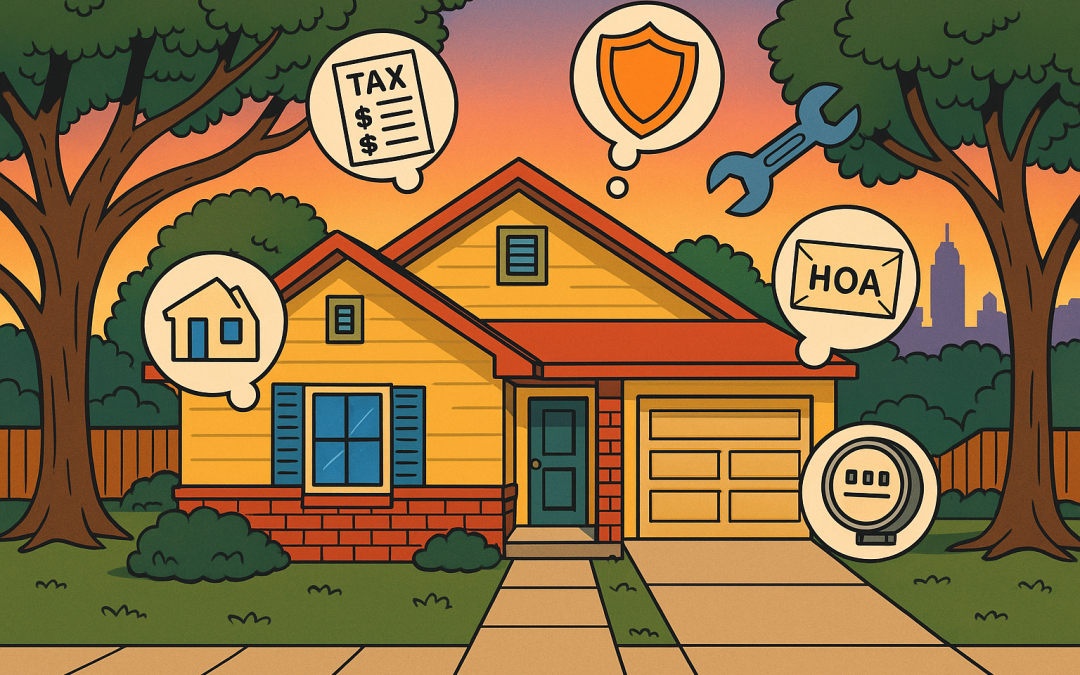
Texas property taxes are typically made up of several taxing entities. Depending on the address, your bill may include:
- County taxes
- School district taxes (often the largest piece)
- City taxes (if inside city limits)
- Community college or hospital district taxes (in some areas)
- MUD taxes (if the home is in a municipal utility district)
Homes in a MUD frequently have a MUD tax rate added on top of other local rates. This is one of the biggest “budget surprises” for first-time buyers who focus only on the sales price and interest rate.
Why MUD tax rates can be higher in newer communities
When a neighborhood is new, the MUD may still be paying off major infrastructure costs. As more homes are built and the tax base grows, the district can sometimes spread costs across more properties—which may help stabilize or reduce rates over time. That said, tax rates can move up or down based on budgets, debt service, and operational needs, so it’s best to treat any future change as a possibility, not a promise.
How to estimate your real monthly payment
When you’re comparing two homes—one in a MUD and one not—ask your lender to run payment scenarios using the full estimated tax rate. A small difference in tax rate can noticeably change your monthly escrow payment.
- Green flag: Your agent and lender provide a complete tax breakdown early, including MUD taxes.
- Red flag: Tax estimates that ignore the MUD or use an outdated rate.
3) You’ll pay both MUD taxes and utility bills—because they cover different costs
Taxes vs. utility rates: what each one pays for
This is a common point of confusion. In many MUD Texas communities, homeowners pay:
- MUD taxes (collected like property taxes, often used to repay infrastructure debt and support district operations)
- Monthly utility bills (water/sewer usage charges, base fees, and sometimes trash through separate providers)
Think of it like this: your utility bill is generally tied to your consumption and service fees, while MUD taxes are tied to the value of your property and the district’s budget and debt obligations.
Practical questions to ask about services
Before you buy, get clear answers on who provides what. In some neighborhoods, the MUD handles water and sewer, while trash pickup might be private. In others, services are bundled differently.
- Who is the water provider and sewer provider?
- Are there separate fees for drainage or stormwater?
- Is trash and recycling included, through the HOA, or billed separately?
- Are there irrigation restrictions or water conservation rules?
In many Texas markets, summer water usage spikes due to lawn irrigation—so it’s smart to review typical seasonal billing patterns, especially if the home has a large yard or new landscaping that needs frequent watering.
4) MUDs issue bonds to build the neighborhood—so debt and “build-out” matter
What it means when a MUD has debt
MUDs often finance infrastructure by issuing bonds. Bond proceeds can pay for major systems like water lines, sewer lift stations, and drainage improvements. Then the district repays those bonds over time using tax revenue from property owners in the district.
Debt isn’t automatically bad—without it, many Texas master-planned communities wouldn’t exist in their current form. The key is understanding how the district’s debt and growth stage may affect tax rates and future planning.
How to think about build-out stage
A newer MUD in early build-out may have:
- Higher infrastructure spending
- A smaller number of homeowners sharing costs
- More construction activity nearby
A more mature MUD may have:
- A larger tax base
- More predictable budgets
- Fewer active construction impacts
Neither is inherently “better,” but they feel different day-to-day. If you work from home or prefer quiet streets, ongoing development can be a meaningful lifestyle factor to weigh.
Due diligence tips buyers often miss
- Confirm the exact tax rate for the current year and ask whether it includes both debt service and operations.
- Ask for recent district information that explains finances, service areas, and long-term plans (your agent can help request what’s appropriate).
- Compare similar homes across neighborhoods using total monthly payment, not just list price.
5) Governance, disclosures, and closing details can affect your experience
How MUDs are governed (and why it matters)
A municipal utility district is run by an elected board. The board makes decisions about budgets, tax rates, infrastructure projects, and operations. While most day-to-day utility operations are handled by professional managers and contractors, governance still matters because it shapes long-term planning and financial priorities.
For homeowners, the practical takeaway is that a MUD is a real local governmental body—separate from a city and separate from an HOA—with its own responsibilities and public processes.
Disclosures you may see when buying a home in a MUD
In Texas, buyers are often provided a notice that a property is located in a utility district, along with information about taxes and services. Closings may also include details tied to the district’s tax rate or utility setup.
Here’s a simple step-by-step approach for buyers to stay organized:
Step-by-step: how to evaluate a MUD home before you close
- Step 1: Identify the district. Ask your agent for the exact MUD name and confirm the home is within its boundaries.
- Step 2: Verify the total tax rate. Compare last year’s and current year’s rates if available, and make sure your lender uses the right number in payment estimates.
- Step 3: Confirm service providers. Verify who bills water and sewer, and whether there are additional district fees.
- Step 4: Review the seller’s disclosures and any district notices. Pay attention to anything referencing taxes, utility districts, or special assessments.
- Step 5: Budget for real-world usage. Ask the seller (or neighbors, if possible) about typical summer and winter utility bills, especially for irrigation and pool ownership.
Common mistakes (and how to avoid them)
- Mistake: Assuming “no city taxes” means “lower taxes.”
Better approach: Compare the total tax rate, including the MUD and school district. - Mistake: Underestimating escrow changes after the first year.
Better approach: Plan for potential payment adjustments if the initial escrow estimate was conservative or if taxes/insurance change. - Mistake: Ignoring drainage and flood resilience.
On that last point: because MUDs often handle drainage infrastructure, it’s still wise to do your own due diligence—review flood history, ask about detention systems, and consider insurance needs. Drainage is a major quality-of-life issue in many Texas regions, particularly in parts of the Gulf Coast and areas prone to heavy seasonal storms.
Pros and cons of living in a MUD community
Pros
- Newer infrastructure and planned utility systems
- Development can happen in desirable areas outside city limits
- Potentially strong neighborhood amenities depending on the community
Cons
- MUD taxes can increase your overall Texas property taxes
- You may pay both MUD taxes and monthly utility bills
- Construction and growth can affect traffic, noise, and local services during build-out
Bottom line: a MUD isn’t “good” or “bad—”it’s a cost-and-services tradeoff
Buying in a MUD Texas community can be a great fit, especially if you want a newer home, planned infrastructure, and access to fast-growing suburban areas. The key is to shop with your eyes open: understand how the municipal utility district impacts services, what it adds to your Texas property taxes, and how it affects your true monthly payment.
If you do that homework early—before you fall in love with a house—you’ll be in a strong position to choose the neighborhood that fits both your lifestyle and your budget.