Why Texas Buyers and Sellers Are Paying Attention
Texas has long been a testing ground for new homebuilding ideas—thanks to fast-growing metro areas, steady relocation demand, and a strong culture of innovation. Over the last few years, one of the biggest “what’s next?” conversations has centered on 3D printed homes with built in smart home technolofy. The promise is compelling: faster builds, improved efficiency, and modern layouts that pair well with cool smart home technology.
At the same time, practical questions matter most for real people trying to buy or sell a home in today’s market: How does the sales price compare to traditional construction? Will it appraise? Is it durable in Texas heat, hail, and shifting soils? And what does owning one actually feel like day to day?
This guide breaks it all down in plain language for Texas buyers, sellers, and curious homeowners—covering the benefits, the concerns, and the design concepts shaping 3D printed smart homes of the future.
What Is a 3D Printed Home (and What Isn’t It)?
A 3D printed home typically refers to a house where a large-scale construction printer “prints” some or all of the wall system, most often using a concrete-based material. The printer lays down the wall material in layers, guided by a digital plan. Think of it like piping icing—only at building scale, and with structural material.
What parts are usually printed?
- Most common: Exterior and/or interior wall systems printed in a concrete-based mix
- Sometimes: Certain partitions, decorative features, or accessory dwelling units (ADUs)
- Usually not printed: Roof framing, windows, doors, mechanical systems (HVAC), electrical wiring, plumbing, cabinetry, and finishes
Why “new construction” matters here
In Texas, most 3D printed residential projects are new construction. That matters because new builds come with different timelines, inspection phases, warranty expectations, and financing requirements than resale homes. It also means buyers need to understand what’s “standard” for this builder versus what’s an upgrade—especially for smart home features and energy-efficiency options.
Texas Market Context: Where 3D Printed Homes Are Showing Up
Texas conditions make the state a natural candidate for alternative building methods. Demand has been strong in many regions, and builders are always looking for ways to deliver homes faster and more cost-effectively—without sacrificing quality.
Common Texas drivers for interest
- Rapid growth: Continued demand in major metros and surrounding suburbs
- Skilled labor shortages: A recurring challenge that can affect construction timelines
- Weather realities: Heat, occasional deep freezes, hail, and storm seasons encourage durable building envelopes
- Energy costs: A strong incentive for efficiency-focused construction and smart controls
Seasonal patterns to keep in mind
New construction activity in Texas often surges in spring and early summer when weather is more predictable, then faces schedule pressure during peak heat and storm periods. While a 3D printed wall system can reduce time spent on some phases, permitting, site work, inspections, and utility connections still follow local schedules—and those can be just as seasonal as traditional builds.
The Big Benefits: Why Buyers Like the Idea
The appeal of 3D printed homes isn’t just novelty. The best projects focus on performance, long-term operating costs, and comfort—especially when paired with cool smart home technology that makes a house easier to manage.
1) Potentially faster build timelines (for certain phases)
When printing replaces parts of conventional framing, some wall-construction steps can move faster and more predictably. That can be especially helpful in markets where labor availability can cause delays.
- Green flag: A builder who provides a clear construction schedule showing what’s faster and what’s unchanged
- Red flag: Marketing that claims “printed in 24 hours” without clarifying that most of the home still requires standard trade work and inspections
2) Strong “envelope” potential and energy efficiency
One of the most practical reasons Texans care about 3D printed homes is efficiency. A tight, well-designed building envelope helps reduce air leakage, stabilize indoor temperatures, and keep HVAC systems from working overtime—especially during long summer heat waves.
Actual performance depends on design choices: insulation strategy, window quality, roof assembly, sealing around penetrations, and HVAC sizing. But many 3D printed designs aim for fewer gaps and a sturdier wall assembly than some standard builds.
3) Durability and resilience (with the right engineering)
Concrete-based wall systems may offer advantages for certain durability concerns, such as resistance to pests and reduced susceptibility to some types of rot. In Texas, that can matter in humid regions and anywhere termites are common.
That said, resilience is never automatic. The foundation design, reinforcement approach, roof system, and water management details (flashing, drainage, grading) are still critical.
4) Design flexibility and modern aesthetics
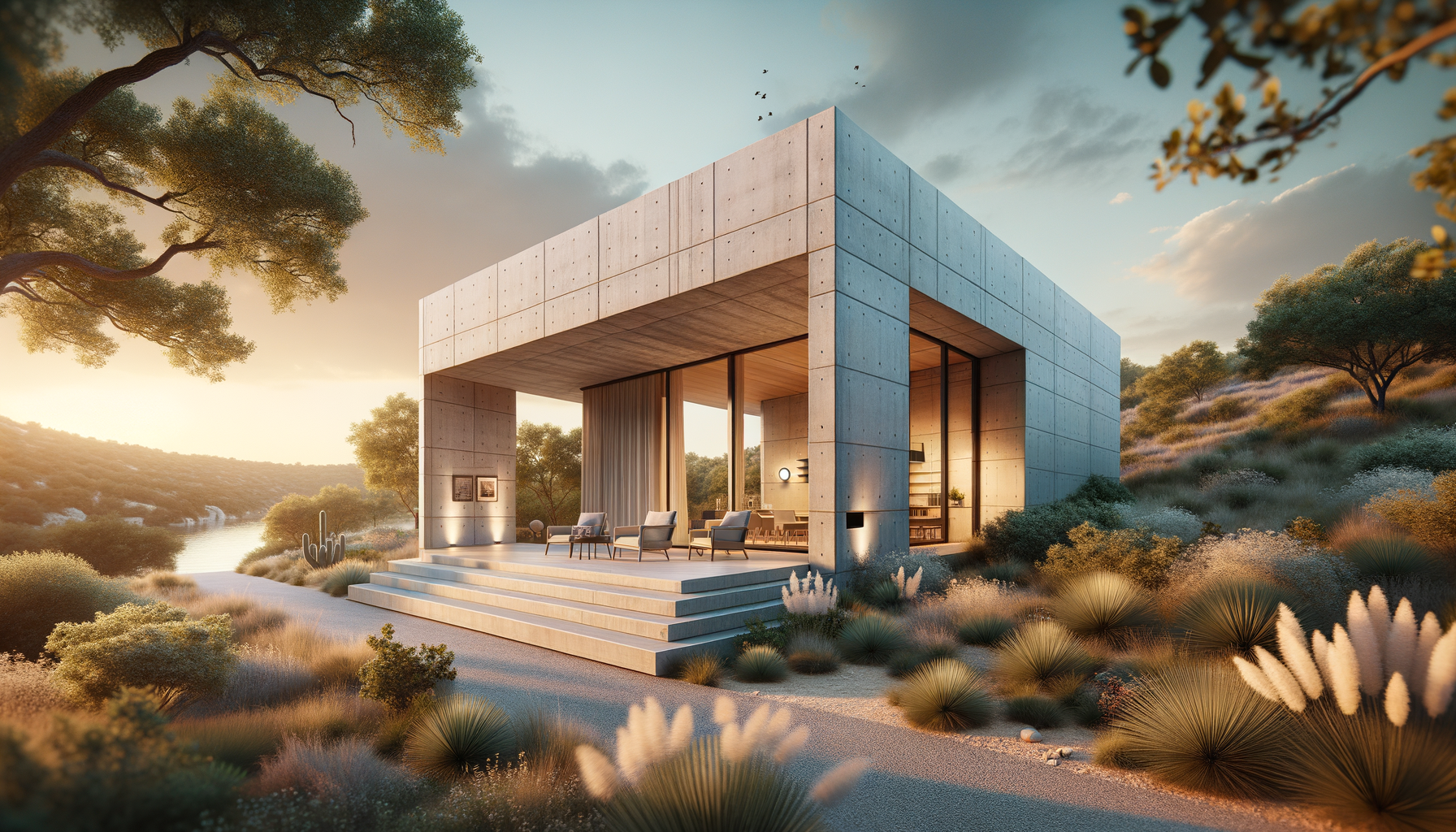
3D printing can enable curved walls, unique textures, and architectural details that may be costlier with traditional methods. Many buyers love the contemporary look, especially when combined with minimalist interiors and smart lighting scenes.
5) A natural fit for cool smart home technology
Because these homes are often built as “future-forward” projects, many feature smart home packages from day one—rather than as afterthoughts. Buyers shopping for 3D printed homes with built in smart home technolofy often prioritize convenience, security, and energy control.
Pros & Cons at a Glance (for Texas Buyers)
Pros
- Efficiency potential: Tighter envelope designs can reduce cooling demand in hot months
- Modern design: Unique architecture and cleaner lines
- Durability: Concrete-based walls may resist pests and some moisture-related issues
- New construction advantages: Warranties, new systems, and fewer near-term repairs
- Smart home readiness: Easier to integrate structured wiring, sensors, and smart panels during construction
Cons
- Financing/appraisal learning curve: Some lenders and appraisers may have limited comparable sales
- Builder variability: Quality depends heavily on engineering, materials, and site management
- Repairs and modifications: Cutting into printed walls for future changes may be more complex
- Permitting and code approvals: Can vary by city/county and may add time
- Resale uncertainty: Buyer pool may be smaller in some areas until the concept becomes more common
Sales Price: How 3D Printed Homes Compare in Texas
Let’s address the question most buyers ask right away: what’s the sales price difference?
In Texas, sales price is influenced by far more than wall construction method. Land cost, neighborhood, builder reputation, square footage, finishes, energy features, and availability of comparable homes all matter. So instead of a single “3D printed homes are cheaper” rule, a more accurate way to think about it is this:
- Scenario A (value-forward builds): Some 3D printed projects aim to reduce labor and streamline construction. If land is reasonably priced and finishes are modest, the sales price can be competitive with entry-level or mid-range new construction.
- Scenario B (design-forward builds): Many 3D printed homes are marketed as premium, architecturally distinctive properties with upgraded smart systems and modern finishes. In that case, the sales price can meet or exceed nearby new builds.
- Scenario C (limited comps): If there are few similar sales, pricing may reflect a mix of replacement-cost thinking and buyer willingness to pay for uniqueness, which can create a wider range of outcomes.
What tends to push the sales price up
- Prime location or high land costs (common in and near Austin, parts of Dallas-Fort Worth, and desirable Houston suburbs)
- High-end window packages, roofs, and interior finishes
- Extensive smart home packages (smart electrical panels, whole-home battery readiness, advanced security and automation)
- Custom architecture, especially curved or complex layouts
- Smaller production scale (one-off builds can cost more per square foot than larger developments)
What may help keep sales price competitive
- Standardized plans used repeatedly (more like a tract-build model)
- Simpler rooflines and efficient footprints
- Smart features focused on efficiency rather than luxury add-ons
- Builder relationships with local inspectors, engineers, and trades that reduce delays
A practical buyer takeaway on pricing
When comparing sales price, ask for an apples-to-apples comparison. A 3D printed home may include upgrades (smart locks, thermostats, EV-ready wiring) that a nearby “traditional” new construction home charges extra for. The sticker price only tells part of the story—total monthly cost and comfort are often where the difference shows up.
Efficiency and Energy Performance: What to Look For in Texas
In much of Texas, cooling is a major part of the monthly budget. That’s why efficiency isn’t just a buzzword—it’s a real quality-of-life feature. A well-built home that maintains temperature and humidity more consistently can feel better and cost less to operate.
Key efficiency features that matter (printed or not)
- Insulation strategy: Ask where insulation is placed and what R-values are used for walls and roof
- Air sealing: A tight building envelope reduces hot air infiltration and humidity issues
- High-performance windows: Low-E coatings and proper installation reduce heat gain
- HVAC design: Right-sized systems and good ductwork (or ductless designs) improve comfort
- Ventilation: Balanced ventilation can help with indoor air quality and humidity control
- Roof/attic approach: Radiant barriers, sealed attics, and reflective roofing can help in hot regions
How smart home technology boosts efficiency
Smart systems can improve efficiency when they’re set up thoughtfully. The goal isn’t gadgets—it’s better control and better information.
- Smart thermostats: Scheduling and learning features can reduce unnecessary runtime
- Room sensors: Helps manage hot spots and comfort zones
- Smart shades or lighting: Reduces solar heat gain and cuts lighting waste
- Leak detection sensors: Prevents expensive water damage, especially in vacation or second homes
- Smart electrical panels: Helps monitor usage and manage loads during peak demand
Common efficiency mistakes to avoid
- Assuming “printed” automatically means efficient: Efficiency depends on the full system—roof, windows, insulation, and sealing details.
- Overlooking humidity control: In many Texas regions, comfort is as much about moisture as temperature.
- Ignoring orientation: West-facing glass can raise afternoon cooling load significantly.
Cool Smart Home Technology: What’s Worth It (and What’s Just Flashy)
Buyers drawn to 3D printed homes with built in smart home technolofy often want a home that feels modern on day one. Here’s how to separate truly useful features from “nice demos” that don’t add much long-term value.
High-value smart features (practical in Texas)
- Smart thermostat + humidity-aware controls: Especially helpful during long cooling seasons
- Smart leak detection + auto shutoff valve: A big win for risk reduction
- Smart garage door + camera coverage: Common daily convenience and security use
- Video doorbell and exterior lighting automation: Improves safety and visibility
- Smart electrical monitoring: Helps track high-use appliances and plan for solar/EV charging
Features that can be great, but depend on the owner
- Whole-home audio: Excellent for some households, unused by others
- Advanced automation scenes: Useful if set up properly; otherwise can be annoying
- Voice assistant integrations: Convenient, but some owners prefer fewer always-on devices
Questions to ask about the smart home package
- Is it a single ecosystem or mixed brands?
- Will features work without subscription fees?
- Is there a structured wiring panel and strong Wi-Fi design?
- Are there dedicated circuits for future upgrades like EV chargers or a battery system?
Design Concepts for 3D Printed Smart Homes (Texas-Friendly Ideas)
The most exciting part of this trend may be design. 3D printing can make certain shapes and details easier to build, which opens the door to layouts tailored to Texas living—indoor-outdoor flow, shade strategies, and flexible spaces.
1) Heat-smart massing and shaded outdoor living
Texas homes live and die by shade and airflow. Design concepts that work well include:
- Deep overhangs and covered patios for afternoon sun protection
- Courtyard plans that create private outdoor space without huge exposure
- Window placement that prioritizes morning light and reduces west-facing heat gain
2) Curved walls and wind-friendly forms
Curved forms can be an aesthetic signature of printed construction. In some designs, smoother shapes can also reduce wind pressure points compared to sharp corners—though actual performance depends on engineering and roof structure.
3) “Right-sized” footprints with flexible rooms
In many Texas markets, buyers want practical spaces: a home office, a guest room, or a flex space that can evolve. Popular concepts include:
- Split-bedroom layouts for privacy
- Home office nooks near the entry (great for remote work)
- Garage-to-mudroom transitions designed for Texas dust and sports gear
4) Smart utility cores
A smart “core” groups mechanical systems, networking equipment, and electrical controls in one accessible area. This is especially useful for homes with advanced efficiency features.
- Dedicated network closet for routers and smart hubs
- Clear labeling for smart panel circuits and loads
- Space planning for future battery storage or additional controls
Concerns to Understand Before You Buy (and How to Reduce Risk)
Every building method has tradeoffs. The goal isn’t to be skeptical—it’s to be informed, especially with newer construction approaches.
1) Appraisal and comparable sales
Because 3D printed homes are still relatively uncommon, an appraiser may have fewer “like for like” comparable sales. That can affect valuation and, in some cases, financing outcomes.
- Green flag: The builder and agent can provide documentation of costs, specs, and nearby comparable new construction.
- Red flag: A sales pitch that dismisses appraisal concerns instead of planning for them.
2) Financing and insurance questions
Many buyers can finance these homes with standard mortgage products, but lender familiarity varies. Insurance carriers may also ask detailed questions about materials and replacement cost.
- Tip: Ask early whether the home qualifies for standard underwriting and what documentation the lender wants.
- Tip: Request an insurance quote before you’re deep into the option period.
3) Permitting, code compliance, and engineering
Texas building requirements can vary by city and county. Some jurisdictions are very comfortable with alternative methods; others may require extra engineering review or inspection steps.
- Green flag: The builder has a track record in the same jurisdiction and can show approved plans and engineering stamps.
- Red flag: Vague answers about how the wall system meets code or handles reinforcement.
4) Repairs, remodeling, and future modifications
Homeowners often change things over time: adding outlets, running new cables, mounting TVs, installing shelving, or remodeling kitchens and baths. With printed walls, modifications may require special tools, careful planning, and experienced contractors.
- Ask: How are utilities routed? Are there chases or designated pathways for future wiring and plumbing changes?
- Ask: What fasteners and mounting methods are recommended for the wall system?
5) Moisture management and exterior detailing
Texas weather can be tough on exterior assemblies. Even with durable wall materials, water intrusion can still happen at transitions—around windows, doors, rooflines, and penetrations.
- Green flag: Clear detailing for flashing and drainage, and a warranty that spells out coverage.
- Red flag: Rushed finishing work around openings or inconsistent sealants.
Step-by-Step: How to Buy a 3D Printed New Construction Smart Home in Texas
Buying new construction is a process, and printed construction adds a few extra questions. Here’s a straightforward roadmap.
Step 1: Get pre-approved (and ask the right lender questions)
- Request a standard pre-approval based on your income, debts, and credit.
- Ask whether the lender has financed non-traditional construction methods before.
- Confirm the lender’s expectations for appraisal and documentation.
Step 2: Review what’s included in the smart home and efficiency package
- Ask for an itemized list of smart devices and whether subscriptions are required.
- Confirm HVAC specs, insulation details, window ratings, and any energy certifications offered.
- Understand what is standard vs. upgrade so you can compare sales price fairly.
Step 3: Understand the timeline and contingency windows
- For move-in-ready homes, confirm inspection and closing timelines.
- For homes under construction, review the build schedule and how delays are handled.
- Ask about change order policies if you want customization.
Step 4: Do inspections—yes, even on new construction
New doesn’t mean perfect. A third-party inspector can help you spot issues early.
- Pre-drywall (if applicable): Checks framing, rough-in mechanicals, and sealing strategy
- Final inspection: Focuses on finishes, function, drainage, and safety items
- Optional tests: Air leakage testing, duct leakage testing, and thermal imaging for insulation gaps
Step 5: Negotiate with facts, not just feelings
- Use inspection results to request repairs or credits.
- Ask for smart home devices to be installed and demonstrated before closing.
- For pricing, ask about builder incentives: rate buydowns, closing cost contributions, or upgrades.
Step 6: Final walkthrough and closing
- Test smart locks, thermostats, garage controls, and cameras.
- Confirm you receive login transfer instructions and reset procedures.
- Collect warranty documents and a clear service request process.
Step-by-Step: Selling a 3D Printed Smart Home in Texas
If you own a 3D printed home—or plan to in the future—resale strategy matters. The goal is to make the home feel understandable and financeable to the widest pool of buyers.
Step 1: Prepare documentation that builds confidence
- Permits, engineering documents, and warranties
- Smart home device list (brands, ages, subscriptions, and reset instructions)
- Utility bills or usage summaries (when available) to support efficiency claims
Step 2: Price with local comps, then adjust for features
- Start with nearby new construction and resale comps of similar size and location.
- Account for smart features and efficiency upgrades in a clear, itemized way.
- Be realistic: uniqueness can add value, but it can also narrow the buyer pool.
Step 3: Market the benefits in plain language
- Focus on comfort, operating costs, durability, and modern convenience.
- Explain how the smart system helps daily life (not just that it exists).
- Offer a simple “how to use the home” sheet for showings and open houses.
Red Flags and Green Flags Specific to Printed New Construction
Green flags
- Clear engineering documentation and a builder who welcomes questions
- Strong water management details (flashing, drainage, grading)
- Thoughtful smart home setup with good Wi-Fi planning
- Transparent warranty terms and a responsive service process
- Evidence-based claims about efficiency (not just hype)
Red flags
- Unclear answers about how utilities are routed or how modifications are handled
- Overpromising on build speed without acknowledging standard construction phases
- Limited documentation for permits, testing, or inspections
- Smart devices installed without a cohesive system or without owner control transfer
- Finish issues around windows/doors that could signal water intrusion risk
What the “Future” Likely Looks Like in Texas (Scenarios, Not Guarantees)
It’s reasonable to expect more experimentation and gradual adoption—especially in fast-growing Texas corridors where builders look for speed, consistency, and workforce flexibility. But outcomes will vary by city regulations, builder quality, and consumer comfort.
Scenario 1: More printed wall systems in entry-level and workforce housing
If printing helps stabilize labor needs and reduce certain timeline risks, we may see more value-focused communities where the main goal is reliable delivery and efficiency.
Scenario 2: Premium design-forward homes expand the category
Architect-led projects can push the design side—curves, textures, and indoor-outdoor concepts—especially in lifestyle-driven markets. These may carry higher sales price points but attract buyers seeking uniqueness.
Scenario 3: Smart home packages become more standardized
As buyers increasingly expect smart thermostats, security, and energy monitoring, builders may shift from “optional tech upgrades” to baseline packages—especially where efficiency and insurance risk reduction are priorities.
Bottom Line: Are 3D Printed Smart Homes Worth It?
For many Texas buyers, the answer depends on priorities. If you value modern design, potential efficiency gains, and integrated cool smart home technology—and you’re comfortable doing a bit of extra diligence on financing, appraisals, and documentation—these homes can be a strong fit.
The best approach is to evaluate the home like any other major purchase: look closely at build quality, warranty strength, neighborhood fundamentals, and monthly cost of ownership. When the printed construction is paired with sound engineering and a well-planned smart home system, the “future” can feel surprisingly practical.