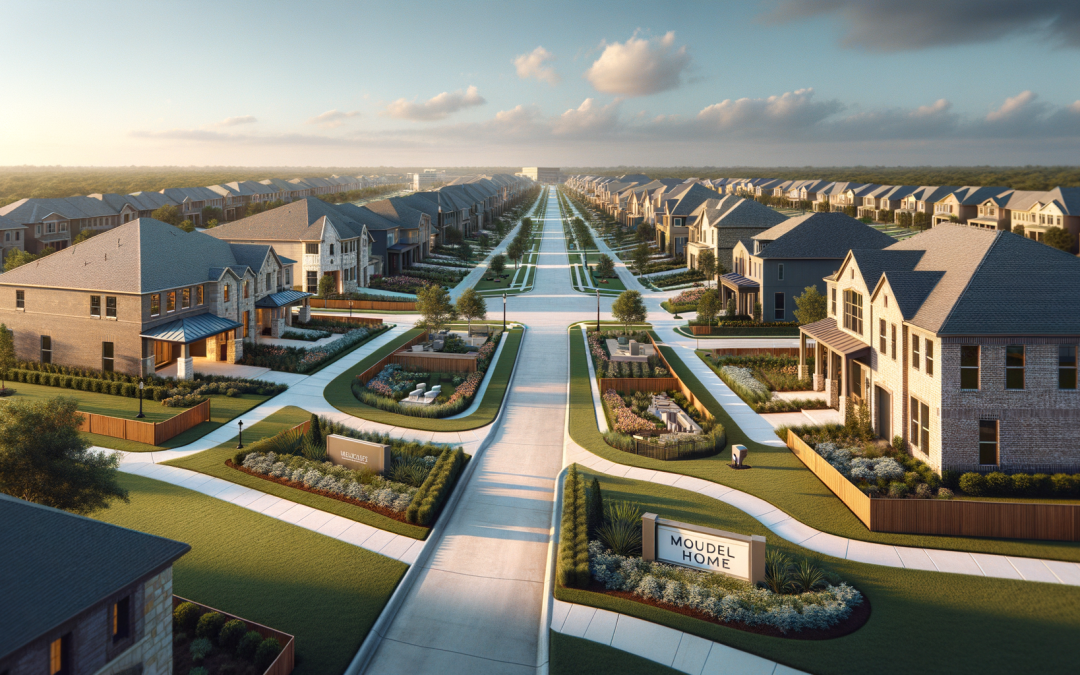
Across the Texas real estate market 2026, one storyline keeps showing up in listing data, builder activity, and buyer conversations: more Texans are choosing suburban addresses over major-city cores. From first-time buyers stretching their budgets to move-up households seeking space, suburban living in Texas is shaping where demand is strongest and which communities are adding the most new rooftops.
This shift matters because it influences pricing, commute patterns, school enrollment, infrastructure planning, and even what kind of homes get built. If you’re buying, selling, or simply tracking Texas housing trends, understanding what’s driving Texas suburban growth can help you set realistic expectations and make smarter decisions in 2026.
Texas Real Estate Market 2026: The Big Picture Behind the Suburban Shift
The Texas real estate market 2026 is best described as “rebalancing”—not a single, uniform story statewide. Some neighborhoods are still competitive, while others are seeing more normalized conditions compared with the peak frenzy of the early 2020s. In many metros, the mix of elevated home prices (relative to pre-2020 levels), selective buyer demand, and continued job growth has pushed more shoppers to look outward.
Three broad indicators explain why suburbs are winning attention:
- Affordability gaps between central neighborhoods and suburban ZIP codes remain meaningful for many households.
- Inventory and new construction are more available on the edges of metros, where land and zoning allow growth.
- Preference shifts toward space, flexibility, and community amenities continue to favor suburban products.
These factors don’t mean downtown living is disappearing. Instead, Texas homebuyer demand is spreading across metro rings—often prioritizing value, commute flexibility, and quality-of-life features that suburban communities can deliver.
Affordability: Why “More House for the Money” Still Wins in 2026
Ask buyers why they’re moving to Texas suburbs, and the answer often starts with monthly payment math. Even when interest rates fluctuate, the price-per-square-foot difference between urban cores and nearby suburbs can be substantial. That gap is a major driver of the search for affordable homes in Texas 2026.
What affordability looks like in real life
In many Texas metros, buyers comparing a smaller home (or condo) closer to the city versus a larger home in a suburb frequently find that suburban options:
- Offer a newer build or updated systems (roof, HVAC, plumbing), lowering surprise maintenance costs.
- Provide more square footage for similar payments.
- Include a yard, garage, and home office space—features that can be expensive to replicate in urban neighborhoods.
Hidden costs to factor in (suburbs vs. city)
Suburban affordability isn’t just about the list price. Smart buyers compare the full monthly “carrying cost,” including:
- Property taxes: Texas has no state income tax, and local property taxes can be significant. Rates vary by county, city, and special districts.
- HOA fees: Many master-planned communities have HOAs that support amenities but add monthly costs.
- Insurance: Premiums vary based on home age, materials, and regional risks. Newer homes can sometimes be less expensive to insure, but it’s not guaranteed.
- Transportation: Longer commutes can mean higher fuel and vehicle costs.
A common mistake in 2026 is assuming a “cheaper” suburban home automatically fits the budget. A good lender and a good agent will help you compare apples-to-apples using a realistic monthly payment estimate.
Lifestyle Preferences: Space, Schools, and Everyday Convenience
Beyond affordability, Texas housing trends in 2026 show buyers prioritizing how a home supports their daily routines. Suburbs are meeting that demand with floor plans, community design, and amenities that align with today’s lifestyles.
More space and flexible floor plans
Hybrid work hasn’t vanished, even as many employers increase in-office time. Buyers still want:
- A dedicated home office (or at least a flex room).
- Separate living areas for multi-generational households.
- Storage and garages that support Texas lifestyles (sports gear, tools, outdoor equipment).
Schools and family-focused amenities
School quality and stability remain key for many households. While every district has nuance, the suburban model—larger developments feeding into growing school systems—continues to attract families who want parks, trails, and kid-friendly amenities nearby.
Green flags buyers mention frequently in strong suburban neighborhoods include well-maintained common areas, active community associations, and easy access to shopping and medical care.
Safety perceptions and “quieter living”
For some, suburban living in Texas offers peace of mind: less congestion, lower noise, and a neighborhood feel that’s harder to replicate in dense urban corridors. This is especially true in master-planned communities designed around walkable pockets, community events, and shared amenities.
Texas Migration Trends: Who’s Moving, and Why Suburbs Fit the Moment
Texas migration trends continue to influence housing demand. Even as the pace of relocation can vary year to year, Texas remains a magnet for job seekers, business expansion, and households looking for a different cost-of-living equation.
Suburbs often become the landing spot for newcomers because they provide:
- More predictable home options, including Texas new construction homes with modern layouts.
- Access to major job hubs without paying the highest central-city price points.
- Neighborhoods that feel “move-in ready” for people unfamiliar with local micro-markets.
In 2026, it’s common to see suburban communities competing not only with nearby city neighborhoods, but also with other Texas metros. A buyer relocating for work may compare suburbs across Dallas–Fort Worth, Austin, Houston, and San Antonio before choosing a home.
New Construction and Master-Planned Communities: A Major Engine of Texas Suburban Growth
Texas suburban growth is closely tied to construction. Land availability at the metro edges makes it easier for builders to deliver the kinds of homes buyers want—often at price points that would be difficult to achieve closer to downtown.
Why buyers are choosing Texas new construction homes
Texas new construction homes can be attractive in 2026 for a few practical reasons:
- Modern systems and energy efficiency that can help with comfort and potentially lower utility usage.
- Builder incentives that may help with closing costs or rate buydowns (terms vary widely).
- Customization options in early build stages (floor plan, finishes, upgrades).
Pros and cons of new construction in the suburbs
- Pros: predictable maintenance early on, modern layouts, community amenities, potential incentives.
- Cons: HOA rules, smaller lots in some communities, construction noise, and timelines that can shift due to supply or labor.
A common red flag: buyers skipping inspections on a new build. Even brand-new homes should be inspected—ideally once before drywall and again before closing—so any issues can be addressed while the builder is still responsible.
Regional Spotlights: Where Suburban Demand Is Growing Fastest
The Texas suburban real estate market isn’t one-size-fits-all. Here’s how the suburban shift shows up in the state’s biggest metro areas, along with examples of communities frequently associated with growth and new housing supply.
Austin suburbs real estate: Growth beyond the core
Austin suburbs real estate continues to draw buyers priced out of close-in neighborhoods or looking for more space. Popular growth corridors often include:
- Round Rock and Pflugerville: established suburban infrastructure with access to major employers.
- Leander and Cedar Park: strong demand for newer housing, commuter options, and suburban amenities.
- Georgetown: a mix of master-planned communities and established neighborhoods, often appealing to families and retirees.
- Dripping Springs and Kyle/Buda: Hill Country lifestyle and south corridor growth, with varying price points.
What buyers should watch: commute realism on I-35 and key arterials, plus property tax differences between counties and MUD/PIO districts in newer developments.
Dallas–Fort Worth suburban housing: A broad map of options
Dallas–Fort Worth suburban housing remains one of the clearest examples of suburban expansion at scale. The Metroplex offers a wide range of suburban submarkets—some more established, others rapidly adding rooftops.
- Frisco, Prosper, and Celina: strong school-driven demand and significant new construction activity.
- McKinney and Allen: a blend of mature neighborhoods and newer developments with strong resale activity.
- Forney, Fate, and Rockwall (east): affordability-driven demand and growing inventory.
- North Fort Worth, Haslet, and Argyle (northwest): newer communities and access to major employment corridors.
In the Metroplex, a green flag is matching your commute to the right ring road access (Dallas North Tollway, SH-121, I-35, I-30). A common mistake is buying “farther out” for price, then underestimating time costs.
Houston suburban communities: Space, master plans, and multiple job nodes
Houston suburban communities benefit from a multi-node job landscape (Energy Corridor, The Woodlands area, the Medical Center region, and more). That job distribution makes suburban living workable for many households.
- Katy: known for master-planned neighborhoods, schools, and strong retail corridors.
- Cypress: large inventory and a wide price spectrum of suburban options.
- Sugar Land and Missouri City: established suburbs with amenities and access to southwest employment centers.
- The Woodlands and Spring: suburban lifestyle with major employers nearby and a strong community identity.
Houston-area buyers should pay close attention to flood risk, drainage, and insurance quotes. A key green flag is a thorough review of the property’s disclosures and flood history, along with appropriate inspections.
San Antonio and Central Texas suburbs: Value and steady growth
San Antonio’s suburban market remains attractive for buyers seeking relative value compared to some other large metros, with growth in areas such as:
- Schertz, Cibolo, and Selma: northeast corridor growth with suburban convenience.
- New Braunfels: positioned between San Antonio and Austin, appealing to commuters and lifestyle buyers.
- Boerne: Hill Country appeal and higher-end suburban options.
As always, “best” depends on budget, work locations, and lifestyle goals—so treat these as starting points when exploring the best Texas suburbs to buy a home.
Seasonal Patterns in 2026: When Suburban Markets Heat Up
Seasonality still matters in Texas. While every metro has its quirks, many suburban areas follow a familiar rhythm:
- Spring to early summer: typically the busiest period for listings and buyer activity, especially for families planning around the school calendar.
- Late summer: activity can remain strong, but buyers may become more price-sensitive as inventory builds.
- Fall: fewer listings, often more serious buyers; negotiation can be more balanced.
- Winter: lighter volume overall, but motivated sellers and occasional builder incentives can create opportunities.
In 2026, many buyers also time their search around new construction releases. Builders may open new phases in waves, so staying in touch with local inventory updates can matter as much as the season.
What Buyers Should Know: A Simple Step-by-Step Game Plan
Suburban shopping can feel easier because there’s more inventory, but the process still rewards preparation. Here’s a straightforward approach that fits today’s Texas homebuyer demand environment.
Step 1: Get pre-approved (not just pre-qualified)
A pre-approval is a lender’s deeper review of your finances and is more persuasive to sellers than a casual estimate. It also helps you shop confidently among affordable homes in Texas 2026 without guessing your ceiling.
- Green flag: a lender who explains rate options, points, and closing costs in plain language.
- Red flag: shopping solely by “maximum approval amount” without discussing monthly comfort.
Step 2: Compare neighborhoods by total monthly cost
When deciding among the best Texas suburbs to buy a home, ask for a side-by-side estimate that includes taxes, HOA, and insurance. In Texas, these line items can change the “best deal” quickly.
Step 3: Decide resale vs. new construction early
Resale homes may offer mature landscaping and established commute patterns. New construction may offer modern layouts and incentives. Your agent can help you evaluate trade-offs in the Texas suburban real estate market.
Step 4: Inspect thoroughly (yes, even new builds)
Schedule a professional inspection for resale, and consider phase inspections for new construction. Also consider specialized inspections when appropriate (foundation, sewer scope, roof), especially in older suburban neighborhoods.
Step 5: Negotiate with local context
Negotiation in 2026 often centers on:
- Price adjustments based on comparable sales and days on market
- Seller concessions for closing costs or rate buydowns
- Repair credits after inspection
A common mistake is focusing only on headline price while ignoring concessions that could improve your monthly payment or reduce cash needed at closing.
What Sellers Should Know: How to Win Suburban Buyers in 2026
If you’re selling in a suburb, today’s buyers are typically more analytical than they were during peak bidding-war years. To stand out:
Price to the neighborhood, not the news
Buyers are watching price reductions and recent comparable sales closely. A well-priced home in the suburbs can still move quickly, while an overpriced listing may sit and require multiple reductions.
Fix the “inspection magnets” before listing
- HVAC servicing and clean filters
- Roof condition and visible leaks
- Foundation-related cracks or sticking doors (get a professional opinion)
- Plumbing leaks and water heater age
Green flags for buyers include clear maintenance records and a home that feels cared for. In many suburban markets, that translates into better offers and smoother negotiations.
Texas Real Estate Forecast 2026: What to Expect (Scenarios, Not Guarantees)
The Texas real estate forecast 2026 depends on the usual big levers: mortgage rates, job growth, consumer confidence, and how much inventory comes to market (especially new construction). Rather than predicting a single outcome, here are reasonable scenarios buyers and sellers are planning around:
- Base case: steady demand in well-located suburbs, with more balanced negotiations where inventory is higher.
- Upside scenario: if borrowing costs ease, more buyers re-enter the market, and competitive pockets in top school zones tighten again.
- Downside scenario: if affordability pressures increase or local job growth slows, price growth may flatten and days on market may rise, especially in areas with heavy new construction supply.
What seems most consistent in 2026 is that the suburbs remain central to Texas housing activity. Whether you’re buying a first home, upsizing, or relocating, understanding suburban dynamics helps you navigate the market with fewer surprises.
Bottom Line: Why Suburban Living Is Rising in Texas in 2026
The rise of suburban living in Texas is being driven by a clear mix of affordability math, lifestyle priorities, and continued suburban building. Add in ongoing Texas migration trends and flexible work patterns, and it’s easy to see why buyers are widening their search beyond city centers.
If you’re considering moving to Texas suburbs, focus on total monthly cost, commute reality, and long-term neighborhood fit. If you’re selling, pricing and presentation matter more than ever. Either way, the suburban story is one of the defining Texas housing trends shaping the year ahead.