by Spencer Krull | May 12, 2025 | Industry, News Feed
Bigger. Better. Bolder. Inman Connect is heading to San Diego. Join thousands of real estate pros, connect with the Inman Community, and gain insights from hundreds of leading minds shaping the industry. If you’re ready to grow your business and invest in yourself, this is where you need to be. Go BIG in San Diego!
My love-hate relationship with dual agency began about 10 years ago on a flight from New York to LA. The conversation with the guy in the seat next to me turned to what we each did for a living.
When he said he was a real estate attorney, I thought maybe I’d found a good source of leads and asked him if he represented investors or sellers. “I represent clients to sue brokerages when they mess up,” he said. “What do you do?”
I squirmed in my seat. “I’m the Broker of Record for a brokerage.”
“Do you allow dual agency?”
“Yes.”
He laughed. “Keep doing dual agency; it’s how I’m putting my kids through college.” This was going to be a long flight.
Before going any further, let’s define the “dual agency” he was talking about: It’s the one in which the buyer and seller are represented by the same individual agent, or even members on the same team.
Dual agency and fiduciary duty
I have no problem with the basic form of dual agency in which agents from the same brokerage represent the buyer and seller in a transaction; in this age of monolithic brokerages, it would be unrealistic and impractical even to suggest ending this form of dual agency.
But when a single agent or even a single team represents both sides, it strains the ability of an agent to provide even the barest level of fiduciary duty owed to each client.
In the aftermath of the National Association of Realtors commission lawsuit settlement, there was a lot of talk about dual agency. At that time, Jim Dalrymple II broke down the legal landscape surrounding the practice:
The U.S. is a patchwork of differing laws when it comes to dual agency. According to ARELLO [the Association of Real Estate License Law Officials], most states do allow dual agency, albeit while requiring the parties involved to sign a written agreement. A handful of states allow dual agency with no agreement.
A total of nine states prohibit dual agency. The first to do so was Texas, in 1993, and the most recent was Maryland, in 2016, according to ARELLO.
In practical terms, if you’ve ever double-ended a deal, you know how difficult it is to maintain confidentiality when you know what the seller would take and what the buyer can spend. It’s even harder to maintain neutrality when a deal gets contentious and you need to strategize opposing goals, advising each client as if you didn’t know what the other side truly wants.
It’s like playing chess against yourself; one can’t forget what the other side plans by simply moving to the other side of the board. (In a cartoon world, this selective amnesia could be induced with a well-placed anvil to the head, but in real life, the resulting CAT scans and MRIs would be cost-prohibitive.)
Just as parents are not supposed to favor one child over another, dual agents are not supposed to favor one client over another. And if at times a parent finds it hard to maintain impartiality, how much more so for an agent and their client?
Some brokerages solve this conundrum by allowing different team members to represent each side. This is certainly better than having only one agent, but even when agents are from different companies, things can get a bit fuzzy with confidentiality to “grease the wheels” to move a deal along.
Yes, I’ve seen some teams handle this version of dual agency exceptionally well, with written policies of a “Chinese Wall” and guidelines on when to bring in the broker or manager. However, more often than not, I’ve witnessed teams do a pretty terrible job by breaching confidentiality, and even worse, I’ve seen both sides team up against the buyer or seller. So much for our duty to always act in our clients’ best interests.
Agents like dual agency because it leads to higher commissions. Brokerages like dual agency because it leads to higher company dollars. Win-win, right?
I’m sure that the companies pushing the value of private networks are doing so because they sincerely believe it serves the best interests of the client. That it also increases the likelihood that those agents will double-end a deal is a very fortunate, unintentional side effect. (Did I mention that these networks serve the best interest of the client?)
In all honesty
Let’s get real — private networks are not going away anytime soon; the companies pushing them have too much influence. But, what if the National Association of Realtors (NAR) instituted a policy banning “single agent” and “same team” dual agency?
Sure, it would be unpopular with many brokerages, but NAR didn’t mind being unpopular when they sprung the Clear Cooperation Policy (CCP) on us. At least in this case, NAR can make the very credible argument that such a ban would truly be in the best interests of the general public.
Plus, if states were to take a long, hard look at dual agency and were honest about whether or not it served the public good, I think you’d see the dual agency reins being pulled in pretty tight.
Tightly restricting dual agency won’t harm business. Of the states that restrict some forms of dual agency, Texas does an exemplary job by having the broker assign an agent to each side, with the broker serving as an intermediary or referee.
The result is dual agency in which both the buyer and seller are fully and equally represented, and an agent’s self-interest (at least in terms of dual agency) is not a part of the mix.
As for the private networks and portals, restricting dual agency might take away the incentive to keep listings off the multiple listing service (MLS) in the hopes of double-ending a deal. The CCP-MLS-private network debate could possibly fade into the background, freeing the industry to tackle other important issues, such as getting a carve-out from independent contractor laws to allow mandatory agent training. (A broker can dream, can’t he?)
To be perfectly transparent, it’s in my own self-interest to allow and even encourage agents to double-end deals. Huh?
See, I exchanged contact information with that attorney on the flight, and a few months later, he called to get my opinion on a file. And so began my career as an expert witness and consultant (mostly in brokerage defense).
Every time I get a new case file, the first thing I check for is dual agency. And I’ve found that a lot of the dual agency files have some serious issues.
That’s when I lean back in my chair, look at the photo of my two children and remember what that attorney said: “Keep doing dual agency; it’s how I’m putting my kids through college.”
Writer’s note: The opinions in this article represent the author’s opinions and do not reflect those of Side.
Spencer Krull is a Managing Broker with Side, and also works as a real estate Expert Witness and Consultant for attorneys.
This post was originally published on this site
by Leah Curtis | May 12, 2025 | Industry, News Feed
In the real estate industry, the path to success can look very different to different people — from selling a record number of homes to breaking into the luxury sector to building a referral-driven business because clients can’t say enough good things about you and the service you provide.
Regardless of how they achieve high producer status, best-in-class agents show up each day with an unwavering drive to excel — and a determined mindset to get them there. Here are three qualities the vast majority of top real estate agents have in common, according to REMAX:
1. Top producers are trustworthy
Trust is the backbone of business. It’s that simple.
When people trust you, they’re going to choose you over the competition. And they’re likely to recommend your business to their friends and family, too. This level of trust is a product of having a robust skillset, offering helpful expertise, communicating clearly and delivering excellent customer service.
Maintaining a reputation of trust is cornerstone to business for top producers. What’s great: those at REMAX brokerages have the facts to back it. A consumer survey found that REMAX has the most trusted real estate agents in the U.S.1 and Canada2.
2. Top producers are productive
Becoming the best in the business doesn’t happen overnight. It’s the outcome of perpetually boosting productivity, often leading to an impressive track record of wins that reinforce an entrepreneur’s experience and longevity in the business.
Top producers also join brokerages with a culture that supports this productivity — and places them in proximity of fellow go-getters who collaborate and help each other grow. That’s one of the many reasons agents join REMAX. In fact, REMAX agents at large U.S. brokerages, on average, outsell the competition 2-to-13.
3. Top producers are professional
A business foundation of professionalism is built through myriad avenues, from how you market your business to how you connect with new customers to how you keep in touch with former ones. Top agents exude professionalism in everything they do — and they lean into resources that support it.
REMAX agents, for instance, leverage the power of a household-name brand people know and trust on a global scale. And they get creative with exclusive REMAX tools that empower users to customize professionally crafted marketing materials and put assets in front of the right people at the right time. An example: the ever-expanding MAX/Tech® powered by BoldTrail platform, a tech solution designed to streamline an agent’s workflow and increase their productivity, complete with a comprehensive CRM, presentation tools, AI capabilities and more.
Top producers stay curious, too, and never stop sharpening their skills and learning new facets of real estate. Through REMAX University® — the brand’s digital education hub — as well as mastermind sessions and events, REMAX agents continually gain timely knowledge and use that expertise to help people turn their real estate goals into reality.
With a network of over 145,000 agents and a presence in over 110 countries and territories, the REMAX brand is home to trusted, productive and professional top producers leading the way in real estate. To learn more about REMAX, a business that builds businesses, visit join.remax.com.
1 Voted most trusted Real Estate Agency brand by American shoppers based on the BrandSpark® American Trust Study, years 2022-2025 and 2019.
2 Voted most trusted Real Estate Agency brand by Canadian shoppers based on the BrandSpark® Canadian Trust Study, years 2021-2025, 2019, and 2017.
3 Transaction sides per agent calculated by RE/MAX based on 2024 data from RealTrends Verified Brokerage Rankings, citing 2024 transaction sides for the 1,256 participating U.S. brokerages that closed 500 transaction sides, excluding 43 who did not report active licensees. RE/MAX average: 11.9. Competitors: 5.3.
Each Office Independently Owned and Operated
This post was originally published on this site
by Brandon Newman | May 12, 2025 | Industry, News Feed
Real estate is one of the most powerful long-term investments one can make — especially in the luxury space. Despite economic headwinds impacting various sectors, the high-end property market continues to demonstrate remarkable resilience and adaptability.
According to the Coldwell Banker Global Luxury 2025 Trend Report, the luxury segment remains a bright spot in U.S. real estate and reports like this create a unique opportunity for agents who possess the right resources to give them a competitive edge.
Turning luxury trends into agent opportunities
The Trend Report turns insights into actionable listing strategies, helping Coldwell Banker Global Luxury Property Specialists position their listings to match evolving buyer demand. Among the leading trends defining today’s luxury landscape are:
- Multigenerational living: Luxury buyers are increasingly seeking homes that accommodate multigenerational living and evolving family needs. 45 percent of surveyed Luxury Property Specialists identified flexible layouts as a top design feature for their clients; knowledge that gives our agents a significant edge in property selection and marketing.
- Dynamic demographic shifts: “She-elites” and Gen X: Affluent women, or “She-elites”, are shaping buying decisions, with over 94 percent of Luxury Property Specialists reporting women either share decision-making power or hold primary authority. Meanwhile, Gen-X luxury homeownership grew by 10 percent over the past five years, outpacing all other age groups. Our specialists leverage these insights to tailor their approach to these influential buying/selling demographics.
- Emerging luxury flock spots: New hubs for primary and secondary residences are attracting high-net-worth individuals seeking lower taxes, economic opportunity, safety, lifestyle benefits and favorable climates compared to traditional luxury markets. Our globally connected network enables agents to facilitate seamless transitions for clients exploring these emerging opportunities.
Identifying these luxury market trends is only the first step — equally important is how Coldwell Banker provides its specialists with the tools to leverage these insights strategically.
Empowering luxury agents to lead and succeed
Coldwell Banker Global Luxury equips its elite Luxury Property Specialists to lead confidently, armed with exclusive tools that elevate the client experience and deliver results. In addition to a powerful network and resources like the Trend Report, agents have access to events like Generation Blue — returning this September — that offer opportunities for education, networking and staying ahead of industry trends.
Coldwell Banker Global Luxury Property Specialists, representing the top 10 percent of independent sales professionals affiliated with the brand worldwide, are a highly exclusive group equipped to handle these transactions. These specialists have demonstrated impressive year-over-year growth across all price points, including a 235 percent increase in the $50 million+ category. Coldwell Banker affiliated agents handled $220 million in daily luxury sales in 2024.
Crafting agent excellence in a competitive market
As 2025 unfolds, shifting consumer preferences are shaping the market in real time. Luxury transactions require a unique approach, with more complex negotiations and higher stakes.
The strength of the Coldwell Banker Global Luxury program lies in its unwavering focus on empowering agents. By combining cutting-edge tools, data-driven insights, an international network and a commitment to personal brand development, the program ensures its specialists are not just participants in the luxury market — they are leaders, trusted advisors and the driving force behind their clients’ success.
To learn more about how to grow your business and join this elite network, visit the Coldwell Banker Global Luxury website.
This post was originally published on this site
by Christian Ashley Harris | May 11, 2025 | Industry, News Feed
 This May marks Inman’s sixth annual Agent Appreciation Month. Look for profiles of top producers, opinions on the current state of the industry and tangible takeaways you can implement in your career today. Plus, the prestigious Future Leaders of Real Estate return this month, too.
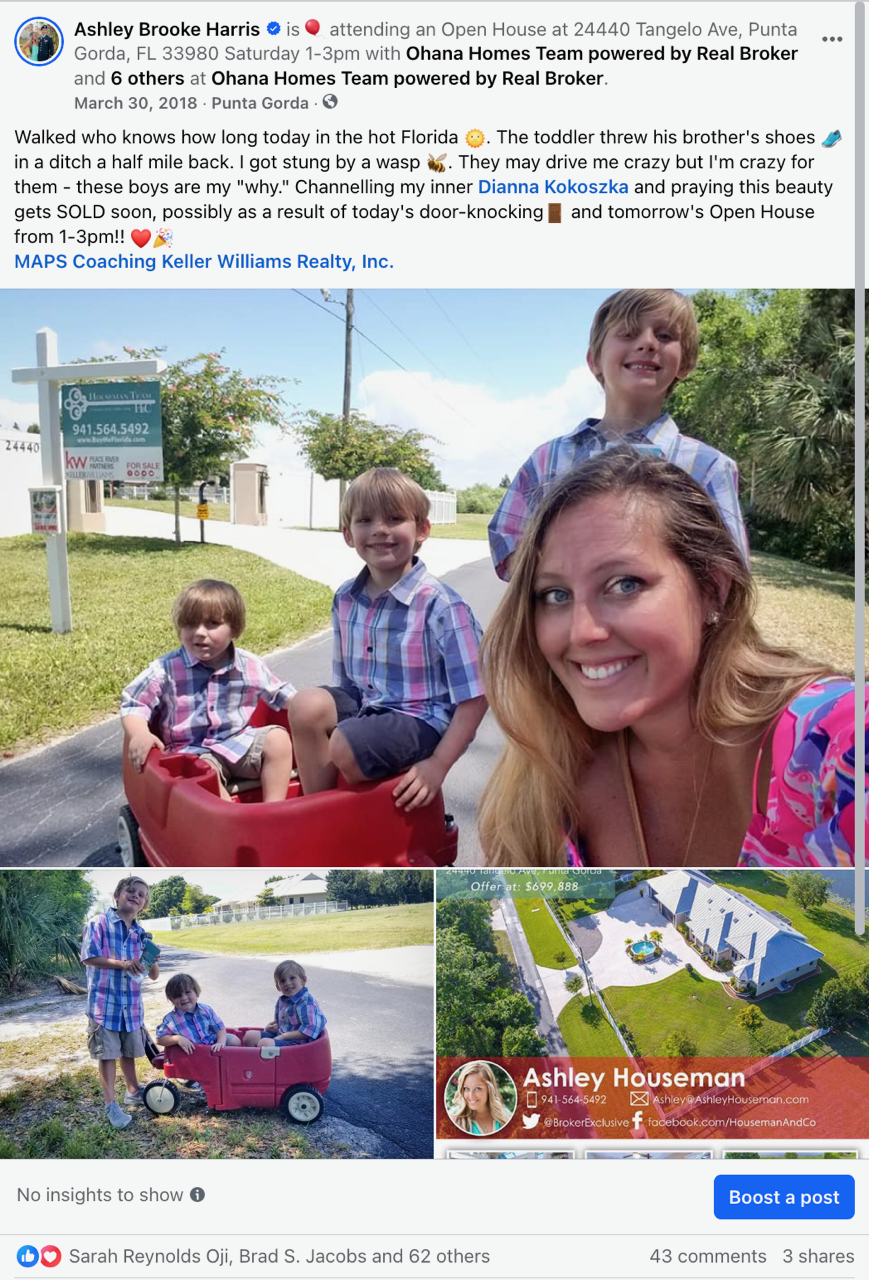
If you’ve ever juggled door knocking in 95-degree Florida heat while towing toddlers in a red wagon, swatting wasps and praying no one loses a shoe in a ditch … you might just be a real-life Mrs. Incredible.
That was me one spring day — sweaty, stung and still smiling — because those little boys in matching plaid? They’re my “Why.”
This Mother’s Day, I want to honor the women who are doing it all — with love, grit and a sense of humor. Because being a mom in real estate? That’s a real superpower.
Stretching ourselves in more ways than one
Helen Parr (aka Elastigirl) is my favorite superhero. Not because of her powers, but because she does what every mom I know does — she bends without breaking. She loves deeply, shows up fiercely and handles chaos with quiet courage.
In my world, the stretch looks a little different:
- Responding to inspection addendums while signing field trip permission slips
- Wrapping up a listing appointment before racing to a football scrimmage
- Coordinating vendor schedules while serving snacks in the school pick-up line
Like many Realtor mamas out there, I’m not just showing homes — I’m shaping lives. That stretch is real, and it’s beautiful.
Motherhood comes in many super shapes
Let’s be clear: Mother’s Day isn’t just for biological moms. This is a celebration of every woman who shows up with love:
- Adoptive moms who choose their kids over and over again
- Bonus moms blending families with grace
- Fur baby moms who love their pets like family
- Women walking the hard path of longing and waiting
- Mentors, aunties and spiritual moms who fill a mama-shaped gap in someone’s life
Motherhood isn’t a title — it’s a calling. And it shows up in all kinds of ways.

Ashley and Christian Harris
Why real estate moms deserve capes (and coffee)
We may not wear red suits, but we slay negotiations, stage chaos into calm, and still manage to make it to football practice or youth group with a granola bar in hand.
We’re not perfect. But we are present.
We’re the ones showing up when it counts — for our clients, for our team, for our families. We are building legacies in between packing lunches and pulling comps.
And that? That’s incredible.

To every Mrs. Incredible out there … I see you
Whether you’re pushing a stroller or pulling your weight on a team …
Whether you’re closing homes or opening your heart …
Whether you’re a biological mom, a bonus mom, a fur baby mom or a “not-yet-but-hopefully-soon” mom…
You are seen. You are celebrated. You are loved.
Happy Mother’s Day to the women who make this world softer, stronger and more incredible — one messy bun, carpool run and closing table at a time.
Keep stretching. We’re cheering for you.
Christian and Ashley Harris are broker associates and team leaders in Florida a Seattle with Real Broker. Connect with them on Instagram or Facebook.
This post was originally published on this site
by Jessi Healey | May 11, 2025 | Industry, News Feed
Bigger. Better. Bolder. Inman Connect is heading to San Diego. Join thousands of real estate pros, connect with the power of the Inman Community, and gain insights from hundreds of leading minds shaping the industry. If you’re ready to grow your business and invest in yourself, this is where you need to be. Go BIG in San Diego!
Each week on Trending, digital marketer Jessi Healey dives into what’s buzzing in social media and why it matters for real estate professionals. From viral trends to platform changes, she’ll break it all down so you know what’s worth your time — and what’s not.
Some trends go viral because they’re absurd. Others go viral because they strike a nerve. The smartest brands — and voices — know how to spot the difference.
From Robert Irwin reframing a ridiculous gorilla debate with compassion, to platforms like Instagram and Threads testing new tools that prioritize tone over polish, the theme is clear: Resonance beats reach.
Whether you’re navigating disappearing metrics, algorithm shifts or just trying to figure out what to say in a noisy feed, the real win isn’t getting seen — it’s being remembered.
Robert Irwin defuses the gorilla fight debate with empathy and clarity
The internet has been in a full-on debate spiral over this question: Could 100 unarmed humans defeat a single gorilla in a fistfight?
Robert Irwin — wildlife conservationist and one of the internet’s more emotionally intelligent voices — finally weighed in on TikTok. His response? Calm, warm and rooted in reality.
He didn’t mock the trend or try to go viral by picking a side. Instead, he reframed the entire conversation.
“Just as an animal conservationist, fighting an endangered species doesn’t sit right with me … Maybe let’s just let this one remain a mystery.”
Irwin redirected the hype toward something meaningful, reminding viewers that gorillas are critically endangered and typically non-aggressive. In doing so, he demonstrated an often-overlooked truth in social media: You don’t have to out-shout a trend — you can out-resonate it.
For real estate professionals, this is a case study in brand voice done right.
If your content strategy leans into trends, humor or meme culture, take notes:
- Acknowledge the moment without being performative
- Reframe the conversation with your values
- Lean into calm clarity over hot takes
Irwin’s response worked because it was consistent with his public persona, rooted in purpose and didn’t try to hijack the trend — it subtly redirected it. And that’s the kind of engagement that builds real trust, not just likes.
Trump suggests yet another TikTok delay
TikTok’s legal limbo continues. President Donald Trump has hinted at a third extension to the platform’s U.S. sell-off deadline, citing tensions with China and stalled negotiations. Technically, the ban is law. In practice, it’s politics.
For creators and brands, this means TikTok remains open — but unstable. The platform’s future now hinges less on content and more on diplomacy.
For real estate professionals, this is a reminder that platform loyalty should never outweigh strategy.
The best safety net? Diversified, values-driven content across multiple touchpoints.
Threads hits 350M users — but video still struggles
With 350 million monthly users, Threads has scaled quickly. But video? Not so much. Instagram chief Adam Mosseri recently explained why: Threads is designed for conversations, not entertainment.
That means glitzy Reels-style video just doesn’t perform the same way here. The algorithm (and audience) favors thoughts over theatrics.
For real estate professionals, this is a cue to lead with clarity over flash.
Use Threads to share your point of view: Market takes, local insights, even quick reflections. Think coffee shop chat, not polished promo. The engagement is there — you just have to meet it in the right voice.
LinkedIn leans in with BrandLink monetization
LinkedIn has launched BrandLink, a new ad format that pairs sponsored video with influencer and publisher content. It’s a small update, but part of a bigger shift: LinkedIn wants to be more than résumés and reposts. It wants creators — and it’s willing to pay them.
For real estate professionals, this is a nudge to treat LinkedIn like a lead engine, not a parking lot.
If you’re already posting market insights or listing breakdowns, think about how that content could be packaged with partners. Your credibility is your currency — don’t be afraid to monetize it through smart collaborations.
Instagram wants to pick your Story soundtrack
Instagram is testing automatic song suggestions for Stories — tiny background tracks designed to match the vibe of your visual content. No need to scroll endlessly for the “right” song — Instagram will queue it up for you.
It’s a small feature, but one that shows how Instagram is trying to reduce friction and increase polish.
For real estate professionals, this is an invitation to make content creation easier, not harder.
Don’t overthink the tools. Use what’s there, move quickly, and focus on storytelling over production. A well-placed audio track won’t sell a home — but it might keep a viewer watching long enough to remember your name.
Hiding Reels view counts may be the most freeing feature yet
Instagram is testing a feature that lets you hide all view counts on Reels — a subtle but significant shift for creators tired of chasing numbers. If turned on, only you will see how many views your content has.
It won’t make your videos perform better, but it might make you feel better about sharing them.
For real estate professionals, this is a healthy shift toward substance over optics.
View counts don’t close deals — trust does. If this feature rolls out broadly, use it as permission to post consistently without worrying how each video “looks” to the algorithm. The real ROI comes from the people who see your content — not the ones who scroll past it.
TL;DR (Too Long, Didn’t Read)
- Robert Irwin reframes a viral gorilla debate with empathy — proof that the most memorable responses are values-driven, not attention-seeking.
- Trump signals another TikTok deadline delay — highlighting ongoing uncertainty and the need for platform diversification.
- Threads hits 350 million users, but video still lags; the platform rewards perspective over polish.
- LinkedIn launches BrandLink to pair video ads with creator content, signaling bigger moves into monetization.
- Instagram tests auto-suggested music for Stories and the ability to hide Reels view counts — small changes that encourage more relaxed content creation.
- Subtle updates across platforms suggest a shift toward quieter, more intentional engagement.
Platforms are always shifting, but the most meaningful updates aren’t always the flashiest. Whether it’s Threads prioritizing conversations over video, Instagram easing pressure with hidden view counts or Robert Irwin quietly reframing a viral debate, the pattern is clear: Impact comes from clarity, not spectacle.
For real estate professionals, this is a moment to sharpen your message, not your polish. Focus on where your voice adds value — because staying visible isn’t just about showing up everywhere. It’s about showing up well.
Jessi Healey is a freelance writer and social media manager specializing in real estate. Find her on Instagram, LinkedIn, Threads, or Bluesky.
This post was originally published on this site
by Jimmy Burgess | May 10, 2025 | Industry, News Feed
Bigger. Better. Bolder. Inman Connect is heading to San Diego. Join thousands of real estate pros, connect with the Inman Community, and gain insights from hundreds of leading minds shaping the industry. If you’re ready to grow your business and invest in yourself, this is where you need to be. Go BIG in San Diego!
Real estate can be a roller coaster ride from multiple transactions in one month to none the next unless you develop a systematic, daily plan of activities. In this article, I’ll be sharing five daily habits that successful agents are leveraging right now to create consistency and momentum in their businesses.
Utilize direct messaging on social media
Direct messaging (DM) on social media has become a common way for friends to communicate. It’s more personal than a text. It’s less intrusive than a phone call. And ultimately, it facilitates a conversation where people are spending their time.
All of these factors make it the perfect format for deepening relationships and helping you stay top of mind for prospects or for potential referrals they might be able to send your way.
Direct messaging has moved from something I sporadically did to being at the top of my morning to-do list. Nos. 1-10 on my daily to-do list that I fill out before going to bed each night say “send a DM.” I often end my morning DMs with a question to get my daily conversations started.
I don’t force the DMs and only send them to people I truly like or someone who posted something that caught my attention. Be natural, and don’t send something unless it is genuine. When you start your days with personalized conversations, you set the tone for a positive day.
Post on social media in the morning
If you want to grow your social media following, consistency is key. Daily posts are ideal, but find a pace for posting where you can have some peace.
I prefer posting on social media in the morning, right after I’ve done my 10 DMs. There have been discussions that the algorithm rewards those who are active on the platform, but either way, your interaction through DMs absolutely should increase the interaction the people you’ve DMed have with your content.
The question then becomes, what should you post? You don’t have to recreate the wheel. Adam Mosseri, head of Instagram, shares the types of posts that Instagram is favoring. If you’re curious about what those types of posts are, check out this article on Instagram posting best practices.
Another way to find posts or Reels that will perform well is to study what agents in other markets are posting that have elevated engagement compared to their normal posts. I do this by going to another agent’s profile on Instagram. Then I click the Reels button. This allows you to see the number of views each reel has.
I look for the ones that have four or more times the agent’s normal views. These Reels are ones to consider modeling on your account.
If you’re looking for a list of agents to model, this article shares 25 Instagram accounts agents should be following.
Share hot sheet highlights
Every great agent I know checks the hot sheet every morning. They look for new listings or listings with substantial price reductions that they can share with prospective buyers. I’ve found there are typically three categories for agents when it comes to buyers, and all three can utilize the hot sheet to engage or expand their buyer prospect list. I call these processes sharing the hot sheet highlights.
The first group is agents who have active, hot buyers. These are buyers who are ready, willing and able to buy as soon as they find the right home. These are our priority prospects who should be emailed details about homes that appear on the hot sheet as soon as possible.
Many of these prospects may be on drip campaigns with automated emails going out when homes meeting their criteria hit the market, but personalized service to these prospects is essential.
I like to use BombBomb to record my screen, going over specifics on a home meeting the prospect’s criteria. I share my screen and show photos and highlights of the home. I also use aerial maps to show where the home is located in relation to landmarks that are important to them.
The second group is agents who have a large database, but the engagement with these prospects is low or limited. Many of these prospects are receiving automated property updates as homes come on the market, but you may not have spoken to them in a while.
This group should be initially reengaged via text or email with something along these lines:
This is [your name] with [your company]. You’ve been receiving property emails from me for a while now. I don’t want to overwhelm you with emails you don’t want or need, but I do want to make sure I am sending you the information you want. With that in mind, should I make any adjustments to the types of properties I’m sending, the price range of homes or the frequency of emails?
This will result in some opting out of receiving the emails, while others will respond with changes in their criteria or confirming that they are receiving what they desire. Once they respond, find a home that hits the hot sheet as soon as possible so that you can send the screen record video mentioned above for the hot prospects. This is a great way to turn some of those cold leads into sold clients.
The third group is the agents who have very few, if any, buyer prospects. If that is you, you have to begin to focus on building your database so you have buyer prospects you can send the hot sheet highlight to as often as possible. If you are wondering how to bring in more transactions, this article shares 25 ways to generate leads that are working now.
Send unsolicited video CMAs
The biggest question homeowners are curious about is the value of their home. A unique way to provide them with this information continues to be providing them with an unsolicited video CMA.
This can be done by recording your screen and walking the homeowner through your CMA while sharing your screen on the video. This provides the homeowner with information they want that they can view when it’s convenient for them, and it is presented in a way that helps you stand out from other agents.
If you’d like a more detailed description of this strategy and how to prepare effective video CMAs, check out this article.
Track real estate-related conversations
All of the previously mentioned activities should lead back to you having as many real estate-related conversations as possible. Nothing happens until we talk with prospective buyers and sellers. Conversations lead to appointments. Appointments lead to contracts, and contracts lead to closings.
The industry average has been widely reported as 50 real estate-related conversations lead to one contract. If you break your transaction goal down by how many daily conversations you need, you will be on a path for success.
Tony Robbins once said the key to success is to take massive action. I would add that the key to true success is consistent action on the right activities. If you are consistent with the activities mentioned above, true success and consistent success will follow.
Jimmy Burgess is a real estate agent and national team builder with Real Brokerage in northwest Florida, serving the 30A, Destin, and Panama City Beach markets. Connect with him on Instagram and LinkedIn.
This post was originally published on this site