
by Jessi Healey | Jun 15, 2025 | Industry, News Feed
The platforms are evolving fast, but the real estate playbook remains simple: Show up often, tell better stories and leverage tools that help the right clients find you.
Bigger. Better. Bolder. Inman Connect is heading to San Diego. Join thousands of real estate pros, connect with the power of the Inman Community, and gain insights from hundreds of leading minds shaping the industry. If you’re ready to grow your business and invest in yourself, this is where you need to be. Go BIG in San Diego!
Each week on Trending, digital marketer Jessi Healey dives into what’s buzzing in social media and why it matters for real estate professionals. From viral trends to platform changes, she’ll break it all down so you know what’s worth your time — and what’s not.
The gap between organic content and paid performance is shrinking fast because platforms are increasingly rewarding the same thing in both: Content that holds attention. Instagram’s Trial Reels aren’t just a growth tool; they’re training users to post more frequently.
TikTok’s ad upgrades aren’t just about targeting — they’re about surfacing brands that behave like creators. Even LinkedIn’s new video ad formats reflect this shift, blending content styles that feel less like ads and more like native engagement.
For real estate professionals, this signals a growing advantage for those who prioritize substance over polish. You don’t need to master every feature — you need to consistently create moments that resonate with your audience’s intent, whether that’s exploring a listing, researching the market or simply building trust over time.
TikTok blends nostalgia, confidence and big ad updates
TikTok’s trending content this week is all about emotional hooks and high-energy edits. The #NoughtiesNostalgia trend taps into 2000s pop culture, while the “Holy (Freaking) Airball” audio gives creators a chance to flex their wins and prove doubters wrong. Tracks like Party 4 U by Charli XCX and Shake It to the Max by Moliy are driving upbeat edits across home tours, lifestyle posts and celebrations.
For real estate professionals, these trends offer quick ways to stay relatable:
- Use nostalgia to highlight neighborhood history or retro home features.
- Pair “Holy (Freaking) Airball” with bidding war wins or client success stories.
- Layer trending tracks over listing tours or market updates for fast, polished content.
On the business side, TikTok dropped major updates at its 2025 “TikTok World” event:
- Market Scope for analyzing audience intent
- Brand Consideration Ads for targeting high-intent users based on in-app behavior
- Search Center for easier ad placement in search results
- TikTok One for better creator insights
- New AI tools like Smart+ and Symphony for automated creative and campaign setup
- Easier UGC-to-ad conversion
And yes — TikTok’s political limbo continues. President Trump confirmed he’s still hoping for a deal, but says he’s open to granting another extension if needed.
For real estate pros, this is a reminder to keep your TikTok content flexible — and stay tuned. The platform continues to evolve both culturally and structurally, offering growing ways to convert viewers into clients.
Instagram levels up discovery, trial tools and audience reach
Instagram is rolling out multiple updates aimed at helping creators — and eventually businesses — reach more non-followers.
- Search engine visibility: Instagram posts may soon start appearing in search engine results, expanding organic discoverability beyond the app.
- Trial Reels boost: Instagram reports that 80 percent of creators who used Trial Reels saw increased reach from non-followers. (Daily limit: 20 Trial Reels per user.)
- Recaps and Celebrations: In-app features highlighting insights, milestones and growth stats.
For real estate professionals, Instagram’s updates signal a stronger push toward visibility for newer accounts and more creative experimentation. Trial Reels, in particular, could help listings or market insights land in front of untapped audiences.
LinkedIn pushes short-form video and creative flexibility
LinkedIn is quietly building out its video ecosystem with:
- First Impression Ads: Full-screen, vertical video ads placed at the top of user feeds, perfect for single-day campaigns.
- Adobe Express integration: Creators and marketers can now pull Adobe designs directly into LinkedIn’s Campaign Manager.
- Video best practices: New recommendations include optimizing for mobile, adding captions, reducing background noise, and experimenting with outside-the-box value content.
For real estate professionals, LinkedIn’s ad tools may offer new ways to target both professional audiences and recruiting prospects, especially with polished, mobile-friendly videos that deliver helpful insights.
Meta ad strategies stay rooted in creative fundamentals
Meta has shared new insights based on analysis of 1 million-plus creatives, reinforcing that strong fundamentals still outperform gimmicks:
- 9:16 vertical video
- Emotional storytelling
- Clear human presence (on-camera, not stock)
- Audio with captions or text overlays
Meta claims that using this combination can lower Cost Per Action (CPA) by 16 percent and increase conversion rates by 29 percent.
For real estate professionals, this means you don’t need the trendiest content — you need clear, human-centered stories that speak directly to buyers and sellers.
Threads links get a quiet boost
Meta’s Adam Mosseri confirmed that links are now performing better on Threads, thanks to ranking updates. For real estate pros using Threads, that means posting helpful links to your site, search tools or lead magnets may have more organic reach than before, making Threads a growing place to build warm audiences while the ad platform develops.
TL;DR (Too Long, Didn’t Read)
- TikTok’s nostalgia-fueled trends pair with major ad tool upgrades, including Market Scope and AI-powered campaign automation.
- Instagram may soon show posts in search results, Trial Reels are boosting reach, and new features like Recaps, Celebrations roll out.
- LinkedIn adds vertical video ads, Adobe integrations, and video best practices focused on mobile, audio and clear value.
- Meta ad data shows that vertical video with emotional storytelling, humans on-camera and text overlays drives stronger conversion.
- Threads improves link ranking — giving organic posts with links more reach and discoverability.
The algorithms may change weekly, but the strategy stays steady: Simplify your message, show up consistently and use each platform’s evolving tools to meet your audience where they are. Whether you’re running ads or simply refining your organic content, focus on clarity over complexity because attention favors content that connects fast.
Jessi Healey is a freelance writer and social media manager specializing in real estate. Find her on Instagram, LinkedIn, Threads, or Bluesky.
by Christian Ashley Harris | Jun 15, 2025 | Industry, News Feed
As we celebrate Father’s Day, Ashley Harris recognizes her father, her husband and the dads who lead with presence — in every form that takes.
Bigger. Better. Bolder. Inman Connect is heading to San Diego. Join thousands of real estate pros, connect with the Inman Community, and gain insights from hundreds of leading minds shaping the industry. If you’re ready to grow your business and invest in yourself, this is where you need to be. Go BIG in San Diego!
I never set out to become a Realtor.
As a third-generation Realtor, you’d think it was inevitable — but in college, I had other plans.
I was earning my marketing degree and fully intended to climb the corporate ladder as a chief marketing officer (CMO) for a Fortune 500 company — not to market myself as a real estate advisor and mentor. But life has a way of surprising you.
One summer, between my sophomore and junior year of college, my dad gave me a nudge I didn’t see coming: “You’re going to get your real estate license.”
At the time, it felt like a temporary side project. I thought, “Well, I’ll need to buy a house one day anyway. Might as well learn how.”
That decision changed the entire trajectory of my life.
Real estate has become far more than a career for me — it’s been the vehicle through which I’ve built a life, a business, lifelong friendships, and most importantly, a family I’m grateful for every single day.
And for that initial push from my dad, I will always be thankful. Because through this journey, I also met my partner in every sense of the word — in life, in business and in parenthood — my husband, Christian.
A real-life Super Dad
Christian leads with a quiet strength and steady heart.
He’s the dad (and bonus dad!) who shows up fully — whether it’s teaching the boys how to shave, helping them iron their uniforms, pretending to understand what’s going on with their latest “sportsball” teams, or navigating the beautiful chaos of raising three boys full time. And that same patience, humor and heart he brings to fatherhood shines through in how he leads our team, cares for our agents and organizations, and serves our clients. It’s who he is — through and through.
Earlier this year, I watched him proudly march down Constitution Avenue alongside our son Asher in the National Memorial Day Parade in Washington, D.C. It was a moment of honor and pride for our family — one I’ll never forget.
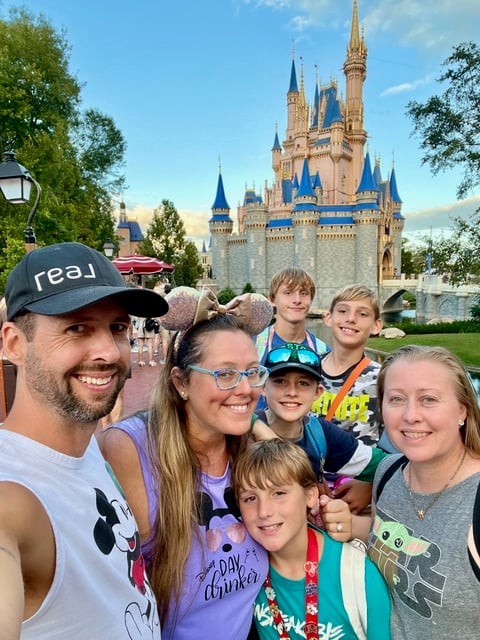
At home, he’s also become a true Disney Dad — fully embracing our love of the parks (popcorn bucket and all). He’s mastered teen lingo with “rizz” (sometimes a little too well), and at dinner, you can count on at least three to four dad jokes — met with groans, laughter and a whole lot of eye rolls from the boys.
But beneath it all is a man who models the values I admire most: faith, integrity, love and leadership.
In a business that often pulls us in a thousand directions, Christian keeps what matters most — our faith and our family — at the center of it all. And I’m endlessly grateful for the example he sets for our boys and for those we lead.
To all the dads who show up
As we celebrate Father’s Day, I want to recognize the dads who lead with presence — in every form that takes.
- The biological dads who balance contracts and coaching schedules.
- The bonus dads who pour love and guidance into their families.
- The mentors who serve as father figures for their teams.
- The single dads who navigate each day with courage and heart.
- The dads of furry family members whose homes are filled with unconditional love.
- And every man who shows up, leads with kindness and models integrity for those around him.
In real estate, we often talk about building a legacy. But in truth, the greatest legacies are built in the quiet, consistent moments — in the way we love, lead and serve those entrusted to us.
To Christian, to my dad, and to all the super dads out there: Thank you. You are shaping lives in ways that extend far beyond any business success.
Happy Father’s Day.

by Devon Broderick | Jun 14, 2025 | Industry, News Feed
Bigger. Better. Bolder. Inman Connect is heading to San Diego. Join thousands of real estate pros, connect with the Inman Community, and gain insights from hundreds of leading minds shaping the industry. If you’re ready to grow your business and invest in yourself, this is where you need to be. Go BIG in San Diego!
My friends, it has been a while since last I wrote to you. Much has changed in the world of dad jokes, yet joyfully things remain largely the same.
Except in my home.
You see, it’s 2025, and my only child moved out this year. It’s honestly a strange sensation because I have been a mostly solo dad for 23 straight years to my son, who has lived with me the whole time. Times change.
When he moved out, an odd melancholy anticipation came over me—melancholy for his absence, but anticipation because I’m excited for his life and my life as it will take shape in that same absence.
And so what do I do with myself now? That’s the question, right? No.
The real question is: “Who do I tell all my dad jokes to now?”
Do I tell my wife? No. Here’s what happens when I do that: Yesterday, she told me her brother is planning a mountain backpacking trip and was going to take some altitude sickness pills. So I said, “Oh man, I hear that medication gets you really high.”
She just looked at me deadpan and said, “Dad jokes.” This is a no-go.
Do I tell the dogs? They never laugh. Door-to-door salespeople? Might make them finally think twice about unsolicited soliciting. Strangers at the store? They tend to look at me weird.
Shall I then shout these zingers at the walls — the cold, grey, echoey walls of my home — hoping in futility to hear just a single creak of the settling house that I could pretend was the tiniest groan in response …?
Who — I ask you — who will be the pun-fortunate recipient of my burgeoning stockpile of unfunny humor?
Hello, Inman Readers. Here is your list of the 15 lamest dad jokes of 2025:
1. Two sheep walk into a — baaaa.
2. What do real estate agents have to be thankful for? Lots. (Get it??)
3. My teacher asked me to name two structures that contain water … I was like, “Well, dam!”
4. Why was the real estate agent in counseling? He just couldn’t get closure.
5. Don’t ever fish with a DJ. They’re always dropping the bass.
6. Siri kept calling me “Shirley” all day yesterday and I was getting very annoyed. But I finally realized I had left my phone in Airplane! mode.
7. Did you hear about the last remaining unit in the apartment building? It was last but not leased.
8. I should start doing lunges to stay in shape. That would be a big step forward.
9. What does a house wear? Address.
10. Did you hear about the guy who got hit in the head with a pop can? He was lucky it was a soft drink.
11. What do you call a pirate who designs houses? An ARRRchitect!
12. I just landed a position at a company that makes foam rubber. So far, it seems like a pretty cushy job.
13. Do you want to hear a joke about a roof? It’s on the house.
14. I only know 25 letters of the alphabet, and I don’t know Y.
15. Q: How many real estate agents does it take to change a lightbulb?
A: None! The lightbulb is in excellent working order and composed of a beautiful retro teardrop illuminator, offering original glass and metal features and located very centrally in the middle of the room. Local amenities abound, and the property is serviced by a newly refurbished power cord connecting it to the ceiling. Nearby is a tasteful power switch to enable the purchaser to switch it on and off. Leasehold with a share of power supply, lovingly improved wattage by the current owners. Would suit a professional couple or family looking for more light.
Sources courtesy InboundREM, The Pioneer Woman, Delish and Reddit.
Connect with Devon Broderick on LinkedIn.

by Christy Murdock | Jun 14, 2025 | Industry, News Feed
As investors see local markets and rental prices soften, they’ve started to unload underperforming inventory at a record pace.
Bigger. Better. Bolder. Inman Connect is heading to San Diego. Join thousands of real estate pros, connect with the Inman Community, and gain insights from hundreds of leading minds shaping the industry. If you’re ready to grow your business and invest in yourself, this is where you need to be. Go BIG in San Diego!
Each week on The Download, Inman’s Christy Murdock takes a deeper look at the top-read stories of the week to give you what you’ll need to meet Monday head-on. This week: As investors see local markets and rental prices soften, they’ve started to unload underperforming inventory at a record pace.
Not long ago, real estate looked like a one-way bet. Prices were climbing, inventory was tight, and rental demand seemed bottomless. Investors banked on the idea that the market would keep delivering year after year.
Now, it seems, the tide is turning. Interest rates, economic pressure and shifting supply dynamics are starting to reshape the landscape, and even large investor-adjacent companies are struggling to regroup.
READ: Opendoor sheds more employees amid Nasdaq delisting threat
At the same time, however, there are bright spots and opportunities that make this the time to take a long, hard look at your holdings and find out what else is out there. If you’re working with investors, reach out and see what they’re looking for on both the buy- and sell-sides.
Real estate investors are selling off portions of their portfolios at a record pace, hoping to stem losses as the housing market cools and rental prices soften, a new report from Realtor.com has found.
Investors in the Midwest and South — two of the country’s most affordable regions — are seeing the most offloads. The top five investor seller states were Missouri (16.7 percent), Oklahoma (16.7 percent), Georgia (15.9 percent), Kansas (14.3 percent) and Utah (14.3 percent).
Despite the sell-off, there are still deals to be had. Purchases by investors ticked up slightly last year, with 13 percent of all 2024 home purchases made by investors, up from 12.7 percent in 2023.
Whether you’re holding investment property, working with investors or trying to plan ahead for a potential portfolio of your own, there’s no need to reinvent the wheel.
Inman contributors regularly write about all things investment and business building, so that you’re always armed with the knowledge and insights you need to make the smartest decisions.
READ: 25 accelerators, podcasts and courses for agent entrepreneurs
by Matt Carter | Jun 13, 2025 | Industry, News Feed
Overseas investors hold about $1.36 trillion in U.S. mortgage debt, with Japan, China, Taiwan and Canada accounting for 61 percent of that total.
Bigger. Better. Bolder. Inman Connect is heading to San Diego. Join thousands of real estate pros, connect with the Inman Community, and gain insights from hundreds of leading minds shaping the industry. If you’re ready to grow your business and invest in yourself, this is where you need to be. Go BIG in San Diego!
The Trump administration is looking to bring mortgage rates down by encouraging South Korean investors to step up purchases of mortgage-backed securities (MBS) guaranteed by Fannie Mae, Freddie Mac and Ginnie Mae.
The U.S. Department of Housing and Urban Development (HUD), Ginnie Mae and the Korea Housing Finance Corporation (KHFC) signed a memorandum of understanding this week aimed at strengthening the relationship between the U.S. housing finance system and South Korean institutional investors.
HUD Secretary Scott Turner met with Kyung-Hwan Kim, president and CEO of the KHFC — Korea’s version of Fannie Mae and Freddie Mac — for the June 10 signing.
“Working strategically with our South Korean allies, we are expanding the global understanding of American housing finance, while increasing capital flows in the United States, strengthening our domestic capital markets, and unlocking strategies to benefit American borrowers,” Turner said in a statement. “This agreement signals that, under President Trump’s leadership, our allies are ready and willing to do business in America again.”
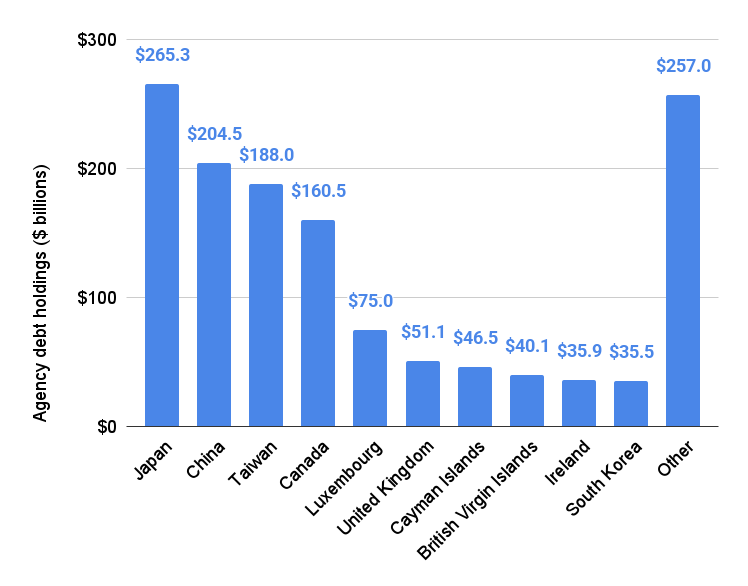
Overseas investors hold about $1.36 trillion in so-called “agency” debt, with Japan, China, Taiwan and Canada accounting for 60 percent of that total.
U.S. agency debt overseas holdings
With $35.5 billion in U.S. agency debt holdings (MBS, notes and bonds), South Korea ranks 10th, behind banking strongholds like Luxembourg, the United Kingdom, the Cayman Islands, the British Virgin Islands and Ireland.
Ginnie Mae President Alanna McCargo led a delegation to Asia in April 2023, meeting with MBS investors, financial institutions, and regulators in Taiwan and South Korea.
On that trip, Ginnie Mae officials “assured investors that the structure of Ginnie MBS will help to protect them from any potential issues tied to a possible U.S. debt default,” Inside Mortgage Finance reported at the time.
“Formalizing our partnership with KHFC through this MOU is a meaningful step in addressing housing challenges that extend across borders,” Ginnie Mae executive Joseph Gormley said in a statement Friday. “Korean institutions continue to play a significant role in our capital markets, and we look forward to working together to advance a shared understanding of global capital markets and to ensure the strength of our mortgage-backed securities.”
Although President Trump has berated Federal Reserve Chair Jerome Powell for not cutting short-term interest rates this year, mortgage rates are largely determined by investor demand for MBS.
MBS are seen as a comparable, if slightly riskier investment, than 10-year Treasury notes. Overseas investors own about 15 percent of the nearly $9 trillion in outstanding Fannie Mae, Freddie Mac and Ginnie Mae MBS.
Fannie Mae and Freddie Mac guarantee payments to MBS investors even if borrowers default on their loans. Ginnie Mae securities are backed by single-family mortgages originated through the Federal Housing Administration (FHA), U.S. Department of Veterans Affairs (VA), U.S. Department of Agriculture’s Rural Development (RD), and Public and Indian Housing (PIH) insurance programs.
Mortgage rates surged in May after Moody’s Ratings became the last credit agency to strip the U.S. of its most favorable debt rating over concerns that Congress and “successive U.S. administrations” have failed to tackle annual budget deficits.
Fears that tax cuts Trump is attempting to push through Congress will lead to even more borrowing have investors demanding higher yields on 10-year Treasurys and MBS.
Trump adviser Peter Navarro has said investors believe the tax cuts aren’t paid for, and “are pricing in a future where the government borrows trillions more with no offsetting revenues.”
But Navarro and other Trump administration officials maintain that tax cuts will help the economy grow and generate more tax revenue than critics expect.
Get Inman’s Mortgage Brief Newsletter delivered right to your inbox. A weekly roundup of all the biggest news in the world of mortgages and closings delivered every Wednesday. Click here to subscribe.
Email Matt Carter

by Jim Dalrymple II | Jun 13, 2025 | Industry, News Feed
The real estate brokerages want to pause a commission case known as Gibson while they wrap up a different lawsuit. But the Gibson homeseller plaintiffs don’t want their case put on ice.
Bigger. Better. Bolder. Inman Connect is heading to San Diego. Join thousands of real estate pros, connect with the Inman Community and gain insights from hundreds of leading minds shaping the industry. If you’re ready to grow your business and invest in yourself, this is where you need to be. Go BIG in San Diego!
The ongoing saga of the commission lawsuit settlements involving eXp and Weichert continued this week, as the homesellers behind one of the industry’s biggest antitrust cases worked to keep their fight with the companies alive.
The fight boils down to the homesellers’ claims that eXp World Holdings and Weichert Real Estate Affiliates engaged in a “reverse auction” when settling their antitrust litigation. In other words, the homesellers — in this case, those who filed a major suit known as Gibson — believe the two brokerages shopped around among similar class action lawsuits to find the best deal.
EXp and Weichert both settled in a case known as Hooper, but the Gibson plaintiffs want to force the companies back to the negotiating table in their own case. The parties have been going back and forth over the issue for months, though the Hooper judge granted the settlements preliminary approval last month.
After winning preliminary approval, eXp and Weichert on May 29 filed a motion to stay — or, pause — Gibson proceedings. The motion states that if the settlements win final approval later this year, that will “extinguish” the Gibson plaintiffs’ claims against the companies. Put another way, the brokerages want to put their part in the Gibson litigation on ice indefinitely.
But the news this week is that on Thursday, the Gibson plaintiffs filed their own document in court pushing back on the brokerages’ motion to stay. The document criticizes what it describes as “inadequate reverse-auction settlements” and notes that a previous motion to stay the case was denied. The document also states that the judge in the Hooper case has not yet considered the Gibson homesellers’ arguments.
Inman has reached out to the brokerages and will update this story with any comments they provide.
Among other things, the new document also claims that the companies “misstate the legal standards regarding a stay,” and that the Gibson homesellers “would suffer significant prejudice if all proceedings were stayed.”
It remains to be seen how the judge in the Gibson case will respond to both the brokerages’ motion to stay and the homesellers’ argument against the stay.
But either way, the settlements have proven to be among the most contentious in the industry. Following the Sitzer | Burnett jury verdict in 2023, the National Association of Realtors and various large companies moved within a matter of months to settle. And while various appeals in the cases are ongoing, the most headline-grabbing litigation involving those companies is now in the rearview mirror.
In the case of eXp and Weichert, however, legal wrangling over the settlements shows no sign of stopping.
Read the Gibson plaintiffs’ latest filing here:
hert
Email Jim Dalrymple II
