by Daniel Houston | May 12, 2025 | Industry, News Feed
Most agents feel like they have compensation talks under control. But as the busy season ramped up, Intel Index survey results suggest homebuyers and sellers alike made only incremental gains.
This report is available exclusively to subscribers of Inman Intel, the data and research arm of Inman offering deep insights and market intelligence on the business of residential real estate and proptech. Subscribe today.
As the spring market shifted into high gear, more clients than ever started seeking favorable deals with agents under the rules of the NAR settlement.
But for most agents, the impact on commissions in the short run remains minimal, according to Intel’s latest survey of real estate professionals.
Nearly 58 percent of the agents Intel surveyed in late April said that commission rates have remained unchanged or even increased as a share of the purchase price since the new rules went into effect last year. That share has steadily climbed since 48 percent gave the same response in December’s survey.
Still, there are clear signs of ongoing downward pressure on commissions, which, if they continue, could meaningfully erode compensation rates over a longer period of time.
And the agents who are feeling the heat most say it’s coming from both ends of the deal.
Read the full breakdown of the latest industry survey results in this week’s report.
A loosening grip
Since the new rules went into place in August, agents have been largely successful in persuading most of their clients to guarantee buyer’s agents their full commission, and to pay it primarily through the seller side.
Still, there have been clear signs in recent months that this success might be slipping as more clients try to negotiate a lower buyer’s commission — or try to pocket the buyer-side fee that sellers have traditionally paid to agents on the other side of the deal.
- The share of agents who say at least some of their buyer clients are trying to negotiate commissions over the previous three months rose from 33 percent in December to 41 percent in April.
- Despite this, few agents say that they are beset by demands from a majority of their recent buyers. Only 6 percent of respondents in April said that more than half of their buyers were trying to negotiate their compensation downward, while another 10 percent of agents said that the share was between 1-in-10 and half of buyers they worked with.
But even as negotiations heated up in the spring, agents continued to score wins as they made the case for the value they bring to buyers, the results suggest.
- Only 30 percent of agent respondents in April said that any of their signed buyer agency agreements ended up agreeing to a below-market commission rate.
- The share of agents who gave that response crept upward from 25 percent at the end of 2025.
On the seller side, agents are facing even more settlement-related questions from clients — and having even more success arguing for a traditional listing approach.
But that power of persuasion may be weakening over time.
- 78 percent of agent respondents in April said they face these questions from sellers about whether they should cover the buyer’s agent, a share that has remained essentially unchanged throughout the opening months of the year.
- Despite the widespread questions from sellers, only 36 percent of agents in April told Intel that any of their sellers have opted to take a hard-line approach against covering the commission. Notably, this share has climbed from 26 percent in December.
A clearer picture emerges
All this adds up to an increasingly divided environment for agents.
Instead of a single fairly standard compensation rate for buyer’s agents, a greater share of real estate professionals say that rates have fallen — or even increased.
- 11 percent of agents in April told Intel that they have seen an increase in their negotiated compensation rates since the new rules went into effect.
This group, while small, has steadily grown over time as more agents have been able to make a strong value case with clients.
Still, it was outnumbered 3-to-1 by agents who reported their compensation rates have declined.
- Nearly 2 in 5 agent respondents said that their rates had declined since August, but only 1 in 20 agents described a “significant” decrease.
Agents are also increasingly confident they understand the effect that these new policies are having on their business revenue.
- Only 4 percent of agent respondents now say it’s too early to determine the effect of the new rules on their business, down from 12 percent in December.
As agents have become more familiar with the rules — and the way their counterparts are handling edge cases with clients — many have also shifted their go-to methods of dealing with them.
- In August, when the rules had just gone into effect, only 21 percent of agent respondents said they were submitting buyer’s offers that stipulated the seller would cover the full buyer’s side commission without first reaching out to the listing agent. Under this model, their buyer client would first learn of the seller’s position on covering their commission later on in the process of normal negotiations.
- In the months since, the share of agents opting for this approach has grown steadily, and by April had more than doubled to 43 percent of agents.
- The other main group — agents who start out by reaching out to the listing agent to learn their client’s position on the buyer-side commission — declined from 63 percent in August to 48 percent in April.
It’s important to note that real estate is a highly seasonal business, and this is the first spring buying season in which these new rules have been in place.
Whether they are part of an ongoing long-term trend dragging lightly downward on commissions, or merely a seasonal blip, will be a question Intel will track closely as it continues to survey the brokerage world in the months to come.
Methodology notes: This month’s Inman Intel Index survey was conducted April 17-May 2, 2025, and received 428 responses. These results are preliminary and may be revised. The entire Inman reader community was invited to participate, and a rotating, randomized selection of community members was prompted to participate by email. Users responded to a series of questions related to their self-identified corner of the real estate industry — including real estate agents, brokerage leaders, lenders and proptech entrepreneurs. Results reflect the opinions of the engaged Inman community, which may not always match those of the broader real estate industry. This survey is conducted monthly.
Email Daniel Houston
This post was originally published on this site
by Lillian Dickerson | May 12, 2025 | Industry, News Feed
Bigger. Better. Bolder. Inman Connect is heading to San Diego. Join thousands of real estate pros, connect with the Inman Community and gain insights from hundreds of leading minds shaping the industry. If you’re ready to grow your business and invest in yourself, this is where you need to be. Go BIG in San Diego!
Agents and homesellers alike dread seeing days on market slowly tick up on their listing.
To homebuyers, a high number of days on market often triggers a warning signal: There must be something wrong with this property.
But with luxury and ultra-luxury properties, especially, it may simply be that the listing hasn’t hit the right eyes yet, Chad Roffers, founder and CEO of Concierge Auctions, told Inman.
“Do not cut the price,” Roffers said during a recent conversation. “The problem wasn’t the price. The problem was, the pool of buyers for your house is small, if not very small, and cutting the price isn’t going to expand the pool of buyers. You need an alternative strategy for expanding the pool of buyers.”
Still, if days on market for ultra-luxury properties continue to rise and exceed a critical threshold of 180 days, according to Concierge Auctions’ 2025 Luxury Homes Index released in April, the effects to seller returns could be significantly detrimental.
The report found that ultra-luxury properties that took more than 180 days to sell only received an average of 80 percent of their asking price. By contrast, properties that sold in less than 180 days received an average of 87 percent of the original list price. The report also found that, on average, ultra-luxury properties take 319 days to sell. But, for properties that take more than 180 days to sell, the average days on market swells to 569 days on market.
So, if an ultra-luxury property sits on the market for more than 180 days, the costs and additional headaches involved in selling multiply quickly.
Inman recently spoke with Roffers about Concierge Auctions’ latest findings to learn more about how luxury agents can minimize days on market and how the current economic environment is impacting the luxury auction space. Here’s what he had to say, edited for brevity and clarity.
Inman: There were some really interesting findings in this report surrounding days on market and how you identified 180 days as this pivotal time frame. And so I’m curious, just based on what you’ve seen, do you feel like agents are underestimating the potential negative impacts of days on market and how that can affect them and their sellers?
Roffers: Yes, very much so. It’s interesting — we have the good fortune of kind of pulling the lens back and looking broadly. We’re active in 40 states, 38 countries, right? So, very broad perspective. And I think when you have that perspective, and you look at what happens, and then kind of overlay this index that we’ve done now for a decade, initially it was pretty obvious, and now it’s incredibly obvious, that days on market are not your friend.
There are two camps: There’s the sell quick, it’s really like 90 days or less, if not shorter, or you’re in for the long haul. So these are the very clear patterns. And I think that the time to start having difficult conversations with your seller as a listing agent is Day 90.
Let’s just assume for a minute that the average listing agreement is still six months. It’s kind of an industry [standard]. And what we see is, people start having hard conversations with two weeks to go in the listing, and it’s almost too late at that point in time. The sellers are probably starting to interview other brokers.
And while there are clear rules about non-solicitation, it seems to me that sellers are really aware that they have alternatives coming up to a listing expiration, so I see agents wait too late. They’re too late, versus being proactive.
So what we have is, 90 days is kind of like the warning signal, like, you better do something about this. And then at 180 days, we start noticing these huge drop offs in sale price if a listing extends beyond 180 days, and also the days on market suddenly balloons to a huge average. So I guess I’m curious, what do you think it is about that kind of roughly six-month marker that makes the difference?
I think it’s the ‘Zillow-fication’ of it, if that’s a term. But, the Zillow-fication of the way consumers, buyers evaluate properties. And I think buyers look at days on market and the Zestimate, and we know the Zestimate can be really unreliable in the ultra-luxury segment of the market.
In fact, oftentimes it is because there’s just not enough data to accurately predict the value of a high-end property. But the days on market, there’s no interpretation needed. And I think that the typical consumer sees 180 days and immediately asks themselves, ‘What’s wrong with this property?’
That is tricky. I know another issue that you all discussed in the report is this kind of overly aspirational seller, who might be really wanting a certain [sales price] and that, of course, can contribute to the days on market as well. So I guess, what’s another strategy that agents can maybe use to try and address sellers’ aspirations?
It’s a great question. I have a lot of empathy for the brokerage community, because, talk about a tough business to be in when there’s literally an unlimited supply of alternative agents who will take a listing at any price versus an agent who’s trying to educate a seller about the essential nature of having the right list price. So that’s a very challenging backdrop for even the best professionals in our business.
So I think that ultimately, the key to success is leaning into the data. My hope this year would be that even if an agent’s not working with us, that they’re using our index data to show a seller how important the first 90 days is, and using our index to say — this is like the oldest adage in real estate — but, your first offer is your best offer. Take the first offer that works, especially if it’s not 90 days [yet], because the odds of a better one coming down the pike aren’t great, and even when it comes, you’re now, as a seller or an agent, battling those days on market — and with a buyer who thinks that they have all the leverage.
So, ultimately, the bottom line is, with agents, it’s like getting comfortable having uncomfortable conversations with your sellers at every stage, from before you get hired to immediately after you get hired, to 90 days in. And, actually, the payoff for those hard conversations is great.
It’s great for the consumer, because they’re taking a proactive approach, helping them take a proactive approach, versus head in the sand and hope for the best, which I just I don’t think that’s a great strategy in life, and it’s certainly not a good strategy when it comes to selling your luxury property.
How I see this, too, is that some agents will go the auction route as an alternative once being on the open market or whatever other strategy doesn’t work. At what point in this days on market cycle do you think that it’s most advantageous for them to do that, if they don’t choose an auction as the primary way that they’re going to market this property?
Agents that consistently succeed with their clients as a result of using our platform introduce us Day 1, Day Zero, and they can kind of shift into gear at whatever inflection points necessary, because they’ve already laid the foundation with the seller. So what I would argue is, we should be a topic of conversation at the listing stage, because we’re the most potent tool for fixing that days on market problem.
And what works for an average house, which is a price reduction, does not work for the typical incomparable property. In fact, price reductions are counterproductive to selling luxury properties.
Concierge Auctions also sometimes preps properties for auction while an agent is simultaneously listing it. How well do you feel like that works typically? Is that a good second choice as opposed to purely auctioning the property? Or where do we see that in terms of ideal marketing?
Interestingly, we’re seeing a lot of sellers and agents using us right out of the gate, like Day 1 of the listing, and they tend to either be a repeat seller or a repeat agent. So it’s somebody who’s worked with us before, and they learned the power of bringing everybody to the table early, and the duration of a property being on the market, and so that works incredibly well.
What I would say, in general, if I were to say kind of a default best practice for a seller and agent is, one, I think it’s important for sellers to get feedback from a handful of top agents in their respective market. So even if you have somebody that you know and trust that you worked with before, who you’re probably going to want to use, I would still get the feedback of two or three other top agents in the market.
And I would, as a seller, be asking them, please be honest with me about price. Don’t tell me what I want to hear. Tell me where you think the market is for my property, and regardless of who you pick as an agent, whoever gave you the lowest suggested list price is probably your list price.
Interesting.
And then from there, what I would say is — I used to say it was 180 days, now it’s more like 120 days — call me. Do not cut the price. The problem wasn’t the price. The problem was that the pool of buyers for your house is small, if not very small, and cutting the price isn’t going to expand the pool of buyers. You need an alternative strategy for expanding the pool of buyers. I think that’s where we come in and where we shine.
Right, Concierge Auctions has that network and that wider exposure.
Yeah.
I also wanted to ask you to just about the current economic uncertainty, and if you think that that’ll impact the luxury auction space at all, either positively or negatively?
You know, I think a couple of things. Our process shines when there’s market uncertainty, and the reason is that sellers value liquidity, and buyers want to know that they’re paying a fair price. So environments like 2025, which as far as I can tell, we’re in a choppy environment for real estate, it is a type of market where our platform really benefits everybody.
It benefits a seller by giving them a predictable sale timeline. It gives agents the ability to sell something that, there’s a good chance, is going to go unsold. And I think for buyers, there are always buyers for quality properties.
I’ve been at this a long time now, I started this business in the middle of the Great Recession, and even then, there were buyers who were willing to line up for the best properties, but they do hold back unless they feel like they’re paying a fair price. And I think when we can show them you’re competing against seven other people and you know and everybody knows exactly where everybody is in terms of price. I think that’s really important right now.
I know it’s still a bit early, it’s been about a month since this kind of global trade war started, but I’m curious if you’ve noticed any kind of trends, maybe either away from investment in US properties, or like towards certain countries, or anything like that.
It’s interesting. Here’s the one thing that I’ve noticed: Even when the majority is going one way, like selling off, there are always people who, in markets like this, kind of buck the trend and march to their own beat. And it gives me a lot of confidence in our year in the market, in that there are always plenty of people who kept their powder dry and are looking for opportune times to buy, and I think this year is going to represent one of those times for buyers.
Any final tips for agents who are getting ready to list an ultra-luxury property this spring?
This sounds counterintuitive, and I think it requires some sincere self-confidence of the agent — but I would be asking the seller, ‘Who else are you talking to? What are they telling you about price?’ It’s almost like a tee-up to having an uncomfortable and honest conversation with a seller about what’s the best way to price their property, and I think that’s something that, again, somebody’s got to be pretty comfortable in their skin to do that, but I would encourage them to do that.
Get Inman’s Luxury Lens Newsletter delivered right to your inbox. A weekly deep dive into the biggest news in the world of high-end real estate delivered every Friday. Click here to subscribe.
Email Lillian Dickerson
This post was originally published on this site
by Spencer Krull | May 12, 2025 | Industry, News Feed
Bigger. Better. Bolder. Inman Connect is heading to San Diego. Join thousands of real estate pros, connect with the Inman Community, and gain insights from hundreds of leading minds shaping the industry. If you’re ready to grow your business and invest in yourself, this is where you need to be. Go BIG in San Diego!
My love-hate relationship with dual agency began about 10 years ago on a flight from New York to LA. The conversation with the guy in the seat next to me turned to what we each did for a living.
When he said he was a real estate attorney, I thought maybe I’d found a good source of leads and asked him if he represented investors or sellers. “I represent clients to sue brokerages when they mess up,” he said. “What do you do?”
I squirmed in my seat. “I’m the Broker of Record for a brokerage.”
“Do you allow dual agency?”
“Yes.”
He laughed. “Keep doing dual agency; it’s how I’m putting my kids through college.” This was going to be a long flight.
Before going any further, let’s define the “dual agency” he was talking about: It’s the one in which the buyer and seller are represented by the same individual agent, or even members on the same team.
Dual agency and fiduciary duty
I have no problem with the basic form of dual agency in which agents from the same brokerage represent the buyer and seller in a transaction; in this age of monolithic brokerages, it would be unrealistic and impractical even to suggest ending this form of dual agency.
But when a single agent or even a single team represents both sides, it strains the ability of an agent to provide even the barest level of fiduciary duty owed to each client.
In the aftermath of the National Association of Realtors commission lawsuit settlement, there was a lot of talk about dual agency. At that time, Jim Dalrymple II broke down the legal landscape surrounding the practice:
The U.S. is a patchwork of differing laws when it comes to dual agency. According to ARELLO [the Association of Real Estate License Law Officials], most states do allow dual agency, albeit while requiring the parties involved to sign a written agreement. A handful of states allow dual agency with no agreement.
A total of nine states prohibit dual agency. The first to do so was Texas, in 1993, and the most recent was Maryland, in 2016, according to ARELLO.
In practical terms, if you’ve ever double-ended a deal, you know how difficult it is to maintain confidentiality when you know what the seller would take and what the buyer can spend. It’s even harder to maintain neutrality when a deal gets contentious and you need to strategize opposing goals, advising each client as if you didn’t know what the other side truly wants.
It’s like playing chess against yourself; one can’t forget what the other side plans by simply moving to the other side of the board. (In a cartoon world, this selective amnesia could be induced with a well-placed anvil to the head, but in real life, the resulting CAT scans and MRIs would be cost-prohibitive.)
Just as parents are not supposed to favor one child over another, dual agents are not supposed to favor one client over another. And if at times a parent finds it hard to maintain impartiality, how much more so for an agent and their client?
Some brokerages solve this conundrum by allowing different team members to represent each side. This is certainly better than having only one agent, but even when agents are from different companies, things can get a bit fuzzy with confidentiality to “grease the wheels” to move a deal along.
Yes, I’ve seen some teams handle this version of dual agency exceptionally well, with written policies of a “Chinese Wall” and guidelines on when to bring in the broker or manager. However, more often than not, I’ve witnessed teams do a pretty terrible job by breaching confidentiality, and even worse, I’ve seen both sides team up against the buyer or seller. So much for our duty to always act in our clients’ best interests.
Agents like dual agency because it leads to higher commissions. Brokerages like dual agency because it leads to higher company dollars. Win-win, right?
I’m sure that the companies pushing the value of private networks are doing so because they sincerely believe it serves the best interests of the client. That it also increases the likelihood that those agents will double-end a deal is a very fortunate, unintentional side effect. (Did I mention that these networks serve the best interest of the client?)
In all honesty
Let’s get real — private networks are not going away anytime soon; the companies pushing them have too much influence. But, what if the National Association of Realtors (NAR) instituted a policy banning “single agent” and “same team” dual agency?
Sure, it would be unpopular with many brokerages, but NAR didn’t mind being unpopular when they sprung the Clear Cooperation Policy (CCP) on us. At least in this case, NAR can make the very credible argument that such a ban would truly be in the best interests of the general public.
Plus, if states were to take a long, hard look at dual agency and were honest about whether or not it served the public good, I think you’d see the dual agency reins being pulled in pretty tight.
Tightly restricting dual agency won’t harm business. Of the states that restrict some forms of dual agency, Texas does an exemplary job by having the broker assign an agent to each side, with the broker serving as an intermediary or referee.
The result is dual agency in which both the buyer and seller are fully and equally represented, and an agent’s self-interest (at least in terms of dual agency) is not a part of the mix.
As for the private networks and portals, restricting dual agency might take away the incentive to keep listings off the multiple listing service (MLS) in the hopes of double-ending a deal. The CCP-MLS-private network debate could possibly fade into the background, freeing the industry to tackle other important issues, such as getting a carve-out from independent contractor laws to allow mandatory agent training. (A broker can dream, can’t he?)
To be perfectly transparent, it’s in my own self-interest to allow and even encourage agents to double-end deals. Huh?
See, I exchanged contact information with that attorney on the flight, and a few months later, he called to get my opinion on a file. And so began my career as an expert witness and consultant (mostly in brokerage defense).
Every time I get a new case file, the first thing I check for is dual agency. And I’ve found that a lot of the dual agency files have some serious issues.
That’s when I lean back in my chair, look at the photo of my two children and remember what that attorney said: “Keep doing dual agency; it’s how I’m putting my kids through college.”
Writer’s note: The opinions in this article represent the author’s opinions and do not reflect those of Side.
Spencer Krull is a Managing Broker with Side, and also works as a real estate Expert Witness and Consultant for attorneys.
This post was originally published on this site
by Leah Curtis | May 12, 2025 | Industry, News Feed
In the real estate industry, the path to success can look very different to different people — from selling a record number of homes to breaking into the luxury sector to building a referral-driven business because clients can’t say enough good things about you and the service you provide.
Regardless of how they achieve high producer status, best-in-class agents show up each day with an unwavering drive to excel — and a determined mindset to get them there. Here are three qualities the vast majority of top real estate agents have in common, according to REMAX:
1. Top producers are trustworthy
Trust is the backbone of business. It’s that simple.
When people trust you, they’re going to choose you over the competition. And they’re likely to recommend your business to their friends and family, too. This level of trust is a product of having a robust skillset, offering helpful expertise, communicating clearly and delivering excellent customer service.
Maintaining a reputation of trust is cornerstone to business for top producers. What’s great: those at REMAX brokerages have the facts to back it. A consumer survey found that REMAX has the most trusted real estate agents in the U.S.1 and Canada2.
2. Top producers are productive
Becoming the best in the business doesn’t happen overnight. It’s the outcome of perpetually boosting productivity, often leading to an impressive track record of wins that reinforce an entrepreneur’s experience and longevity in the business.
Top producers also join brokerages with a culture that supports this productivity — and places them in proximity of fellow go-getters who collaborate and help each other grow. That’s one of the many reasons agents join REMAX. In fact, REMAX agents at large U.S. brokerages, on average, outsell the competition 2-to-13.
3. Top producers are professional
A business foundation of professionalism is built through myriad avenues, from how you market your business to how you connect with new customers to how you keep in touch with former ones. Top agents exude professionalism in everything they do — and they lean into resources that support it.
REMAX agents, for instance, leverage the power of a household-name brand people know and trust on a global scale. And they get creative with exclusive REMAX tools that empower users to customize professionally crafted marketing materials and put assets in front of the right people at the right time. An example: the ever-expanding MAX/Tech® powered by BoldTrail platform, a tech solution designed to streamline an agent’s workflow and increase their productivity, complete with a comprehensive CRM, presentation tools, AI capabilities and more.
Top producers stay curious, too, and never stop sharpening their skills and learning new facets of real estate. Through REMAX University® — the brand’s digital education hub — as well as mastermind sessions and events, REMAX agents continually gain timely knowledge and use that expertise to help people turn their real estate goals into reality.
With a network of over 145,000 agents and a presence in over 110 countries and territories, the REMAX brand is home to trusted, productive and professional top producers leading the way in real estate. To learn more about REMAX, a business that builds businesses, visit join.remax.com.
1 Voted most trusted Real Estate Agency brand by American shoppers based on the BrandSpark® American Trust Study, years 2022-2025 and 2019.
2 Voted most trusted Real Estate Agency brand by Canadian shoppers based on the BrandSpark® Canadian Trust Study, years 2021-2025, 2019, and 2017.
3 Transaction sides per agent calculated by RE/MAX based on 2024 data from RealTrends Verified Brokerage Rankings, citing 2024 transaction sides for the 1,256 participating U.S. brokerages that closed 500 transaction sides, excluding 43 who did not report active licensees. RE/MAX average: 11.9. Competitors: 5.3.
Each Office Independently Owned and Operated
This post was originally published on this site
by Brandon Newman | May 12, 2025 | Industry, News Feed
Real estate is one of the most powerful long-term investments one can make — especially in the luxury space. Despite economic headwinds impacting various sectors, the high-end property market continues to demonstrate remarkable resilience and adaptability.
According to the Coldwell Banker Global Luxury 2025 Trend Report, the luxury segment remains a bright spot in U.S. real estate and reports like this create a unique opportunity for agents who possess the right resources to give them a competitive edge.
Turning luxury trends into agent opportunities
The Trend Report turns insights into actionable listing strategies, helping Coldwell Banker Global Luxury Property Specialists position their listings to match evolving buyer demand. Among the leading trends defining today’s luxury landscape are:
- Multigenerational living: Luxury buyers are increasingly seeking homes that accommodate multigenerational living and evolving family needs. 45 percent of surveyed Luxury Property Specialists identified flexible layouts as a top design feature for their clients; knowledge that gives our agents a significant edge in property selection and marketing.
- Dynamic demographic shifts: “She-elites” and Gen X: Affluent women, or “She-elites”, are shaping buying decisions, with over 94 percent of Luxury Property Specialists reporting women either share decision-making power or hold primary authority. Meanwhile, Gen-X luxury homeownership grew by 10 percent over the past five years, outpacing all other age groups. Our specialists leverage these insights to tailor their approach to these influential buying/selling demographics.
- Emerging luxury flock spots: New hubs for primary and secondary residences are attracting high-net-worth individuals seeking lower taxes, economic opportunity, safety, lifestyle benefits and favorable climates compared to traditional luxury markets. Our globally connected network enables agents to facilitate seamless transitions for clients exploring these emerging opportunities.
Identifying these luxury market trends is only the first step — equally important is how Coldwell Banker provides its specialists with the tools to leverage these insights strategically.
Empowering luxury agents to lead and succeed
Coldwell Banker Global Luxury equips its elite Luxury Property Specialists to lead confidently, armed with exclusive tools that elevate the client experience and deliver results. In addition to a powerful network and resources like the Trend Report, agents have access to events like Generation Blue — returning this September — that offer opportunities for education, networking and staying ahead of industry trends.
Coldwell Banker Global Luxury Property Specialists, representing the top 10 percent of independent sales professionals affiliated with the brand worldwide, are a highly exclusive group equipped to handle these transactions. These specialists have demonstrated impressive year-over-year growth across all price points, including a 235 percent increase in the $50 million+ category. Coldwell Banker affiliated agents handled $220 million in daily luxury sales in 2024.
Crafting agent excellence in a competitive market
As 2025 unfolds, shifting consumer preferences are shaping the market in real time. Luxury transactions require a unique approach, with more complex negotiations and higher stakes.
The strength of the Coldwell Banker Global Luxury program lies in its unwavering focus on empowering agents. By combining cutting-edge tools, data-driven insights, an international network and a commitment to personal brand development, the program ensures its specialists are not just participants in the luxury market — they are leaders, trusted advisors and the driving force behind their clients’ success.
To learn more about how to grow your business and join this elite network, visit the Coldwell Banker Global Luxury website.
This post was originally published on this site
by Christian Ashley Harris | May 11, 2025 | Industry, News Feed
 This May marks Inman’s sixth annual Agent Appreciation Month. Look for profiles of top producers, opinions on the current state of the industry and tangible takeaways you can implement in your career today. Plus, the prestigious Future Leaders of Real Estate return this month, too.
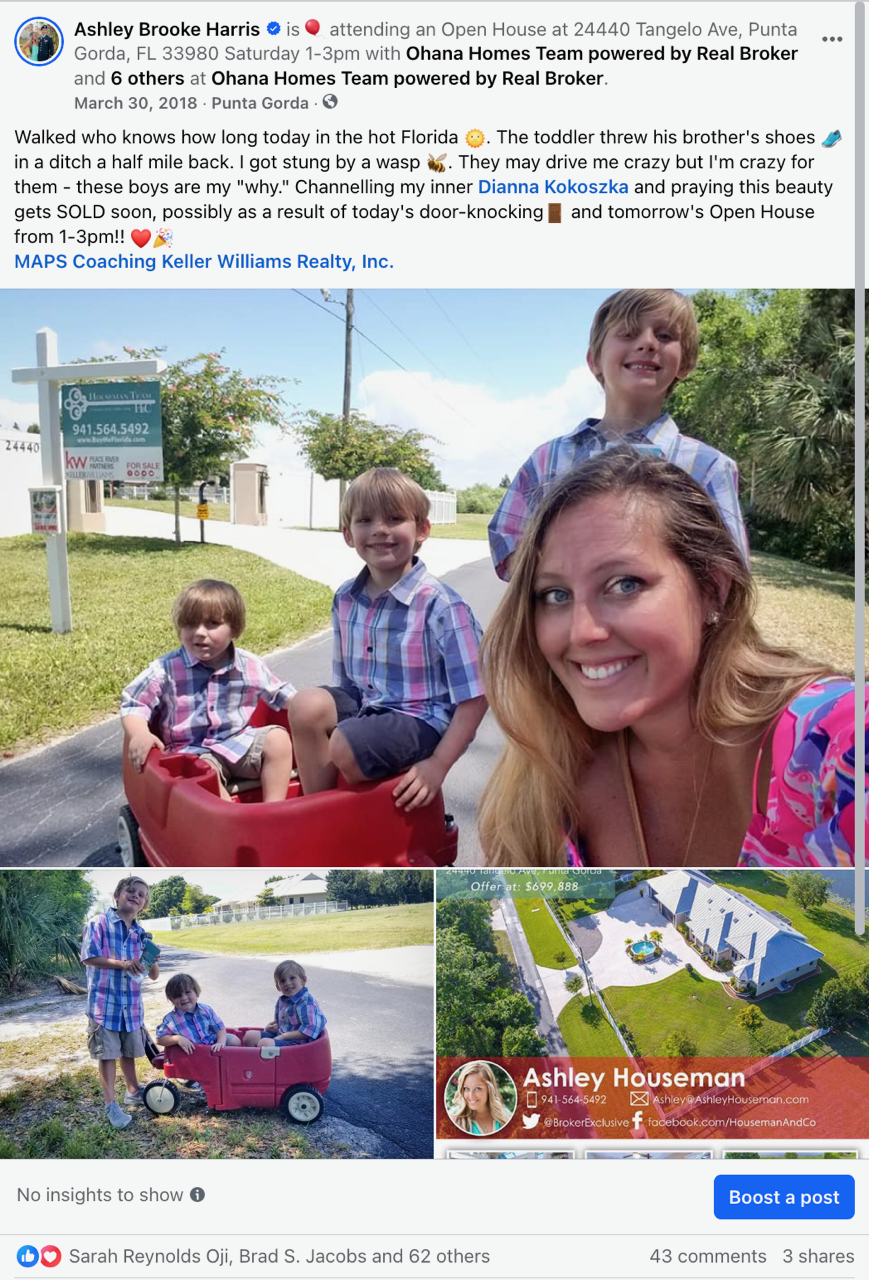
If you’ve ever juggled door knocking in 95-degree Florida heat while towing toddlers in a red wagon, swatting wasps and praying no one loses a shoe in a ditch … you might just be a real-life Mrs. Incredible.
That was me one spring day — sweaty, stung and still smiling — because those little boys in matching plaid? They’re my “Why.”
This Mother’s Day, I want to honor the women who are doing it all — with love, grit and a sense of humor. Because being a mom in real estate? That’s a real superpower.
Stretching ourselves in more ways than one
Helen Parr (aka Elastigirl) is my favorite superhero. Not because of her powers, but because she does what every mom I know does — she bends without breaking. She loves deeply, shows up fiercely and handles chaos with quiet courage.
In my world, the stretch looks a little different:
- Responding to inspection addendums while signing field trip permission slips
- Wrapping up a listing appointment before racing to a football scrimmage
- Coordinating vendor schedules while serving snacks in the school pick-up line
Like many Realtor mamas out there, I’m not just showing homes — I’m shaping lives. That stretch is real, and it’s beautiful.
Motherhood comes in many super shapes
Let’s be clear: Mother’s Day isn’t just for biological moms. This is a celebration of every woman who shows up with love:
- Adoptive moms who choose their kids over and over again
- Bonus moms blending families with grace
- Fur baby moms who love their pets like family
- Women walking the hard path of longing and waiting
- Mentors, aunties and spiritual moms who fill a mama-shaped gap in someone’s life
Motherhood isn’t a title — it’s a calling. And it shows up in all kinds of ways.

Ashley and Christian Harris
Why real estate moms deserve capes (and coffee)
We may not wear red suits, but we slay negotiations, stage chaos into calm, and still manage to make it to football practice or youth group with a granola bar in hand.
We’re not perfect. But we are present.
We’re the ones showing up when it counts — for our clients, for our team, for our families. We are building legacies in between packing lunches and pulling comps.
And that? That’s incredible.

To every Mrs. Incredible out there … I see you
Whether you’re pushing a stroller or pulling your weight on a team …
Whether you’re closing homes or opening your heart …
Whether you’re a biological mom, a bonus mom, a fur baby mom or a “not-yet-but-hopefully-soon” mom…
You are seen. You are celebrated. You are loved.
Happy Mother’s Day to the women who make this world softer, stronger and more incredible — one messy bun, carpool run and closing table at a time.
Keep stretching. We’re cheering for you.
Christian and Ashley Harris are broker associates and team leaders in Florida a Seattle with Real Broker. Connect with them on Instagram or Facebook.
This post was originally published on this site