
by Molly McKinley | Jun 24, 2025 | Industry, News Feed
Real estate is changing fast, and so must you. Inman Connect San Diego is where you turn uncertainty into strategy — with real talk, real tools and the connections that matter. If you’re serious about staying ahead of the game, this is where you need to be. Register now!
The shift from search engines to answer engines is redefining how agents and brokerages should approach online reputation management.
TAKE THE INMAN INTEL SURVEY FOR JUNE
The real estate industry is experiencing its most significant digital transformation since the advent of online listings. As artificial intelligence reshapes how consumers discover and evaluate services, the role of client reviews has evolved from simple social proof to critical training data for AI systems that will soon recommend or overlook your business.
The new reality: From search to conversation
Traditional search behavior is rapidly changing. Instead of typing “real estate agents near me” and scrolling through results, consumers increasingly ask AI assistants direct questions: “Who’s the best agent for first-time buyers in downtown Austin?” or “Which brokerage knows the most about new construction in Plano?”
This shift represents more than a change in user interface. It’s a fundamental change in how business recommendations are generated. When ChatGPT, Google’s AI Overviews or other AI systems respond to these queries, they’re not ranking websites. They’re synthesizing information from across the internet to provide direct recommendations, and your client reviews are a primary data source.
A study by Netpeak found that over 60 percent of consumers now use AI chatbots for product research before making purchase decisions. For real estate professionals, this means your online reputation isn’t just influencing potential clients who read your reviews. It’s actively training the AI systems that will represent your brand to future prospects.
Reviews as AI training data
Here’s the critical insight most agents miss: AI systems can assess the sentiment of written content, meaning negative or outdated reviews on any platform may cause AI to describe your brand unfavorably. Conversely, detailed, positive reviews with specific outcomes help AI systems understand and communicate your expertise.
AI systems are surprisingly sophisticated at identifying inconsistent claims. If your marketing materials claim exceptional results but independent reviews don’t support these assertions, AI systems will likely favor competitors with stronger evidence. This makes authentic client satisfaction — and the detailed reviews it generates — more valuable than ever.
The most effective reviews for AI training include specific details: transaction timelines, price outcomes, neighborhood expertise and process excellence. Generic five-star ratings with minimal text provide little training value compared to detailed testimonials that demonstrate concrete expertise.
Platform strategy: Focus where it matters
While the industry offers numerous specialized review platforms, market data reveals a clear hierarchy. According to BrightLocal’s 2025 consumer behavior survey, 83 percent of consumers check Google reviews, compared to just 44 percent who check other major platforms. This isn’t just about consumer preferences. It directly impacts the quality and quantity of AI training data.
Google’s dominance in search (with an 88 percent market share, according to DataPin’s research) means its review ecosystem provides the richest training environment for AI systems. Additionally, Google’s local search features capture up to 70 percent of local service interactions in home services industries, making Google Business Profile optimization critical for AI visibility.
Yelp emerges as the strategic secondary platform, ranking third in consumer usage according to BrightLocal data, following its recent integration of AI-powered review analysis tools. This integration means that Yelp reviews are increasingly contributing to AI system training data.
Strategic framework: Brokerage vs. agent approach
Successful implementation requires different strategies for brokerages and individual agents, though both should focus on the same core platforms.
Brokerages should establish market authority through comprehensive Google Business Profile optimization, targeting 100+ reviews minimum to establish credible sample sizes. The goal is to position the brokerage as the definitive market expert while maintaining consistent brand messaging across all agents.
Individual agents should build personal expertise authority through focused Google Business Profile development, targeting 50+ agent-specific reviews that demonstrate neighborhood knowledge and transaction expertise. This creates layered credibility: market authority at the brokerage level, specific expertise at the agent level.
Both approaches require systematic review collection, professional response protocols, and consistent Name, Address, Phone (NAP) formatting across all platforms to ensure AI systems can accurately identify and reference your business.
Implementation strategy
The transition to an AI-optimized review strategy should be a methodical process. Begin with Google Business Profile optimization, implementing systematic review collection processes that prioritize detailed, specific feedback over generic ratings. Establish Yelp presence as a secondary platform while maintaining any existing specialized platform investments strategically.
For established professionals with existing review platform investments, the key is integration rather than abandonment. Leverage existing content as templates for new review requests while gradually shifting focus toward platforms with proven AI integration. Ask vendors about their roadmap for AI optimization and how they plan to ensure your reviews contribute to AI training data, rather than remaining isolated from these emerging systems.
Response protocols matter significantly. According to ResponseScribe research, 88% of consumers prefer businesses that respond to every review, and these interactions provide additional context for AI training.
Looking forward
The real estate industry has always been relationship-driven, built on trust and local expertise. The AI revolution doesn’t change these fundamentals. It amplifies them. Agents and brokerages that have built genuine client satisfaction will find their authentic review patterns naturally align with what AI systems recognize as authority.
The opportunity lies in understanding this shift early. While competitors focus on traditional SEO tactics, forward-thinking professionals can build the review foundation that will drive AI recommendations for years to come.
Success in the AI era isn’t about gaming systems. It’s about being so consistently excellent that the systems naturally recognize your expertise. In real estate, that’s always been the path to sustainable success.
Molly McKinley is the founder of Redtail Creative and is the Entrepreneur-in-Residence and teaches entrepreneurship, innovation and social impact at Meredith College in Raleigh, North Carolina.

by Summer Goralik | Jun 24, 2025 | Industry, News Feed
Real estate is changing fast, and so must you. Inman Connect San Diego is where you turn uncertainty into strategy — with real talk, real tools and the connections that matter. If you’re serious about staying ahead of the game, this is where you need to be. Register now!
I’m going to warn you right now. I’ve wanted to write this piece for a long time. I kept asking myself — how am I going to incorporate real estate compliance into one of my favorite ’90s flicks?
TAKE THE INMAN INTEL SURVEY FOR JUNE
And then it hit me: I’m leaving compliance at the door for this one.
Because there’s something bigger, and honestly, more important, for a lot of professionals out there. Especially for women.
There are a few things I remember vividly from my younger years, and believe it or not, Don’t Tell Mom the Babysitter’s Dead is one of them. Not just for the title (which is undeniably iconic), but because it struck a unique chord in a less modern time.
I loved this movie so much and didn’t realize the real reason why. But watching it again as an adult, especially over the past 15 years, it finally clicked. Yes, it’s funny. Yes, it’s chaotic. But more than anything, it showcases powerful women. And that hit differently, especially for a ’90s film.
This movie isn’t just a nostalgic Gen X favorite. It’s a story about a teenage girl who steps into a corporate world she was never supposed to enter — and absolutely owns it. And in the process, it offers some sharp commentary that still applies today, particularly in real estate.
As a sociology major in college, my thesis centered on a question I had always wondered about: Do women support each other, or are we conditioned to compete?
Back then, I felt the competition. It showed up in classrooms, social circles and even casual conversations. You could practically cut it with a knife.
But over time, that changed. I’ve been supported by incredible women throughout my life and career, and I genuinely love supporting other women, especially the smart, vocal and confident ones. It’s empowering not just to be a woman, but to be a fan of other women.
2 realities: 1 workplace
In the film, Sue Ellen Crandell (played by Christina Applegate) is underestimated and antagonized by Carolyn, an ambitious coworker who sees her as a threat. Carolyn isn’t exactly the villain, but she plays out a dynamic that’s all too familiar: Woman versus woman, especially when power feels scarce.
And yet, right alongside that tension, we meet Rose.
Rose is everything Carolyn isn’t. She’s warm. She’s encouraging. She’s competent. She gives Sue Ellen both freedom and structure. She sees potential before there’s even a résumé — albeit a completely made-up one in this case — to prove it. She’s the kind of leader many women remember having once, or quite frankly, wish they’d had.
The irony? In an industry like real estate, where the majority of agents are women, we still don’t see nearly enough Roses at the top.
The industry has a representation problem
Despite women making up nearly two-thirds of residential real estate professionals, men remain overrepresented in leadership roles. They dominate positions as broker-owners, team leads and executives at major firms. They’re more likely to be the ones closing high-dollar deals, chairing boards and shaping industry policy.
According to the California Association of Realtors’ (C.A.R.) 2017 Women’s Initiative report, women represent 57 percent of Realtors in California, yet hold only one-third of leadership roles in brokerages with over 100 agents — and just 26 percent of the top 500 real estate firms nationwide are led by women.
Nationwide, the 2024 National Association of Realtors Member Profile Highlights shows that 65 percent of Realtors are women, continuing a longstanding trend in which women make up the majority of the residential real estate workforce.
The paradox is hard to miss: Even in a female-majority industry, leadership and high-authority positions remain disproportionately male.
Wage disparities persist as well, particularly among top-tier producers and team leaders. According to The Zebra, in 2020, women brokers and sales agents made only 69 cents for every dollar their male counterparts earned, tightening to 92 cents at the management level. In commercial real estate, CREW Network found that while the base salary gap hovers around 10 percent, the bonus and commission gap blows out to a staggering 56 percent.
Although women are doing the bulk of the work, they don’t always set the rules. I’ve been surrounded by powerful women — broker-owners, firm partners, top producers. And yet, when I attend conferences or major industry panels, it’s sometimes hard not to notice how many are still led, moderated or headlined by men.
Not a criticism, just an observation that speaks volumes and reminds us that women must keep forging ahead and reaching higher.
Supporting roles — and real shifts
Back in the film, even Sue Ellen’s brother Kenny, the burnout-turned-budding chef, surprises us. When he’s overwhelmed by housework, cooking, prepping for the party and keeping the kids in line, Sue Ellen calls him out with a line that still hits: “It’s a rat race and it sucks, Kenny. So what do you want, a medal?”
I might not have known it at the time, but that moment flips the gender script. Kenny’s domestic labor becomes visible and exhausting. But instead of retreating, he memorably steps up. He doesn’t just watch his sister succeed; he becomes part of what makes her success possible.
Real estate needs more of that energy. More men who listen, support and make room at the table. Not just in theory, but in leadership roles, partnerships and backing deals.
The Rose effect: Support is a leadership skill
Don’t Tell Mom the Babysitter’s Dead is often remembered for its humor and chaos. But behind the corporate whirlwinds and the constant demands of family life lies a deeper truth: Women don’t need permission to lead — they need opportunity.
And when given both structure and autonomy, as Rose gave Sue Ellen, they don’t just show up. They thrive.
Personally, I owe my first consulting opportunity to a powerful woman who believed in me before I had any impressive title outside of government. She took a chance, gave me space and made it clear she had complete faith in my ability. That kind of trust? It was the best compliment and motivation I could’ve received, and it helped launch my career.
And speaking of compliments … I love giving them. Recently, I was at dinner with a male colleague when our waitress walked up, and besides being incredibly kind, she was absolutely stunning. So I told her. Without hesitation. Just a simple, genuine compliment. My colleague looked a little surprised.
Here’s the thing: When I see something I admire, I say it. I don’t care if we’re strangers, walking in a crosswalk or stuck in an elevator with 60 seconds to spare. If it’s genuine — whether it’s a strength, a kind gesture or something they’ve achieved — I’ll call it out. I don’t discriminate either. If someone’s doing something great, I’ll acknowledge it.
Sure, it might’ve been about her looks that night, but more often, it’s about someone’s smarts, character or the way they show up in the world. And as a woman who once wrote a thesis about whether women support or compete with each other, it hits differently when I can uplift the women around me. It feels personal. And powerful.
That wasn’t always me at 18. But now? I can’t stop thinking about how good it feels to say the thing out loud, to support someone in real time and genuinely mean it.
Don’t get me wrong. I know men who absolutely support women in the workplace. I work with them. I’m friends with them. They advocate, they amplify, they show up. And they’ll continue to show up.
But would I call it the status quo? Not yet.
We talk about innovation, disruption, evolution. But real transformation means looking at who gets lifted up, how we show up for them and whether we’re reaching beyond the usual circle.
And here’s the good news: There is momentum. While men still dominate many of the leadership stages and high-profile panels, more women are stepping into visibility — leading, mentoring and showing up for one another in ways that are shifting the narrative.
Tell Mom: There’s more to do
So let’s close this piece out. Two things are in order.
First, if you missed a film that knocked it out of the corporate park so many years ago, lifting up women from every inch of the screen, go back and watch this thing. Don’t Tell Mom the Babysitter’s Dead might surprise you. You won’t be disappointed.
Second, and more importantly, it’s time to look to real life. The real estate industry is in the midst of major change. And part of that progress must include a deliberate focus on recognizing, elevating and empowering women in leadership.
So let’s leave no compliment, no opportunity and no woman behind.
by Lillian Dickerson | Jun 24, 2025 | Industry, News Feed
Real estate is changing fast, and so must you. Inman Connect San Diego is where you turn uncertainty into strategy — with real talk, real tools and the connections that matter. If you’re serious about staying ahead of the game, this is where you need to be. Register now!
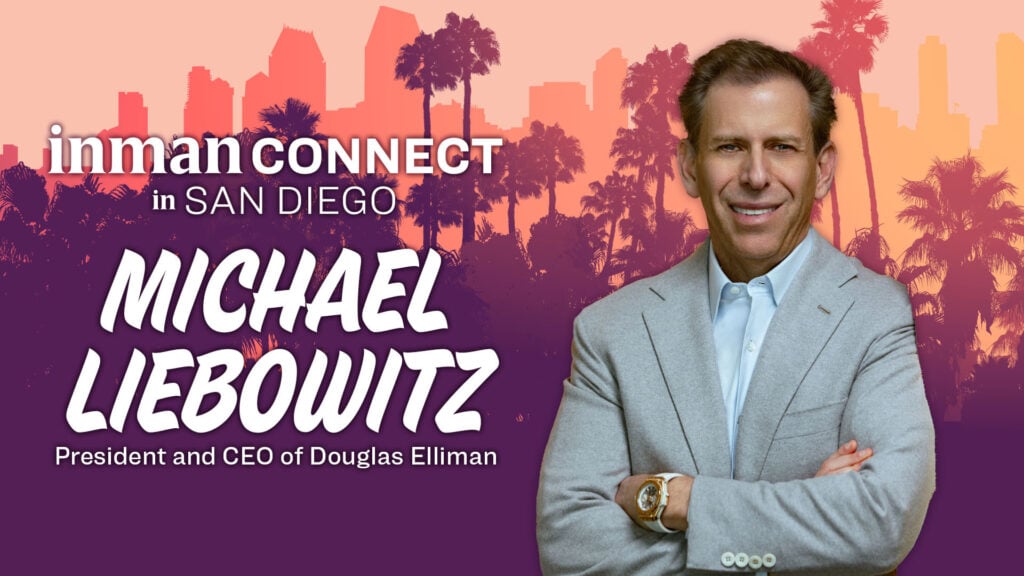
Luxury brokerage Douglas Elliman has had a busy few months.
Since President and CEO Michael S. Liebowitz took the helm from Howard Lorber in October, the exec has been working to improve finances by decreasing losses and focusing on some of the firm’s strengths, like its new development pipeline.
Liebowitz has also responded to luxury consumer demand by announcing the brokerage’s forthcoming private listings platform, Elliman Black Label Private Listings, and launching operations globally with Elliman International.
Next month, Liebowitz will also join a roster of elite industry players onstage at Inman Connect San Diego. In advance of the event, Inman caught up with the CEO to hear more about what Elliman is up to now, and what he’s looking forward to in San Diego. Here’s what he had to say, edited for brevity and clarity.
Inman: It seems like Elliman has been busy with a lot of projects lately. I wanted to start by getting an update on what’s happening with Elliman International, since it was recently announced. What are you excited about and what’s the current focus with the new initiative?
Michael Liebowitz: We think that our brand has worldwide scalability. Our prior deal [with Knight Frank] didn’t give us the ability to do that. So the fact that we’re in the high-end luxury market, the average person you know in that market has four or five, six homes, and they’re in places around the world.
The world is getting smaller, so to speak, and [so are] the barriers between countries. I know a lot of people who have homes in Europe and in South America and all that. So it’s just a natural progression for us as a company to build a worldwide network surrounding our name and our agents. It’ll bring a lot of inbound leads in to our agents in the U.S. It’ll create a revenue opportunity for us around the globe.
Yeah, that’s super exciting. And I wanted to touch too on just where we are with private listing networks today. I know you talked about this a little bit at our Miami event a couple of weeks ago. How do you feel about the state of private listing networks, and Zillow’s move to try and squash that?
It’s interesting. For me, that’s maybe a little bit different from our competitors. I’m new to the scene, you know. I don’t have any of the angst or bruises from battles that the industry, within itself, has had. So I look at it really from a very clear lens.
And on private listings, I look at it really clearly in the sense that I’m a big believer that the more people that look at something, the higher price you will typically get, right? I mean, there’s just no doubt about it. It’s like in the banking world — buyers never want a banker because they think the banker is going to raise the price on them and the deal will cost them more, right? Because there’s more people looking.
It’s no different than in this, right? If you know, 4,000 people see that your property is for sale [compared to] 40, you’re likely to get a better deal and create more competition. But I don’t want to ignore the fact that if consumers are saying that they would like some privacy in it, for whatever reason it may be — like I wanted privacy years ago because I didn’t want people traipsing through my house — I understand it. And when I mean understand it, I mean really understand it.
So I believe that Douglas Elliman is a business that is in the expertise business, and that’s where we want to be.
And you know, we’re doubling and tripling down on being the thought leader and the expertise leader, and training our agents and making sure that they’re the leaders in that. And that comes with everything that you do, education and disclosure. So you really need to have the conversation we’re having here. You meet a movie star or a very high-powered executive who says, “I really want privacy.” We’ll give you privacy. That’s no problem, but just please, really understand the process.
Yeah, gotcha — it’s about finding that balance.
Yeah, that’s why we’re really down the middle on this one. I think some of our competitors are using that as a way to accomplish other things, and maybe become Zillow or some of these other businesses. We are a traditional brokerage, right? That’s what we are; we’re not running away from that. We’re not trying to be something that’s different. We’re not trying to be Zillow.
We’re a traditional brokerage that has a lot of agents; we embrace our agents. We want to be an agent-centric business. And our competitors are trying, in my opinion, to take this issue — like some of our competitors are [saying], ‘Oh, we’re an urban business. We’re a technology business. Now we’re a private listing [business].’ It’s always another thing.
We’re a brokerage. That’s what we are, that’s what we want to be, that’s where we see our future.
Got it. But you guys are developing your own private listing network: Elliman Black Label Private Listings.
Yeah, it’s in addition to the other services that we provide because the clients are demanding it. That’s it — end of story.
I also wanted to follow up on something — a couple of months ago now, there were some rumors floating around about a potential Anywhere merger, or they maybe expressed an interest in buying Douglas Elliman. Just out of curiosity, do you have anything further to say about that?
Listen, the only comment I’ll make is that we don’t comment on rumors.
But the other comment that I would make is, we are not in talks with anybody about selling the company, and we love our business plan. I think that Douglas Elliman is actually in the best position as a company for the future. And we’re not looking to go and do acquisitions that are not accretive to us immediately.
So you’re not going to see us as a company buying more real estate brokerages unless they’re incredibly opportunistic. We have no plan to buy brokerages at the moment at all. I think we’re looking at it more as a strategic recruiting opportunity. So maybe it’s a smaller one or groups of agents domestically and internationally. We’re busy working on what I’ll call our infrastructure, our technology, making the company much more efficient and lean. It’s been successful so far.
We’re spending a lot of time with our existing agents. Retention is what’s important to us. We don’t spend any time recruiting — the recruiting that we do is when we hear somebody wants to leave somewhere, or if somebody calls us, obviously, we’ll get aggressive with them, because we want to bring in really quality agents. But we are not a recruiting model business like our competitors — we’re not aggregating and building the agents.
It’s no surprise that it’s been a slow market recently, and some agents are struggling right now. What kind of advice do you have for them to get through this period?
I actually did a round table two nights ago with a bunch of young professionals, and someone asked me the question of, ‘When do you think it’s time to leave a brokerage when you’re an agent?’ And I said to them, and it really kind of rang true for us, ‘The agents that we lost, were all not having a great year, and I think that agents leave a company because they get frustrated with their own business, and they think a change of scenery will shake up their environment, and it’ll give them more motivation.’
Now, listen, maybe that’s true. Maybe there’s some truth to that. I don’t really believe that. I think at the end of the day, it comes down to us all individually, and what we do is no different than us as a company.
I’m coming up with all these things to differentiate ourselves. And I think that the reality is it’s really important as an agent to focus on your own existing business and what you’re doing. Because I think that making moves just to make a move — you then go and you realize the walls may be a different color, but it’s the same business and it’s the same industry, and there’s not much of a difference between the companies.
It’s really the support you get at the company, the people who are at the company. That’s why for us, it’s really important to make sure that the right agents come in the door, and we’re not just going to hire anybody, which some of our competitors are doing. And I think that’s the one thing.
The last thing I wanted to ask you about was, since you’re going to be speaking at Inman Connect San Diego this year, is there anything in particular that you’re looking forward to at that event?
Listen, the one thing I like about those events is that I get to meet so many people. It’s like, I mentioned this round table that I did the other night, that I was really doing it as a favor. It was for this rabbi. It was at a young Jewish professionals thing in Miami, and he asked me to do — what I really thought I was doing, I’ll stick to the script of a rabbi — I thought I was doing a mitzvah for him. And you know what, I met so many young professional people that I gave my cell phone to a bunch of them, and it was great.
And I think that with the speaking engagements, I think a lot of people think it’s like, ‘Oh my God, it’s like work.’ You gotta go to this and that. But it’s where I’ve met such amazing people. And everybody who goes to those is going there because they want to learn, they want to meet people. We’re all going kind of for the same reason.
Get Inman’s Luxury Lens Newsletter delivered right to your inbox. A weekly deep dive into the biggest news in the world of high-end real estate delivered every Friday. Click here to subscribe.
Email Lillian Dickerson

by Matt Carter | Jun 23, 2025 | Industry, News Feed
No evidence of “horizontal agreement” among real estate brokerages to inflate commissions, but judge will hear arguments alleging a “vertical antitrust conspiracy” with NAR.
Bigger. Better. Bolder. Inman Connect is heading to San Diego. Join thousands of real estate pros, connect with the Inman Community, and gain insights from hundreds of leading minds shaping the industry. If you’re ready to grow your business and invest in yourself, this is where you need to be. Go BIG in San Diego!
A federal judge isn’t buying allegations that Howard Hanna Real Estate conspired with other real estate brokerages in a “horizontal agreement” to inflate commissions charged to homebuyers.
But lawyers seeking class action status to represent homebuyers nationwide will have a chance to argue that Howard Hanna engaged in a “vertical antitrust conspiracy” with the National Association of Realtors.
In a June 23 opinion and two related orders, Federal District Judge Wendy Beetlestone further whittled down the scope of a commission-related antitrust lawsuit filed last year against Hanna Holdings by dismissing claims of “unjust enrichment.”
TAKE THE INMAN INTEL INDEX SURVEY FOR JUNE
Beetlestone also dismissed claims tied to antitrust and consumer protection laws in multiple states, outlining procedural issues and perceived legal deficiencies in the Sept. 16 amended complaint against the family-owned brokerage.
A North Carolina homebuyer, Scott Davis, filed the suit in May 2024, and was joined by more than two dozen other plaintiffs.
Attorneys are seeking class action status to represent homebuyers nationwide, claiming that Howard Hanna conspired with other NAR-member brokerages to artificially inflate commission rates for buyer-brokers through rules, policies, and practices imposed on NAR members and MLS users.
That NAR members “are required to obey and enforce NAR rules … only plausibly suggests a vertical agreement between Hanna and NAR, not a horizontal agreement between Hanna and its competitors,” Beetlestone wrote in explaining her order dismissing claims that Howard Hanna conspired with other brokers.
But Beetlestone said the lawsuit presents enough of an argument that a vertical agreement exists between Howard Hanna and NAR to warrant further discovery of evidence and a trial.
“Plaintiffs plausibly allege a vertical agreement between Hanna and the NAR, where the former agrees to enforce the latter’s rules in exchange for the benefits of NAR membership,” Beetlestone wrote. “Those benefits include the ability to participate in NAR-controlled MLSs, where, due to the anticompetitive effects of a handful of NAR rules restraining normal competition among brokers, brokerage fees have allegedly ballooned to supracompetitive rates and non-NAR brokers have been iced out of the market.”
Attorneys for homebuyers allege that they “bear the brunt of these inflated commissions, since sellers pass the inflated rates on to buyers as part of the purchase price of the home,” Beetlestone noted.
Future fact finding “may — or may not” prove those allegations to be true, she said.
Beetlestone dismissed claims tied to state antitrust laws in Arizona, Hawaii, Nevada and Utah, saying those states require plaintiffs to provide notice to states before filing suit. Beetlestone dismissed those claims without prejudice, leaving the door open for plaintiffs to argue that state noticing requirements don’t apply in federal cases.
Attorneys for homebuyers also sought damages under consumer protection laws in 23 states. Beetlestone dismissed claims tied to consumer protection laws in Colorado, Michigan, New York, Oregon, Pennsylvania, Virginia and Wisconsin, saying those laws apply to conduct that involves fraud or deception.
“Nothing about the vertical relationship alleged by Plaintiffs plausibly suggests active concealment or deception,” Beetlestone ruled.
She also dismissed claims tied to Massachusetts’ consumer protection laws, saying plaintiffs failed to fulfill notification requirements.
Finally, Beetlestone dismissed without prejudice claims tied to the doctrine of “unjust enrichment,” saying attorneys for the plaintiffs failed to specify which states’ common laws provided a basis for those claims.
“This slim pleading is simply too vague to clear the bar … because the law of unjust enrichment varies from state to state,” Beetleston ruled.
Barring a settlement, the case will proceed to the discovery stage and trial in the Philadelphia-based U.S. District Court for the Eastern District of Pennsylvania.
Email Matt Carter

by Craig C. Rowe | Jun 23, 2025 | Industry, News Feed
HomeLister, acquired by Newfound, joins Houwzer, Trelora and HomeRise under the Newfound umbrella of web-based brokerage services, each offering its own tiered services model for non-traditional home sales that blend software, MLS and portal marketing and licensed agent advisement.
Real estate is changing fast, and so must you. Inman Connect San Diego is where you turn uncertainty into strategy — with real talk, real tools and the connections that matter. If you’re serious about staying ahead of the game, this is where you need to be. Register now!
Newfound, parent company to a family of alternative, technology-enabled brokerage brands, has acquired HomeLister, a web-based home sale solution.
Inman was provided exclusive information on the deal, the terms of which were not disclosed.
HomeLister joins Houwzer, Trelora and HomeRise under the Newfound umbrella, each offering its own tiered services model for non-traditional home sales that blend software, MLS and portal marketing, and licensed agent advisement.
Mike Maher, CEO of Newfound, called the deal a “pivotal moment” for his company, and said that HomeLister capabilities will be augmented by HomeRise, launched in 2024, which allows homesellers to publish directly to local multiple listing services.
“HomeLister’s proven technology and customer-centric approach are a perfect complement to our vision for HomeRise,” he said. “Together, we are poised to redefine the real estate landscape, especially as the industry anticipates broader adoption of Model Context Protocol (MCP) across Multiple Listing Services.”
Model Context Protocol is an emerging technology that, among other things, makes it easier for artificial intelligence models to learn from data sources. It standardizes context from the source to ensure, for example, that a large language model better understands what it’s ingesting.
HomeLister leverages AI to streamline the listing process for its users and make its backend functionality more efficient, leading to the operational savings that drive its low cost services. That also provides scalability, one of the factors motivating Newfound’s acquisition, as well as what Newfound called, a “synergistic audience overlap” that will “enable more effective marketing and customer acquisition.”
HomeLister founder and CEO Lindsay McLean is moving to Newfound, according to the release.
“Our shared commitment to technology-driven improvements in customer experience and cost reduction aligns perfectly. Newfound’s impressive growth, particularly with HomeRise, showcases its capability to thrive even under challenging market conditions,” McLean said.
HomeLister secured $10 million in a Series A round in 2022 from investors M13 and Homebrew. At that point, it was operating in 17 states.
“Like so many other parts of our economy, digital transformation can drive efficiency across many aspects of the homeselling process without sacrificing quality,” McLean said in 2022. “Knowing that a home sale is one of the biggest financial transactions of a person’s life, our goal is to put power and control back in the hands of sellers by letting them select the level of support they need and saving them tens of thousands in the process.”
Newfound said in the release that it has “closed over 40,000 real estate transactions, representing a total sales volume of more than $10 billion.” With the HomeLister acquisition, Newfound brands are marketing more than 1000 active listings in 30 states. The company reports 25 percent year-over-year growth.
Email Craig C. Rowe
by Lillian Dickerson | Jun 23, 2025 | Industry, News Feed
With their combined forces, the companies will have about 65 agents to serve the greater Houston real estate market, Inman has learned.
Real estate is changing fast, and so must you. Inman Connect San Diego is where you turn uncertainty into strategy — with real talk, real tools and the connections that matter. If you’re serious about staying ahead of the game, this is where you need to be. Register now!
In a first-of-its-kind deal for affiliates within the Corcoran Affiliate Network, Houston-based Corcoran Genesis is acquiring The Woodlands, Texas-based Corcoran Ferester Realty, the companies have informed Inman.
Under the Corcoran Genesis banner, the combined companies will have a strengthened foothold under which to serve the greater Houston market. Corcoran Prestige Realty is another affiliate that also operates in Houston.
TAKE THE INMAN INTEL SURVEY FOR JUNE

Nicole Freer | Corcoran Genesis
Corcoran Genesis, born out of the Nicole Freer Group, affiliated with Corcoran in February 2024. The roughly 35-agent affiliate also has an office in Katy, Texas, and serves communities in Cypress, Fulshear, Sugar Land and elsewhere. The Nicole Freer Group at Corcoran Genesis was the No. 1 medium-sized agent team in the country in 2024 by transaction volume, according to RealTrends. Freer runs the team with her husband, Doug Freer.
Corcoran Ferester Realty affiliated with Corcoran in December 2021. The nearly 30-agent affiliate was founded by Beth Ferester, who will now launch a team called The Ferester Team at Corcoran Genesis. Together, the firms will create a force of about 65 agents.
“Beth and her team have set a high standard in The Woodlands, and we’re honored to carry that forward,” Nicole Freer said in a statement. “Through taking the established business and infusing it with the operational management, marketing techniques and growth strategies that we have implemented at Corcoran Genesis, I’m excited to not only expand, but also succeed across The Woodlands market.”

Stephanie Anton | Corcoran Affiliate Network
The Woodlands is about 30 miles north of Houston and has become an increasingly desirable place to live for Houston metro area residents because of its green spaces, highly rated schools and well-planned neighborhoods. The housing market has seen a strong performance over the last few years, Corcoran said, also driven by professionals who move to the city for work and are drawn to the area’s nature-filled spaces.
“Bringing Corcoran Ferester Realty under the Corcoran Genesis umbrella is a powerful alignment of talent, leadership and market expertise,” Stephanie Anton, president of Corcoran Affiliates, said in a statement. “Beth has built an incredible legacy in The Woodlands, and I’m thrilled to see that legacy continue, as well as expand even further under both Nicole and Doug’s dynamic leadership.”
Get Inman’s Luxury Lens Newsletter delivered right to your inbox. A weekly deep dive into the biggest news in the world of high-end real estate delivered every Friday. Click here to subscribe.
Email Lillian Dickerson
