Weichert finds opportunity in international expansion

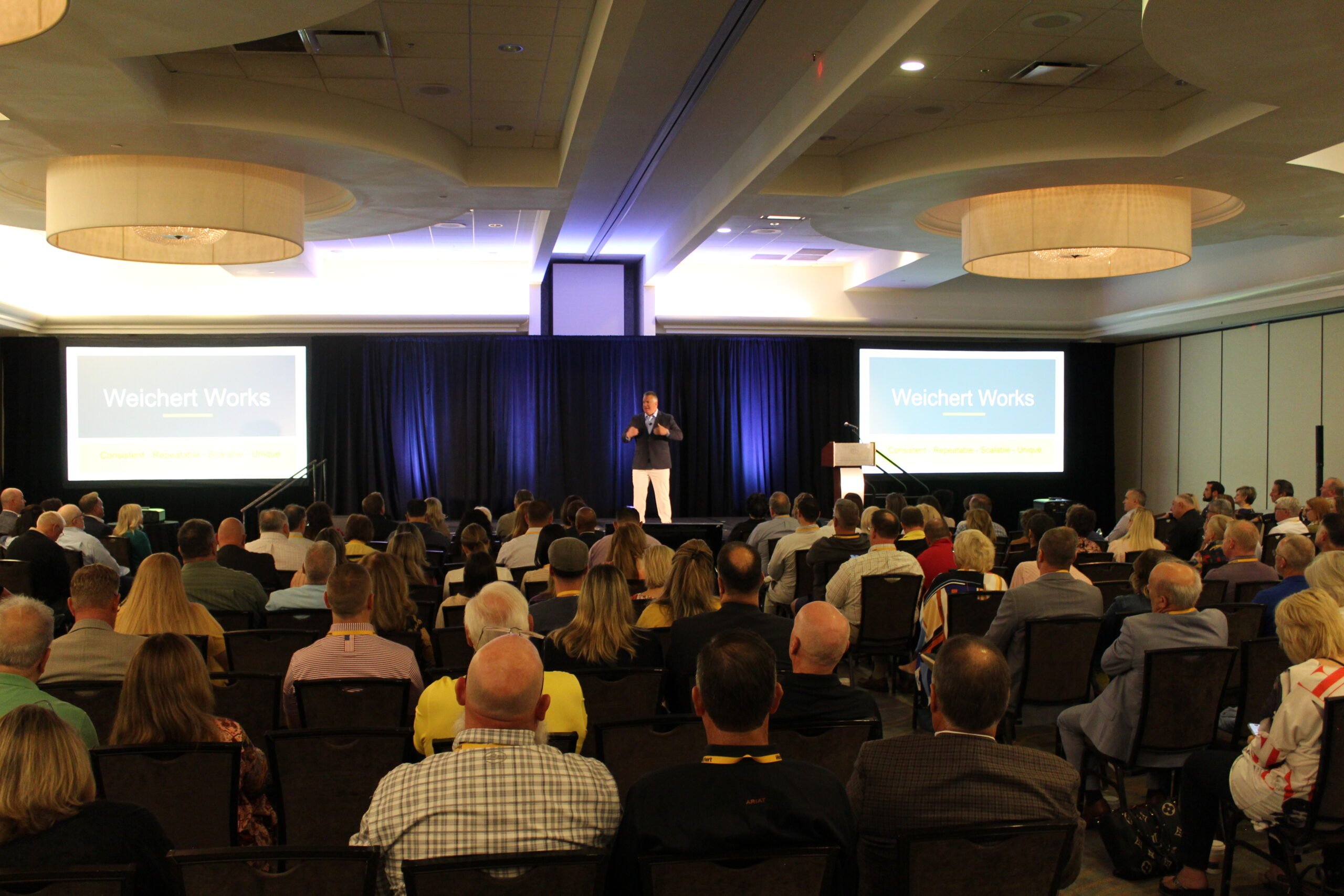
Today’s real estate professionals are navigating an increasingly complex environment shaped by fluctuating markets and economic uncertainty. While the real estate market isn’t currently where everyone wants it to be, opportunities and success can still be found everywhere — if you have the vision to seek them out. 

A legacy of looking ahead

Jim Weichert founded Weichert, Realtors® over 50 years ago, and since then, the company has steadily grown into one of the largest in the country independent providers of real estate-related services — now known as the Weichert Family of Companies. This extraordinary journey is the product of his vision and constant pursuit of opportunity. 

In his first days as an agent with no clients, Jim handed out business cards every day at the train station. He pioneered the modern open house concept, recognizing what others in the industry had overlooked — the opportunity to turn open houses into “pop-up stores” and engage with more customers. 

He was one of the first to integrate mortgage, title, insurance and home warranty under one roof to simplify the transaction for clients and make Weichert a one-stop shop. His commitment to growing talent led him to establish his own real estate school, helping attract and develop new agents. 

Never content to stand still, Jim went on to build one of the world’s top relocation companies to serve clients moving their workforce, and later, launched a franchising company after realizing that many independent brokerages sought guidance and support to run their businesses. This type of vision has become central to the Weichert story, inspiring a culture of thinking big and always looking for the next opportunity as the company continuously seeks to evolve itself.

New time, new opportunity

Enter the latest frontier for Weichert — international expansion. With a strong brand presence established in the United States, the company was confident its systems and strategies would translate successfully to international markets and began exploring new opportunities for growth. 

One such opportunity emerged across the water from a top brokerage based in Lisbon, Portugal, named HomeLovers. While international brokerages had reached out before, this time was different. It was the right opportunity, at the right time, with the right people in owner Miguel Tilli and his talented team. 

Tilli had a clear vision of what he wanted in a partner: an organization that operates with a people-first philosophy, has a family-like culture, a proven track record of success and an appetite for growth. In the sea of sameness, Tilli saw something different in Weichert. He saw a perfect fit, centered around its strong core values and the opportunity to introduce a fresh brand that wasn’t already established in the Portuguese market. 

The resulting partnership marked the first Weichert international licensing agreement and has sparked inquiries from brokerage owners in other countries, leading Weichert to look at further growth in Europe and throughout the world.

The future is bright

When you’ve been in business as long as Weichert, you’ve seen your share of market ups and downs, and this current cycle is no different. The key to resilience isn’t simply staying the course; it’s having the courage to change course when necessary and the vision to seek out the next opportunity. 

Whether it’s expanding service offerings, investing in professional development, leveraging productive technology or exploring new partnerships and markets — growth and success come to those with a clear vision who actively pursue new opportunities. The Weichert story proves this. 

Looking forward is in our DNA, and the future looks bright and yellow.

Weichert Real Estate Affiliates, Inc. is a top real estate franchisor established in 2001 by Jim Weichert. The company offers a proven business model for operating, managing and marketing a real estate brokerage. Its franchise network includes over 350 offices, serving markets in over 40 states. Each Weichert franchised office is independently owned and operated.

This post was originally published on this site

Home staging tips for Austin sellers

Home staging tips for Austin sellers

Home staging tips for Austin sellers

Why staging matters in Austin right now

Austin buyers move fast, but they’re also picky. With more inventory than the frenzied peak years and many shoppers comparing multiple homes in the same weekend, presentation can be the difference between “let’s write” and “let’s wait.” Thoughtful home staging Austin helps your listing feel turnkey, photograph better, and stand out online—where most buyers decide whether to tour in the first place.

Staging isn’t about masking problems. It’s about removing distractions, highlighting what makes your home livable, and making rooms look appropriately sized and bright. In a market where price reductions are common when a home misses the early rush, staging can support your plan to sell fast Austin—or at least sell with fewer concessions.

What Austin buyers respond to: styles that sell

Austin is not one-style-fits-all. What works in Central Austin can feel out of place in Round Rock or Dripping Springs. Still, there are consistent themes that show well across the metro:

Warm modern (Austin’s current favorite)

Think clean lines, light neutrals, and natural textures. White or soft greige walls, light oak tones, linen-like fabrics, and matte black accents photograph well and complement many of Austin’s newer builds and remodels. This approach is especially effective when your goal is to boost home value TX through perception: buyers feel the home is updated even when the changes are mostly styling.

Hill Country comfort

In West Austin, Lake Travis, and the Hill Country edges, buyers often respond to a relaxed upscale feel: layered neutrals, leather accents, and a few rustic touches (wood, stone, woven textures). Keep it refined—too much “farmhouse” can read dated if the finishes don’t match.

Urban minimal for condos and small footprints

Downtown, South Lamar, and East Austin condos tend to show best with fewer pieces and bolder, intentional art. Minimal staging helps rooms feel larger and keeps attention on views, balconies, and walkability.

What to avoid in Austin staging

  • Overly trendy colors (strong teal, bright red, heavy accent walls) that don’t translate in real estate photography.
  • Theme staging (too “Texas,” too “boho,” too “industrial”) that competes with the architecture.
  • Dark rooms created by heavy drapes or too-small lamps—Austin buyers expect light and airy spaces.

Staging ROI in Austin: what sellers can realistically expect

Most sellers want to know the payoff. Staging ROI Austin varies by price point, condition, and neighborhood demand, but the most consistent return comes from reducing days on market and protecting your asking price. When a home looks great online and in person, it’s more likely to earn strong early interest—important because many listings see their best traffic in the first 7–14 days.

In practice, staging tends to deliver ROI through:

  • Fewer price reductions (a big “hidden cost” when a home starts high and chases the market down).
  • Better offer terms (less pressure to cover buyer closing costs or make multiple repair credits).
  • Stronger perceived condition, especially when paired with sharp real estate photography.

Local stagers often tell sellers to treat staging like marketing, not remodeling. As one Central Austin stager puts it: “Your goal isn’t to show how you live—it’s to show how the next buyer could live here. That means cleaner lines, fewer personal items, and rooms that clearly communicate purpose.”

When to stage: timing it for Austin’s seasonal market

Austin has predictable seasonality, and staging should match your listing plan.

Spring (March–May): the “best foot forward” season

Spring typically brings more buyers and more competition. Staging is most valuable here because side-by-side comparisons are common. If you can only do partial staging, focus on the rooms that show first online: living room, primary bedroom, kitchen, and backyard/patio.

Summer (June–August): family moves and heat management

Summer showings can be hot—literally. Staging should emphasize cool, bright, breathable spaces. Make sure HVAC is serviced, blinds work smoothly, and outdoor spaces look inviting even in heat. Shade, clean cushions, and a tidy grill area can make a difference.

Fall (September–November): serious buyers, fewer of them

Fall buyers are often more decisive. Staging can support a confident list price when demand is more selective. Keep décor neutral and avoid heavy holiday items that shrink spaces.

Winter (December–February): fewer showings, higher stakes

In winter, each showing matters more. Staging helps create warmth and comfort. Use soft lighting and textiles, but keep it uncluttered. Also plan around shorter daylight hours to support real estate photography and after-work showings.

Step-by-step: how to prepare your home for sale in Austin

If you’re wondering how to prepare home for sale without getting overwhelmed, use this simple sequence. It’s the same approach many best home stagers Austin recommend because it builds on itself.

Step 1: Start with repairs and “quiet upgrades”

Staging doesn’t fix broken. Address items that buyers flag during tours and inspections:

  • Sticky doors, loose handles, cracked switch plates
  • Leaky faucets, running toilets, missing grout/caulk
  • Burnt-out bulbs (match color temperature for consistent lighting)
  • Touch-up paint on baseboards and door frames

Tip from a North Austin listing agent: “If a buyer sees three small maintenance issues in the first five minutes, they assume there are thirty more. Fix the easy stuff so the home feels cared for.”

Step 2: Declutter like you’re moving (because you are)

Decluttering is the highest-impact, lowest-cost staging move. Remove at least 30–50% from shelves, counters, and closets. Austin buyers open closets and pantry doors—storage matters.

  • Clear kitchen counters except one or two attractive items
  • Reduce closet contents so it looks like there’s room to spare
  • Pack personal collections, family photos, and oversized furniture

Step 3: Deep clean and reset odors

Clean sells. Pay special attention to baseboards, ceiling fans, shower doors, and pet areas. Avoid heavy plug-in scents; many buyers read them as “cover-ups.” A local stager’s rule: “If you can smell it when you walk in—good or bad—it’s too much.”

Step 4: Create a neutral, consistent palette

Neutral doesn’t mean bland. It means cohesive. Choose whites and light neutrals that complement Austin’s bright natural light. If repainting isn’t in the budget, at least unify mismatched accent walls and touch up high-traffic areas.

Step 5: Define every space (especially flex rooms)

Austin homes often have bonus rooms, lofts, or “office nooks.” Make the purpose obvious:

  • Loft becomes a second living area with a rug and compact seating
  • Extra bedroom becomes a guest room, not a storage room
  • Dining area gets a properly sized table (even small) to anchor the space

Room-by-room staging tips for sellers (Austin edition)

These staging tips for sellers focus on the rooms that drive buyer decisions and appraisals indirectly through stronger offers.

Entry and first impression

  • Replace or clean the doormat; keep the entry bright
  • Add a simple console or bench if space allows
  • Keep keys, bags, and shoes out of sight during showings

Living room: scale and flow

  • Float furniture to create clear walkways (no obstacle course)
  • Use a rug large enough to anchor the seating area
  • Limit pillows and throws; choose textures that photograph well

Home styling ideas that work in Austin: a warm neutral rug, one statement plant, and art that nods to local color without overwhelming the room.

Kitchen: the Austin buyer “deal room”

  • Clear counters and remove fridge magnets/papers
  • Stage with one board, one bowl of citrus, and a clean sink
  • Showcase pantry organization (buyers notice)

If your kitchen has dated hardware, swapping pulls and knobs can be an affordable way to boost home value TX by modernizing the look without a remodel.

Primary bedroom: calm and hotel-like

  • Use crisp bedding and a simple color palette
  • Nightstands should match in height and feel balanced
  • Remove extra furniture that shrinks the room

Bathrooms: bright, clean, spa-light

  • Fresh white towels and a single decorative item (plant or tray)
  • Re-caulk if needed and replace worn shower curtains
  • Close toilet lids; store personal items completely away

Outdoor spaces: don’t leave money on the patio

Outdoor living is a major Austin lifestyle selling point. Even small spaces deserve attention.

  • Sweep patios, clean outdoor lighting, and stage seating for two or four
  • Trim trees and shrubs to open sightlines and reduce “crowded” feel
  • In summer, set out a clean umbrella or shade sail if you have one

Staging and real estate photography: a package deal

In Austin, most buyers first meet your home on their phone. That’s why staging should be planned with real estate photography in mind. Bright, balanced, and simplified rooms photograph larger and more inviting.

Photography-ready checklist

  • All lights on, all bulbs matched (same color temperature)
  • Window coverings open (unless glare is an issue)
  • Cars out of driveway, trash bins hidden
  • Ceiling fans off (they blur in photos)
  • Countertops cleared, cords tucked away

Tip from an Austin real estate photographer: “The camera sees clutter you’ve learned to ignore—paper stacks, pet bowls, cords, and too many small décor items. If you want magazine-style photos, simplify and let the architecture do the talking.”

Should you hire a stager in Austin, or DIY?

Many sellers can DIY the basics, but professional staging is often worth considering when competition is tight or your home is vacant. Here’s a practical way to decide between DIY and hiring one of the best home stagers Austin homeowners regularly use.

DIY staging: pros and cons

  • Pros: lower cost, quick decisions, uses what you already own
  • Cons: harder to see your home objectively, risk of mismatched style, may not photograph as well

Professional staging: pros and cons

  • Pros: design expertise, access to inventory, stronger flow and scale, often better for vacant homes
  • Cons: added upfront cost, scheduling, requires cooperation to maintain staged look

A common hybrid approach in Austin is a staging consultation: a stager walks the home, gives a prioritized punch list, and recommends what to keep, remove, or add. This can be a sweet spot for sellers who want strong results without full-service staging costs.

Austin open house tips: staging for maximum weekend traffic

Open houses can still be a useful part of the marketing mix, especially in neighborhoods where buyers like to “tour first, decide later.” These Austin open house tips focus on creating an easy, comfortable experience.

Before the open house (day-of essentials)

  • Set thermostat to a comfortable temp (cooler in summer)
  • Open blinds, turn on lamps, and brighten darker corners
  • Put away valuables, prescriptions, and personal paperwork
  • Hide pet items and arrange for pets to be off-site if possible

During the open house

  • Keep music low or skip it—many buyers prefer quiet
  • Light scent only (clean air beats strong candles)
  • Leave out a simple feature sheet that highlights upgrades, roof/HVAC age, and neighborhood perks

After the open house

  • Reset quickly for private showings; in Austin, follow-up tours can happen the same day
  • Review feedback for patterns (lighting, smell, layout confusion) and adjust staging accordingly

Common staging mistakes Austin sellers make (and how to fix them)

  • Ignoring curb appeal: Buyers form opinions before they walk in. Fresh mulch, trimmed landscaping, and a clean front door go a long way.
  • Leaving rooms empty without a plan: Vacant rooms often look smaller and feel cold. Even minimal furniture helps define scale.
  • Overfurnishing to “show value”: Too much furniture makes square footage feel tight. Aim for flow.
  • Trying to hide condition issues with décor: Buyers notice. Handle repairs first, then stage.
  • Forgetting the garage and laundry room: In Austin, storage is a selling point. Clean, organized utility spaces are a quiet win.

Quick checklist: staging plan to sell fast in Austin

If your main goal is to sell fast Austin, focus on the highest-impact actions first:

  • Repair small maintenance issues and touch up paint
  • Declutter aggressively (counters, closets, shelves)
  • Deep clean and neutralize odors
  • Stage key rooms: living, kitchen, primary bedroom, patio
  • Prep for real estate photography with bright, simplified spaces
  • Use a consultation or hire a pro if the home is vacant or highly competitive

Final thoughts: staging as smart Austin marketing

Staging works best when it’s strategic, not expensive. The right home staging Austin plan helps you prepare home for sale with clarity: fix what’s broken, remove what distracts, and style what sells. In many Austin neighborhoods, buyers are making careful comparisons—and a well-staged home often earns stronger first impressions, better photos, and smoother negotiations.

If you’re unsure where to start, ask your listing agent what’s typical for your price point and area, and consider a staging consult. The goal is simple: present a home that feels bright, cared for, and easy to move into—so buyers can say yes with confidence.

Are Real Estate Syndications Dead?

Are real estate syndications dead? Some multifamily syndicators are making capital calls and hiding information from investors who anxiously wait (and pray) for their money to be returned. A lot is going wrong, so should you pause investing in real estate syndications for now, or should you write them off entirely? Brian Burke, who saw it coming and sold almost everything before prices fell, is on today to give us his answer.

Joining him is a fellow syndication investor and BiggerPockets CEO, Scott Trench, who’s had his fair share of syndication headaches over the past few years. We’re going back in time, talking about what exactly went wrong for multifamily syndications, why we saw a rise in untrustworthy/inexperienced syndicators entering the market, and why multifamily specifically is taking the majority of the headwinds.

We’re also sharing the numbers on the almost unbelievable amount of multifamily investors who have short-term loans coming due, all at a time when interest rates are still high and values are close to (if not at) the bottom. We’ll even talk about our own failed deals and whether or not we’d continue investing in syndications.

Click here to listen on Apple Podcasts.

Listen to the Podcast Here

Read the Transcript Here

Dave:
For anyone looking to invest in real estate, the more passive options like investing in a syndication can be really appealing. There are great returns and you pretty much don’t have to do anything. But in recent years, we’ve seen syndication returns diminish. So today we’re diving into what’s behind the trend and whether there are still good syndication deals to be found. Hey everyone, it’s Dave. Welcome to On the Market, and we’ve got a super fun episode for you today. We are joined by Brian Burke, who’s a seasoned multifamily investor. He is been on the show many times, and he always offers very spirited and fun takes about the state of the multifamily market. And we have the BiggerPockets CEO Scott Trench, who’s also an active investor in syndications. He participates as an lp, which I’ll explain in a minute, in a lot of syndications, as do I.
So we’re gonna have a really good discussion and debate about the topic are syndications debt. And in this conversation we’re gonna talk about the pretty rapidly growing number of distress multifamily properties. We’ll talk about how syndications arrived at this point, where there is distress in the first place. We’ll talk about some regional variances and some markets that have seen the worst multifamily returns, and we’ll talk about ones that have held up pretty well. Plus we’ll also be talking at the end about whether or not we’re still personally investing in syndications and how our current deals are performing. So let’s bring on Brian and Scott. Brian Burke, welcome back to On the Market. Thanks for being here. Thanks for having me here, Dave. It’s great to be back. Always enjoy your colorful commentary, an honest commentary about the multifamily and syndication market. Scott Trench, thanks for joining us as well.

Scott:
Thank you, Dave. Super excited to be here.

Dave:
Well, I’m, I’m gonna outsource my job to both of you to just start here and just create some context around what we’re talking about today, which is of course, syndications, which in our world, at BiggerPockets, most of the time what we’re talking about is a multifamily syndication for, there are other types, but that’s mostly what we’re talking about. So, Brian, can you just explain to us what a syndication is and why the term syndication is so closely associated with multifamily, at least in our community?

Brian:
Yeah. So syndications really are just a vehicle to finance a business venture. And you know, I, I know on BiggerPockets we often talk about syndications in the context as a way to acquire large multifamily properties. And certainly that is one of the uses for syndication. But syndication in and of itself is really just a group of people getting together collaboratively to execute some business model. And that might be to start up a new company to make widgets. That could be a syndication, could be to buy, uh, office buildings, self storage, uh, any type of real estate. It could be a race horse. I mean, any kind of different thing that requires money to be pooled from a group of investors that’s managed by one person or one company is a syndication.

Dave:
So just to, to establish this for everyone, a syndication is a way to fund any type of business. It is a popular way to fund multifamily acquisitions, but not all multifamily acquisitions are syndications. It’s just one way to do it. All right. Next contextual background goes to you, Scott. There are two different classes. Uh, typically in a syndication, there’s something called the limited partner, an lp. There’s also a general partner, a gp. Can you tell us what those two things are?

Scott:
Sure. The general partner is typically raising the money and operating the deal. Hopefully they’re doing both of those things. In many cases, they and their team are doing both of those things. Sometimes duties are distributed, and I’m sure we’ll get into why that has created a little bit of chaos in the space here. And then the limited partner just basically hands over the money and most operating control and, you know, hopes that they did a good analysis in the front end and hopes to receive the, those returns in the back. That’s the blessing and the curse of passive investing in syndications. It is truly passive. You give up essentially all control, um, with limited exceptions once you hand your money over to a syndication, either in a single asset deal or a fund structure.

Dave:
Given what you said, what type of investor, let’s put the profile of the average investor who syndications appeal to, or who would you at least recommend consider being an LP in a syndication?

Scott:
Sure. I’ll build a profile of a typical lp. I mean, this can run the gamut from anybody, but the typical probably bigger pockets listener that folks might know or have met in the past that’s gonna be in this category of an LP is probably a modest accredited investor, right? So let’s talk about 1 million to maybe $5 million in net worth. Um, they can be, of course go up the whole gamut to institutional capital with hundreds of millions or billions of dollars in assets. But probably most people listening to this that would be relevant to the, uh, to thinking about investing in syndications are gonna be in that modest accredited investor category there. And the big theme is a mentality shift. Most of those people just don’t want to build big real estate businesses. Maybe they’ve got a career, maybe they just wanna live the financial independence, retire early lifestyle, and they want to put some portion of their portfolio in deals that provide either diversification away from traditional stock market investments, their existing real estate portfolio, um, or they want a different type of return, like cash flow, for example, in a preferred equity format. But that’s what I would say is a typical bread and butter limited partner in this space. I see Brian nodding his head and agreeing with, with most of what I’m saying there. I’ll talk about the GP next.

Dave:
Well, I, I feel so seen, Scott, I feel like you’re just describing me. I invested in syndications as an LP for a lot of the reasons you, you just listed. And I do think most of the people I’ve met who also invest in syndications sort of fit that bill. It’s not typically the first thing you do as an investor unless you have a, a lot of money and a lot of comfort with the real estate investing space. I’m actually gonna throw it to Brian though on the GP here, Scott, and, and ask him since he is a GP or has been in the past, I know he is not buying a lot right now, but is a gp. What’s the typical profile or who makes a good gp, Brian?

Brian:
Well, I think, uh, there’s a difference between the typical profile and who makes a good gp because there’s, there’s a lot of, uh, syndicators out there, quote unquote gps that might throw off the average and make typical a little bit less than what would be considered good . Uh, so I think, uh, a, a typical GP is somebody that’s working their way up the real estate investment ladder, and I’ll kind of layer this in with what I think makes a good GP to, is somebody who, uh, has invested all the way up from single family homes to small multifamily, to midsize multifamily, to large multifamily, has a long history of investing in real estate, successfully creating value, uh, for themselves and for their investors, and uses syndication as a tool to grow their business into something larger than they could grow on their own. Now we see a variety of syndicator types all the way from, you know, first time real estate investors who think that you can invest in real estate with no money if you just simply syndicate out large apartment buildings and have somebody else provide the cash.

Dave:
Is that not how it works?

Brian:
Well, yeah, that’s, it’s how it’s done in a lot of cases, , but that’s also where, you know, if you were to look at syndications that are going down in balls of flames, they, uh, tend to fit that description more often than not. Uh, now I think, you know, what makes a good syndicator is somebody that’s in this business as a financial services provider and recognizes that their role is to safeguard their client’s principle and grow their investments. Not someone who is in the business to become financially free, work the four hour work week or invest in real estate with no money, no skill, no knowledge, and do it on the backs of others. And, you know, I think the, the field is, is, uh, populated with people that fit all sorts of descriptions. And it’s really important that LPs or investors are very careful in making their sponsor selections. Because I think I’ve preached this a number of times on this show and elsewhere, including in my, uh, BP published book, that the sponsor that you invest with is more important than the deal you invest in because, you know, bad sponsors are out there and they’ll screw up a perfectly good real estate deal.

Scott:
I just wanna piggyback on a, a couple of items that we talked about here, right? I would just simply define the GP as a professional investor or that’s what they ought to be here. The GP in its definitional sense, raises the capital and deploys it. It’s an active role in managing the asset at the highest level. And they run the gamut from career professionals like Brian Burke here to these folks who bought, I mean, sometimes the rackets in the space get crazy. And now with the tide coming out, we’re seeing some of the folks that really shouldn’t have been in there or just doubled the penny over and over and over again, all the way through the peak, really starting to recede. And we’re starting to see that pain come out and LPs are gonna be the ones that are gonna get smarter. The GPS will just keep doing it, right? This is ingrained in some of them. There’s this, it attracts a certain high ego person.

Dave:
Oh yeah. Like Brian.

Scott:
Yeah, exactly right. , it attracts us. And, and it should, the, the allure of money is a motivator. And the l as the lp, you wanna align those interests with the, these gps so that they work the 60, 80, a hundred hour weeks necessary to get these deals through to completion and have the big payday at the end. But that’s been the, the problem in the space that we’re coming out. And I also wanna call out that I just slightly disagree with Brian on the, the sponsor is more important than the deal piece because I believe that, uh, you can invest with a great sponsor and if you buy at the peak at a three and a half cap, you lost everything. Didn’t matter how good they were, uh, to that front. And they can behave ethically and do all the right things. Maybe you should invested them again, but sometimes you’re gonna lose the deal too.

Dave:
But would a good GP buy at the peak with a three and a half cap, is the real question, right? It’s that, would a good sponsor do that?

Brian:
But what you’re describing there, Scott, is a risk adjusted return if you’re getting those high returns because of those ultra low cap rates you’re doing so at higher risk. And yeah, that’s how some of those deals blow up. And just to kind of dovetail onto something else that you said there about LPs and their knowledge, there’s an old saying that says, you know, when a deal starts out, a GP has the knowledge, the LP has the cash, and when the deal is over, they switch places, .

Dave:
All right, so now that we’ve gotten all those definitions outta the way and we’re all on the same page about what syndications are and the upsides and the risks, we’re gonna dive into the juicy stuff. Brian will walk us through the state of syndications today and how we got here right after the break. Investors welcome back to On the Market. I’m here with Brian Burke and Scott Trench talking about syndications. All right, well this has been helpful context to just make sure everyone understands sort of where we are and how we got here in, in the world of syndications. But before we get into where we’re at today, Brian, I’m just curious, you’ve been doing this a long time as a GP and I was just kidding about your ego. You’re a very humble, very competent person. Has it changed? I hear this narrative that social media sort of invented these sort of inexperienced, I should say, uh, GPS and that it got popular. But has this always been the case? Has there always been suspect operators in this industry?

Brian:
Yeah, of course there have, I, I had a friend of mine, uh, 15 years ago that lost her entire savings, investing in a real estate syndication when the sponsor turned out to be a crook and basically raided the account, stole the money and let the properties all go into foreclosure. Uh, she’s, you know, broke for life and he’s wearing an orange jumpsuit in a prison to this day. So, uh, these kinds of antics have been going on for a while. And, you know, that’s one of the jobs of a, an investor is to try to root that out. Now, one of the problems I think we’ve seen, uh, over the last, I’d call it maybe 12 years and got exacerbated over the call it, you know, 2019 to maybe 20, 23 period, is you have this blind leading the blind situation where you have newer gps that probably shouldn’t even be in the business but are able to be in the business because there’s this low barrier to entry.
And the low barrier to entry was there was a lot of LPs that had cash that didn’t know any better, and were funding these, you know, newer GPS in deals and, you know, basically nobody knew what they were doing. You know, the, the, the gps were inexperienced and, and untested. The LPs were just blindly throwing money around because it was a, it seemed like a better investment than maybe the stock market. And ultimately that, you know, led to complete collapse in a lot of these deals. And, and, and that’s really been part of it. Now, in the earlier part of this, uh, they were getting away with it because, as Scott alluded to, the market was re, you know, cap rates were compressing, rent growth was growing, interest rates were declining, and the market was essentially bailing out, uh, these blind leading the blind deals, and they were actually making really good returns.
And to your point, Scott, earlier, yes, they were even more than our returns in a lot of cases, I wasn’t willing to take the same amount of risk. So, you know, those days are over. And I think, you know, when you ask if things have changed, they’ve changed a lot because going forward, you know, you’re the operator’s skill and, you know, finding good deals is gonna make a world of difference because the market’s not going to bail you out. When things start to come around and get better, they’re gonna get better slowly, and it’s gonna take work and, you know, solid fundamentals to make these things pencil, not just blind luck.

Scott:
One of the things I wanna talk about is, you used the word antics, um, earlier, and one of the things that bugs me, right, is somebody raised a syndication in 2019, exited in 2021 or 20 18, 20 21, did really well and thought they were awesome and thought things were going well and raised a bunch more capital. You know, when, when going after it, let’s actually take our 20 years of syndicating and all that type that take that hat off and just say, is that unethical? Is that, do we have, is it an ethics problem or is it a, is it just a, a mistake? Is it just people getting too excited on there? Like again, I bought that three and a half cap and I, I don’t think the operator was unethical. I think that was just very silly. In hindsight, we should obviously not have bought a three and a half cap multi-family deal. Um, and those days aren’t coming back. So what is your opinion on that, Brian?

Brian:
Yeah, I, that’s, that’s a great question, Scott. And I think, uh, I think there’s unethical operators out there, and I think that there’s ethical operators that don’t know any better and got in over their head. And, you know, you see the whole, the whole, uh, bit of it there was, I remember looking at a deal one time where it was so badly messed up, and it was a newer property in a great market, and it was just fundamentally operating horribly. And when I asked, I was trying to dig in to figure out, you know, why is this such a problem? Obviously the owner couldn’t possibly be an idiot because this was being sold as part of like a five property portfolio. And, and so I’m talking to the broker, I learned that the, the operator had bought thousands of units in about a two year period of time.
And this was, I think around 20 18, 20 19, and then decided to take management in-house and go vertically integrated, did that, but really knew nothing about what he was doing. So he hired all the wrong people, he had a lot of turnover, people were quitting. The thing just fell into complete chaos. And ultimately it got so bad that they couldn’t even evict non-paying tenants because the syndicator wasn’t even, didn’t pay the bills to their eviction company, and the eviction company wouldn’t process evictions for them. It was that bad. And, and so, you know, I don’t think the guy was unethical. I think he just got in way over his head and didn’t appreciate the risk of growing too quickly. And, you know, when you have early success, you think you’re invincible. And that real estate is like being a kid in a candy store. Everything looks like a deal. I mean, isn’t there an old saying, like, when you’re a hammer, everything looks like a nail. And it’s kind of the same thing with, you know, some of these groups that got in and had early success in a really good favorable market environment, uh, that think that they did that ’cause they were great operators and really they did it because they had high rent growth and cap rate compression. So not unethical, no, but certainly disastrous.

Scott:
One other thing i i, that always comes up for me when I think about this situation is the incentive misalignment. When you buy a hundred million dollars of real estate as a gp, you often collect a one to two and a half percent acquisition fee. Forget the other millions of dollars in fees potential that can come up in that situation. You got two and a half million dollars for buying a few apartment complexes in there. And look, I am all for paying a gp, right? If I’m gonna give somebody a hundred grand, I want them to earn a high enough salary where they’re not worrying about their side hustle or their Instagram account or whatever it is. I want them earning enough money to be focused full time, and I want them to have a huge carrot. I want them to have many millions of dollars at the end of that. I just want them buying their beach home after my money is returned , not with the money I just gave them. How important do you think that structure is in creating misalignment here? It’s very easy to convince yourself that what I’m doing is ethical when the more I buy, the more money I make right up front, right? Is that a part of this?

Brian:
I think it’s a part of it, but maybe not. It, it just depends upon the, again, going back to the sponsor, right? For a newer sponsor that’s doing this ’cause they don’t have any money, uh, the, the lure of a big payday, even if it’s a few hundred grand, is overwhelming to them. And, you know, they’ll, they’ll take a 300,000, $500,000 acquisition fee for a deal that they have no money in just because they can, you know, whether it’s a good deal or not, no one cares. Or at least on the GP side, you know, that’s not, that’s not their focus right now. Somebody that’s been in this business for the long haul, on the other hand, I think looks at it differently. You know, the way I look at it is I look at the future potential of, you know, the aggregate of acquisition fees and other fees that you earn over the long haul. And if you screw up a deal, you have a real tough time raising money for the next one. And if that next deal doesn’t happen, that next fee doesn’t come in. And you really have to look at this as a career, not as a transaction. And I think that’s kind of the difference between what you see with newer sponsors and season sponsors.

Dave:
All right. This has been a great conversation about the state of syndication, specifically what’s going on with LPs and GPS right now and some of the challenges that have arisen over the last couple of years. But what we’re here for today in this podcast is to talk about are syndications dead? Are there good syndications to be invested in today? Will there be good deals in the future? And so I think we need to turn our attention now towards the state of multifamily in general, not just the the ownership structure of a syndication, but what is going on with the asset class. Most people like Scott and myself as LPs invest in in today’s day and age. So Brian, maybe you could just give us an overview of h how would you describe the multifamily market today?

Brian:
Total crap . Uh, that’s, that’s, that’s probably the best, the, the best way I could put it. If I’m, if you really want me to be succinct and clear,

Dave:
I said in the intro that you’d offer colorful commentary and you’re, you’re living up to the billing. Thank you, .

Brian:
Well, you know, I, I try, if you look at some data on how far prices have collapsed since the second quarter of 2022 and look at peaked trough measurements, uh, I’m seeing reports of like 25 to 30%. Now, if I look at data myself from deal to deal, uh, peak to trough, I’m actually seeing deeper decline than that. Uh, about 35 to 40% in value. And here’s an example. We had a property that I had an accepted LOI, uh, that I was looking to buy in 2021 for $55 million it brand new construction. And the seller, after accepting the LOI didn’t sign the purchase agreement because he said, you know what? I think I’m selling this too low. I’m just gonna keep the property and sell it for more next year. Now, how do you think that worked out for him? Well, I’ll tell you how it worked out.
Uh, he’s still trying to sell it. They just brought the property back to me. My new offer was $35 million, so that’s $20 million less for the same property and I’m underwriting to essentially the same performance. Now, I’ve never been more happy that I didn’t get a deal, I’ll tell you that. Uh, but that’s an example, just a real live deal example of how far values have come down. Now why is that? There’s a lot of reasons. I think I described this on a previous show as a traffic collision where if you imagine a four-way intersection and all the lights are green and from one direction you have interest rates from another direction, you have rent growth from another direction, you have cap rates and from another direction you have expenses. And they all went the wrong direction at the same time and they collided in the middle of the intersection and left this tangled mess of metal. And that’s what we’re dealing with right now. That’s the state of the mar multifamily market. Now we’re at the bottom. That’s another discussion, but it’s certainly, I think we’re closer than we, uh, than we have been.

Scott:
I love that. I just wanna agree very, uh, emphatically with Betty, the points Brian made. I will say, I’ll go, I’ll even one up a couple of those and say, if interest rates are 5%, cap rates should be 6%. I bought a deal at a three point a half cap. That thing should be trading at a six cap. Like that’s what I would be wanting to buy it at today. One of the things Brian didn’t say is, transaction volume is not happening in this space. So even more than what you’re seeing from a a, a valuation drop in the multifamily space, you’re seeing no transactions, right? We’re, we’re doing a, a capital call on a deal. I meant, and I don’t know if there’s any comps to, to tell what the thing is worth at this point and that should scare multifamily investors that are out in, in the industry right now.
So there’s no comps. I believe that multi-family properties should trade at a premium to borrowing costs. Uh, fundamentally I think that’s an absolute, like that’s a, a fundamental thing for me. I’m not gonna put any more money into multifamily until that is true. The opposite of that, buying at a cap rate that is the same as your debt costs or below it in a negative leverage environment fundamentally means that you are all in on NOI growth either through rent growth or expense, um, expense reduction. So you better have a real good plan if you’re gonna go into something like that. Or you better pray that the market delivers, uh, massive rent growth that will bail you out because that’s the only way out of a negative cap rate situation. Um, and then you have the supply headwinds. I mean, this is the year 2024 with the most multifamily construction hitting the market ever.
You talk about how there’s a housing shortage all you want, multifamily developers are doing everything they can out of their own pocketbooks to solve that housing shortage problem. So we have debate on the demand side, but the brutal reality of what is going to happen to you on the supply side will drive your absorption down and will drive your rents down at the same time. And that will happen through the middle of next year. It will abate in 2026 by that point. So maybe you get some rent growth at that point. But this pain is here through 2025. And I don’t think there’s a world where cap rates don’t end up being above interest rates in markets like a place like Austin, for example, uh, in the near term. So I think that that’s, that should scare the heck out of people and I’m very bearish on the space for the next 12 months in most regions.

Dave:
Yeah, I was actually just gonna ask you about some regional changes and uh, shout out to our colleague Austin Wolfe, who pulled some data for us about the multifamily market. And Austin, Texas is one of the places he pulled Scott. And to your point, just in the last year, they’ve had 28,000 units delivered in Austin and rent for multifamily has gone down 6%. Just like you said, even though there is population growth, even though there is employment growth markets like that, where there’s just this oversupply are getting hammered. Meanwhile, if you look at markets, to your point, Chicago places in the Midwest where there is a lot less multifamily construction rents are still growing. So even though Brian, uh, categorically described multifamily, uh, as total crap, I think was exactly the words you used, I agree, uh, there are, of course there are of course regional differences, but I think the national summary is spot on.

Scott:
But even Chicago, right? Like I, I don’t know what’s going on with cap rates, but it’s hard for me to imagine that the asset value is not impaired. So like in Chicago, I would be surprised if you’re seeing cash flow really getting crushed for many in the multifamily space. I’d love to hear some feedback on that. I’ll not be surprised to hear it getting absolutely wrecked in a place like Austin, which by the way, that’s just the, that’s just the, the rent growth, the expense growth in the south has been even worse. You have huge increases in insurance and that is the worst possible thing for a multifamily operator. ’cause there’s nothing you can do about it. And it just gets taken right outta NOI and right outta your valuation on top of whatever cap rate expansion that you’re seeing in the asset. So I worry like in a place like Chicago, you’re still gonna see valuation declines, but your cash flow has an evaporated and in Austin you’re seeing both.

Brian:
Well, one one quick comment is that, uh, the, the things that you described there, Scott, are the very reasons why I haven’t bought anything in three years. I’ve been completely pencils down. I think a lot of prudent buyers have been completely pencils down, which is why transaction volume is off 80%, uh, from the peak of the market. So that, that definitely speaks to, uh, to why no one’s buying. You can’t, you can’t make the numbers pencil simple as that. Now, can you make the numbers pencil in some markets, perhaps, but it’s still difficult. Now, Chicago has actually had a higher, uh, level of transactions in a lot of other markets because it does still have rent growth and the cap rates never got as low. So the cap rate decompression has been less of a factor than it has been in other markets, uh, just because of that.
But I can’t find deals in any market right now that make any sense at all. Now, if I were to find them, uh, it depends on how you’re evaluating them. If you’re looking solely at like historical, uh, near term rent growth, the Midwest markets have been kind of ruling the day over the last couple years while the Sunbelt markets, which were far favored in earlier years have been getting hammered. Now, having said that, they’re getting hammered mostly because of new apartment deliveries. You know, like, like you said, Scott, the developers recognized that there was massive rent growth and they wanted to capitalize on that by building more units. And boy did they ever, uh, now that’s starting to fall. I mean, construction permits are down 50% over last year. There’s a lot of units still in the pipeline that will be built and delivered. But when those are done and delivered and leased up, the market’s gonna get back more into balance.
Now that’s gonna take one to two years for that to play out. But when that does, I think that the southern markets, the sunbelt markets are gonna once again return to be the bell of the ball because you still have people moving there. And I always believe that you want to invest where people are moving to, not where people are moving from. So if you’re looking at this in the very short term, you know, maybe those sleepy Midwestern markets look really good, but if you’re looking at this in the long term, uh, those, uh, Sunbelt markets will look much better. And there may be an opportunity to buy some undervalued distressed assets in the next year or two in those markets at the bottom, and then capitalize on the ride back up after all the new apartment deliveries have tapered off.

Dave:
Okay, time for one last quick break, but if you’d enjoyed the conversation so far, if you’re curious about passive investing, BiggerPockets has a brand new podcast for you. It’s called Passive Pockets, the Passive Real Estate Investing Show. And you can listen and follow now wherever you get your podcasts. We’ll be right back. Welcome back to On the Market. Let’s jump back in. All right, super helpful. Brian, I have one more question for you about this. Uh, tell me about distress in the market. ’cause you, it’s like every day in the Wall Street Journal or some financial news talking about, you know, some credit emergency in the commercial real estate space. Are you seeing a lot of distress in the multifamily market? And if so, is it coming from banking or where is it coming from?

Brian:
There is a lot of distress and it’s coming mostly from loan maturities and, uh, floating interest rates. You know, your fixed rate loans that still have many years left on them. The, the subset of deals that rather maybe small subset of deals financed that way, uh, are doing fine. You know, their values have declined, but they’ll ride it out. ’cause you know, their debt service hasn’t, uh, gone up and their maturities aren’t steering ’em in the face. So those deals aren’t, aren’t really, uh, problematic, but there is a lot of distress that’s, uh, coming forward in shorter term lending. And, um, you know, Austin pulled up some great data before this show, uh, talking about, uh, 8.4% distress rates in the multifamily lending sector. Uh, that some data that came through and, and I actually had seen that data, and there’s newer data now, uh, from the same source that that multifamily distress rate has reached 11%.
Now the headline is, wow, multifamily distress is 11%. That’s a lot. The nuance though is that data was restricted to a subset of loans called CMBS, which was commercial mortgage backed securities, which comprises only about 10% of the multifamily market, uh, for financing. So if 11% of 10% are in distress, that’s only 1%. But what about the other 90%? How were they financed? Well, a lot of ’em were financed with short term bridge debt that had three year maturities. Now, if the CMBS is generally a five year maturity, and if 11% of those loans are in, uh, distress because of a maturity issue, which, which is the case in most of those, that means that, you know, you’ve got 5-year-old loans reaching maturities they can’t get out of. What about the 3-year-old loans that are now reaching maturity? There’s a bigger number of those. And, and this is where I think things start to get kind of interesting. I got some data from Yardi Matrix on this acquisition since 2020 with two to three year loan maturities. There’s 3,200 properties and these are, uh, multi-family properties, a hundred units and larger. 3,200 buildings were purchased since 2020 with two to three year loan maturities. That’s a lot of inventory.

Dave:
Wow.

Brian:
Uh, since 2021, there were 1700 properties with floating interest rate loans. There’s 3,500 properties with construction loans between 2021 and 2023. Now, construction loans, for those of you who don’t know, tend to have short maturities. Generally two years, maybe three years, maybe five years if you’re lucky.

Scott:
They’re just hard money.

Brian:
It’s, it’s essentially hard money and or bank money, which is recourse, which is a real, uh, a whole other can of, and there’s over 2000 properties with debt service coverage ratios, uh, less than a break even. And, and that’s just in this subset of data that was found. And there’s concentrations of this in certain markets. , you’re talking about crap here,

Scott:
You’re stressing me out, man. Please stop. Please stop. , I’m just kidding. Keep going with this in a second here. But I wanna interrupt and I wanna talk, I wanna talk about this deal that you passed that you didn’t get the deal you used to . Let, let’s go through that example. Okay, 2021. Let’s say you buy this thing for $55 million with one of these three year fixed rate GSE debt loans, right? Today it’s worth $35 million. What would’ve been your debt to equity when you bought it?

Brian:
Well, it would’ve, when we bought it, you know, generally those three year loans are 80% to cost, sometimes 85% to cost. So your debt to equity is really high. You know, your sometimes, you know, 70 to 80% is debt and the rest is equity, and that’s all gone. It’s, it’s a hundred percent wipe out.

Scott:
Let’s literally do that math. It’s down $20 million. So you would’ve bought with, with, uh, $11 million in equity and 44 on your GSE debt. The NOI has gone nowhere to refinance it today. What would, you know, what, what would that take? How you, you’d have, you’d have a $35 million property. E the equity is well gone. How much would you need to raise to refi it?

Brian:
Well, I can tell you that in preparing to write this offer, uh, the debt sizing for the acquisition this time around was 25 million. So that’s the size of the loan. So now let, let me clarify one thing before we get too far down this road. I would never have bought that property with a high leverage three year loan. Uh, we would’ve been at like 50 to 60% LTV with 10 year maturity. So I wouldn’t be stuck in that position. But other buyers who were looking at that deal at that time would’ve been looking to finance it that way.

Scott:
But that’s it. You just said there’s 3,300 deals that did that. You just said that. That’s right.

Brian:
Right

Scott:
On. That’s right. So, so those deals, so now you’re the operator on that deal. Are you, and, and let’s not, let’s not take you, let’s take somebody who’s a little bit more naive and not as you know, in this, the one of these folks we talked about earlier in the call, are they gonna actually say that the deal is now worth $35 million?

Brian:
No. And you know how I know that they aren’t? I, so I have a deal that, that I got stuck with when the market, uh, fell. Uh, we had it in contract to sell, but the switch got flipped on the market and the buyer couldn’t close because the market had declined. So I still own that property. I got a broker’s price opinion of value on that property. And when the broker, uh, had the number for me, he called me on the phone instead of sending me the price opinion, he called me on the phone and he said, you know, this is what the number is gonna be. Do you want me to send it to you? And I’m like, of course I do. Why wouldn’t I want you to send it to me? He said, because a lot of my clients are asking me not to send the broker’s opinion of value, because if they, if I did, they would have to share that with their investors, and they don’t want their investors to know. Wow. And I was floored. I couldn’t believe it. I mean, sponsors are actually hiding this stuff from their clients.

Dave:
Okay. There’s the immoral, uh, GP that you were talking about, Scott,

Scott:
And that’s the, that’s, that’s the problem.

Dave:
Yes.

Scott:
Right? Like that, that I see in here. So you just described all that, but what is happening out there is that $55 million deal that’s now worth $35 million is getting capital called by the sponsor. Yeah. Who’s saying it’s worth $45 million and somehow they’re making that case look palatable to investors. And that’s showing up in the BiggerPockets forums, for example, and on passive pockets as a question. And I think that’s, I I think that you’re gonna see transaction volume down until cap rates are at least at or above interest rates for the time being here or until the supply abates. But that’s the decision that syndicators and their LPs are facing with right now. And Brian, I guess the question here is what do you ethically do in that situation?

Brian:
Well, I’ll tell you what we did. I mean, in the deal that, that I just described to you a second ago, uh, I, we fully disclosed what the value was. You know, I’ll take the phone calls from people who are like, oh my gosh, I can’t believe the value’s falling that much. I mean, what are you gonna do? That’s the truth. All you can do is tell the truth. Sponsors ethically should just be telling their investors the truth and let the chips fall where they may, that’s what they should be doing. Now in terms of like this, uh, $55 million deal that we were describing before, if you finance that thing at max leverage, let’s say 80% to cost bridge debt, that’d be a $44 million loan, $11 million in equity. Now it’s worth 35 and your loan is 25. So to refinance the $44 million loan with a $25 million loan, you need $19 million of equity, right?
So there’s your capital call, but here’s the rub. You only raised 11 million. So that means you would have to be asking your investors to put in basically two times what they originally put in just to salvage this deal. It’s a complete wipe out. The best choice for the sponsor in this case is they have to let the lender, they would have to let the lender foreclose take the property back and everybody’s a hundred percent wiped out. And you’re seeing that happen in some of these deals for that very reason. And there’s 35, 3200 of ’em here that might be in that position. Now, us as a buyer in the future, those are the deals I want to be buying because those are the ones I bought after we came out of the last recession when I was buying stuff at 50 cents on the dollar from lenders. I mean, that day could come again.

Dave:
Well, that, that just sets up a great transition to what the future holds. To answer the question of our episode, our syndication’s dead. I feel like we’ve sort of answered it. Uh, I’ll, I’ll defer to you, but my summary of this conversation is that syndications aren’t dead, but multifamily is dead right now, let’s just call it. It will of course come and run through a cycle, but it’s not the structure of syndications that’s causing problems, it’s just the multifamily market that’s causing problems. Would both of you agree with that?

Brian:
I would agree with that as a, uh, broadly, yes, certainly there’s some problems with some syndications

Dave:
Yes,

Brian:
Uh, where people run over their head. But the, the most of the issue here is actually with the market. And I think the market’s been in the toilet for three years. That’s why I haven’t bought anything for three years. But from every disaster opportunity is bred there, there will be a moment when, uh, multifamily acquisitions make a lot of financial sense. Uh, I don’t think we’re quite there yet, but that day is coming and there will be opportunity. I mean, this isn’t all doom and gloom. Uh, housing is a, is a very valuable and sought after resource and it always will be. And you know, this, this too shall pass.

Scott:
I’ll also chime in that I had a debate with our analyst Austin, who is phenomenal. And I told him about how supply is such a good predictor of negative rent growth like in Austin. And here’s the silver lining for everyone listening here. He said, Scott, that’s right, generally, but what you missed here is that long term that supply growth is correlated with even better rent growth and appreciation on assets in those classes. So if you’re in a place like Austin, for example, that new supply that’s all coming on the market has a high correlation to predicting long-term success. So it’s not all doom and gloom forever, uh, but you’re gonna be in a lot of pain of you have some of a, a loan maturing in the next year or two, I think, in those markets.

Dave:
Well guys, I have to say this, this episode came at the right time for me. Someone sent me a, a multifamily deal the other day that I’ve been looking at. It’s pretty interesting actually. But I think you talked me outta it, . So I’m gonna pass on it. Thanks for the advice. Well, Brian, thank you for joining us, Scott, as well. Of course, if you wanna connect with either of these two, we’ll put their BiggerPockets profiles in the show description below. Scott, thanks for being here.

Brian:
Thank you Dave

Dave:
And Brian, always fun to have you.

Brian:
Thanks for having me back, Dave,

Dave:
For BiggerPockets. I’m Dave Meyer and we’ll see you next time. On The Market was created by me, Dave Meyer and Kaylin Bennett. The show is produced by Kaylin Bennett, with editing by Exodus Media. Copywriting is by Calico content, and we wanna extend a big thank you to everyone at BiggerPockets for making this show possible.

Watch the Episode Here

https://youtube.com/watch?v=PnWbNjWPqxI

Help Us Out!

Help us reach new listeners on iTunes by leaving us a rating and review! It takes just 30 seconds and instructions can be found here. Thanks! We really appreciate it!

In This Episode We Cover

  • Real estate syndications, general partners, and limited partners explained
  • Why the multifamily real estate market is a “traffic collision” in 2024
  • Areas of the country with the highest/lowest risk for real estate syndications
  • The astonishing amount of distressed investors with short-term loans coming due
  • Our own failed investments and whether we’d still invest in syndications
  • When multifamily real estate investments could finally rebound and become investable again
  • And So Much More!

Links from the Show

Interested in learning more about today’s sponsors or becoming a BiggerPockets partner yourself? Email [email protected].

Note By BiggerPockets: These are opinions written by the author and do not necessarily represent the opinions of BiggerPockets.

Snowballing $20K Into 11 Rental Properties in Under 4 Years

Snowballing a $20,000 investment into eleven rental properties…in under four years?! Most investors are happy to add ONE property to their real estate portfolio every year or so, but this rookie wants to get a head start on his ultimate goal—creating enough cash flow to retire him and his wife!

Welcome back to the Real Estate Rookie podcast! After years of job hopping, Bryan Field wondered whether settling into a traditional nine-to-five job would ever be in the cards for him. As fate would have it, Bryan stumbled on BiggerPockets at a crossroads in his life, and real estate investing quickly became his new obsession. The only problem? His hometown of San Diego, California was well outside his price range. So, he and his wife took a leap of faith and moved to Arizona, which is where he found his first rental property!

In just a few short years, Bryan has had the FULL investing experience—changing investing strategies mid-deal and investing in markets all over the country. Along the way, he has moved to low-cost-of-living areas to save money, rolled home equity into more deals, and found rare off-market properties (seller-financed)!

Click here to listen on Apple Podcasts.

Listen to the Podcast Here

Read the Transcript Here

Ashley:
Ever wonder how you could just take $20,000 and turn it into a portfolio of 11 long-term rental properties? It might sound impossible, but our guests today did exactly that and they’re here to break down how they made it happen. If you’ve been looking for a game plan to grow your real estate portfolio in a strategic way, this is the episode for you. This is the Real Estate Rookie podcast. I’m Ashley Care, and I’m here with Tony j Robinson.

Tony:
And welcome to the show where every week, three times a week, we bring you the inspiration, motivation, and stories you need to hear to kickstart your investing journey. Now, today we’re going to discuss why moving to a lower cost of living area could supercharge your real estate investing journey. We’re going to talk about how to pull equity out of a property that you already own to help you scale faster, and we’ll also talk about how to grow your portfolio in under five years. So welcome to the show, Brian Field. Brian, we’re super excited to have you here. Thanks so much for joining us today, brother. Thank

Brian:
You guys. Ashley, Tony, good to see you and super excited to be here and chat with you.

Ashley:
Ryan, I was looking over the guest form that you filled out and it says that you have 11 properties. So let’s start with how long have you been investing to amass this portfolio?

Brian:
Yeah, so I think really the start of everything was three and a half years ago, just over that in January, 2021, my wife and I decided to move out of California to Arizona and we bought a primary residence and the goal there was to be boots on the ground in a lower cost of living market and start our investing from there. At the time, that wasn’t what I thought was my start of my investing career, but today that property that was our primary is now actually a rental. It’s one of our best performing rentals in terms of cashflow and appreciation and then has also helped fuel. We’ve used the equity in that house to now snowball that into the rest of our rental. So technically speaking about three and a half years ago is when I got started.

Ashley:
And when you first started out, why did you decide that real estate was going to be a path that you chose, such as keeping this house as a rental? Why did you decide on real estate instead of other paths to build wealth and financial independence?

Brian:
I think it was a lot of trial and error. I did try stock trading and investing in the stock market and what led me to pursuing investing in general was kind of just some failures in the job market myself out of college and finding that it really wasn’t what I thought it was. And I started out of college wanting to have a high paying sales job and make six figures and I would work till I was 65. And that’s all I knew really. And I think failing over and over in some of these jobs, you should have seen my resume. It was very long with less than a year at each position and I just felt so bad about it. I went down a rabbit hole on the internet. I found different avenues of investing stock markets like I mentioned, but ultimately stumbled upon BiggerPockets. And as most people that listen to this show come to learn, then you start drinking the Kool-Aid with BiggerPockets and the rest is history. So that’s really where I got my hook onto real estate and made a couple of bold moves and found that it could work for me and stuck with it. And here we are today, still early in the journey, but well, on my way.

Tony:
Brian, you said that initially the goal after college was to get a six figure job work there till you’re 65 and then retire. It sounds like maybe that goal has shifted a little bit. So I guess if we zoom out 30,000 foot view, what’s the bigger goal for you now as it relates to investing in real estate?

Brian:
To buy back my time, I still have a W2 job and while it is aiding my ability to buy real estate and I’ll continue to use that lever as long as I need to, but really the goal is to be able to have enough passive income, retire my wife, retire myself, and be able to do the things that we want in life and not have to be tied ball and chain to coming to work Monday through Friday. It’s truly just buying back our time. So that’s the goal really, is to have that freedom.

Ashley:
So now that you’ve kind of put this plan in place, what is the first step that you actually take after you find BiggerPockets, after you’ve engulfed yourself in this information? What is the first step that you took besides just your research after you started learning about real estate investing?

Brian:
Yeah, coming from San Diego, California, very high cost of living market mentioned kind of the struggles with the jobs and the low income that I had and sometimes working two jobs restaurants at night and some form of a W2 during the day. But I did find and discover out of state markets and started researching online of lower cost of living areas. And I kind of put two and two together and said, well, how can I not venture so far to some of the Sunbelt cities like Florida or really far from California and how can I stay somewhat close but also kind of make this leap? And it really just came down to looking at some numbers. And I had a friend living in Arizona who was interested in investing as well. And it took a couple of weeks, months to convince my wife and she was on board eventually, and it came with a few tears from family members, but we decided that with the income and the savings that we had, that we could be boots on the ground in Arizona. It’s not so far from California that we could come back and visit. And it seemed to have worked for us pretty well. So that was kind of our first venture off into real estate was to move and try it out.

Ashley:
So right there is a huge step deciding to actually move for your first real estate investment. And it’s so funny, we have a friend James Dard, who literally just moved from California to Arizona also for a new primary residence and also great tax benefits going from California to Arizona too. So when you’re taking that leap and you’re making that decision, you talked about having a friend in that market and I think that is such a great opportunity. And if someone is really struggling with they got to invest out of the state, their market they’re looking at they live in right now is too expensive. That is such a great starting point is look at where you already have a boots on the ground, somebody that can help you with information, maybe even somebody that could go look at a property, somebody you trust, but somebody at least that has some knowledge of things that you would not know just from going on Google Maps and looking at the data of the property in the area too. So you need help trying to figure out your market. Take a look at what are markets you already know, maybe you grew up there, maybe your husband grew up there, maybe you have a friend that lives there that can help and guide you. I think that is great advice as to getting started with choosing a market. Tony, I already know that you are probably chomping at the bit to talk about the spouse piece here of getting the spouse on board.

Tony:
Alright, after a quick break, we’re going to hear more about how Brian grew his portfolio to 11 properties after almost a $100,000 mistake. Now if you are looking to grow your portfolio to, you’re going to need to find the right market to invest in, head over to biggerpockets.com/find a market to find the perfect market for you. Alright, welcome back to the show. Let’s hop back in with Brian reading in my mind Ash, because I think Brian, one of the questions we get often is, how do I get my spouse on board with the idea of investing in real estate? And you took it even one step further where not only were you able to get her on board with the idea, but you guys literally picked up and moved to a different place. So I guess you were the one, like you said, drinking the BiggerPockets Kool-Aid and reading all the stuff and listening to the podcast and watching the YouTube videos. How did you actually get your wife on board to say, Hey, we’re going to upend our life to lay the foundation to start investing in real estate?

Brian:
I guess there’s no real single way to put it, but I painted the picture. I had taken the things that I’ve learned from the podcast and the books and even showed some examples, but I just painted the picture of a better life that could be if we were to take a leap of faith. And worst case scenario was that we could have just moved back. And I think she was just super supportive. I didn’t have to pride that much honestly, but I think just being able to communicate well and lay out the pros and cons and discuss ’em together and just come to a conclusion together that it makes sense. And so that was really all it took. And like I said, she’s super supportive and was on board and I think the hardest part was convincing some of the family members that it was a good idea more so than my spouse. So we made it work. Well,

Tony:
I appreciate you giving us that insight, Brian, because again, there are a lot of folks listening who would love to get that first deal, but the spouse maybe is, I don’t want to say an obstacle, but they’re a little bit more hesitant than the folks that are actually listening. So it’s always good to get that insight. So Brian, going back to your story there, brother. So you guys pick up, you move across state lines, you land in Arizona. It sounds like maybe that first deal was actually the primary residence that you moved into. So talk us through maybe how that primary house ultimately turned into an investment for you. Yeah,

Brian:
A little bit of luck. I think. Like I said, we bought the house January, 2021 height of Covid, Arizona was actually one of the markets that had some of the highest appreciation in the country around that time. And so we got a great deal on a great house in an A neighborhood. And from 2021 to 2022, I actually didn’t buy anything. We just were saving our money, increasing our W2 income saving and kind of game planning with that friend of mine that I mentioned. And we ended up doing our first two deals together. But we were just able to buy right and get a little luck with the market. And we ended up gaining quite a bit of appreciation, which is what we tapped into a year later to really help us buy our next, or you could say our first true investor deal after that,

Ashley:
What an opportunity to start with your investing is to turn your primary into a rental property at some point, but also start amassing other rentals. So kind of walk us through as to, you’ve gotten to 11 rentals, so from then until now, what are the different ways that you’ve been able to fund and finance these properties? Because it all sounds great and wonderful, but how can you actually pay for these rentals that you have?

Brian:
Yeah, a combination of things. So first and foremost, we hustled with our W2 jobs. We moved to Arizona, weren’t making that much. My wife and I are in travel nurse staffing. And for anyone who doesn’t know, there was a huge demand in nurse needs across the country for all the hospitals. And so naturally our business in income was lifted with that surge in demand as well. So we were able to really grow our W2 income, and I think that’s kind of the foundation of we were able to save in our time in Arizona with a lower cost of living from compared to California. And then the second piece, which is pretty unique strategy that we tapped into was the appreciation of that primary residence. We were able to get an appraisal a year later. Like I said, that thing skyrocketed about 150,000 in equity,

Ashley:
Oh my god, in one year.

Brian:
And so we took out a heloc and that HELOC, along with our personal savings was our initial source of funds. And so from there we can talk about the first couple of deals, but that was really, it took us that whole year living in that house to ride that wave up.

Tony:
Brandon, I just want to quickly pause in the HELOC because there may be some folks in the audience who aren’t familiar with what that is. So can you describe what a HELOC is and how much of that equity you were actually able to tap into

Brian:
Heloc home equity line of credit? So it’s different from a cash out refi where I didn’t have to change my interest rate on the home and get a whole new loan on the home. They just were able to go in and appraise the current value and give me a spread of what my loan was on the property against what equity I had. And I think the bank at this time, I don’t think this is still a thing these days based on the way interest rates and all the chaos that’s gone, but we were able to get 95% loan to value at that time. And so they said, okay, you bought your home for 3 95, it’s now worth five 50. And so we were able to, I don’t know the exact percentages here, but we got a line of credit for $135,000 that was just free access for us to use. And payback, obviously payback. That was kind of our best tool that we’ve been able to put into play for investing into other deals.

Ashley:
So were you using this to make the purchase and then you’d go and refinance and pay your line of credit back? How were you actually utilizing your savings and the line of credit?

Brian:
At first, the goal was to flip two houses using our line of credit, and we used hard money lending as well, but that was kind of like our down payment was the line of credit, the hard money was the rest of the funding and then also using the line of credit for those renovations. And so our very first deal, we did exactly that. We used our HELOC to fund the down payment. We partnered with a hard money lender. We brought in 15 20% on that down payment. I think that first flip that we did was purchased for, it was about three 50 or so that we purchased it, but we were able to rehab it, we sold it, and it was actually a successful flip. We made about $27,000 in cash, which we paid back our HELOCs and then still had that $20,000, $27,000 nest egg to help roll into our next deal. So that was the plan. And then I guess we can get into a little bit later, but my strategy has switched a little bit, but initially, yes, we were going to flip, pay back the HELOC and use cash to deploy into rentals.

Ashley:
What a great way to build capital. And congratulations making that much money on your first flip. That is awesome. So Brian, before we get into the next step of your phase, now that you’ve flipped your first health, and is this where you start the transition into rentals?

Brian:
Not quite. So I mentioned our plan was two flips in a rental. So we had that first successful flip where we netted the 27,000 paid back our HELOCs, and we had this wave of confidence and we’re like, we’re doing this again. So a few months later, my business partner and wife at the time, and we found another house right away. And so the second house was also a flip. And this is an interesting story because this is the same way that I said Arizona went up. It also went down. And so this is kind of a huge learning experience that I’m happy to share, but we kind of upped our Annie a little bit. We had a little bit of a bigger house, a bigger purchase price, a bigger renovation on this particular deal, and turns out that it was a beautiful rehab and remodel, but it took about three months.
And during that time is also when the market started to shift downwards a little bit, we saw some interest rate hikes and some consumer sentiment changes and things like that. But we had gone from thinking we were going net $40,000 on this deal to losing 75 to a hundred thousand dollars. And so at that time, we had to make a decision, are we going to list this house and lose the money and carry that money on our HELOCs too, mind you, where we would still have to make payments beyond that loss on the interest of that debt. So we actually pivoted from there and decided to furnish the listing or furnish the house and actually turn it into a short-term rental. The remodel again was so beautiful. We had a pool this big backyard and just thought, let’s not lose this money and let’s just take our earnings from the last flip and furnish it and turn it into a short-term rental. So that was the second deal, and we held that for a year, which we actually just sold a couple months ago. But during that year, it kept us afloat. We were constantly booked, we made some money, but I think overall we broke even on that deal. And then once the market started to kind of ease up a little bit, we actually sold it for just a little bit lower than what we anticipated the first time around. And so that was kind of where the second deal ended up.

Ashley:
And you ended up making money off of the sale?

Brian:
We essentially broke even. We did sell it.

Ashley:
Oh, even with the sale, okay.

Brian:
Yeah, the sale after a year of holding it pretty much broke us even because we still had holding costs and while the income of that property, it was there, it didn’t make as much as we had hoped. I think maybe due to some short-term rental saturation in the Arizona market in particular. But it definitely floated us and saved us from catastrophe to be honest.

Ashley:
Yeah, I mean, this is why I think it’s so important to think about what your exit strategies are, and you were able to take this property that was going to be a flip, and instead of a losing a hundred thousand dollars, you went and you changed and you pivoted your strategy. And I think that as a new investor, you have to understand that that might happen because the market can change, especially if you are flipping a house, making sure you have some kind of option of what you can do with the property afterwards. And Brian went from about to lose a hundred thousand dollars to breaking even within a year. And I think that is a huge safety net that he had able and you were able to think fast and to kind of have a plan in place to take action on that.

Tony:
So Brian, how did you change strategies? Did you have flipping PTSD?

Brian:
Yeah, so a couple things transpired from there. My wife and I had our first son, and there was a couple of different factors, including that big one there that actually led us back to California. And so we moved back and turned that primary into a rental, but we kind of needed to come up with a new strategy because I was sort of back to I can’t invest in California. We still don’t have the funds even though I had the HELOC and whatnot, but we’re talking $300,000 houses now, $700,000 houses. And so it was still a little bit too out of my wheelhouse at the time. And so upon moving back to California, I still had confidence in investing since we had the successful flip. We ran the short-term rental really well, even though we broke even. And so we had all this experience and now I have a long-term tenant in my old primary residence.
And so I really just gained the confidence that I can keep doing this and I can do this out of state. And so my wife and I sort of ventured off on our own and started looking in out of state markets, and we still had our good savings and earnings rate. We still had our HELOC access. So we ended up also using our HELOC to now buy a long-term rental. And that was kind of where our strategy shifted was to get some buy and holds under our belt and start to build up our cashflow. And I had the confidence to look out of state, and we did our research and found a market. And the next deal from there, I bought a duplex and we did some value add to it, and that’s turned out we still have it and it’s turned out to be a great deal. So that’s the next part of my journey was venturing into long-term rentals out of state in more affordable markets than Arizona as well. So

Ashley:
Ryan, what markets did you actually decide on? Is it more than one?

Brian:
Yeah, so I’m in with the long-term rentals right now. We’ve got the Arizona property. The duplex I just mentioned is actually in Aberdeen, South Dakota, not a very well-known market. And there’s kind of a funny story as to why that was chosen. And just to touch on that a little bit, we work in healthcare staffing. And so my wife had an account in that city and she was saying, you know what? The hospital there has a lot of needs, but nurses are booking assignments and they’re getting canceled because they can’t find housing. And so I thought to myself,

Ashley:
Look at your wife, the lead source.

Brian:
So I thought to myself, why don’t we investigate this, right? If there’s a lack of housing, why don’t we see if we can pull off a little midterm rental? And so we investigated that and we ended up finding a realtor, found a duplex near the hospital, put in some renovation money into that, and actually it’s now a long-term rental, but we went into that market anticipating a midterm rental, but we did such a good job on the renovation there that the realtor and the property manager said, Hey, you can get the same on a long-term rental and you don’t have to furnish it. You don’t have to spend all that extra money and do that extra management. And so we ended up just plugging in two long-term leases into that duplex and making about the same there.

Tony:
Now, Brian, you have flips under your belt from the work you did in Arizona, but when you transitioned into South Dakota, how did you go about building that team remotely?

Brian:
At the point of moving back to California, it was like all or nothing. I had to make it work out of state. And so for me, I’m a pretty social person. I have no problem making cold calls, reaching out to people and building relationships. And that’s what I did. I called a couple different brokers that I just found on Zillow and started chatting with them, and one relationship led to another. And so once I honed in on the realtor that I wanted to work with, from there, I literally just leveraged their referrals for everything else, property manager, a contractor. And so it takes a little bit of trust to be in a short amount of time to be able to find and utilize all those resources from that first contact. But again, I was all or nothing. I just went for it and I made it work. And luckily, all the folks that were referred to me, I felt truly had my best interest in heart. And when working with those contractors, they would call me almost every other day. They would send me pictures. They were super detailed and it just worked out really well. But I think it all just starts with not being afraid to make a phone call and to get personable with people and build a relationship.

Ashley:
We have to take one final break, but more from Brian on how to adjust your real estate investing strategy after this. Okay, let’s jump back in with Brian.

Tony:
So Brian, I just looked it up and it was 1,688 miles separating San Diego and Aberdeen, South Dakota. So talk about long distance, right? That’s a pretty wide gap between those two places, but kudos to you for figuring out the process to do it remotely and then really leaning into the folks that you met to help you facilitate that. One last question from you on the duplex. So obviously this was like a burr, right? You bought it, you rehabbed it, you rented it. Were you able to refinance and kind of pull out most of that capital or did you have to leave any cash on the deal?

Brian:
Yeah, great question. And it’s super relevant to present day. I’m actually refinancing it right now. I’m trying to pull about, depends on where the appraisal comes in. I’m shooting for an appraisal of about 1 95 and we bought it for one 30. So after fees and whatnot, I’m hoping we can cash out about 35,000 of that. So that’s my down payment plus a little bit. So it’s not a full bur, but it’s definitely enough to buy me the next deal. And it’s been about a year, right? Since we bought that, it was July of 2023. We bought that at a 7.2% interest rate, and it just didn’t make sense for me to refi until right about now. And I could probably even hold it a little bit longer to get more cash out, but I’m ready to keep adding fuel to the fire. So here we are just working on that right now actually.

Ashley:
Well, Brian, a great time to refinance because while we’ve been on this call here doing this recording, I just Googled it. I knew the meeting was happening that the feds actually cut rates by half a percentage point. So I think more than expected by most. I did a poll this morning on my Instagram and definitely everyone thought more a quarter they were going to cut it, but yeah, by half percent. So

Brian:
Thanks for the news break.

Ashley:
Yeah, you better lock in that loan rate.

Brian:
It’s not locked in yet, so I’m actually excited about that.

Ashley:
Well, that’s good. Yeah. Yeah, it’s

Tony:
A good timer for you. Well, Brian, so I guess we heard about the duplex. I got so excited when you started talking about this that we didn’t get to hear the rest of your portfolio. So we know we got the flips. We have the primary residence in Arizona that became a rental. We have the duplex in South Dakota. What do the other units consist of where they located?

Brian:
So that brings us to 2024. After that duplex this year in 2024, I’ve added eight units, all of them in Arkansas. And so I pivoted out of Aberdeen because I wanted you learn a little bit as you go every time, learn something new after each deal. And I wanted somewhere that had a little bit more population growth, a little bit more job growth. And so I started to look for markets that gave a little bit more of that. And so I stumbled on a market in Arkansas. Interesting story here. I wanted to get into some creative finance, and I had been learning about it recently, and I started Googling buildings that looked like multifamily on Google maps and trying to find ways to find the owners. And so I built a list of a hundred different properties, and I started cold calling and making connections with owners and not necessarily saying, I want to buy your house, but I’m new to this market.
I’m looking to make connections. I noticed you’ve got X, Y, Z property. I’m looking to learn from others. And like I said, build that relationship. How did you get to where you are today? And after calling a hundred people, I stumbled upon a broker in the market who was also an investor. Her and her team own over 200 units, built a connection with her, and she ended up seller financing me a small portfolio of three single family houses and a triplex. And so that was kind of the next deal that we just closed on in May.

Tony:
Brian, I want to really pause here and take a moment to applaud what you just said, because I think for a lot of people, it’s going to go over their heads and they’re just going to hear the seller financing deal at the end, but they’re going to ignore the fact that you were virtually driving for dollars. You built your own list of over 100 small multifamily properties in that market, and you called every single one of those people to find one person that was willing to really entertain and give you that support that you were looking for. And I think that’s the work that most people are not willing to do. They want it to fall into their laps, or instead of doing 100, they’ll do 10. And when they call those 10 people and it doesn’t work, and they just kind of throw their hands up in the air and they wave the white flag. But that is the kind of dedication and hard work that separates the people who talk about wanting to grow their portfolio and those who actually do. So kudos to you, man. That was an amazing thing to hear.

Ashley:
So Brian, what is your cashflow goal? What have you set for yourself as to what you want to reach in cashflow and where are you at right now with it?

Brian:
Yeah, we have some lofty goals. I think just the stretch goal, I want to be at 30,000 a month in cashflow. I’m far from that right now, but I do have some incremental goals that we will achieve on the way to that. And the first thing is to really just be able to retire my wife and then retire myself. And so we’re looking at goals of 8,000 a month in cashflow, 16,000 and then up to 30. And right now, currently with the long-term rentals, we do have a couple of leases that we need to bump up to get us to market value. Once we do that early next year, we’ll be right around 28 to 3000, 2,800 to 3000 in monthly cashflow on those long-term rentals. And then another piece of the story is we just added an arbitrage Airbnb that I just launched last week. We’ve got five bookings. Thank you. Thank you. We’ve got five bookings already. And so we’re hoping that we’ll add over the course of a year with seasonality, maybe another $2,000 a month average over the course of next year. So that’ll put me at about 5,000 a month when all that comes to fruition throughout the next couple months here. So we’re about peeking around the 5,000, and then we’re just going to continue to snowball and hope that we can get that 8,016 and 30,000 mark.

Tony:
Brian, lots of inspiring things coming out of your story today, but I guess the last question I have for you is, do you have maybe a piece of advice that you wish you had three years ago when you first got started?

Brian:
Yeah, I mean, I would just say for anyone that’s new out there who has any doubt, any fear just to take action, that could be maybe not as extreme as what I did in moving out of state to kind of lower your cost of living, but you could literally start. House hacking is huge, and I think a great way for people to get started. But just again, my biggest piece of advice for folks out there is just to take action. And you’re not growing if you’re not a little bit fearful on what that next step is. And I think overcoming that fear and facing it is the biggest thing you can do and build a network of folks that are also interested in what you’re doing. Go to the meetups. But yeah, just take action. My biggest piece of advice for the listeners out there is just to take action, fight your fear, head on, and go out there and do it. That’s all I got for that one.

Ashley:
Well, Brian, thank you so much for joining us today, the Real Estate Rookie. We’re going to link your BiggerPockets profile into the show notes, or if you’re watching on YouTube, it’ll be in the description so you can reach out to Brian to learn more about what he’s doing and his investing journey. I’m Ashley. And he’s Tony. And we’ll see you guys next time on the next episode of Real Estate Rookie.

Help Us Out!

Help us reach new listeners on iTunes by leaving us a rating and review! It takes just 30 seconds and instructions can be found here. Thanks! We really appreciate it!

In This Episode We Cover:

  • How Bryan snowballed $20,000 into eleven properties (in under four years)
  • Building your real estate portfolio faster by moving to a low-cost-of-living area
  • How to get your spouse on board with your real estate investing dream
  • Using a HELOC (home equity line of credit) to fund more real estate deals
  • How to pivot to another investing strategy when things don’t go to plan
  • Why you always need an exit strategy whenever you buy a new property
  • And So Much More!

Links from the Show

Interested in learning more about today’s sponsors or becoming a BiggerPockets partner yourself? Email [email protected].

Note By BiggerPockets: These are opinions written by the author and do not necessarily represent the opinions of BiggerPockets.

What this summer’s foreign buyer data means for you

The U.S., throughout most of this century, was the top destination for foreign homebuyers from many countries, including China. However, its position has slipped due to the strong dollar and the after-effects of the global pandemic.

For buyers from China, the U.S. today is now the fifth-most-popular destination. We think this ranking could again improve in the years ahead because there remains a strong flow of Chinese to the U.S.

The Migration Policy Institute reports that some 2.4 million Chinese citizens live in the United States. The Institute on International Education says more than 280,000 Chinese students were studying in the U.S. And the NAR report reveals that billions of dollars of Chinese investment money sought a home in the stable U.S. housing market.

What it all means for agents

Understanding these trends is crucial for agents who aim to work with foreign buyers and capitalize on the transaction flow they represent.

One actionable strategy is to target buyers who seek premium properties, such as high-net-worth individuals from China, Canada, Latin America and Europe. Emphasize the unique benefits of U.S. real estate, such as stability and the potential for high returns. Also, learn about the property types that most interest these buyers in your area.

Focusing on key destinations will help you with this strategy. Because foreign buyers are most active in Florida, Texas, California, Arizona and Georgia, tailor your marketing strategies to showcase the lifestyle and investment benefits of these locations. Be ready to provide useful information that will help these buyers hit the ground running when they fly in to visit properties and explore the place that might become their new home.