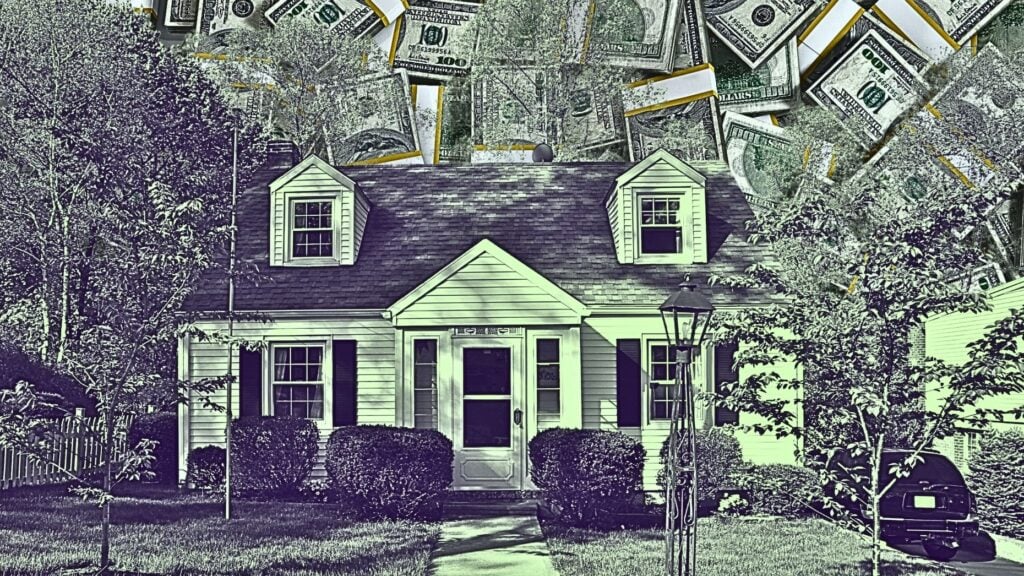
House hacking is a mindset shift that turns today’s real estate market challenges into strategic advantages, broker Julie Busby writes.
Real estate is changing fast, and so must you. Inman Connect San Diego is where you turn uncertainty into strategy — with real talk, real tools and the connections that matter. If you’re serious about staying ahead of the game, this is where you need to be. Register now!
In a market squeezed by higher interest rates and low inventory, we’ve got to get creative. Lately, I’ve been leaning into an old concept with a fresh twist: house hacking — and it’s working.
Instead of buyers feeling stuck, they’re seeing opportunity: Rent out a unit, a basement, even a spare room to offset the mortgage. It’s turning “Can I afford this?” into “How can I make this work for me?” If you’re not already talking to your clients about this creative solution, here’s why you should be.
What is house hacking?
House hacking, in its most basic form, means buying a property and then renting out a portion of it, using the new income to cover mortgage payments, property taxes and other costs associated with homeownership. For some, house hacking is a great entry point into real estate investing, providing an affordable way to own a property without having to bear the entire financial burden alone.
Why house hack?
House hacking offers a wide variety of benefits for homeowners, some of which include:
Added income: Mortgage payments and property expenses are offset by the added rental income. Depending on the situation, some house hackers even end up with little to no housing costs.
Real estate appreciation: House hacking enables the accumulation of equity in a property and an increase in net worth, particularly when compared to renting.
Potentially afford more: When a buyer knows they will rent out a portion of a property and receive a return, they can usually afford more. One of our clients is working with one of our favorite lenders and was initially targeting condos and townhomes for $650,000.
Now that she’s house hacking, though, she’s looking at a $1.2 million multiunit property with a larger backyard and two-car garage. Additionally, she’s building her real estate portfolio for better returns in the future.
Tax benefits: Owning property often comes with tax advantages, such as deducting property-related expenses, such as mortgage interest, repairs and property taxes.
Advice for getting started with house hacking
Here are a few things buyers should consider:
Analyze finances: Buyers should take a financial deep dive and figure out everything from what they can afford for a down payment, full monthly costs and projected (realistic!) rental income.
Choose the right property: This part is crucial. Our favorite property for house hacking setups is a multiunit, where the owner lives in one unit and the renter lives in the other. This way, you can keep a good eye on your property.
Get a feel for financing options: House hackers may be eligible for some really great loan programs and products. Right now, we have a client using a loan program where she can finance any improvements she makes to the property.
Understand landlord responsibilities
It’s a good reminder that house hackers become landlords! Remind your buyers to check into local regulations regarding renting out a portion of a property.
One way we got started was to ask our clients for a weekly chat and bring up the idea during that informal meeting. We then gauged interest and made the relevant introductions.
House hacking is a powerful tool that we love to discuss with clients, and it is not just a workaround; it’s a mindset shift that turns today’s market challenges into strategic advantages. As brokers, we have the opportunity to educate our clients, expand their options and help them build wealth in creative ways.
Julie Busby is the founder and president of Busby Group, and in the top 1 percent of Chicagoland brokers. Follow her on Facebook and LinkedIn.
Think of public housing, and a familiar picture comes to mind: hulking, run-down brick tenement buildings, graffiti-strewn malfunctioning elevators, crime, drugs, and all the social ills that go with it. Unsurprisingly, previous governments sought to move away from public housing as a solution for low-income residents. However, the affordability crisis has placed housing firmly back in the spotlight, and public or social housing, as it is now being termed, is once again being touted as a solution.
If only it were that simple.
The Urgent Need for Affordable Housing
With homelessness on the rise and both the working and middle classes feeling the effects of elevated home prices—homes are unaffordable in 80% of U.S. counties—high interest rates and escalating rents, there’s little doubt about the need for affordable housing. Even both presidential candidates have offered solutions.
“This is hitting first-time home buyers that can’t get into the housing market.This is hitting middle-class renters who are spending more than 50% of their income on rent,” Brian McCabe, Associate Professor of Sociology at Georgetown, told Time. “It’s not that there’s never been an affordability crisis before, but it’s now an affordability crisis that’s hitting a much broader set of Americans.”
The Different Sides of Public Housing
Not all public housing consists of crime-ridden, poorly maintained tenements. It’s back in the spotlight because of innovative and attractive developments such as The Laureate in Montgomery County, Maryland, which has transformed notions of what the term can mean. In most settings, the Laureate would be termed a luxury apartment building with its raft of amenities and attractive, modern construction.
Montgomery County has been an innovator in public housing initiatives. It instigated a landmark law that requires developers to set aside about 15 percent of the units in new projects for households making less than two-thirds of the area’s median income—now $152,100 for a family of four. For-profit developers built the Laureate, but the controlling owner is a government agency, the Montgomery County Housing Opportunities Commission. H.O.C. has a 70% stake, so the Laureate can set aside 30% of its 268 units for affordable housing.
It’s a far cry from the first self-contained and largest cooperative housing development ever built, Co-op City in the Bronx. Few can dispute the bold intentions and even bolder scale of the 15,000-unit development, completed in 1973 and often referred to as a “city within a city.” Democratic lawmakers Alexandria Ocasio-Cortez and Tina Smith cited Co-op City as an example of how public housing can work. However, that development has a history of poor management, corruption, and squalid conditions, which led to an emergency repair bill of $500 million in 2003. Co-op City, while laudable for its intentions, is hardly the shining star to encourage further investment in public housing.
But neither is The Laureate as attractive as it is. That’s because the Laureate is geared toward the middle class and is located in a wealthy county. Residents who earn around $50,000/year can expect to pay $1,700 for a one-bedroom apartment, compared with a market rent of around $2,200. Other residents might expect to pay half the advertised rate depending on their income. Montgomery County was able to kick in $100 million, using its ownership position to become a benevolent investor that trades profits for lower rents.
“The private sector is focused on return on investment,” Chelsea Andrews, H.O.C.’s executive director, told the New York Times. “Our return is public good.”
Developers Are Rejecting Government Funding
Unfortunately, that’s not a position that many financially stressed counties can adopt. Public housing is usually financed by the Department of Housing and Urban Development and operated by one of the nation’s roughly 3,300 public housing agencies, which are locked in a steady decline.
That’s partly why private developers are rejecting government money for affordable housing. Mismanagement and red tape in the public sector have a history of bloating construction expenses and other costs for developers. It’s why—despite the commitment of tens of billions of dollars from Californian State and local government, some developers such as S.D.S. Capital Group, which recently completed a 49-unit apartment building in South Los Angeles, has self-financed the project. S.D.S. told theWall Street Journal that it cost them $291,000 per unit to build instead of the roughly $600,000 that the city of Los Angeles has averaged for similar apartments.
A recent report commissioned by the city of San Jose found that affordable housing projects that received tax credits cost an average of around $939,000 a unit to build there last year. The average affordable unit in the Bay Area costs $817,000 to build, according to a study by the Bay Area Housing Finance Authority and the affordable housing finance company, Enterprise.
Rather than using government cash, S.D.S., an investment firm, raised a $190 million fund to build an estimated 2,000 units for formerly homeless people in the city with mental health and other medical needs. The speed of private, self-funded construction has proved to be a big savings compared to the governmental bureaucracy that hampers similar projects.
“We believe there’s a different way than using government money, which really becomes slow and arduous and increases cost,” Deborah La Franchi, chief executive of S.D.S., told the Wall Street Journal.
“You’re cutting out millions of dollars just in soft costs,” David Grunwald, an executive at R.M.G. Housing, which is developing the S.D.S. fund’s projects, said of private financing.
Why Section 8 Has Faltered
Unlike many landlords, S.D.S.’s model is unique in that it accepts government vouchers—Section 8—to house residents. The Los Angeles City Housing Authority says there are over 1000 unused tenant vouchers at any one time, which provides a captive market for S.D.S. buildings.
Activists have found that the rejection of Section 8 vouchers by brokers looking to rent apartments is a nationwide issue. A watchdog group, Housing Rights Initiative, filed a lawsuit in New York in 2022, citing—after a sting operation—the discriminatory practices of landlords and real estate agents when turning away prospective tenants who rely on subsidies to pay rent. It is illegal in New York City for landlords to refuse to accept applications from tenants who depend on them.
“Housing discrimination is not an isolated incident,” Aaron Carr, the executive director of the Housing Rights Initiative, told the New York Times. “It is a part of an industrywide problem.”
When Bill Clinton encouraged the movement away from public housing construction with the Faircloth Amendment in 1998, the hope was that private landlords in mixed-income buildings would take up the slack. Henry Cisneros, Bill Clinton’s H.U.D. Secretary developed a plan that consolidated grant programs and shifted the emphasis to housing vouchers over traditional public housing subsidies.
According to a H.U.D. report, HOPE VI, a H.U.D. program aimed to redevelop “severely distressed” public housing projects, demolished 98,592 public housing units and replaced them with 97,389 mixed-income units between 1993 and 2010. It was widely considered a move out of a Republican playbook and received no blowback. However, gentrification and the demand for housing from non-voucher renters have pushed Section 8 tenants further into the margins of low-income housing in dicey neighborhoods. Many tenants feel that rejecting Section 8 is a mask for racial discrimination. Some landlords and renters conversely feel Section 8 tenants can disrupt their buildings and neighborhoods.
Insurance: The Silent Killer
As if public/affordable housing wasn’t facing enough issues, soaring insurance costs have made things unsustainable for developers, landlords, and management companies. It’s not just in areas of extreme weather but nationwide where costs have quadrupled along with deductibles.
Unlike market-rate apartment developers, multifamily projects financed by subsidies and tax credits cannot pass on those higher insurance costs to tenants since they are limited by government guidelines as to how much rent they can collect. As a result, developers and housing authorities have appealed to state lawmakers for assistance or have decided to abandon affordable housing completely. According to aNational Leased Housing Association survey, nearly one-third of affordable housing providers reported increases of at least 25 percent.
“In 2020, I would have said this is cyclical; the pendulum has always been swinging,” Denise Muha, the organization’s executive director since 1988, told the New York Times. “But this is totally different. I don’t see this really curing itself anytime soon.”
Final Thoughts
Affordable housing in America is an oxymoron in this day and age. The red tape, bureaucracy, and social issues that come with providing it have made it a minefield for developers and investors. While public housing developers such as S.D.S. have largely circumvented the problem by taking matters into their own hands and bypassing the government, there is still the issue of management and upkeep. The lessons learned from Co-op City City is that despite a city’s best intentions, when the management of a project cannot run efficiently and ethically and without the finances it needs, things will deteriorate quickly.
Public housing advocates worldwide often point to Vienna, which, with its huge apartment complexes known as Gemeindebauten, has made Austria’s capital one of the world’s most livable cities. Why they have succeeded so spectacularly in Austria but not so in the U.S. is, however, a far longer discussion.
Get the Best Loan Today
Find trusted, investor-friendly lenders who specialize in your strategy.
Join the community
Ready to succeed in real estate investing? Create a free BiggerPockets account to learn about investment strategies; ask questions and get answers from our community of +2 million members; connect with investor-friendly agents; and so much more.
Note By BiggerPockets: These are opinions written by the author and do not necessarily represent the opinions of BiggerPockets.
DC Attorney General Brian Schwalb found that four title companies gave financial and other perks to real estate agents in return for homebuyer referrals. The companies have agreed to pay $3 million.
Whether it’s refining your business model, mastering new technologies, or discovering strategies to capitalize on the next market surge, Inman Connect New York will prepare you to take bold steps forward. The Next Chapter is about to begin. Be part of it. Join us and thousands of real estate leaders Jan. 22-24, 2025.
Four title companies in the District of Columbia have agreed to pay a total of about $3 million for alleged “illegal kickback schemes” in which the companies gave financial and other perks to real estate agents in return for homebuyer referrals.
District of Columbia Attorney General Brian Schwalb announced the settlement on Thursday, saying the “conflict of interest-plagued, anticompetitive arrangements” hurt homebuyers’ ability to shop around for the best service and artificially inflated their homebuying costs.
“District residents are entitled to make fully informed decisions about how to spend their hard-earned money, especially when it comes to making the high stakes purchase of a home,” Attorney General Schwalb said in a statement.
The companies, which denied wrongdoing, are affiliated businesses that were allegedly created by title insurers to split profits with real estate agents who referred business to them.
The Real Estate Settlement Procedures Act (RESPA) – federal law governing the provision of mortgage-related services – allows such affiliated business arrangements if they meet specific requirements intended to protect consumers.
Washington, D.C. law “is more stringent and does not have such an exception,” prosecutors noted in announcing the settlement.
“These four companies violated the most fundamental principles of a free and fair marketplace: they hid information from consumers, limited their choices and hurt other businesses that play by the rules. Today, we’re exposing and putting an end to these elaborate, secretive and illegal kickback schemes.”
As agents know, title insurance is required by lenders in order to protect the lender against unexpected costs that might arise from a challenged property title (borrowers can also purchase owner’s title insurance separately). It is not uncommon for homebuyers to be connected with title companies through the guidance of their real estate agent, and the fees often end up being some of the most expensive that they pay at the closing table, after agent commissions.
With the findings from Schwalb’s office, officials are now wondering just how widespread the practice of agents steering buyers to certain title companies in return for a cut of the profit is, and how much it is impacting homebuyer costs across the country.
The title companies that Schwalb’s office identified as engaging in the schemes included Allied Title, KVS Title, Modern Settlements and Union Settlements. The Attorney General’s office found that all four companies gave real estate agents discounted investment opportunities if they referred clients to the company. Modern also offered ownership interests in the partnership without requiring agents to make an upfront investment, and Allied gave agents yacht parties on the Chesapeake Bay in exchange for referrals.
As part of the civil settlements, all companies denied wrongdoing.
The practice of kickbacks in exchange for referrals became more widespread in the wake of the pandemic when the housing market surged, academics and real estate professionals told The Wall Street Journal, as a means for title companies to gain more market share.
The findings are just another knock on the title insurance industry, however, which has already been scrutinized by the Biden administration because of how much its services add to homebuyer expenses. The administration has been looking for ways to lower upfront mortgage costs, and Fannie Mae has requested permission to launch a test pilot program that would waive title insurance on low-risk mortgage refinancings.
The settlement also contributes to the poor public reputation that real estate agents have faced in the wake of the National Association of Realtors (NAR) antitrust settlement, which followed accusations from homesellers that agents and other industry players artificially inflated commissions, increasing costs to homesellers. Yet another allegation of anticompetitive practices that potentially harm consumers while filling agents’ pockets could significantly damage the industry’s already weakened reputation.
Editor’s note: This story has been updated to note that federal law allows affiliated businesses that meet consumer protection requirements mandated by the Real Estate Settlement Procedures Act (RESPA).
Inman Connect is moving from Las Vegas to San Diego in 2025 and it’ll be bigger, better, and bolder than ever before. Join us for Inman Connect San Diego on July 30-Aug. 1, 2025 with the brightest minds in real estate to shape the future of the industry. Reserve your spot today for an exclusive discount.
Looking for a quick catch-up on the buzziest stories of the week? Here’s Inman Top 5, the most essential stories, according to Inman readers.
And don’t miss The Download, our weekly column that breaks down one of the top stories of the week and equips you with what you’ll need to meet next Monday head-on.
The plaintiffs protest “compulsory” Realtor membership to access the MLS after the removal of “the guaranteed broker commission” from the MLS.
The Consumer Federation of America raised eyebrows and hackles with its advice to pay only the equivalent of a 2 percent commission for both real estate purchases and sales.
At Keller Williams’ annual Mega Agent Camp, franchise founder Gary Keller and several leaders shared how agents can navigate recession fears and commission confusion with clarity.
Canva
The wisest thing you can do is learn from the mistakes of others, especially when it comes to long-term career decisions that are hard to reverse, Mainframe founder and CEO Sean Frank writes.
Getty Images
The nation’s largest MLS removed compensation fields from its platforms on Aug. 13, after offering detailed guidance to agents on the terms of NAR’s proposed settlement.
More agents are joining the National Association of Realtors ahead of the approaching Aug. 17 deadline for Realtors and MLSs to implement policy changes.
Inman Connect is moving from Las Vegas to San Diego in 2025 and it’ll be bigger, better, and bolder than ever before. Join us for Inman Connect San Diego on July 30-Aug. 1, 2025 with the brightest minds in real estate to shape the future of the industry. Reserve your spot today for an exclusive discount.
The latest NAR-affiliated state association data shows that NAR membership has rebounded from a slowdown, with over 29,000 agents seeking membership from April to August, bringing the membership total to approximately 1.53 million, Real Estate Newsreported on Monday.
According to Washington Realtors CEO Nathan Gorton, recent membership growth shows that agents may be jumping back on board before the Aug. 17 deadline.
“You’ve got to be a member in good standing in order to benefit from the NAR settlement — in order to have the liability removed,” Gorton told Real Estate News. “So certainly that’s had an impact.”
NAR-affiliated association Washington Realtors, based out of Washington state, saw an increase of 5.6 percent from April to August, representing the highest percentage growth of any association in the U.S. during this time period.
Washington Realtors rebounded after enduring the biggest drop in membership by any state association last year. The association lost over 2,500 agents, an 11 percent decline in Realtor membership. That loss can be attributed to Redfin’s split from NAR last October, Gorton said.
Gorton suggested that Washington agents may be more prepared for the upcoming deadline compared to agents in other states as buyer agent agreements are already required by Washington state law. Washington Realtors has begun educating consumers on the upcoming changes in the industry with a web and television campaign.
As Inman reported in February, “NAR membership was 2.1 percent lower in January than a year earlier, dropping to 1,515,837. That’s down 5.3 percent from October 2022, when NAR hit a membership peak of 1.6 million, and it’s the lowest level since May 2021. NAR reported a net loss in members last year for the first time since 2012.”
In February, NAR Chief Economist Lawrence Yun predicted further membership declines “given the reduction in business opportunities over the past two years” and “the lag effects of past housing cycles.”
In April, NAR scrubbed its website of decades of month-over-month membership data. NAR did respond to questions on why the data was removed from the public eye, but spokesperson Mantill Williams said at the time, “Any suggestion that our members will not have visibility into membership data is inaccurate.”
However, as recently as May, NAR Treasurer Greg Hrabcak asserted that membership was “tracking favorably to plan and is increasing each month.” NAR did not respond to a request from Inman for membership data to support this assertion.
Inman reached out to NAR for comment, and spokesperson Mantill Williams said NAR had “nothing further to add to the story.”
Since the real estate market initially slowed in 2022, there has been speculation about whether decreasing market share, accusations of sexual harassment against the trade group, and challenges such as commission-related lawsuits and NAR’s subsequent settlement have had a significant impact on agent membership growth.
In August 2023, sexual harassment accusations arose against NAR’s former president Kenny Parcell, and the organization reported membership losses in the months that followed. Membership declined by 62,000 from October 2023 to January 2024, though the organization still claimed over 1.5 million members.
NAR faced additional losses in February, losing 19,000 members, bringing membership lower than 1.5 million for the first time in three years.
On March 15, NAR reached a settlement agreement in the antitrust lawsuits related to its practices.
Membership numbers for the organization have remained resilient for the most part, despite changes in the market and industry practices.
“Our membership numbers — as in all previous years — will be competitive, with new members trying out their entrepreneurial skills while less productive members drop out,” NAR Chief Economist Lawrence Yun said in an email to Real Estate News. “We will await the net impact. So far, membership is holding high with only a 2 percent decline from a year ago despite the low home sales over the past two years.”
This story has been updated with additional context from previous Inman reporting.