If you don’t define your real estate team’s culture, it will define itself, author and team leader Erin Krueger writes. And that’s a risk you can’t afford to take.
Bigger. Better. Bolder. Inman Connect is heading to San Diego. Join thousands of real estate pros, connect with the power of the Inman Community, and gain insights from hundreds of leading minds shaping the industry. If you’re ready to grow your business and invest in yourself, this is where you need to be. Go BIG in San Diego!
There’s a dangerous myth about real estate teams — the idea that success is simply about strategy and hard work. If you master the market, deliver amazing customer service and work hard, success will automatically follow.
Strategy alone won’t save you. Hard work alone won’t elevate you.
Because a business without culture is like a house without a foundation — it might look strong on the outside, but the first storm will bring it crashing down. You can have the most talented individuals, but if they don’t work well together, your company will crumble.
I’ve seen it firsthand. I’ve built, refined and protected my team culture with the same intensity that I sell homes. I want to share a blueprint for building a business that doesn’t just survive, but thrives.
Great culture doesn’t happen by chance; it demands ongoing commitment, clear values and authentic leadership. These ideals cultivate an environment where everyone feels valued and empowered to contribute to a shared vision and achieve extraordinary results.
We are in an era when employees and team members no longer just want a paycheck. They want purpose. They want to be part of something bigger. They want to feel valued, challenged and supported.
When a culture is strong, your team moves like a championship-winning sports team — each player knows their role, supports each other and is working toward a common goal. When a culture is weak, it feels like you’re constantly fixing issues — miscommunications, disengagement, high turnover and that underlying feeling that something is “off.”
So, how do you create a culture where people want to work, thrive in their roles and stay long-term? It comes down to three essential pillars: build intentionally, nurture consistently and monitor actively.
1. Build intentionally: Culture doesn’t happen by accident
What is the biggest mistake I see business leaders make? They let culture happen instead of shaping it. Culture is like a house — if you don’t build it intentionally, it will crumble under pressure.
That’s why, from Day 1, I decided that the culture of my team would be built on integrity, trust and a relentless commitment to growth.
What does this look like in practice?
Hiring for values as much as for skills
Setting clear expectations and holding people accountable
Leading by example — because you can’t ask your team to do what you aren’t willing to do
If you don’t define your culture, it will define itself. And that’s a risk you can’t afford to take.
2. Nurture consistently: Culture is like a garden. Neglect it, and it dies
Culture isn’t something you set once and forget. It’s a living, breathing thing that needs constant attention. Think about it: You don’t plant a garden and expect it to thrive without watering, pruning and tending to it. The same applies to your team.
How do you nurture culture consistently?
Celebrate wins — big and small. Don’t wait for massive milestones to acknowledge hard work
Check in regularly — not just on results, but on how your team is feeling
Encourage growth — whether it’s training, mentorship or new challenges
The strongest cultures are not built overnight, but they are built daily.
3. Monitor actively and protect relentlessly: Culture is your competitive advantage
Here’s the hard truth: Not everyone is meant to stay on your team. One of the toughest lessons I’ve learned in leadership is that the wrong person in the right culture can destroy it.
There were times I kept someone on my team because they were producing excellent results, but they weren’t aligned with our values. And every time, it cost me. Negativity can spread faster than positivity, and a disengaged team member can pull down even the strongest players.
So, I started treating culture like a non-negotiable. If someone didn’t align, I had to make a change, no matter how difficult the decision was. Protecting your culture isn’t about being harsh. It’s about being committed to the team you want to build. Because at the end of the day, your business will only be as strong as the culture you protect.
Building a thriving team culture isn’t easy. It takes commitment, clarity and courage.
But when you get it right? Your team becomes your biggest asset. Your business grows effortlessly because people love what they do. You don’t have to chase success — it comes to you.
Remember: The greatest leaders don’t just build businesses. They build cultures that last.
Erin Krueger is the author of Capture the Culture and team lead at The Erin Krueger Team, Compass in Nashville. Connect with Erin on LinkedIn and Instagram.
As you can imagine, we’ve heard just about everything people have to say about investing in real estate during our twentysomething-year tenure in this industry. One of the complaints we see frequently is regarding ethics. Is it ethical to invest in real estate? Are landlords evil? Some people are thoroughly convinced that this investment method should be abolished altogether.
The Three Primary Ethical Objections to Investing in Real Estate
Obviously, we would disagree! That said, the question of ethics in real estate investment is essential. We don’t need to ignore how the industry can—and has—harmed people. What we can do is take in these criticisms, examine ourselves, and modify our strategies to promote ethical investing that benefits local communities.
Objection 1: Speculative investing ruins local markets for everyone else.
Speculative investing is most commonly a short-term strategy that involves snapping up properties in markets as they heat up.
Now, there’s nothing wrong with getting your foot in the door of a hot market! However, we often see flippers who buy properties, renovate them, and hold them vacantuntil they see the perfect opportunity to maximize capital gains. This drives up home prices artificially and can disrupt housing supply when done en masse. It can also disrupt local buyers who want to own and live in the properties and would like to benefit from the discounted purchase and renovation costs.
Objection 2: Real estate investors contribute to gentrification and harm vulnerable populations.
An individual investor can’t cause gentrification. (For those who need a refresher, gentrification happens when a wealthier demographic moves into a lower-income area, ultimately displacing the original residents.) This can happen when large-scale investment conglomerates develop large areas. Home values, costs, and rent may increase to a level untenable for vulnerable residents.
However, investment dollars from banks in the form of construction loans can be scarce and hard to come by, meaning abandoned and blighted properties sit vacant longer without renovation and threaten neighborhoods by creating the environment for other properties to fall victim as well.
Objection 3: Real estate investors exploit rental residents.
We’ve all heard landlord horror stories. It’s common to see them—and, by extension, real estate investors—vilified. And we’re not about to deny that some people and management companies do not treat their residents or properties respectfully. They may ignore significant maintenance issues, raise rent irresponsibly, and let their greed harm those around them.
Four Ways to Prioritize Ethical Real Estate Investment
So, how do we maintain responsible, ethical investment strategies?
1. Treat real estate investment as a people business
The bigger things get, the more impersonal they tend to be. We would do well to zoom back in and see people as people—not numbers, not vague demographics, not as a source of cash.
Investing in real estate is undeniably a relational business. The more you recognize the humanity in your partners, vendors, and residents, the more empathetic and ethical you’ll be. It’s just natural. You cannot push an easy button to have work done for you. There is not an app that can suddenly appear and replace the work and effort that genuine, human relationships can accomplish.
You can do this even if you’re a passive investor who never meets the people living in your properties. Hiring reputable, compassionate managers and quality vendors ensures safe, well-kept properties and transparent, fair communication with those living there.
2. Refuse to compromise on your standards
Plenty of investors choose to cut corners in one way or another. While this may seem like a good call in the short term, it harms your portfolio and those around you in the long run.
Don’t compromise your standards. Know what you will and will not accept, what is and isn’t typical in the industry, and what kind of investor you want to be. When you have a clear goal and high standards, you’re less likely to lose your way—and hurt others in the process.
Examples of compromising may include skipping on basic repairs that are needed but not threatening to the property. Another example would be not answering resident calls on holidays. A final example would be moving to evict a resident even when they are communicating and working diligently to pay rent on time.
3. Look for opportunities to improve sustainability
Sustainability isn’t just about being energy-efficient. It’s about making strategic decisions that improve efficiency and property longevity.
Simply buying and renovating a property that would otherwise remain vacant and decaying is sustainable. Renewing existing properties is good for the market and the environment. Your investments impact the market they’re in.
In cities like Memphis, which have been hotbed markets for long-term buy-and-hold investors, the majority of dollars spent renovating and revitalizing neighborhoods has had a tremendous, positive impact. It has helped keep neighborhoods intact and helped bring others back from the brink.
The impact we have as investors can be life-changing in some areas. Consider if that impact will be positive or not!
4. Be a long-term investor
Finally, we would encourage all real estate investors to consider the long term over the short term. Short-term investors typically cause issues with artificial price inflation and fan the flames of overhyped markets. They won’t be here long-term, so they’re not considering how their actions will impact the area.
A long-term investor, though, contributes to the local community. They’re a part of the ecosystem. As such, they’re invested in the health and stability of that market. And that mindset benefits everyone.
This article is presented by REI Nation
Ready to add turnkey real estate to your portfolio in 2024? If so, now’s the time to invest with REI Nation. Where you invest, and they handle the rest.
Discover stress-free real estate investing with the largest family-owned turnkey investment company, REI Nation. Whether you’re a seasoned investor or just starting, they are dedicated to helping you achieve your financial goals in the world of real estate investing. Visit our website to start your turnkey real estate journey, where your success is their commitment.
Note By BiggerPockets: These are opinions written by the author and do not necessarily represent the opinions of BiggerPockets.
Whether it’s refining your business model, mastering new technologies, or discovering strategies to capitalize on the next market surge, Inman Connect New York will prepare you to take bold steps forward. The Next Chapter is about to begin. Be part of it. Join us and thousands of real estate leaders Jan. 22-24, 2025.
What happens to a “power buyer” when buyers have the power?
Tim Heyl, CEO of the Austin-based power buyer Homeward, has an answer.
The company had to rapidly scale to meet the demand for cash offers in 2020 and 2021, when homes sold quickly, garnered multiple offers and went for over asking price.
Demand for companies to turn consumers into so-called power buyers spiked as homebuyers sought ways to edge out multiple competing bidders on homes. Homeward adjusted to meet the need.
During that same market, Homeward gave homeowners the flexibility to buy their next home before selling their existing one.
That all largely froze when interest rates spiked in 2022 and 2023, and homeowners remained rate-locked in their existing homes, unwilling to take on the added cost of buying even a less-expensive home.
Heyl said Homeward shifted to give homeowners an instant cash offer, the certainty to close within days, and the ability to receive full price for their homes in exchange for an administrative fee.
It’s an alignment of interests that’s distinct from traditional iBuyers who have struggled to achieve consistent profitability in a variety of market types, Heyl said.
Heyl will be on stage at the inaugural Inman Connect Austin next month. He met with Inman this month to dish on how Homeward shifted in the high-rate, low-sales environment to meet the needs of sellers in a buyer-friendly environment.
The following interview has been edited and condensed for clarity.
Inman: The last time we talked was December 2022. It’s been an interesting 18 months. Tell me where your mind is at right now. How have the past 18 months been and what are you looking forward to?
Heyl: This huge need for a first-time homebuyer to make an all-cash offer declined fast. The other challenge is that for existing homeowners who need to buy and sell simultaneously, that’s typically not a buyer’s market or seller’s market problem. That’s a liquidity problem that exists in all markets.
There’s one very unique market where it doesn’t exist as much, and that’s when interest rates change as fast as they did; it sort of just froze that buy-sell customer or buy-sell consumer in the marketplace. It became more expensive to buy a less expensive home. For most of these buyers to move down was actually more expensive. There’s no incentive to do that.
And then, to move up costs so much more than what it used to that these move-up and move-down customers just kind of froze in the market. So you saw a lot of power buyers who were helping buyers buy; those products declined in demand.
On the other side, you saw something different with the iBuyer model in that when the market softened, the demand from a seller for a reasonable cash offer skyrocketed because homes are taking longer to sell. Sellers were less certain of if they would sell their home at all. And if they did, what price would it sell for? It became months and months of going through this process.
So how did you adjust?
Homeward launched another product into the market; it’s the Homeward Cash Offer for Sellers. What we realized is that while the trade up and trade down customer is sitting on the sidelines right now, there are still 4 million transactions a year happening. And a lot of these sellers, they’re just selling. They’re not trying to buy another home simultaneously.
We wanted to be able to bring an offer to these sellers to fill that gap in the marketplace that I just described. We knew that we needed to be able to protect our risk. We can’t go in and make a full-price offer. But we also know that sellers don’t want to give all their money away. The majority of their net worth is tied up in their home equity.
We’ll buy their house and we’ll cash the seller out just like an iBuyer would, in a matter of days. After they move out, we’ll go and get the home ready in its best-selling condition and work with their real estate agent to sell the home on the open market for its full price. When we do resell it for its full market value, we pass all of those upside proceeds back to the seller.
What’s the upside for Homeward?
It’s kind of the best of both worlds. It’s the seller’s ability to generate a cash offer on demand and sell in a matter of days, get most of their home equity, and move on and not have to deal with repairing the house and going through a multi-month sale process. But it’s paired with all of the benefits of a traditional market sale with their real estate agent actually going and getting that full market price.
The sellers pay us a transaction fee in order to provide this service for them. We charge a 6 percent fee. So unlike an investor who is flipping the house and trying to monetize the home price appreciation or the bulk of the equity in the home, we’re simply charging a service fee, cashing them out of their home, and going out and getting them their full market value on the back end after they’ve moved out.
What happens if a house doesn’t sell or doesn’t hit the price point that you were expecting? Is it the seller that’s on the line to make up the gap, or what happens in that situation?
When we buy the seller out of their home, they never have to bring any more money to the table. So they’ve cashed out and their certainty of sale is done.
But we buy the home at a discount to create a buffer to make sure that the home is going to sell above that price. And so, if it sells below that discounted offer that we initially made, then, you know, then that’s a loss that Homeward will take.
It’s very rare. We do take that discount up front. But all of the upside, whether it sells for the amount that Homeward thought it would sell for or more than that amount or less than that amount, whatever those upside proceeds are, they do go back to the seller.
This seems distinct from traditional iBuyers, and I wanted to ask you about them, generally. They struggled to make a profit when things were hot. They’re struggling when things are cold. Will they ever have a Goldilocks moment?
You have to align incentives between the business and the customer. Some of these models that exist today don’t align those incentives. With an iBuyer model, the higher the cash offer, the better it is for the consumer, but the more risky and less profitable it is for the iBuyer. The lower the cash offer amount, the worse it is for the consumer, but the better it is for the iBuyer. They’re at odds.
It’s an investor buying a house from a consumer. You know, it’s an investor flipping somebody’s house and taking their upside. And so the challenge is there was incredible demand when the iBuyers were paying full market price.
And so the challenge is for these companies, can they find a spread that is good for the consumer, good for the seller and good for their economics? I think we’ve yet to see that.
On the ground, I see headlines where it’s like Austin’s at the top, Boise’s next. There are these pandemic-era darling markets that now are also at the top for the inverse reason. Give me a little flavor of Austin as an agent.
I just took a listing. A $3 million, $3.5 million home in central Austin. In that neighborhood, there are 25 homes for sale between $2.5 million and $4.5 million. There’s one home that’s pending in that price point in that neighborhood — 25 for sale, one pending.
That’s a bit of an extreme. Austin is a bit of an extreme in and of itself. But this is the challenge that we’re living in. This is the challenge that homesellers are increasingly having.
Austin is, without question, one of the more challenging markets across the country because it boomed really fast. Like with most things that go up, they come down, and Austin is definitely paying the price for how fast it grew.
It reminds me of 2009, when I first got in. Taking a listing in 2021 was exciting as a real estate agent because you knew you were going to make some money. Now, in 2024, you take a listing and it doesn’t exactly mean you’re going to make some money. It means you better go do your job and price it right and go get the thing sold because many of the homes that are listing are not actually getting offers and not actually selling.
Whether it’s refining your business model, mastering new technologies, or discovering strategies to capitalize on the next market surge, Inman Connect New York will prepare you to take bold steps forward. The Next Chapter is about to begin. Be part of it. Join us and thousands of real estate leaders Jan. 22-24, 2025.
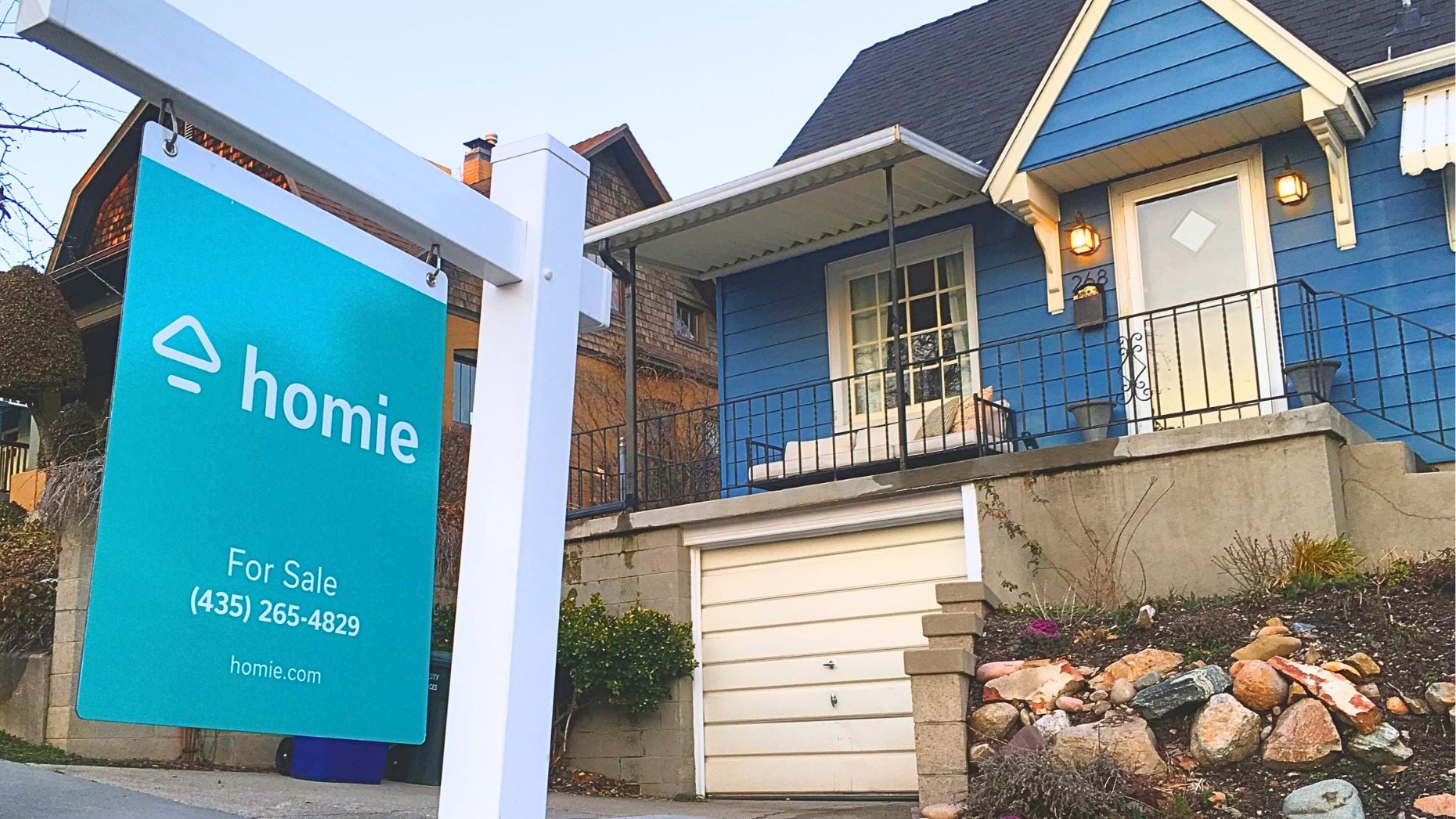
Homie, a once-rising flat-fee brokerage that has since struggled with layoffs, has filed an antitrust lawsuit against the National Association of Realtors and other industry players, saying they “conspired” to prevent innovation and boycott low-commission listings.
The suit was filed Thursday in U.S. District Court in Utah, where Homie is based. In many ways, the suit’s claims mirror those made in other recent antitrust lawsuits: It argues that NAR and other organizations violated the Sherman Antitrust Act, along with other laws; it takes issue with NAR’s now-eliminated Participation Rule, which required listing brokers to offer buyer brokers a commission in order to submit a listing to a Realtor-affiliated MLS; and it asks for unspecified damages. The Participation Rule is at the heart of many other real estate antitrust lawsuits.
The language is also similar to that in other cases.
“The anticipated wave of disruptive innovation and entry into the residential real estate brokerage market has not yet occurred because defendants conspired to prevent it,” the complaint in the case argues. “Using their control of the MLS, defendants imposed rules nationwide that erected substantial barriers to entry for new competitors, thereby elevating the price of residential real estate brokerage services well above competitive levels.”
The lawsuit goes on to claim that Homie was subject to both “express and tacit boycotts” that involved real estate incumbents “steering buyers away from” the company’s listings. The complaint also includes a transcript of an alleged text message in which one agent discusses not showing a Homie listing because it was only offering a 1.5 percent commission to the buyer’s broker.
Homie also allegedly received similar messages through the local MLS.
“If you up the commission, I will bring my buyers. If not, I will not,” one message stated, according to the complaint.
“[R]aise Commission to 3%,” another allegedly demanded.
In addition to NAR, the suit names a handful of other defendants: Anywhere, HomeServices of America, RE/MAX, Keller Williams, and the Wasatch Front Regional Multiple Listing Service, which operates the locally popular UtahRealEstate.com website.
News of the new suit was first reported by HousingWire.
Asked for comment, a Homie spokesperson directed Inman to a statement on the company’s website that describes the suit as “”shining a light” on “unjust practices.”
“Our fight is about so much more than savings,” the statement adds, “it’s about every homebuyer and seller who’s had to endure a system that puts profits over people.”
Asked about the lawsuit, an NAR spokesperson said in a statement to Inman that the organization’s “goal is to promote local real estate marketplaces that provide fair and equal access to property information and promote competition while empowering Realtors to serve clients on their homebuying and selling journeys. We will respond to these claims in court.”
HomeServices Executive Vice President Chris Kelly said that “while we cannot comment on the specifics of the complaint given its recent filing, the claim that competition within the real estate industry has been stifled is simply unfounded.”
“The industry has undergone significant evolution over the past decade, with dynamic changes in the competitive landscape,” Kelly continued. “For example, of the top 10 brokerages by closed sides in 2013, only three remain in the top 10 in 2023. Notably, seven of the top 10 brokerages in 2023 were not in that group just 10 years ago. There has been an ongoing and continued introduction of new brokerages, models and platforms, such as iBuying, that have emerged over the past decade.”
Keller Williams and Anywhere both declined to comment.
In addition to alleging a conspiracy, Homie argues in the complaint that NAR’s Clear Cooperation Policy is “exclusionary.” NAR rolled the policy out in 2019 in an attempt to crack down on pocket listings, or homes that are for sale but not entered into the MLS. The policy has been controversial from the get-go and still faces criticism today.
For Homie’s part, it argues in the complaint that Clear Cooperation “tends to prevent the creation of rival listing networks that might arise to challenge the dominance of the NAR-affiliated MLS system.”
Regarding the Participation Rule, the complaint argues that the defendants “understood and intended” the policy to result in steering to properties with higher commissions. The complaint refers to the policy as the “Buyer Broker Compensation Rule.”
The lawsuit comes amid a period of tumult for Homie. The company was once among the most prominent flat-fee brokerages in the U.S. and employed hundreds of people. In 2021, the company announced plans to hire 1,000 buy-side agents.
However, Homie eventually experienced multiple rounds of layoffs and, earlier this year, announced it was moving its agents to contractor status. The company had no CEO at the time. A spokesperson said Homie was undergoing a “shift” and would continue on with only a “handful” of W2 employees.
Antitrust lawsuits such as the one Homie filed have dominated the real estate industry for the last year. Many of those lawsuits were filed by consumers who objected to the way sellers’ and buyers’ agents traditionally shared commissions. The situation led to a jury verdict last fall against NAR and major franchisors, followed by a slew of major settlements from those franchisors.
Though Homie’s suit resembles previous cases in many ways, it is also atypical because it was filed by a corporation instead of a homeseller or homebuyer.
The suit ultimately describes the brokerage landscape as a “stagnant industry” and says Homie took legal action to “recover damages suffered as an excluded competitor foreclosed by the Defendants’ conduct.”
Homie additionally argues in the complaint that if it weren’t for the defendants’ actions, the company could have taken market share from real estate incumbents. Instead, the complaint claims, both consumers and the company suffered.
Read Homie’s full complaint here (refresh if you have trouble viewing):
Update: This story was updated after publication with comments from the various parties involved in the suit, and with additional details from the complaint.
CHICAGO (August 16, 2024) – Today, the National Association of Realtors® provides a final reminder to members, real estate professionals, and consumers that on August 17, 2024, the practice changes following NAR’s Proposed Settlement Agreement that would resolve claims brought on behalf of home sellers related to broker commissions will be implemented across the country.
REALTOR® MLSs (those owned exclusively by one or more REALTOR® Associations) must implement the changes by August 17, 2024, to remain in compliance with NAR policy.
As a reminder, under the settlement, the following practice changes will take effect:
Offers of compensation will be prohibited on Multiple Listing Services (MLSs). Offers of compensation will continue to be an option consumers can pursue off-MLS through negotiation and consultation with real estate professionals.
Agents working with a buyer must enter into a written buyer agreement before the buyer can tour a home. The practice changes do not require an agency agreement or dictate any type of relationship.
Please visit facts.realtor for the latest updates on the settlement and practice changes and for additional resources to assist with implementation of the settlement terms.
Additionally, August 17, 2024, is the first date members of the “Settlement Class”— home sellers who sold a home on an MLS anywhere in the U.S. during the eligible date ranges and paid a commission to a real estate brokerage in connection with the sale of the home—can be informed about NAR’s proposed settlement of the Sitzer-Burnett case, through a process called class notice. Notice will be distributed by mail and electronically. Class notice informs class members of their rights, options, and deadlines to exercise those rights and options under the proposed settlement.
For more information on what class notice means for REALTORS®, please reference NAR’s video here. Consumers with questions about the class notice or eligibility processes should reference the settlement website or call the settlement administrator at 888-995-0207 for additional guidance.
About the National Association of Realtors®
The National Association of Realtors® is America’s largest trade association, representing 1.5 million members involved in all aspects of the residential and commercial real estate industries. The term Realtor® is a registered collective membership mark that identifies a real estate professional who is a member of the National Association of Realtors® and subscribes to its strict Code of Ethics.