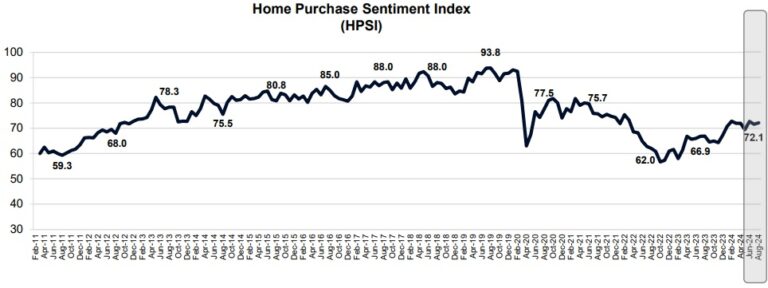
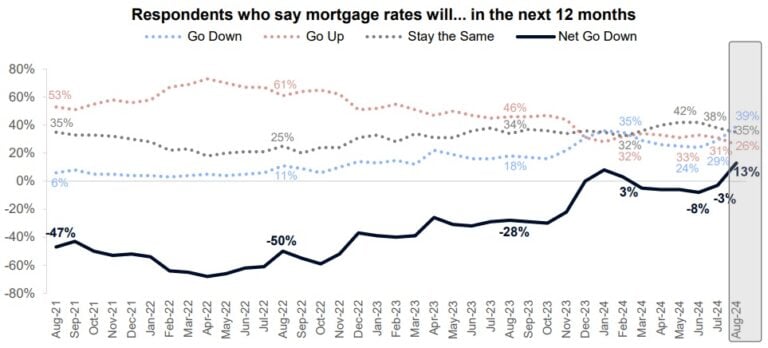
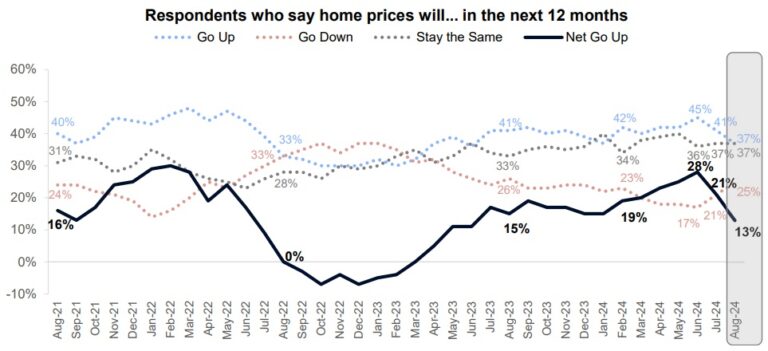
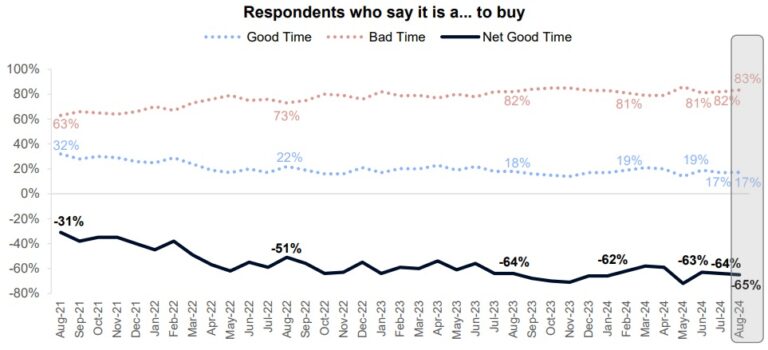
But to understand where we’re headed, we have to peak inside the personal finances of Americans. In this episode, we’re breaking down the average American’s wallet, how much money they have, their credit card debt, and whether they’ll be able to weather the financial storm of rising costs coming at them. How can Americans cope with higher insurance, taxes, and home prices?
Dave:
We have finally got lower mortgage rates, but is that actually going to help America’s housing affordability problem? What’s the state of the average American’s wallet right now and how does Gen Z stack up to previous generations in terms of home ownership? The answer for that one actually might surprise you. Hey everyone, it’s Dave Meyer and this is on the Market, and today we’re bringing you the headlines. We’ve got my friend James Dainard, Kathy Fettke, and Henry Washington all here to join us to discuss the latest real estate news and what it means for each of our portfolios. Henry, how have you been, ma’am?
Henry:
I’ve been fantastic, man. How are you?
Dave:
I’m tired, to be honest. I am in Seattle right now and had dinner with James last night, but I’m not used to these 7:00 AM recordings. I’m used to 11:00 PM recording, so I’m a little thrown off. So if this episode sucks, it’s my fault. Kathy, how are you doing? I am
Kathy:
Good. I’m used to these 7:00 AM
Dave:
Ones. Yeah, you’re bright and chipper and I appreciate it. Thank you. And James, what’s going on?
James:
Not much. I’m still waking up too. Me and Dave were out a little bit later. All of a sudden we’re like, oh, we got early rise. We got to get out of here.
Dave:
We shut down this steak restaurant, not because we were drinking and getting rowdy, we were just hanging out
Henry:
Because they closed at 10.
Dave:
Yes. I mean, I do think we closed at 10 15 and we were by far the last people there. Yeah,
James:
We weren’t really wild that we were nerding out. We were talking about numbers and passive income.
Dave:
Wild spreadsheet talk took us late into the night. It was great. Well, we do have some great headlines for today’s show. We’re going to talk a lot about sort of the broader real estate news. We’ll talk about some lifestyle things and I’m excited to get into one of our headlines which really talks about the state of the average American’s wallet. We talk a lot about macro economics here, but today we’re going to talk a little bit more about microeconomics, which would be a lot of fun. So let’s just jump into our headlines. Our first headline is America’s Home Affordability Crisis has a solution and Lower Rates, isn’t it? As you all probably know by now, at the September meeting, the Federal Reserve cut their interest rate by half a percentage point and not at that meeting. But in the months leading up to that meeting, we did see mortgage rates start to come down, which is really encouraging for the housing market, but at the same time, home prices just keep going up. So there’s sort of this offsetting effect where affordability actually isn’t getting all that much better, even though mortgage rates definitely need to go down for that long-term solution. So Kathy, curious what you think. What are these long-term solutions to affordability if mortgage rates aren’t it?
Kathy:
Yeah, the problem with lower mortgage rates is it’s going to exacerbate the problem. We’re going to probably see more people being able to afford to come in the market when they’re still not the kind of supply that’s needed. So if anything, it’s going to get worse unfortunately, in terms of demand versus the supply that’s out there. So that leaves you with, you’ve got two metrics, right? Supply demand. If there’s not enough supply and too much demand, you got to create more supply. And we know there’s, our presidential candidates are talking about that. That’s great. The fact that it’s even in the news now from politicians saying we got to do something to create more supply. Hopefully they’ll figure something out If it’s more tax credits to builders, better loans, the fact that the Fed did cut rates does make it a little tiny bit better for builders to be able to get the construction loads and bring down costs, at least there. But costs are up everywhere for builders and labor costs and material costs. So it’s, the numbers aren’t working out for a lot of builders, so hopefully politicians come in and help with this situation somehow.
Dave:
Yeah, the press conference after where Jerome Powell was talking about this was like, yeah, supply is the real issue and then we moved on it.
Kathy:
They don’t know how to solve it. They don’t know how do you build something that can’t be built for what it costs to bring in affordable housing? It’s really hard to do. I think you guys know in California it’s been a huge fail. I think they built an apartment building for homeless, it was a million dollars per unit. That’s not obviously sustainable, so I’m not sure anybody knows how to fix the problem and bring on more supply except for real estate investors.
Dave:
Yeah, that’s true. Well, I’m in Seattle visiting family and hung out with James like we were saying last night, but I’ve been noticing the Upzoning a lot here, which if you haven’t heard that term, it’s one potential solution to supply where single family lots are now allowed to add either a single or even two ADUs. And I don’t know James, I just see it driving around everywhere. Do you think it’s having an impact in Seattle?
James:
No, I think it’s definitely having an impact, creating more housing in Seattle. I know LA has a boom going on right now too, where people are trying to build a lot of ADUs. Ddus. The big issue is it’s not creating affordable housing though. Because the big issue like Kathy said, is the costs are just too high. Not only are the building costs up, they continue to creep up, but cost of money’s way up and cost of land is way up. And so what it does is they’re getting built, but the average price in the Seattle metro market, those things are selling for around eight to $900 a foot.
Dave:
Oh my god.
James:
And so like a two bed, two bath, 1,150 square foot unit on a good lot with a garage can get you. I saw one sell recently for over $950,000. What
Henry:
For a
James:
Box? Insane. So it’s not a creating the affordable housing. And the issue is you could do it in some submarkets like Tacoma where the average pricing would be 400,000, a lot cheaper. You can’t build it and make any money though because the average cost to build that unit is about 300 to 350 grand
Dave:
With
James:
Land costs, debt costs, you are in the red, and so you can’t make it. Pencils a rental. You can’t make it pencil as a development to sell. And so it’s just hard. It’s not creating the product that they’re hoping it will create. I in this article, they’re like, oh yeah, we came up with a solution. We’re just going to build more houses.
Henry:
Yeah, okay,
James:
We’re going to motivate you to build houses. We awesome, but you can’t build ’em cheap enough to get affordable housing. So we got to figure out how to drive those costs down. The one thing I did in the article, how it notated was that the construction, how do you get costs down? Well, it’s a supply and demand thing. We have seen, even though it has crept up nationwide, there’s a lot more people looking for work right now in the new construction space, not as much in the renovation space. From my experience with the new construction, and it did say open jobs in the construction space were at 250,000, whereas they were at 400,000 before. And I don’t know if that was part of the whole jobs reporting mess, but the jobs are being filled, but it’s like people don’t have the work in the volume. And so we have seen, I definitely have seen pricing drops, siting, framing, roofing windows. Those costs have dropped for us probably 10 to 20% in the last 12 months. Oh, that’s good. So maybe supply and demand, lack of jobs being bid out permits are rolling out a lot slower right now. There’s less stuff to build. We’re starting to see some construction break and that’s maybe how we get the affordable housing going.
Dave:
Yeah, I wouldn’t describe an eight or $900,000 A DU as affordable housing, Henry. It’s not like your market’s super cheap, but what would 800 grand buy you at Northwest Arkansas?
Henry:
Whew, man. 800 grand. That is probably like a 3000 to 4,000 square foot home, four to six bedrooms, bonus space. It’s a pretty decent size home now. Affordability, I mean it is come down now. You used to be able to get quite the spread for 800,000, but it’s come down a little bit,
Dave:
But I mean it seems like if you took that money to the Midwest, you could buy a fourplex for that at least maybe more eight plex.
Henry:
Yeah, more than that for sure.
Dave:
Yeah, so hopefully there are some positive trends. And I do think at least generally if rates do come down, we’re seeing the rate of appreciation go down. So if home prices stop growing so quickly and rates keep coming down to maybe in the mid fives at some point in the next year or so, that should improve affordability. And I don’t have the numbers right in front of me, but when you look at these tables where it shows how much a half point helps the housing market, it’s a lot. It’s usually for half a point, a couple million households become able to qualify for mortgages. And so I think there’s hope that it’s going to get better. Does that mean we’re going to have an abundance of affordable housing? Unfortunately, I don’t think so.
Kathy:
Well, yeah, I mean the stats that I’ve seen is you’ve got about 15 million people in the millennial group just at that household formation age in their early thirties. And if a couple million people are now able to afford homes, you’ve still got 13 million trying to create those households. How are they going to do it? There are reports saying that there’s 7 million homes needed in the affordable range. So it’s a huge issue.
Dave:
Hopefully things are starting to move in the right direction. At least to me, this seems so unsustainable.
James:
I love how the politicians are like, oh yeah, bill Morehouse investors fix this. And then they’re like, oh, by the way, if you increase your rents more than 5%, we want to tax you or take away some of the tax. It’s like they take from one and then they expect you to build the house. It makes no
Henry:
Sense. We want you to build this and then we want you to pay us taxes on the ghost income you create through the appreciation.
Kathy:
Well, one thing that really bugs me about this, but it’s a positive for BiggerPockets and for this community, is that people are going in and buying older homes, dilapidated homes and renovating them and bringing on new supply that way. That can be a cheaper way to bring on more affordable housing. And yet you’ll see headlines just recently of oh, 25% of inventory was bought by investors, how those naughty bad investors. So I do think education is needed and that’s what we’re doing here, trying to get the word out that investors are doing a good thing by buying those houses, fixing them up and putting ’em on the market is more affordable than a new home would be. Right. James and Henry
James:
We’re not so bad. We’re not so bad.
Dave:
That’s a great point, Kathy. And in addition, we are going to be covering some ideas and sort of diving deep into two of these issues, both the housing supply issue and the housing affordability issue the next couple of weeks, we’re doing entire episodes on them, so definitely make sure to check them out because on top of just the headlines, we do want to talk about what’s happening on the ground, what some of the proposals going through, government examples from municipalities that are doing this well, and we’ll be sharing all that in the next couple of weeks. So definitely make sure to check those out. Okay. Time for our first brief word from our sponsors, but don’t go anywhere. Predictions from Fannie Mae and Redfin on where home sales volume’s going next year on the other side.
Welcome back to On the Market. We are breaking down the latest headlines. Let’s move on to our second headline, which reads Real estate news. Redfin predicts Brighter Market next Spring expands team, but also we saw another headline that said Fannie Mae, existing Hope Sales Odd Pace to hit nearly 30 year low despite lower rates. So we’re hearing sort of conflicting news about what’s going on with transaction volume and we of course talk a lot about on the show about home prices, but transaction volume is really a very good indicator for the health of the housing market. It’s a big important element of GDP. All of our friends and listeners who rely on transaction volume like real estate agent mortgage lenders are probably very curious to know what’s going to happen here. So Henry, what’s your take on this? Do you think that we’re going to start to see the market thaw a little bit as we head into 2025?
Henry:
Yeah, I mean I do. We’re still seeing transactions happen. There are a subset of people who still want to move. Yes, there’s a lock in effect happening, but we have to remember that people don’t just move for one reason. People have to move for work. People have to move because they’ve got to get closer to family. People have to move because they’re trying to get away from family. There’s other factors that are causing people to want to move. And so I do think we’re going to see a bump after the holidays just naturally we get a bump in the market at that time. But if rates are sub 6%, I find it hard to believe that we won’t see more transactions.
Dave:
What do you think, James? You think that we’re on pace for more?
James:
It’s been very strange. Right now we have about 34 listings going on for dispose of flip product, which is usually pretty looked at. We’re on the higher price point on the market, but it’s fully renovated. And right now we have about 30% pending. Typically we run about 55 to 65% pending. The thing that I have noticed is the bodies haven’t increased since rates have fallen. It’s not that we’re not selling, we’re not transacting like Henry says, but the average showings, there’s been a couple that have been around the median home price numbers and that’s usually your sweet spot. As rates fell, I was thinking we were going to get a surge in activity and it has been flatlined, we’re still getting one to two show winds a week. And so I think the people still buying, there’s still only so many people out there that can really transact even with rates and housing costs as high as there is.
So there’s going to be some sort of middle point, whether it’s a little pullback in pricing as rates come down, there will be a sweet spot. And I do think there is more buyers coming to market. I think it was last week reported that 11% more mortgage applications got applied for. And then the interesting thing is about the whole lock-in effect though 20% more refi requests. And so I think everyone’s thinking it’s going to loosen up inventory, but what if it doesn’t? Because now everyone who was at seven and a half to eight is just locking in and they’re not moving either. But so those are things to watch. But as of right now, I’m not seeing any bodies increase and eventually it will come, but to my surprise right about now, the market picks up a little bit. Rates are lower, we’re technically cheaper than we were in the first quarter of 2024 and we’re not seeing the bodies.
Dave:
People keep saying this and it makes sense to me that we’ve just sort of exhausted the number of people who want to buy at a high six rate. And I know we’re at low six, but I think it’s just people who are willing to pay sort of any price despite rates have probably moved by now. And now we’re just into a pool of potential buyers that are a little bit more hesitant at least. But I am optimistic that we’re going to start to see a bit of an increase next year. It’s got to get better. It’s hard to imagine it getting worse, at least to be. So I think it’s going to start to get better. And then I actually, I put this on Instagram the other day, but the amount of work from home is really declining.
And very famously we saw Andy chassis, the CEO of Amazon call all their employers back to work five days a week this week. And I found this data that showed that in 2021, about 18% of workers worked from home, at least part-time, 2022 it went down to 15% and now it’s down to 13.8%. So it’s steadily declining. And it just makes me wonder if people who move during the pandemic are going to start to have to move back. And although that’s not the wide open market that we’d all hope for where there’s plenty of inventory and plenty of demand, it could at least push some people back into the market because things are improving a little bit and it’s required for their lifestyle.
Henry:
That’s one of the things that’s happening here in northwest Arkansas. Walmart has made that call about two months ago, and so we’ve started to see people trickle back in to northwest Arkansas, and that is stimulating the housing market, especially in that mid tier home. So the more expensive luxury homes still take a while to sell, but kind of that second tier home, when you’re upgrading from your first three bed, two bath up to your four bed, three bath kind of home, that median range, we’re starting to see more buyers enter that market. As we have high income earners who are coming back to the market,
Dave:
It’s probably, I would imagine also as a landlord, a pretty good sign for vacancy rates and flips because some people might be moving back and not ready or financially unable to buy a house, but it will increase demand for rentals as well.
Henry:
And it’s increasing demand for short-term rentals as you have people who are coming back here and having to spend time looking for a home or having to spend time waiting until a home gets built. We’ve seen our short-term rentals get booked for longer stays for people who are either moving back to the area or having houses built.
Dave:
Alright, well let’s move on to our third headline, which was taken from the Wall Street Journal. It was called The State of America’s Wallet. I really enjoyed this article, but basically it goes through different personal finance metrics through sometimes contradictory and sometimes confusing elements of what’s going on with Americans. So some of the highlights are that compared to 2019, credit card debt is at an all time high. Just to be candid, it’s at over $1.1 trillion. But if you actually break that down on an individual basis, Americans are now earning more than inflation. So we have real wage growth for the first time in a couple of years. Americas have higher earnings bank balances and compared to their disposable income, the debt ratio on that credit card debt is actually a little bit lower. There’s a bunch of other interesting stuff in there though. So Kathy, curious, what do you make of the state of the average American’s finances right now?
Kathy:
Well, from what I’ve seen from charts, and again, there is no average American, right? Yeah,
Dave:
That’s true
Kathy:
From what I’ve seen is the savings rate has gone down, but that’s partly because there’s been more opportunity to put it elsewhere. Why would you just have it sitting in a savings account when you could have it in a money market account or buy some treasuries and make some money on it? So the money for many people is still there, it’s just invested. But with that said, there is the credit card issue, and it’s the same with housing taking an average. It just doesn’t make sense when you’re talking nationally. There are people who are on more fixed incomes, they maybe aren’t as educated, they maybe have more blue collar jobs and inflation has come down. But just the growth rate, a lot of people are like inflation came down. That doesn’t mean prices came down. It just means the rate of those prices going up has slowed down.
So for people on fixed incomes, it’s tough time. There’s so much increase in prices from housing to insurance. I mean we’ve talked about this at length. You go to the grocery store and you come out with a bag of groceries, it’s like, what did I get for this price? So I think there’s still sticker shock for a lot of people, but that’s more on the fixed income area. Then you’ve got a whole nother group that is doing great. They are seeing wage growth, they are seeing opportunity and have certainly benefited from asset growth whether in the stock market or in housing. So it’s the tale two worlds and to me makes no sense to just give averages out there. There are people suffering and there are people really benefiting from things that have happened. But based on the last story of why is the market frozen with housing, I mean, look at where we are. We’re at a very uncertain time. The election is freaking people out. It could go either way. Here we are again at a stalemate like who’s going to win? And I think that that causes the pause of people just kind of not knowing what to do right now.
Dave:
Definitely I agree that’s slowing down the housing market and I think historical precedent shows that we’ll probably see an uptick in real estate transaction regardless of who wins. People stop buying just before the election and then once there’s some more certainty they start buying again. So that would be interesting. The one thing that’s just really stuck out to me in this article, the car ownership expenses, just how expensive it’s gotten to own a car. Everyone knows that prices went up, but this shows that since 2019 insurance, we talk about housing insurance all the time, car insurance has gone up 50%. Explain that to me. That doesn’t make any sense to me. Are people getting in 50% more crashes? I don’t know. Meanwhile, repairs and maintenance are up 40%, so it just feels like getting kicked when you’re down. It’s the situation where you have new cars are more expensive, used cars are way more expensive, maintenance is more expensive, insurance is more expensive. It’s just like all these little things really add up to reduce your spending power and makes you understand why. Even though at the broadest level we do see GDP growth, why people aren’t feeling great about the economy because these little things that really impact their lives, it’s been relentless. It’s terrible.
James:
I mean, I actually thought this article was somewhat of a positive compared to, I’ve kind of looked at it, I’ve had kind of more of a negative outlook on this, but I’m like, okay, well 4 0 1 ks are rising a little bit. People, maybe the credit card debt isn’t as bad for the individual, but there’s a certain breaking point where I’m still like, these costs are just snowballing insurance utility costs are brutal right now too. Property taxes, as people trade out their houses, those things reset. All these things start snowballing and pinching the consumer. It’s kind of came to this slow and I feel like we’re flattening out because of these expenses just because people have to think about it and they value their lifestyle more and they’re like, well, these things are costing more. I’m just going to stay where I’m at and until I think some of these costs start getting some relief and I don’t know how they’re going to get some of these costs down, like insurance, that’s not going to go down.
Henry:
Nope, never.
James:
Who knows? It could keep dramatically increasing the amount of claims that were out there the last two years. We might be just in the beginning of this increase. And so these things are pinching and it’s causing the slowdown across the board and they do need to figure out how can you get other out the Fed cutting their rates that’s going to help with credit card rates. We got to get people spending. I did think a couple of ’em, the stats, I’m like, well, individual 4 0 1 ks are rising and maybe it’s not as bad as I thought it was. I thought America was going broke 12 months ago.
Dave:
Yeah, I agree that the 401k, I thought the credit card debt was really encouraging. And just to clarify, right, there is a ton of credit card debt, but you have to remember that with all the money printing that went on over the last few years, the value of the dollar has declined. And so the value of that credit card debt is actually not as bad as it sounds like it would be because if you look at credit card debt as a percentage of disposable income or as a percentage of monetary supply, like the total amount of dollars that are out there, it’s actually better because there’s way more dollars out there right now. And yes, 1.1 trillion of them are in credit card debt, but that’s actually not any real worse percentage wise than it has been over the last couple of generations. It just feels like a mixed bag.
And you actually see that if you look at the consumer sentiment charts, this is something that gets put out by the University of Michigan. They just measure how consumers are feeling about economy. It looks like one of those EKGs at the hospital. People are like, it’s good, it’s terrible, it’s good, it’s terrible. And every month it just kind of changes. No one really can get a good read on the trend direction at least. Alright, we have to take one last short break, but when we come back we’re going to talk about how Gen Z stacks up in the home ownership race. And the answer’s probably going to surprise you. Stay with us.
Hey everyone, welcome back to On the Market. Alright, let’s move on to our last headline today, which is how Gen Z outpaces past generations in the home ownership rate. And this was surprising to me that Gen Z has taken the lead in the home ownership rate. So basically there’s a survey and it shows what different generations their home ownership rate was at the age of 24 years old. So for Gen Z at 24-year-old Gen Z member, 28% of them own a home, which was kind of high. I was pretty surprised by that. For millennials that rate was 24.5% and Gen X had the lowest at 23.5%. And I’m just curious, Henry, since you’re a resident Gen Z expert here, tell us what all you youngins are talking about with the housing market today.
Henry:
I think this is, in my opinion, this is just a function of the access to information at a younger age. And specifically we’re talking about financial education, right? Financial education wasn’t something that was taught to the general public in a school system. It still really isn’t. But people at a younger age are growing up with technology in their hands at a younger age. And there are more people like us Yahoos out there teaching people about how to build wealth, about how to make money. There’s plenty of financial educators on TikTok teaching people that you can build wealth and you couple that with everything else that we talked about on this podcast. You couple the fact that the knowledge is out there on top of the fact that they understand that housing is not really affordable, life is not really affordable. I have to do something to create more income so that I can have the lifestyle that I want. And so it’s forcing them to think, what can I do with this money to make me more money so that I can afford a home so that I can afford to do the things that I want to do so that I don’t have to worry about going to the grocery store and not being able to afford the things that I want. So you’ve got the circumstance plus the information and then people are taking action with it at a younger age.
Kathy:
I totally agree with you, Henry, that people have more information today, more education, but this article is talking about 2021.
If you have access to information and you’re looking at it and saying, wow, it’s cheaper for me to own than to rent. These young people are smart enough to do that. I just don’t know if that’s going to continue based on where we are today, where the payment is double, maybe what some of those younger people got into. I hope that now that rates are a little bit lower and people have access to information and can say, if I’m going to stay in this place and get all the other benefits of homeownership, which is paying down that loan and hopefully seeing appreciation over time and getting some tax benefits. If you put that all together that it makes sense maybe to have that higher payment or if it’s just more expensive to rent than to own. But that is not the case today. It’s way, way cheaper to rent than to own. And it’s maybe not the best financial decision for some people if they’re going to be paying double to own than to just rent a nice apartment somewhere they could invest elsewhere. So I will be curious to see what the data says after 2022 new data.
Dave:
I have the same exact question, Kathy. I was thinking Gen Z sort of came into this era, at least for the survey like young twenties during a fantastic time to buy real estate and now the pendulum has swung totally in the other direction and now it’s an extremely difficult time to buy real estate. And if you look at some of the data, the job market is particularly tough on young people right now. And so I think it’ll be interesting to see if they’ll be able to keep up. Hopefully as the market gets a little bit better, we’ll be able to see these young people buying homes. Just a critical part of the housing market and the entire economy building wealth and stability. Long-term is for young people to be able to buy homes.
James:
And I think I really like what Henry said. People were at home, they were bored, they educated themselves and that’s why, and luckily there’s things like BiggerPockets and they can actually get good information. When I was their age, there was not all that information. I would Google and look for documents and news articles. But the one thing I will say, I talked to a lot of these Gen Zs that are the short-term rental investors and the ones that bought some of their own homes. They are trying to figure it out. And I give them a little bit of resilience because they is harder, but they’re not throwing in the towel. They are still trying to do different things. They’re raising money. And so I think that’s the one really positive and silver lining to that is they saw the success, they felt the success, and they are still trying to figure it out and create the new plan. And that’s the cool thing because I would’ve thought they would’ve kind of thrown in the towel a little bit more, but they are shift in, they’re moving, they’re really trying to figure it out. And that’s the cool thing.
Dave:
Yeah, that’s very encouraging. So I mean it’s also very counter to the mainstream media narrative that everything about Gen Z’s finances is screwed up. And I’m sure there are a lot of unique challenges, but clearly there are some bright spots too and some opportunities for young folks to get into the housing market as well.
Kathy:
And they’ve kind of lived in a time when they haven’t really seen home prices go down for a while and they are seeing the stock market having not really gone down for a while. So I would imagine it would feel like, oh man, I got to get in because prices are going to keep going up. And based on the lack of supply, that could be true that prices could continue to go up until there’s more supply. Obviously in areas where there’s oversupply like Austin and I think Nashville and Denver prices are coming down a little bit, but still so high. Still so high. So I would imagine the mindset is a little different than maybe a millennial who saw their parents lose their homes, saw prices come down dramatically. It maybe wasn’t as urgent. I need to get into this market. Watching people lose so much money.
James:
I’m excited for is when Jen Alpha starts buying, and then we’re going to start hearing like this cashflow is riz this cashflow, and we’re going to hear all these terms coming out.
Dave:
I’m retiring at that point. I can’t learn all those new words.
Henry:
Yeah, because right now it’s pretty mid, so pretty soon. Pretty soon it’ll be better.
Dave:
Alright, well thank you all so much for joining us, James, Henry, Kathy, I think the next time I’m going to see you guys is in Mexico. Is that right?
Kathy:
Oh my gosh, I’m so excited. It’ll
Dave:
Be fun. Let’s
Kathy:
Go. Bep con’s going to be lit. I have Gen Z kids, right? I have to learn this
Dave:
Stuff. There you go. Well hopefully we’ll see you all there. Come check us out. We’re going to actually, this year we’re doing a podcast meet and greet part of BP Con where we’re just kind of hanging out and chatting with listeners of the show. So if you are a listener of On the Market, come check us out. I don’t know the date and the time on the top of my head, but it’ll be on the agenda. Come hang out with Kathy Henry, James, and myself in Mexico. It should be a really good time. Thank you all so much for listening. We’ll see you soon for another episode of On The Market. On The Market was created by me, Dave Meyer and Kaylin Bennett. The show is produced by Kaylin Bennett, with editing by Exodus Media. Copywriting is by Calico content and we want to extend a big thank you to everyone at BiggerPockets for making this show possible.
Help us reach new listeners on iTunes by leaving us a rating and review! It takes just 30 seconds and instructions can be found here. Thanks! We really appreciate it!