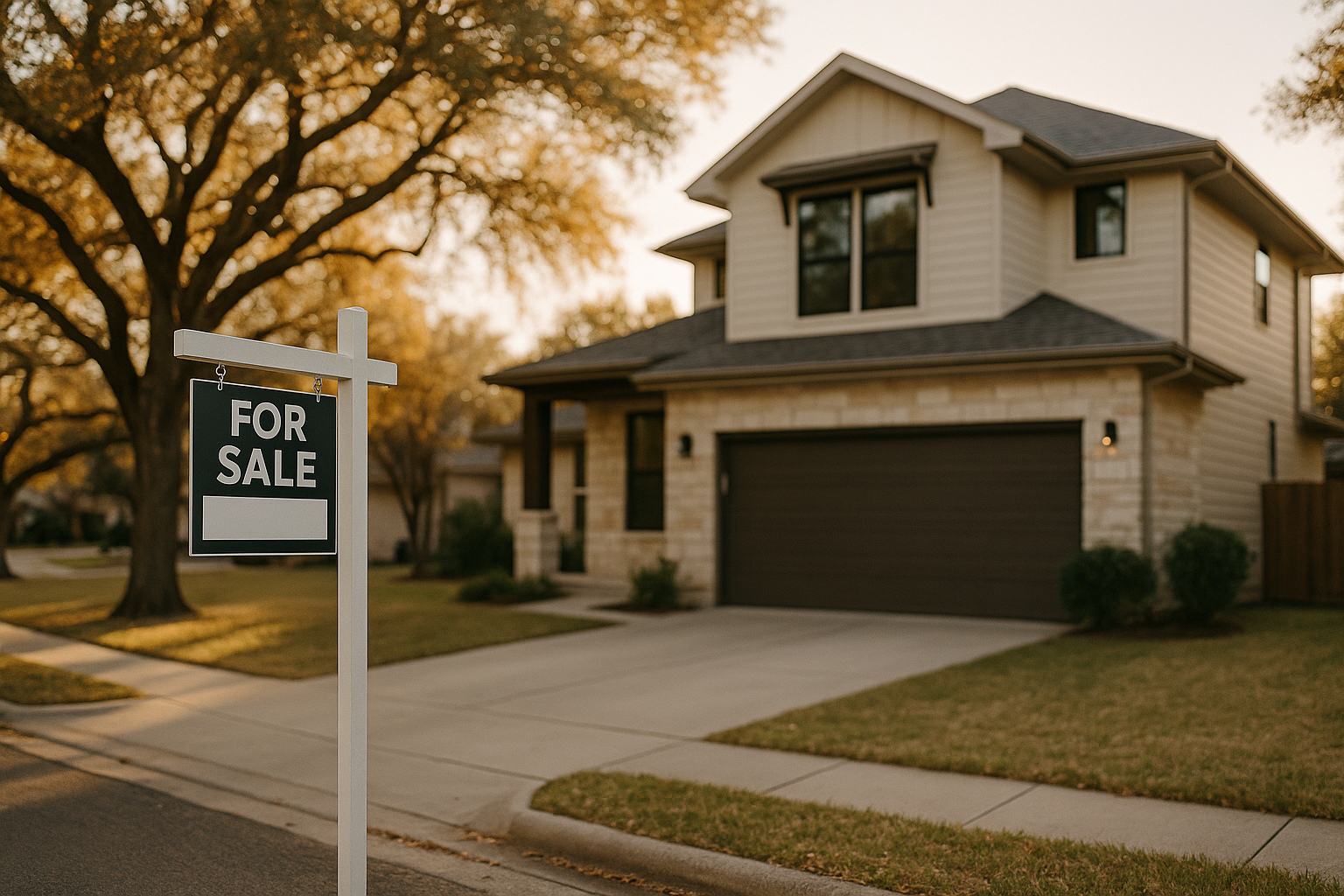
As Texas heads into the fall and autumn stretch after Summer 2026, the big question for buyers and sellers is whether the market finally settles into a “new normal”—or throws another curveball. Mortgage rates are still the headline driver, and the Federal Reserve’s recent rate decisions continue to ripple through borrowing costs, affordability, and buyer confidence across the state.
The short version: Texas is likely to see a more balanced market than the frenzy years, but not a uniform one. Future forecasts depend heavily on where you’re shopping (Austin vs. Dallas-Fort Worth vs. San Antonio vs. Houston), how quickly homes are priced correctly, and whether mortgage rates ease, hold, or grind higher this autumn.
Will Texas home prices rise or fall in fall and autumn 2026?
Post-summer is typically a “reset season” in Texas real estate. Once the peak family-moving window closes, the market often cools: fewer new listings, fewer active buyers, and more price sensitivity. In fall and autumn 2026, that seasonal slowdown is meeting a broader rebalancing—more normal negotiation patterns, fewer bidding wars, and a stronger focus on monthly payment math.
In many Texas metros, prices are likely to move sideways rather than swing sharply. That doesn’t mean every home holds value equally, though. Well-maintained, correctly priced homes in desirable school zones or near major job hubs can still move quickly, while homes that feel “overpriced for the payment” may sit longer and require strategic price adjustments.
Regionally, the direction of pricing may vary:
- Austin and parts of Central Texas: More sensitive to rate changes due to higher price points and a recent history of faster run-ups; you may see more price reductions on homes that miss the mark.
- Dallas-Fort Worth: Often steadier due to diversified job growth and constant in-migration, but buyers remain payment-focused; overpriced listings can get ignored.
- Houston: Typically more affordable relative to income, which can cushion demand; neighborhood and flood-risk factors remain key differentiators.
- San Antonio: Often benefits from affordability and military-related stability; pricing may be more resilient for entry-level and mid-priced homes.
Across Texas, expect a market where condition, pricing, and location matter more than ever. The days of “list it high and see what happens” are harder to pull off in a higher-rate environment.
What’s happening with mortgage rates this autumn, and how is the Fed affecting borrowing costs?
Mortgage rates are rarely just about housing—they’re about inflation, economic growth, and bond markets. Even when the Federal Reserve isn’t directly setting mortgage rates, its decisions shape the overall interest-rate environment. In autumn 2026, buyers should be prepared for mortgage rates to remain “higher for longer” compared to the ultra-low era, with periodic spikes when markets react to inflation data or Fed messaging.
Here’s the practical takeaway for Texas buyers: the Fed’s recent rate decisions influence short-term rates and investor expectations. That filters into longer-term bond yields, and mortgage-backed securities pricing often follows. When investors demand higher returns due to inflation uncertainty or stronger-than-expected economic reports, mortgage rates can face upward pressure—even if home prices are steady.
Why mortgage rates can feel stubborn in fall 2026
Autumn often brings volatility because markets digest updated inflation readings, jobs reports, and central bank guidance heading into year-end. For borrowers, this can look like rate quotes changing quickly from week to week—even when nothing changed about the home they want to buy.
Other forces that can keep borrowing costs elevated include:
- Sticky inflation components: Housing, insurance, and services inflation can slow the “rate relief” buyers hope for.
- Strong labor markets: If wage growth stays firm, policymakers may be cautious about easing too quickly.
- Bond market risk premiums: Investors may demand higher yields if economic uncertainty rises.
In other words, the future forecasts for mortgage rates this fall and autumn should be treated as a range of scenarios—not a promise of an imminent drop. For many Texas households, the better strategy is to plan around the payment you can comfortably afford today, with flexibility to refinance later if rates improve.
Strategies for Texas buyers who are tired of waiting on the sidelines
If you’ve paused your search hoping for a dramatic rate drop, you’re not alone. But waiting can have a cost: you may miss the specific home, school zone, or neighborhood fit you want, and rents in many Texas markets don’t necessarily fall just because home sales slow down. For buyers who are ready in life terms—job stability, savings, timeline—fall 2026 can offer advantages, especially as competition tends to soften after summer.
Here are realistic, Texas-friendly strategies buyers can use without overextending.
- Focus on payment stability, not perfect timing: Build a budget that includes taxes, insurance, HOA (if applicable), and maintenance—especially important in Texas where property taxes and insurance can materially impact the monthly payment.
- Get a fully underwritten pre-approval: This goes beyond a quick pre-qual. It can strengthen your offer and reduce closing surprises when lenders verify income, assets, and credit.
- Use rate tools strategically: Ask your lender about temporary or permanent rate buydowns, and compare the cost against your expected time in the home. A well-structured buydown can help in a higher-rate autumn market.
- Target homes that are “lingering” for solvable reasons: Listings that need cosmetic updates, have dated finishes, or were initially overpriced can become good value opportunities—if the inspection is clean and the numbers work.
- Negotiate for what matters most: In a rebalancing market, buyers may be able to request seller credits, repairs, or closing cost assistance. Prioritize concessions that reduce your cash-to-close or improve the home’s livability.
One important Texas-specific note: don’t underestimate the impact of insurance and weather-related risk on affordability. Between wind/hail exposure, roof condition, and neighborhood flood history, the “true payment” can differ widely from one property to the next. Ask for an insurance quote early in the process—before option period ends—so you don’t fall in love with a payment that won’t pencil out.
Buyers should also watch the calendar. Fall and autumn shopping can be calmer, with fewer competing offers, and sellers may be more open to negotiation after the summer rush. That can be a healthy tradeoff if you’re less concerned about having dozens of choices and more focused on getting a fair deal.
How sellers can price competitively as the Texas market rebalances
For sellers, the post-summer 2026 market rewards precision. In many Texas neighborhoods, pricing too high is no longer “a harmless test.” It can backfire by increasing days on market, shrinking your buyer pool, and triggering larger price cuts later—especially when mortgage rates are already stretching affordability.
Competitive pricing in fall and autumn is about aligning with how buyers shop today: they filter by monthly payment, not just list price. A small price difference can push your home into a higher payment bucket, where fewer buyers qualify or feel comfortable.
Here are practical pricing and positioning moves that tend to work in a rebalancing Texas market:
- Anchor to recent, nearby closed sales: Focus on the last 60–90 days in your subdivision or a truly comparable pocket of the neighborhood. Older comps may reflect different rate conditions.
- Watch active competition closely: Your biggest competitor is the home down the street offering a newer roof, better layout, or seller concessions. If they reduce price, your “market” just changed.
- Use strategic concessions instead of chasing the price: A seller credit toward closing costs or a rate buydown can be more compelling than a small price reduction, because it can lower the buyer’s effective payment.
- Invest in the obvious fixes: In Texas, buyers pay attention to roof age, HVAC performance, drainage, foundation red flags, and visible water intrusion. These items can derail offers faster than dated countertops.
- Prepare for inspection negotiations: A clean seller disclosure, receipts for repairs, and a pre-listing inspection (when appropriate) can reduce renegotiation risk.
Sellers should also remember the seasonal shift: in fall and autumn, you may have fewer showings simply because there are fewer active buyers. That makes each showing more valuable. Strong listing photos, clean presentation, and fair pricing matter even more when buyer traffic is thinner.
What should Texans expect next? Future forecasts for inventory, demand, and negotiation power
Looking beyond the immediate post-summer period, the most realistic future forecasts for Texas are a market that remains highly local and payment-driven. Statewide trends matter, but neighborhood-level supply and demand is what determines whether you’ll see multiple offers or a slow burn with concessions.
Here’s what to watch through late 2026 and into the next spring cycle:
- Inventory levels: If listings build faster than buyer demand, negotiation power tilts toward buyers—especially for homes that aren’t move-in ready. If inventory tightens, sellers regain leverage, even with higher mortgage rates.
- Affordability pressure: If mortgage rates stay elevated or move higher, affordability remains the governor on price growth. This tends to reward correctly priced homes and punish “stretch pricing.”
- New construction incentives: In many Texas suburbs, builders can adjust faster than resale sellers by offering rate buydowns and closing cost help. That competition can influence resale pricing, particularly in fast-growing corridors around DFW, Austin’s outskirts, and parts of San Antonio.
- Employment and in-migration: Texas demand is often supported by job growth and relocation. If hiring stays steady, the floor under demand tends to hold; if layoffs rise, higher-end segments may soften first.
For buyers, a balanced autumn market often creates openings: you can negotiate, you can take time to inspect carefully, and you can avoid the emotional whiplash of bidding wars. For sellers, it’s still very possible to sell quickly—but the path is narrower: price it right, present it well, and meet the market where it is.
The bottom line for fall and autumn 2026 in Texas: expect steadier, more rational conditions than the boom years, with mortgage rates continuing to shape behavior. The best outcomes will go to the buyers who prepare thoroughly and the sellers who price competitively as the market rebalances.