Drive through the edges of Austin, Dallas-Fort Worth, Houston, or San Antonio and you’ll notice a new kind of neighborhood taking shape: rows of brand-new single-family homes with leasing signs instead of “For Sale” banners. These are build-to-rent (BTR) communities, and they’re quickly becoming a major force in the rental market Texas residents rely on—especially as affordability, interest rates, and lifestyle preferences continue to evolve.
This matters whether you rent or own. For renters, rental communities Texas built as purpose-designed neighborhoods can offer more space and privacy than apartments—often with resort-style amenities. For buyers, build-to-rent Texas can influence nearby home prices, resale competition, and the overall balance between renting and owning. In this guide, we’ll break down what BTR is, why it’s expanding, where it’s growing fastest, and how it may shape Texas housing trends 2025.
What Is Build-to-Rent (BTR)?
Build-to-rent refers to newly constructed homes—typically single-family detached houses, townhomes, or cottage-style units—built specifically to be rented, not sold to individual homeowners. Many of these are professionally managed by a single owner (often an institutional investor or large operator), which is why you’ll also hear terms like BTR neighborhoods Texas or “single-family rental communities.”
How BTR Differs From Traditional Rentals
- Not a scattered-site rental: Instead of individual rental houses spread across a city, BTR concentrates single-family rental homes Texas into one cohesive, managed neighborhood.
- New construction by design: Floor plans, finishes, and maintenance systems are chosen for durability and long-term rental performance.
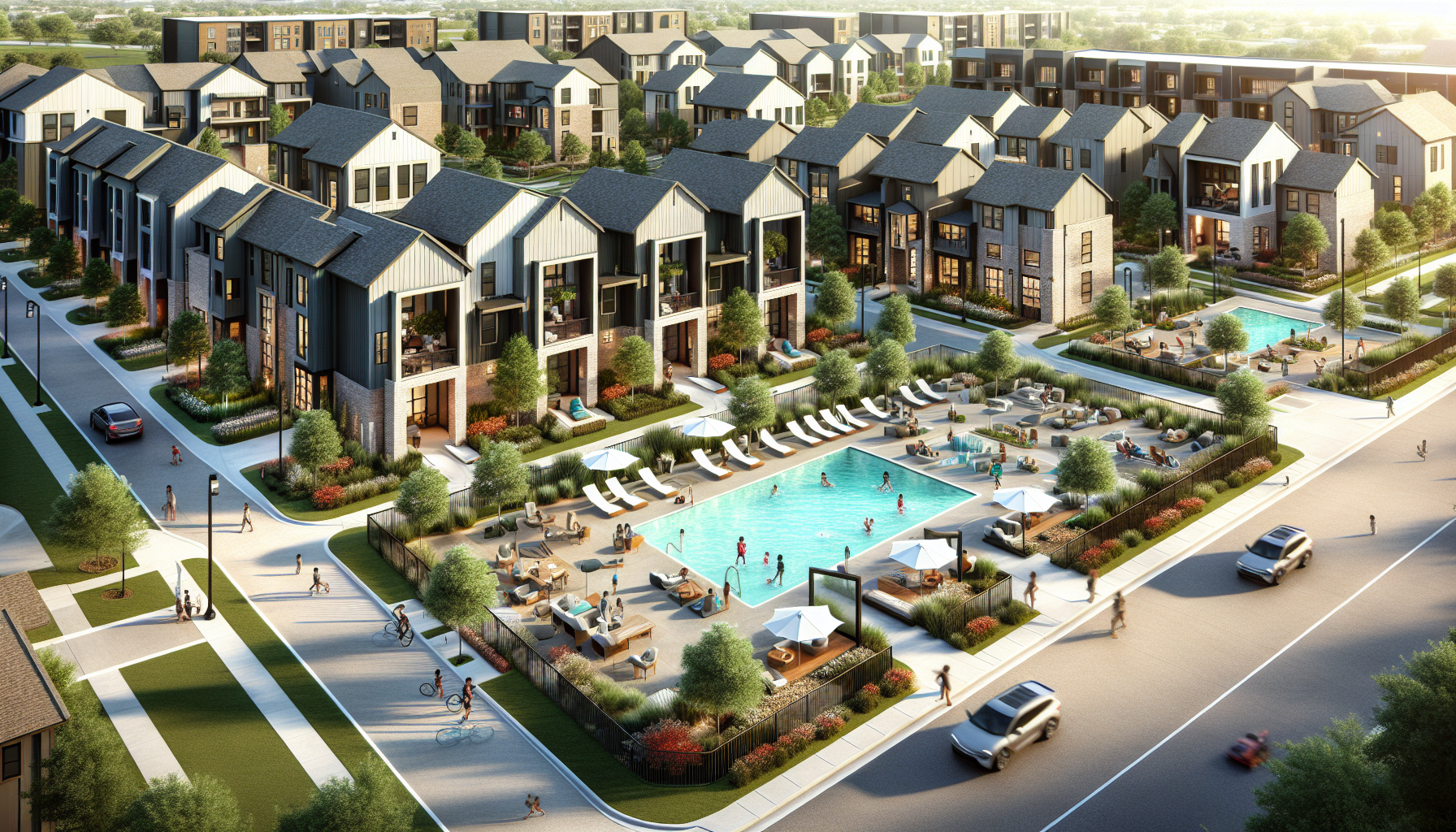
- Amenities and services: Many communities include pools, dog parks, co-working spaces, package lockers, and on-site management—features historically associated with apartments.
Why Developers Are Building BTR Communities Across Texas
The growth of build-to-rent developers Texas isn’t an accident—it’s a response to demand, financing realities, and the state’s long-running population growth. Texas continues to attract new residents for jobs, relative affordability (compared to many coastal markets), and business expansion. That creates a deep pool of renters, including households that want a yard and garage but aren’t ready to buy.
Key Drivers Behind the Trend
1) Affordability Pressures and Mortgage Rate Sensitivity
In many Texas metros, home prices rose sharply over the past several years. Even when prices stabilize, monthly payments can remain high if mortgage rates are elevated. That reality fuels renting vs buying Texas debates for everyday households—especially first-time buyers trying to save for down payments and closing costs. BTR offers a “single-family lifestyle” without a mortgage commitment.
2) Demand for Space Without the Burden of Ownership
Many renters want an extra bedroom for remote work, a backyard for pets, or separation from shared walls. BTR communities often meet those needs while keeping maintenance responsibilities largely off the resident’s plate—one of the biggest lifestyle advantages of Texas real estate rentals in a managed community setting.
3) Developer and Investor Economics
BTR can pencil out differently than for-sale subdivisions. Developers may build, stabilize occupancy, and then sell the entire community to long-term owners—often large investors. In other cases, the developer retains ownership and operates it. Either way, new rental communities TX can provide predictable cash flow once leased.
4) Texas-Friendly Development Footprint
Texas metros have significant suburban land pipelines, especially in growth corridors near major highways and job centers. While local zoning, infrastructure, and permitting vary widely by city and county, the overall ability to build at scale—particularly in outer-ring suburbs—supports BTR expansion.
Where BTR Is Growing Fastest: Key Texas Markets
Build-to-rent is statewide, but the biggest concentration of build-to-rent Texas activity shows up where job growth, in-migration, and new construction capacity intersect.
Austin: BTR Along Growth Corridors
Austin’s housing story has been defined by rapid growth and affordability challenges. As more households get priced out of close-in neighborhoods, BTR communities are appearing in suburban corridors where new construction is more feasible. For renters, BTR can be an alternative to high-rise or mid-rise apartments, providing more space while staying within commuting distance of major employment hubs.
What to watch in Austin: competitive leasing incentives during softer leasing seasons (often late fall and winter), and how BTR rent levels compare to newer Class A apartments.
Dallas-Fort Worth: Scale and Suburban Demand
DFW is one of the nation’s busiest construction markets, which makes it a natural fit for BTR neighborhoods Texas. With multiple employment centers and a broad suburban footprint, build-to-rent communities can thrive in areas where households want good schools, garages, and neighborhood amenities—without the upfront costs of buying.
In DFW, BTR is also part of a broader ecosystem of rental communities Texas options, from urban apartments to master-planned communities that may include both for-sale and for-rent sections.
Houston: Workforce Mobility and Diverse Submarkets
Houston’s size and diversity create multiple strong submarkets for BTR—especially in areas seeing continued job formation and household growth. The region’s relatively abundant land supply supports new construction, while renters often value flexibility due to job changes and commuting patterns.
A key Houston dynamic: BTR communities may compete directly with older single-family rentals in established neighborhoods, potentially nudging expectations upward for finishes, smart-home features, and amenity packages.
San Antonio: Value-Oriented Growth and First-Time Buyer Overlap
San Antonio has long been viewed as a value play compared to other major Texas metros, but it’s not immune to affordability pressures. BTR can attract renters who want suburban comfort and newer construction at a monthly cost that feels more predictable than ownership—particularly when property taxes, insurance, and maintenance are considered.
In San Antonio, BTR may also overlap with the first-time buyer pool, which makes the conversation about renting vs buying Texas especially relevant.
Pros and Cons for Residents in BTR Neighborhoods
Not every community is the same, so the best approach is to compare lease terms, fees, management quality, and location. Here’s a practical view of the most common tradeoffs in single-family rental homes Texas within BTR communities.
Benefits (Green Flags)
- More space and privacy: Many BTR homes include yards, garages, and fewer shared walls than apartments.
- Newer systems and finishes: New construction can mean fewer immediate repair issues and more energy-efficient features.
- Community amenities: Pools, fitness spaces, trails, dog parks, and co-working areas are common in new rental communities TX.
- Professional management: Centralized maintenance and consistent processes can improve response times (though quality varies).
- Flexibility: Renting offers mobility for job changes, family needs, or a future home purchase plan.
Drawbacks (Red Flags)
- Rent increases at renewal: Lease renewals can bring higher rents, especially in tight submarkets of the rental market Texas landscape.
- Fees and add-ons: Watch for mandatory “amenity fees,” smart-home packages, pest control, or valet trash-like services in the fine print.
- Uniform rules: HOA-style guidelines may apply (parking, landscaping, exterior décor), even though you’re a renter.
- Limited personalization: You typically can’t remodel, paint freely, or make major changes the way an owner can.
- Corporate ownership changes: Communities can be sold to new operators, which may affect service levels and policies.
How BTR Impacts Homebuyers and the For-Sale Market
The rise of build-to-rent Texas doesn’t just affect renters—it can influence buyers, sellers, and neighborhoods in subtle ways. The impact varies by submarket, but a few themes are consistent across Texas metros.
1) More Competition for Entry-Level New Construction
When builders allocate homes to rental portfolios, there may be fewer similar new homes available for purchase in certain price bands. In fast-growing suburbs, that can keep pressure on entry-level inventory—one reason Texas housing trends 2025 conversations often focus on supply, not just demand.
2) A “Try Before You Buy” Path
Some households use BTR as a stepping-stone: rent a single-family home in the area, learn the commute and school zones, then buy later. For first-time buyers, this can reduce the risk of purchasing in the wrong neighborhood.
3) Neighborhood Pricing and Appraisal Questions
In mixed areas with both rentals and owner-occupied homes, buyers sometimes wonder if nearby rental concentration will affect resale. Appraisers typically rely on comparable sales, not rental status, but community perception can influence demand. The most important practical factor is maintenance: well-managed communities tend to be neutral or even positive for nearby appeal, while poorly maintained rentals can be a drag.
Renting vs Buying in Texas: A Simple Decision Framework
The “right” move depends on finances, timeline, and lifestyle. Here’s a straightforward way to think about renting vs buying Texas in a BTR era.
If Renting (Including BTR) May Fit Best
- You may move within 1–3 years (job change, family plans, uncertainty about location).
- You’re rebuilding credit or saving for down payment and reserves.
- You prefer predictable maintenance and fewer surprise costs.
- You want a single-family layout now, but aren’t ready for a mortgage.
If Buying May Fit Best
- You plan to stay put long enough to justify closing costs and market cycles.
- You want long-term payment stability (especially if rates drop later and refinancing becomes an option).
- You value control: renovations, pets, landscaping, and customization.
- You’re prepared for Texas-specific ownership costs like property taxes and insurance, plus ongoing maintenance.
Step-by-Step: How to Evaluate a Build-to-Rent Community Before You Lease
A BTR lease is still a lease—but the community setup can come with extra layers (fees, rules, amenity access). Use this step-by-step checklist before signing in any of the major rental communities Texas markets.
Step 1: Compare Total Monthly Costs (Not Just Base Rent)
Ask for a full fee sheet. Confirm which utilities are included, whether lawn care is included, and any recurring community fees. This helps you compare BTR to apartments and older Texas real estate rentals fairly.
Step 2: Review Lease Terms and Renewal History
Ask how renewals are priced and whether they use market-rate resets. In seasonal markets, you may see more negotiating room in late fall and winter than during spring and summer leasing peaks.
Step 3: Check Maintenance Response and Warranty Coverage
Because homes are new, some issues may fall under builder warranties. Ask who coordinates warranty repairs and typical timelines.
Step 4: Understand Community Rules
Clarify parking rules, guest policies, pet restrictions, and whether fences, grills, or exterior décor are allowed. These rules can be stricter than some renters expect.
Step 5: Research the Operator
Look for consistent management practices and clear communication. A well-run operator is a major green flag in BTR neighborhoods Texas.
What to Expect for Texas Housing Trends 2025: Scenarios, Not Guarantees
Looking ahead, the BTR sector is likely to remain a meaningful part of Texas housing trends 2025, but outcomes will vary by metro and by submarket. If job growth stays steady and household formation remains strong, demand for single-family rental homes Texas should hold up—especially for renters seeking space and flexibility.
At the same time, more supply can mean more competition among operators. In some areas, that could translate into leasing specials, upgraded amenities, or more resident-friendly concessions. If mortgage rates ease meaningfully, some renter households may pivot back toward buying, which could slow lease-up velocity in certain pockets. The most realistic outlook is a “both/and” market: rentals and homeownership continuing to coexist, with BTR serving the middle ground.
Bottom Line: BTR Is Reshaping the Texas Rental and Ownership Landscape
The rise of build-to-rent developers Texas is creating a new category of housing that fits the way many Texans live today—mobile careers, growing families, and a desire for space without the full responsibility of ownership. For renters, new rental communities TX can offer a high-quality single-family experience. For buyers, BTR is another factor influencing inventory and neighborhood dynamics.
If you’re deciding between leasing in a BTR community or purchasing, focus on your timeline, your total monthly budget, and how much control you want over your home. In today’s rental market Texas, an informed comparison is your best advantage.