Mortgage rates have become the deciding factor for many Texas buyers—and right now, the conversation is all about rates hovering around 6% to 6.1%. That range may not sound dramatic day to day, but it can meaningfully change your monthly payment, your buying power, and the type of home that fits your budget in markets from Houston and San Antonio to Dallas–Fort Worth and Austin.
This guide lays out a practical, Texas-specific “6.1% mortgage rate strategy” for staying confident in today’s financing environment. We’ll unpack what a 6.1% rate means for affordability, why Texas housing market interest rates have stabilized near this level, and mortgage payment strategies Texas buyers can use—whether you’re buying your first home in Fort Worth or moving up in the suburbs of Houston.
What does a 6.1% mortgage rate mean for Texas affordability right now?
When buyers talk about affordability, they’re usually reacting to the monthly payment—not just the price tag. With current mortgage rates Texas buyers are seeing around 6%–6.1%, the payment impact is large enough to shape what neighborhoods you shop, how much you put down, and whether you choose a 30-year loan or something shorter.
As a quick rule of thumb, interest rate changes matter most in the early years of a mortgage, when most of your payment is interest. That’s why buying a home with 6 percent mortgage rate can feel like a different world compared with the ultra-low-rate period earlier this decade.
How interest rates affect monthly payments (a simple Texas-friendly example)
Here’s a plain-English way to think about it: the interest rate determines how expensive it is to borrow each dollar. As rates rise, the same home price produces a higher monthly principal-and-interest payment. That often forces one of three adjustments: lower price point, larger down payment, or a different loan structure.
For example, on a 30-year fixed loan, a 6.1% rate versus a 5.1% rate can move the monthly payment by hundreds of dollars depending on the loan size. And that’s before you add Texas property taxes and homeowners insurance, which are major parts of the full housing payment in many counties.
Texas-specific note: even when home prices cool, the “all-in” monthly payment can stay stubbornly high because property taxes and insurance often rise over time. In places like Harris, Fort Bend, Collin, Denton, Williamson, and Bexar counties, many buyers feel the squeeze most in the escrow portion of their payment.
Texas property taxes, insurance, and the real monthly payment
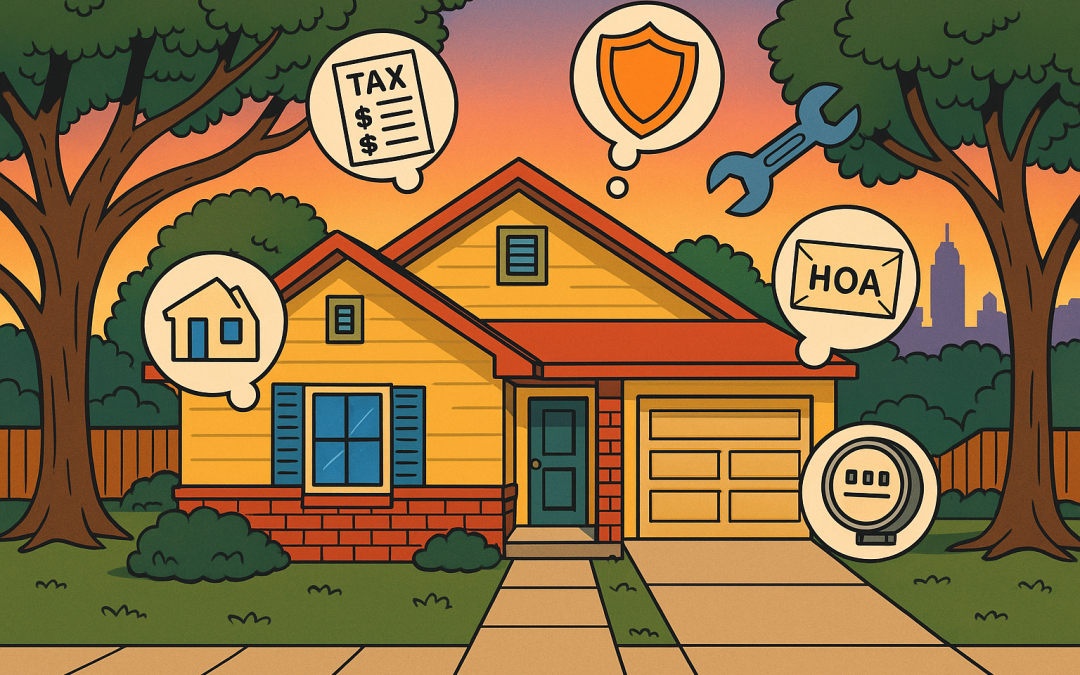
When you hear someone say, “I can afford a $2,800 payment,” they usually mean the full payment: principal, interest, taxes, and insurance (often called PITI). In Texas, taxes and insurance can be a larger slice of PITI than buyers expect, especially first-timers coming from renting.
To keep your budget realistic, ask your lender for scenarios that include:
- Estimated property taxes based on the neighborhood and the new purchase price (not the seller’s old tax bill)
- Insurance quotes that reflect today’s replacement-cost pricing
- Any HOA dues (common in many master-planned Texas communities)
This is where Texas real estate financing tips really matter: two homes with the same price can have very different monthly costs if one sits in a higher-tax area or carries higher insurance costs.
How today compares with the higher-rate reality of recent years
If you’ve watched Texas home loan trends closely, you’ve seen rates move up and down, but many buyers’ memories are anchored to the “cheap money” era. In more recent years, buyers also experienced higher peaks—periods where rates pushed well above 6% and sometimes into the 7% range depending on the week, the loan type, and the borrower profile.
So while 6%–6.1% isn’t “low,” it can feel more manageable than the highest points buyers saw recently. That’s part of why navigating mortgage rates Texas buyers face today is less about waiting for a miracle drop and more about building a plan that works now—with flexibility if rates improve later.
Why have Texas housing market interest rates stabilized around 6%–6.1%?
Mortgage rates don’t move randomly. They respond to a mix of inflation expectations, Federal Reserve policy direction, bond market pricing, and investor demand for mortgage-backed securities. The result is that rates can stabilize for stretches when the market feels it has a clearer read on where inflation and economic growth are headed.
In Texas, the day-to-day shopping experience also contributes to the sense of “stability.” Many lenders are pricing competitively, and borrowers are choosing similar products—especially 30-year fixed-rate loans—so the quoted range often clusters near a tight band like 6%–6.1%.
From a practical standpoint, here’s why many buyers are seeing a plateau-like environment in current mortgage rates Texas shoppers are quoted:
- Inflation has been less volatile than during peak swings, reducing rate whiplash
- Markets have adjusted to “higher for longer” expectations, limiting sudden repricing
- Lenders are competing for purchase loans, sometimes using credits or pricing specials that keep rates near a common range
It’s also worth noting that “Texas mortgage rates 2026” discussions often blend national rate drivers with local market realities. Texas doesn’t set mortgage rates, but Texas buyers do experience the rate environment differently because property taxes, insurance, and the state’s fast-growing metro areas shape affordability decisions.
How to use the “6.1% mortgage rate strategy” to buy confidently in Texas
A smart 6.1% mortgage rate strategy isn’t about pretending rates don’t matter—it’s about controlling what you can. The best approach usually combines three moves: strengthen your borrower profile, structure the loan to match your timeline, and negotiate hard on the purchase (including concessions that reduce your effective cost).
Below are mortgage payment strategies Texas buyers are using right now to make buying a home with 6 percent mortgage rate feel less intimidating—and more predictable.
1) Improve credit and pricing tiers (often the biggest “silent discount”)
Your credit score influences your rate and costs because it affects how lenders price risk. Even a modest score improvement can move you into a better pricing tier, which can lower your payment or reduce fees.
Practical steps buyers can take 30–90 days before applying:
- Pay down credit card balances to lower utilization (often a fast win)
- Avoid opening new accounts right before mortgage underwriting
- Check for errors on your credit report and dispute inaccuracies
- Keep all payments on time—late payments can be costly in pricing
If you’re navigating mortgage rates Texas buyers are dealing with this year, a lender conversation about “rate versus points” can also help. Sometimes paying points makes sense, but only if you expect to keep the loan long enough to break even.
2) Re-think down payment strategy (without draining your safety net)
In Texas, down payment decisions often come down to balancing a lower monthly payment against keeping cash for closing costs, moving expenses, and a healthy emergency fund. More down payment reduces the loan amount, which reduces the principal-and-interest payment at any rate—including 6.1%.
But buyers should be cautious about putting “every dollar” into the down payment. Texas homes can come with real-world first-year costs (fence repairs, HVAC tune-ups, blinds, lawn equipment), and keeping reserves can prevent post-closing stress.
Common, workable approaches include:
- Choose a down payment level that keeps 3–6 months of reserves available
- Compare 5% vs. 10% vs. 20% down with full PITI included
- Ask about lender-paid mortgage insurance options where available, and compare costs carefully
3) Explore loan terms and products that match your timeline
Not every buyer needs a 30-year fixed, and not every buyer should avoid it. The “best” loan is the one that fits how long you expect to stay in the home and how stable you want your payment to be.
Options many Texas buyers consider:
- 30-year fixed: Most popular for payment stability and long-term budgeting
- 15-year fixed: Higher payment, but much less interest over time—best for buyers with strong cash flow
- Adjustable-rate mortgages (ARMs): Can offer a lower initial rate; best for buyers with a shorter ownership horizon or a plan to refinance, but requires clear risk tolerance
Texas home loan trends also show many buyers leaning into “payment certainty,” especially when property taxes and insurance already create year-to-year variability. For that reason, a fixed-rate structure remains a comfort choice, even in a 6%–6.1% environment.
4) Negotiate concessions and consider a temporary buydown
In a more balanced market, negotiations can matter as much as the interest rate. Seller concessions—credits paid at closing—can help cover closing costs or fund a temporary interest rate buydown. This can be especially useful when you want payment relief in the first year or two.
A common approach is a temporary buydown (often structured as a 2-1 buydown), where the rate is lower for the first year and steps up toward the note rate over time. It’s not free money—the cost is usually paid upfront, often by the seller as part of the deal. But it can create breathing room while you settle into the home and adjust your budget.
In many Texas neighborhoods—especially where inventory has improved compared with the frenzied peak—buyers may find more room to negotiate on:
- Seller-paid closing costs
- Rate buydown credits
- Repairs or repair credits after inspection
- Price reductions that directly lower the loan amount
This is one of the most actionable Texas real estate financing tips: negotiate the full package, not just the sticker price.
5) Shop lenders carefully and compare APR, not just the headline rate
Two lenders can quote the same rate but offer very different overall costs. Ask for a formal Loan Estimate and compare the APR, lender fees, and credits. Pay attention to whether you’re being quoted a rate with points, and what the breakeven timeline looks like.
Also consider service quality. In Texas, where contract timelines can be tight and appraisal/insurance details matter, a responsive lender can reduce stress and help avoid closing delays.
Refinancing later: smart option or wishful thinking?
Many buyers feel hesitant to commit at 6%–6.1% because they hope rates will drop. Refinancing can be a smart tool, but it works best as an option—not the foundation of your purchase decision.
Mortgage rate forecasts Texas buyers hear about can change quickly. The healthier mindset is: buy a home that fits your budget today, then refinance later if the math works and your long-term plan still makes sense.
When refinancing can make sense
Refinancing generally becomes compelling when you can reduce your rate enough to offset closing costs within a reasonable timeframe. Another reason is switching from an adjustable rate to a fixed rate for long-term stability, or removing mortgage insurance if your equity position improves.
Green flags that a refinance might work later:
- You expect to keep the home long enough to recoup refinance costs
- Your credit profile may improve after purchase
- You’re buying in an area with steady demand and potential for equity growth over time
Common mistakes Texas buyers should avoid
One mistake is stretching your budget because you assume you’ll refinance quickly. Another is overlooking total housing costs—especially taxes and insurance—when calculating whether a refinance would materially improve affordability.
Also, be cautious about using refinance expectations to justify skipping an inspection or accepting major repair risk. A lower future rate won’t fix a foundation issue, aging roof, or chronic drainage problems—three issues Texas buyers frequently watch for, depending on region and soil conditions.
Texas housing market 2026 outlook: what buyers should watch as rates hover near 6%
No one can promise where rates will land, but buyers can watch the indicators that shape Texas mortgage affordability 2026: inflation trends, job growth in major metros, housing supply, and the pace of new construction—especially in fast-growing corridors like the I-35 stretch (San Antonio to Austin), the DFW suburbs, and parts of the Houston exurbs.
The Texas housing market 2026 outlook is often described as “more normal” than the extreme swings of earlier years: less frantic bidding in many neighborhoods, more listings to choose from in certain price bands, and buyers paying closer attention to the monthly payment than the headline price.
Here are grounded scenarios to keep in mind when thinking about Texas mortgage rates 2026 and mortgage rate forecasts Texas buyers may see:
- If rates stay near 6%: Affordability remains payment-driven; negotiations, credits, and smart loan structuring matter a lot
- If rates ease modestly: More buyers re-enter the market, which can increase competition in popular school zones and close-in neighborhoods
- If rates rise again: Buyers with strong credit, cash reserves, and flexibility on home type or location will have an advantage
Across these scenarios, the most durable strategy is the same: focus on a payment you can comfortably handle, keep reserves, and use the financing tools available. That’s the heart of navigating mortgage rates Texas buyers are facing in this cycle.
If you’re deciding whether to move forward now, remember this: a 6.1% rate environment doesn’t eliminate opportunity—it changes where the wins come from. In today’s Texas real estate financing landscape, buyers often win by preparing thoroughly, negotiating thoughtfully, and choosing a loan structure that fits both the home and the life you plan to live in it.