In today’s Texas housing market, your first conversation with a lead is rarely the moment they’re ready to buy or sell. Whether you’re working Austin move-up buyers, Houston investors, San Antonio first-timers, or Dallas-Fort Worth relocations, most people need time, clarity, and trust before they commit. That’s why a consistent, well-timed real estate lead follow-up process matters right now: it’s the difference between a name in your inbox and a signed client agreement.
Texas Realtor lead generation can be strong—open houses, sign calls, Facebook leads, referral networks, and relocation inquiries keep pipelines active. But real estate lead conversion is where many agents lose momentum, usually because follow-up feels awkward, inconsistent, or too pushy. The good news: you can build a repeatable real estate follow-up strategy that feels professional, helpful, and human.
Why consistent follow-up wins in the Texas housing market
Texas is a “life-change” state: job relocations, new construction communities, downsizing retirees, and first-time buyers all create steady demand. But decision timelines vary widely. In spring and early summer, many families time moves around the school calendar, while late summer and fall can bring relocation waves and buyers trying to lock in terms before holiday slowdowns. Interest-rate changes and local inventory shifts can also turn “maybe later” leads into “we need to act” leads quickly.
That’s why consistent real estate lead nurturing is one of the most reliable successful real estate agent habits. You’re not just checking in—you’re staying present so that when the lead’s urgency spikes, you’re the agent they remember. In competitive markets like Austin or parts of DFW, leads may talk to multiple agents. In slower pockets of the market, they may pause for months. Either way, the agent with the best follow-up system tends to win.
A strong follow-up cadence also protects you from the classic Texas real estate career trap: feast-or-famine production. If you want to keep building a real estate pipeline, follow-up can’t be a “when I have time” task. It has to be scheduled, trackable, and tied to clear next steps.
How to follow up with real estate leads without sounding pushy
If you’ve ever worried you’ll come across as aggressive, you’re not alone. The secret to how to follow up with real estate leads in a way that builds trust is simple: lead with relevance, not pressure. Your job is to reduce uncertainty—about timing, financing, neighborhoods, and the process—so the lead feels safe taking the next step.
Use the “permission + value + question” formula
This approach works across calls, texts, and emails, and it’s one of the best real estate agent sales tips for keeping conversations moving.
- Permission: “Is now a bad time?” or “Can I send a couple options?”
- Value: “I pulled a quick snapshot of homes under $450K in Cypress with low HOA fees.”
- Question: “Do you prefer something move-in ready, or are light updates okay?”
That last question matters because it invites a real response. The goal of real estate prospecting tips isn’t to “check in.” It’s to learn something new that helps you personalize the next touch.
Match your follow-up to the lead type
Not all leads want the same approach. A Zillow lead asking for a tour is different from an open house visitor who’s “just looking,” and both are different from a past client referral. Your follow-up should reflect where the lead came from and what they asked for.
- Tour request leads: Fast response, confirm details, offer two showing times, and clarify financing status.
- Open house leads: Thank them, ask what they liked/disliked, and offer to set up a tailored search.
- Relocation leads: Provide area guidance (commute, schools, property taxes, builders) and offer a brief strategy call.
- Seller leads: Offer a pricing range, discuss timing, and ask about their next move and ideal list date.
This is also where Texas-specific knowledge builds credibility. If you can explain differences in property tax rates between nearby areas, typical HOA structures in master-planned communities, or how new construction timelines work around Houston or San Antonio, you stop sounding like a salesperson and start sounding like a guide.
A practical real estate follow-up strategy: calls, texts, emails, and timing
Consistency beats intensity. A real estate lead follow-up plan should feel steady and organized, not like a burst of messages over three days and silence for three weeks. The best real estate follow-up strategy is one you can execute every week—even during busy closings.
Suggested follow-up cadence (first 21 days)
Use this as a baseline and adjust based on engagement. The point is to create enough contact to be remembered, while leaving room for the lead to breathe.
- 0–5 minutes: Text acknowledgment (and confirm the best way to reach them).
- Day 0: Call attempt + short voicemail if no answer.
- Day 1: Email with something useful (listings, neighborhood guide, selling checklist, or lender intro).
- Day 3: Text with a specific question (timing, area, price range, must-haves).
- Day 7: Call attempt + invite to a 10-minute strategy chat.
- Day 10–14: Email with market context (inventory, days on market trend, price reductions, seasonal notes).
- Day 21: “Close the loop” message offering options (pause, monthly updates, or schedule a call).
In Texas, timing can be especially important around weekends. Many buyers tour on Saturdays, so a Friday afternoon text offering a showing window can be more effective than a midweek “checking in.” For sellers, Sunday evening can be a good time to set up a weekday pricing conversation.
Call tips that lead to appointments
Calls still convert well because they create real rapport quickly. Keep it short, and aim for a next step, not a full consultation on the first contact.
- Open with context: “You reached out about the home in Katy—do you have two minutes?”
- Ask one qualifying question: “Are you already talking with a lender, or would you like a couple local options?”
- Offer two choices: “Would you rather talk today at 4:30 or tomorrow morning?”
- End with a clear next step: showing, lender intro, CMA appointment, or search setup.
If they don’t answer, leave a calm voicemail and send a text immediately after. The text should be simple and action-oriented, not a paragraph.
Text message tips that feel professional
Texts work best when they’re specific. Avoid the generic “Just checking in” and replace it with a choice or a question. This is one of the most overlooked Texas real estate agent tips for getting replies.
- “Do you want homes that allow a pool, or is that not a priority?”
- “I can show it today 5–6:30 or tomorrow 11–1. Which is better?”
- “Quick question—are you hoping to move before school starts, or is your timeline flexible?”
Also, respect boundaries. If a lead says “email only,” honor it. If they reply at 9:30 p.m., you don’t have to respond immediately. Consistency is more important than instant availability.
Email tips for real estate lead nurturing
Email is where you can deliver value at scale, which matters when you’re focused on how to get more real estate clients without burning out. Keep emails skimmable and helpful.
- Subject lines: Use specific topics like “3 homes in Pearland under $400K (new listings)” or “Next steps for buying in DFW with 5% down.”
- Structure: One key takeaway, 2–3 bullets, one clear call-to-action.
- Content ideas: “What to know about Texas property taxes,” “New construction timelines,” “How option periods work,” “What to expect at appraisal.”
If you’re nurturing long-term, a monthly “Texas market pulse” email can keep you top-of-mind without feeling intrusive—especially if you tailor it by metro (Austin vs. Houston vs. DFW) and include a short note on seasonal patterns.
Real estate CRM strategy: organize your follow-up and build a reliable pipeline
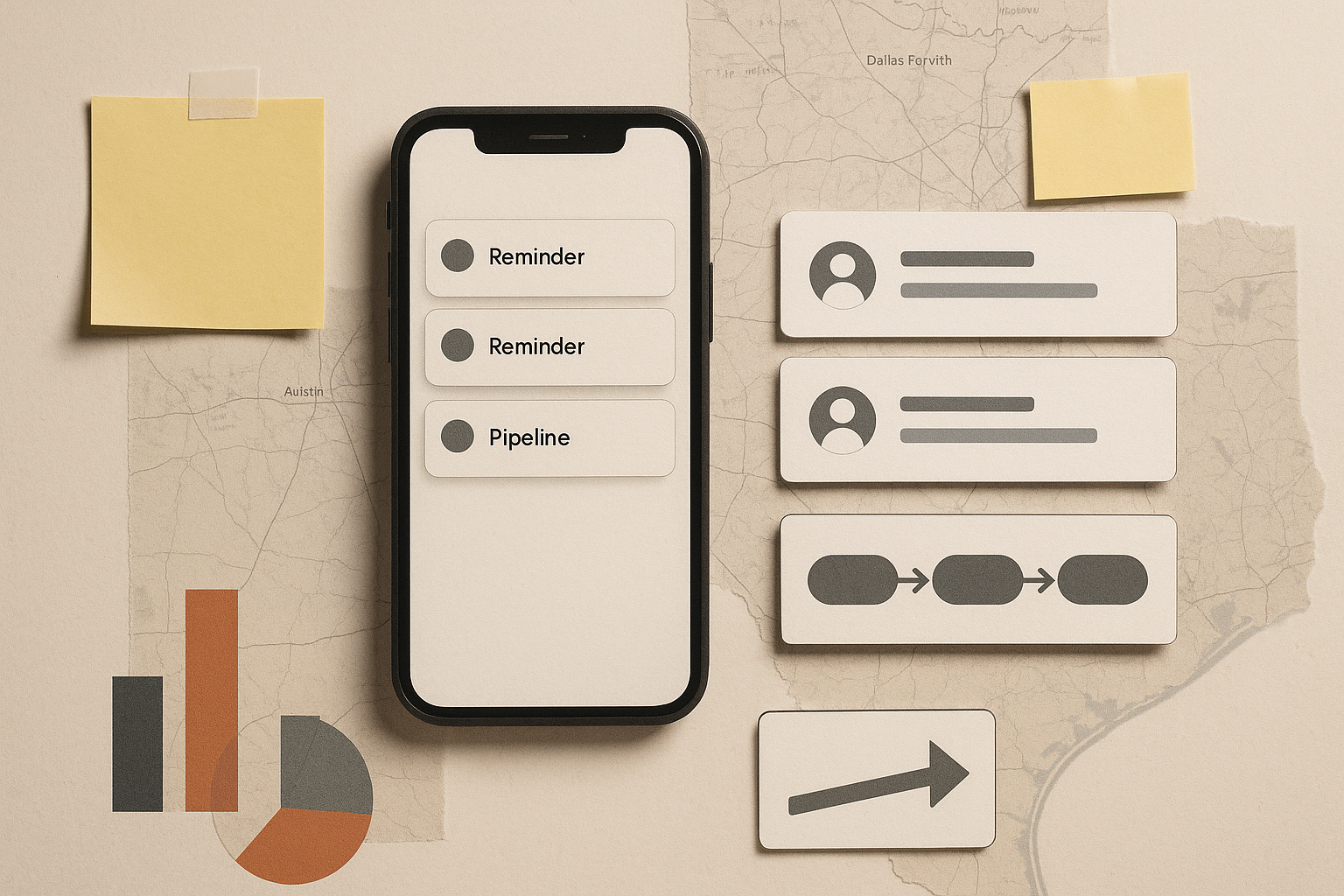
If you want to improve converting real estate leads into clients, you need more than good intentions—you need a system. A real estate CRM strategy helps you track conversations, schedule next actions, and maintain momentum even when you’re in back-to-back inspections or negotiating repairs.
A CRM should do three things well: store clean contact data, document the lead’s motivation and timeline, and prompt you to take the next step. If it doesn’t do those things, it’s just a digital address book.
Set up your CRM for speed and consistency
Many agents overcomplicate CRM setup. Start with a simple structure you’ll actually use, then refine it as your Texas real estate career grows.
- Tags: Buyer, Seller, Investor, Relocation, New Construction, Lease, Past Client, Sphere.
- Stages: New lead, Connected, Active search, Appointment set, Under contract, Closed, Nurture.
- Required notes: Timeline, budget, area(s), motivation, lender status, best contact method.
- Next task: Every lead must have a dated next action (call, text, email, send listings, schedule CMA).
This is where building a real estate pipeline becomes predictable. If each lead has a stage and a next task, your daily work becomes a simple question: “What’s due today?” That’s how top producers stay consistent without relying on memory.
Automate the basics, personalize the moments that matter
Automation is great for speed-to-lead and routine check-ins. Personalization is what creates trust and real estate lead conversion.
- Automate: Initial response, “thanks for reaching out,” basic buyer/seller guides, meeting confirmations.
- Personalize: First live conversation, showing invites, pricing strategy calls, feedback after tours, negotiation updates.
A good rule: if the message could apply to anyone, automate it. If the message is about their specific home, their budget, or their timing, personalize it.
Signs a lead is ready—and how to move from nurture to client
One of the most valuable real estate agent sales tips is knowing when to stop “following up” and start “moving forward.” Leads often signal readiness in small ways. Your job is to recognize those signals and offer a clear next step.
Green flags that indicate real estate lead conversion potential
- They answer with details (not just “thanks”).
- They ask about financing, down payment options, or closing costs.
- They request showing times or ask to see multiple homes.
- They mention a deadline (lease ending, job start date, school schedule).
- They start comparing neighborhoods, commute times, or builders.
When you see these, shift to an appointment-driven approach. For buyers, it’s a buyer consultation or lender introduction. For sellers, it’s a pricing and net sheet conversation. For both, it’s a calendar invite and a defined agenda.
Red flags (and what to do instead of chasing)
Some leads won’t convert soon, and that’s okay—your follow-up strategy should protect your time while still keeping the door open.
- They never answer questions: Move to a lighter cadence and send one value-based email per month.
- They only ask “lowest price” questions: Offer a quick call to clarify goals; if they refuse, keep them in nurture.
- They avoid commitment but keep browsing: Provide a clear “next step” option: consultation, lender pre-approval, or a shortlist tour.
This is a key part of real estate prospecting tips that often gets missed: your pipeline should have both “active” and “nurture” buckets. Not everyone deserves daily attention, but many people deserve a long-term touchpoint.
Long-term nurturing that actually converts
Texas markets can turn quickly, and long-term leads often become short-term leads when circumstances change. The agents who win are the ones who stay helpful without hovering.
- Quarterly check-ins: A short message tied to a market change, seasonal shift, or neighborhood update.
- Lifecycle moments: Lease renewals, new job announcements, family changes, school-year planning.
- Local expertise: Property tax protest season reminders, homestead exemption basics, storm preparedness resources.
Over time, this kind of real estate lead nurturing builds familiarity and trust. And trust is what turns a lead into a signed client—even if they first reached out six months ago.
Ultimately, converting real estate leads into clients isn’t about perfect scripts. It’s about a consistent real estate follow-up strategy, a practical real estate CRM strategy, and the discipline to keep showing up with value. Combine those with strong Texas Realtor lead generation, and you’ll build a healthier pipeline, steadier closings, and a more sustainable Texas real estate career.