
by Darryl Davis | Jul 4, 2025 | Industry, News Feed
Coach Darryl Davis gives you permission to lighten up, enjoy yourself and have more fun in your real estate business.
Real estate is changing fast, and so must you. Inman Connect San Diego is where you turn uncertainty into strategy — with real talk, real tools and the connections that matter. If you’re serious about staying ahead of the game, this is where you need to be. Register now!
Look, sometimes this market, this business, even, can mess with your head. One minute, you’re riding high on multiple offers. The next, you’re refreshing your CRM like it owes you money. Add in economic uncertainty, client curveballs and an inbox full of “just checking ins,” and you’ve got a recipe for burnout with a side of self-doubt.
That’s where your most underrated (and underutilized) business tool comes in: humor.
Not sarcasm. Not fake-it-‘til-you-make-it platitudes. I’m talking about real, gut-level, perspective-resetting, endorphin-releasing laughter. The kind that reminds you you’re human, your clients are human, and not every obstacle requires an Advil and a spreadsheet.
If I sound passionate about this, it’s because I am. Before I ever became a real estate coach or speaker, I trained as a professional actor and stand-up comic. I’ve spent decades studying the science of smiling, humor and human connection — not just because it’s fun, but because it’s healing. It works.
In fact, I wrote a whole book on it: How to Design a Life Worth Smiling About. Because I truly believe that a life worth smiling about starts with choosing to find joy — even in the chaos. Especially in the chaos.
So, let’s talk about how humor isn’t just a mood booster — it’s a business booster, especially when the market gets lean.
Humor is stress relief with a punchline
Real estate is a roller coaster — and not the fun kind with cotton candy at the end. It’s more like the rickety wooden one that makes your knees buckle and your lunch questionable. Humor is what helps you hang on. It lowers cortisol, resets your nervous system, and creates space between you and your stress. That space? That’s where your best thinking lives.
Happy agents = magnetic agents
No one wants to work with an agent who’s wound tighter than a listing agreement. Your energy sets the tone for your client’s experience — and humor makes you relatable, trustworthy, and unforgettable. It helps people feel safe, even in the middle of a bidding war or a blown appraisal.
It’s the best icebreaker (and business-saver)
Whether you’re meeting a new client, calming a nervous seller or navigating the awkward “Why is there a stuffed raccoon in this living room?” moment — humor is your best bet. It’s disarming. It’s real. And it builds trust faster than any scripted pitch ever will.
Laughter fights burnout (and wins)
Let’s talk numbers: 89 percent of workers reported burnout in the past year. Agents? We’re probably at 110 percent. This business will chew up your enthusiasm if you’re not actively protecting it. Laughing isn’t frivolous — it’s fuel. It’s how you stay in the game without losing your mind.
Perspective is everything
When a transaction falls through or your buyer ghosts you for the fifth time, it’s easy to spiral. Humor helps you zoom out. It keeps you from making it personal, keeps you grounded and reminds you that this moment — no matter how frustrating — isn’t forever.
Humor is a communication superpower
Tension during negotiations? Humor helps you redirect it. Clients second-guessing your advice? A little levity can help them breathe. Used with care (and always appropriately), humor shows leadership, humanity, and confidence. It’s what turns you from “just another agent” into their agent.
Laughing unlocks creative problem-solving
Humor and creativity live in the same part of the brain. When you’re laughing, you’re accessing more innovative thinking. That next-level listing strategy? That “why didn’t I think of that sooner” solution? It’s probably waiting on the other side of a good laugh.
So, how do you stay funny when nothing’s funny?
Good question. Here’s how I coach agents through it:
- Reconnect with your WHY: You didn’t get into this business to be stressed 24/7. Whether it was to help people, build wealth or prove something to yourself — get back in touch with that mission.
- Collect the comedy: Keep a “laugh file.” Funny showing stories. Awkward listing moments. Bizarre client questions. Share them with your team. Your future self will thank you.
- Take yourself a little less seriously: Yes, this is serious work — but you’re allowed to smile through it. When you drop the keys, forget a lockbox code or trip over a welcome mat … laugh. Clients won’t remember the fumble — they’ll remember how you handled it.
- Create a fun-first culture: Whether it’s your team, your brokerage or your social feed — surround yourself with people (and posts) that bring joy. Positivity is a business asset. Make sure you’ve got plenty of it.
The punchline
When I say, “design a life worth smiling about,” I don’t mean slap on a fake grin and power through. I mean, choose joy where you can. Choosing to be the kind of person who lightens a room — not just with expertise, but with empathy and a little humor, too.
This market is tough. Clients are on edge. Your energy, your presence and your ability to find the funny matters.
So go ahead — crack an (appropriate) joke. Share the story. Let the smile show up in your conversations. Because when the market gets lean, the agents who keep laughing? They’re the ones who stay standing.

by Luke Babich | Jul 4, 2025 | Industry, News Feed
Real estate is changing fast, and so must you. Inman Connect San Diego is where you turn uncertainty into strategy — with real talk, real tools and the connections that matter. If you’re serious about staying ahead of the game, this is where you need to be. Register now!
It’s impossible to deny the many ways the increase in the number of remote workers since the pandemic has changed the housing landscape. Where once homebuyers focused on proximity to jobs and commute times, many now simply have to wake up and take a few steps to the next room to start work.
As a real estate agent, it’s important to consider your client’s work life and how that impacts the type of home that will suit them best. Some clients will require dedicated home offices, while others might have a hybrid schedule where certain rooms have multiple uses.
Knowing your buyer’s preferences can help you find the ideal home for them. Here are some things remote workers look for when purchasing a home.
1. Separate workspace
Most homebuyers who work remotely prefer having a separate space to work. That way, they have a physical separation between work life and home life. However, with rising home prices and 44 percent of potential homebuyers prioritizing affordability, real estate agents may need to help their clients think creatively about potential workspaces.
For example, if a home doesn’t have a spare bedroom, encourage your clients to use a loft, a reading nook, an enclosed porch, a den or a garage apartment as a home office. A finished room in the basement or a large space with added doors or privacy panels can also help separate a workspace from the rest of the house.
2. Airy floor plans
The median home price was $418,000 as of January 2025, a 45 percent increase in five years. That means many homebuyers are priced out of specific markets that were once within reach. The challenge in this market is finding a home with a spacious floor plan that’s still within your clients’ budget.
Remote workers who are indoors in the same place most of the day want homes that feel spacious and airy to walk around in so they don’t go stir crazy. Agents can help their clients by looking for homes with multiple zones and versatile layouts, which can help break up the monotony of a smaller home.
3. Lots of natural light
Remote workers aren’t waiting in traffic to get to the office, but when they’re working and living in the same space, they’re not getting outside as much. This can take a toll on their mental health and productivity.
Many remote workers are drawn to spaces with abundant natural light, large windows and even skylights. Having a yard or porch to work on can also be helpful if they can work outside on their laptop to enjoy some sunlight.
As a real estate agent, you should look for homes with adequate lighting throughout, especially in potential workspaces.
4. Quiet suburbs
Before the pandemic, more working professionals were flocking to cities for job opportunities. Now that so many people work remotely, a higher percentage of buyers are looking for houses in the suburbs, where more affordable prices and more land mean they can get more square footage without going over their budget.
That’s particularly important in today’s economy as inflation continues to trend upward and mortgage rates are much higher than they were a few years ago.
With no need to worry about a long commute, remote workers often want to relocate to an area where they can live more comfortably, away from the city’s noise, which can be distracting during their workday.
5. Location near amenities
For remote workers, access to amenities is as important as space. For instance, living near a coffee shop or coworking space can give them somewhere else to work if they need to get out of the house.
Walkability could also play a significant role in their decision about where to live. Nearby parks and trails may be particularly important to remote workers who want to take walks to break up their workday. Nearby restaurants for a quick lunch or grocery stores may also be considered when remote workers are buying a new home.
Finding homes that meet this criterion can be an added bonus for your buyers. Even if there aren’t coffee shops nearby, showing your buyers neighborhoods with dedicated sidewalks and nearby trails can go a long way in showing how their lives could look in that location.
6. Smart-tech capabilities
Showing homes in areas with access to reliable, high-speed internet, excellent cell signals and other technological needs is also vital for many remote workers. Having an office space with numerous outlets and access to several top Internet companies can be a game-changer for remote workers.
Many remote workers also look for homes that already have other smart features, such as smart appliances, lighting and security systems. Doorbell cameras and already installed video security systems can make managing working from home easier and safer.
7. Pet-friendly amenities
When working from home, having a good setup for pets is key to ensuring remote workers have a peaceful workday. Remote workers can’t skip meetings to walk their dog multiple times a day. Instead, having a fenced-in yard can make it easier for remote workers to let their pets in and out with minimal disruption.
If your clients have a significant interest in their pets, finding a home with a drop zone, mud room or even a pet bathing area can help your clients see themselves living and working in that space. Taking the extra time to identify dog parks, walking paths and pet-friendly restaurants near a home can also help convince buyers they’ve found the perfect place.
Remote work isn’t going away anytime soon. With more people working remotely than in previous decades, it’s important to consider what remote workers want when showing homes to your clients.
By focusing on homes with rooms that can be dedicated work areas and amenities that can help remote workers get outside and take breaks during the day, you’ll be able to find the perfect home for your clients.
For buyers on a budget who may not be able to afford extensive square footage, getting creative and showing them ways to work and live in multi-use spaces can help them see the potential of each home you show them.

by Marian McPherson | Jul 3, 2025 | Industry, News Feed
The report beat analyst expectations by 37,000 jobs, curtailing hopes of a short-term rate cut in July. Several economists say mortgage rates will likely stay elevated and keep homebuyers on the sidelines.
Real estate is changing fast, and so must you. Inman Connect San Diego is where you turn uncertainty into strategy — with real talk, real tools and the connections that matter. If you’re serious about staying ahead of the game, this is where you need to be. Register now!
The U.S. economy added 147,000 jobs in June, curtailing hopes of another mortgage rate drop amid slowing homebuying and homeselling activity.
The Bureau of Labor Statistics’ report exceeded analyst expectations by 37,000 jobs, as unemployment rates dropped 3 percent month-over-month to 4.1 percent. The majority of job losses came from the federal government, due to the Trump Administration’s months-long mission to streamline multiple agencies and departments.

Dr. Lisa Sturtevant
Bright MLS Chief Economist Lisa Sturtevant said the June report reflects the strength of the U.S. market despite a topsy-turvy trade and interest rate environment.
“There had been expectations that the June jobs report would indicate that businesses were holding back on hiring as a result of uncertainty around tariffs and elevated interest rates,” she said. “But there were strong gains in employment in the health care sector, while state and local governments also ramped up hiring in June. The June report included a 7,000 drop in Government employment, but again, this was far less than had been expected.”
Even though the June report bodes well for the overall economy, Sturtevant and Realtor.com Sr. Economist Jake Krimmel said it could lead to continued headwinds for the housing market.
After the jobs report was released, the CME FedWatch Tool, which tracks futures markets to gauge investor sentiment, put the odds of a July 30 Fed rate cut at 5 percent, down from 24 percent on Wednesday. Bets placed by futures market investors Thursday suggest the odds of a September rate has dropped to 67 percent, down from 94 percent on Wednesday.
Short-term rate cuts don’t guarantee that mortgage rates will drop; however, there is a correlation between the two metrics.
“Signs of a cooling labor market in today’s BLS report could have provided the Federal Reserve the data it needs to cut interest rates when they meet at the end of July,” Sturtevant said. “However, with the employment numbers coming in strongly and with continued expectations that tariffs will lead to higher inflation, it is likely that the Fed is again going to hold off on rate cuts.”
“Mortgage rates had been edging down slightly this summer even without action by the Fed, but, so far, those lower rates have not been enough to drive higher home sales activity,” she added. “It is unlikely that we will see any significant drop in mortgage rates this summer.”
Krimmel said the housing market will remain in a “holding pattern,” as sticky mortgage rates prevent homebuyers from taking advantage of a boom in inventory rates.
“Realtor.com data show rising inventory for the 19th straight month, but sales are slowing. Homes are sitting on the market nearly a week longer than a year ago, and price cuts have reached record levels, indicating sellers are having a harder time finding a buyer — despite slightly lower mortgage rates in recent weeks,” he said. “High interest rates and the lingering lock-in effect are still keeping many would-be buyers and sellers on the sidelines.”
“The July 9 tariff decision could also reshape the inflation outlook and, combined with June’s above-expectation job growth, may keep the Fed cautious about cutting rates before September,” he added. “For housing demand to meaningfully rebound, affordability must improve — through both a more balanced market and wage growth that keeps up with living costs. A strong and stable labor market remains key to unlocking that path forward.”
Although a July rate cut is unlikely, Mortgage Bankers Association SVP and Chief Economist Mike Fratantoni said the Association still anticipates two short-term rate cuts before the end of 2025.
“… These data indicate a job market that is holding up reasonably well given the uncertainties facing this economy,” he said. “While there are certainly some signs of softening in the private sector, the report is likely to keep the Federal Reserve on hold for now. MBA is still forecasting two cuts from the Fed this year.”
“Potential homebuyers are likely to remain cautious unless, and until, the job market begins to improve again, or mortgage rates drop sufficiently to spur more activity,” he added.
Email Marian McPherson
by Marian McPherson | Jul 3, 2025 | Industry, News Feed
Real estate is changing fast, and so must you. Inman Connect San Diego is where you turn uncertainty into strategy — with real talk, real tools and the connections that matter. If you’re serious about staying ahead of the game, this is where you need to be. Register now!
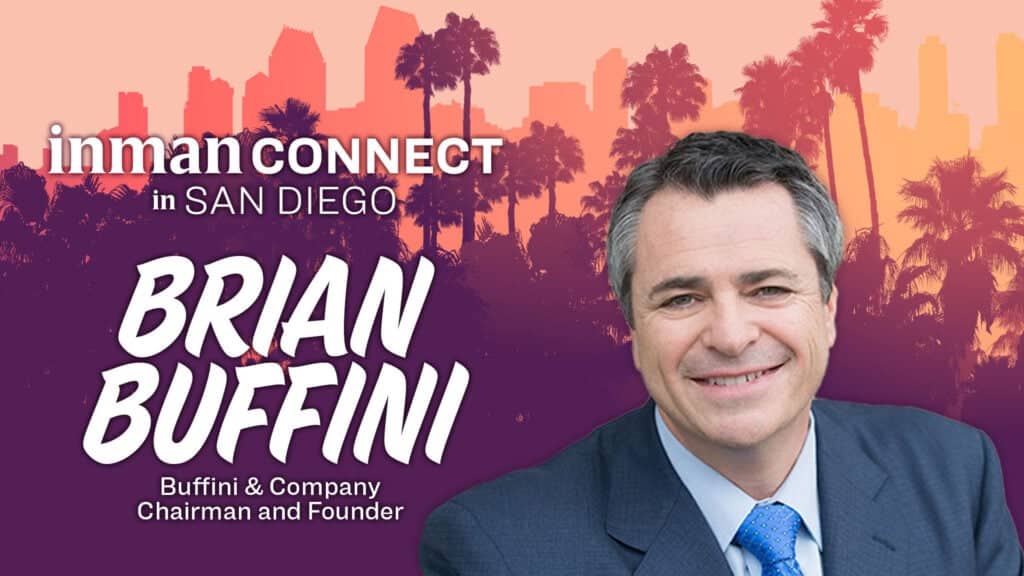
The emergence of large language models, like ChatGPT, has transformed artificial intelligence from an esoteric plaything to a tangible tool that influences business and everyday life. While AI has proved its utility in taking on some of agents’ most dreaded tasks, like crafting quick emails and analyzing long documents, Buffini & Company Chairman and Founder Brian Buffini said he fears that the industry’s AI obsession may be feeding a simmering apathy toward the basics of good business.
“We just launched a hugely successful launch of our AI training program, and I don’t want to be part of the people thinking, ‘Oh yeah, AI is going to do all the work for me. I’m going to sit by the beach, and they’re going to click ‘add this home’ to my shopping cart and email me the check,’” he told Inman. “That’s just not the deal. That’s just not how real estate works.”
“People have to snap out of it because it’s 90 days to sell a home now, not 10 days. You have to work,” he added. “I’m excited to kind of help people to put a fresh look on fundamentals, to bring a fresh approach to training, and help agents be at their very best. That’s my drum that I’ve been beating.”
Ahead of his first-ever Inman Connect appearance, Buffini dove into the challenge of leveraging technology, battling apathy amid strengthening market headwinds, and building the attitude it takes to pull yourself out of a business rut.
The conversation that follows has been edited for length and clarity.
Inman: This is your first time speaking at Inman Connect. What are you most excited about?
Brian Buffini: You know, you only get to do something for the first time once, right? So I’m excited. I’ve known Brad [Inman] a long time, I’ve done interviews with Brad, and I just have always had huge demand on my schedule for our Buffini & Company events, and then demand outside of it. So the planets never really aligned. And then when [Inman CEO] Emily [Paquette] reached out and said, ‘Hey, we’re coming to San Diego,’ my schedule was open and I was fired up. It’s right here in San Diego, in my backyard, and so it’s exciting. I’m fired up. San Diego is the best place in the world to come to, so it’ll be great.
Your session for Inman Connect San Diego is ‘The Era of High Tech, High Touch.’ That’s such a timely topic, especially in light of the intensifying conversation about artificial intelligence, its role in business and society, and the fear that it will replace humans. Can you talk about your philosophy through the lens of the latest tech revolution we’re experiencing?
Buffini & Company’s brand is that we’re old school — just fundamentals, pick them up and put them down, write your notes, and make your calls. But our company probably has as much tech as anybody in the industry. We have our own CRM, which is award-winning. We have our own AI training program. So we have all this stuff that does the heavy administrative and organizational lifting so agents can free up their time, improve their quality, so that they can spend more time face-to-face with people. It’s still a relationship business. The number one driver for people is trust.
Data just came out from the National Association of Realtors showed that 66 percent of all transactions are repeat and referral customers. Forty-two percent of all buyers and sellers are baby boomers, 24 percent are Gen Xers, and 29 percent are millennials. Millennials are very sophisticated with tech; they understand tech, and yet they’re more likely to go and get a personal endorsement for an agent than any other group. You know, Gen Z, which is the hyper-tech generation, is only 3 percent of the market. So the vast majority of the business still relies on personal endorsements.
But I believe the business has lost its focus. We had a super hot market for 14 years, and what’s happened is we have an industry that’s after the lawsuits, after the settlements, and has basically fallen into a state of apathy. Buffini & Company has 3,600 brokers who are certified mentors, and the number one feedback we hear is that the agents are just they’re full of apathy. They’re waiting for the market to change. They’re waiting for the rates to change. They’re waiting for AI to save them, and we have an industry that’s lost its way when it comes to the fundamentals.
It’s about building relationships, going the extra mile for people, exceeding expectations, pouring into people, and becoming their trusted advisor. So use the high tech, but you’ve got to leverage the high touch, and if you do that, that’s the winner. I’m concerned for the new people who’ve just come into the industry. I’m concerned for the people who never developed the fundamentals, and then I’m concerned with the people who lost the fundamentals by not practicing them. So that’s my passion. That’s where I’m at, and that’s why I’m coming to Inman Connect.
I’m a millennial. We’re the generation that grew up during the shift from analog to digital, and we’ve learned every corner of the internet, good and bad. I find that my friends and I lean on getting those personal referrals when making big purchases or decisions because we know how much noise, smoke, and mirrors are online. How can agents cut through that noise, especially when a buyer or seller can come across dozens of agents a day on their social media feed?
We have a whole system, which is sorting and qualifying the database and then building relationships. Building relationships with people is about providing value — systematically and on purpose. It’s about educating you and bringing you along. ‘Hey, here’s how you improve your credit score. Hey, here’s how you can eliminate higher-interest debt. Here’s how you can save money for a down payment. Here are the programs that are available to help someone who’s a first-time buyer.’
So there’s just an awful lot of ability to provide information and to serve and serve unconditionally. The key is what our philosophy is: you give, then you ask to receive. I’m not focused on the fact that Marian may be buying or selling a home. I’m focused on the fact that I want to be Marian’s go-to person. So anytime she thinks of real estate, she thinks of me. If she has a question, if her family has a question, I’m the person she turns to. I’m at the housewarming after closing with ketchup, mustard and relish for everyone. I’m the person who shows up with de-icer during the winter, and I’m the person who has a roofer when you experience a leak.
Here’s my final question. I want to go back to what you said about apathy. What’s the one piece of advice you’d give to the agent who’s never built relationship skills, and what’s one piece of advice you’d give to the agent who once had that fire, but who’s lost it over time?
Well, you know, I’m in San Diego and one of the things you’ll see every day is the Navy SEALs. And the Navy SEALs say a few things. They go, ‘We’re not trying, we’re training.’
There are an awful lot of people right now who are trying very hard to do business. They’re trying new techniques, they’re trying new technologies, but what they’re not doing is training. Now is not the time to try — now is the time to train. I’ve built all these training programs for years, like our 100 Days to Greatness program for brand-new agents. The average realtor sells less than six homes a year and makes $35,000 in gross commissions a year. We’ve had 79,000 people go through this training program and do seven transactions in 100 days, and we teach them the fundamentals.
We hear people say, ‘Oh, it’s a lot of work, and it’s 12 weeks.’ And what younger people are asking for is, ‘Hey, can you give me the three-minute YouTube clip that shows me how to build a successful business?’ That’s not real estate. You have to invest the time.
I was an immigrant and in America with $92 to my name, got in a motorcycle accident and owed $252,000 in 1986. Real estate allowed me to dig my way out of that hole. It’s about working for referrals — not waiting for referrals, not wishing for referrals. You actually have to work and put the effort in to get the results out.
Email Marian McPherson

by Melanie Klein | Jul 3, 2025 | Industry, News Feed
Real estate is changing fast, and so must you. Inman Connect San Diego is where you turn uncertainty into strategy — with real talk, real tools and the connections that matter. If you’re serious about staying ahead of the game, this is where you need to be. Register now!
“Huddle Up” is a recurring column where teams across the country to show us their meeting playbook.
“You can’t control the market, but you can control your mindset, your systems and the energy you bring to the table,” said Tessa Lauritzen Osborn, one of the driving forces behind The Heyday Group, an Austin, Texas-based real estate team operating under eXp Realty, led by Meredith Alderson and powered by Lauritzen Osborn, head of growth and operations, and Adam Walding, content and brand strategist.
TAKE THE INMAN INTEL SURVEY FOR JUNE
Meredith Alderson: Art, tech and real estate smarts
Alderson’s journey into Austin real estate traces back to her days at Indiana University, where her fine arts background was just the start. After 18 years in technology and sales, including a director role in San Francisco, she pivoted back to her first love: design and client relationships.
Serendipity led her to Austin, where she’s flourished. In her first four years, she contributed to the city’s No. 1 real estate team, earned membership in the Austin Luxury League and Platinum Top 50 and consistently ranks in the top 1 percent of Austin Realtors.
In 2024 and 2025, she was among Austin Business Journal’s Top 30 individual agents, took home the eXp ICON Agent Award, ranked in RealTrends’ top 10 in the city and most recently was a finalist for Austin Board of Realtors Salesperson of the Year. Her brand is a reflection of who she is: polished, personable, deeply responsive and fiercely client-first.
Small team, big culture
Under Alderson’s leadership, Heyday’s culture is built on authenticity, care and constant alignment. Lauritzen Osborn underscores their impact: “We’ve really been a positive light to our community during some of the hardest years in real estate,” she said. “We’ve not only grown each year in production but also in being a leading team that leaves events and interactions with more excitement and positivity.”
“We’re obsessed with taking care of our clients and making them feel special,” Alderson added. “The energy we bring into the world as a team — how we show up for our clients and real estate partners — is a huge part of what makes us different.”
Their client-first approach isn’t a checkbox — it’s a continual commitment. Personalized gift cards, handwritten notes, pop-by visits and client events are standard practice, all designed to deepen ongoing relationships.
Daily huddles, real results
There’s no lukewarm commitment here — The Heyday Group meets every morning, without fail.
“We meet every morning — even when we’re running in different directions,” Lauritzen Osborn said. Daily huddles cover goals, logistics and immediate priorities, while weekly strategy sessions (often led by Walding) tackle content and brand development.
“Our daily meetings follow a consistent yet flexible format,” Walding said. “We each share our plans and goals, and we naturally move into problem-solving and reallocating tasks to support each other. It keeps us operating like a true team, not just three individuals.”
Alderson expanded on the tone those meetings are grounded in: “We’ve created an environment of open communication and trust. We can speak honestly, ask for help and talk about what’s working — or what isn’t — without judgment.”
Lauritzen Osborn added, “We each have our own topics that we bring into the meetings, from marketing strategy to task management. And what makes it work is that we all feel like we can speak up. There’s no ego — just support.”
Personal branding done right
Walding leads brand strategy with precision — and heart.
“I’m working on branding Meredith every day,” he said. “We want to come across as approachable and sophisticated. When someone sees our social media, we want them to say, ‘I’d love to work with Meredith — I feel like we’d be good friends.’” It’s a balancing act — strategic but warm, aspirational but authentic — that resonates deeply with their ideal clients.
Scaling with intention
Spring’s high-volume listing rush tested their systems — but Heyday passed with flying colors.
“The volume of details could have felt overwhelming — and did at times — but we stayed transparent with each other,” Walding shared. They introduced personalized weekly seller updates and communicated capacity openly, ensuring no client ever felt overlooked.
As Lauritzen Osborn shared, “We sat down and planned out an entire year of pop‑by ideas, client events and outreach. It’s not about checking boxes — it’s about making our people feel special all year long.”
Alderson echoed that forward-thinking mindset, “We never stop looking for ways to be better at what we do. Just because we implement a process doesn’t mean we’re finished — we keep refining and improving.”
Intrinsic energy, no external hacks needed
The Heyday culture thrives from within.
“I like to say this is the first job I’ve ever had where I don’t get Sunday scaries,” Walding laughed. “I truly love what I do and who I do it with.”
Lauritzen Osborn agreed, “Our team has a genuinely positive attitude that feeds on itself — it’s just who we are.”
Takeaways for real estate teams
The Heyday Group isn’t just building transactions — they’re building trust, brand and momentum. Here are a few reflective questions for your own team:
- Do you connect consistently, or just when things go sideways?
- Are your meetings creating clarity and collaboration?
- How well are you balancing backend efficiency with front-end connection?
- Is your brand truly reflecting your culture?
- And most importantly, are you enjoying the work — and the people you do it with?
In a shifting market, this trio’s culture-first approach isn’t a soft tactic — it’s a strategic one. Their story reminds us: Success isn’t just the transactions — it’s the trust, care and values behind them.
“This isn’t just a business to us — it’s personal,” Alderson said. “Every interaction, every process, every client touchpoint is a reflection of who we are and what we value. That’s the heart behind everything we do.”
Melanie C. Klein, M.A., is an empowerment and mindset coach.

by Rachael Hite | Jul 3, 2025 | Industry, News Feed
Regroup and rebuild a real estate team that’s gone off the rails with content and advice from trainer Rachael Hite.
Real estate is changing fast, and so must you. Inman Connect San Diego is where you turn uncertainty into strategy — with real talk, real tools and the connections that matter. If you’re serious about staying ahead of the game, this is where you need to be. Register now!
Tool Kit is a recurring column on Inman that pulls together resources for agents who want to dive deeper on specific subjects or team leaders and brokers looking for educational content on timely topics for trainings.
Making moves, maintaining talent and building culture are some of the biggest challenges brokers and sales managers will always struggle with in our industry.
TAKE THE INMAN INTEL SURVEY FOR JUNE
Why? Let’s say the industry tends to attract some of the best and brightest individuals that you will ever meet. However, we are all human, and the logistics of even the simplest real estate transactions require smooth practices to reach the closing table.
What’s a broker or team leader to do when the team is falling apart, burned out, has left for a competitor or worse, is in the office every day complaining they have no business? Let’s break down three best practices that will help your Bad News Bears evolve into Mighty Ducks with transactions all in a row.
Set the expectation and be the example
Brokers and team leaders need to model the behavior and expectations they want their team to follow. This means showing your team how you work, being clear about what your standards are and taking pride and passion in what you do.
Often, one of the first areas that is the easiest to fix when rebuilding your team has nothing to do with replenishing talent. It’s setting the expectation of what you want to see if you are not seeing it.
Clean your office, organize your files, and conduct client meetings with your door open so that your team can observe how you work, how frequently you work and how you interact with clients.
Ensure the office maintains a calm and productive vibe so that clients feel welcome, and agents who are working don’t have to worry about what their coworkers are saying in the background.
At every team meeting, have a teaching moment. Give an example of what you would like to see improved. If team members are doing better, acknowledge it.
Further reading
Stop the nonsense
Suppose your team or members at your brokerage are tied up in petty arguments, gossip, drama, etc. Put an end to it. Great leaders listen and then take action. You don’t have to be everyone’s friend, but you do have to let team members know that nonsense will not be tolerated, or they will be asked to leave.
Why do teams fall apart? Usually, it’s because someone feels left out, underappreciated or annoyed by another member who has a terrible habit and gets away with it.
The biggest reason? Leadership fails to maintain a standard that is fair and easy to understand.
If the entire team is working to have an A+ experience for consumers and their personal lives, that is where the magic happens. If you have team members who are providing C- or D-level results, it pulls down the rest of the team.
Brokers and team leaders must be unwavering in their commitment to quality control for consumers. If they are not, they are essentially sending unchecked experiences into the market, with potentially catastrophic results.
Further reading
Fire and hire with intention
It’s not unreasonable, especially in a commission-driven industry, to set expectations for those who work underneath your brand and your license. This is your reputation.
Leaders have two choices: They can collect franchise fees and their cut of commissions and be a revolving door for untrained professionals to keep the “lights on,” or they can be the brokerage or team that has a strong connected presence in the community. With the latter, top talent know that when they come into work, they have a team they can be proud of and brag about.
Don’t be afraid to let go of those who create more work than they do wins for your team. Hire for passion. Hire with your clear expectations in mind. Don’t gamble on talent.
If you’re not bragging about how incredible your team is, there’s an issue, especially heading into the uncertain winter of 2026.
Further reading
Ins and wins
Rebuilding a team is one of the most challenging tasks that brokers and team leaders must manage. The pipeline always needs to be filled, and agents and office staff are busy and overwhelmed.
Lead conversion and customer management take more touches and attention than ever before. Loyalty? Most brokers and team leaders would settle for folks who don’t argue during meetings and constantly complain that they need more leads.
Be an example. Be what you want your team to be. Manifest positive change, and be honest about the changes you want to see. Authenticity is inspiring, and it’s never too late to rebuild, revivify and start again. Focus on the ins and wins, and the rest will begin to come together.
Rachael Hite is a seasoned housing counselor and thought leader in the real estate industry. Connect with her on Instagram and LinkedIn.
