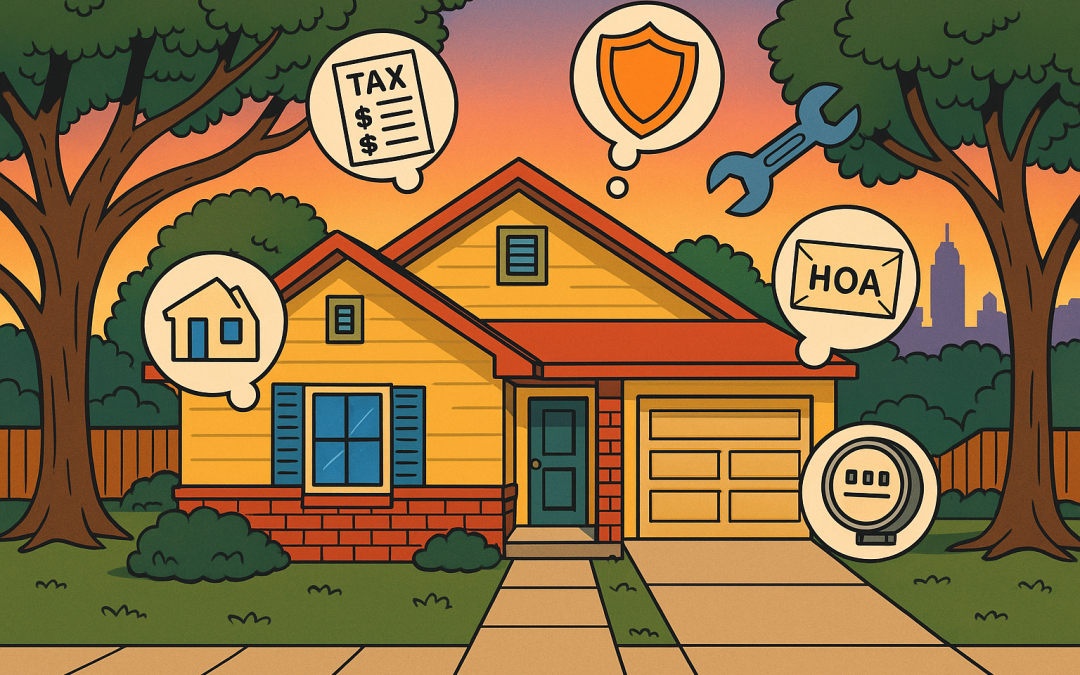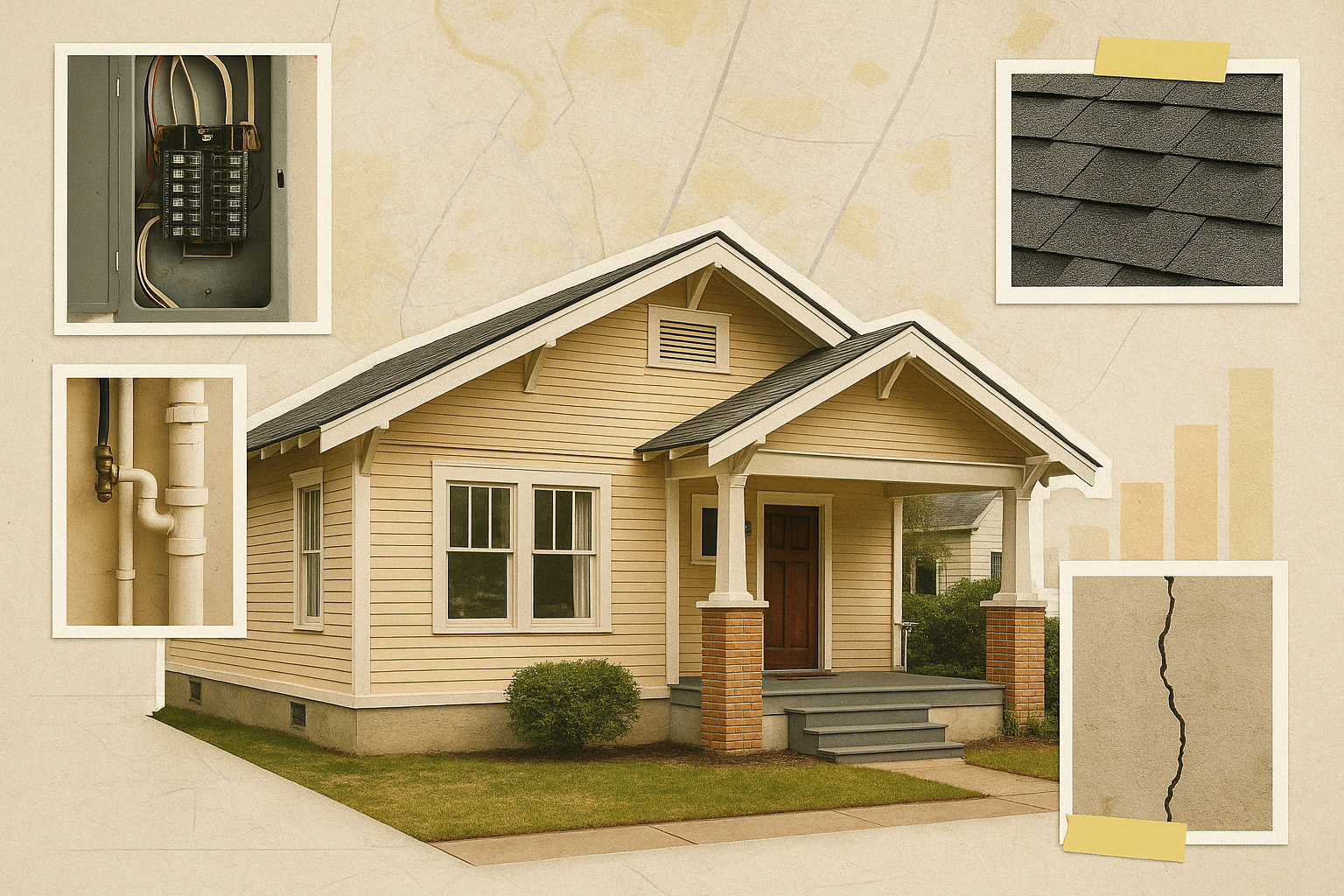
From shaded porches in the Heights to bungalows in North Oak Cliff and historic cottages near downtown San Antonio, older homes Texas buyers love often stand out for their craftsmanship, mature trees, and character you can’t always find in newer subdivisions. But when you’re buying an older home in Texas, the “cute” details should be the starting point—not the final decision.
Texas weather and soil can be tough on houses over time. Heat, humidity, hail, and expansive clay soils mean an older property may need more careful evaluation of its structure and systems than its curb appeal suggests. This Texas home buying guide walks through what to look for when buying an older house so you can move forward confidently, budget realistically, and avoid surprises after closing.
What should you check first when buying an older home in Texas?
If you’re buying a house in Texas that’s 30, 50, or 100+ years old, start by focusing on the “big-ticket” items: foundation, roof, electrical, plumbing, HVAC, and insulation. These are the parts of the home that can turn a charming deal into an expensive project—especially if multiple systems are near the end of their lifespan.
A helpful rule of thumb for Texas homebuyer tips: don’t assume cosmetic updates mean the important parts were updated too. Fresh paint and new countertops may be paired with aging wiring, older supply lines, or a roof that’s close to replacement.
Foundation and structure: the Texas-specific reality
Texas foundation problems are one of the most common concerns in older neighborhoods across Houston, Dallas-Fort Worth, Austin, and parts of Central Texas. Expansive clay soils swell when wet and shrink when dry, and our seasonal swing—from spring rains to hot, dry summers—can stress foundations year after year.
What to look for when buying an older house: doors that stick, cracks that reappear after repair, sloping floors, gaps around windows, and separated trim can be clues that movement has occurred. Not every crack is a crisis, but patterns matter, and a Texas home inspection should note red flags and recommend further evaluation when needed.
Roof age and storm history
Roof condition is especially important in Texas because hail and high winds can shorten a roof’s useful life. Ask for the approximate age, the shingle type, and whether there’s been recent storm damage or insurance claims. Even if the roof “looks fine,” it may be near the end of its service life based on age alone.
Also pay attention to attic signs: staining, daylight coming through, and soft decking are all concerns. If you’re planning on renovating an older home, a roof replacement can impact the timing and cost of everything else, from insulation to electrical work in the attic.
How do electrical, plumbing, and HVAC issues show up in older homes Texas buyers tour?
Systems are where older homes can differ the most from modern builds. Some historic homes Texas buyers consider have been meticulously updated behind the walls. Others still have patchwork improvements done over decades. Either way, understanding the home’s “infrastructure” is essential to safe living and predictable costs.
Old house electrical systems: safety and capacity matter
Old house electrical systems may not match the demands of today’s lifestyle—think multiple TVs, computers, EV chargers, and larger HVAC loads. In older Texas homes, you might see a mix of newer and older wiring types, older panels, or circuits that were added over time.
During a Texas home inspection, common findings include:
- Outdated or undersized electrical panels that may need upgrading
- Improper DIY additions (splices, overloaded circuits, unsafe junctions)
- Limited grounded outlets or inconsistent wiring practices across the home
- Older fixtures or exterior connections that aren’t weather-protected
Important note for home inspection tips for buyers: a standard home inspection is a great screening tool, but if the inspector flags concerns, you may want a licensed electrician to provide a deeper evaluation and a repair estimate. This helps you negotiate clearly and budget accurately.
Plumbing in older homes: supply lines, drains, and water pressure
Plumbing in older homes can be perfectly functional—or it can be nearing a major update, depending on what’s been replaced. In Texas, hard water in many areas can contribute to mineral buildup, and older supply lines and drain systems may have had decades of wear.
What to look for when buying an older house includes water pressure consistency, slow drains, signs of prior leaks under sinks, staining near ceilings, or cabinetry damage. Ask what materials are present for supply lines and drain lines, and whether the home has had any repiping work. If the home has a pier-and-beam foundation, access may make certain repairs easier; if it’s slab-on-grade, plumbing repairs can be more disruptive.
HVAC and insulation: comfort in the Texas heat
Texas summers are where older homes either prove their quality—or reveal their weak points. HVAC age and maintenance history are critical because replacement can be one of the biggest expenses after closing. But don’t stop at the unit itself; ductwork condition, airflow, and return placement also matter for comfort and efficiency.
Insulation is another common gap in older homes Texas buyers fall for. Many older properties have less attic insulation than what’s typical today, and some have older windows or unsealed penetrations that allow hot air in and conditioned air out. If the home is drafty or struggles to cool in summer, you’ll likely see it in utility bills and daily comfort.
What paperwork and clues reveal how an older home has been maintained?
When buying an older home in Texas, the story of the house is often spread across permits, disclosures, repair receipts, and visible craftsmanship. A well-maintained older home usually leaves a paper trail—and consistent details that match the owner’s claims.
Start by asking for documentation on major replacements (roof, HVAC, water heater, foundation work, plumbing updates, electrical panel changes). If sellers don’t have paperwork, that doesn’t automatically mean the work wasn’t done, but it should encourage a closer look and more detailed questions.
Renovations: quality matters more than style
Renovating an older home is common in popular Texas neighborhoods, but not all renovations are equal. A gorgeous kitchen can hide older plumbing in walls or outdated wiring nearby. Likewise, “open concept” changes may involve structural modifications that should be supported correctly.
Green flags include consistent finishes, professional-grade work, and evidence of licensed trades when major systems were touched. Red flags include uneven floors after remodels, mismatched materials, visible shortcuts, or renovations that seem to ignore moisture management (especially around tubs, showers, and exterior doors).
In historic homes Texas buyers consider—like properties in Galveston’s historic districts, older parts of San Antonio, or established Dallas and Houston neighborhoods—there may be additional considerations related to preserving character. Even when there aren’t formal restrictions, specialty materials and craftsmanship can cost more to repair or replicate.
Moisture, drainage, and trees: small issues that become big ones
Maintenance history shows up in how the property handles water. In many Texas cities, sudden downpours test drainage fast. Look at the slope of the yard, gutter condition, downspout placement, and signs of standing water. Water management is closely tied to long-term foundation performance, especially where soils expand and contract.
Mature trees are part of the charm in many older neighborhoods, but they can influence foundations and underground plumbing. You don’t need to fear trees, but you should evaluate how close large trees are to the home, whether roots have affected walkways, and whether plumbing has had past root intrusion.
How do inspections and insurance work when buying a house in Texas that’s older?
A thorough Texas home inspection is your main tool for understanding the home beyond the charm. It also helps you decide which issues are safety concerns, which are normal age-related wear, and which are budget items you can plan over time.
Most buyers benefit from scheduling the inspection early in the option period so there’s time to get follow-up specialists if needed. This is one of the most practical Texas real estate tips: use the inspection to gather facts and estimates, not just to generate a punch list.
Texas home inspection focus areas for older homes
Here are home inspection tips for buyers that matter most with older properties:
- Ask about system ages (roof, HVAC, water heater) and request approximate install dates if known.
- Review electrical safety, including panel condition, grounding, GFCI placement in wet areas, and any questionable DIY work.
- Check plumbing performance by running multiple fixtures, flushing toilets, and looking under sinks for prior leak repairs.
- Evaluate the attic for insulation depth, ventilation, signs of leaks, and past fire or pest issues.
- Look for movement indicators and ask whether a structural engineer is recommended when foundation concerns appear.
Depending on the home and region, buyers may also consider additional inspections such as sewer scope, pool inspection, chimney/fireplace evaluation, or pest/termite checks. Older homes are more likely to have a mix of past repairs, so verifying key areas can be money well spent.
Insurance considerations for older homes in Texas
Insurance is another area where age can matter. Some insurers look closely at roof age, electrical updates, plumbing material, and prior claims history. In storm-prone regions—like the Gulf Coast and hail-impacted North Texas—roof condition can heavily influence premiums and deductibles.
Texas homebuyer tips: request insurance quotes earlier than you think you need them, especially if the home is significantly older or has unique features. If the property has an older roof, older wiring, or older plumbing, you may need to document upgrades or plan improvements to meet underwriting requirements. Also ask how the policy treats replacement cost versus actual cash value for roofs, since that can affect out-of-pocket costs after a claim.
Are older homes in Texas worth it? Advantages, trade-offs, and smart next steps
For many buyers, the answer is yes—older homes Texas buyers pursue can offer location, lot size, architectural character, and established community feel that’s hard to replicate. In many metro areas, older neighborhoods also place you closer to job centers, dining, parks, and cultural hubs than newer outer-ring developments.
Still, the trade-off is that older home maintenance tends to be more hands-on. Even well-cared-for homes may need ongoing updates over time, and your first year of ownership might include projects you didn’t expect if you don’t plan carefully.
Advantages that often come with buying an older home in Texas include:
- More mature landscaping and shade, which can improve outdoor enjoyment and comfort
- Distinct architecture and materials that may be difficult or expensive to reproduce today
- Established neighborhoods with community identity and long-term market demand
- Potential value-add if you renovate thoughtfully and address systems strategically
The best approach is balanced: appreciate the charm, but validate the fundamentals. If your inspection results show manageable issues and the home’s major systems have a realistic path forward, an older home can be a smart long-term purchase.
As you move through the process, remember that buying a house in Texas is as much about planning as it is about preference. A clear budget for repairs, a prioritized maintenance plan, and a careful review of inspection findings can turn an older home from a gamble into a confident decision—and a place you’ll love living in.