Opendoor hit with Nasdaq notice, skids closer to delisting zone

Opendoor’s stock has spent months in precarious territory and now, the warning siren is blaring. The company has received a notice from Nasdaq after its share price fell below $1 for 30 consecutive business days, triggering compliance concerns, according to a recent SEC filing.

Bigger. Better. Bolder. Inman Connect is heading to San Diego. Join thousands of real estate pros, connect with the Inman Community and gain insights from hundreds of leading minds shaping the industry. If you’re ready to grow your business and invest in yourself, this is where you need to be. Go BIG in San Diego!

Opendoor’s stock has spent months in precarious territory and now, the warning siren is blaring.

The company has received a notice from Nasdaq after its share price fell below $1 for 30 consecutive business days, triggering compliance concerns, according to a recent SEC filing.

Shares in Opendoor, which haven’t closed above $1 since April 11, touched an all-time low of 59 cents Monday.

TAKE THE INMAN INTEL SURVEY FOR MAY

Falling under the $1 mark for an extended period is risky, as companies that don’t recover are subject to delisting.

A spokesperson from Opendoor told Inman that the notice was expected and emphasized that it has no immediate effect on operations.

“We want to be clear — this notice was anticipated, and has no immediate effect on our business operations. Our stock will continue to trade publicly on Nasdaq,” the spokesperson shared via email.

The company has 180 days — until late November 2025 — to regain compliance. If needed, Opendoor may qualify for an additional 180-day extension.

“We have various options available to us to regain compliance, including effecting a reverse stock split,” Opendoor’s spokesperson added. “We are evaluating each of our alternatives, while remaining focused on our mission to transform the U.S. residential real estate industry.”

If the company fails to meet Nasdaq’s listing standards in time, delisting will follow.

The stock market has been under pressure since the news of President Trump’s sweeping tariffs sent shares across a variety of sectors tumbling. Opendoor wasn’t spared.

The company posted an $85 million loss in Q1 2025, following a $113 million loss in Q4 of 2024. Its stock has steadily declined since.

Opendoor isn’t alone in these losses. In April, Offerpad was put on notice by the New York Stock Exchange (NYSE) due to market capitalization that dropped below $50 million, while Fathom Holdings was contacted by Nasdaq as its stock value fell below the $1 threshold.

Tom White, a senior research analyst for D.A. Davidson, suggests that Fathom’s age plays a role in these struggles, aside from broader economic conditions.

Despite the turbulence, Opendoor CEO Carrie Wheeler remains optimistic that the company is positioned “for long-term success,” she told investors in May.
Email Richelle Hammiel

This post was originally published on this site

New-home sales climb nearly 11%, but figures may be ‘overestimated’

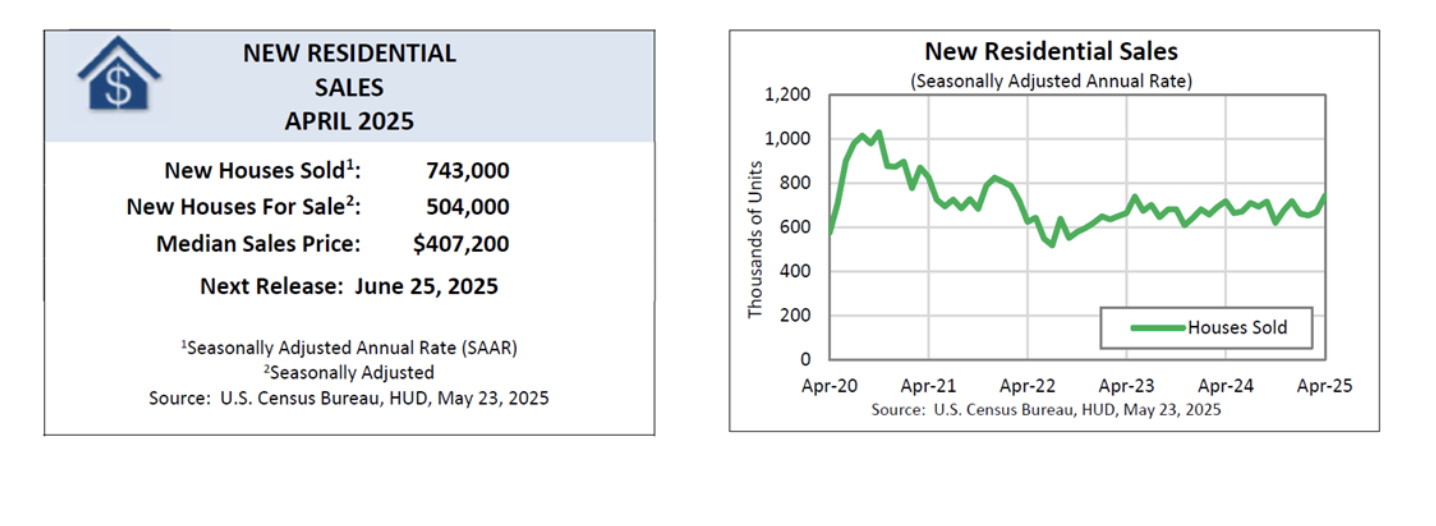
Sales of newly built single-family homes rose in April, pointing to continued buyer engagement during the spring homebuying season, the latest data from the U.S. Census Bureau and Department of Housing and Urban Development (HUD) suggests. New residential sales increased 10.9 percent from March to a seasonally adjusted rate of 743,000 units. That’s also a 3.3 percent boost over the April 2024 pace of 719,000 units.

Bigger. Better. Bolder. Inman Connect is heading to San Diego. Join thousands of real estate pros, connect with the Inman Community and gain insights from hundreds of leading minds shaping the industry. If you’re ready to grow your business and invest in yourself, this is where you need to be. Go BIG in San Diego!

Sales of newly built single-family homes rose in April, pointing to continued buyer interest during the spring homebuying season, the latest data from the U.S. Census Bureau and Department of Housing and Urban Development (HUD) suggests.

However, a few growing concerns, namely rising cancellation rates, softening builder sentiment and affordability challenges, could weigh on future momentum.

New residential sales increased 10.9 percent from March to a seasonally adjusted rate of 743,000 units. That’s also a 3.3 percent boost over the April 2024 pace of 719,000 units.

TAKE THE INMAN INTEL SURVEY FOR MAY

“Builders are off to a better spring than expected, despite higher mortgage rates in April,” First American Deputy Chief Economist Odeta Kushi said in a statement. “New-home sales in April beat consensus expectations and jumped approximately 11 percent above the March seasonally adjusted rate, even beating last April’s seasonally adjusted pace by 3.3 percent.”

The median sales price for new homes sold in April was $407,200, up 2 percent from March but down 2 percent year over year. The average sales price reached $518,400, up 3.7 percent month over month and 3.6 percent year over year.

“While the median sales price of a new home ticked up slightly on a month-over-month basis, prices are down 2 percent from a year ago,” Kushi added.

Odeta Kushi | First American Deputy Chief Economist

“Generally, new-home prices have been trending lower since prices peaked in 2022. This is in part an indication that builders are increasingly leaning on price incentives to support demand, but it’s also indicative of a shift in sales being concentrated at lower price points. For example, one year ago, 46 percent of new-home sales were priced below $400,000, whereas in April of this year that share increased to 49 percent.”

However, not all signs point to smooth sailing.

“While today’s report appears optimistic at first glance, there are underlying concerns,” Kushi warned. “The new-home sales report does not adjust figures to account for cancellations of sales contracts. Redfin recently highlighted a rise in home sales cancellations due to affordability challenges and heightened economic uncertainty. This trend suggests that sales figures might be overestimated.”

On top of that, builder sentiment is showing signs of strain, with builder sentiment dropping to its lowest level since November 2023. Expectations for single-family sales over the next six months have also declined to their lowest point since November 2023.

By the end of April, there were an estimated 504,000 new homes for sale, down slightly by 0.6 percent from March, but up 8.6 percent from April 2024. This figure represents 8.1 months of supply at the current sales rate.

“Despite the demand waiting on the sidelines and builders’ ability to offer incentives to attract buyers, the outlook remains clouded by uncertainty,” Kushi said.

Email Richelle Hammiel

This post was originally published on this site

Say goodbye to paper: Anywhere agents go digital with InstaCard

Anywhere Real Estate is introducing a new way for its agents to connect with clients with no paper cards, no app downloads and no hassle. Through a new enterprise agreement Real Grader, agents now have access to InstaCard, a digital business card designed to streamline networking.

Bigger. Better. Bolder. Inman Connect is heading to San Diego. Join thousands of real estate pros, connect with the Inman Community and gain insights from hundreds of leading minds shaping the industry. If you’re ready to grow your business and invest in yourself, this is where you need to be. Go BIG in San Diego!

Anywhere Real Estate is introducing a new way for its agents to connect with clients — no paper cards, no app downloads, no hassle. Through a new enterprise agreement with online reputation manager and tech company Real Grader, agents now have access to InstaCard, a digital business card designed to streamline networking and grow their digital footprints, the company informed Inman.

TAKE THE INMAN INTEL SURVEY FOR MAY

Real Grader, a 2023 member of NAR REACH, first landed an enterprise deal with Anywhere in August 2024. Now, the brand is taking it a step further, giving agents across the entire Anywhere brand, including Coldwell Banker, Sotheby’s International Realty and The Corcoran Group, access to yet another one of its tools geared towards empowering agents.

Alex Montalenti | Real Grader CEO

InstaCard was created by Real Grader in 2019 to bring together key elements of an agent’s professional profile, including contact information, bios, reviews, listings and more, into one shareable digital card.

According to Real Grader CEO Alex Montalenti, Real Grader has been a part of the industry for over two decades and understands the need to bridge the gap between technology hurdles, and InstaCard does just that.

“InstaCard empowers agents with the tools to connect instantly and effectively,” Montalenti said in a statement. “This product can equip agents to grow their networks, showcase their professionalism and streamline their digital presence with cards that are pre-made for agents — no tech expertise required.”

Here’s how it works:

When meeting a prospective client, an agent can simply pull up a QR code on their phone. With one quick scan, the client is directed to the agent’s InstaCard, where they can find agent details, property listings and more, all in one place.

Some of the key features of InstaCard include:

  • Sharing instantly: Connect via QR codes, text, email or social media
  • Building reputation: Highlight Google Reviews and boost credibility
  • Customizing designs: Present a professional and branded image
  • Capturing leads: Collect and manage client details
  • Integrating video: Add personalized videos or property tours

Source: Real Grader

InstaCard Pro includes expanded features for those who want to step it up a notch, including Google review integration, custom menu items, custom QR codes, links to property search and home valuations.

“Our mission is to give agents the tools to stand out and stay relevant in a digital-first world,” Montalenti said. “By integrating InstaCard into the Anywhere ecosystem, we’re giving thousands of agents a modern edge that’s fast, flexible and built for results.”

Email Richelle Hammiel

This post was originally published on this site

Dual mastery: ‘You have to be a jack of all trades,’ Senada Adzem says

From traditional residential sales to large-scale, new development projects, a trio of seasoned professionals, Senada Adzem, Jorge L. Guerra and Miltiadis Kastanis, and moderator Eloy Carmenate took the Inman On Tour Miami stage to discuss how they’ve built careers that straddle both worlds.

Bigger. Better. Bolder. Inman Connect is heading to San Diego. Join thousands of real estate pros, connect with the Inman Community and gain insights from hundreds of leading minds shaping the industry. If you’re ready to grow your business and invest in yourself, this is where you need to be. Go BIG in San Diego!

From traditional residential sales to large-scale, new development projects, a trio of seasoned professionals, Senada Adzem, Jorge L. Guerra and Miltiadis Kastanis, and moderator Eloy Carmenate took the Inman On Tour Miami stage to discuss how they’ve built careers that straddle both worlds.

During their Wednesday panel, “Dual Mastery: Navigating Success in Both Residential Resales and New Development,” the panelists opened up about their unique paths into real estate, how they navigated market shifts and the lessons they’ve learned along the way.

TAKE THE INMAN INTEL SURVEY FOR MAY

Guerra, president and CEO of Real Estate Sales Force (RESF), started in construction when he was 19 years old. While working on a construction site, he made his way into the sales office by building relationships.

“I was able to win the hearts of the salespeople,” Guerra told the audience. “Sergio Vinograd walked in one day, saw me in there and told me I didn’t belong in the sales office. I snapped back with ‘How can I get a job there?’”

That bold move launched his career. Guerra became a top salesperson and went on to open RESF, a marketing solution for developers.

Kastanis, on the other hand, entered real estate through hospitality.

“Working at Faena [Hotel Miami Beach], I saw them marketing the sales of Faena residents,” Katstanis, director of new development sales at Compass, said. “I got to see how real estate agents work in the new development space.”

After some experience with real estate on the side, he got his big break after facilitating David Martin’s Eighty Seven Park, one of Miami Beach’s most notable new development sales.

Unlike her peers, Adzem started on the development marketing side. After working for a venture capital firm, she was offered the opportunity to work for Trump International.

“I was training the sales team, doing all the marketing strategies, Adzem, executive director of luxury sales at Douglas Elliman, said. “One day, I realized the money is really in sales. So, if I don’t want to be a hardworking, poor immigrant, I better get into sales.”

Adzem shared her excitement and passion for working with big residential developers and luxury spec homebuilders. Having come from war-torn Bosnia, building homes carries deep meaning for her, but she still emphasizes that both sides of the coin are interconnected.

“It’s like yin and yang,” she said. “Pre-development sales gave me the opportunity to connect to buyers and understand what they need. Relationships I created eventually ended up being buyers in pre-development.”

Guerra echoed the importance of understanding both sides. “Working construction for me was a game changer,” he said. “Developer contracts are completely different than our standard contracts. You have to sit down, understand and explain to some clients the difference between a condominium and the detail that goes behind that HOA.”

Guerra’s secret to getting in the door was his tenacity and persistence.

I started from the bottom, and when I was ther,e I made sure that I learned the sales contract. I made sure that I was the first one to open up that office. I was the last one to leave. I didn’t take a day off.”

Kastanis feels that new development gave him both confidence and visibility by learning each product, which translated to prospective buyers as well as the aging community.

“I was representing some of the most important projects at the time — Eighty Seven Park, Arte Surfside — and everyone wanted to know about it,” he said. “It was a really big networking opportunity, and that’s what’s driven my general real estate career.”

Networking is exactly how Kastanis found success, but he emphasized that the path for new agents looking to enter the new development realm is difficult if they don’t reach out and ask for the opportunity.

The developers want someone with experience in new development sales,” Kastanis explained. “There’s a demand for really eager, good pre-development, new development sales agents, and I think a lot of people are afraid to ask for that opportunity. And those are the ones that typically shine.”

When asked about how to weather slower markets, Adzem was candid, but spot on. “We just work freaking harder. Sellers get antsy. You have to be a psychologist, marriage counselor, stock market adviser — you have to be a jack of all trades,” she said.

But it’s also about working smarter. “This business is all about relationships,” she told the Inman On Tour audience. “You think you’re making a quick call, and it turns into a one-hour conversation.” Managing that is tough, but essential.

Email Richelle Hammiel

This post was originally published on this site

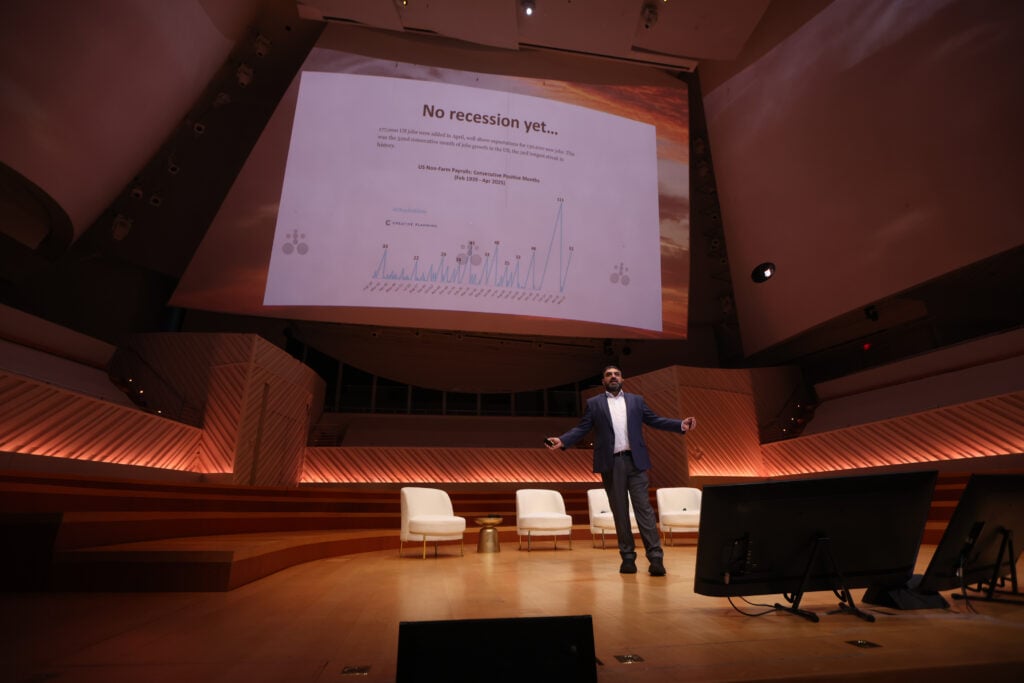
It’s all a cycle: Boom, bust, rebound, Roben Farzad says

Roben Farzad took the stage at Inman On Tour Miami with a message that struck a rare balance between realism and resilience: We’re living in uncertain times, but history has shown that people adapt.

Bigger. Better. Bolder. Inman Connect is heading to San Diego. Join thousands of real estate pros, connect with the Inman Community and gain insights from hundreds of leading minds shaping the industry. If you’re ready to grow your business and invest in yourself, this is where you need to be. Go BIG in San Diego!

At Inman On Tour Miami, journalist and public radio host Roben Farzad took the stage with a message that struck a rare balance between realism and resilience: Yes, we’re living in uncertain times, but history has shown time and time again that people adapt, markets evolve and somehow, we always find a way forward.

Farzad, who jokingly calls himself a “distressed journalist,” didn’t sugarcoat the moment we’re in. From the Great Recession to the chaos of COVID-19, from surging mortgage rates to the long tail of Trump-era tax policies, he painted a picture of a global economy that’s been rattled repeatedly.

Still, he urged the audience to zoom out and reflect.

TAKE THE INMAN INTEL SURVEY FOR MAY

In his Tuesday morning session, “Upside Down and Back Up Again: What’s Next for the Global Economy,” Farzad encouraged the audience to imagine it was 2007. Could anyone have predicted what was coming next? A housing crash, a financial meltdown, and eventually, a once-in-a-century pandemic? Of course not, but the world didn’t end. It rebalanced. It evolved.

“If you go to a Walmart, if you go to a Target, if you go to a Men’s Wearhouse, China is the manufacturer and the exporter of the world,” he said. “You’ve been able to take advantage of that peace dividend.”

Even Walmart’s chief procurement officer, Farzad noted, has been in a public back-and-forth with the White House, trying to hold prices down.

Then, there’s the bond market. Farzad recalled a surreal moment when the 10-year yields dropped below 0.5 percent. “I want you to put yourselves in that mindset, that weightlessness,” he said.

Despite all the instability, he returned to one key point: perspective. During the depths of the 2008-9 collapse, no one wanted to touch real estate in Miami. But in hindsight, that was exactly the time to buy.

Now, here we are again, caught in another moment that feels just as foggy. Farzad admitted he’s worried.

Credit card delinquency rates are rising, and people are struggling to make minimum payments even as job numbers grow.

“There are people not able to make the minimum debt payment over the next three months,” Farzad said. “You should not have that kind of deteriorating credit quality when jobs are being added.”

AJ Canaria Creative Services

The housing market, especially in places such as Miami, is flashing warning signs.

“This has left a lot of homebuyers thinking, maybe now, maybe never,” Farzad explained. “Are we at the fork in the road where inflation is going to worsen and the Fed has to come and finish the job?”

Farzad didn’t hold back on structural concerns either. Without workers, income or affordability, who will live in these places? Who will staff the buildings? Who will drive the Ubers? he asked the audience.

In Midtown Manhattan and Miami’s booming Brickell Avenue, hedge fund managers are buying up entire blocks. Goldman Sachs and others are doubling down on Palm Beach. But Farzad asked the question no one wants to answer: “Who’s going to keep the engine running?”

Even with all the glamour and investment, there’s a cost. “You’re getting tax benefits, but you’re paying more in quality of life, in staffing shortages, in basic services,” he said. “Welcome to Miami.”

That line carried weight for Farzad, who grew up just north of Surfside — the site of one of the most devastating building collapses in recent U.S. history.

To Farzad, it was inconceivable that the disaster could happen so close to where he grew up, but also in a place with zoning laws, building codes and condo boards.

What’s happening now, he said, feels like déjà vu. The skyline looks shiny again, but beneath the surface, cracks remain — figurative and literal. And that’s real estate. The wild ride from boom to bust — and sometimes, back again.

Email Richelle Hammiel

This post was originally published on this site