Curiosity is the key to unlocking artificial intelligence’s full potential

Artificial intelligence’s hold on real estate — and the world — has only gotten stronger over the past year, sparking further conversation on whether large language models like ChatGPT and other categories of AI tools are doing more harm than good to education and business sectors. Despite the questions that still linger about AI, two leading Florida brokers and a proptech innovator told the Inman On Tour Miami crowd they can’t afford to eschew the technology in an increasingly fast-paced world.

Bigger. Better. Bolder. Inman Connect is heading to San Diego. Join thousands of real estate pros, connect with the Inman Community, and gain insights from hundreds of leading minds shaping the industry. If you’re ready to grow your business and invest in yourself, this is where you need to be. Go BIG in San Diego!

Artificial intelligence‘s hold on real estate — and the world — has only gotten stronger over the past year, sparking further conversation on whether large language models like ChatGPT and other categories of AI tools are doing more harm than good to education and business sectors. Despite the questions that still linger about AI, two leading Florida brokers and a proptech innovator told the Inman On Tour Miami crowd they can’t afford to eschew the technology in an increasingly fast-paced world.

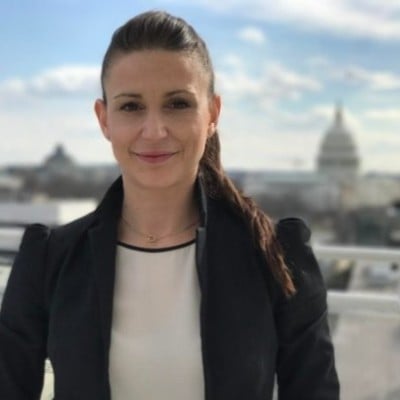
Jonathan Spears

“Anytime you try to get an agent to adopt new technology, it’s like pulling teeth. I think the issue of AI with agents is that their use of the technology is driven more by fear than it is curiosity,” Spears Group founder Jonathan Spears said.

“I think we, as agents, have gone away from the curiosity of this technology that we’re afraid is going to take our job, when, in reality, we need to look at it curiously. Think about how a child asks their mom and dad questions, like ‘What does this do? What does that do?’”

“It’s touching every other industry, including the grocery store you shop at [and] your financial tech. I mean, everything’s being disrupted,” he added. “You want to get involved now — or even later — and, ultimately, be able to leverage it to multiply yourself.”

Although ChatGPT gets most of the attention, Spears, LoKation Real Estate Chief Operating Officer Jonathan Lickstein and Propy CEO Natalia Karayaneva said there are multiple ways to leverage AI.

Lickstein said he’s laser-focused on AI’s role in bolstering the end-to-end experience for agents and consumers. The CEO pointed to Zillow and Realtor.com’s lead generation systems as an example of what agents can replicate with an AI-powered customer relationship management (CRM) platform.

“You’re seeing this end-to-end solution being provided by the major portals, and it’s a lot more attainable for the individual agent and team than you might think,” he said. “There are a lot of platforms out there right now, like voice agents that will integrate to your CRM and communicate for you, much like you’re seeing from the Zillow Flex and the new Realtor.com program, where they have a call center that’s reaching out to the leads in a timely manner, satisfying that speed to lead, and then bringing that information back to allow you to operate smarter, faster and better.”

Lickstein said agents need to have an end-to-end solution to keep leads in their ecosystem. For some brokerages, that could mean investing in proprietary tech like Spears, who’s poured thousands into creating a new CRM, MyOps. And for others, that means choosing the best third-party CRM system for their agents and supercharging it with an AI integration like Speculo.ai.

“The best [CRM] is the one that you’re going to log into and actually put information,” he said. “But then working with a third-party program that will latch on to your CRM, take an incoming lead, call them instantly and extract information from that conversation to give you knowledge when you’re going into an appointment, or create the follow-up method for you is invaluable. You just plug and play. No coding experience whatsoever.”
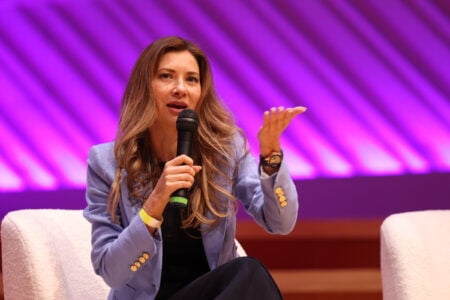
Natalia Karayaneva

For Karayaneva, AI is best used for offloading some of the busy work that prevents agents from being fully attentive to clients. Agents should be using AI to craft engaging property descriptions, fast-track the home search process, and streamline title and escrow.

“Realtors don’t have to come to the AI conversation with fear, but instead with the abundance mindset … AI can give us more time for personal life, for our families,” she said. “We know that transactions will be simpler, and instead of 30 days of anxiety, consumers and agents will have full transactions within a day.”

“The role of the agent will keep being this human element —  the psychologist, someone who knows the locality,” she added. “The role of the agent, in that sense, is never going away.”

Spears then echoed Karayaneva, saying that agents can use AI to stoke deeper conversations with buyers and sellers, many of whom have already used AI-powered tools on portals and other platforms well before signing a listing or buyer representation agreement.

“… AI can’t tell the whole story,” he said.  “If you’re an agent out there who’s transacting in the market and you go sit in a listing appointment, the seller may be equipped with all the information they’re pulling from technology, whether it be Zillow or wherever, but you should be able to sit down and be like, ‘Hey, man, I was part of that deal [you saw online] and the human element [of that deal] was this, and that’s my real value to you.’ And I don’t believe technology is going to be able to do that.”

Email Marian McPherson

This post was originally published on this site

New Keller Williams book helps rookies create a ‘limitless career’

Keller Williams VP of Strategic Content Jay Papasan has penned a new, 18-chapter book outlining how new agents can build a lasting sales career. The book is available for pre-sale and will officially debut in September.

This May marks Inman’s sixth annual Agent Appreciation MonthLook for profiles of top producers, opinions on the current state of the industry and tangible takeaways you can implement in your career today. Plus, the prestigious Future Leaders of Real Estate return this month, too.

Keller Williams is expanding its publishing empire with “Rookie Real Estate Agent,” a book that helps agents navigate their first years in the industry without falling victim to common — and potentially career-ending — mistakes.

Jay Papasan

The book is based on a decade’s worth of insights from 250 top-performing agents, which have been organized into 18 chapters covering topics such as:

  • Adopting the mindset​ needed to thrive as a real estate entrepreneur
  • Mastering industry fundamentals​
  • Developing a six-figure business plan​ and managing finances
  • Driving effective lead-generation strategies​ to find motivated buyers and sellers
  • Delivering exceptional client service​
  • Managing transactions from agreement to close​
  • Building a reliable database for predictable future income​

Alongside the book, KW leaders are working on new training materials and workshops for rookie agents.

“We asked the most successful agents in our industry what they did their first year that others don’t,” KW VP of Strategic Content Jay Papasan said in a written statement. “Their answers offered a clear formula for success. Treat your career like a business, not a hobby. Work your database early and often. Leverage technology to save money and time while amplifying your value proposition. The ‘Rookie’ lays out the fundamentals every agent needs to thrive.”

Rookie Real Estate Agent: Launch a Limitless Career That Lasts is available for pre-sale on Keller Williams’ KellerINK site for $16.00. Pre-orders will be sent in September, after which the book will also be available for purchase at Amazon, Barnes & Noble, and other major retailers.

Keller Williams has eight other books, including The ONE Thing: The Surprisingly Simple Truth Behind Extraordinary Results, The Millionaire Real Estate Agent, The Millionaire Real Estate Investor and SHIFT: How Top Real Estate Agents Tackle Tough Times.

“With tens of thousands of new agents entering the industry each year — and a third leaving before they close a deal — it’s time for a new playbook,” he added. “‘Rookie Real Estate Agent’ is that playbook. It’s built for the realities of 2025 and beyond.”

Email Marian McPherson

This post was originally published on this site

The market is short 416K homes for middle-class homebuyers: NAR

After a herky-jerky few years, the housing market is at a major tipping point, according to the National Association of Realtors’ May 2025 Housing and Affordability Report. The report, which is based on NAR and Realtor.com data, revealed the market needs at least 416,000 listings priced at or below $225,000 to make homeownership affordable to the typical middle-class household.

Bigger. Better. Bolder. Inman Connect is heading to San Diego. Join thousands of real estate pros, connect with the Inman Community and gain insights from hundreds of leading minds shaping the industry. If you’re ready to grow your business and invest in yourself, this is where you need to be. Go BIG in San Diego!

After a herky-jerky few years, the housing market is at a major tipping point, according to the National Association of Realtors’ May 2025 Housing and Affordability Report.

The report, which is based on NAR and Realtor.com data, revealed the market needs at least 416,000 listings priced at or below $225,000 to make homeownership affordable to the typical middle-class household.

Currently, households earning annual incomes of $75,000 can only afford 21.2 percent of available housing — a slight improvement from March 2024 (20.8 percent), but far below pre-pandemic trends (49 percent). Households earning $100,000 are only doing slightly better, with them affording 37.1 percent of current listings, up from March 2024 (36.9 percent) but significantly down from March 2019 (64.7 percent).

Meanwhile, households making $50,000 have long struggled before the pandemic. Households in this income bracket can only afford 8.7 percent of listings, down from 9.4 percent in 2024. The market needs at least 367,000 listings priced at or below $175,000 to improve affordability, the report said.

Danielle Hale

“Shoppers see more homes for sale today than one year ago, and encouragingly, many of these homes have been added at moderate income price points,” Realtor.com Chief Economist Danielle Hale said in a written statement. “But as this report shows, we still don’t have an abundance of homes that are affordable to low- and moderate-income households, and the progress that we’ve seen is not happening everywhere. It’s been concentrated in the Midwest and the South.”

In NAR and Realtor.com’s study of the 100 largest metros, only four — Akron, Ohio; St. Louis, Missouri; Youngstown, Ohio; and Pittsburgh — are balanced, meaning home prices and local incomes are aligned, leading to a 15 percent or more increase in the availability of affordable homes.

Another 30 markets are closer to reaching balance, with the availability of affordable listings increasing at least 5 percent over the past year. Raleigh, North Carolina; Des Moines, Iowa; Grand Rapids, Michigan; Columbia, South Carolina; and Columbus, Ohio, have logged the greatest improvements from 2024, NAR said, thanks to favorable market conditions and legislators adopting housing policies that prioritize affordability.

Meanwhile, 44 percent of markets are “stuck in the middle,” where the average gap between what households can afford and what’s actually for sale is still more than 10 percentage points but less than 20 percentage points. Seattle; Washington, D.C.; Austin, Texas; Salt Lake City, and Denver are some of the key markets in a precarious situation, where the next few years will be key to determining whether they move toward balance or continue to fall behind.

The final 26 percent of markets have fallen behind, where the availability of affordable listings has either annually declined or remains more than 20 percentage points below what NAR considers a balanced market. Los Angeles; Oxnard, California; San Diego; New York City; and Spokane, Washington, are the top markets where affordability has crumbled, despite strong jobs and economic growth. In these cities, years of underbuilding and restrictive zoning laws have undercut any potential affordability improvements that come with a robust economy.

Nadia Evangelou

“It’s not just about economics — it’s about opportunity. When home prices outpace income growth by this much, it limits people’s ability to build equity, stay rooted in their communities, or move closer to jobs and schools. It becomes harder for teachers, nurses, police officers, and essential workers to live anywhere near where they work,” the report read. “What these metros need isn’t just more housing — it’s the right kind of housing, in the right places, and at prices that reflect the real lives of the people who call these areas home.”

Although some of the report’s findings are bleak, NAR Senior Economist and Director of Real Estate Research Nadia Evangelou said she’s still optimistic about the market’s ability to recover and yield more opportunities for homebuyers.

“Even in high-cost areas like San Francisco, we’re witnessing real progress,” she said in a written statement. “While the housing market remains far from balanced, current for-sale home listings better align with home buyers’ incomes compared to pre-COVID-19 levels — a clear reminder that improvement is possible.

“More homes are hitting the market, and it’s encouraging to see the greatest housing-supply gains among middle-income homebuyers,” she said.

Email Marian McPherson

This post was originally published on this site

Keller Williams pledges support for inclusion with Natalie Davis hire

Davis, a broker and coach, will replace Julia Lashay Israel as Keller Williams’ head of Community Growth. The appointment reflects the franchisor’s commitment to inclusivity, executives said.

Bigger. Better. Bolder. Inman Connect is heading to San Diego. Join thousands of real estate pros, connect with the Inman Community and gain insights from hundreds of leading minds shaping the industry. If you’re ready to grow your business and invest in yourself, this is where you need to be. Go BIG in San Diego!

Keller Williams on Thursday reasserted its commitment to diversity, equity and inclusion with the appointment of Natalie Davis as the franchisor’s new director of “community growth.”

Davis, a veteran broker and business coach, will oversee the franchisor’s agent communities and affinity groups, foster leadership development opportunities for agents, and spearhead inclusivity initiatives throughout the KW ecosystem.

Davis’s appointment to the department, which had previously been referred to as “Inclusion and Belonging,” comes during a fraught time for diversity, equity and inclusion programs, with President Trump’s anti-DEI mission pushing some of the nation’s largest public companies and universities to roll back such efforts.

“Natalie is a proven leader whose passion for people, commitment to service, and deep industry expertise make her the ideal person to help lead our next chapter of inclusive growth,” Keller Williams spokesperson Darryl Frost said in a prepared statement on Wednesday.

Natalie Davis

Davis has served the real estate industry for 14 years, with experience as one of the top-performing brokers in Fort Collins, Colorado.

In addition to real estate sales, Davis has held two leadership roles with the Fort Collins Board of Realtors and founded an independent coaching business, Leadership that Shines. She’s also the co-host of the Reignite Resilience Podcast, which helps entrepreneurs navigate the ups and downs of business and life.

Davis joined Keller Williams in 2021 and owns The Evolution Group powered by Keller Williams.

“As a member of the Growth Team, our vision is crystal clear: to foster a culture where every agent, employee and client feels they truly belong,” Davis said in a statement. “When people bring their authentic selves to work, magic happens — innovation flourishes, relationships deepen, and communities strengthen.

Davis is replacing Julia Lashay Israel, who Keller Williams appointed as its first-ever head of inclusion and belonging in 2021.

Israel, the Operating Principal for Keller Williams Realty Integrity Lakes, has been with the Texas-based franchisor for more than two decades. Alongside her leadership within the company, Israel has had leadership roles within the Minneapolis Area Realtors, the Minnesota Association of Realtors and the National Association of Realtors.

She’s also a noted real estate coach, speaker, podcast host and author, with her first book — The Color of Real Estate — slated to debut by the end of June.

In a LinkedIn post on Tuesday, Israel said she’s excited to hand the reins over to Davis, as she focuses on finishing her book and pouring more time into her Integrity Lakes team.

“It’s time to turn the page! After four incredible years as Head of Inclusion and Belonging at the world’s largest real estate franchise, I’m passing the torch,” she said. “This has been an amazing journey, but the absolute best part has been meeting and working with so many extraordinary people.”

Julia Lashay Israel

“They say, ‘It’s not what you get at KW, it’s who you become,’ and that couldn’t be more true. This experience has lived up to our mission of lives worth living, businesses worth owning, and legacies worth leaving,” she added. “I am forever changed and thankful for every moment. I’m grateful to Kymber Lovett-Menkiti and John Clidy for being pioneers in this walk and for all the love and support so many of you provided along the way. A special thanks to Gary Keller for trusting me with his vision.”

In a statement, Keller Williams thanked Israel for her leadership over the past four years.

“Julia’s leadership has helped us shape a more connected and purpose-driven Keller Williams,” Frost said.  “We are incredibly grateful and want to thank Julia for her extraordinary leadership.”

Frost also reinforced Keller Williams’s dedication to inclusion amid political tensions that have led multiple multinational companies, such as Target and Walmart, to shelve their DEI efforts. President Trump has doubled down on his anti-DEI efforts, with the president defunding federal grants that support people of color, women and LGBTQ+ communities.

“At Keller Williams, we celebrate our differences. We believe that each of us has the right to be our authentic self, live our true life, and pursue the opportunities we have always believed were possible,” Frost said, quoting Keller Williams’s diversity commitment. “Our mission is to be the empowering community we all deserve, where everyone belongs, and anyone can thrive.”

Email Marian McPherson

This post was originally published on this site

Texas governor attempts to squash Muslim residential development

On Sunday, Texas Governor Greg Abbott announced that he’d halted development on a Muslim mixed-use project in Plano due to several alleged violations. However, the developers said Abbott’s investigations are unfounded and rooted in Islamophobia.

Bigger. Better. Bolder. Inman Connect is heading to San Diego. Join thousands of real estate pros, connect with the Inman Community and gain insights from hundreds of leading minds shaping the industry. If you’re ready to grow your business and invest in yourself, this is where you need to be. Go BIG in San Diego!

Texas Gov. Greg Abbott on Sunday announced that state officials have stopped the construction of Muslim development EPIC City — even as the creators of the 402-acre master planned project say construction has not started.

Gov. Greg Abbott

“Texas has halted any construction of EPIC City. There is no construction taking place,” Abbott posted on X, formerly known as Twitter, on May 11. “The state of Texas has launched about a half dozen investigations into this project. That includes criminal investigations… This matter, and similar matters, are taken very seriously, and actions are being taken to address all concerns.”

Abbott started his crusade against EPIC City in February, with claims that East Plano Islamic Center (EPIC) and its development arm, Community Capital Partners Inc. (CCP), had violated several state and federal laws, including building without a permit and offering funeral services without a license.

The governor also claimed EPIC City, which includes plans for single- and multifamily homes, a mosque, a faith-based primary school, a community college and commercial lots for small businesses, violates the 1968 Fair Housing Act, which prohibits landlords, developers and other real estate entities from discriminating against prospective renters and buyers based on “race or color, religion, sex, national origin, familial status, or disability.”

Texas Attorney General Ken Paxton and Texas Senator John Cornyn have backed Abbott, with both men making claims that EPIC would force EPIC City residents to follow Sharia, which the Council on Foreign Relations (CFR) defines as moral guidance based on the Quran and sayings from the Prophet Muhammad. Although Western culture is most familiar with the strictest interpretation of Sharia, the CFR said there are multiple interpretations of Sharia, from liberal to conservative.

Cornyn said he sent a letter to the Department of Justice, asking Attorney General Pam Bondi to launch an investigation into EPIC and EPIC City.

“Religious discrimination and Sharia Law have no place in the Lone Star State,” Cornyn said in a prepared statement on Monday. “Any violations of federal law must be swiftly prosecuted, and I know under the Trump administration, they will be.”

As Abbott, Paxton, and Cornyn advance their mission to squash EPIC City, EPIC and CCP leaders maintain they haven’t broken any laws, as the development is still in the planning stage. EPIC’s website includes several project renderings, information on how to purchase a plot, and a development timeline, which states that EPIC and CCP are expected to close on the land for EPIC City in June.

EPIC City renderings for housing, a mosque and resident common areas | Credit: EPIC City

Leaders also dismissed Abbott’s fair housing claims, as the community is open to homebuyers and renters of all faiths.

“The vision for EPIC City is simple,” CCP President Imran Chaudhary told FOX 4 Dallas-Ft. Worth on Monday. “We want to build an inclusive community, one in which people of every background, faith, and culture can live together in harmony.”

EPIC and CCP hired veteran attorney Dan Cogdell to represent them in the investigations, which include the Texas Rangers, the Texas Workforce Commission, the Texas State Securities Board, the Texas Funeral Service Commission and the Texas Attorney General. Cogdell rose to national prominence in 2024 while representing AG Ken Paxton in a securities fraud case.

“[EPIC has] done nothing illegal and we will cooperate fully with all investigations — regardless of how misguided and unnecessary they are,” he told FOX 4 on Monday.

Cogdell also admonished Abbott, Paxton and Cornyn for using Islamaphobia to sour public perception against EPIC and CCP, and said there wouldn’t be an uproar if EPIC and CCP were planning their development around a church or temple.

“[This is] racial profiling,” he said. “These folks are U.S. Citizens, law-abiding and Texans.”

Email Marian McPherson

This post was originally published on this site