Anywhere grows revenue to $1.2B during first quarter of 2025

The franchisor’s performance was driven by its luxury brands during the first quarter. President and CEO Ryan Schneider also reaffirmed during an investors’ call the company’s stance on recent moves by NAR, Zillow and Redfin in regards to Clear Cooperation.

Bigger. Better. Bolder. Inman Connect is heading to San Diego. Join thousands of real estate pros, connect with the Inman Community and gain insights from hundreds of leading minds shaping the industry. If you’re ready to grow your business and invest in yourself, this is where you need to be. Go BIG in San Diego!

Real estate franchisor Anywhere grew revenue by 7 percent year over year during the first quarter of 2025, hitting $1.2 billion in a solid start to the year as luxury continued to drive the company’s performance.

Quarterly revenue was down slightly from fourth-quarter 2024 revenue of $1.4 billion. The company’s net loss was $78 million during the first quarter of 2025, an improvement of $23 million on an annual basis. Adjusted net loss was $64 million, improved by $21 million from the previous year.

TAKE THE INMAN INTEL SURVEY FOR APRIL

Transaction volume also increased 6 percent annually, with units down about 4 percent and price up about 11 percent. This figure bested the National Association of Realtors’ 3 percent annual market volume growth, Anywhere noted. Transaction volume was boosted largely by the success of the franchisor’s luxury brands and growth in California and New York City.

“Anywhere continues to prove the advantage of our unique assets, including our unmatched scale, high-margin franchise network, luxury leadership, and integrated end-to-end transaction experience,” Anywhere President and CEO Ryan Schneider said in a statement. “Those assets are driving differentiated success today and help fuel our growth and transformation as we look to the future.”

The previous quarter, Anywhere announced that it had grown revenue, improved quarterly net losses on an annual basis and increased closed transaction volume by 13 percent year over year. During the fourth quarter of 2024, Anywhere increased revenue by $112 million year over year to $1.4 billion.

“Anywhere is on offense, seizing opportunities to fortify our market-leading position today while making smart moves to transform our operations, accelerate our strategic momentum, and build on our financial progress,” added Anywhere Executive Vice President, Chief Financial Officer and Treasurer Charlotte Simonelli.

Coldwell Banker Global Luxury, Corcoran and Sotheby’s International Realty outperformed the market during the first quarter, with closed transaction volume up about 16 percent on an annual basis.

Anywhere added 11 new U.S.-based franchisees during the first quarter and two new international franchisees.

Agent commission splits rose 39 basis points year over year to 80.4 percent.

The company realized $14 million in cost savings during Q1 2025 and said it is on track to realize cost savings of $100 million for the full year.

Anywhere added that it would be making three one-time payments during 2025 that will add up to about $115 million, the first $54 million of which will be the final payment toward its antitrust litigation settlement.

Anywhere, which was one of the first major real estate companies to settle its part in the commission lawsuits, paid $10 million toward the settlement in Q4 2023 and another $20 million in Q2 2024.

The franchisor’s second payment of $41 million will go toward addressing a 1999 Cendant legacy tax issue and the third payment will be a roughly $20 million payment for the January 2025 settlement of the Company’s Telephone Consumer Protection Act (TCPA) litigation, which is still subject to final court approval.

Schneider also addressed recent industry changes, including NAR’s new Delayed Marketing Exempt Listings option and Zillow and Redfin’s choices not to display listings on their portals that have previously been marketed privately.

“Anywhere Real Estate is aggressively advocating for transparency and the broad public distribution of all listings,” Schneider said during an investors call on Tuesday, adding that starting listings as private was not a winning strategy.

“We remain committed to doing what’s right for buyers and sellers which … starts with advocacy, consumer choice and the broad distribution of public listings.”

He added that Anywhere will continue to build out private listing networks within its brands because of industry trends in this direction, but believes that private listings, ultimately, disadvantage both buyers and sellers, even though they respect the wishes of those sellers who choose to list privately. Simonelli likewise added that from a financial standpoint, marketing listings publicly to the widest possible audience made the most sense for the business.

When asked about recent economic volatility and its impact on Anywhere’s performance, Schneider said that, thus far in April, there had not been a significant change to Days on Market or contract cancellation rates. Low inventory and high home prices are continuing trends, however. “But it is pretty volatile out there, so we’re watching it closely and not extrapolating too far,” Schneider said.

Schneider added that Anywhere had proven its ability to deliver results during a tough housing market and said the franchisor is “ready to charge ahead” moving further into 2025.


Email Lillian Dickerson

This post was originally published on this site

Patrick Carroll evades prosecution with mental health counseling

The multifamily investor has agreed to undergo mental health counseling and, in doing so, will not be prosecuted on felony charges by the LA County District Attorney’s Office, according to a pretrial hearing last week.

Bigger. Better. Bolder. Inman Connect is heading to San Diego. Join thousands of real estate pros, connect with the power of the Inman Community, and gain insights from hundreds of leading minds shaping the industry. If you’re ready to grow your business and invest in yourself, this is where you need to be. Go BIG in San Diego!

Multifamily investor Patrick Carroll will avoid criminal charges against him after consenting to counseling in a pretrial hearing that occurred last Thursday.

Carroll was facing felony charges for displaying a loaded firearm in public last summer and evading arrest by law enforcement, which was captured in news footage. Carroll pleaded not guilty and said in November that he has bipolar disorder.

Carroll said during the pretrial hearing last week that he would enter a mental health diversion program in exchange for the LA County District Attorney’s Office dropping his case, according to court records, The Real Deal reported.

Over the past couple of years, Carroll has had a number of encounters with law enforcement and has been the subject of multiple civil lawsuits from his former employees. In 2023, he sold his multifamily firm, RMR Group, for $80 million, and now splits his time between Los Angeles and Miami Beach.

Carroll was hit with an aggravated stalking charge in Tampa in November, and the following month, he was arrested in Wyoming for allegedly violating a 15-day restraining order from his ex-wife, Lindsey Truex. It was later determined that Carroll’s calls to Truex were made after the restraining order expired.

The multifamily investor also spent three days under involuntary psychiatric evaluation in March 2024 by order of Miami courts. A few days prior, law enforcement had responded to an emergency call about gunshots coming from his property. At that time, Carroll had also posted on Instagram a video of himself firing what he claimed were blanks from a shotgun while on a boat docked behind his Miami property.

Two of Carroll’s former security guards also sued him in LA County in recent months for wrongful termination, false imprisonment and a hostile work environment, alleging that Carroll held them at gunpoint and called them racial slurs. Carroll has denied the claims.

Email Lillian Dickerson

This post was originally published on this site

Fewer consumers think it’s a good time to buy — or sell: Inman-Dig poll

Rapid fluctuations in tariff policies by the Trump administration have the economy and the stock market in a volatile state, which is weighing heavily on consumers, findings from the latest Inman-Dig Insights consumer survey, conducted in April, show.

This report is available exclusively to subscribers of Inman Intel, the data and research arm of Inman offering deep insights and market intelligence on the business of residential real estate and proptech. Subscribe today.

Americans have been dealing with uncertainty lately — and how they react to it may have a significant impact on the spring homebuying market.

Trump administration tariff policies have plunged the economy and stock market into uncertainty, a concern weighing heavily on consumers, according to the latest Inman-Dig Insights consumer survey. Among 3,000 Americans polled, 70 percent believe now is a bad time to buy a home, up 10 percent since January.

Americans were only beginning to grasp what “reciprocal” tariffs announced during the first week of April might mean for their wallets when, on April 9, the Trump administration announced it would pause the implementation of those tariffs for 90 days. The Dig Insights poll was conducted April 9-15.

TAKE THE INMAN INTEL SURVEY FOR APRIL

Growing worries over the potential surging cost of goods in response to tariffs, as well as expenses involved in homebuying, have more consumers thinking it’s a bad time to buy a home. The good news is, not all consumers are ready to completely throw in the towel when it comes to transacting, which is something agents may be able to latch onto.

Concerns over affordability

Americans are worried about high costs coming at them from all angles right now, whether it’s from housing or the rising prices of goods.

  • As of April, 17 percent of consumers polled said they felt inflation most significantly when it comes to housing costs, compared to 23 percent of consumers who cited housing costs as the biggest impact of inflation in January.
  • 67 percent of consumers polled in April said inflation was most significantly impacting them at the grocery store, compared to 56 percent of consumers in January.

The good news is that fewer consumers today feel the impact of inflation on housing, which has the potential to make them look more favorably on transacting. But, because consumers are also likely to prioritize buying groceries over meeting their homebuying goals, they may also be reserving more of their budget to go toward the rising cost of other goods now, which could potentially chip away at their buying power when it comes to a real estate transaction.

A larger share of consumers also now believe that average home prices and average mortgage rates will increase in the next year.

  • 57 percent of consumers in April said they believe average home prices will increase over the next 12 months, compared to the 50 percent who believed in January that home prices would rise in the next year.
  • 51 percent of consumer respondents in April said they think average mortgage rates will increase in the next 12 months, compared to 45 percent in January who said they think rates would rise during the same period.

Sentiment sours on homebuying; selling more stable

  • In April, 70 percent of consumer respondents said that it was a bad time to buy a home in the U.S., compared to 60 percent in January.
  • 30 percent of respondents in April said it was a good time to buy a home in America, compared to 40 percent in January.

Most consumers who feel it is a bad time to buy a house now cited unaffordable home prices (73 percent of respondents) and high mortgage rates (72 percent of respondents) as barriers to homebuying. Low inventory and difficulty in qualifying for a mortgage were also options that survey respondents could select in this “select all that apply” question.

About 4 percent of respondents (75 individuals) elected to write in a response to this survey question about why they felt it was a bad time to buy a home. Many of those respondents cited some version of market volatility, economic fluctuations, the Trump administration’s tariffs and the imminent threat of an economic recession or depression as reasons why it’s a bad time to buy a home in the U.S.

The responses reflect the intense anxiety and frustration a portion of Americans are experiencing right now and how it’s impacting their thoughts on transacting real estate.

Despite the distinctly negative responses around homebuying, consumers were less severe in their outlook on homeselling, though optimism was hard to find.

  • 61 percent of consumer respondents said in April that they thought it was a good time to sell a home in the U.S., compared to 65 percent in January.
  • Meanwhile, 39 percent of respondents said in April that it was a bad time to sell a home in the U.S., compared to 35 percent in January.

The difference in these responses shows the disconnect between buying and selling in the U.S. market today, which real estate agents will have to grapple with moving deeper into the spring market.

If Thursday’s existing-home sales report, which showed sales falling to their slowest pace since 2009, is a harbinger of what’s to come, agents will need to develop new strategies to pivot during this time of uncertainty.

About the Inman-Dig Insights Consumer Survey

The Inman-Dig Insights consumer survey was conducted from April 9 through April 15 to gauge the opinions and behaviors of Americans related to homebuying. 

The survey sampled a diverse group of 3,000 American adults, who ranged in age from 24 to 65 and were employed either full-time or part-time. The participants were selected to produce a broadly representative breakdown by age, gender and region.

Statistical rigor was maintained throughout the study, and the results should be largely representative of attitudes held by U.S. adults with full- or part-time jobs. Both Inman and Dig Insights are majority-owned by Toronto-based Beringer Capital.

Email Lillian Dickerson

This post was originally published on this site

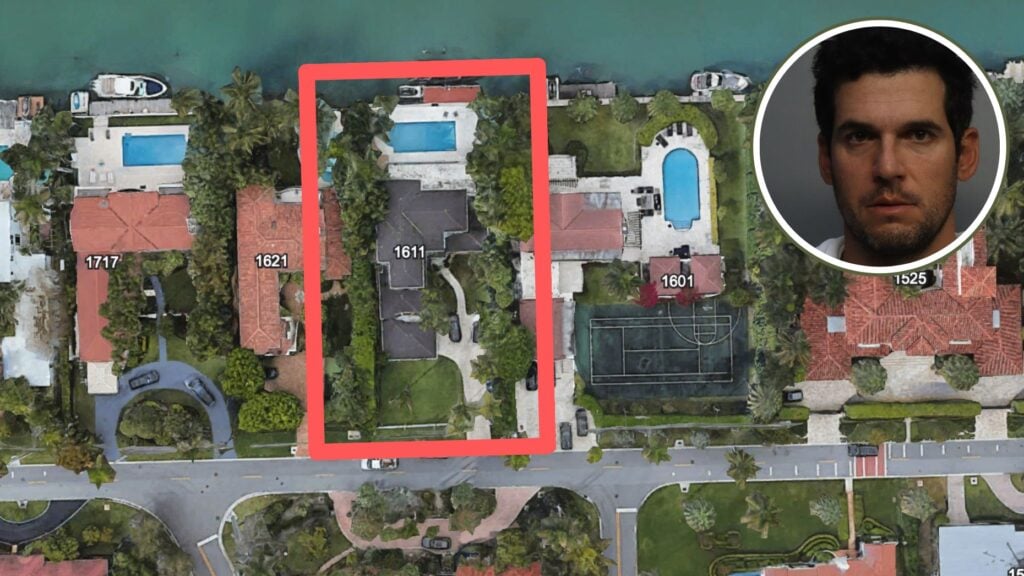
Oren Alexander renting out Miami Beach home at $55K per month

The waterfront home on one of the Sunset Islands was listed for rent last week by Corcoran’s Isaac Lustgarten, who previously worked with the Alexanders at Official. The home spans 4,267 square feet and has four bedrooms.

Bigger. Better. Bolder. Inman Connect is heading to San Diego. Join thousands of real estate pros, connect with the power of the Inman Community, and gain insights from hundreds of leading minds shaping the industry. If you’re ready to grow your business and invest in yourself, this is where you need to be. Go BIG in San Diego!

Once top luxury broker Oren Alexander has listed his waterfront Miami Beach home for rent for $55,000 per month with the assistance of a former colleague.

Isaac Lustgarten of Corcoran Group, who previously worked with Alexander at Official, listed the property at 1611 West 24th Street on the Sunset Islands last week.

TAKE THE INMAN INTEL SURVEY FOR APRIL

According to the listing, the property was built in 1938, but photos show what appears to be a recently remodeled home. Alexander bought the 4,267-square-foot house, which spans four bedrooms and four-and-a-half baths, in 2021 via an LLC, according to records, and paid $9.8 million for it.

Alexander’s primary residence is located on a neighboring Sunset Island. Lustgarten did not immediately respond to a request for comment.

Oren, as well as his twin brother Alon Alexander and older brother Tal Alexander, are currently being held in a Brooklyn detention center while awaiting trial on federal sex-trafficking charges. The trial is scheduled for January 2026.

Oren and Tal launched Official Partners with Side in Miami and New York in 2022, alongside three business partners, after building their careers at Douglas Elliman over the course of 10 years. Alon was a private security executive for the family firm, Kent Security.

In addition to the federal charges, Alon and Oren face sexual battery charges by the Miami-Dade State Attorney’s office, and all three brothers face multiple civil lawsuits from women who allege that they drugged and/or sexually assaulted them. The brothers have denied all allegations.

Side also sued Oren, Tal and Official Partners last fall, alleging that they had defaulted on a $5 million loan that Side extended to them when launching their firm. The parties settled the lawsuit on April 18. Terms of the settlement were not disclosed.

It was reported in February that the Alexander family was shopping around their Miami homes while the brothers were awaiting next steps in their trial, even as Side had requested a preliminary injunction to prevent them from selling or leasing those properties in any way, as some served as collateral on their loan — including the property at 1611 West 24th Street.

Get Inman’s Luxury Lens Newsletter delivered right to your inbox. A weekly deep dive into the biggest news in the world of high-end real estate delivered every Friday. Click here to subscribe.

Email Lillian Dickerson

This post was originally published on this site

Existing-home sales fall to slowest pace since 2009 amid rising costs

Existing-home sales decreased by 5.9 percent from February and by 2.4 percent from March 2024 as homebuyers continued to deal with affordability challenges, said NAR Chief Economist Lawrence Yun.

Bigger. Better. Bolder. Inman Connect is heading to San Diego. Join thousands of real estate pros, connect with the Inman Community and gain insights from hundreds of leading minds shaping the industry. If you’re ready to grow your business and invest in yourself, this is where you need to be. Go BIG in San Diego!

Existing-home sales fell in March to their slowest pace since the subprime mortgage crisis in 2009 as high home prices and mortgage rates continued to impede buyers, data released Thursday by the National Association of Realtors shows.

Sales dropped in all four major regions month over month, with total existing-home sales decreasing by 5.9 percent from February to a seasonally adjusted annual rate of 4.02 million in March. On an annual basis, sales dropped by 2.4 percent from March 2024’s rate of 4.12 million.

Economists had pegged March 2025’s existing-home sales to hit closer to 4.13 million units.

TAKE THE INMAN INTEL SURVEY FOR APRIL

“Homebuying and selling remained sluggish in March due to the affordability challenges associated with high mortgage rates,” NAR Chief Economist Lawrence Yun said in a statement. “Residential housing mobility, currently at historical lows, signals the troublesome possibility of less economic mobility for society.”

Total inventory hit 1.33 million units in March, which was up 8.1 percent month over month, and up 19.8 percent year over year. At the current sales rate, unsold inventory is at a 4 month supply, which is up from 3.5 months in February 2025 and up from 3.2 months in March 2024.

The median existing-home sale price across all housing types rose 2.7 percent year over year to $403,700.

“In a stark contrast to the stock and bond markets, household wealth in residential real estate continues to reach new heights,” Yun added.

“With mortgage delinquencies at near-historical lows, the housing market is on solid footing. A small deceleration in home price gains, which was slightly below wage-growth increases in March, would be a welcome improvement for affordability. With real estate asset valuation at $52 trillion, according to the Federal Reserve Flow of Funds, each percentage point gain in home prices adds more than $500 billion to the household balance sheet.”

Homes typically stayed on the market for 36 days in March, according to the Realtors Confidence Index, down from 42 days in February and up from 33 days the year prior.

First-time homebuyers made up 32 percent of March home sales, up slightly from 31 percent in February and equal to March 2024.

Cash deals represented 26 percent of transactions, down from 32 percent in February and 28 percent in March 2024. Individual investors and second homebuyers (who represent many cash sales) bought 15 percent of homes in March, which was nearly equal to February 2025 and March 2024 figures.

Single-family sales declined 6.4 percent from February to a seasonally adjusted annual rate of 3.64 million, which was down from 2.2 percent in March 2024. Existing condo and co-op sales stayed flat month over month at a seasonally adjusted annual rate of 380,000 units, down 5 percent from the previous year.

By region

  • In the Northeast, existing-home sales dropped 2 percent from February to an annual rate of 490,000. The median price rose 7.7 percent annually to $468,000.
  • In the Midwest, existing-home sales dropped 5 percent from February to an annual rate of 950,000. The median price rose 3.5 percent annually to $302,100.
  • In the South, existing-home sales declined 5.7 percent from February to an annual rate of 1.81 million. The median price ticked up 0.6 percent on an annual basis to $360,400.
  • In the West, existing-home sales tanked 9.4 percent from February to an annual rate of 770,000. The median price increased 2.6 percent on an annual basis to $621,200.

Email Lillian Dickerson

This post was originally published on this site