Buying or selling a home is one of the largest financial transactions most people will ever make. While many people focus on the purchase price, down payment, or sale proceeds, another important part of the transaction often catches consumers by surprise: closing costs.
Closing costs are the fees and expenses associated with finalizing a real estate transaction. They cover everything from lender fees and title services to taxes and insurance-related expenses. Understanding these costs ahead of time can help buyers and sellers budget more effectively, avoid surprises, and navigate the closing process with confidence.
Whether you’re purchasing your first home or preparing to sell a property in Texas, here’s what you need to know about closing costs and how they can impact your transaction.
What Are Closing Costs?
Closing costs are the various fees and expenses paid when ownership of a property transfers from a seller to a buyer. These costs are typically paid at the closing table and are separate from the home’s purchase price.
Some closing costs are paid by the buyer, some by the seller, and others may be negotiated between the parties as part of the contract.
The exact amount varies depending on the property’s value, loan type, location, and terms of the transaction. In general, buyers can expect closing costs to range from approximately 2% to 5% of the purchase price, while sellers often pay costs associated with commissions, title-related fees, and other transaction expenses.
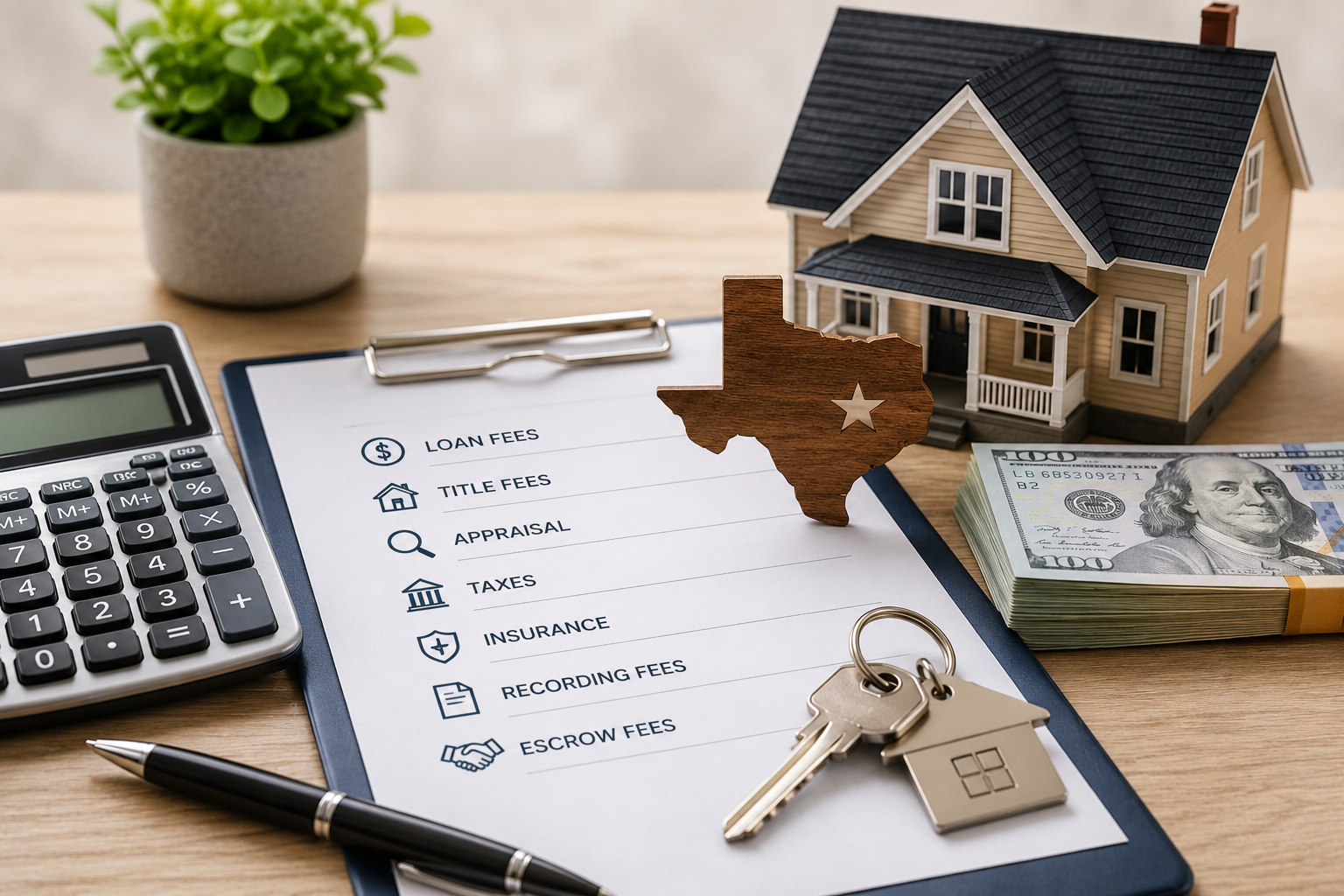
Common Closing Costs for Texas Homebuyers
Homebuyers typically incur the majority of the financing-related expenses in a transaction. Some of the most common buyer closing costs include:
Loan Origination Fees
Mortgage lenders often charge fees for processing and underwriting a loan application. These fees help cover administrative and lending costs.
Appraisal Fee
Lenders generally require an appraisal to verify the property’s value before approving a mortgage. This helps ensure the home’s value supports the loan amount.
Credit Report Fee
Most lenders will obtain a credit report during the loan approval process. The cost is usually modest but is often included in the buyer’s closing costs.
Title Services
Title companies play a critical role in Texas real estate transactions. Buyers may pay for services such as:
- Title search
- Escrow services
- Settlement services
- Recording fees
These services help ensure the property can legally transfer ownership without title issues.
Homeowners Insurance
Lenders require proof of homeowners insurance before closing. Buyers often pay the first year’s premium upfront or place funds into an escrow account.
Property Taxes
Depending on the timing of the transaction, buyers may need to prepay property taxes or contribute funds to an escrow account that the lender manages.
Prepaid Interest
Buyers typically pay interest that accrues between the closing date and the first mortgage payment.
Survey Fees
In some transactions, a new property survey may be required if an existing survey cannot be accepted.
Common Closing Costs for Texas Home Sellers
Sellers also have expenses associated with closing. While buyers often focus on financing costs, sellers should prepare for several transaction-related fees.
Real Estate Commissions
One of the largest seller expenses is often the commission paid to real estate professionals involved in the transaction. Commission structures vary and should be discussed with the listing broker before the property is listed.
Owner’s Title Policy
In Texas, sellers commonly pay for the owner’s title insurance policy, although this can be negotiated between the parties.
Property Tax Prorations
Property taxes are generally prorated between the buyer and seller based on the closing date. Sellers are responsible for taxes accrued during the period they owned the property.
HOA Fees and Transfer Charges
If the property is located within a homeowners association, there may be fees associated with providing resale certificates, transfer documents, or updating ownership records.
Repairs or Buyer Credits
If inspection issues arise during the transaction, sellers may agree to complete repairs or provide credits to the buyer. These negotiated expenses can affect the seller’s net proceeds.
Mortgage Payoff
If the seller still has an existing mortgage, the remaining balance must typically be paid off from the proceeds of the sale.
Who Pays Closing Costs in Texas?
There is no universal rule that determines exactly who pays every closing cost. Texas real estate contracts often specify which party is responsible for certain expenses, and many costs are negotiable.
Generally speaking:
- Buyers usually pay lender-related costs.
- Sellers often pay title policy costs and commissions.
- Property taxes are typically prorated.
- Certain fees may be negotiated during contract negotiations.
Market conditions can also influence who pays specific costs. In a buyer’s market, sellers may be more willing to contribute toward closing expenses. In a seller’s market, buyers may assume a larger share of the costs to make their offer more attractive.
Can Closing Costs Be Negotiated?
Many people are surprised to learn that some closing costs can be negotiated.
For example, buyers may request seller concessions to help cover closing expenses. A seller concession is an agreement where the seller contributes a specified amount toward the buyer’s closing costs.
Negotiations may also involve:
- Repair credits
- Home warranty coverage
- HOA transfer fees
- Title-related expenses
- Survey costs
The success of these negotiations often depends on market conditions, property demand, and the overall strength of the offer.
Understanding the Closing Disclosure
Before closing, buyers receive a document known as the Closing Disclosure.
This document provides a detailed breakdown of:
- Loan terms
- Monthly payment information
- Interest rate
- Cash required at closing
- Itemized closing costs
Buyers should review this document carefully and compare it with previous loan estimates to ensure there are no unexpected changes.
If questions arise, it is important to discuss them with the lender, title company, or real estate professional before signing closing documents.
How to Budget for Closing Costs
One of the best ways to reduce stress during a real estate transaction is to plan ahead.
For Buyers
Buyers should avoid focusing solely on the down payment when preparing financially. Closing costs can represent a significant additional expense.
Helpful budgeting strategies include:
- Requesting a loan estimate early
- Maintaining a financial cushion
- Avoiding major purchases before closing
- Discussing expected costs with a lender
For Sellers
Sellers should calculate their estimated net proceeds before listing the property.
Factors to consider include:
- Mortgage payoff amount
- Real estate commissions
- Title-related expenses
- Potential repair costs
- HOA fees
- Property tax prorations
Understanding these costs ahead of time can prevent surprises when reviewing settlement statements.
Common Closing Cost Misconceptions
“The Down Payment Covers Everything”
Many first-time buyers assume their down payment is the only major expense. In reality, closing costs are separate and can add thousands of dollars to the amount needed at closing.
“The Seller Pays All Closing Costs”
While sellers do pay certain expenses, buyers are responsible for many lender-related and financing costs.
“Closing Costs Are the Same in Every Transaction”
Each transaction is unique. Factors such as loan type, purchase price, location, and negotiated contract terms can significantly impact the final amount.
“You Can’t Shop Around”
Some services, such as lenders and title-related providers in certain situations, may offer options that allow consumers to compare costs and services.
Tips for Avoiding Closing Day Surprises
A smooth closing often comes down to preparation and communication.
Consider the following tips:
- Review all estimates carefully.
- Ask questions early.
- Maintain contact with your lender and agent.
- Avoid opening new credit accounts before closing.
- Respond quickly to document requests.
- Verify wire instructions directly with the title company.
- Review the Closing Disclosure thoroughly before signing.
Being proactive can help prevent delays and unexpected expenses.
The Value of Professional Guidance
Closing costs can seem complicated, especially for first-time buyers and sellers. Working with experienced real estate professionals, lenders, and title companies can make the process easier to understand.
A knowledgeable real estate agent can help explain transaction expenses, identify negotiation opportunities, and ensure clients understand what to expect throughout the closing process.
While every transaction is different, having a trusted professional guide you through the process can help reduce stress and provide confidence from contract to closing.
Final Thoughts
Closing costs are an essential part of every Texas real estate transaction. Although they may not receive as much attention as the purchase price or mortgage rate, they can have a significant impact on a buyer’s budget and a seller’s proceeds.
By understanding the most common closing expenses, knowing which costs are typically paid by each party, and planning ahead, buyers and sellers can approach closing day with fewer surprises and greater peace of mind.
Whether you’re buying your first home, upgrading to a larger property, or preparing to sell, taking the time to understand closing costs is an important step toward a successful real estate transaction.