In 2026, the biggest design story in Texas homes isn’t a single style—it’s the way interior and exterior spaces are being planned as one cohesive, livable environment. Across Austin, Dallas-Fort Worth, Houston, San Antonio, and the Hill Country, buyers are gravitating toward architectural designs that feel modern, peaceful, and calming, while still standing up to Texas heat, sudden storms, and real family life.
What’s driving the shift now? A mix of lifestyle changes (more time at home), energy-awareness (higher utility costs and more efficient building systems), and a stronger desire for homes that connect to nature without sacrificing comfort. The newest designs blur boundaries with biophilic design principles, open air layouts, retractable walls, inside-outside pools, and materials chosen for long-term sustainable performance.
What interior architectural designs feel “modern” and livable in 2026?
Texas buyers still love clean lines and uncluttered spaces, but in 2026, “modern” is softer and more human. Instead of sharp minimalism, the most popular interior architectural designs focus on comfort, curves, and flexible rooms that work for families—think homework zones, quiet corners, and kitchens that can handle both weeknight chaos and weekend entertaining.
Designers are leaning into warm modern: lighter woods, textured walls, and layered lighting that makes rooms feel peaceful rather than sterile. In Texas, where bright sun can wash out a space, interiors are also being tuned for glare control and better indoor comfort with window placement, solar shades, and smart glass options.
Organic shapes and curves are replacing hard edges
Curved architecture is showing up everywhere—from arched doorways and radius drywall corners to rounded kitchen islands and built-in banquettes. These organic forms make rooms feel calming, and they also create better flow in open layouts (especially helpful in narrower urban homes around Central Austin or in townhome-heavy pockets of Dallas).
Look for these curve-forward details in 2026 builds and renovations:
- Arched interior openings and cased passages
- Barrel-vault or subtly curved ceilings in entryways and hallways
- Rounded plaster or limewash fireplaces as living room anchors
- Curved cabinetry ends and furniture-like vanities
“Quiet luxury” finishes that hold up to real family use
Texas buyers are increasingly asking for premium materials that don’t feel precious. That means fewer glossy surfaces that show fingerprints and more honed, brushed, or textured finishes that age gracefully. You’ll see durable wide-plank engineered wood, dense porcelain slabs (popular for heat resistance), and stain-resistant performance fabrics for family rooms.
Another practical shift: more storage integrated into the architecture. Mudrooms, drop zones, and pantry walls aren’t just add-ons—they’re being designed as core parts of the interior plan, especially in suburban markets like Katy, Frisco, and New Braunfels where buyers expect everyday functionality.
Flexible rooms and “micro-zones” inside open plans
Open concepts aren’t disappearing in 2026—they’re evolving. Homeowners want openness, but they also want places to focus, rest, or take a call. The newest modern layouts create micro-zones using ceiling changes, partial walls, slatted wood dividers, built-ins, and lighting to define spaces without closing them off.
Common 2026 interior planning moves include:
- Kitchen + dining + living in one connected great room, but with distinct lighting zones
- Small “library walls” or study nooks off main living spaces
- Pocket offices near the kitchen for parents managing schedules
- Multi-purpose flex rooms with upgraded sound insulation
How are exterior architecture designs changing across Texas in 2026?
On the exterior, the trend is clear: homes are being designed to look lighter, more natural, and more integrated with the landscape. In Texas, that also means exteriors that can handle UV exposure, humidity swings (especially along the Gulf Coast), and wind-driven rain without constant maintenance.
While modern farmhouses are still present, 2026 is leaning into regional modernism—Hill Country contemporary, desert-inspired forms in West Texas, and Gulf-friendly designs near Houston and Galveston that emphasize shade, airflow, and resilient materials.
Modern exteriors with warmth: wood tones, stone, and shaded depth
Flat, one-note facades are out. The most popular exterior architectural designs use contrast and depth: deep overhangs, layered materials, and shadows that make the home feel grounded. You’ll see smooth stucco paired with limestone, warm-toned wood accents (often engineered for durability), and dark bronze or black window frames that read modern without feeling harsh.
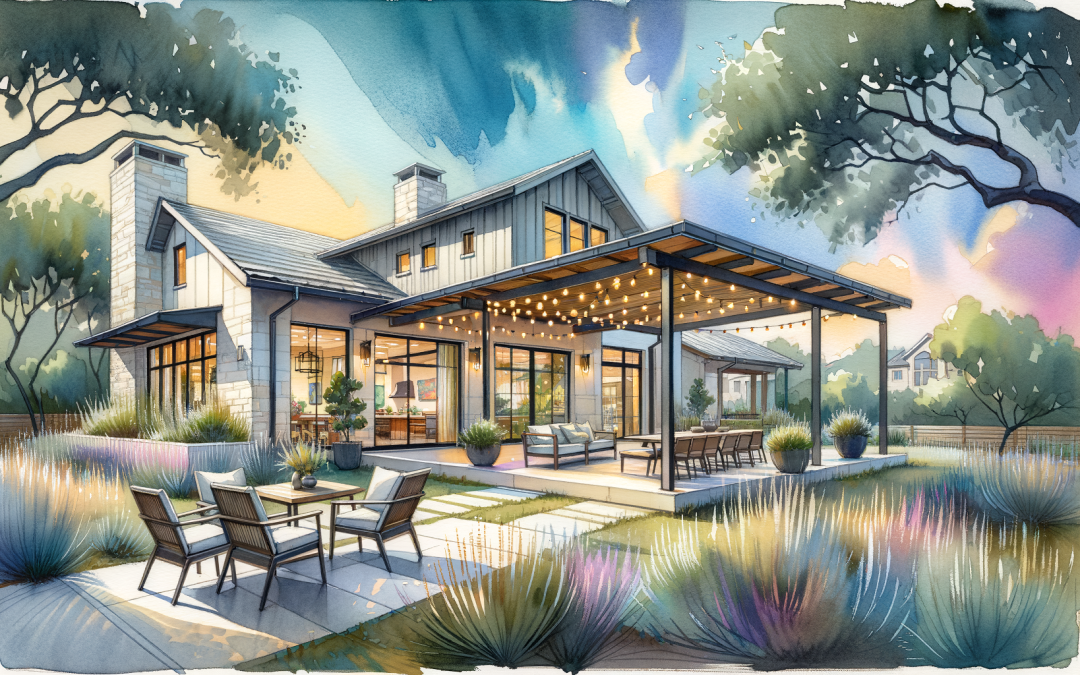
Practical Texas-specific detail: shade is a design feature, not an afterthought. Covered porches, recessed patios, and pergola structures are being built into the home’s form to reduce heat gain and expand outdoor living for more months of the year.
Curves and organic massing on the exterior
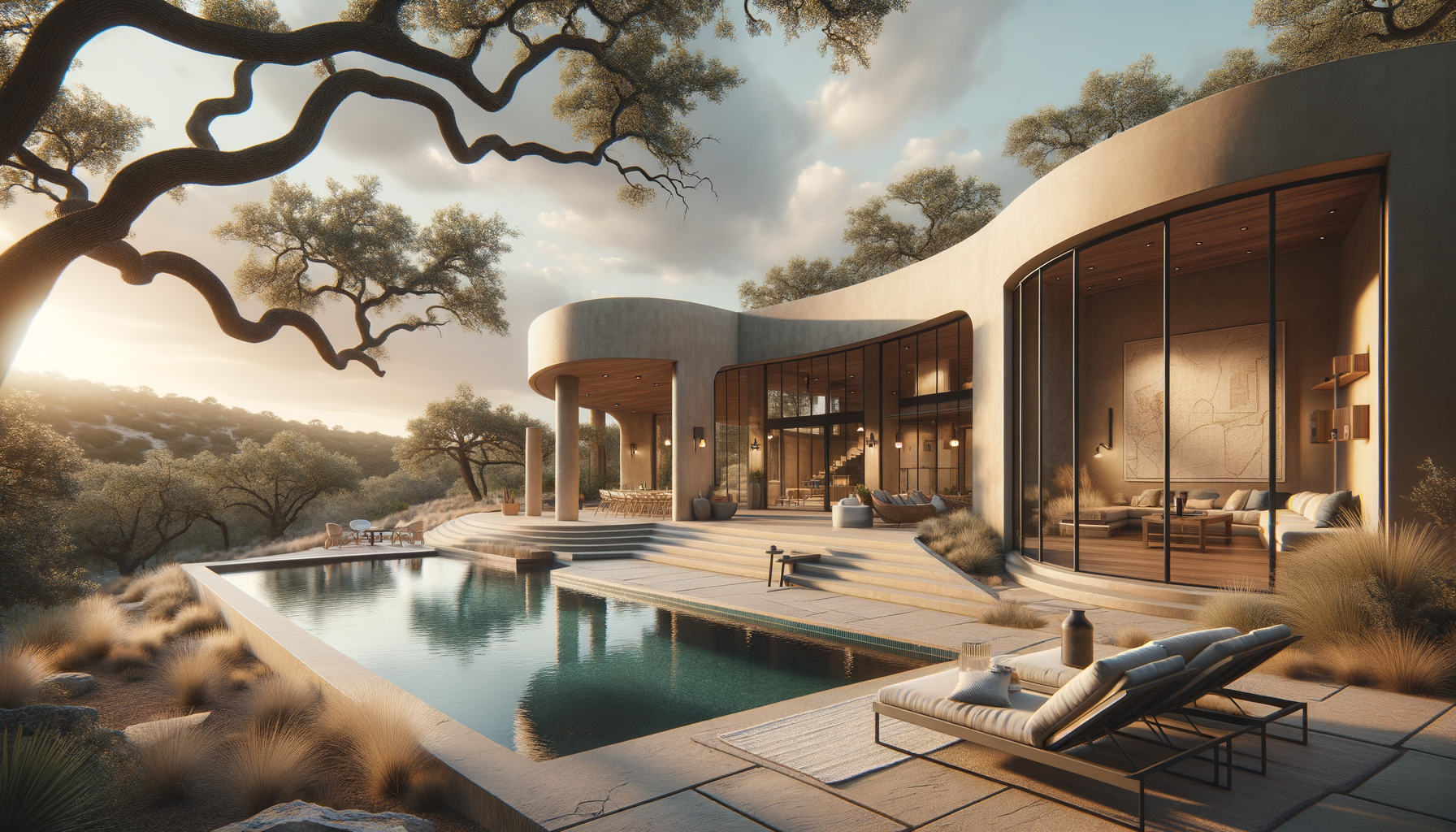
That interior love for curves is extending outdoors. Rounded entry walls, curved courtyard edges, and softly arched patio openings are increasingly common—especially in custom homes throughout the Hill Country and luxury pockets of North Dallas and West Houston. These shapes can make a large home feel more approachable and peaceful from the street.
At the neighborhood level, it’s also a response to “box fatigue.” In fast-growing suburbs, buyers want a home that stands out subtly through craftsmanship and form, not just louder finishes.
Outdoor rooms that function like real rooms
In 2026, the outdoor space isn’t just a patio—it’s a furnished, wired, and weather-considered extension of the interior. Many new builds are including outdoor kitchens, dining zones, and lounge areas designed around ceiling fans, heaters, and lighting that feels like indoor ambient light.
For families, the priority is usability: outdoor storage for pool gear, a bathroom with easy backyard access, durable surfaces that don’t become slippery in humid weather, and sightlines that let parents keep an eye on play areas.
How do biophilic design principles blur the line between interior and exterior?
Biophilic design principles are a major force behind 2026’s most desirable homes because they deliver something buyers instantly feel: a calming, restorative atmosphere. In Texas, where life can be fast-paced and weather extremes are real, that connection to nature—light, air, greenery, natural materials—can make a home feel like a retreat without leaving the city.
Biophilic design isn’t just “add plants.” It’s designing the interior and exterior together so the home supports well-being, comfort, and daily rhythms. Done right, it also supports resale value because it reads as intentional, high-quality architecture rather than a passing decor trend.
Daylight, views, and ventilation as first-class features
Expect to see more emphasis on window placement for usable daylight (not glare), and more intentional framing of views—courtyards, oaks, native landscaping, or water features. In Texas, north- and east-facing glass is often prized for softer light, while south- and west-facing exposures benefit from overhangs, shaded courtyards, or high-performance glazing.
Natural ventilation is also back in focus. While air conditioning is essential, many homeowners still want the option of fresh air during shoulder seasons—especially in Central Texas and North Texas when evenings cool down. Transom windows, operable clerestories, and screened openings help create airflow without inviting every bug in the county.
Natural textures that feel modern, not rustic
Biophilic interiors in 2026 use materials that feel tactile and authentic: plaster, limewash, clay-toned paints, rift-sawn oak, and stone with movement. The effect is peaceful and grounded, especially when paired with modern lines and clean detailing.
For Texas homes, homeowners are also prioritizing low-VOC paints, formaldehyde-free cabinetry options, and flooring choices that reduce dust and allergens—small decisions that can make a big difference in comfort.
Courtyards and “protected nature” outdoors
One of the most Texas-friendly biophilic moves is the courtyard: a private, wind-buffered outdoor space that brings light and greenery into the center of the home. Courtyards work particularly well in hot regions because they can be shaded, irrigated efficiently, and enjoyed even when the broader yard is baking in late summer.
Common courtyard features in 2026 include:
- Native plant palettes (better water efficiency and easier maintenance)
- Rain gardens or permeable hardscapes for stormwater management
- Small fountains or water walls for cooling ambiance and sound control
- Outdoor fireplaces designed for shoulder-season evenings
What “open air” living features are most popular in 2026 (and what should buyers watch for)?
The biggest crowd-pleaser in 2026 is open air living that feels seamless—wide openings, consistent flooring transitions, and outdoor zones that truly act like extensions of the interior. In Texas, this is more than a style choice. It’s a lifestyle upgrade that can add year-round value when it’s designed for heat, humidity, and sudden weather shifts.
The trick is doing it in a way that’s cohesive and buildable. Not every dramatic rendering translates well to Texas wind loads, water intrusion risks, or long-term maintenance. Buyers should look for thoughtful detailing and reputable construction methods, especially around large openings and complex water features.
Retractable walls and big sliders: the new indoor-outdoor “hinge”
Multi-panel sliders, pocketing glass walls, and folding doors are popular because they create that “resort at home” feeling. In cities like Austin and Dallas, they’re often used to open a living room to a covered patio; in the Hill Country, they frame views and connect to decks and outdoor kitchens.
Green flags to look for when touring homes with retractable systems:
- High-quality door hardware that glides smoothly and locks securely
- Proper thresholds and drainage detailing to manage wind-driven rain
- Compatible HVAC zoning so the home doesn’t struggle to keep up after openings are used
- Insect screening solutions if the space will be used frequently
Red flags include sticking panels, visible water staining near the track, or exterior patios that slope toward the house. Those can signal future headaches in heavy storms.
Inside-outside swimming pools and “spillover” water features
Inside-outside swimming pools—where a pool connects through a wall opening or glass separation—are among the most talked-about luxury features in 2026. You’ll also see negative-edge spas, courtyard plunge pools, and long, narrow lap pools designed for smaller lots.
For Texas buyers, the conversation should include practical considerations:
- Evaporation and water management in hot months
- Energy-efficient pumps, variable-speed systems, and smart controls
- Slip resistance on surrounding decking and steps
- Humidity control if water features are close to interior openings
When done right, these water-focused architectural designs can create a calming focal point and a true indoor-outdoor experience. When done poorly, they can lead to moisture problems and higher maintenance than buyers expect.
Cohesive material palettes that tie interior and exterior together
A hallmark of 2026 design is continuity: the home reads as one connected environment, not a set of mismatched rooms and add-ons. The most cohesive homes repeat materials and shapes from inside to out—stone that appears on the fireplace and the exterior wall, wood tones that echo from kitchen cabinetry to outdoor ceiling slats, or lighting styles that feel consistent across thresholds.
Flooring transitions are a big part of this. While using the exact same material inside and out isn’t always practical, designers are choosing complementary finishes so the eye moves smoothly—especially when large openings are used to connect spaces.
What makes 2026 architecture more sustainable in Texas (without sacrificing style)?
Sustainable design in 2026 is less about trendy labels and more about performance you can feel: lower bills, steadier indoor temperatures, and materials that last. In Texas, where cooling costs can be a major part of the monthly budget, sustainability also translates to comfort and resilience.
Many buyers—especially families planning to stay put—are asking for homes that balance beauty with long-term practicality. That includes energy efficiency, smart water use, and durable exterior assemblies that reduce maintenance over time.
High-performance building envelopes and heat-smart planning
A strong building envelope is the foundation of modern sustainable homes: better insulation, tighter air sealing, and windows chosen for the right exposures. This matters in Texas because it helps homes handle triple-digit days without constant HVAC strain.
Common sustainability upgrades buyers are noticing in 2026:
- High-efficiency heat pumps and variable-speed HVAC systems
- Spray foam or advanced insulation packages (used appropriately for the climate zone)
- ENERGY STAR-rated windows and doors with improved solar performance
- Smart thermostats and zoning for multi-story comfort
Water-wise landscapes and outdoor living that doesn’t waste resources
Texas homeowners are becoming more intentional about water use, especially in drought-prone regions. Sustainable landscaping in 2026 often means native and adapted plants, drip irrigation, smart controllers, and mulch strategies that reduce evaporation.
Outdoor spaces are also being designed for shade and airflow so they’re usable without excessive misting systems or constant cooling. A well-placed pergola, a deep covered patio, or a shaded courtyard can make outdoor living feel calming even during warm seasons.
Healthy-home details that support peaceful, everyday living
One reason these design trends are “all the rave” is that they don’t just look good—they support how people want to feel at home. Better filtration, low-VOC materials, and thoughtful acoustics can make a house feel noticeably more peaceful, especially for busy families.
Buyers touring 2026-style homes often appreciate small quality markers: quiet-closing cabinetry, layered lighting, dedicated storage, and outdoor connections that create a daily sense of ease. Those features may not show up on a listing headline, but they often influence which home feels right.