
Commercials in Houston
2019 Design Forecast: What’s In, What’s Out
As we flip to the last pages of our 2018 calendar, it’s time to look at interior design trends on the rise – and say goodbye to those on their way out in 2019.
Here are our predictions about what’s in and what’s out in the year to come.
What’s in
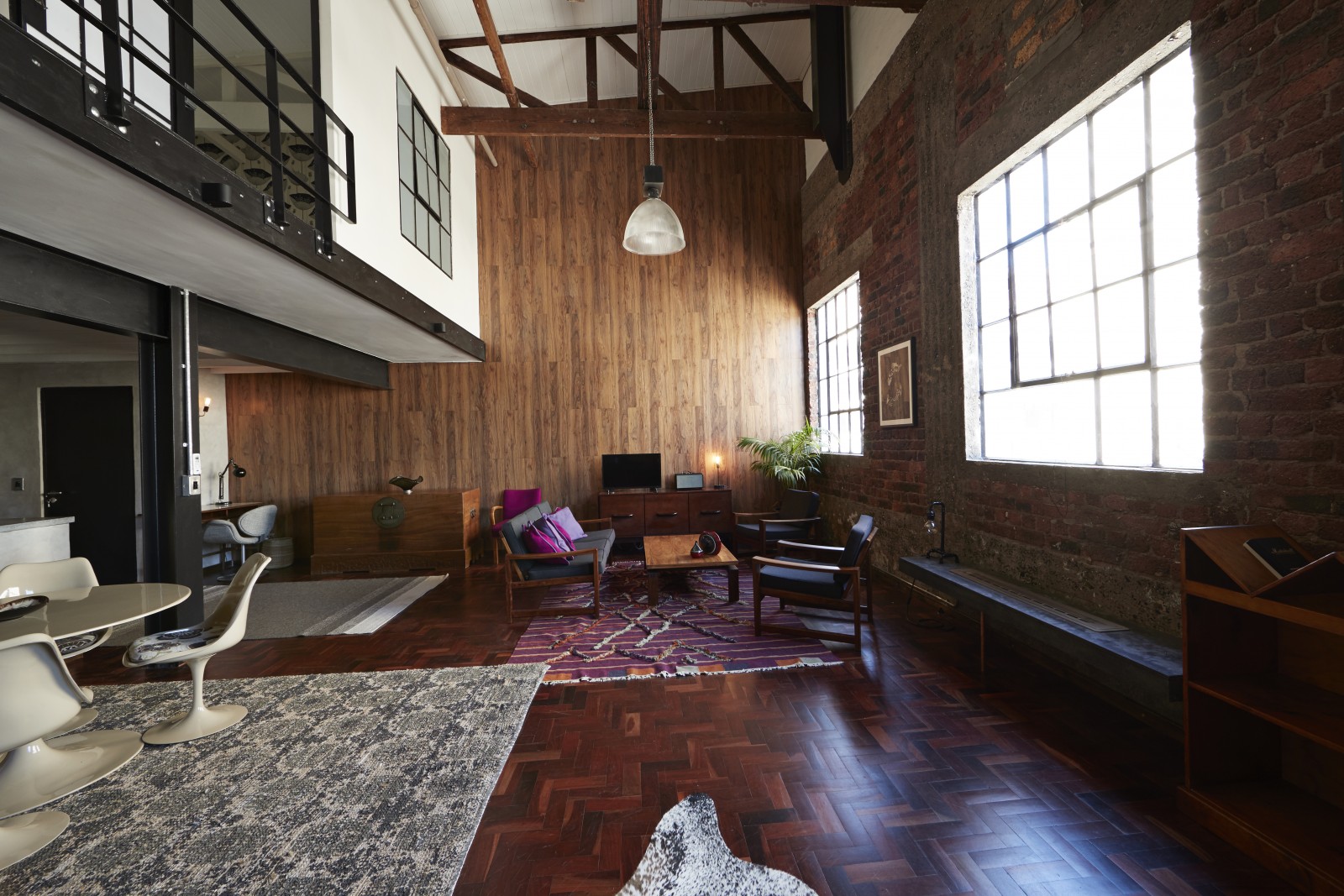
Warm modernism
It’s official – many regions throughout the U.S. are choosing a modern aesthetic over a rustic style.
While black-and-white contrast and raw materials like steel and wood will continue to be popular, they’ll be softened by color and asymmetry. These modern elements will have a fresh approachability when surrounded by sun-soaked fabrics and natural wallcoverings.
Effortless technology and transformations
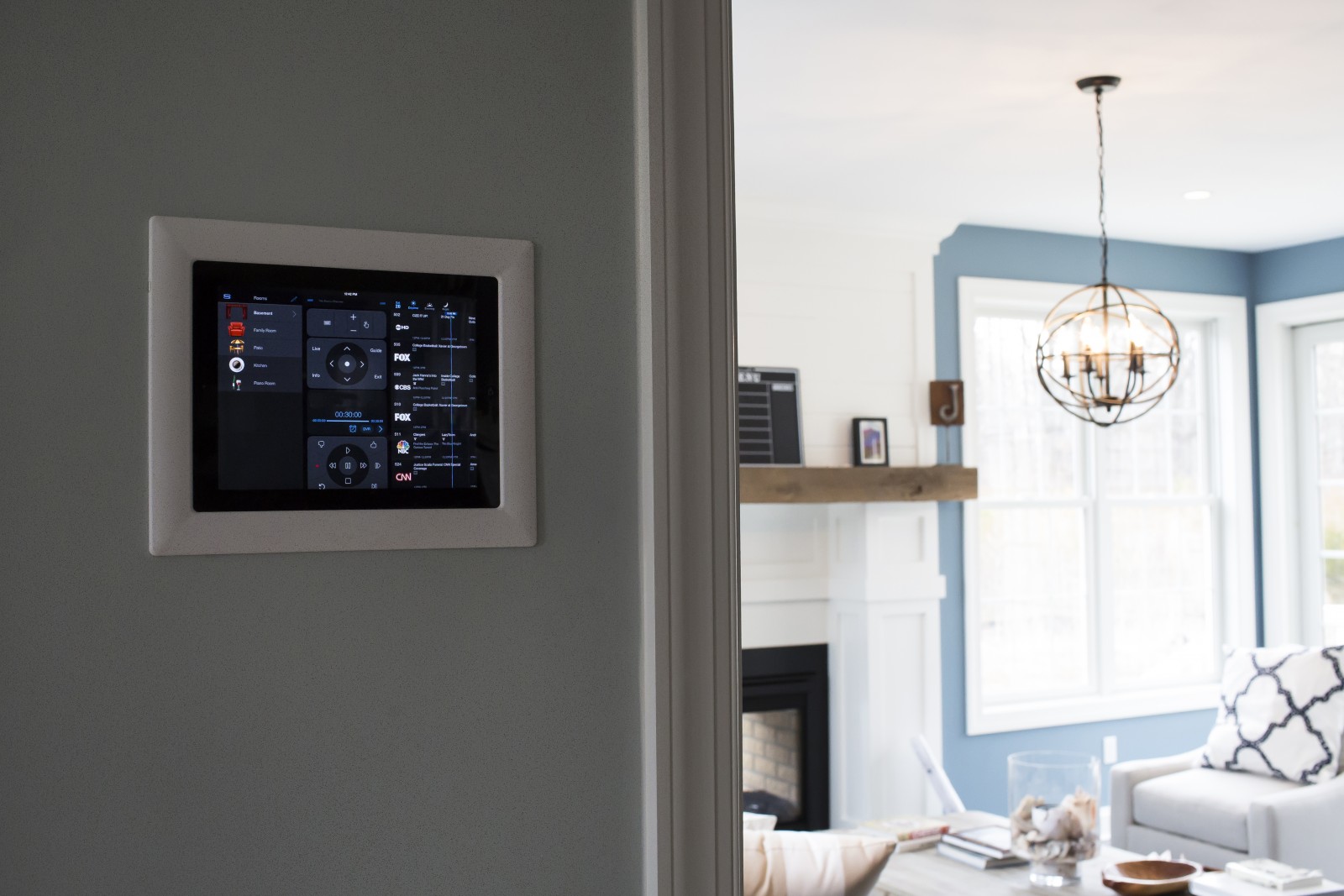
Talk-to-me tech products help you get things done with your voice, and homeowners are using them to modernize their daily routine.
In 2019 you’ll see smart faucets, fans, window coverings and appliances paired with popular platforms – Google Home, Amazon Alexa and Apple HomePod – for a convenient, connected home.
Additionally, products that offer easy installation and seamless integration into existing layouts make projects remodel-friendly. Innovative sinks, faucets, medicine cabinets, appliances and lighting provide a quick transformation to refresh the style and functionality of your space.
Om sweet home
Though talk-to-me tech is trending, some will be looking for ways to escape the chatter.
Meditative and sound-barrier features will appear in more homes this year – think transformative experiences using acoustic panels, colored lights and aura effects. Ethereal, sheer and translucent fabrics will support the aesthetic, pairing an organic feel with the benefits and convenience of select technology.

Industrial style
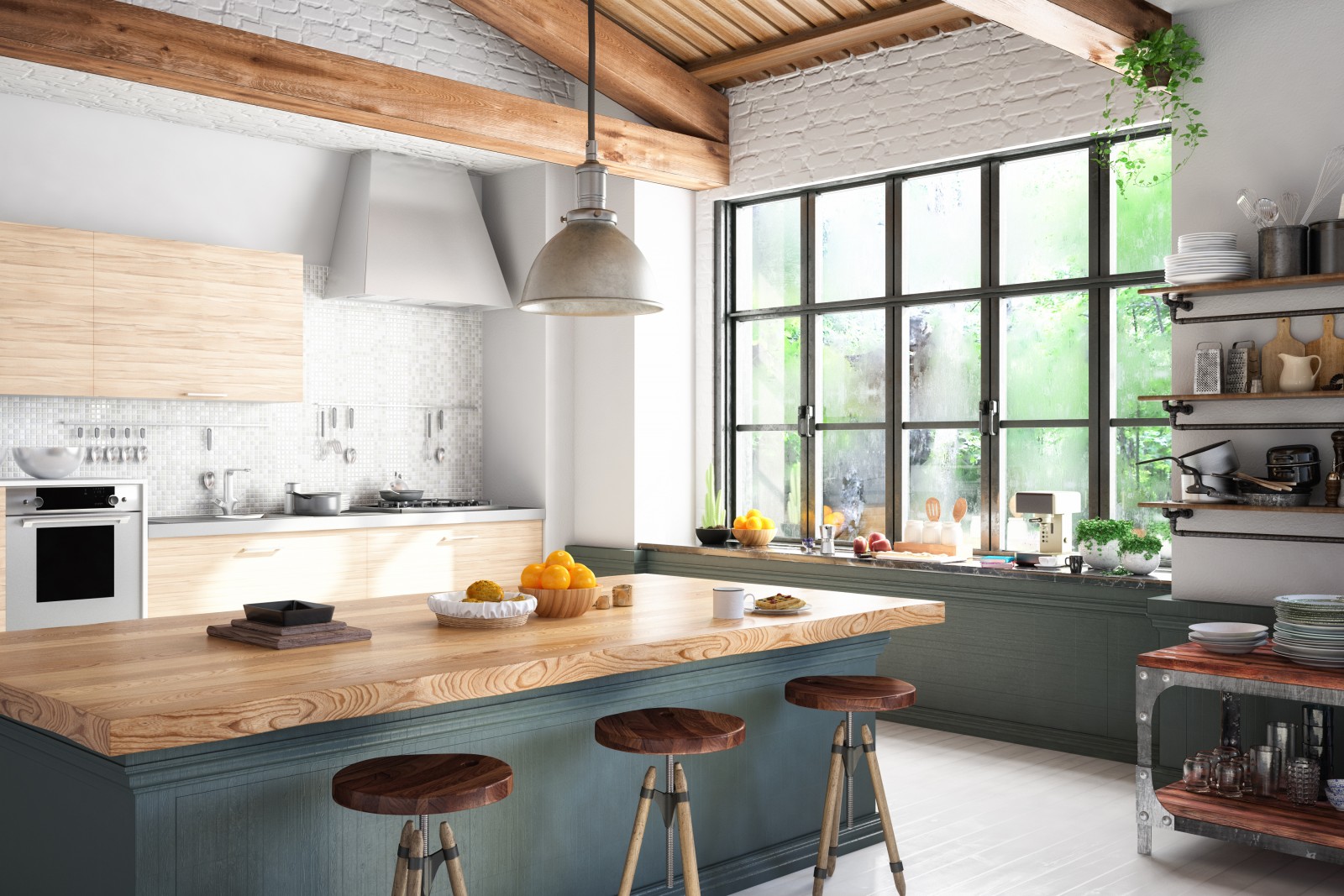
Concrete, quartz and metal lovers, rejoice! Industrial styles are predicted to rise in popularity in 2019.
Matte black and bronze continue to dominate and complement a more industrial vibe. But when selecting wall colors, appliances, faucet finishes and fabrics, consider the possibilities of moody blues and the gray color spectrum. From warm light grays to the coolness of matte black, these tones add a subtle layer of intrigue and distinction.
Plus, black and charcoal gray front doors could earn up to $6,271 more when selling your home!
Organic maker accents
Handmade details can immediately soften an interior. This year you’ll see rhythmic patterns and imperfect lines incorporated through hand-painting, stitching and detailing, expanding the possibilities for endless mixing and matching in the home. Additionally, fabrics and accents with strands of crystal, wooden and pearlescent beads present a sophisticated flair for artful detail.
Home decor favorites will still include earthy elements and nubby textures. Think neutral naturals by simply adding a wooden side table and sculpture, live and fake plants for color, and natural fibers through rugs and fabrics.

What’s out
Rustic
Is America finally over the “Fixer Upper” movement? Not quite, but the rustic, farmhouse-chic elements are getting refined.
The shiplap-crazy trend seems to be leaning toward a modern twist, simplifying layers of the look. Cutesy barn doors will take a backseat to more modern versions featuring glass and metal instead of reclaimed barn wood.
The signature statement range hood covered in rustic materials will swing to simplified finishes, like brushed brass, stainless and matte black. Lastly, the harsh light of the Edison bulb will move to a more complementary glow, reflecting concealed bulbs versus exposed ones.

Millennial pink
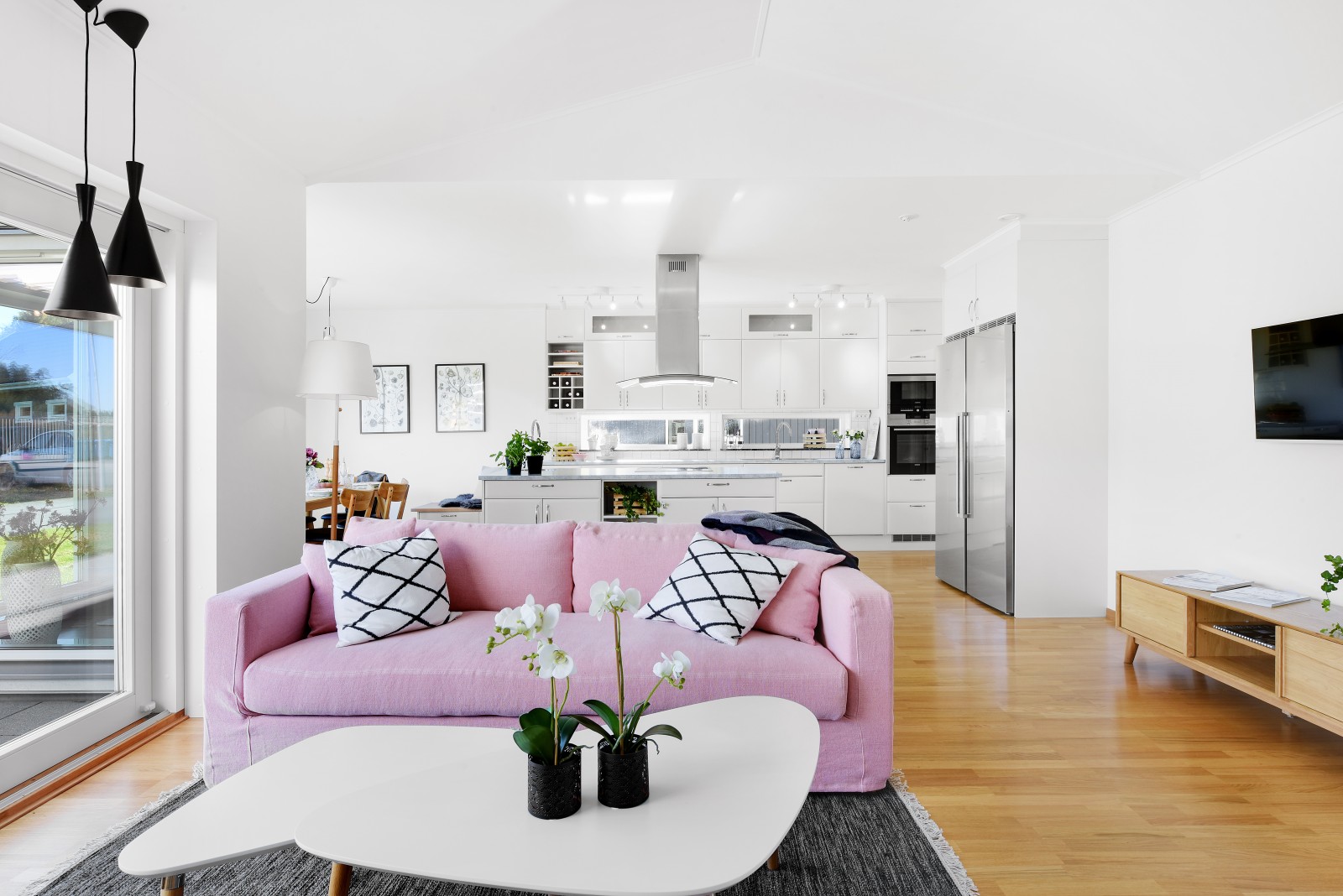
Bold, trendy color schemes are likely on the way out, with more subtle earth tones and cool, classic palettes on the rise.
Blues and neutrals continue to top Zillow trend reports, adding higher dollar values related to home sales when used in kitchen and bathroom areas. While millennial pink may have been all the rage on designer Instagram feeds, people don’t actually want to live with it throughout their homes.
Whether trends inspire you or not, it’s important to be aware of them, because they help shape our own personal interior style. If you love purple gingham in your dining room, go for it. If an all-white interior speaks to you, celebrate it.
Our homes are where we express ourselves and tell our unique style story, so I encourage you to do just that in the new year.
Related:
How to Move Cross-Country: See How These Renters Made It Work
When former New Yorkers Erica Warren and Cici Harrison drove across the country and settled in the Pacific Northwest, they had a list of criteria for their new rental.
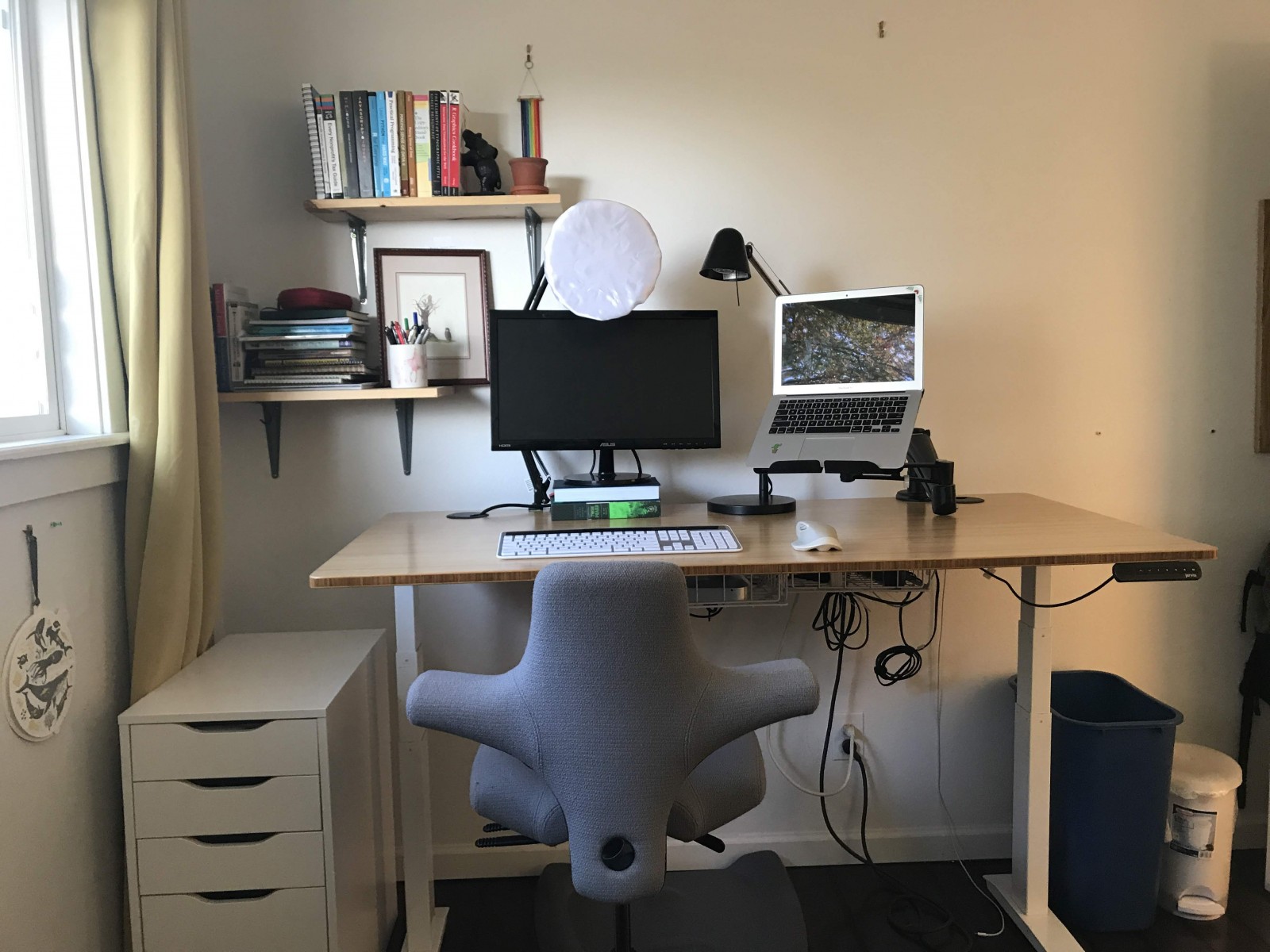
They’d need a parking space, a home office so Erica could work remotely and, of course, a yard so they could adopt a dog. And this rental couldn’t be too splashy, because a cross-country move is expensive enough.
All of this complicated their search in Portland’s tough rental market. Luckily the couple were able to stay locally with friends until they found the right rental. And their new home ticks all the boxes – while requiring some minor compromises to make it all work.
We chatted with Warren to hear how she and her wife navigated a cross-country move, including finding a home in a new city and making their new rental feel like home.
Where is your home, and how long have you lived there?
We’re in the Southeast, specifically the Richmond neighborhood. We moved there in March of 2017, and we’ve been there a year and a half.
How did you find your rental?
When we got here, we were staying with Marty and Tera, our friends who live here locally. The day after we arrived, there was the biggest snowstorm Portland had ever had in 30 years. That put a damper on our apartment searching, because we couldn’t drive our car or get anywhere. This place was actually the first one we saw, because it was in walking distance from Marty and Tera’s house.
We heard about it because Tera had sent an email around at her job asking if anyone had a lead on a rental. Someone else who worked with her had recently purchased a duplex and was looking for renters for the other side.
We walked over and saw it, and it was a very nice place. But it was the first place we looked at. We had no context for if it was a good deal or not. Of course, it seemed like a good deal to us, coming from New York. I was like, “It has a washer and dryer, it has a yard – I’ll pay any amount of money for that!”
So we didn’t say yes right away, and then we probably spent the next two or three weeks looking at places. We looked at about a dozen places all over the city. We saw all the different variations.
At some point we were almost ready to sign a lease on a 1 bedroom in a new apartment complex. It was, on paper, everything we were looking for. And Cici, out of nowhere, goes, “Why didn’t we want that first place that we looked at?” The one we were going to sign a lease for was 1 bedroom, and this was 2 bedrooms, and it was bigger, and the monthly rent was less. And we were like, “Oh, that was a much better place!” So we emailed the landlords to see if it was still available, and it was.
What price range were you looking for, and what did you end up paying?
We were looking in the $1,500-$1,700 per month range. This place ended up being right in the middle. It was $1,600 when we started the first year we were here, and it’s now $1,685. It seems like a pretty reasonable price for the neighborhood we’re in, because the rental market in Portland seems to be growing so fast.
What was the application and approval process like?
It was really straightforward. Our landlords live on the other side of the duplex, and they’re really nice people. I think they were looking for good neighbors as much as they were looking for good tenants. So I think that also helped with the relationship.
Were there any surprise fees?
We paid first month’s rent and a security deposit. The only extra fee when we moved in – we had just adopted Billie, and they had a $25 monthly dog rent. Which they told us about beforehand, because we were very particular about wanting a building that would allow us to adopt a dog. We got her a month after we moved in.

What was your cost of moving across the country?
We paid about $5,000 total for a full-service moving company, which is a lot of money. It was our biggest moving expense, but all we had to do was box up our things. They sent a whole team of people, packed our stuff into a storage cube, stored the cube for us, and then when we found a place, shipped it across the country. We didn’t have to do any of the logistics, and we didn’t have to do any of the carrying of things – we just had to pack a few boxes and unpack the boxes when we got here.
New York is notorious for small apartments. Is your Portland space bigger or smaller?
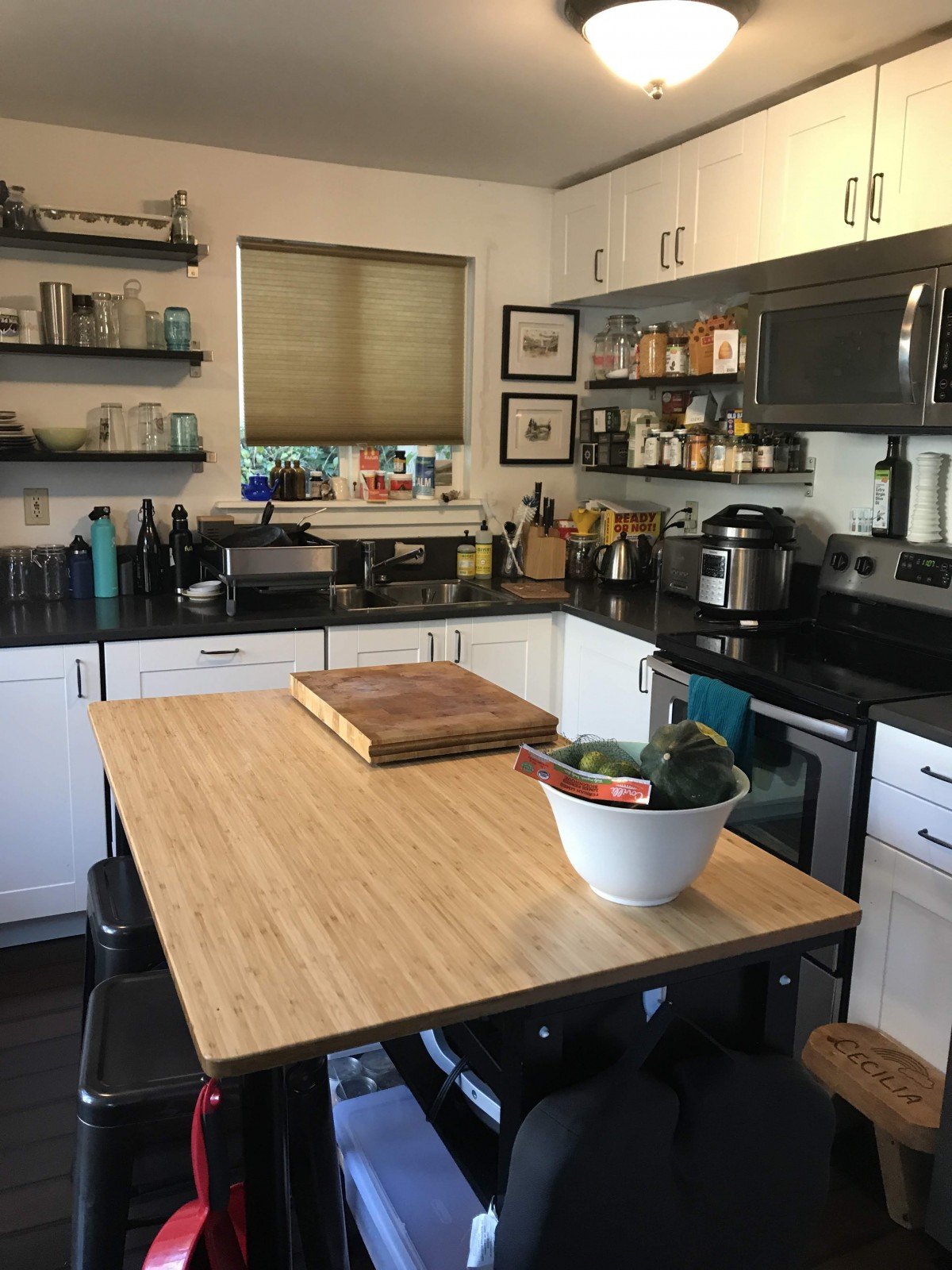
It’s slightly bigger, and I feel like it’s most noticeable in the kitchen. The kitchen that we have here is two or three times bigger than what we had in New York. I didn’t know how much I wanted a really nice kitchen, but now that I have one, I’m like yes, this is exactly where we needed the extra space!
We also have outdoor space, which makes a huge difference. It’s not huge – it’s more like a patio than a yard. We have a little grill, and we can sit out there on a nice day. Plus, it’s got a fence, so we can let our dog out.
Did you have any challenges making the place functional?
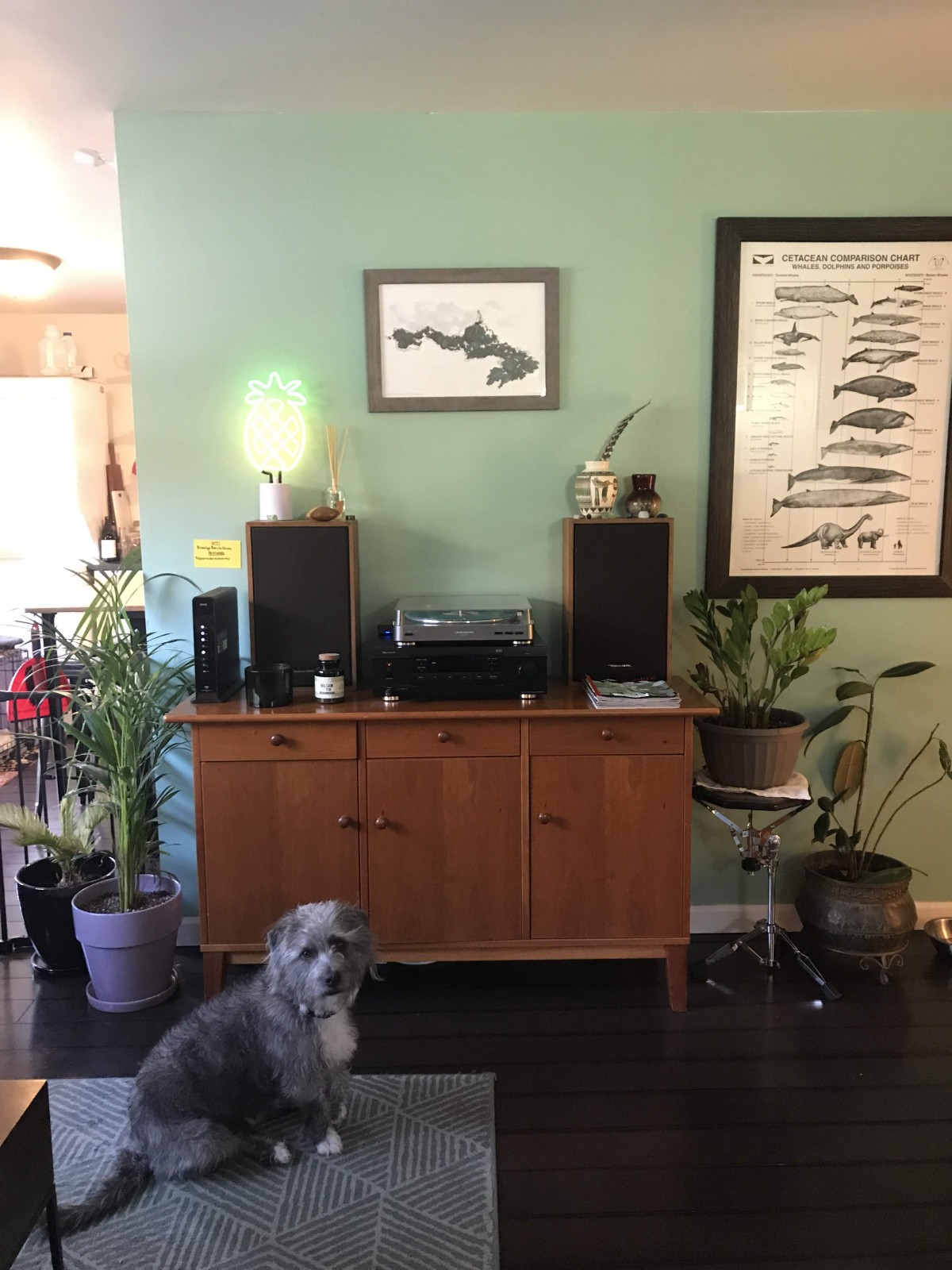
Nothing major. It was built in the ’60s or ’70s, but the landlords had renovated our unit before we moved in, so the kitchen, bathroom and flooring were all brand new – you know, everything works and is nicely designed, so that helped.
I did a little bit of work in the yard, just because it was a little muddy, and it’s Portland, so it’s wet in the winter, and Billie likes to dig. I got some pebble stones to fill in some of the muddy areas. We got into some light container gardening, because we never had outdoor space in Brooklyn. So we have a little blueberry bush, some star jasmine and some other little things I’m trying not to kill.
What else have you done to make your rental feel like home?
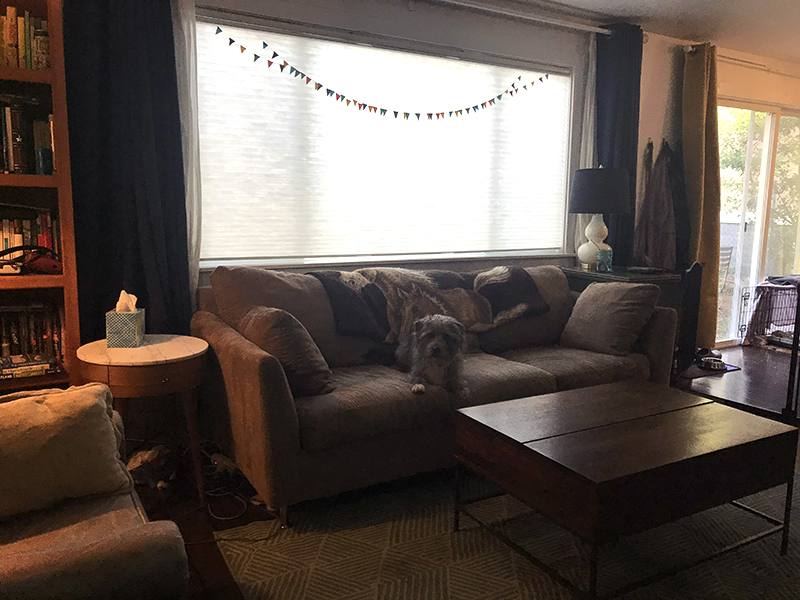
We painted a couple accent walls, which our landlords were totally fine with. We have this wide picture window in the living room that faces the road, but because of that you can see right into our house. So we got a custom shade that you can pull up from the bottom or pull down from the top, just so that we can have privacy but also sunlight if we want.
How long do you think you’ll stay?
I don’t know specifically. When we moved in, we talked about how we’d love to stay here until we’re in a position to buy a house. One day I’d like to own a house – a dining room would be nice at some point in my life. But where we’re at right now, this is the right amount of space, and it’s a really great neighborhood.
What do you want from your next place, other than a dining room?
A big fenced-in yard for Billie! Cici’s mom sent us an article about how the thing that’s finally getting millennials to buy houses is their dogs.
I’d also like a little bit more guest space so we could have people visit more frequently, because all of our family is on the East Coast.
And this is 100 percent because Cici has already claimed it – whatever house we buy has to have a basement so that she can play drums there. Number one is a yard for Billie, and number two is a basement for a drum kit and band practice.
Erica’s tips for finding a rental in a new city
1. Look around to get a sense of the market
Look at as many places as possible. Because even if you don’t want that unit, it gives you a sense of the market. So when you do find a good deal, you know that you have a good deal.
2. Know where you’re willing to compromise
If you have enough money that you don’t have to make sacrifices in renting, you probably don’t need to be renting. So everything’s a trade-off. There’s not a perfect rental out there. So it’s like, “This place has 2 bedrooms, but it’s more expensive, or this place has a bigger yard, but it’s farther out.”
3. Get a little help from your friends
We were so lucky to stay with Marty and Tera in their guest room until we found our own place. And Tera emailed co-workers to see if they knew of any rentals, which is how we ended up finding this place.
4. Conserve your energy and hire a full-service moving and storage company (if you can)
There’s enough stress in moving at all, amplified by moving cross-country. We probably could have gotten a U-Haul, packed it up, driven it cross-country and put our stuff into a storage unit here. But the logistics, let alone the physical labor, were not extra pieces of stress we needed. And even though it was really expensive, it was worth every penny.
Apartment photos by Erica Warren.
Related:
7 Places in America That Will Pay You to Move There
If you’re willing to move and if you meet the qualifications, many rural American towns are offering incentives aimed at attracting new residents and reviving their communities.
At the beginning of the 20th century, rural America housed more than half the country’s entire population. While the number of Americans living in rural areas has been roughly stable over the past century – as urban and suburban America have boomed – its share of the total population has declined, falling from 54 percent in 1910 to just 19 percent in 2010.
This is due, in part, to migration to urban cores, especially by younger generations and the middle class.
This decline in population – and the accompanying social and economic challenges – is forcing rural America to come up with incentives to attract new residents back to rural communities.
Tribune, Kansas, offers such a program. “If you move here, we will pay down your student debt,” explains Christy Hopkins, community development director for Kansas’ least populated county, Greeley (in which Tribune sits).
This program, called the Rural Opportunity Zone (ROZ) program, offers perks to grads from big cities for moving to underpopulated towns in one of 77 participating Kansas counties. One of the incentives? They’ll help you pay off your student loans – up to $15,000 over the course of five years.
And it seems to be working – for both the town and its new residents.
“We’re the least populated county – we’re 105th in population for counties in Kansas, and now we’re eighth in college degrees per capita. There’s a correlation to draw,” says Hopkins.
Here are five towns and three states that offer a robust set of loans, programs and/or assistance for those seeking to become homeowners:
Curtis, Nebraska
Population: 891
Median home value: $79,000
Dream of building your own home from the ground up? Curtis, Nebraska, has a sweet deal for you. If you construct a single-family home within a specified time period, you’ll receive the lot of land it sits on for free.
Marne, Iowa
Population: 115
Median home value: $75,300
Just 45 minutes east of Omaha, Marne will give you a lot of land for free – all you have to do is build the house (conventional construction or modular) and meet program requirements. Houses must be a minimum of 1,200 square feet, and the average lot size is approximately 80 feet by 120 feet.
Harmony, Minnesota
Population: 999
Median home value: $93,900
Dreaming of a a newly built home in the Land of 10,000 Lakes? Good news: Your dream comes with a cash rebate.
The Harmony Economic Development Authority offers a cash rebate program to incentivize new home construction. Based on the final estimated market value of the new home, rebates range from $5,000 to $12,000, and there are no restrictions on the applicant’s age, income level or current residency.
Baltimore, Maryland
Population: 616,958
Median home value: $116,300
Definitively not a rural town, Baltimore offers homeowners incentives that are too appealing to leave off this list.
Baltimore has two programs offering robust incentives for buying a home in the city. Buying Into Baltimore offers a $5,000 forgivable loan (forgiven by 20 percent each year so that by the end of five years, you no longer have a balance) if you meet certain qualifications.
The city’s second solution is a brilliant one. The Vacants to Value Booster program offers $10,000 toward down payment and closing costs when you buy one of the program’s distressed or formerly distressed properties.
New Haven, Connecticut
Population: 131,014
Median home value: $168,400
Also not a rural area, but offering an incredibly generous package of homeowner incentives, New Haven offers a suite of programs totaling up to $80,000 for new homeowners, including a $10,000 forgivable five-year loan to first-time home buyers, $30,000 renovation assistance and/or up to $40,000 for college tuition.
Alaska
Population: 739,795
Median home value: $310,200
Alaska offers incentives for veterans and live-in caretakers of physically or mentally disabled residents. They even have a manufactured home program and a rural owner-occupied loan program. See the full list of programs here.
Colorado
Population: 5.6 million
Median home value: $368,100
Colorado offers traditional programs that assist with down payments and low interest rates, but it also has a disability program that helps first-time buyers who have a permanent disability finance their home.
The state also has a down payment assistance grant that provides recipients with up to 4 percent of their first mortgage, which doesn’t require repayment.
Related:
- Small-Town Charm: 8 Homes for Sale in Less Populated Areas
- A Farmhouse-Style Prefab That’ll Make You Want to Ditch the Big City
- 5 Reasons to Buy a Home This Fall
Originally published October 2017. Information updated October 2018.
Elementor #579071
Buying a Home
Buying your new home is an exciting venture. At times it can be a complete joyride, and at others terrifying. Your house is not just your home, it is a serious investment in the dwelling, the area and your future.
When buying a home – you are bound to have many questions. For example, “In what area can I find a home that suits my needs?”, “How much money will I need to afford the monthly payments?” and “How long will the process take?”
Work with your local on your Texas Ally agent to learn more about the home buying process. Texas Ally has professionals who address every facet to help make your venture a stress free one. We provide personalized service and ensure you are thoroughly satisfied.
Advice for First-Time Buyers
Pre-Qualifications
Pre-Qualifications
Meet with a mortgage broker and find out how much you can afford to pay for a home.
Pre- Approval: While knowing how much you can afford is the first step, sellers will be much more receptive to potential buyers who have been pre-approved. You’ll also avoid being disappointed when going after homes that are out of your price range. With Pre-Approval, the buyer actually applies for a mortgage and receives a commitment in writing from a lender. This way, assuming the home you’re interested in is at or under the amount you are pre-qualified for, the seller knows immediately that you are a serious buyer for that property. Costs for pre-approval are generally nominal and lenders will usually permit you to pay them when you close your loan.
List of needs & wants
List of needs & wants
Make 2 lists. The first should include items you must have (i.e., the number of bedrooms you need for the size of your family, a one-story house if accessibility is a factor, etc.). The second list is your wishes, things you would like to have (pool, den, etc.) but that are not absolutely necessary. Realistically for first-time buyers, you probably will not get everything on your wish list, but it will keep you on track for what you are looking for.
Be Objective
Be Objective
Instead of thinking with your heart when you find a home, think with your head. Does this home really meet your needs? There are many houses on the market, so don’t make a hurried decision that you may regret later.
Visualize the house empty & with your decor: Are the rooms laid out to fit your needs? Is there enough light?
Representation by a Professional
Representation by a Professional
Consider hiring your own real estate agent, one who is working for you, the buyer, not the seller.
Focus & Organization
Focus & Organization
-
In a convenient location, keep handy the items that will assist you in maximizing your home search efforts. Such items may include:
- One or more detailed maps with your areas of interest highlighted.
- A file of the properties that your agent has shown to you, along with ads you have cut out from the newspaper.
- Paper and pen, for taking notes as you search.
- Instant or video camera to help refresh your memory on individual properties, especially if you are attending a series of showings.
- Location: Look at a potential property as if you are the seller. Would a prospective buyer find it attractive based on school district, crime rate, proximity to positive (shopping, parks, freeway access) and negative (abandoned properties, garbage dump, source of noise) features of the area?
Be Thorough
Be Thorough
A few extra dollars well spent now may save you big expenses in the long run. Don’t forget such essentials as:
-
- Include inspection & mortgage contingencies in your written offer.
- Have the property inspected by a professional inspector.
- Request a second walk-through to take place within 24 hours of closing.
- You want to check to see that no changes have been made that were not agreed on (i.e., a nice chandelier that you assumed came with the sale having been replaced by a cheap ceiling light).
The best way to make to maximize your profits and minimize your mistakes is through self education. The second best thing you can do is find a real estate professional you trust. Remember, real estate agents in the State of Texas have a fiduciary duty to look out for the best interests of their clients. It would be wise to find someone who takes that position seriously.
How to Negotiate with Sellers
Buying a home is one of the most important purchases most people will make. In order to make the right decision the first time, potential buyers need to be prepared. Consider the following before starting negotiations:
BE PREPARED
Research the housing market in the target area. Once you have information about the general area, focus on the particular property and seller. Look for answers to questions such as:
- Why is the homeowner selling? If they’re moving because they find the area undesirable, you might want to consider this issue.
- How long has the home been on the market? If it has been on the market for a long time, perhaps there are negative facts about the property that you need to know.
- How much did the seller pay for the home compared to the current asking price? If the seller paid more, find out why. Was it a general real estate trend, or did property values in that particular neighborhood go down?
- What is the seller’s time frame for selling and moving? Does it fit within your needs?
- Are there any defects in the home or problems with the surrounding neighborhood? For example, is the roof so old that it will likely leak during the next storm? Is there a new construction project in the area that will lead to major traffic congestion?
As the potential buyer, you want the advantage. While you want answers to all your questions to the seller, reveal very little about your circumstances. Do not give the seller personal information such as your income, the maximum you are able to pay for a down payment or the home, or when you want to move. Make sure that your agent knows not to reveal any such information to the seller or his/her agent.
ESTABLISH A TIMELINE
Find out if the seller needs to have the sale closed sooner rather than later. If the seller is feeling pressured to sell, use that to your advantage in negotiating. Even if you, the buyer, are the one with the deadline for purchasing a home, don’t let yourself be rushed into making concessions or a purchase you may regret later.