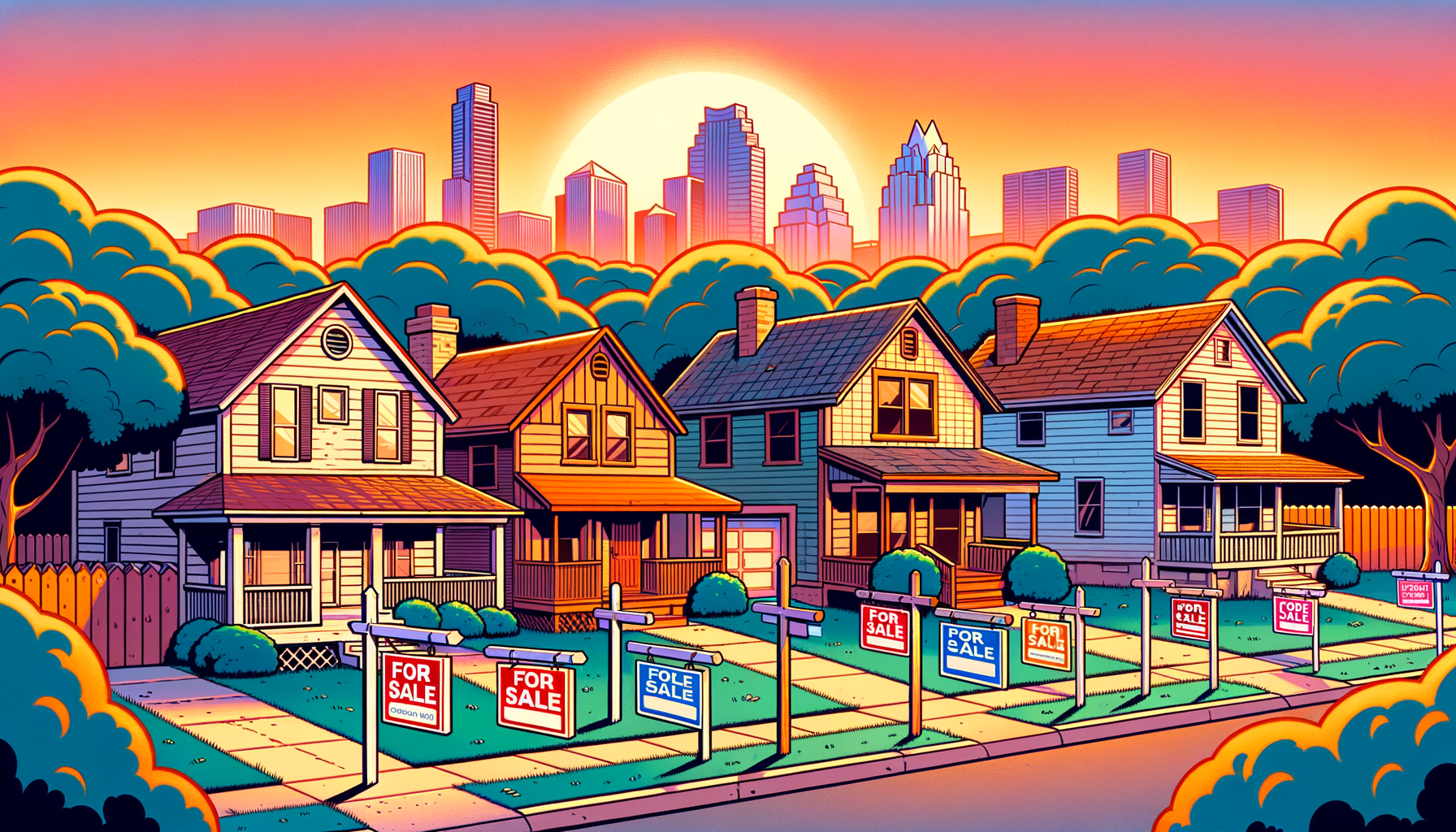
After years of extreme swings—first a seller-dominated boom, then a sharp cooldown—Texas Real Estate is starting to look more “normal” again. The reason is simple and measurable: housing inventory in many Texas metros has been rebuilding, giving buyers more choices and forcing sellers to price more realistically. If these housing inventory trends hold, 2026 could be the first time in about a decade that much of Texas resembles a balanced housing market, where neither side has all the leverage.
A “balanced market” usually means supply and demand are closer to even—often reflected in months of inventory rising toward levels that support steady price growth, typical negotiations, and more consistent days on market. Texas may not move in a straight line (it never does), but the state’s recent inventory patterns, affordability pressures, and steadier job-and-population growth point toward a calmer middle ground heading into 2026.
Importantly, “balanced” won’t mean the same thing everywhere. Dallas-Fort Worth, Austin, San Antonio, Houston, and many smaller markets have different new-construction pipelines, migration dynamics, and price points. But statewide, the direction of travel in housing inventory trends is the story to watch—and it could reshape strategies for buyers, sellers, and investors.
What does a “balanced housing market” mean in Texas, and why could 2026 be the turning point?
In Texas Real Estate, the last decade has been defined by undersupply meeting strong demand: job growth, inbound migration, and household formation collided with a long period of underbuilding after the Great Recession. That imbalance pushed prices up quickly and left buyers competing for limited listings, especially from 2020 through 2022.
A balanced market is typically described as one where homes sell at a steady pace, price changes are modest, and negotiations feel normal again. You’ll still see well-priced homes move quickly in desirable areas—think Plano ISD in North DFW, parts of Katy and The Woodlands near Houston, or Northwest Austin pockets near major employers—but the “weekend bidding war” environment becomes less common.
Why 2026? Because the ingredients for balance are increasingly visible:
- More active listings: As resale sellers re-enter the market and builders deliver more spec homes, buyers gain options.
- Slower demand at today’s payment levels: Higher mortgage rates and higher prices changed what many households can comfortably afford.
- New construction staying relevant: Texas has been one of the nation’s leaders in building permits and completions, which helps replenish supply over time.
These forces don’t guarantee a perfect equilibrium, but they do support the idea that housing inventory trends are normalizing. That’s the foundation of a balanced market.
Evidence to watch: In 2023 and 2024, multiple Texas metros saw months of inventory rise from the ultra-low levels of 2021–2022, signaling a shift away from the tightest seller’s market conditions. This is consistent with reporting from the Texas Real Estate Research Center at Texas A&M University and national brokerage research tracking Texas inventory conditions. [Citations: Texas Real Estate Research Center, Texas Housing Insight reports, 2023–2025; National Association of Realtors market indicators, 2023–2025]
What’s happening with housing inventory in Texas right now?
Housing inventory is the number of homes available for sale at a given time. In plain terms: it’s your selection. When selection is thin, buyers compete. When selection expands, buyers negotiate and sellers compete on price and condition.
Across Texas, inventory conditions have been rebuilding compared with the peak frenzy years. But it’s uneven: Austin and parts of Central Texas generally loosened faster, while some Dallas-Fort Worth and Houston submarkets remained tighter for longer due to steady job growth and continued in-migration.
New construction is playing a bigger role than many buyers realize
Texas has a structural advantage: it can build at scale. Land availability at metro edges, a large builder presence, and strong permitting activity have helped add supply even as affordability became a bigger challenge. Builders also adjusted quickly to the post-2022 environment by using incentives—rate buydowns, closing cost credits, and design upgrades—to keep sales moving without always cutting base prices dramatically.
That matters for inventory trends because new homes can add “shadow inventory” even when resale listings remain limited. In many DFW and Houston-area master-planned communities—Celina/Prosper corridors north of Dallas, or Cypress and Fulshear outside Houston—buyers may find more choice in new construction than in established neighborhoods with locked-in low-rate homeowners.
Evidence: Texas has consistently ranked among the top states for new-home construction activity, and major metros such as Dallas, Houston, Austin, and San Antonio have been leading markets for building permits and housing starts in recent years. [Citations: U.S. Census Bureau Building Permits Survey, 2023–2025; Texas Real Estate Research Center, 2023–2025]
Resale inventory is improving, but “rate lock” still limits supply
Many Texas homeowners refinanced or purchased with very low mortgage rates in 2020–2021. That creates the “rate lock” effect: owners hesitate to sell and move because a new mortgage could mean a much higher monthly payment. This has kept some resale inventory tighter than it would otherwise be.
Even so, life events still drive transactions—job changes, new babies, downsizing, divorce, inheritance—and those listings gradually add up. If mortgage rates ease even modestly in 2025–2026, you could see more resale sellers come off the sidelines, accelerating the move toward balance.
Evidence: Industry research has repeatedly identified the rate-lock phenomenon as a key reason existing-home inventory remained constrained nationally and in high-growth states, even as demand cooled from 2022 highs. [Citations: Freddie Mac housing market commentary, 2023–2025; National Association of Realtors research, 2023–2025]
Seasonal patterns in Texas: spring lists, summer closings, and a fall reality check
Texas has clear seasonality, and it can amplify how inventory “feels.” Spring typically brings a wave of new listings and buyer activity. Summer is often peak closing season—especially for families timing moves around the school calendar. By late summer into fall, price reductions become more common if homes were listed too optimistically.
In a rebalancing market, that fall “reality check” can be more pronounced. Sellers who missed the early-spring window may have to compete harder, particularly if builders are offering attractive incentives nearby.
How a balanced 2026 market could affect Texas home prices and negotiations
When inventory rises, price growth usually cools. That doesn’t automatically mean statewide price declines—Texas is too diverse for a one-size answer—but it does typically mean fewer dramatic bidding wars and more frequent concessions.
In a balanced market, the typical transaction looks different than it did in 2021:
- More price discovery: Homes may take longer to sell, and list-to-sale price ratios often soften.
- Inspections matter again: Buyers are less likely to waive inspections, and repair requests become more common.
- Appraisals regain influence: With fewer above-ask contracts, appraisal gaps are less frequent.
- Seller credits return: Credits for closing costs or rate buydowns become a standard negotiation tool, especially for homes that need updates.
Texas neighborhoods that saw the fastest pandemic-era appreciation may be the most sensitive to inventory gains. Austin is the clearest example: it experienced rapid run-ups and then a more noticeable cooldown as inventory increased. That doesn’t mean the entire state follows Austin’s exact path, but it shows how quickly conditions can change when housing inventory trends shift.
Evidence: Austin’s housing market has been widely documented as one of the most volatile among major U.S. metros in the pandemic cycle, with sharp changes in competition, inventory, and price momentum as conditions normalized. [Citations: Texas Real Estate Research Center, Austin market summaries, 2023–2025; Zillow market reports, 2023–2025; Redfin market insights, 2023–2025]
For Texas overall, a reasonable 2026 scenario is slower, steadier price movement—more tied to local employment and affordability than to “fear of missing out.” That’s what balance looks like: fewer extremes.
What 2026 could mean for Texas buyers: more choice, but you still need a plan
For first-time buyers, a balanced market can be a breath of fresh air. More inventory usually means you can view more homes, compare neighborhoods, and negotiate without feeling rushed. But don’t confuse “balanced” with “easy.” Desirable homes in top school zones—Frisco ISD, Lake Travis ISD, Eanes ISD, or certain Houston-area districts—can still attract multiple offers if priced right.
If you’re buying in 2026, a smart approach is to prepare for a market where you have leverage, but only if you use it well.
Practical steps buyers can take as inventory improves
- Get fully underwritten (or as close as possible) before shopping: Pre-approval is good; stronger underwriting can make your offer cleaner.
- Track housing inventory trends by ZIP code, not just metro headlines: Conditions in East Dallas can differ from Celina; Midtown Houston differs from Katy.
- Use inspections strategically: Ask for safety fixes first (roof, electrical, plumbing) before cosmetic credits.
- Compare seller credits vs. price cuts: A credit to buy down your rate can matter more than a small price reduction, depending on your loan.
One common mistake in a shifting Texas Real Estate market is over-celebrating “more inventory” and then overreaching on negotiations. If a home is truly well-priced and in excellent condition, pushing too hard can backfire—especially if the seller has backups or the property is rare (large lot, updated systems, prime location).
Green flag: A listing that’s priced in line with recent comparable sales and has clear disclosures, receipts for major repairs, and a realistic negotiation posture.
Red flag: A home that sits with repeated small price drops and vague listing details, which can signal hidden condition issues or an unrealistic seller expectation.
What 2026 could mean for Texas sellers and investors: strategy matters more than ever
Sellers and investors typically feel the shift first when housing inventory rises. In a seller’s market, you can get away with “testing the market.” In a balanced market, buyers have options, and the best-priced, best-presented homes win.
For sellers, the biggest adjustment is psychological: you may not be competing against just the house down the street—you may be competing against a brand-new home offering a rate buydown and warranties. That’s especially true in the suburbs of Dallas-Fort Worth, Houston, San Antonio, and Austin where new construction is abundant.
Seller playbook for a more balanced Texas market
- Price to the market you’re in, not the market you remember: Use the most recent comparable sales and active competition, including new builds.
- Pre-inspect if your home is older: In markets like Houston (with varied housing stock) or established Dallas neighborhoods, a pre-inspection can prevent surprises.
- Focus on “first five minutes”: Curb appeal, clean interiors, and sharp listing photos matter more when buyers are touring multiple homes.
- Be ready to offer concessions: Closing cost credits or repair allowances can be the difference between a showing and an offer.
For investors, balance can be healthy. It often brings more predictable underwriting assumptions and fewer “accidental overpays.” But it also puts pressure on deal quality. If rents soften or flatten while insurance, taxes, and maintenance rise, cash flow can get squeezed.
Texas investors should pay special attention to:
- Property taxes: Texas has no state income tax, but property taxes can materially affect returns. Confirm exemptions and protest options.
- Insurance costs: Coastal and hail-prone regions (including parts of North Texas) can see higher premiums; budget conservatively.
- HOA and MUD fees: Common in newer Texas communities; they can change the real monthly cost profile.
- Exit liquidity: In a balanced market, resale can take longer—plan hold times accordingly.
Evidence: Analysts have emphasized that Sun Belt markets with strong construction pipelines can see faster normalization in price growth and competition, which shifts investor strategy toward fundamentals like rent growth, operating costs, and neighborhood-level demand. [Citations: Urban Land Institute (ULI) housing and emerging trends commentary, 2024–2025; Federal Reserve Bank of Dallas regional economic updates, 2023–2025]
Where Texas housing inventory trends may rebalance first (and where it could stay tight)
Texas isn’t one market—it’s dozens of micro-markets. Still, housing inventory trends tend to rebalance first in places with a combination of (1) strong new construction, (2) rapid prior price growth, and (3) affordability sensitivity.
Here are broad patterns to watch as 2026 approaches:
Austin and parts of Central Texas: Often the first to show bigger inventory swings. Tech-driven demand is real, but affordability constraints can change buyer behavior quickly. If listings continue to outpace buyer urgency, the market can look balanced (or even buyer-leaning) sooner than other metros.
Dallas-Fort Worth: A large, diverse economy helps stabilize demand, but the region also delivers a lot of new supply, especially in fast-growing northern corridors (Prosper, Celina, Melissa) and western expansions. Balance may show up first in areas with heavy builder competition, while close-in neighborhoods with limited new construction can stay tighter.
Houston: Houston often behaves differently because it’s less constrained by zoning, has broad geographic sprawl, and has a huge range of price points. Inventory can normalize without the same degree of price volatility. Neighborhood-level factors—flood risk history, insurance costs, and commute patterns—matter heavily.
San Antonio: Typically more affordable than Austin and often steadier. Inventory improvements can give buyers negotiating room, but well-located, well-maintained homes still move. Watch the new construction pipeline on the metro edges and how it competes with resale.
Smaller metros and Hill Country markets: Places like Waco, College Station, New Braunfels, and parts of the Hill Country can be sensitive to second-home demand and local job drivers (universities, healthcare, military). Inventory can shift quickly with sentiment, so buyers and sellers should track local data closely.
Evidence: Regional reporting from the Texas Real Estate Research Center and the Federal Reserve Bank of Dallas consistently highlights that Texas metros can diverge based on construction volumes, employment mix, and affordability—making local inventory trends more predictive than statewide averages. [Citations: Texas Real Estate Research Center regional reports, 2023–2025; Federal Reserve Bank of Dallas, Texas economy and housing commentary, 2023–2025]
One more Texas-specific factor: property tax and insurance affordability can act like a “soft cap” on demand. Even if home prices stabilize, monthly payments can still rise if taxes and insurance jump. That can keep buyers selective and support the case for a more balanced 2026 environment.
Looking ahead, the most realistic takeaway is this: if housing inventory continues rebuilding and demand remains steady but affordability-conscious, 2026 could be the year Texas Real Estate feels less like a roller coaster. Buyers may gain breathing room, sellers will need sharper strategy, and investors will have to underwrite conservatively—but the market as a whole could benefit from a return to healthier, more sustainable norms.